

Emranul Haque
What will you do
with your future?
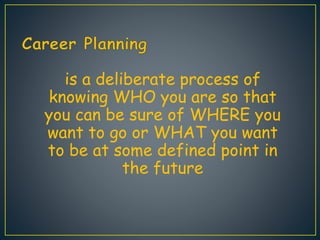
is a deliberate process of
knowing WHO you are so that
you can be sure of WHERE you
want to go or WHAT you want
to be at some defined point in
the future
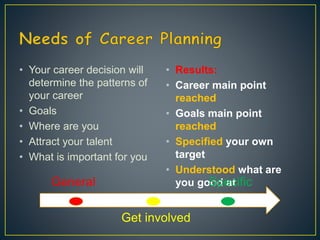
• Your career decision will
determine the patterns of
your career
• Goals
• Where are you
• Attract your talent
• What is important for you
• Results:
• Career main point
reached
• Goals main point
reached
• Specified your own
target
• Understood what are
you good atGeneral Specific
Get involved
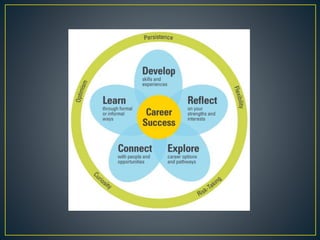
• A career is an individual's journey through learning, work
and other aspects of life.
• Career planning is the process through which individuals
identify and implement steps to attain their career goals.
(1) self-assessment
(2) investigating career options/ explore work
(3) narrow down list of work/ career options
(4) action planning/ decide/ choose the best option
(5) evaluation/ set a career goal
• Self-Assessment Examine personal interests, skills,
values, and abilities.
Attitude
Interests
Personality
Needs
Values
Skills
• Opportunity Exploration Seek information on available job
opportunities from family, friends, online job boards, job
fairs. Examine the skills and abilities required.
• Look opportunity within your known industries/
organizations
• Look at career opportunity in other organization
• Look an entrepreneurial and self employment
opportunities
• Look at jobs/ careers of other people you know
• Goal Setting/Reality Checking Decide which
job/occupational opportunities fit both personal interests
and skills/abilities. Set specific target job objectives for a
defined time period.
• List down three to five career options that match with
your interest, attitude, skills, needs and values in one
hand and the opportunities and limitations on other.
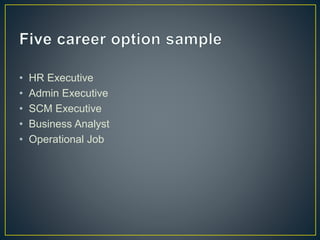
• HR Executive
• Admin Executive
• SCM Executive
• Business Analyst
• Operational Job
• Steady state
Need to life long commitment to one career and by
characterized by a steady improvement in knowledge and
skill.
• Linear
Constant upward mobility in which there is a steady
increase in power, responsibilities in the work of others
• Transitory
Constant seeking for variety or independence. Jobs tend to
be short term and mobility is generally lateral.
• Spiral
Regular changes, usually every five or seven years.
Mobility is usually lateral and may be initially downward.
• Action Planning Outline all steps needed to reach a
specific career goal—formal training, internships, job
search strategy development, network building, further
career exploration, etc.
• Evaluation Review progress on steps in the action plan,
realism of goals, and accuracy/currency of self-
assessment.
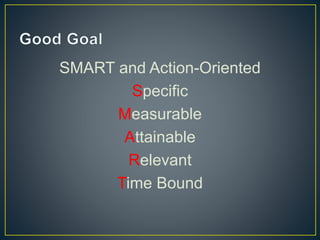
SMART and Action-Oriented
Specific
Measurable
Attainable
Relevant
Time Bound
• Self imposed or, psychological barrier
Think out of the box
Keep Learning
Passion To Excel
Communication Skill||Computer Skill||Good
CV||Interview
1. Build your career in a foundation of
expertise
2. Prove the work you do matters
3. Be courageous and put your self out there
4. Connect to a community that teaches,
inspires and supports you
Career planning & Development

Career planning & Development

  • 1.
  • 3.
    What will youdo with your future?
  • 4.
    is a deliberateprocess of knowing WHO you are so that you can be sure of WHERE you want to go or WHAT you want to be at some defined point in the future
  • 5.
    • Your careerdecision will determine the patterns of your career • Goals • Where are you • Attract your talent • What is important for you • Results: • Career main point reached • Goals main point reached • Specified your own target • Understood what are you good atGeneral Specific Get involved
  • 6.
    • A careeris an individual's journey through learning, work and other aspects of life.
  • 7.
    • Career planningis the process through which individuals identify and implement steps to attain their career goals.
  • 8.
    (1) self-assessment (2) investigatingcareer options/ explore work (3) narrow down list of work/ career options (4) action planning/ decide/ choose the best option (5) evaluation/ set a career goal
  • 9.
    • Self-Assessment Examinepersonal interests, skills, values, and abilities.
  • 10.
  • 11.
    • Opportunity ExplorationSeek information on available job opportunities from family, friends, online job boards, job fairs. Examine the skills and abilities required.
  • 12.
    • Look opportunitywithin your known industries/ organizations • Look at career opportunity in other organization • Look an entrepreneurial and self employment opportunities • Look at jobs/ careers of other people you know
  • 13.
    • Goal Setting/RealityChecking Decide which job/occupational opportunities fit both personal interests and skills/abilities. Set specific target job objectives for a defined time period.
  • 14.
    • List downthree to five career options that match with your interest, attitude, skills, needs and values in one hand and the opportunities and limitations on other.
  • 15.
    • HR Executive •Admin Executive • SCM Executive • Business Analyst • Operational Job
  • 16.
    • Steady state Needto life long commitment to one career and by characterized by a steady improvement in knowledge and skill.
  • 17.
    • Linear Constant upwardmobility in which there is a steady increase in power, responsibilities in the work of others
  • 18.
    • Transitory Constant seekingfor variety or independence. Jobs tend to be short term and mobility is generally lateral.
  • 19.
    • Spiral Regular changes,usually every five or seven years. Mobility is usually lateral and may be initially downward.
  • 20.
    • Action PlanningOutline all steps needed to reach a specific career goal—formal training, internships, job search strategy development, network building, further career exploration, etc.
  • 21.
    • Evaluation Reviewprogress on steps in the action plan, realism of goals, and accuracy/currency of self- assessment.
  • 22.
  • 23.
    • Self imposedor, psychological barrier
  • 24.
    Think out ofthe box Keep Learning Passion To Excel Communication Skill||Computer Skill||Good CV||Interview
  • 25.
    1. Build yourcareer in a foundation of expertise 2. Prove the work you do matters 3. Be courageous and put your self out there 4. Connect to a community that teaches, inspires and supports you