

Conflict
 2013
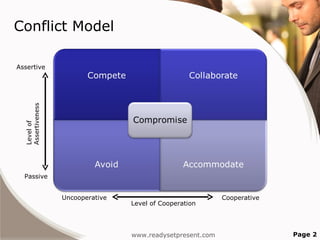
Conflict Model

Assertive


  Passive


            Uncooperative                             Cooperative
                            Level of Cooperation


                            www.readysetpresent.com                 Page 2
Program Objectives           (1 of 2)

     Explain the difference between
      a disagreement and a conflict.


     Understand conflict theories.


     Explain the six causes of conflicts.


     Explain the importance of talking
      out a conflict.


                      www.readysetpresent.com   Page 3
Program Objectives          (1 of 2)

     Use two-way and assertive
      communication skills to level with
      people, to accept feedback from
      them, and to discuss/resolve
      problems.


     Know how to manage a conflict.


                     www.readysetpresent.com   Page 4
Definition    (2 of 2)

     “The goal of organizational
      leadership is not to eliminate
      conflict, but to use it.”


     “Conflict is a predictable social
      phenomenon and should be
      channeled to useful purposes.”


                         www.readysetpresent.com   Page 5
What Do You Think?
     When you hear the word . . .
              CONFLICT
     What do you think and what images
      come to you . . .


                     www.readysetpresent.com   Page 6
Symptoms Of Conflict            (1 of 4)

     Tensions.
     No desire to communicate.
     Work not done properly.
     Disastrous meetings.
     Anger occurs quickly and easily.


                     www.readysetpresent.com   Page 7
Symptoms Of Conflict             (2 of 4)

     Failing productivity.
     Slipping morale.
     Absenteeism.
     Accidents.
     Escalating costs.
     Slamming doors.
     Shouting.
     Bad times.


                      www.readysetpresent.com   Page 8
Symptoms Of Conflict              (3 of 4)

     The employee (or employees)
      involved display no desire to
      communicate.
     Bad tempers are evident.
     Productivity is falling.
     Morale is slipping.


                       www.readysetpresent.com   Page 9
Symptoms Of Conflict           (4 of 4)

     One or more of those involved
      frequently calls in sick.
     Accidents and errors become more
      frequent.
     Disagreements become more
      pronounced (shouting, slamming
      doors, etc.)


                    www.readysetpresent.com   Page 10
Dealing With Resistance
  The Five "A'S"
     Avoidance.
     Acceptance.
     Adaptation.
     Adamancy.
     Attack (push back).


                     www.readysetpresent.com   Page 11
Symptoms Versus Causes
  Symptoms:
     Conditions brought on by other
      related situations; signs of a basic
      problem.
  Causes:
     The basic problems; situations that
      give rise to symptoms.


                      www.readysetpresent.com   Page 12
Causes of Conflict


      www.readysetpresent.com   Page 13
Causes of Conflict           (1 of 3)


  1.   Conflicts of belief:
         – People have different personal beliefs
           and any deviation from those beliefs is
           bound to cause problems. This type of
           conflict should not be allowed to erupt
           in an organization.


                         www.readysetpresent.com     Page 14
Defuse A
Conflict


  www.readysetpresent.com   Page 15
Active Listening


www.readysetpresent.com   Page 16
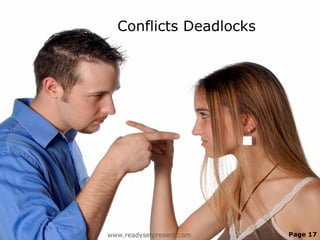
Conflicts Deadlocks


www.readysetpresent.com   Page 17
Download “Conflict”
                 PowerPoint presentation
                at ReadySetPresent.com

    149 slides include: the definition of conflict, 5 slides on
conflict theory, four slides on the symptoms of conflict, the five
  A’s of dealing with resistance, 10+ slides on symptoms and
  causes of conflict, 5 methods to handle conflict, 4 points on
   fight or flight, a graphic on conflict escalation, 10 slides on
    group conflict and causes, 10 slides with ways to address
  conflict: ignoring - stifling, defusing, organizational conflict:
positive and negative aspects, 4 steps of conflict management,
 20+ slides on organizational conflict and conflict management
strategies, 17 points on how to overcome deadlocks, 5 types of
 conflict deadlocks each with causes and techniques to handle:
    relationship - data - value - interests - structural, conflict
     models, strategies, 20+ tips, how to's and much more.

        Royalty Free - Use Them Over and Over Again.
                 Updated & Expanded 2013
       Now: more content, graphics, and diagrams
                           www.readysetpresent.com                    Page 18

Conflict PowerPoint PPT Content Modern Sample

  • 1.
  • 2.
    Conflict Model Assertive Passive Uncooperative Cooperative Level of Cooperation www.readysetpresent.com Page 2
  • 3.
    Program Objectives (1 of 2)  Explain the difference between a disagreement and a conflict.  Understand conflict theories.  Explain the six causes of conflicts.  Explain the importance of talking out a conflict. www.readysetpresent.com Page 3
  • 4.
    Program Objectives (1 of 2)  Use two-way and assertive communication skills to level with people, to accept feedback from them, and to discuss/resolve problems.  Know how to manage a conflict. www.readysetpresent.com Page 4
  • 5.
    Definition (2 of 2)  “The goal of organizational leadership is not to eliminate conflict, but to use it.”  “Conflict is a predictable social phenomenon and should be channeled to useful purposes.” www.readysetpresent.com Page 5
  • 6.
    What Do YouThink?  When you hear the word . . . CONFLICT  What do you think and what images come to you . . . www.readysetpresent.com Page 6
  • 7.
    Symptoms Of Conflict (1 of 4)  Tensions.  No desire to communicate.  Work not done properly.  Disastrous meetings.  Anger occurs quickly and easily. www.readysetpresent.com Page 7
  • 8.
    Symptoms Of Conflict (2 of 4)  Failing productivity.  Slipping morale.  Absenteeism.  Accidents.  Escalating costs.  Slamming doors.  Shouting.  Bad times. www.readysetpresent.com Page 8
  • 9.
    Symptoms Of Conflict (3 of 4)  The employee (or employees) involved display no desire to communicate.  Bad tempers are evident.  Productivity is falling.  Morale is slipping. www.readysetpresent.com Page 9
  • 10.
    Symptoms Of Conflict (4 of 4)  One or more of those involved frequently calls in sick.  Accidents and errors become more frequent.  Disagreements become more pronounced (shouting, slamming doors, etc.) www.readysetpresent.com Page 10
  • 11.
    Dealing With Resistance The Five "A'S"  Avoidance.  Acceptance.  Adaptation.  Adamancy.  Attack (push back). www.readysetpresent.com Page 11
  • 12.
    Symptoms Versus Causes Symptoms:  Conditions brought on by other related situations; signs of a basic problem. Causes:  The basic problems; situations that give rise to symptoms. www.readysetpresent.com Page 12
  • 13.
    Causes of Conflict www.readysetpresent.com Page 13
  • 14.
    Causes of Conflict (1 of 3) 1. Conflicts of belief: – People have different personal beliefs and any deviation from those beliefs is bound to cause problems. This type of conflict should not be allowed to erupt in an organization. www.readysetpresent.com Page 14
  • 15.
    Defuse A Conflict www.readysetpresent.com Page 15
  • 16.
  • 17.
  • 18.
    Download “Conflict” PowerPoint presentation at ReadySetPresent.com 149 slides include: the definition of conflict, 5 slides on conflict theory, four slides on the symptoms of conflict, the five A’s of dealing with resistance, 10+ slides on symptoms and causes of conflict, 5 methods to handle conflict, 4 points on fight or flight, a graphic on conflict escalation, 10 slides on group conflict and causes, 10 slides with ways to address conflict: ignoring - stifling, defusing, organizational conflict: positive and negative aspects, 4 steps of conflict management, 20+ slides on organizational conflict and conflict management strategies, 17 points on how to overcome deadlocks, 5 types of conflict deadlocks each with causes and techniques to handle: relationship - data - value - interests - structural, conflict models, strategies, 20+ tips, how to's and much more. Royalty Free - Use Them Over and Over Again. Updated & Expanded 2013 Now: more content, graphics, and diagrams www.readysetpresent.com Page 18