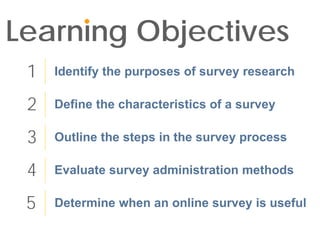
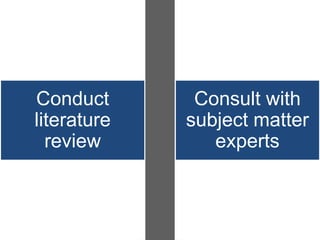
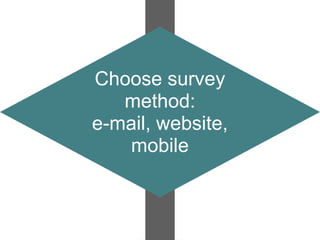
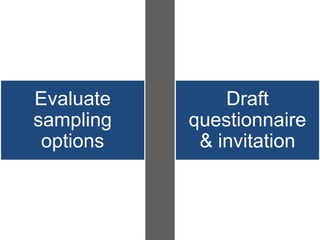
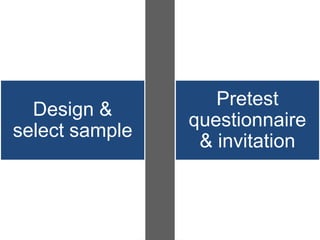
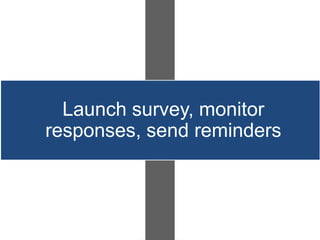
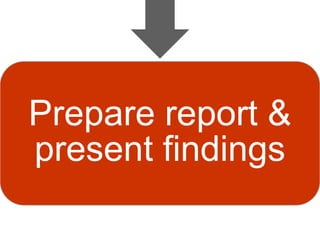
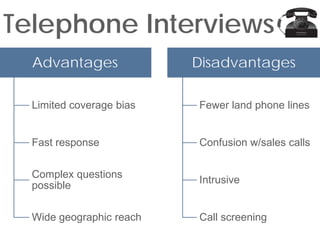
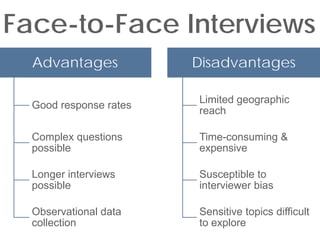
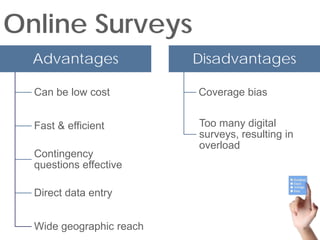
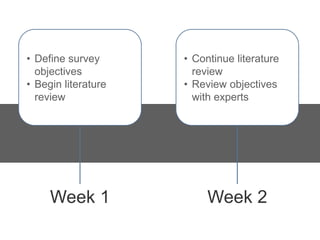
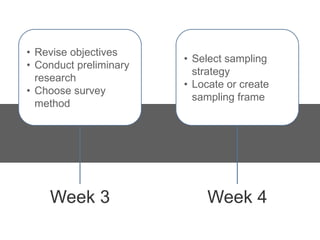
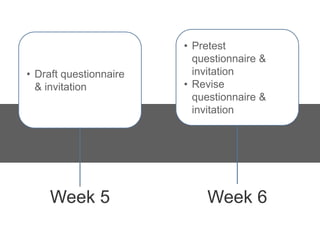
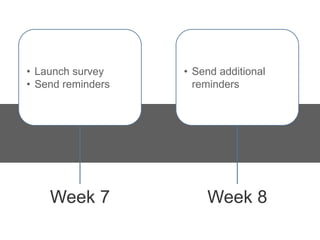
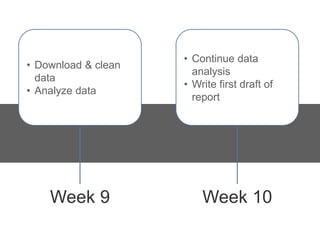
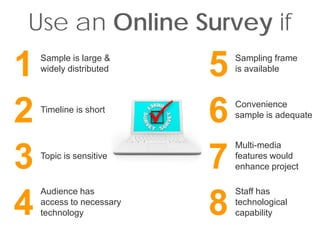
An online survey can be a useful data collection method when the sample is large and geographically dispersed, the timeline is tight, the topic is sensitive, respondents have necessary technology, a sampling frame exists, a convenience sample is adequate, and staff capabilities allow for online survey design and administration. Key steps in the survey process include defining objectives, reviewing literature, pretesting the questionnaire, launching the survey, analyzing responses, and reporting findings. The advantages of online surveys include low cost, speed, and the ability to ask complex contingent questions, though coverage bias and survey fatigue are potential disadvantages.




















![Survey design-workshop-1234170716539145-3[1]](https://cdn.slidesharecdn.com/ss_thumbnails/survey-design-workshop-1234170716539145-31-120721053559-phpapp02-thumbnail.jpg?width=640&height=640&fit=bounds)


