
PRESENTED BY,
MR. KAILASH NAGAR
ASSIST. PROF.
DEPT. OF COMMUNITY HEALTH NSG.
DINSHA PATEL COLLEGE OF NURSING, NADIAD
1
CONTENTS
3
• INTRODUCTION
• CONCEPTS OF DISEASE
• CONCEPTS OF CAUSATION
• NATURAL HISTORY OF DISEASE
• CONCEPTS OF CONTROL
• CONCEPTS OF PREVENTION
• CHANGING PATTERN OF DISEASE
• DISEASE CLASSIFICATION
• CONCLUSION
INTRODUCTION
• The concept of disease has been the subject of a vast,
vivid and versatile debate.
• Disease is a central notion to modern health care, it
effects society and is important to the process of
discovering and identifying disease entities.
4
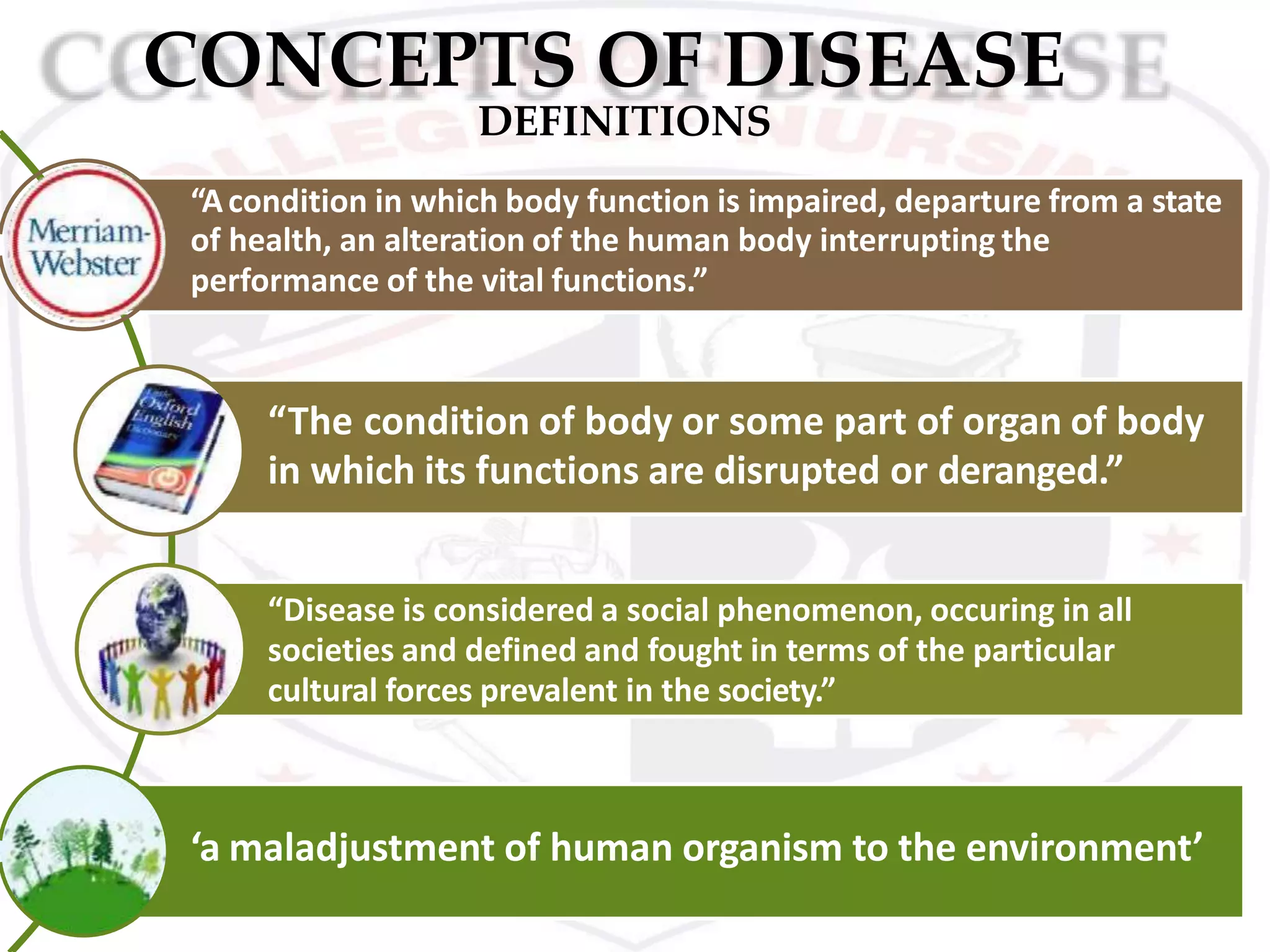
CONCEPTS OF DISEASE
4
DEFINITIONS
“Acondition in which body function is impaired, departure from a state
of health, an alteration of the human body interrupting the
performance of the vital functions.”
“The condition of body or some part of organ of body
in which its functions are disrupted or deranged.”
“Disease is considered a social phenomenon, occuring in all
societies and defined and fought in terms of the particular
cultural forces prevalent in the society.”
‘a maladjustment of human organism to the environment’
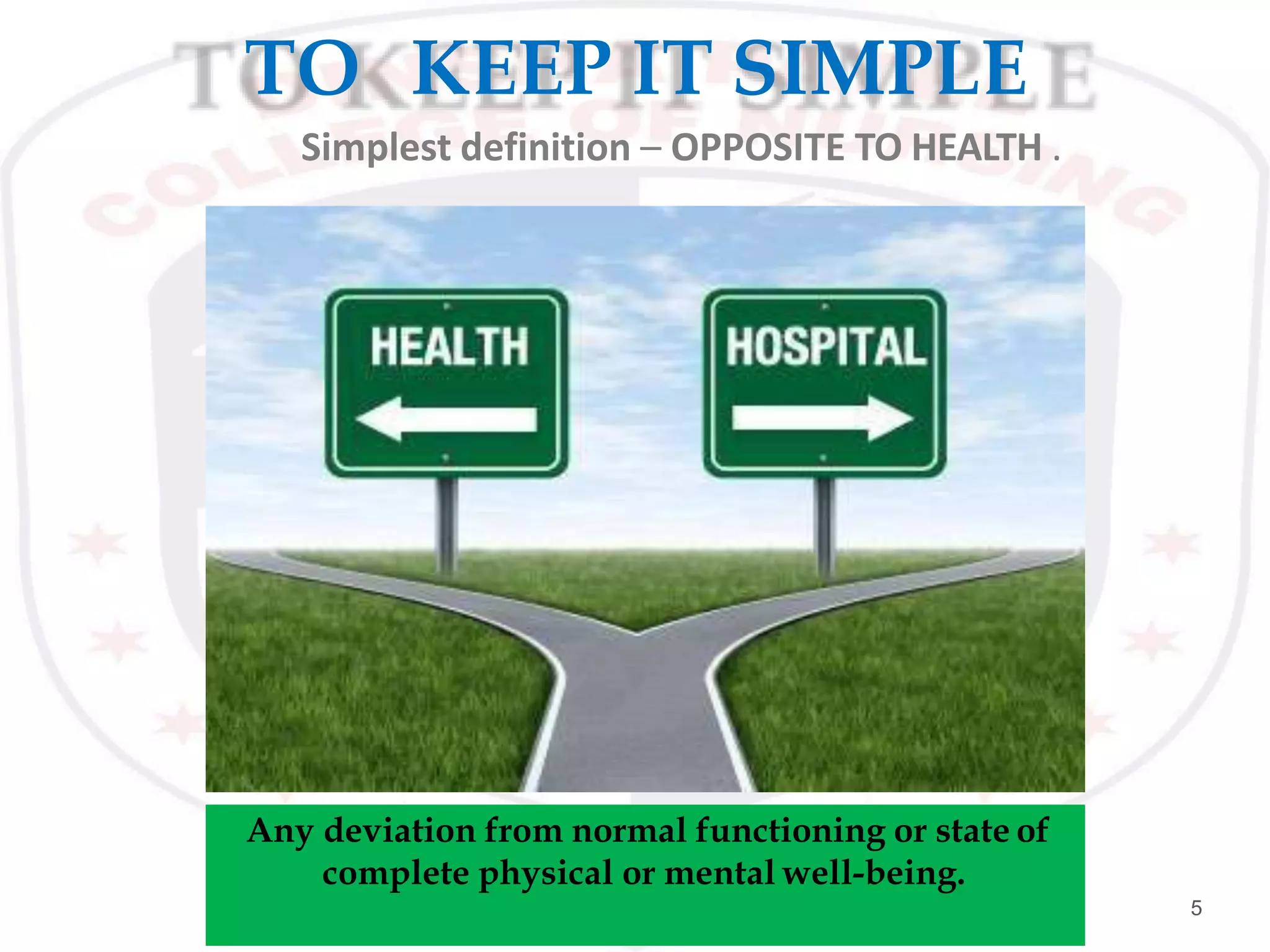
TO KEEP IT SIMPLE
Simplest definition – OPPOSITE TO HEALTH .
5
Any deviation from normal functioning or state of
complete physical or mental well-being.
DISEASE ILLNESS SICKNESS
6
DISEASE is a physiological/
psychological dysfunction.
ILLNESS
is a subjective state
of the person who
feels aware of not
being well.
SICKNESS
is a state of social
dysfunction i.e. a
role that the
individual assumes
when ill (sickness
role).
Discovery of microbiology - turningpoint
• GERM THEORY OF DISEASE
• Microbes as sole cause of disease
7
CONCEPT OF CAUSATION
EARLIER THEORIES
• Supernatural theory
• Theory of Humors
• Concept of contagion
• Miasmatic theory
• Theory of spontaneous generation
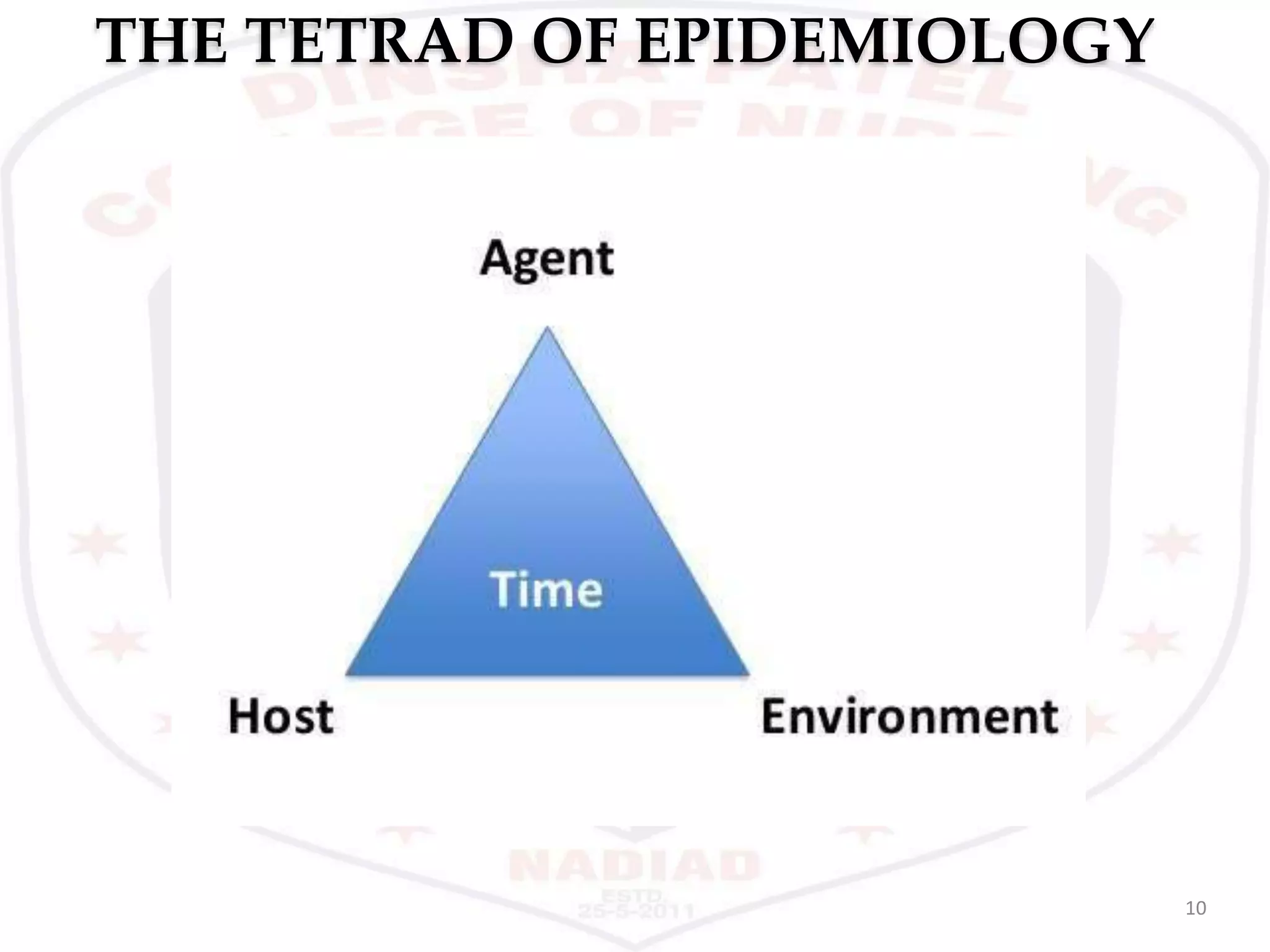
EPIDEMIOLOGICAL TRIAD
• Factors relating host and environment
• Mission of epidemiology – break one of the legs of
triangle and disrupt the connection between these and
thereby stopping outbreak. 8
THE TETRAD OF EPIDEMIOLOGY
10
MULTIFACTORIAL CAUSATION
11
• CONCEPT- disease is due to multiple factors and not
a single one.
• PETTENKOFER OF MUNICH(1819-1901)-early
proponent of this concept. “Germ theory of disease
"or “single cause idea "in late 19 century
overshadowed the multiple cause theory.
11
Causative Factors
Groups or
populations
and their
characteristics
Environment
behaviour, culture
physiological
factors ecological
elements
TIME
ADVANCED MODEL OF THE TRIANGLE
OF EPIDEMIOLOGY
WEB OF CAUSATION
13
• Suggested by- Mac Mahon and Pugh
• Considers all the predisposing factors of any type and
their complex interaction with each other.
41
Changes in life style
Stress
Obesity
HTN
Smoking
Emotional stress
Aging
Changes in the walls
of arteries
Coronary Occlusion
Myocardial ischemia
Hyperlipidemia
Coronary
Atherosclerosis
Myocardial Ischemia
Fig: Web of causation of MI
14
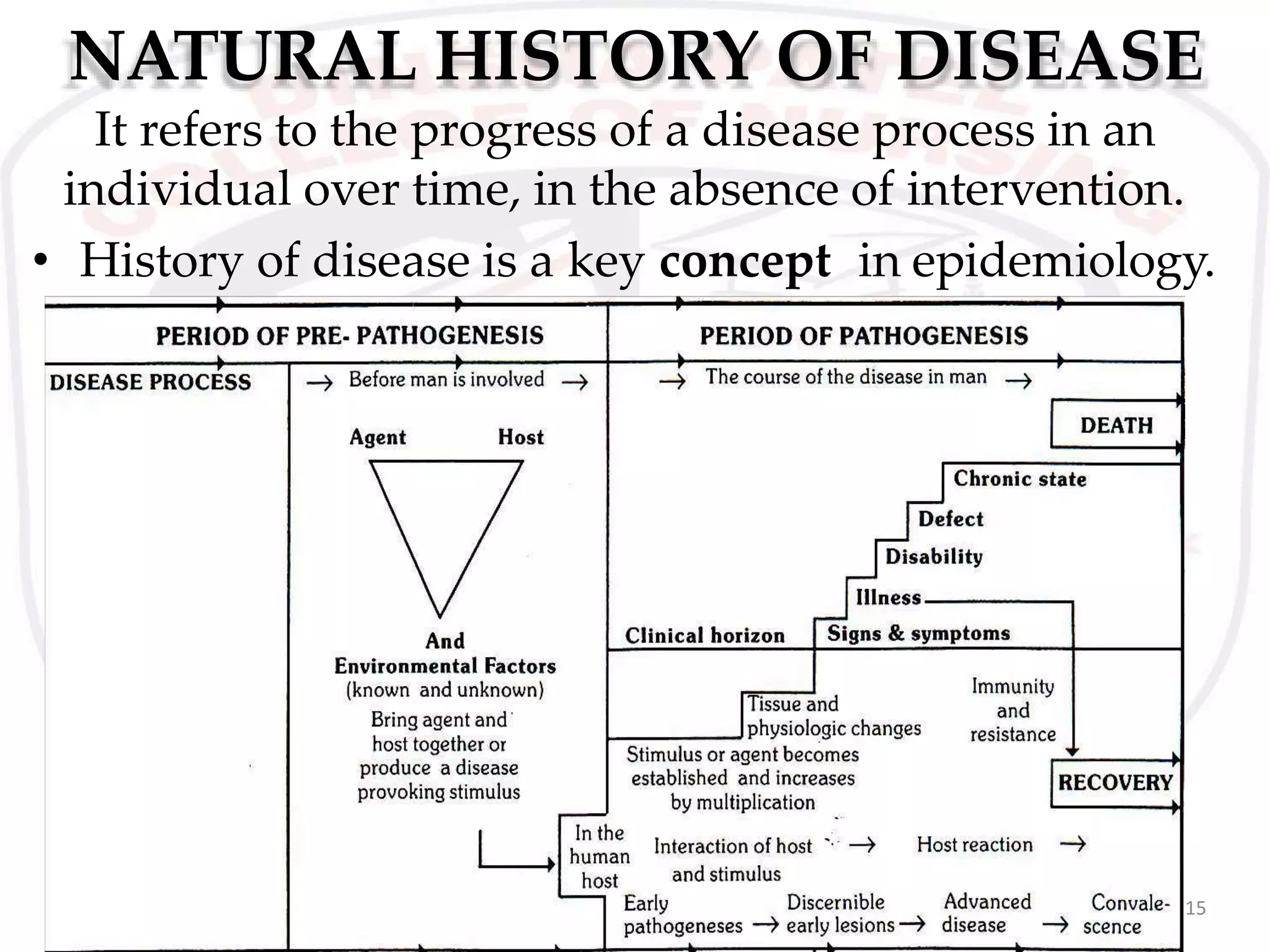
NATURAL HISTORY OF DISEASE
15
It refers to the progress of a disease process in an
individual over time, in the absence of intervention.
• History of disease is a key concept in epidemiology.
16
PRE PATHOGENESIS PHASE
17
• Disease agent has not entered man, but factors
favouring disease exist in the environment.
• What required is an interaction of these factors to
initiate the disease process.
Agent Host
Environment
PATHOGENESIS PHASE
18
• Entry of disease agent in susceptible human host.
• Disease agent multiplies and induces tissue and
physiological changes.
• final outcome- recovery, disability or death.
• This phase may be modified by intervention measures
such as immunization, chemotherapy
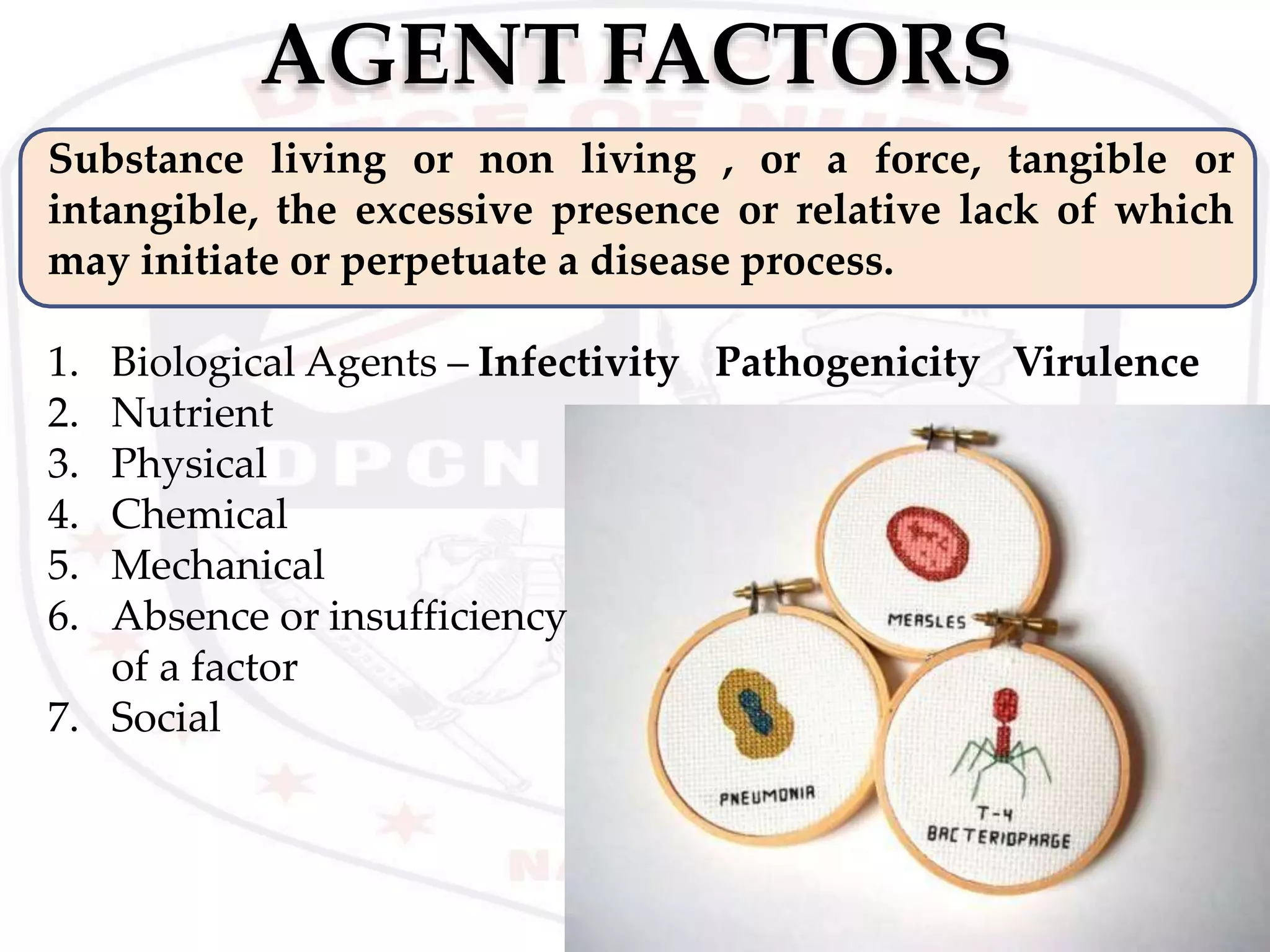
AGENT FACTORS
18
Substance living or non living , or a force, tangible or
intangible, the excessive presence or relative lack of which
may initiate or perpetuate a disease process.
Pathogenicity Virulence1. Biological Agents – Infectivity
2. Nutrient
3. Physical
4. Chemical
5. Mechanical
6. Absence or insufficiency
of a factor
7. Social
HOST FACTORS
• Host - SOIL Disease agent –
SEED
Classified as
• Demographic
characteristics
• Biologic
• Social & Economic
• Lifestyle factors
19
ENVIRONMENTAL FACTORS
• All that which is external to the individual
human host, living and non-living, and
with which he is in constant interaction.
-Macro-environment (external)
• Physical
• Biological
• Psycho social
20
RISK FACTORS
22
• Where the disease agent is not
established, the
is generally
in terms of risk
firmly
aetiology
discussed
factors.
• The term risk factor
by different authors
is used
with at
least two meanings-
 An attribute or
significantly
exposure that is
associated with
development of disease.
 A determinant that can be modified
by intervention, thereby reducing
the possibility of occurrence of
disease or other specified outcomes.
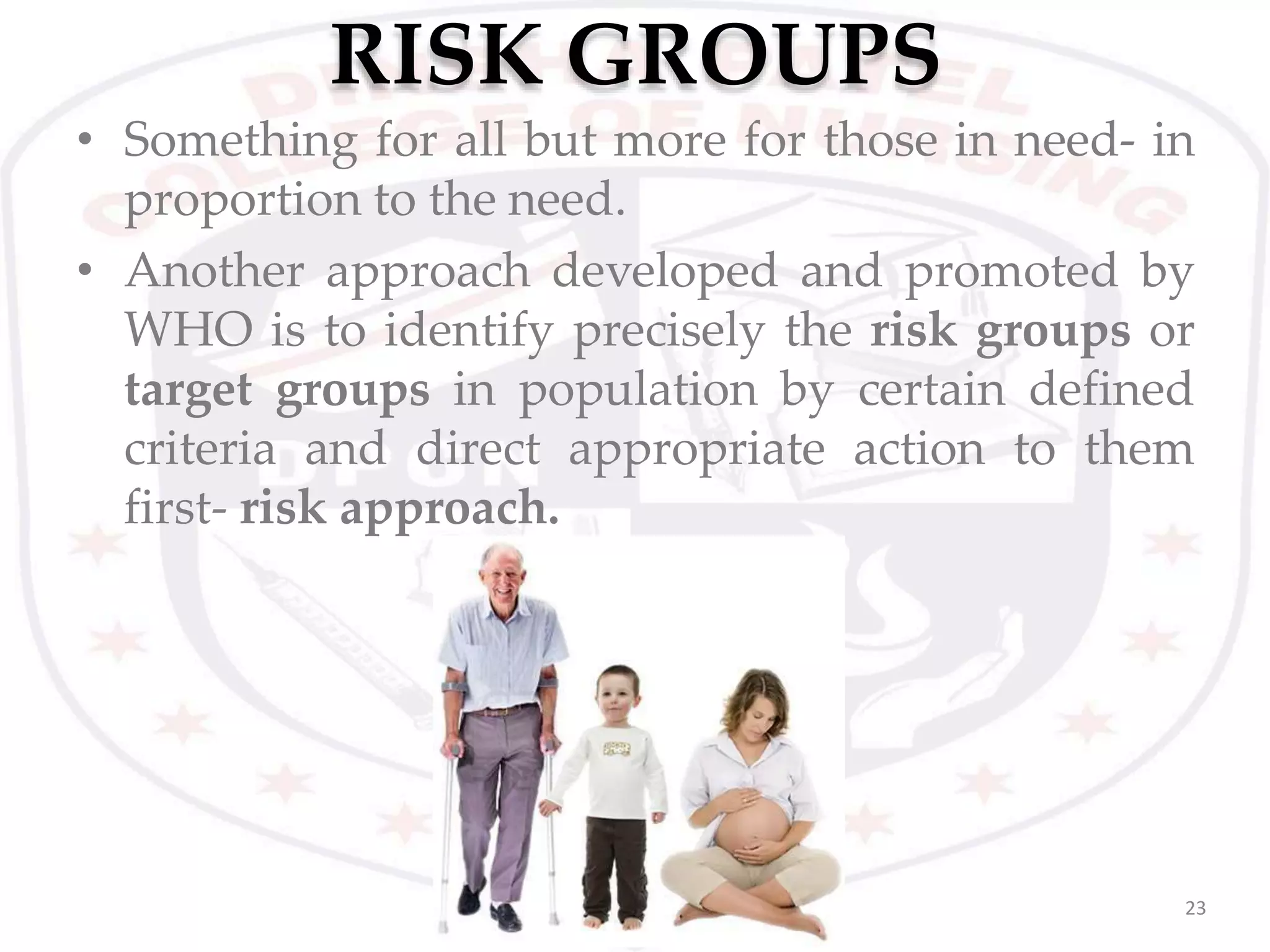
RISK GROUPS
23
• Something for all but more for those in need- in
proportion to the need.
• Another approach developed and promoted by
WHO is to identify precisely the risk groups or
target groups in population by certain defined
criteria and direct appropriate action to them
first- risk approach.
SPECTRUM OF DISEASE
• Graphic representation of variations in the
manifestations of disease.
• Infectious disease – gradient of infection
23
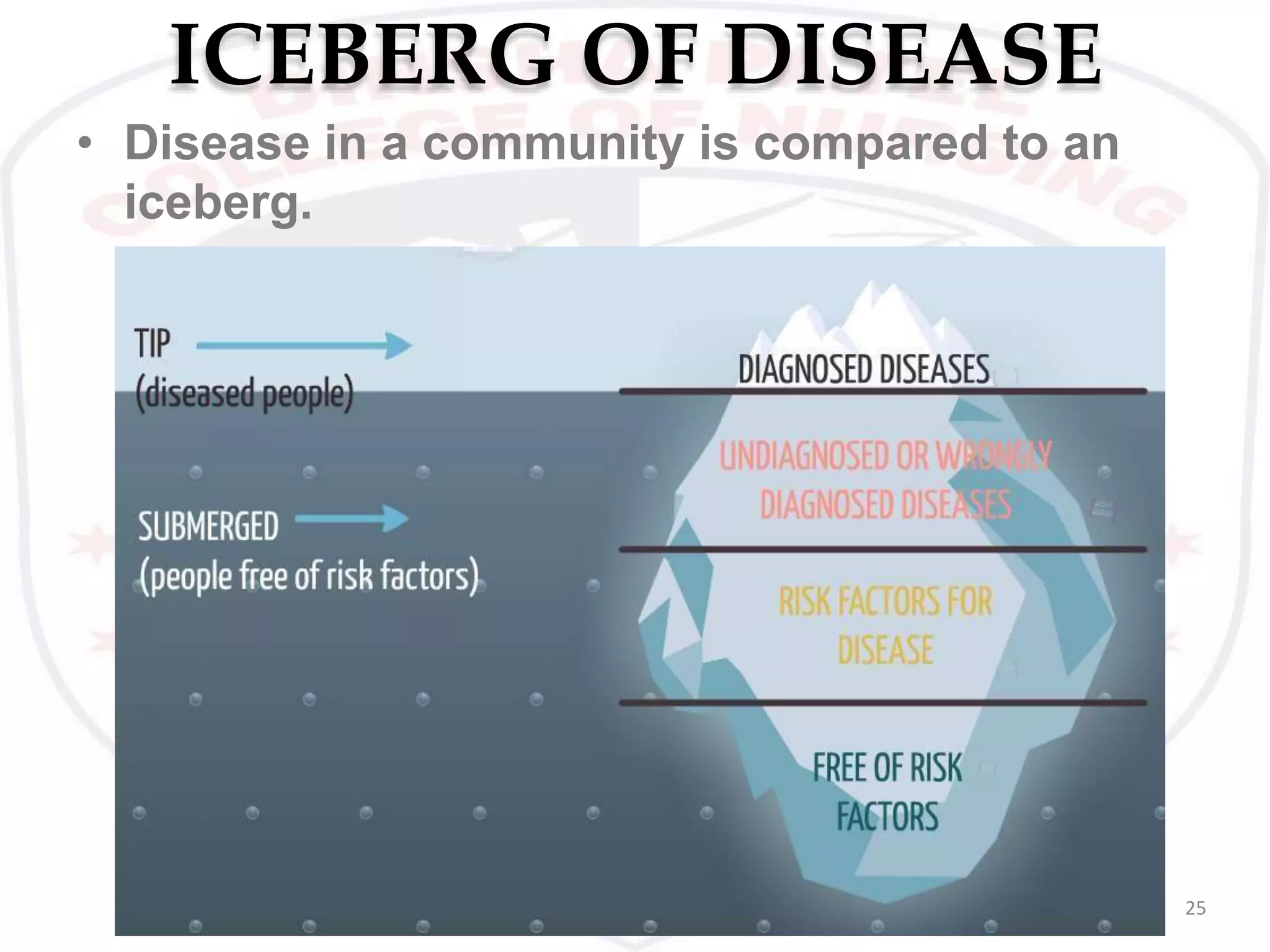
ICEBERG OF DISEASE
25
• Disease in a community is compared to an
iceberg.
CONCEPTS OF CONTROL
26
The term disease control refers ongoing operation
aimed at reducing:
o The incidence of disease.
o The duration of disease and the consequently the
risk of transmission.
o The effect of infection including physical and
psychological complication.
o The financial burden to the community.
•DISEASE ELIMINATION: Reduction of case transmission to a
predetermined very low level or interruption in transmission.
E.g. measles, polio, leprosy from the large geographic region or
area.
• DISEASE ERADICATION: Termination of all transmission of
infection by extermination of the infectious agent through
surveillance and containment. “All or none phenomenon”. E.g.
Small pox.
26
• DISEASE MONITORING:
28
• Defined as “the performance and analysis of routine
measurement aimed at detecting changes in the environment
or health status of population.” e.g. growth monitoring of
child, Monitoring of air pollution, monitoring of water quality
etc.
• DISEASE SURVEILLANCE:
• Defined as “the continuous scrutiny of the factors that
determine the occurrence and distribution of disease and
other conditions of ill health.” E.g. Poliomyelitis surveillance
programme of WHO.
CONCEPTS OF PREVENTION
29
The goals of medicine are to
• Promote health,
• To preserve health,
• To restore health when it is
impaired
• And to minimize suffering and
distress.
These goals are embodied in the word "prevention"
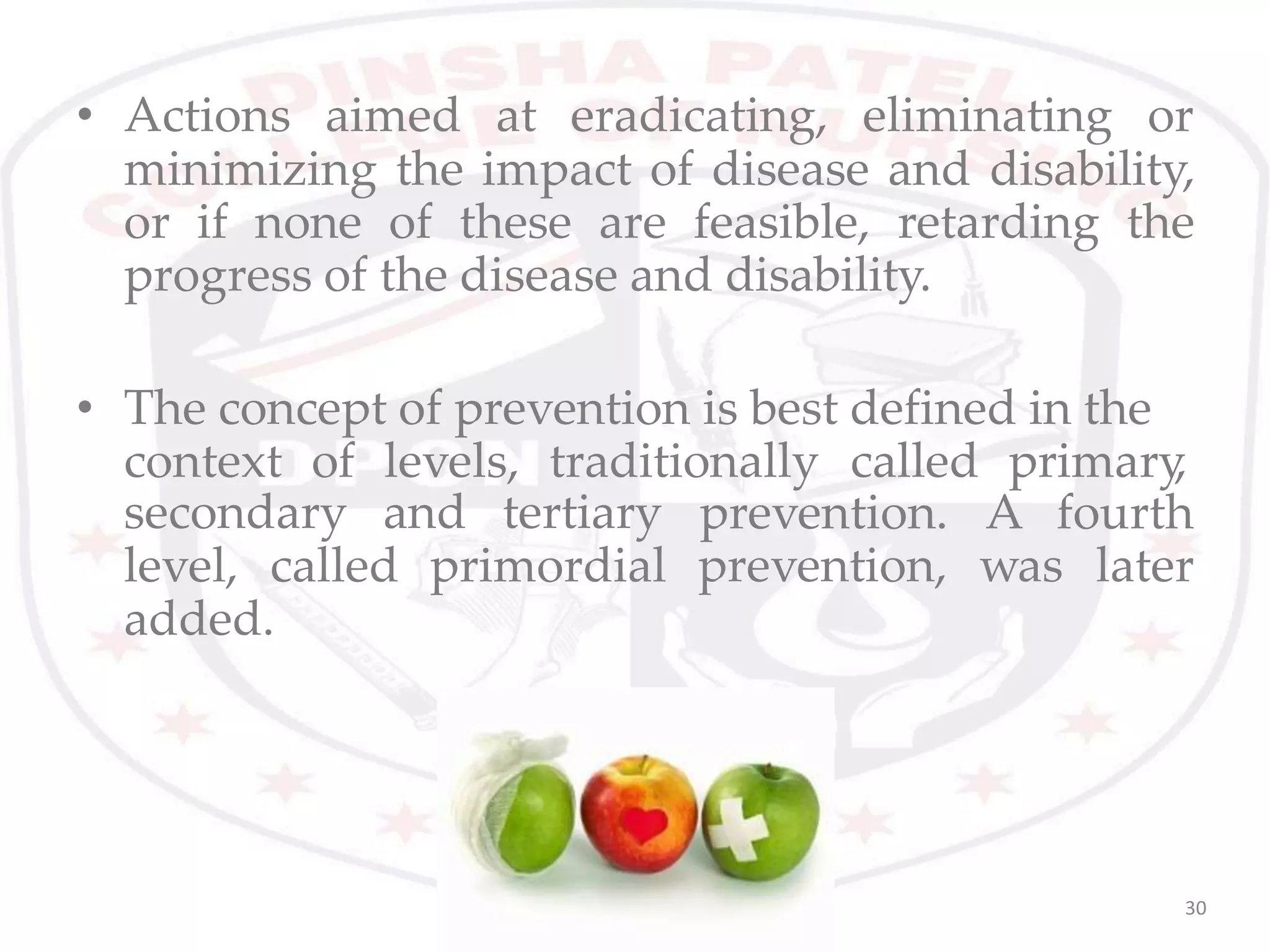
• Actions aimed at eradicating, eliminating or
minimizing the impact of disease and disability,
or if none of these are feasible, retarding the
progress of the disease and disability.
• The concept of prevention is best defined in the
context of levels, traditionally called primary,
secondary and tertiary
level, called primordial
prevention. A fourth
prevention, was later
added.
30
Leavell’s Levels of Prevention
31
Stage of disease Level of prevention Type of response
Pre-disease Primary Prevention Health promotion and
Specific protection
Latent Disease Secondary prevention Pre-symptomatic
Diagnosis and treatment
Symptomatic Disease Tertiary prevention •Disability limitation for
early symptomatic disease
•Rehabilitation for late
Symptomatic disease
PRIMORDIAL PREVENTION
32
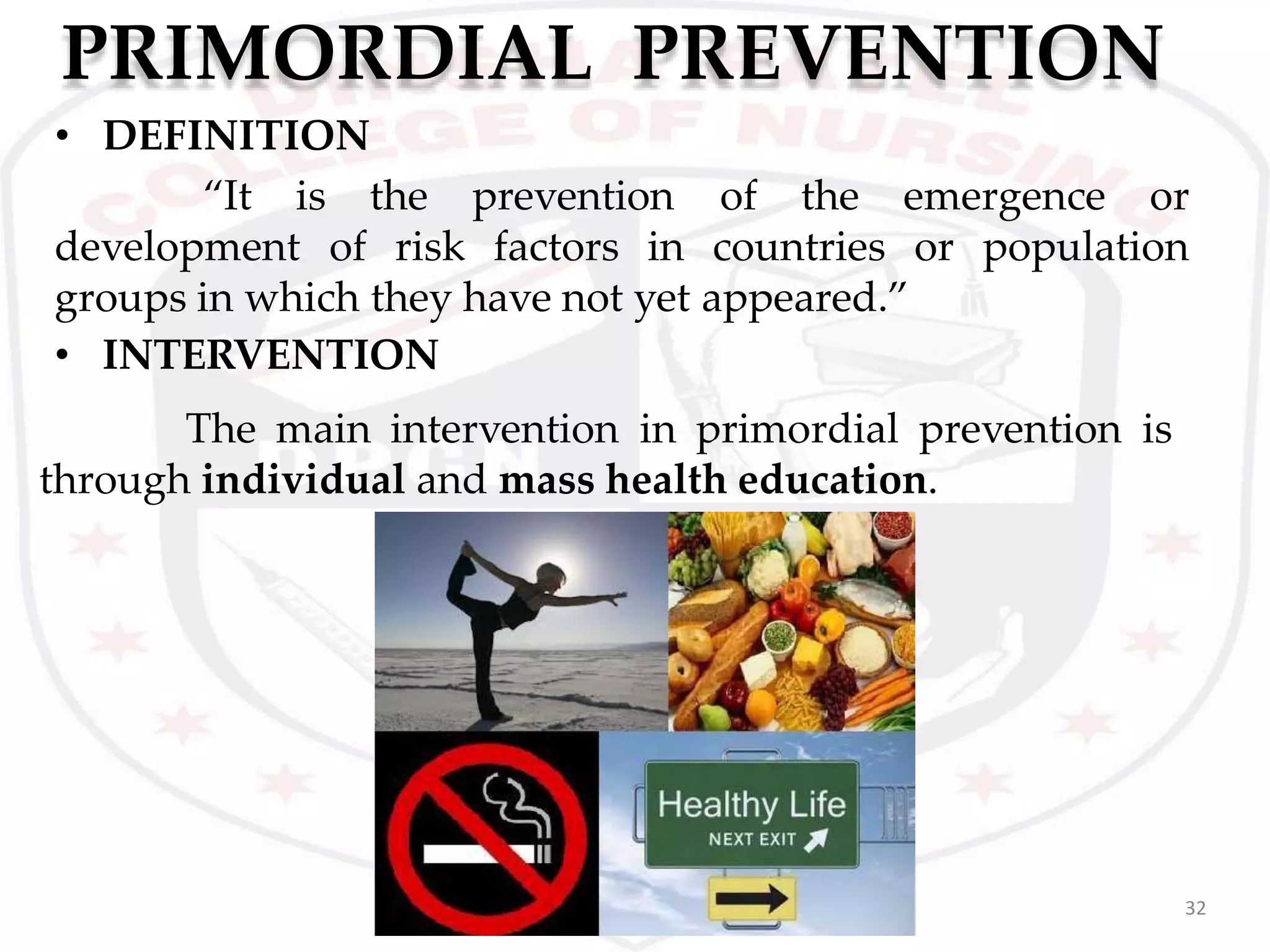
• DEFINITION
“It is
development of
the prevention
risk factors in
of the emergence or
countries or population
groups in which they have not yet appeared.”
• INTERVENTION
The main intervention in primordial prevention is
through individual and mass health education.
PRIMARY PREVENTION
33
•
•
Goal:
• Reduce number of new cases
Rationale:
• By reducing exposure rates and increasing resistance, can reduce number
of new cases
• Target population:
• Those who are most likely to be exposed and/or could increase their
resistance
• Typical activities:
• Remove or reduce source of the risk
• Educate and make aware of disease risk
o Include behavioral changes to reduce exposure
• Improve general health
• Outcome measure: incidence of exposure; incidence of
disease
Primary prevention can be defined as the action
taken prior to the onset of disease, which removes
the possibility that the disease will ever occur.
SECONDARY PREVENTION
34
•
•
Goal:
• Reduce number of new cases; reduce number of severe cases
Rationale:
• By reducing number of exposures and early disease that progress to more
severe disease, mortality and morbidity can be reduced
• Target population:
• Those who have been exposed to the disease-causing agent or have early
symptoms of the disease
• Typical activities:
• Screening for exposure and/or disease
• Post-exposure prophylaxis
• Early treatment to reduce impact of disease/reverse course
• Outcome measure: incidence of disease
Secondary prevention can be defined as the action
which halts the progress of a disease at its incipient
stage and prevents complications.
TERTIARY PREVENTION
35
•
•
r of
Goal:
• Reduce number of complications, deaths
Rationale:
• By reducing disease severity and increasing recovery, can reduce numbe
premature deaths or complications
• Target population:
• Those who have disease and need treatment
• Typical activities:
• Treatment tailored to the patient
• Rehabilitation to promote recovery
• Outcome measure: incidence of death and long-
term disability
Tertiary prevention can be defined as all measures
available to reduce or limit impairments and
disabilities, minimize suffering caused by existing
departures from good health and to promote the
patients adjustment to irremediable conditions.
MODES OF INTERVENTION
36
• Intervention is any attempt to intervene or interrupt the usual
sequence in the development of disease.
• Five modes of intervention corresponding to the natural
history of any disease are:
o Health Promotion
o Specific Protection
o Early Diagnosis and Adequate Treatment
o Disability Limitation
o Rehabilitation
HEALTH PROMOTION
37
• It is the process of enabling people to increase control over
diseases, and to improve their health. It is not directed against
any particular disease but is intended to strengthen the host
through a variety of approaches(interventions):
o Health Education
o Environmental Modifications
o Nutritional Interventions
o Lifestyle and Behavioral Change
SPECIFIC PROTECTION
38
• Some of the currently available interventions aimed at specific
protection are:
 immunization,
 use of specific nutrients,
 chemoprophylaxis,
 protection against accidents,
 protection from carcinogens,
 avoidance of allergens,
 control of specific hazards in general environment .eg air
pollution , noise control
 Control of consumer product quality and safety of foods,drugs
etc
EARLY DIAGNOSIS AND TREATMENT
39
•A WHO defined early detection of health impairment as “the
detection of disturbances of homeostatic and compensatory
mechanism while biochemical, morphological, and functional
changes are still reversible.”
•Early detection and treatment are the main interventions of
disease control.
•Earlier a disease is diagnosed and treated the better it is from
the point of view of prognosis and preventing the occurrence of
further cases or any long-term disability.
•Ex – essential hypertension, cancer of cervix and Breast cancer
DISABILITY LIMITATION
40
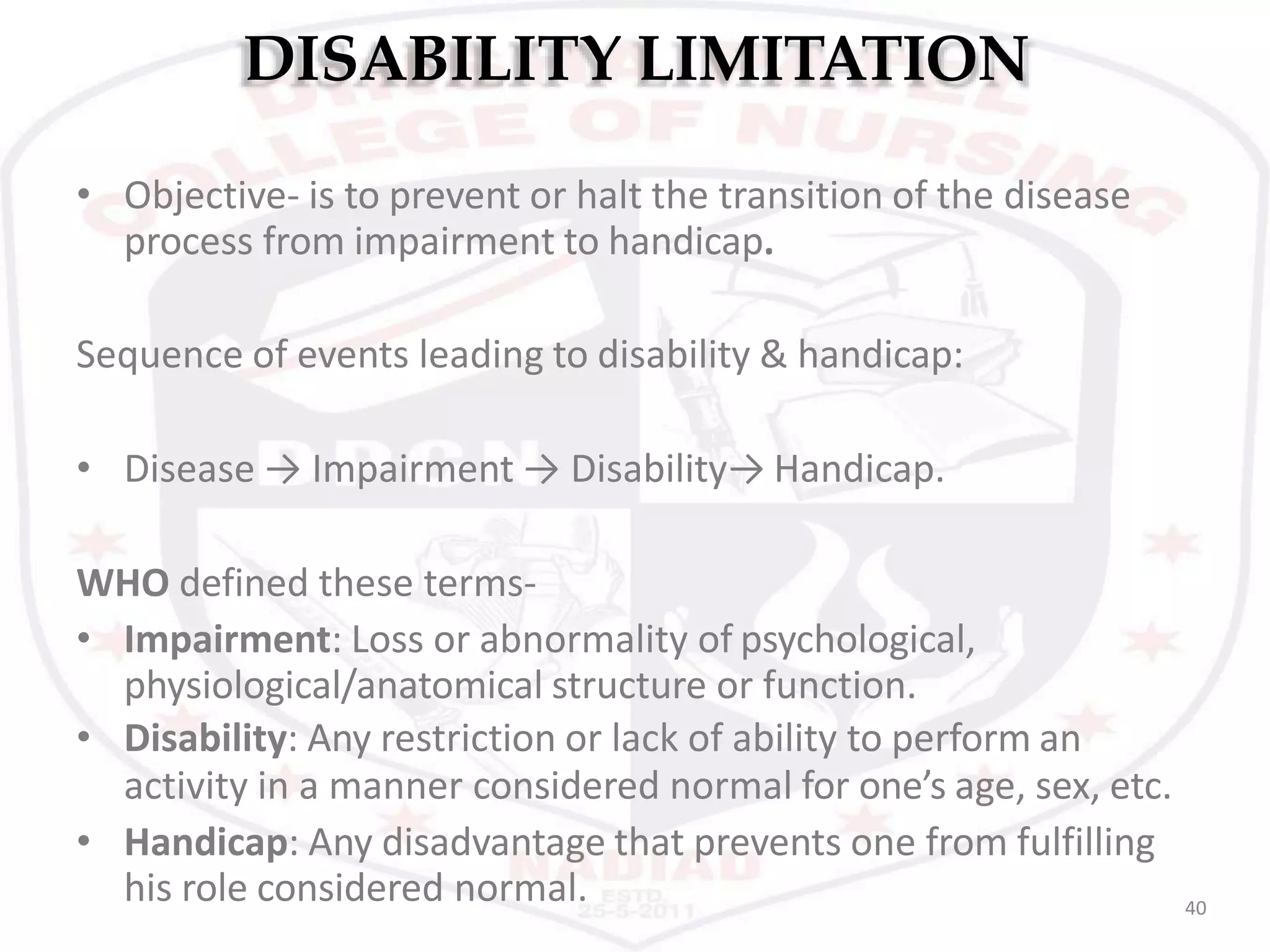
• Objective- is to prevent or halt the transition of the disease
process from impairment to handicap.
Sequence of events leading to disability & handicap:
• Disease → Impairment → Disability→ Handicap.
WHO defined these terms-
• Impairment: Loss or abnormality of psychological,
physiological/anatomical structure or function.
• Disability: Any restriction or lack of ability to perform an
activity in a manner considered normal for one’s age, sex, etc.
• Handicap: Any disadvantage that prevents one from fulfilling
his role considered normal.
REHABILITATION
• retraining the individual to the highest possible
level of functional ability”.
• Areas of concern in rehabilitation:
 Medical rehabilitation (restoration of function),
 Vocational rehabilitation (restoration of the capacity to earn a livelihood),
 Social rehabilitation ( restoration of family and social relationships),
 Psychological rehabilitation (restoration of personal dignity and
• confidence).
41
“combined
educational
and coordinated use of medical, social,
and vocational measures for training and
CHANGING PATTERN OF
DISEASE
42
• Although diseases have not changed significantly
through human history, their patterns have.
• Every decade produces its own patterns of disease.
42
Spanish flu
EPIDEMIOLOGICAL
TRANSITION.
44
• A characteristic shift in the disease pattern of a
population as mortality falls during the
demographic transition: acute, infectious
diseases are reduced, while chronic,
degenerative diseases increase in prominence,
causing a gradual shift in the age pattern of
mortality from younger to older ages. (Omran
1970)
DEVELOPED COUNTRIES
45
• Causes of diseases
have shifted from
and deaths
infectious to
chronic diseases.
Common disease- HEART DISEASE - 23.81%
CANCER-22.95%
CVS- 5.16% .
These 3 together- constitutes about 51.92% of deaths in
US.
OTHERS- Alzheimer's disease, lung cancer, environmental
health problems, and microbial diseases
• DEVELOPING COUNTRIES
• Nation with a low level of material well-being.
• In a typical developing country about 40%of
death are from infectious ,parasite, and
respiratory diseases compared with about
8%in developed countries.
• In India ,as in other developing countries ,most
death result from infectious and parasite
disease, abetted by malnutrition.
46
47
47
DISEASE CLASSIFICATION
49
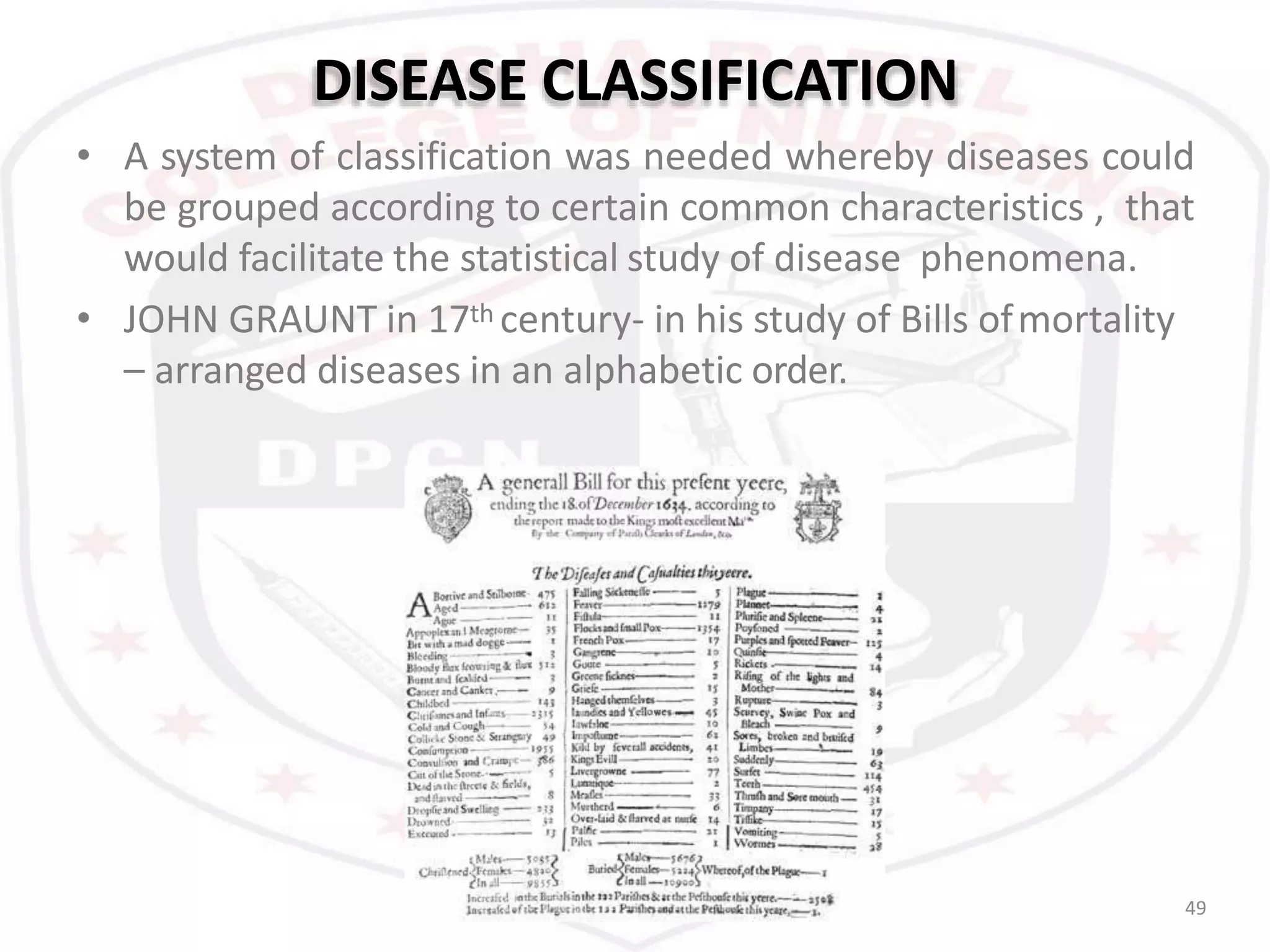
• A system of classification was needed whereby diseases could
be grouped according to certain common characteristics , that
would facilitate the statistical study of disease phenomena.
• JOHN GRAUNT in 17th century- in his study of Bills ofmortality
– arranged diseases in an alphabetic order.
ICD CLASSIFICATION
50
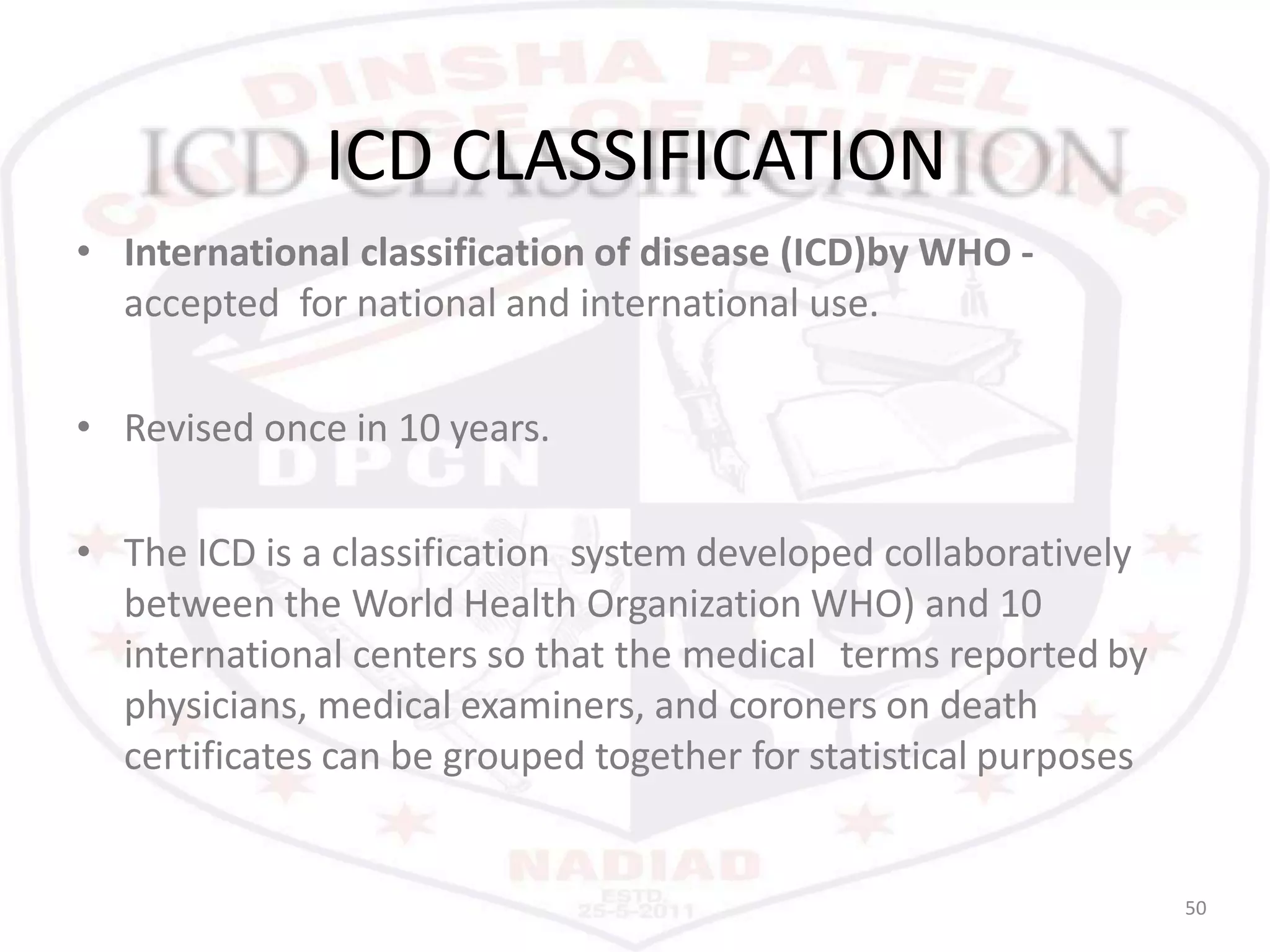
• International classification of disease (ICD)by WHO -
accepted for national and international use.
• Revised once in 10 years.
• The ICD is a classification system developed collaboratively
between the World Health Organization WHO) and 10
international centers so that the medical terms reported by
physicians, medical examiners, and coroners on death
certificates can be grouped together for statistical purposes
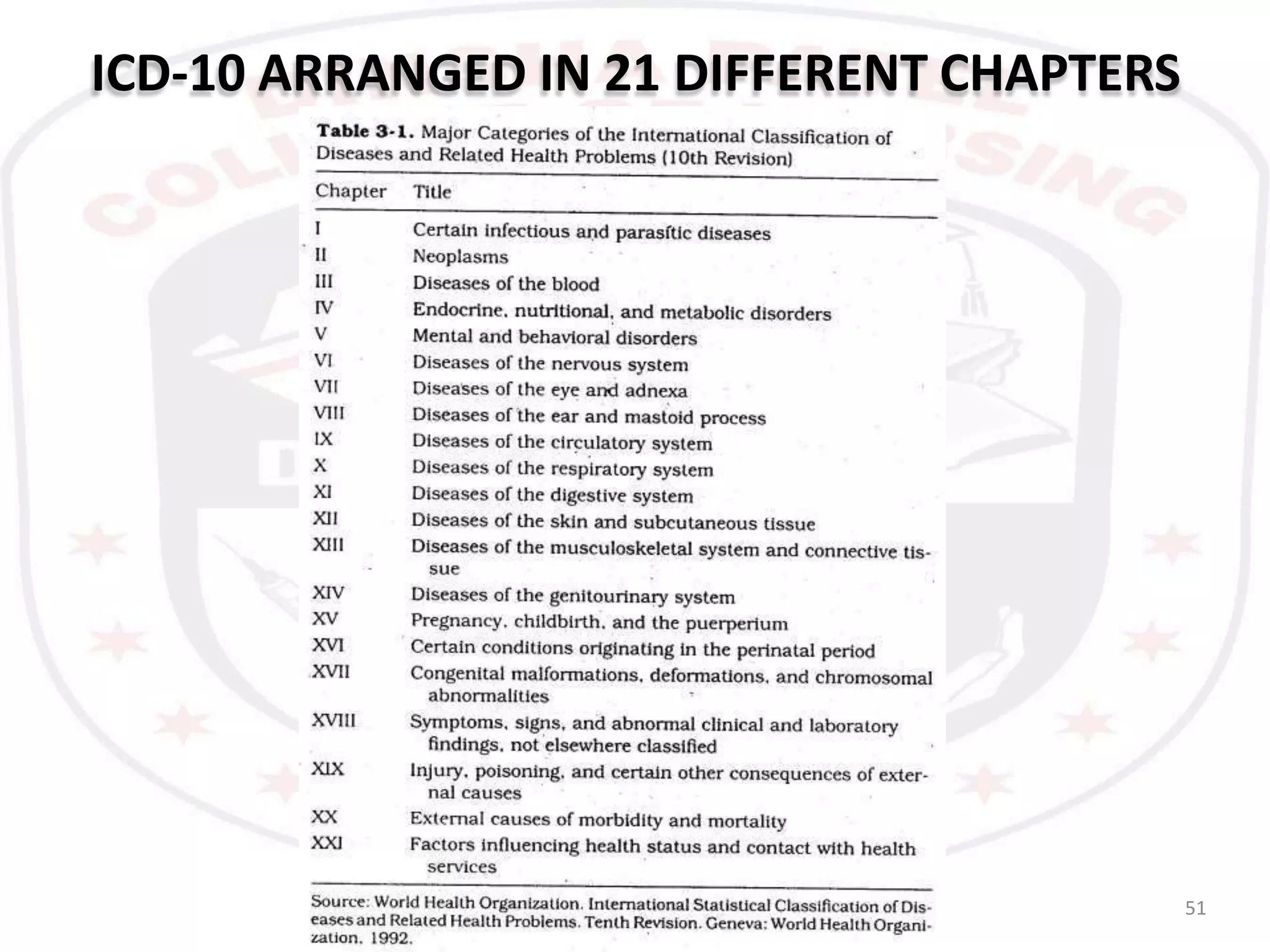
ICD-10 ARRANGED IN 21 DIFFERENT CHAPTERS
51
Why we need disease???
• HAEMOCHROMATOSIS - BUBONIC PLAGUE
• DIABETES - YOUNGER DRYAS
• FAVISM - MALARIA
51
Natural selection is maintaining this
genetic defect because it had conferred
some benefit in the past.
CONCLUSION
53
• Understanding disease pathology is the
first step towards formulating preventive
measures.
• As a dentist or public health worker it is
our primary responsibility for the
prevention of diseases in community as
well as individual.
REFERENCES
54
• Park, Park’s Textbook of Preventive &Social Medicine, 22nd
Edition, Jabalpur: Banarsidas Bhanot,2013.
• Soben Peter. Essentials of Public Health Dentistry. 4th ed.
New Delhi: Arya Publising House; 2013.
• Epidemiology, L. Gordis, Fourth ed, 2009, Saunders
• Moalem, S., & Prince, J. (2007). Survival of the sickest: A
medical maverick discovers why we need disease. NewYork:
William Morrow.
Thank You !

Concepts of disease

  • 1.
    PRESENTED BY, MR. KAILASHNAGAR ASSIST. PROF. DEPT. OF COMMUNITY HEALTH NSG. DINSHA PATEL COLLEGE OF NURSING, NADIAD
  • 2.
  • 3.
    CONTENTS 3 • INTRODUCTION • CONCEPTSOF DISEASE • CONCEPTS OF CAUSATION • NATURAL HISTORY OF DISEASE • CONCEPTS OF CONTROL • CONCEPTS OF PREVENTION • CHANGING PATTERN OF DISEASE • DISEASE CLASSIFICATION • CONCLUSION
  • 4.
    INTRODUCTION • The conceptof disease has been the subject of a vast, vivid and versatile debate. • Disease is a central notion to modern health care, it effects society and is important to the process of discovering and identifying disease entities. 4
  • 5.
    CONCEPTS OF DISEASE 4 DEFINITIONS “Aconditionin which body function is impaired, departure from a state of health, an alteration of the human body interrupting the performance of the vital functions.” “The condition of body or some part of organ of body in which its functions are disrupted or deranged.” “Disease is considered a social phenomenon, occuring in all societies and defined and fought in terms of the particular cultural forces prevalent in the society.” ‘a maladjustment of human organism to the environment’
  • 6.
    TO KEEP ITSIMPLE Simplest definition – OPPOSITE TO HEALTH . 5 Any deviation from normal functioning or state of complete physical or mental well-being.
  • 7.
    DISEASE ILLNESS SICKNESS 6 DISEASEis a physiological/ psychological dysfunction. ILLNESS is a subjective state of the person who feels aware of not being well. SICKNESS is a state of social dysfunction i.e. a role that the individual assumes when ill (sickness role).
  • 8.
    Discovery of microbiology- turningpoint • GERM THEORY OF DISEASE • Microbes as sole cause of disease 7 CONCEPT OF CAUSATION EARLIER THEORIES • Supernatural theory • Theory of Humors • Concept of contagion • Miasmatic theory • Theory of spontaneous generation
  • 9.
    EPIDEMIOLOGICAL TRIAD • Factorsrelating host and environment • Mission of epidemiology – break one of the legs of triangle and disrupt the connection between these and thereby stopping outbreak. 8
  • 10.
    THE TETRAD OFEPIDEMIOLOGY 10
  • 11.
    MULTIFACTORIAL CAUSATION 11 • CONCEPT-disease is due to multiple factors and not a single one. • PETTENKOFER OF MUNICH(1819-1901)-early proponent of this concept. “Germ theory of disease "or “single cause idea "in late 19 century overshadowed the multiple cause theory.
  • 12.
    11 Causative Factors Groups or populations andtheir characteristics Environment behaviour, culture physiological factors ecological elements TIME ADVANCED MODEL OF THE TRIANGLE OF EPIDEMIOLOGY
  • 13.
    WEB OF CAUSATION 13 •Suggested by- Mac Mahon and Pugh • Considers all the predisposing factors of any type and their complex interaction with each other.
  • 14.
    41 Changes in lifestyle Stress Obesity HTN Smoking Emotional stress Aging Changes in the walls of arteries Coronary Occlusion Myocardial ischemia Hyperlipidemia Coronary Atherosclerosis Myocardial Ischemia Fig: Web of causation of MI 14
  • 15.
    NATURAL HISTORY OFDISEASE 15 It refers to the progress of a disease process in an individual over time, in the absence of intervention. • History of disease is a key concept in epidemiology.
  • 16.
  • 17.
    PRE PATHOGENESIS PHASE 17 •Disease agent has not entered man, but factors favouring disease exist in the environment. • What required is an interaction of these factors to initiate the disease process. Agent Host Environment
  • 18.
    PATHOGENESIS PHASE 18 • Entryof disease agent in susceptible human host. • Disease agent multiplies and induces tissue and physiological changes. • final outcome- recovery, disability or death. • This phase may be modified by intervention measures such as immunization, chemotherapy
  • 19.
    AGENT FACTORS 18 Substance livingor non living , or a force, tangible or intangible, the excessive presence or relative lack of which may initiate or perpetuate a disease process. Pathogenicity Virulence1. Biological Agents – Infectivity 2. Nutrient 3. Physical 4. Chemical 5. Mechanical 6. Absence or insufficiency of a factor 7. Social
  • 20.
    HOST FACTORS • Host- SOIL Disease agent – SEED Classified as • Demographic characteristics • Biologic • Social & Economic • Lifestyle factors 19
  • 21.
    ENVIRONMENTAL FACTORS • Allthat which is external to the individual human host, living and non-living, and with which he is in constant interaction. -Macro-environment (external) • Physical • Biological • Psycho social 20
  • 22.
    RISK FACTORS 22 • Wherethe disease agent is not established, the is generally in terms of risk firmly aetiology discussed factors. • The term risk factor by different authors is used with at least two meanings-  An attribute or significantly exposure that is associated with development of disease.  A determinant that can be modified by intervention, thereby reducing the possibility of occurrence of disease or other specified outcomes.
  • 23.
    RISK GROUPS 23 • Somethingfor all but more for those in need- in proportion to the need. • Another approach developed and promoted by WHO is to identify precisely the risk groups or target groups in population by certain defined criteria and direct appropriate action to them first- risk approach.
  • 24.
    SPECTRUM OF DISEASE •Graphic representation of variations in the manifestations of disease. • Infectious disease – gradient of infection 23
  • 25.
    ICEBERG OF DISEASE 25 •Disease in a community is compared to an iceberg.
  • 26.
    CONCEPTS OF CONTROL 26 Theterm disease control refers ongoing operation aimed at reducing: o The incidence of disease. o The duration of disease and the consequently the risk of transmission. o The effect of infection including physical and psychological complication. o The financial burden to the community.
  • 27.
    •DISEASE ELIMINATION: Reductionof case transmission to a predetermined very low level or interruption in transmission. E.g. measles, polio, leprosy from the large geographic region or area. • DISEASE ERADICATION: Termination of all transmission of infection by extermination of the infectious agent through surveillance and containment. “All or none phenomenon”. E.g. Small pox. 26
  • 28.
    • DISEASE MONITORING: 28 •Defined as “the performance and analysis of routine measurement aimed at detecting changes in the environment or health status of population.” e.g. growth monitoring of child, Monitoring of air pollution, monitoring of water quality etc. • DISEASE SURVEILLANCE: • Defined as “the continuous scrutiny of the factors that determine the occurrence and distribution of disease and other conditions of ill health.” E.g. Poliomyelitis surveillance programme of WHO.
  • 29.
    CONCEPTS OF PREVENTION 29 Thegoals of medicine are to • Promote health, • To preserve health, • To restore health when it is impaired • And to minimize suffering and distress. These goals are embodied in the word "prevention"
  • 30.
    • Actions aimedat eradicating, eliminating or minimizing the impact of disease and disability, or if none of these are feasible, retarding the progress of the disease and disability. • The concept of prevention is best defined in the context of levels, traditionally called primary, secondary and tertiary level, called primordial prevention. A fourth prevention, was later added. 30
  • 31.
    Leavell’s Levels ofPrevention 31 Stage of disease Level of prevention Type of response Pre-disease Primary Prevention Health promotion and Specific protection Latent Disease Secondary prevention Pre-symptomatic Diagnosis and treatment Symptomatic Disease Tertiary prevention •Disability limitation for early symptomatic disease •Rehabilitation for late Symptomatic disease
  • 32.
    PRIMORDIAL PREVENTION 32 • DEFINITION “Itis development of the prevention risk factors in of the emergence or countries or population groups in which they have not yet appeared.” • INTERVENTION The main intervention in primordial prevention is through individual and mass health education.
  • 33.
    PRIMARY PREVENTION 33 • • Goal: • Reducenumber of new cases Rationale: • By reducing exposure rates and increasing resistance, can reduce number of new cases • Target population: • Those who are most likely to be exposed and/or could increase their resistance • Typical activities: • Remove or reduce source of the risk • Educate and make aware of disease risk o Include behavioral changes to reduce exposure • Improve general health • Outcome measure: incidence of exposure; incidence of disease Primary prevention can be defined as the action taken prior to the onset of disease, which removes the possibility that the disease will ever occur.
  • 34.
    SECONDARY PREVENTION 34 • • Goal: • Reducenumber of new cases; reduce number of severe cases Rationale: • By reducing number of exposures and early disease that progress to more severe disease, mortality and morbidity can be reduced • Target population: • Those who have been exposed to the disease-causing agent or have early symptoms of the disease • Typical activities: • Screening for exposure and/or disease • Post-exposure prophylaxis • Early treatment to reduce impact of disease/reverse course • Outcome measure: incidence of disease Secondary prevention can be defined as the action which halts the progress of a disease at its incipient stage and prevents complications.
  • 35.
    TERTIARY PREVENTION 35 • • r of Goal: •Reduce number of complications, deaths Rationale: • By reducing disease severity and increasing recovery, can reduce numbe premature deaths or complications • Target population: • Those who have disease and need treatment • Typical activities: • Treatment tailored to the patient • Rehabilitation to promote recovery • Outcome measure: incidence of death and long- term disability Tertiary prevention can be defined as all measures available to reduce or limit impairments and disabilities, minimize suffering caused by existing departures from good health and to promote the patients adjustment to irremediable conditions.
  • 36.
    MODES OF INTERVENTION 36 •Intervention is any attempt to intervene or interrupt the usual sequence in the development of disease. • Five modes of intervention corresponding to the natural history of any disease are: o Health Promotion o Specific Protection o Early Diagnosis and Adequate Treatment o Disability Limitation o Rehabilitation
  • 37.
    HEALTH PROMOTION 37 • Itis the process of enabling people to increase control over diseases, and to improve their health. It is not directed against any particular disease but is intended to strengthen the host through a variety of approaches(interventions): o Health Education o Environmental Modifications o Nutritional Interventions o Lifestyle and Behavioral Change
  • 38.
    SPECIFIC PROTECTION 38 • Someof the currently available interventions aimed at specific protection are:  immunization,  use of specific nutrients,  chemoprophylaxis,  protection against accidents,  protection from carcinogens,  avoidance of allergens,  control of specific hazards in general environment .eg air pollution , noise control  Control of consumer product quality and safety of foods,drugs etc
  • 39.
    EARLY DIAGNOSIS ANDTREATMENT 39 •A WHO defined early detection of health impairment as “the detection of disturbances of homeostatic and compensatory mechanism while biochemical, morphological, and functional changes are still reversible.” •Early detection and treatment are the main interventions of disease control. •Earlier a disease is diagnosed and treated the better it is from the point of view of prognosis and preventing the occurrence of further cases or any long-term disability. •Ex – essential hypertension, cancer of cervix and Breast cancer
  • 40.
    DISABILITY LIMITATION 40 • Objective-is to prevent or halt the transition of the disease process from impairment to handicap. Sequence of events leading to disability & handicap: • Disease → Impairment → Disability→ Handicap. WHO defined these terms- • Impairment: Loss or abnormality of psychological, physiological/anatomical structure or function. • Disability: Any restriction or lack of ability to perform an activity in a manner considered normal for one’s age, sex, etc. • Handicap: Any disadvantage that prevents one from fulfilling his role considered normal.
  • 41.
    REHABILITATION • retraining theindividual to the highest possible level of functional ability”. • Areas of concern in rehabilitation:  Medical rehabilitation (restoration of function),  Vocational rehabilitation (restoration of the capacity to earn a livelihood),  Social rehabilitation ( restoration of family and social relationships),  Psychological rehabilitation (restoration of personal dignity and • confidence). 41 “combined educational and coordinated use of medical, social, and vocational measures for training and
  • 42.
    CHANGING PATTERN OF DISEASE 42 •Although diseases have not changed significantly through human history, their patterns have. • Every decade produces its own patterns of disease.
  • 43.
  • 44.
    EPIDEMIOLOGICAL TRANSITION. 44 • A characteristicshift in the disease pattern of a population as mortality falls during the demographic transition: acute, infectious diseases are reduced, while chronic, degenerative diseases increase in prominence, causing a gradual shift in the age pattern of mortality from younger to older ages. (Omran 1970)
  • 45.
    DEVELOPED COUNTRIES 45 • Causesof diseases have shifted from and deaths infectious to chronic diseases. Common disease- HEART DISEASE - 23.81% CANCER-22.95% CVS- 5.16% . These 3 together- constitutes about 51.92% of deaths in US. OTHERS- Alzheimer's disease, lung cancer, environmental health problems, and microbial diseases
  • 46.
    • DEVELOPING COUNTRIES •Nation with a low level of material well-being. • In a typical developing country about 40%of death are from infectious ,parasite, and respiratory diseases compared with about 8%in developed countries. • In India ,as in other developing countries ,most death result from infectious and parasite disease, abetted by malnutrition. 46
  • 47.
  • 48.
  • 49.
    DISEASE CLASSIFICATION 49 • Asystem of classification was needed whereby diseases could be grouped according to certain common characteristics , that would facilitate the statistical study of disease phenomena. • JOHN GRAUNT in 17th century- in his study of Bills ofmortality – arranged diseases in an alphabetic order.
  • 50.
    ICD CLASSIFICATION 50 • Internationalclassification of disease (ICD)by WHO - accepted for national and international use. • Revised once in 10 years. • The ICD is a classification system developed collaboratively between the World Health Organization WHO) and 10 international centers so that the medical terms reported by physicians, medical examiners, and coroners on death certificates can be grouped together for statistical purposes
  • 51.
    ICD-10 ARRANGED IN21 DIFFERENT CHAPTERS 51
  • 52.
    Why we needdisease??? • HAEMOCHROMATOSIS - BUBONIC PLAGUE • DIABETES - YOUNGER DRYAS • FAVISM - MALARIA 51 Natural selection is maintaining this genetic defect because it had conferred some benefit in the past.
  • 53.
    CONCLUSION 53 • Understanding diseasepathology is the first step towards formulating preventive measures. • As a dentist or public health worker it is our primary responsibility for the prevention of diseases in community as well as individual.
  • 54.
    REFERENCES 54 • Park, Park’sTextbook of Preventive &Social Medicine, 22nd Edition, Jabalpur: Banarsidas Bhanot,2013. • Soben Peter. Essentials of Public Health Dentistry. 4th ed. New Delhi: Arya Publising House; 2013. • Epidemiology, L. Gordis, Fourth ed, 2009, Saunders • Moalem, S., & Prince, J. (2007). Survival of the sickest: A medical maverick discovers why we need disease. NewYork: William Morrow.
  • 55.