By
Dr. Kuldeep Bauddh
Assistant Professor, Department of
Environmental Sciences
Central University of Jharkhand, Ranchi-835205
Environment: concept, types and components
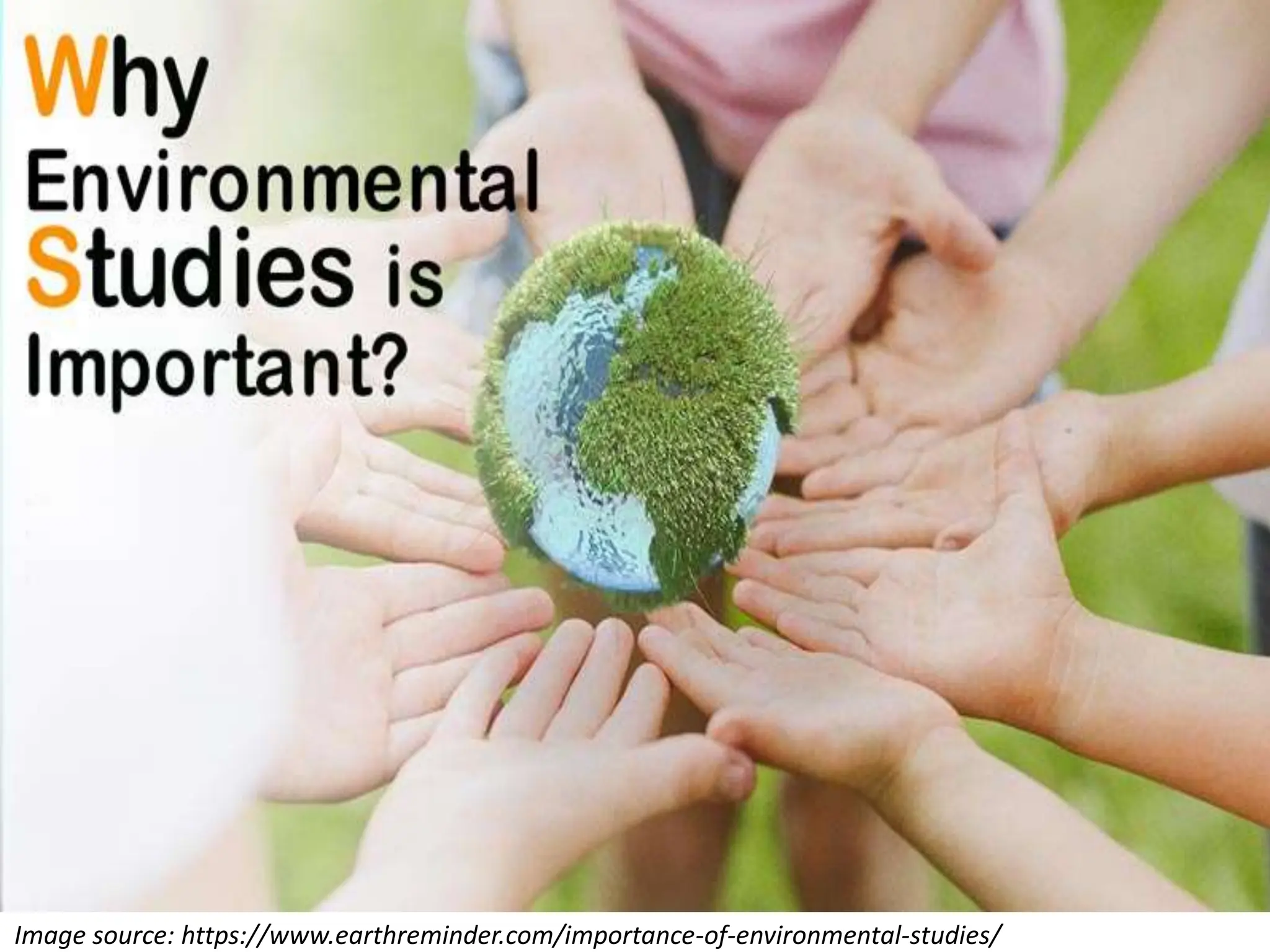
Image source: https://www.earthreminder.com/importance-of-environmental-studies/
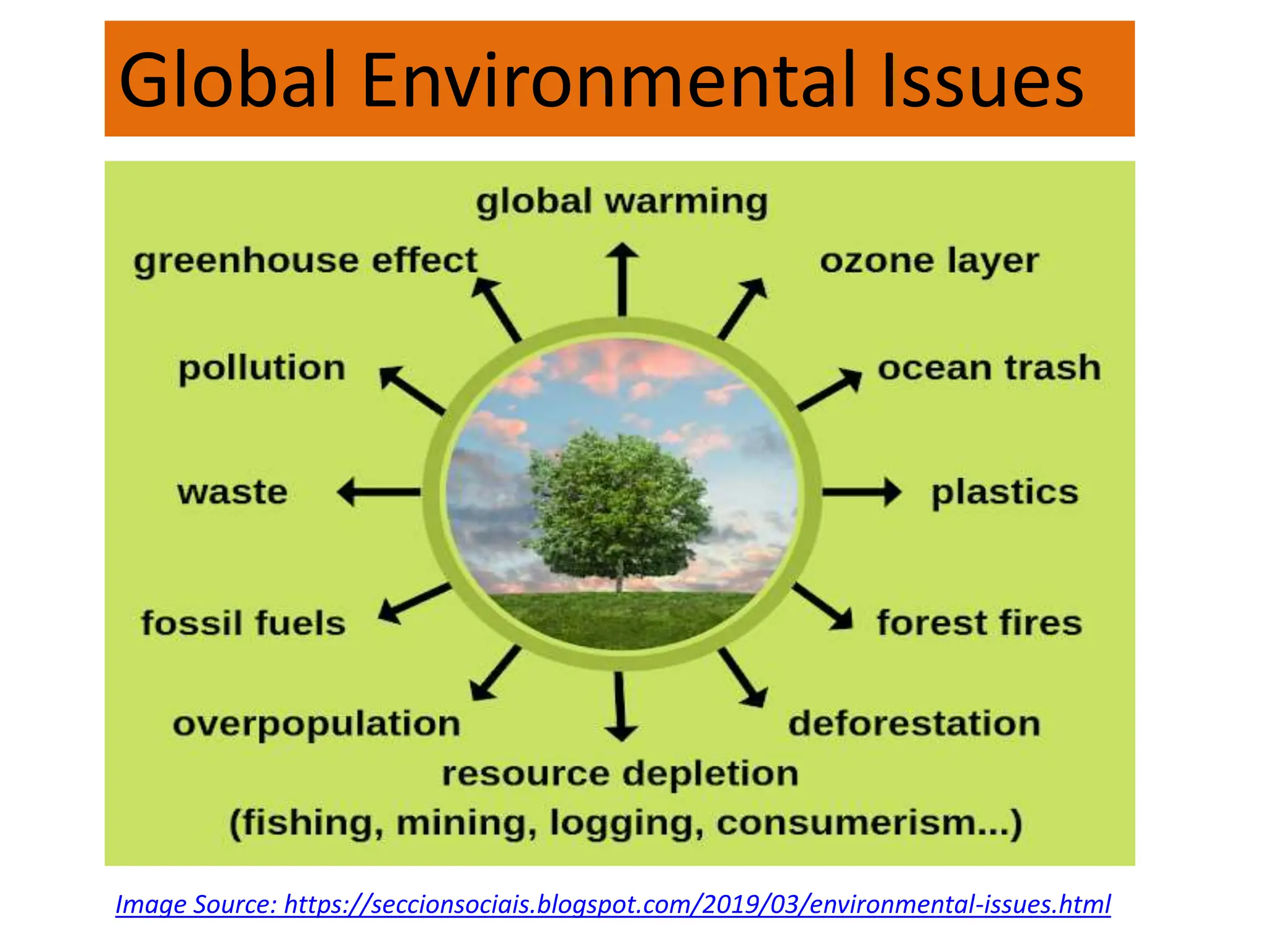
Global Environmental Issues
Image Source: https://seccionsociais.blogspot.com/2019/03/environmental-issues.html
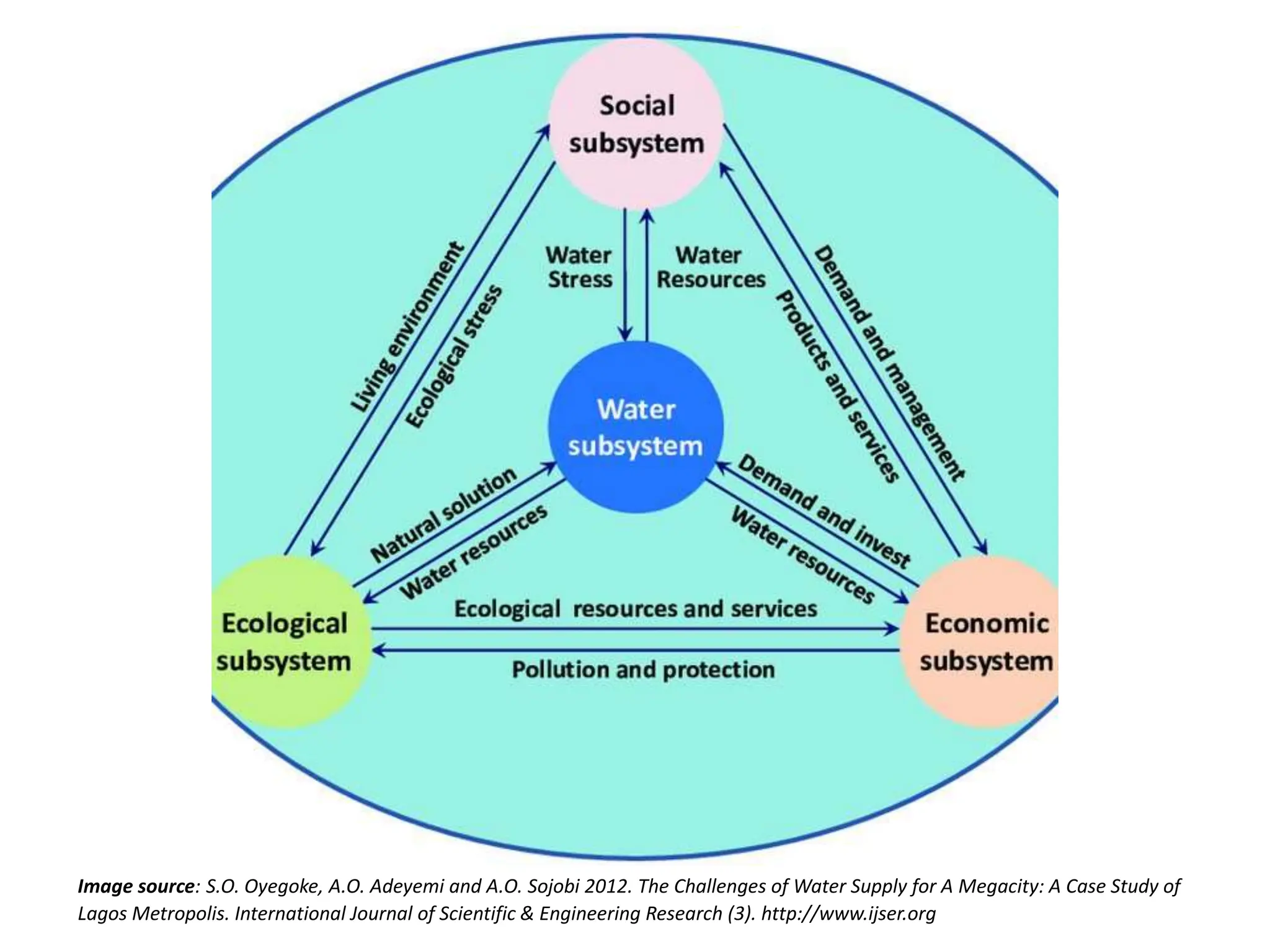
Image source: S.O. Oyegoke, A.O. Adeyemi and A.O. Sojobi 2012. The Challenges of Water Supply for A Megacity: A Case Study of
Lagos Metropolis. International Journal of Scientific & Engineering Research (3). http://www.ijser.org
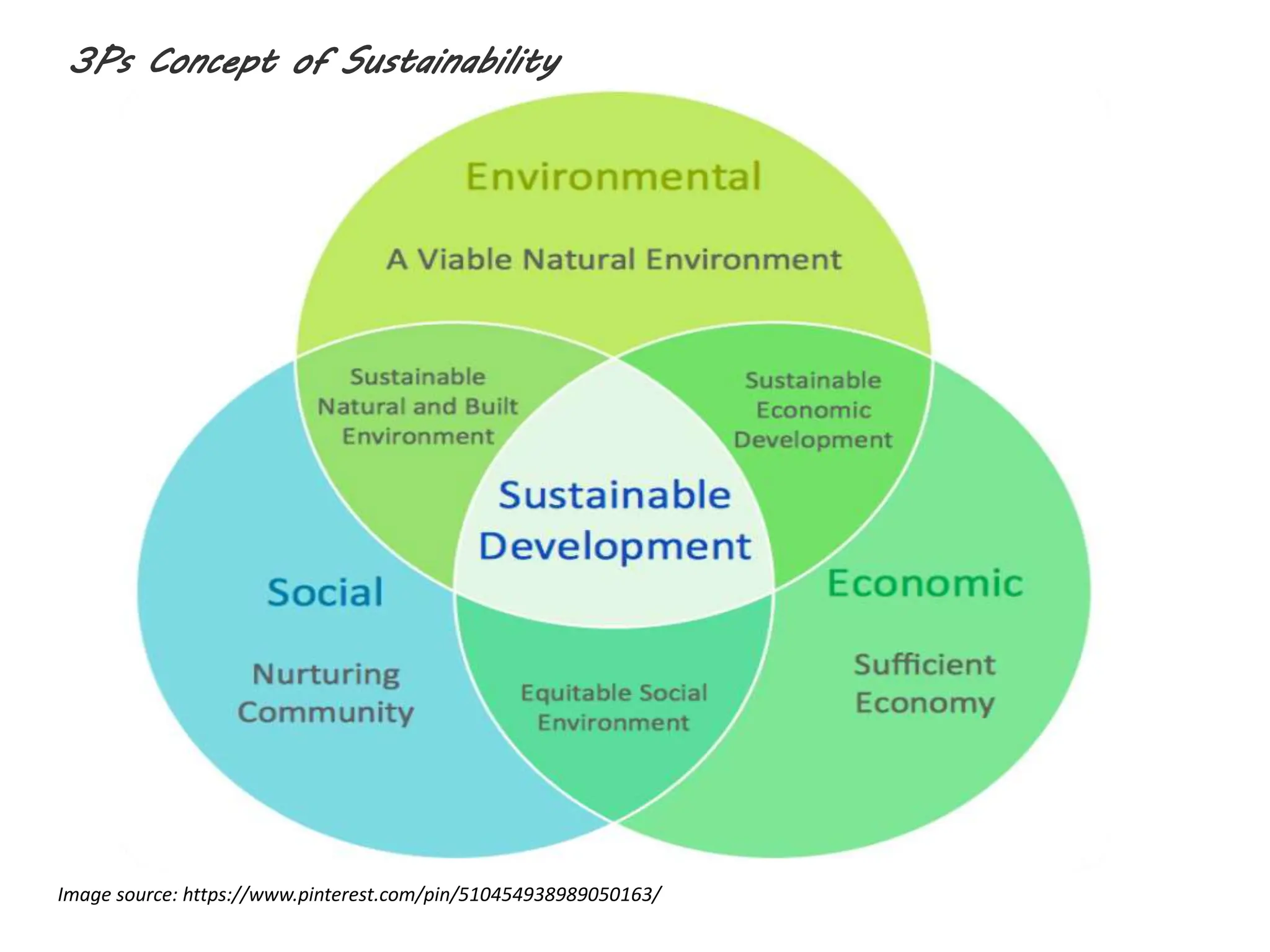
Image source: https://www.pinterest.com/pin/510454938989050163/
3Ps Concept of Sustainability
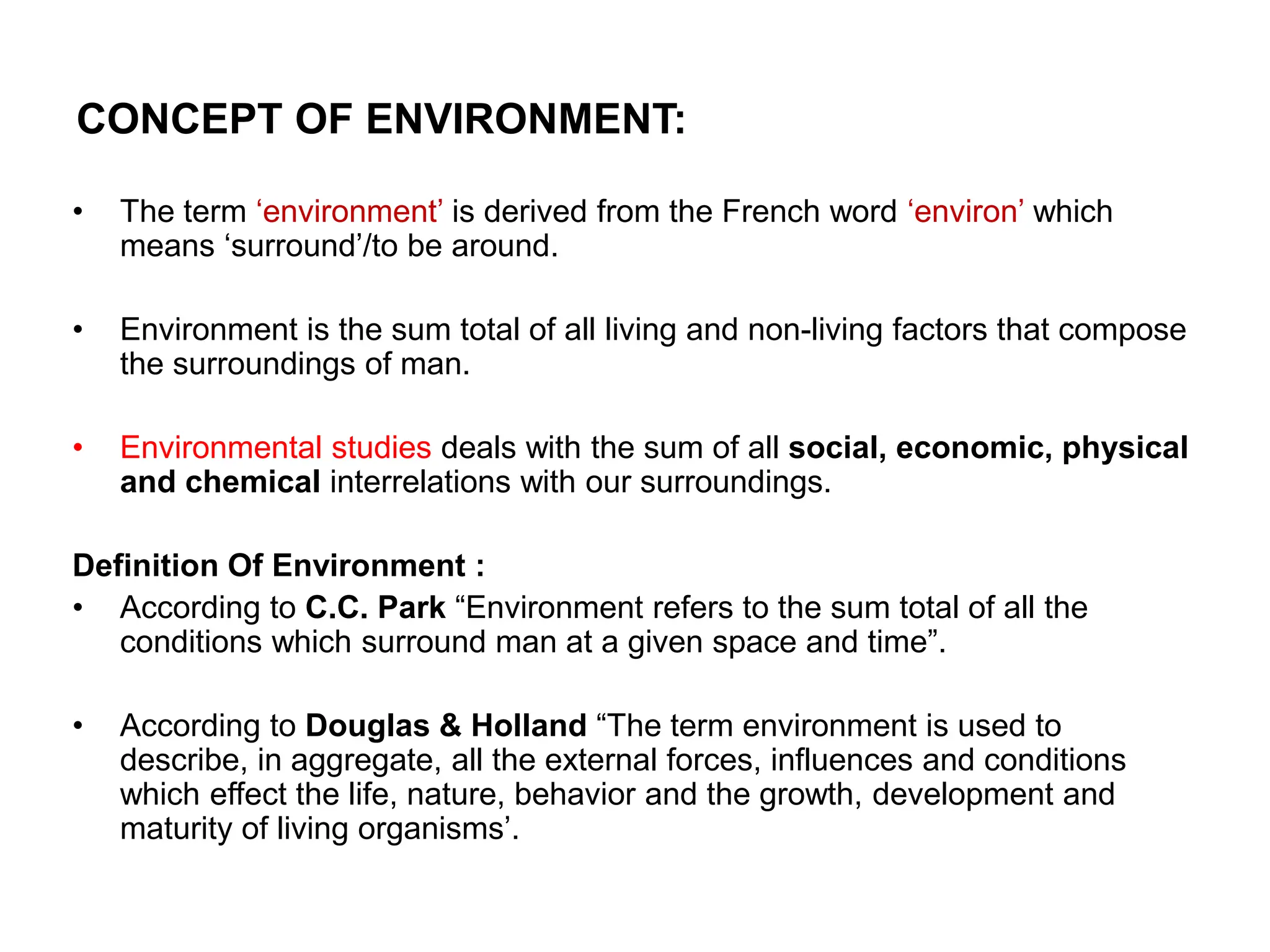
CONCEPT OF ENVIRONMENT:
• The term ‘environment’ is derived from the French word ‘environ’ which
means ‘surround’/to be around.
• Environment is the sum total of all living and non-living factors that compose
the surroundings of man.
• Environmental studies deals with the sum of all social, economic, physical
and chemical interrelations with our surroundings.
Definition Of Environment :
• According to C.C. Park “Environment refers to the sum total of all the
conditions which surround man at a given space and time”.
• According to Douglas & Holland “The term environment is used to
describe, in aggregate, all the external forces, influences and conditions
which effect the life, nature, behavior and the growth, development and
maturity of living organisms’.
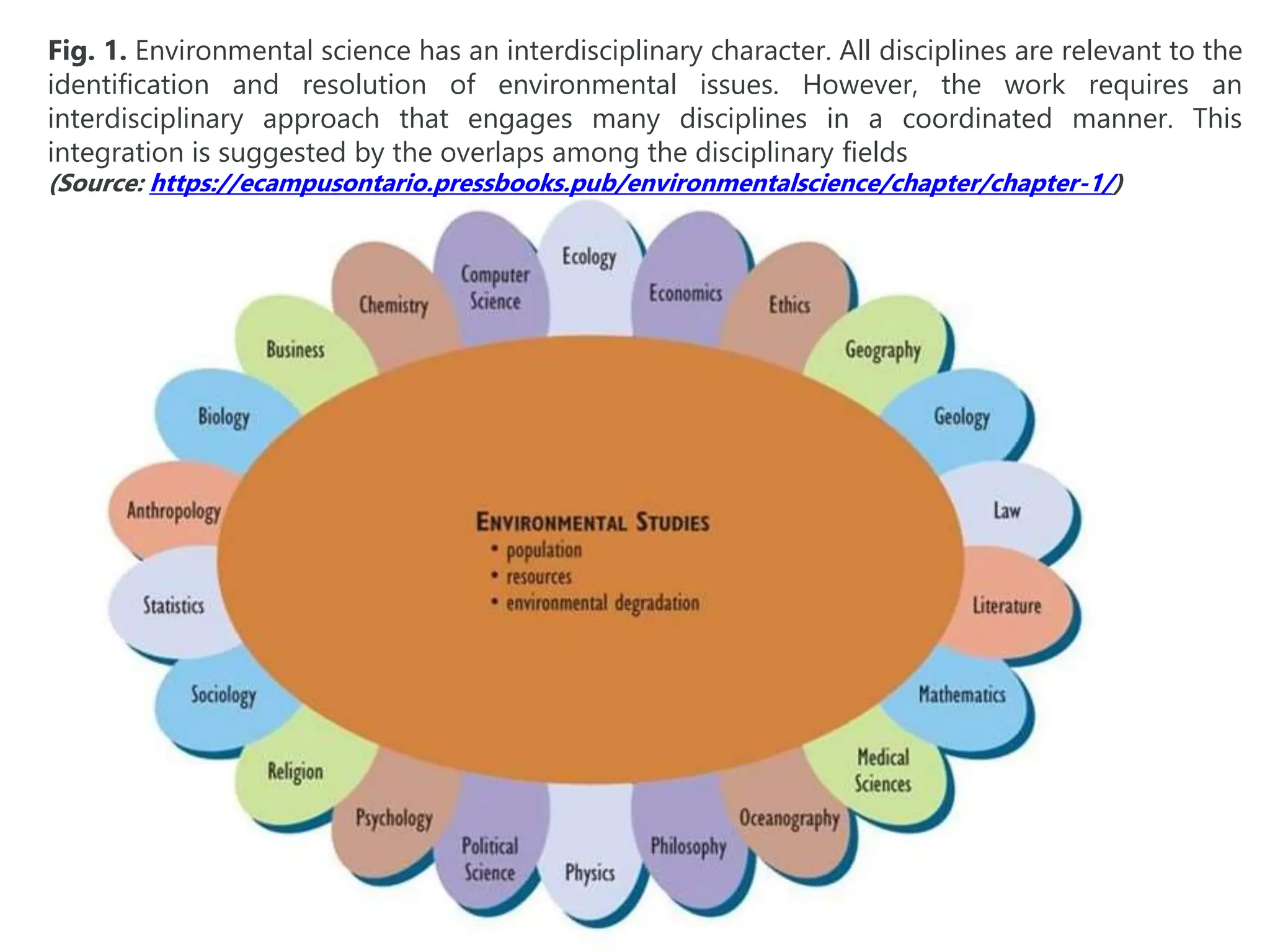
Fig. 1. Environmental science has an interdisciplinary character. All disciplines are relevant to the
identification and resolution of environmental issues. However, the work requires an
interdisciplinary approach that engages many disciplines in a coordinated manner. This
integration is suggested by the overlaps among the disciplinary fields
(Source: https://ecampusontario.pressbooks.pub/environmentalscience/chapter/chapter-1/)
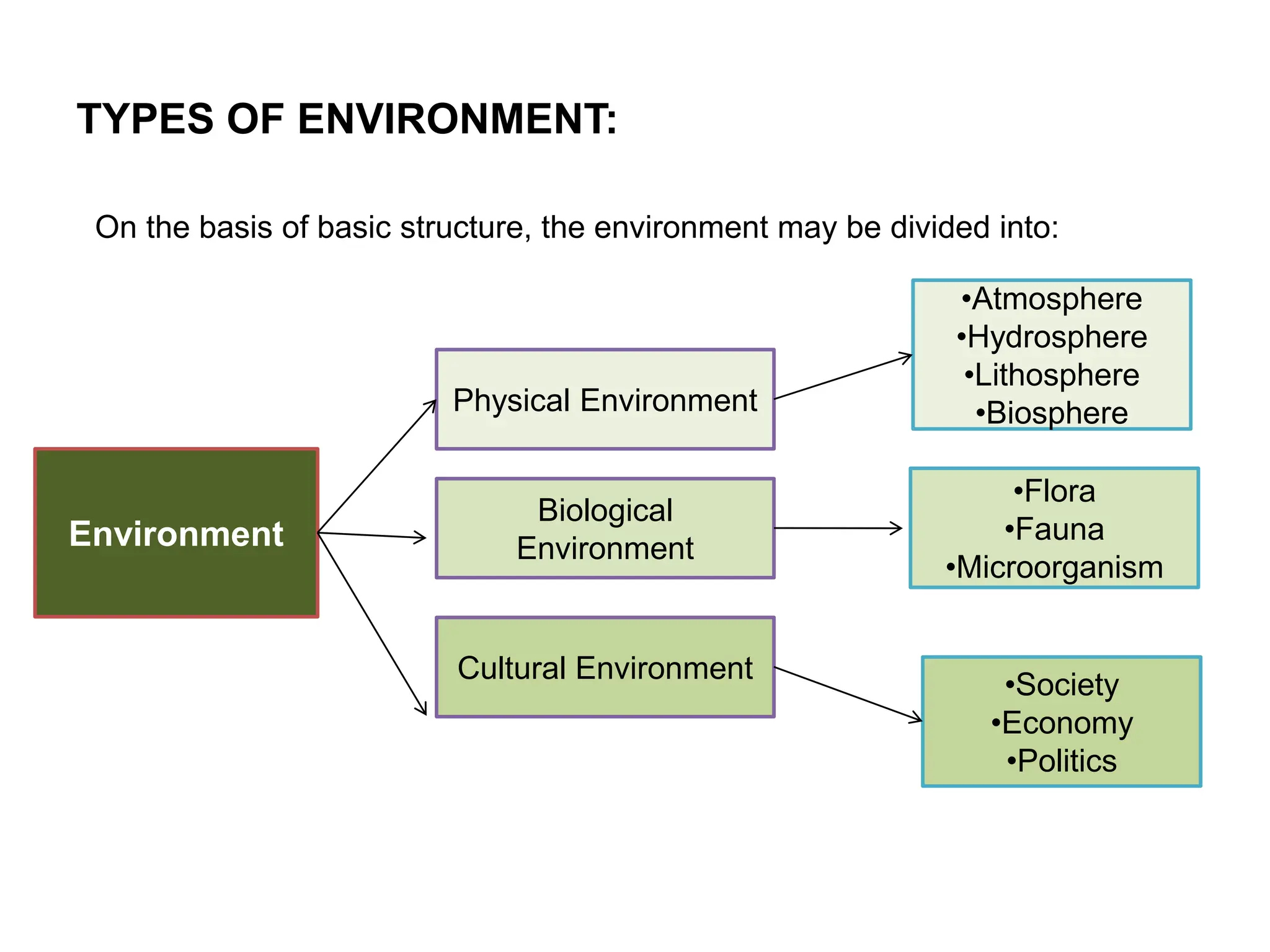
TYPES OF ENVIRONMENT:
On the basis of basic structure, the environment may be divided into:
Environment
Physical Environment
Biological
Environment
Cultural Environment
•Atmosphere
•Hydrosphere
•Lithosphere
•Biosphere
•Flora
•Fauna
•Microorganism
•Society
•Economy
•Politics
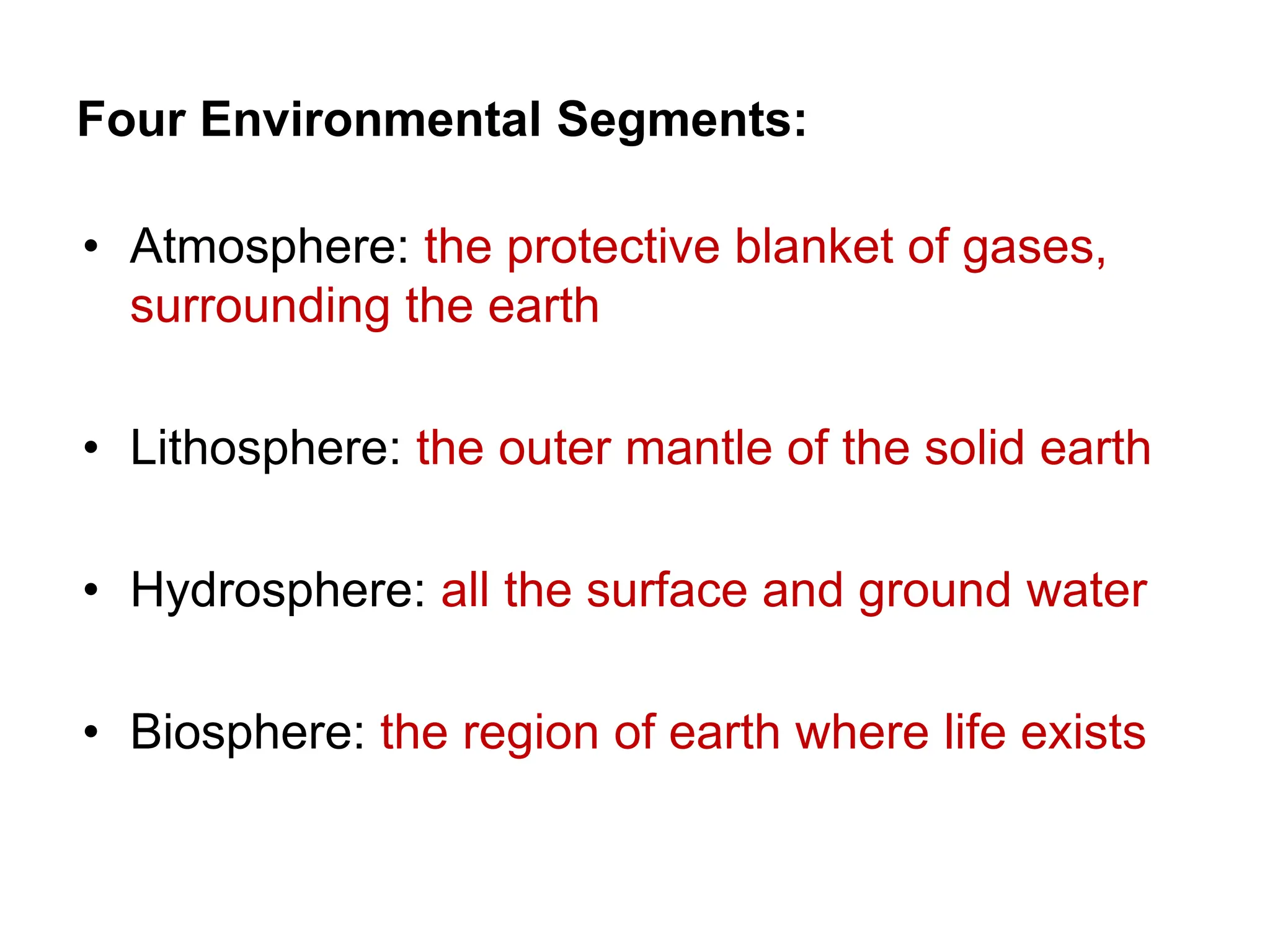
Four Environmental Segments:
• Atmosphere: the protective blanket of gases,
surrounding the earth
• Lithosphere: the outer mantle of the solid earth
• Hydrosphere: all the surface and ground water
• Biosphere: the region of earth where life exists
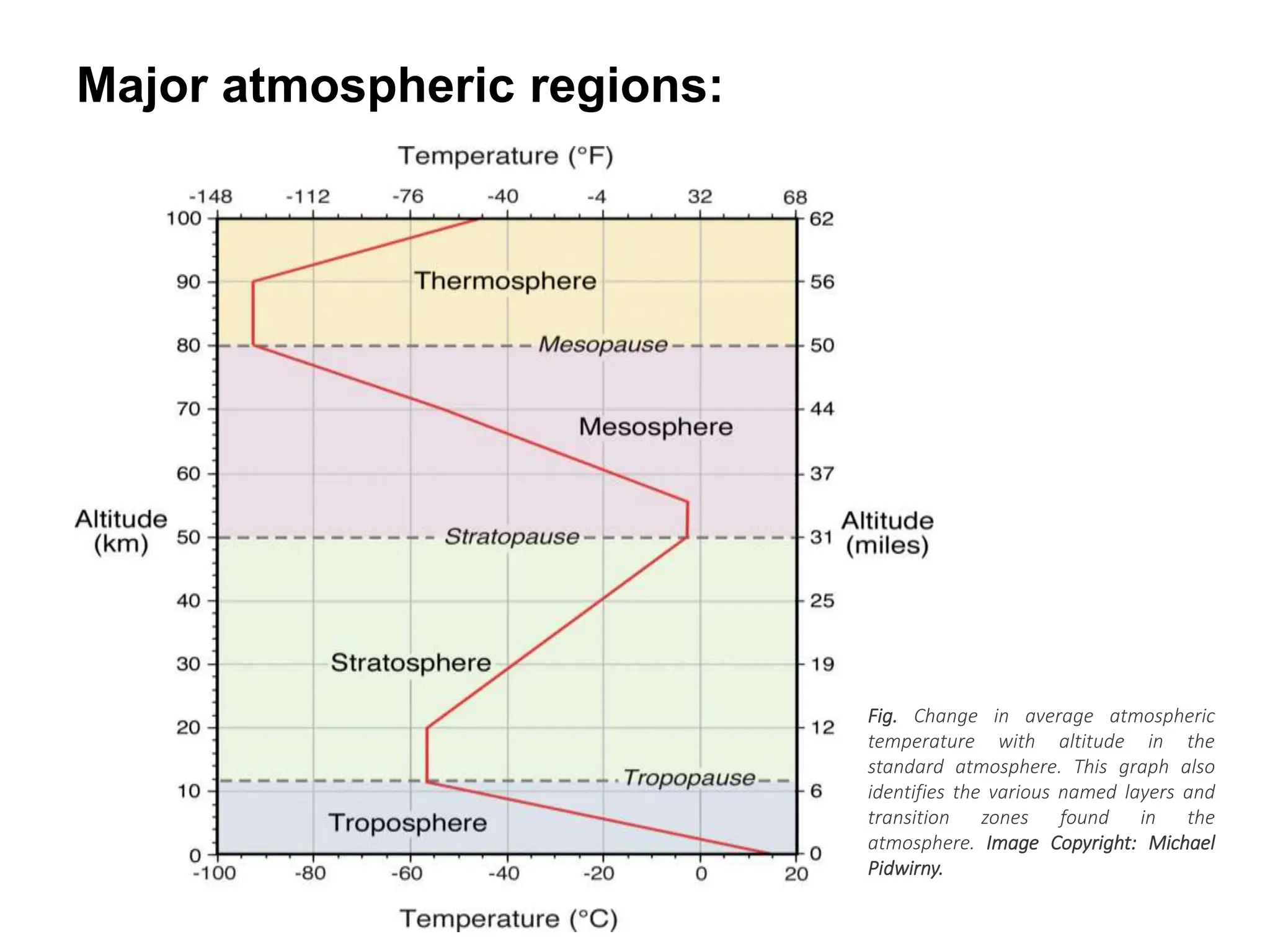
Major atmospheric regions:
Fig. Change in average atmospheric
temperature with altitude in the
standard atmosphere. This graph also
identifies the various named layers and
transition zones found in the
atmosphere. Image Copyright: Michael
Pidwirny.
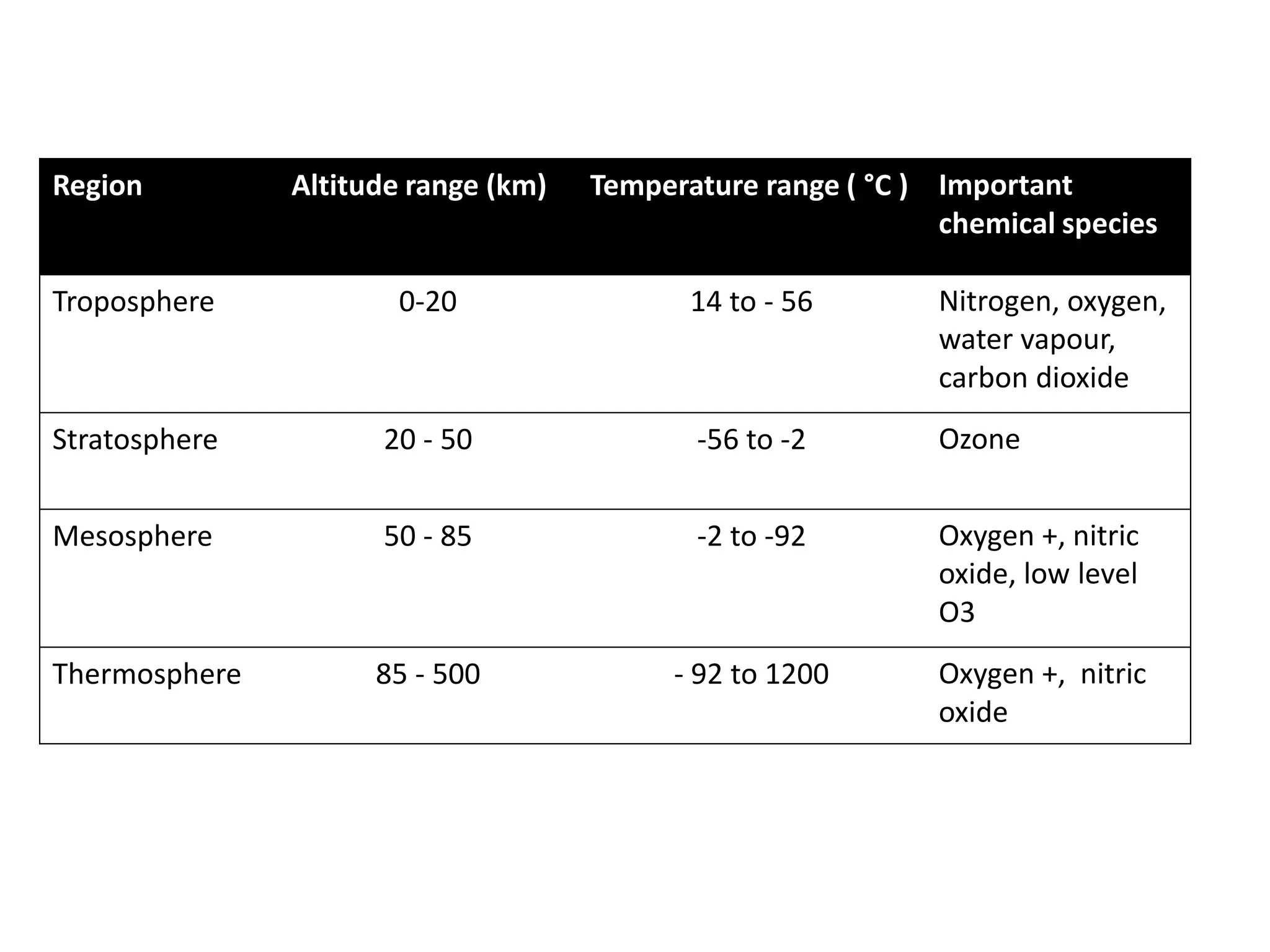
Region Altitude range (km) Temperature range ( °C ) Important
chemical species
Troposphere 0-20 14 to - 56 Nitrogen, oxygen,
water vapour,
carbon dioxide
Stratosphere 20 - 50 -56 to -2 Ozone
Mesosphere 50 - 85 -2 to -92 Oxygen +, nitric
oxide, low level
O3
Thermosphere 85 - 500 - 92 to 1200 Oxygen +, nitric
oxide
Troposphere
Troposphere in the atmosphere is found from the surface to a height of between 8 to
16 kilometers (5.0 to 10.0 miles) of altitude [average height 11 kilometers (6.8
miles)]. The tropopause is typically at about 18 km near the Equator, and only about 8
km at the poles. Most of our planet’s weather occurs in this layer.
stratosphere
Above the troposphere, to an elevation of about 50 km, there is the stratosphere.
Here, atmospheric temperature increases because of the absorption of solar
ultraviolet radiation by ozone. The stratosphere is capped by the and the lies above
at about 50 to 80 km.
Mesosphere
In the mesosphere, temperatures decrease with height and have the coldest
temperatures in the atmosphere (about -90°C) at the upper boundary of this layer
(the ).
Thermosphere
The highest temperatures (>1000°C), are reached in the (85 km to the atmosphere’s
outermost fringe).
Source: LABORATORY 2: HEAT AND TEMPERATURE IN THE ATMOSPHERE – Physical Geography Lab Manual: The Atmosphere and
Biosphere (bccampus.ca)
Hydrosphere
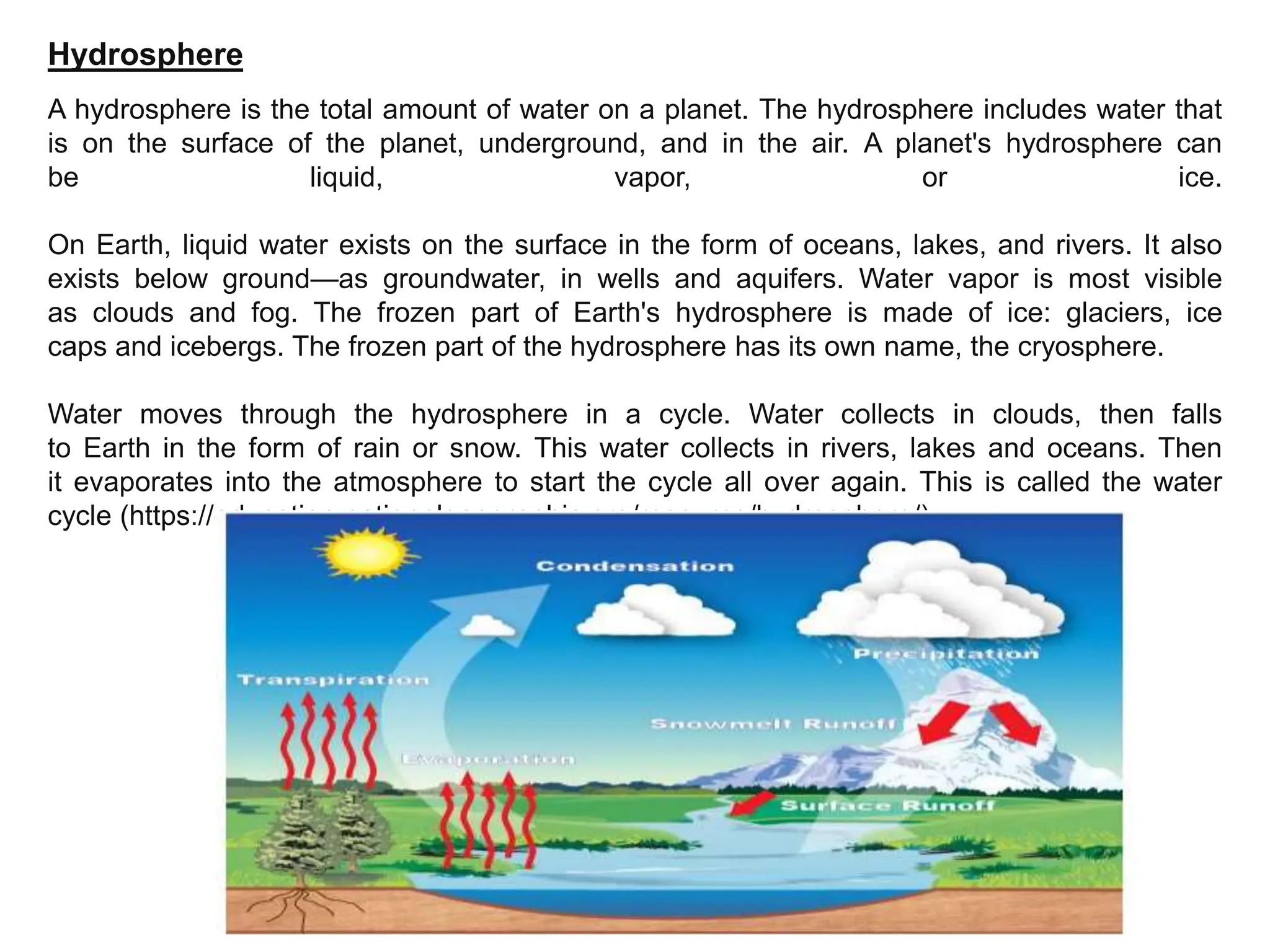
A hydrosphere is the total amount of water on a planet. The hydrosphere includes water that
is on the surface of the planet, underground, and in the air. A planet's hydrosphere can
be liquid, vapor, or ice.
On Earth, liquid water exists on the surface in the form of oceans, lakes, and rivers. It also
exists below ground—as groundwater, in wells and aquifers. Water vapor is most visible
as clouds and fog. The frozen part of Earth's hydrosphere is made of ice: glaciers, ice
caps and icebergs. The frozen part of the hydrosphere has its own name, the cryosphere.
Water moves through the hydrosphere in a cycle. Water collects in clouds, then falls
to Earth in the form of rain or snow. This water collects in rivers, lakes and oceans. Then
it evaporates into the atmosphere to start the cycle all over again. This is called the water
cycle (https://education.nationalgeographic.org/resource/hydrosphere/)
Lithosphere
• Soil can be defined as the organic and inorganic materials on the surface of the earth
that provide the medium for plant growth, together support life on earth. Soils are the
products of weathering from some parent rocks.
• All soils initially come from some pre-existing rocks. They are called as ‘parent
materials’. The Parent Material may be directly below the soil, or at great distances
away from it.
Constituents of Soil
(i) Inorganic matter (rock particles)
(ii) Organic matter/humus (decayed plants and animal matter)..
(iii) Living organisms such as bacteria, worms, and insects
(iv) Water/moisture
(v) Air/gases
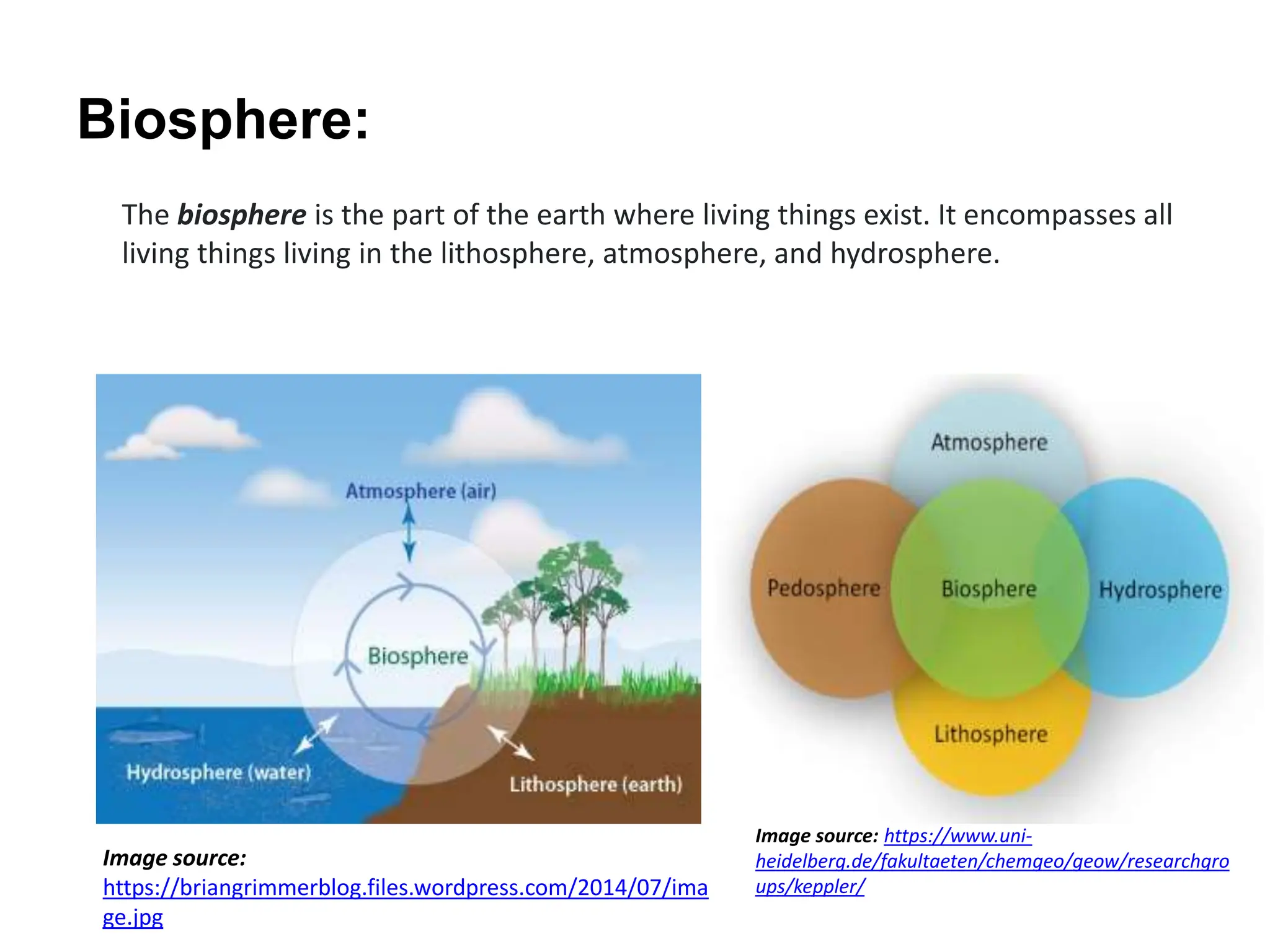
Biosphere:
The biosphere is the part of the earth where living things exist. It encompasses all
living things living in the lithosphere, atmosphere, and hydrosphere.
Image source: https://www.uni-
heidelberg.de/fakultaeten/chemgeo/geow/researchgro
ups/keppler/
Image source:
https://briangrimmerblog.files.wordpress.com/2014/07/ima
ge.jpg
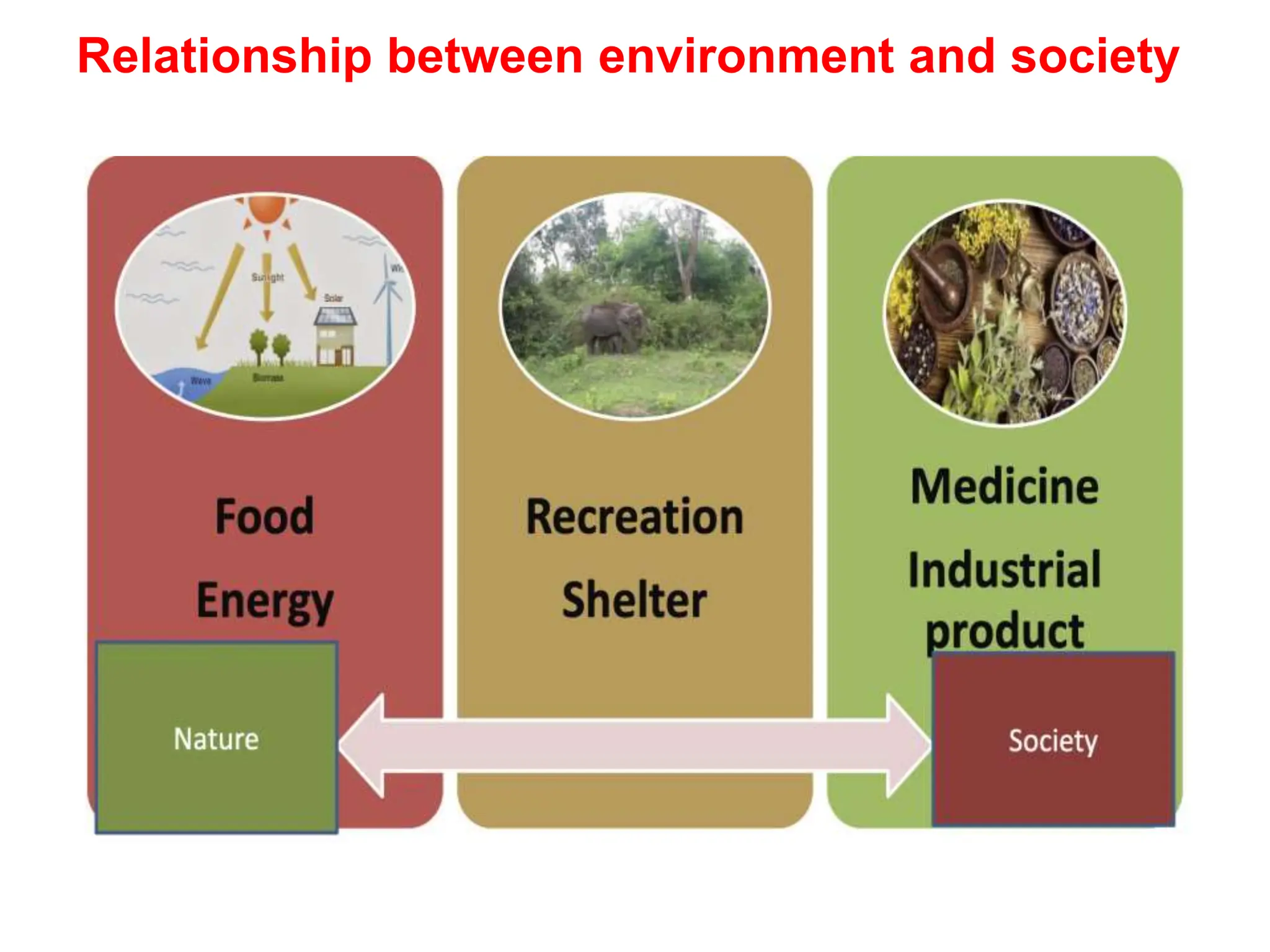
Relationship between environment and society
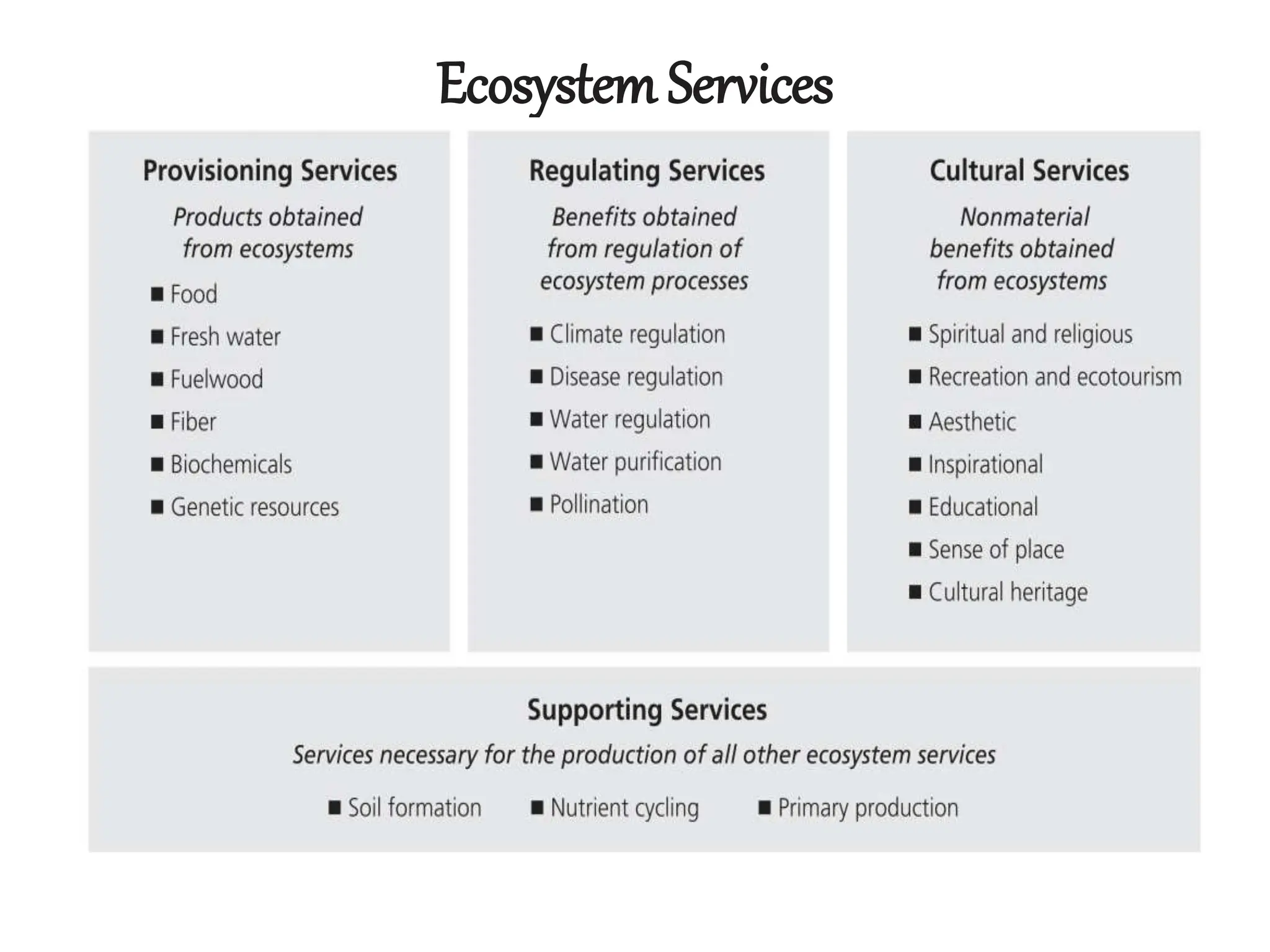
Ecosystem services:
Ecosystem services are the benefits people
obtain from ecosystems.
The Millennium Ecosystem Assessment divided
ecosystem services that benefit humans into four
classes:
1)Regulating
2) Provisioning
2) Cultural (non-material)
4) Supporting
Ecosystem Services
"The world has enough for everyone's
needs, but not everyone's greed,“
Mahatma Gandhi
Thank you

Concept of Environment.pptx

  • 1.
    By Dr. Kuldeep Bauddh AssistantProfessor, Department of Environmental Sciences Central University of Jharkhand, Ranchi-835205 Environment: concept, types and components
  • 2.
  • 3.
    Global Environmental Issues ImageSource: https://seccionsociais.blogspot.com/2019/03/environmental-issues.html
  • 4.
    Image source: S.O.Oyegoke, A.O. Adeyemi and A.O. Sojobi 2012. The Challenges of Water Supply for A Megacity: A Case Study of Lagos Metropolis. International Journal of Scientific & Engineering Research (3). http://www.ijser.org
  • 5.
  • 6.
    CONCEPT OF ENVIRONMENT: •The term ‘environment’ is derived from the French word ‘environ’ which means ‘surround’/to be around. • Environment is the sum total of all living and non-living factors that compose the surroundings of man. • Environmental studies deals with the sum of all social, economic, physical and chemical interrelations with our surroundings. Definition Of Environment : • According to C.C. Park “Environment refers to the sum total of all the conditions which surround man at a given space and time”. • According to Douglas & Holland “The term environment is used to describe, in aggregate, all the external forces, influences and conditions which effect the life, nature, behavior and the growth, development and maturity of living organisms’.
  • 7.
    Fig. 1. Environmentalscience has an interdisciplinary character. All disciplines are relevant to the identification and resolution of environmental issues. However, the work requires an interdisciplinary approach that engages many disciplines in a coordinated manner. This integration is suggested by the overlaps among the disciplinary fields (Source: https://ecampusontario.pressbooks.pub/environmentalscience/chapter/chapter-1/)
  • 8.
    TYPES OF ENVIRONMENT: Onthe basis of basic structure, the environment may be divided into: Environment Physical Environment Biological Environment Cultural Environment •Atmosphere •Hydrosphere •Lithosphere •Biosphere •Flora •Fauna •Microorganism •Society •Economy •Politics
  • 9.
    Four Environmental Segments: •Atmosphere: the protective blanket of gases, surrounding the earth • Lithosphere: the outer mantle of the solid earth • Hydrosphere: all the surface and ground water • Biosphere: the region of earth where life exists
  • 10.
    Major atmospheric regions: Fig.Change in average atmospheric temperature with altitude in the standard atmosphere. This graph also identifies the various named layers and transition zones found in the atmosphere. Image Copyright: Michael Pidwirny.
  • 11.
    Region Altitude range(km) Temperature range ( °C ) Important chemical species Troposphere 0-20 14 to - 56 Nitrogen, oxygen, water vapour, carbon dioxide Stratosphere 20 - 50 -56 to -2 Ozone Mesosphere 50 - 85 -2 to -92 Oxygen +, nitric oxide, low level O3 Thermosphere 85 - 500 - 92 to 1200 Oxygen +, nitric oxide
  • 12.
    Troposphere Troposphere in theatmosphere is found from the surface to a height of between 8 to 16 kilometers (5.0 to 10.0 miles) of altitude [average height 11 kilometers (6.8 miles)]. The tropopause is typically at about 18 km near the Equator, and only about 8 km at the poles. Most of our planet’s weather occurs in this layer. stratosphere Above the troposphere, to an elevation of about 50 km, there is the stratosphere. Here, atmospheric temperature increases because of the absorption of solar ultraviolet radiation by ozone. The stratosphere is capped by the and the lies above at about 50 to 80 km. Mesosphere In the mesosphere, temperatures decrease with height and have the coldest temperatures in the atmosphere (about -90°C) at the upper boundary of this layer (the ). Thermosphere The highest temperatures (>1000°C), are reached in the (85 km to the atmosphere’s outermost fringe). Source: LABORATORY 2: HEAT AND TEMPERATURE IN THE ATMOSPHERE – Physical Geography Lab Manual: The Atmosphere and Biosphere (bccampus.ca)
  • 13.
    Hydrosphere A hydrosphere isthe total amount of water on a planet. The hydrosphere includes water that is on the surface of the planet, underground, and in the air. A planet's hydrosphere can be liquid, vapor, or ice. On Earth, liquid water exists on the surface in the form of oceans, lakes, and rivers. It also exists below ground—as groundwater, in wells and aquifers. Water vapor is most visible as clouds and fog. The frozen part of Earth's hydrosphere is made of ice: glaciers, ice caps and icebergs. The frozen part of the hydrosphere has its own name, the cryosphere. Water moves through the hydrosphere in a cycle. Water collects in clouds, then falls to Earth in the form of rain or snow. This water collects in rivers, lakes and oceans. Then it evaporates into the atmosphere to start the cycle all over again. This is called the water cycle (https://education.nationalgeographic.org/resource/hydrosphere/)
  • 14.
    Lithosphere • Soil canbe defined as the organic and inorganic materials on the surface of the earth that provide the medium for plant growth, together support life on earth. Soils are the products of weathering from some parent rocks. • All soils initially come from some pre-existing rocks. They are called as ‘parent materials’. The Parent Material may be directly below the soil, or at great distances away from it. Constituents of Soil (i) Inorganic matter (rock particles) (ii) Organic matter/humus (decayed plants and animal matter).. (iii) Living organisms such as bacteria, worms, and insects (iv) Water/moisture (v) Air/gases
  • 15.
    Biosphere: The biosphere isthe part of the earth where living things exist. It encompasses all living things living in the lithosphere, atmosphere, and hydrosphere. Image source: https://www.uni- heidelberg.de/fakultaeten/chemgeo/geow/researchgro ups/keppler/ Image source: https://briangrimmerblog.files.wordpress.com/2014/07/ima ge.jpg
  • 16.
  • 17.
    Ecosystem services: Ecosystem servicesare the benefits people obtain from ecosystems. The Millennium Ecosystem Assessment divided ecosystem services that benefit humans into four classes: 1)Regulating 2) Provisioning 2) Cultural (non-material) 4) Supporting
  • 18.
  • 19.
    "The world hasenough for everyone's needs, but not everyone's greed,“ Mahatma Gandhi
  • 20.