Computer Vision : Applications and challenges
01 02 03 04
MD. Tasadduk
Hossain
ID : 221-15-4830
MD. Raihanul
Islam
ID : 221-15-5150
MD. Moinur
Hasan
ID : 221-15-5692
Rita Faria
Richi
ID : 221-15-5025
Information of Group member
What is Computer Vision?
Computer vision is a field of artificial intelligence (AI) that enables computers and systems to
derive meaningful information from digital images, videos and other visual inputs — and take
actions or make recommendations based on that information.
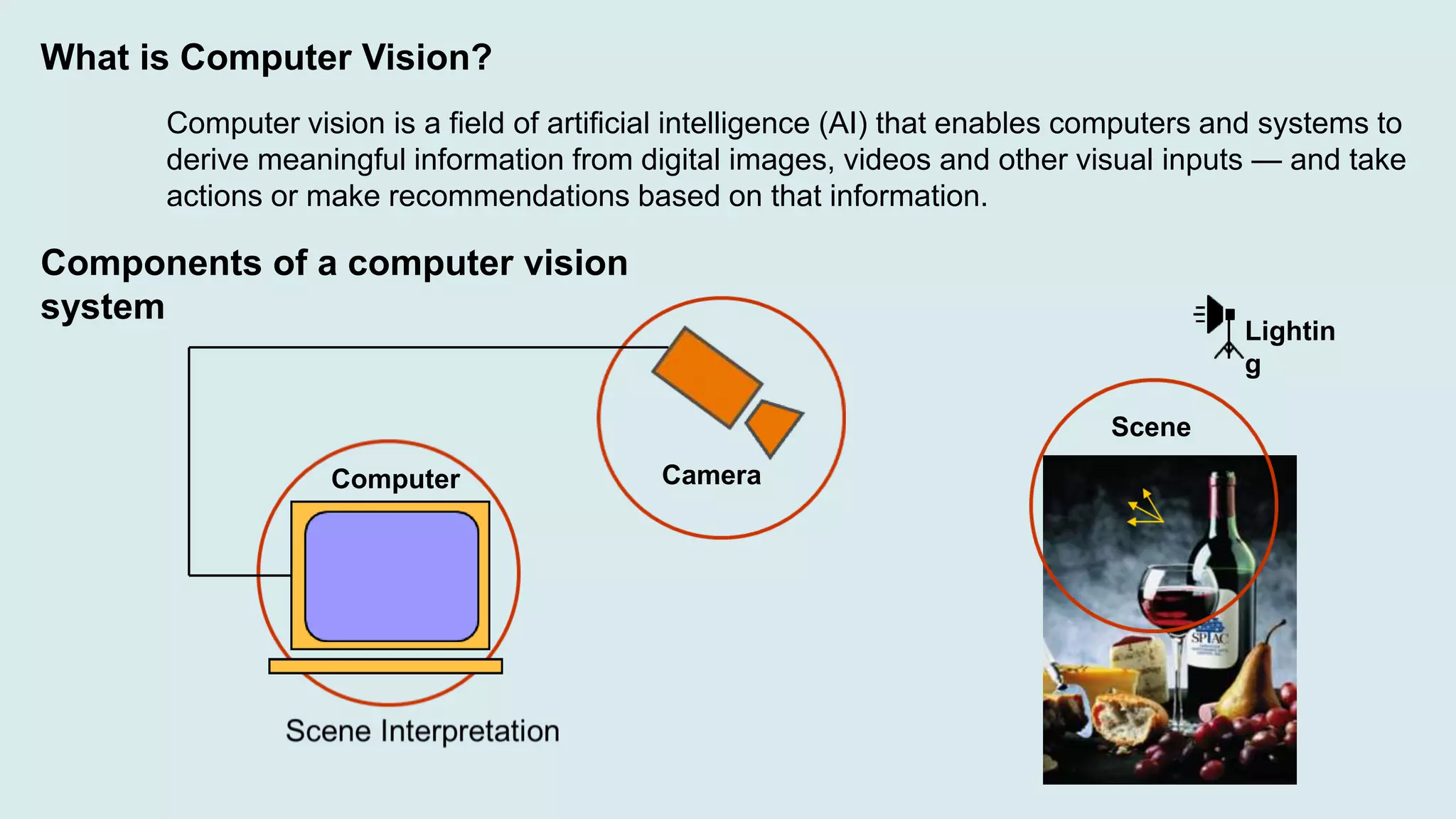
Components of a computer vision
system
Camera
Computer
Scene
Lightin
g
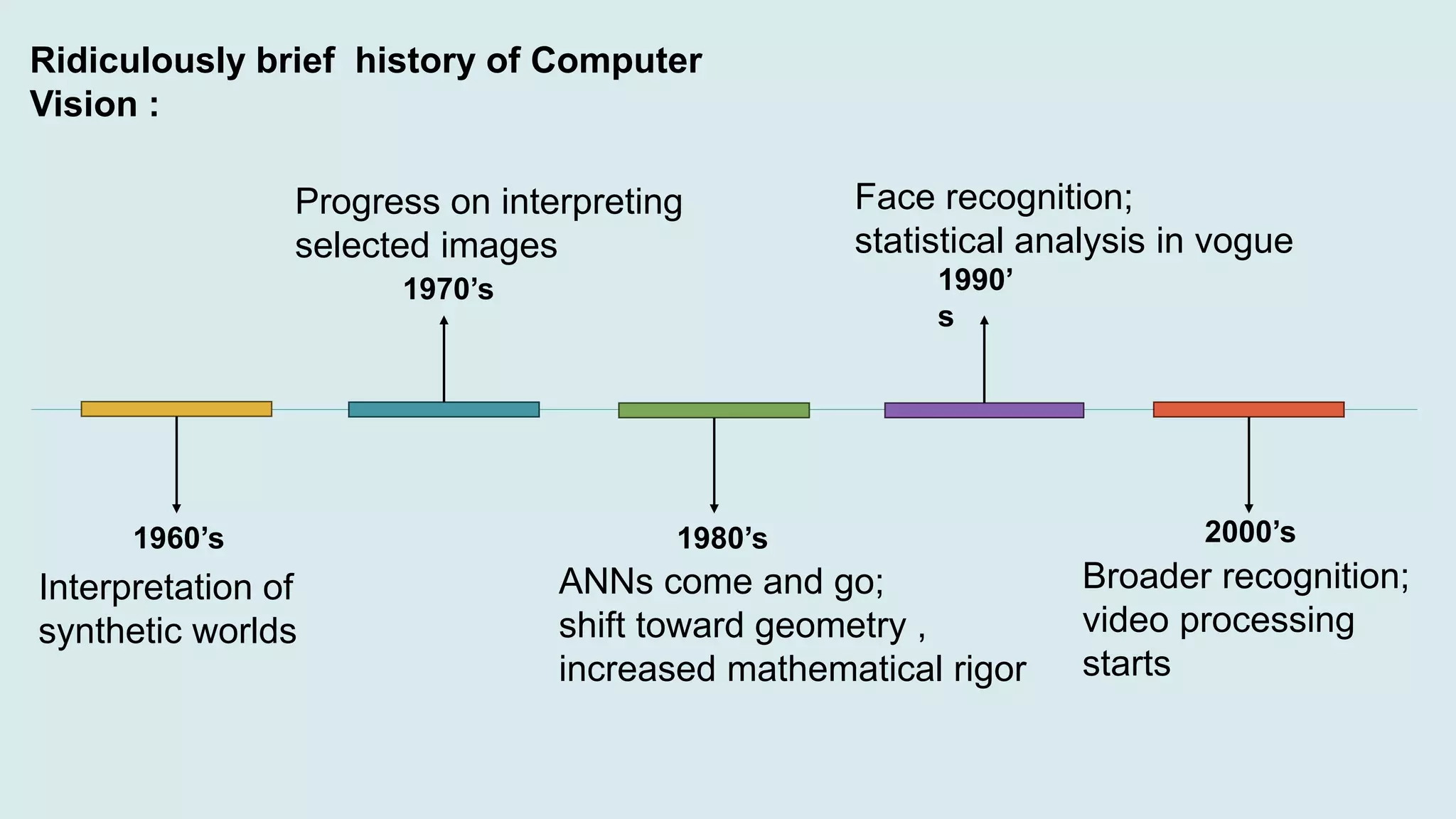
Ridiculously brief history of Computer
Vision :
1960’s
Interpretation of
synthetic worlds
1970’s
Progress on interpreting
selected images
ANNs come and go;
shift toward geometry ,
increased mathematical rigor
1980’s
Face recognition;
statistical analysis in vogue
1990’
s
2000’s
Broader recognition;
video processing
starts
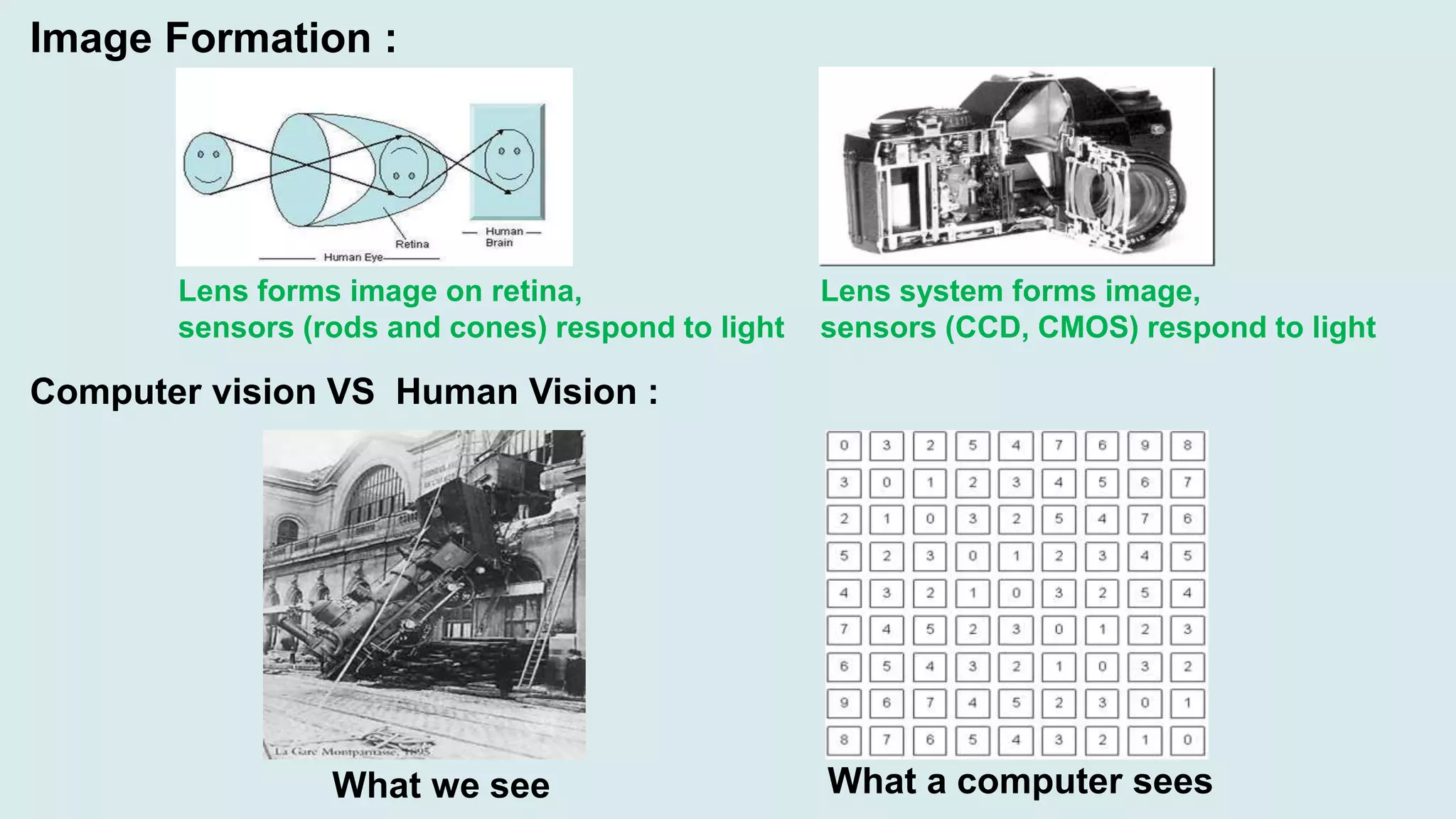
Image Formation :
Lens forms image on retina,
sensors (rods and cones) respond to light
Lens system forms image,
sensors (CCD, CMOS) respond to light
Computer vision VS Human Vision :
What we see What a computer sees
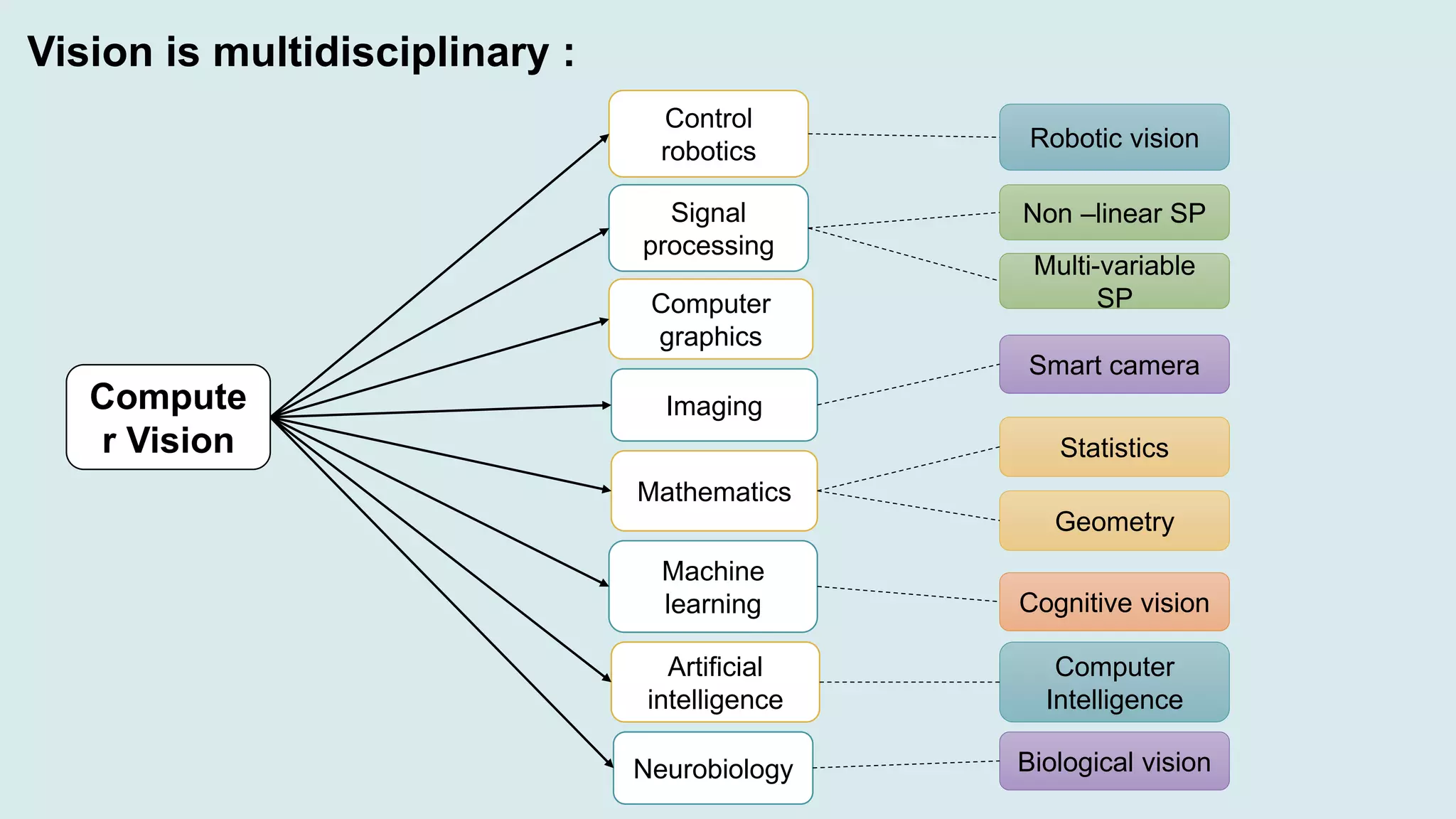
Vision is multidisciplinary :
Compute
r Vision
Control
robotics
Signal
processing
Computer
graphics
Imaging
Artificial
intelligence
Machine
learning
Neurobiology
Mathematics
Robotic vision
Non –linear SP
Multi-variable
SP
Smart camera
Statistics
Geometry
Cognitive vision
Computer
Intelligence
Biological vision
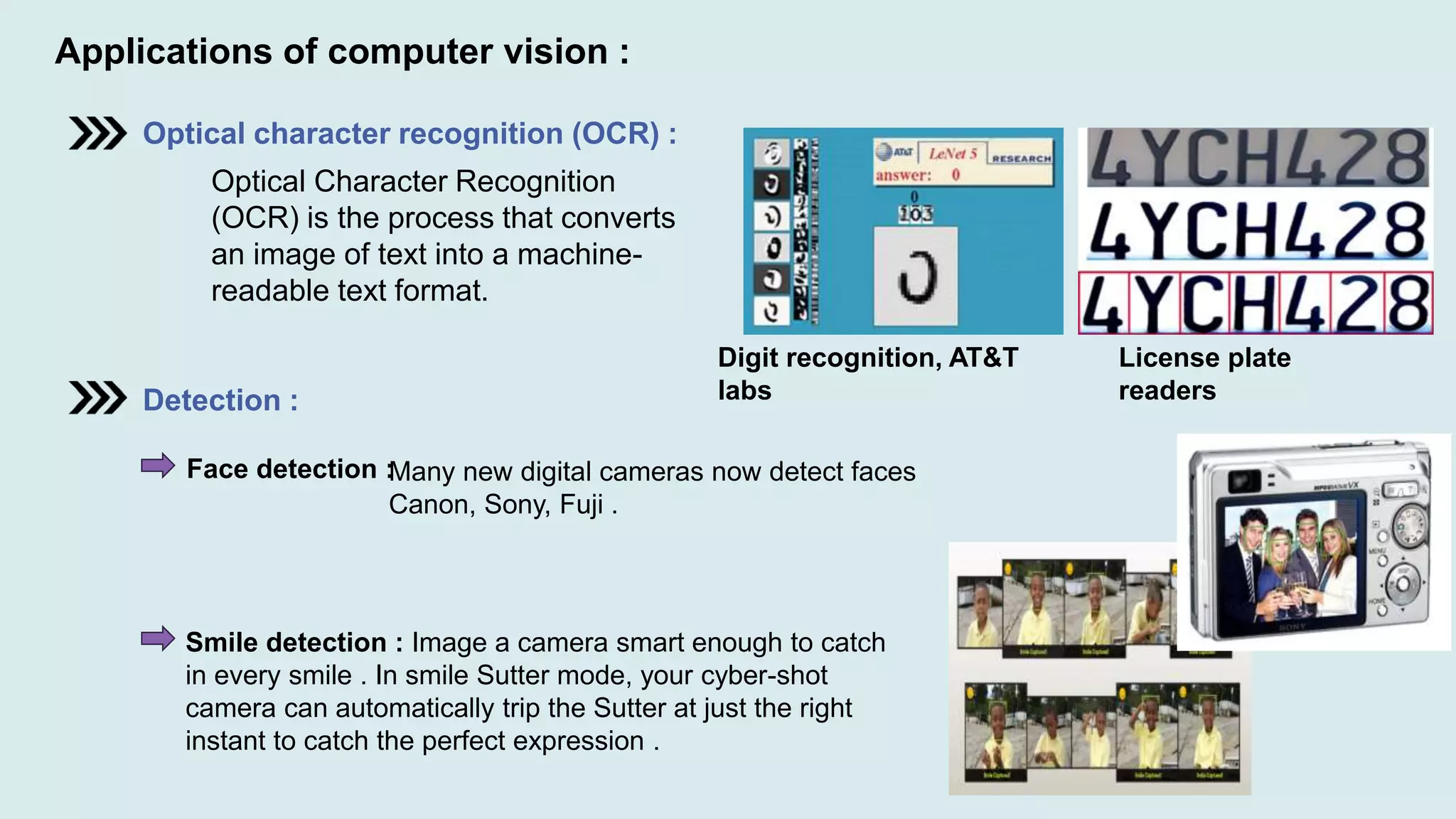
Applications of computer vision :
Optical character recognition (OCR) :
Optical Character Recognition
(OCR) is the process that converts
an image of text into a machine-
readable text format.
Digit recognition, AT&T
labs
License plate
readers
Detection :
Face detection :
Many new digital cameras now detect faces
Canon, Sony, Fuji .
Smile detection : Image a camera smart enough to catch
in every smile . In smile Sutter mode, your cyber-shot
camera can automatically trip the Sutter at just the right
instant to catch the perfect expression .
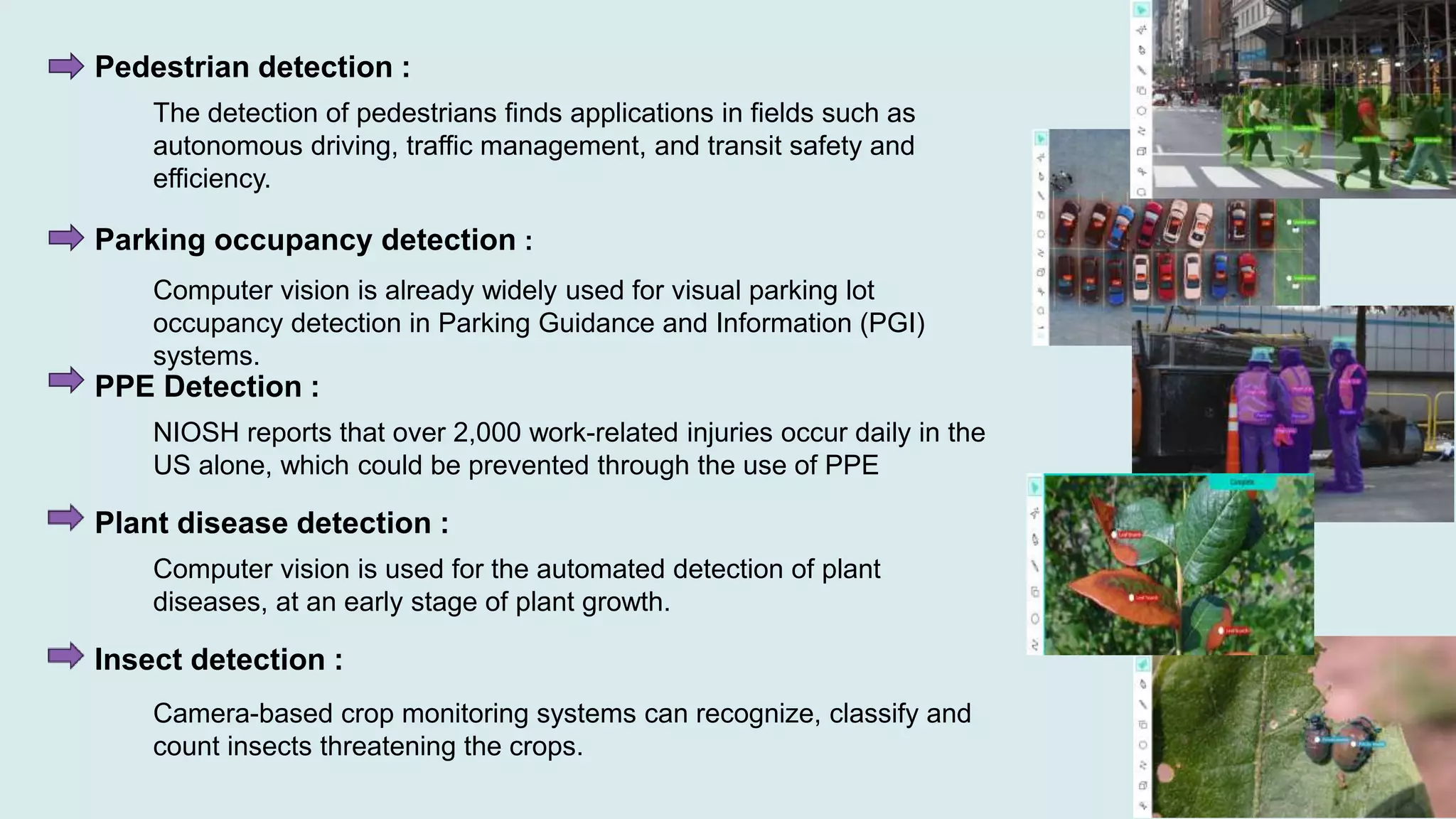
Pedestrian detection :
The detection of pedestrians finds applications in fields such as
autonomous driving, traffic management, and transit safety and
efficiency.
Parking occupancy detection :
Computer vision is already widely used for visual parking lot
occupancy detection in Parking Guidance and Information (PGI)
systems.
PPE Detection :
NIOSH reports that over 2,000 work-related injuries occur daily in the
US alone, which could be prevented through the use of PPE
Plant disease detection :
Computer vision is used for the automated detection of plant
diseases, at an early stage of plant growth.
Insect detection :
Camera-based crop monitoring systems can recognize, classify and
count insects threatening the crops.
Transportation related issue :
Self-driving or smart or google cars :
Researches working on the ADAS technology combine computer vision
techniques such as pattern recognition, feature extraction, object tracking,
3D vision to develop real-time algorithms that assist driving activity
Traffic flow analysis :
Drone and camera-based traffic flow tracking and estimation have
been possible to the developments in the field of computer
vision.
Road condition monitoring :
Automated Pavement Distress (PD) detection has increasing road
maintenance efficiency and decreasing the safety risk related to accidents.
Agriculture :
Crop and yield monitoring
Automatic weeding
Livestock health monitoring
Aerial survey and imaging
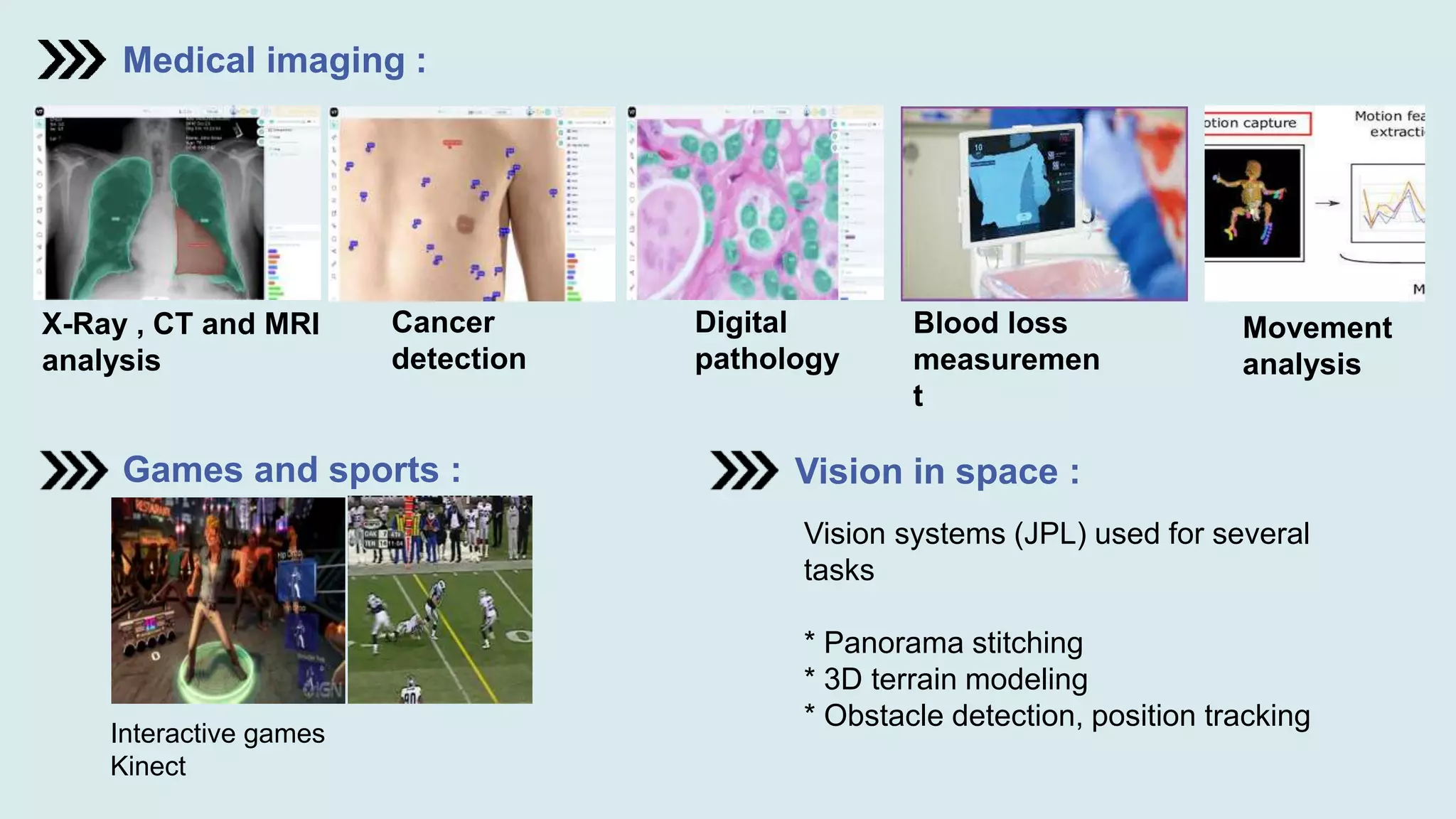
Medical imaging :
X-Ray , CT and MRI
analysis
Cancer
detection
Blood loss
measuremen
t
Digital
pathology
Movement
analysis
Games and sports : Vision in space :
Vision systems (JPL) used for several
tasks
* Panorama stitching
* 3D terrain modeling
* Obstacle detection, position tracking
Interactive games
Kinect
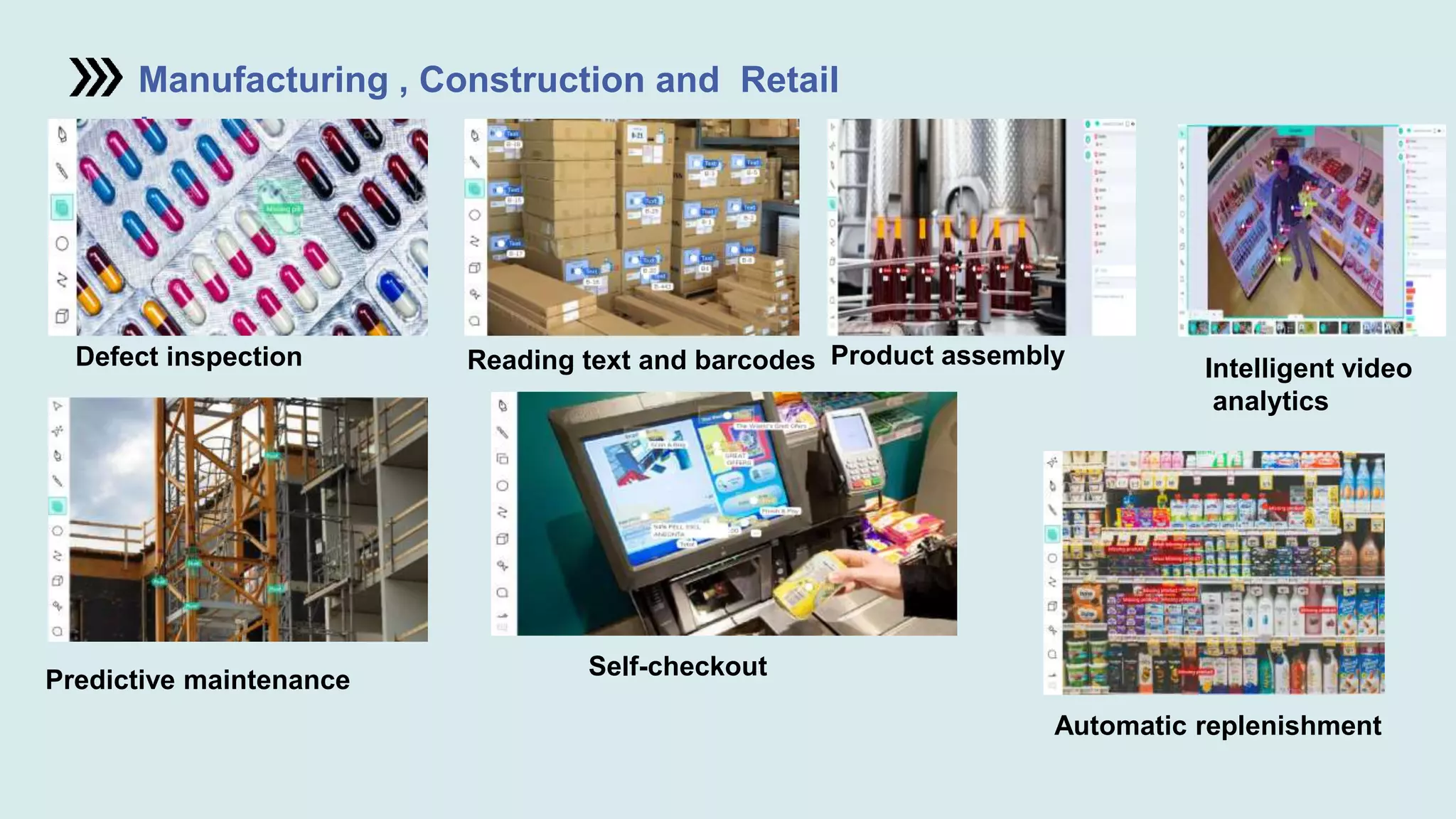
Manufacturing , Construction and Retail
:
Defect inspection Reading text and barcodes
Predictive maintenance
Product assembly
Automatic replenishment
Self-checkout
Intelligent video
analytics
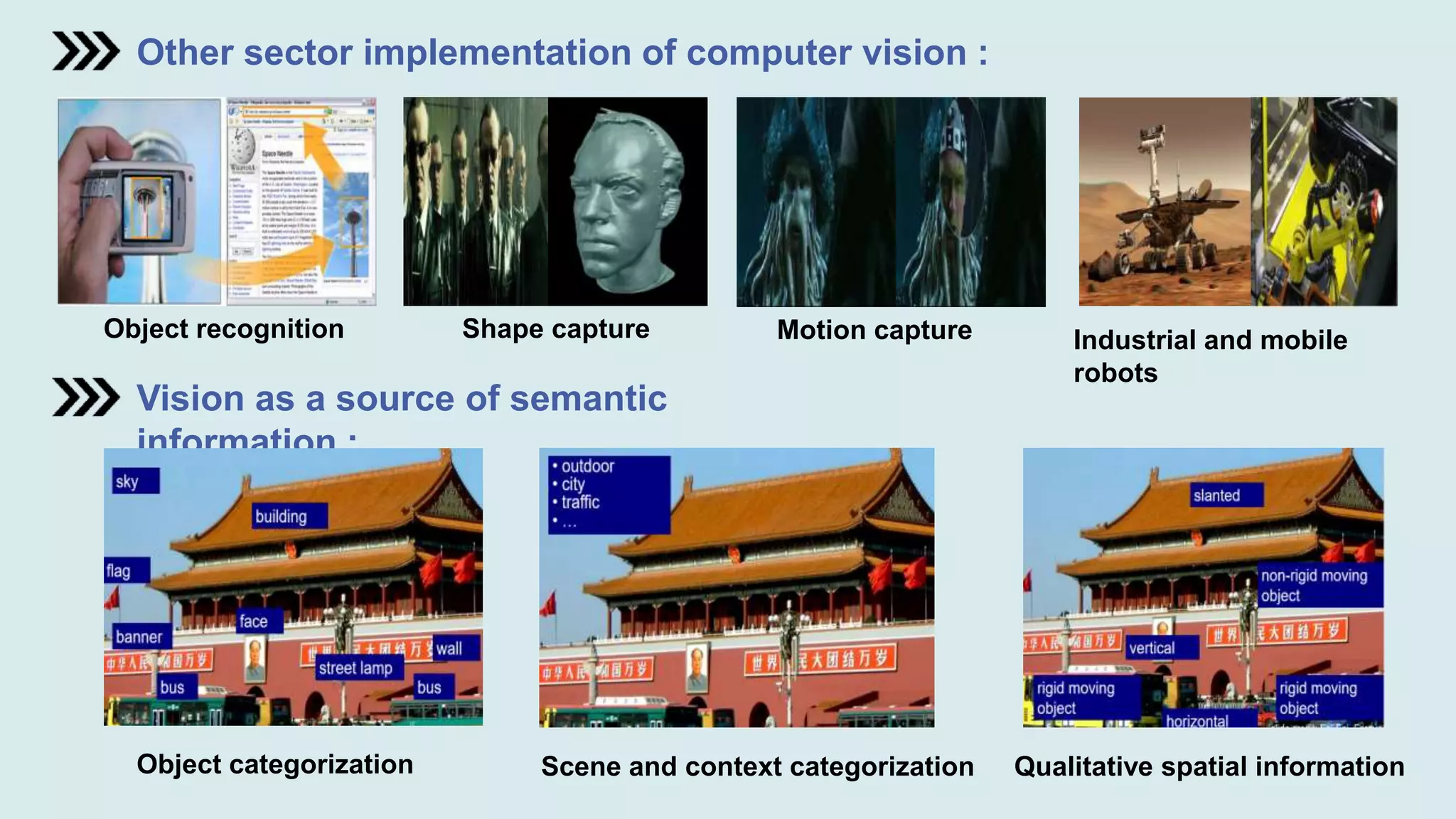
Other sector implementation of computer vision :
Object recognition Shape capture Motion capture Industrial and mobile
robots
Vision as a source of semantic
information :
Object categorization Scene and context categorization Qualitative spatial information
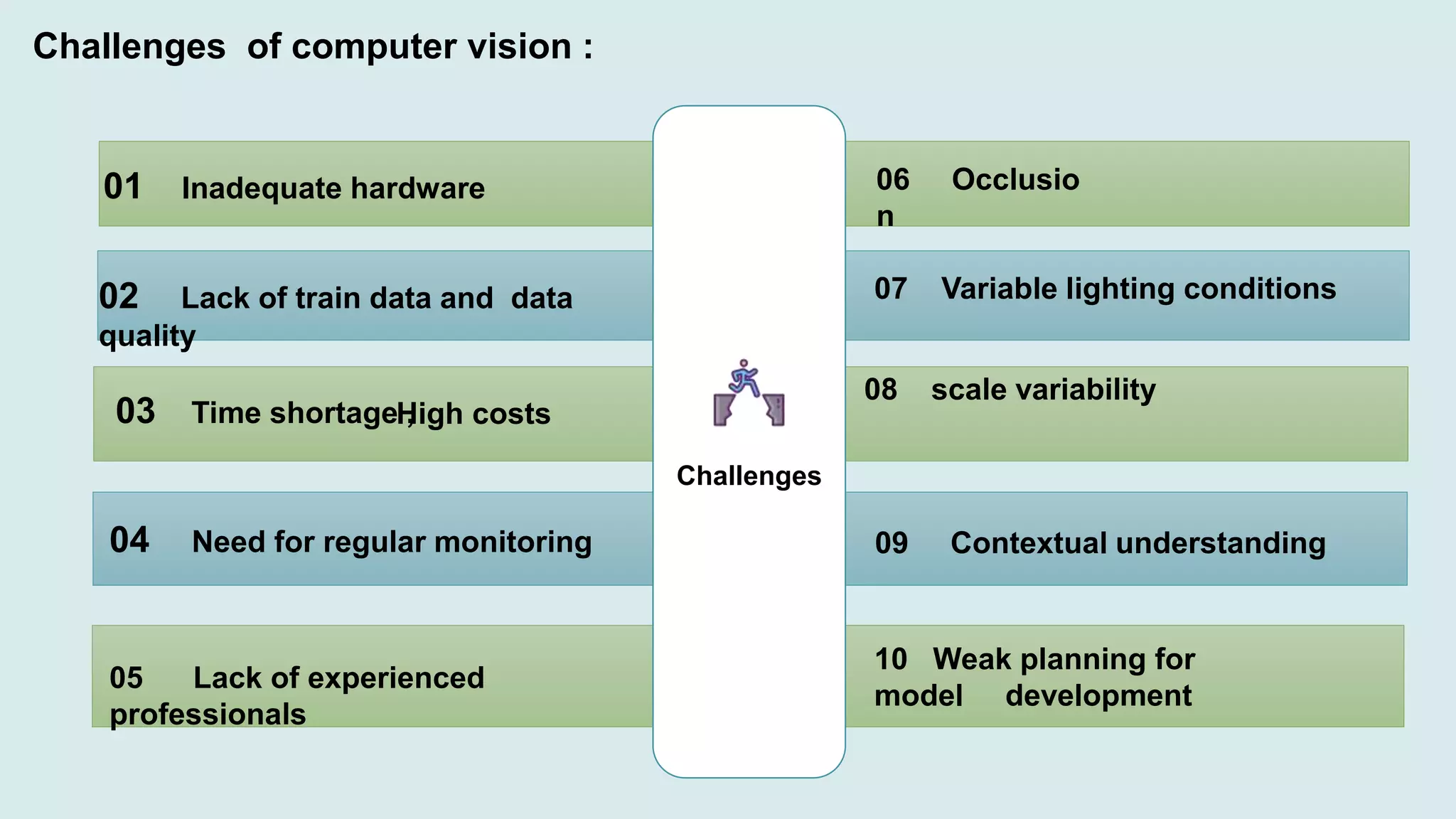
Challenges of computer vision :
Challenges
01 Inadequate hardware
02 Lack of train data and data
quality
10 Weak planning for
model development
03 Time shortage ,
04 Need for regular monitoring
05 Lack of experienced
professionals
High costs
07 Variable lighting conditions
06 Occlusio
n
09 Contextual understanding
08 scale variability
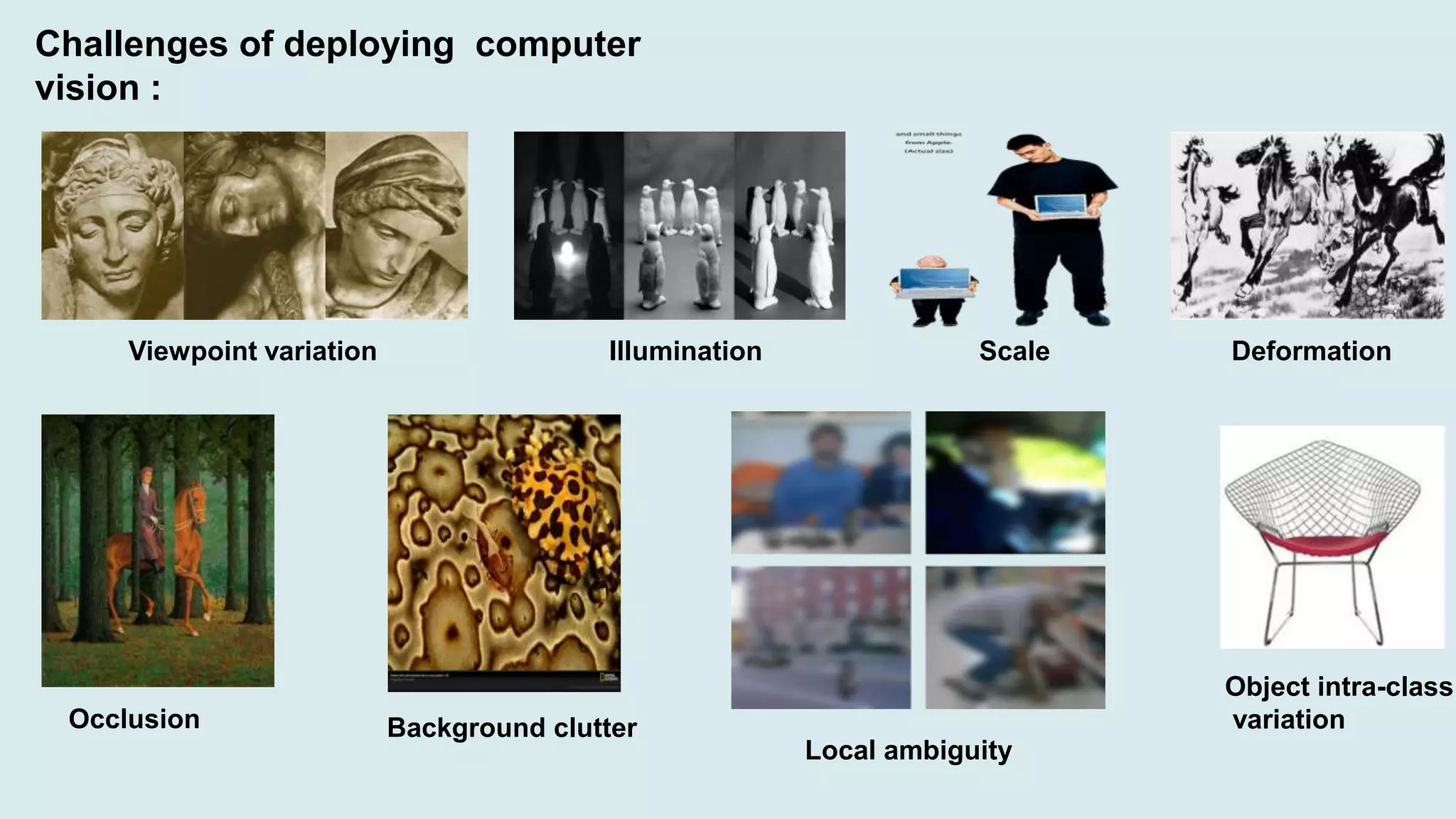
Challenges of deploying computer
vision :
Viewpoint variation Illumination Scale Deformation
Occlusion Background clutter
Object intra-class
variation
Local ambiguity
Thank
you

computer vision

  • 1.
    Computer Vision :Applications and challenges
  • 2.
    01 02 0304 MD. Tasadduk Hossain ID : 221-15-4830 MD. Raihanul Islam ID : 221-15-5150 MD. Moinur Hasan ID : 221-15-5692 Rita Faria Richi ID : 221-15-5025 Information of Group member
  • 3.
    What is ComputerVision? Computer vision is a field of artificial intelligence (AI) that enables computers and systems to derive meaningful information from digital images, videos and other visual inputs — and take actions or make recommendations based on that information. Components of a computer vision system Camera Computer Scene Lightin g
  • 4.
    Ridiculously brief historyof Computer Vision : 1960’s Interpretation of synthetic worlds 1970’s Progress on interpreting selected images ANNs come and go; shift toward geometry , increased mathematical rigor 1980’s Face recognition; statistical analysis in vogue 1990’ s 2000’s Broader recognition; video processing starts
  • 5.
    Image Formation : Lensforms image on retina, sensors (rods and cones) respond to light Lens system forms image, sensors (CCD, CMOS) respond to light Computer vision VS Human Vision : What we see What a computer sees
  • 6.
    Vision is multidisciplinary: Compute r Vision Control robotics Signal processing Computer graphics Imaging Artificial intelligence Machine learning Neurobiology Mathematics Robotic vision Non –linear SP Multi-variable SP Smart camera Statistics Geometry Cognitive vision Computer Intelligence Biological vision
  • 7.
    Applications of computervision : Optical character recognition (OCR) : Optical Character Recognition (OCR) is the process that converts an image of text into a machine- readable text format. Digit recognition, AT&T labs License plate readers Detection : Face detection : Many new digital cameras now detect faces Canon, Sony, Fuji . Smile detection : Image a camera smart enough to catch in every smile . In smile Sutter mode, your cyber-shot camera can automatically trip the Sutter at just the right instant to catch the perfect expression .
  • 8.
    Pedestrian detection : Thedetection of pedestrians finds applications in fields such as autonomous driving, traffic management, and transit safety and efficiency. Parking occupancy detection : Computer vision is already widely used for visual parking lot occupancy detection in Parking Guidance and Information (PGI) systems. PPE Detection : NIOSH reports that over 2,000 work-related injuries occur daily in the US alone, which could be prevented through the use of PPE Plant disease detection : Computer vision is used for the automated detection of plant diseases, at an early stage of plant growth. Insect detection : Camera-based crop monitoring systems can recognize, classify and count insects threatening the crops.
  • 9.
    Transportation related issue: Self-driving or smart or google cars : Researches working on the ADAS technology combine computer vision techniques such as pattern recognition, feature extraction, object tracking, 3D vision to develop real-time algorithms that assist driving activity Traffic flow analysis : Drone and camera-based traffic flow tracking and estimation have been possible to the developments in the field of computer vision. Road condition monitoring : Automated Pavement Distress (PD) detection has increasing road maintenance efficiency and decreasing the safety risk related to accidents. Agriculture : Crop and yield monitoring Automatic weeding Livestock health monitoring Aerial survey and imaging
  • 10.
    Medical imaging : X-Ray, CT and MRI analysis Cancer detection Blood loss measuremen t Digital pathology Movement analysis Games and sports : Vision in space : Vision systems (JPL) used for several tasks * Panorama stitching * 3D terrain modeling * Obstacle detection, position tracking Interactive games Kinect
  • 11.
    Manufacturing , Constructionand Retail : Defect inspection Reading text and barcodes Predictive maintenance Product assembly Automatic replenishment Self-checkout Intelligent video analytics
  • 12.
    Other sector implementationof computer vision : Object recognition Shape capture Motion capture Industrial and mobile robots Vision as a source of semantic information : Object categorization Scene and context categorization Qualitative spatial information
  • 13.
    Challenges of computervision : Challenges 01 Inadequate hardware 02 Lack of train data and data quality 10 Weak planning for model development 03 Time shortage , 04 Need for regular monitoring 05 Lack of experienced professionals High costs 07 Variable lighting conditions 06 Occlusio n 09 Contextual understanding 08 scale variability
  • 14.
    Challenges of deployingcomputer vision : Viewpoint variation Illumination Scale Deformation Occlusion Background clutter Object intra-class variation Local ambiguity
  • 15.