
Submitted to- Submitted By-
Dr. A. P. J. Abdul Kalam Kunwar Srivastav
Institute Of
Forensic Science & Criminology
Bundelkhand University, Jhansi
INTRODUCTION
HISTORY
TYPES OF COMPUTER
SOFTWARE
FUNCTIONS
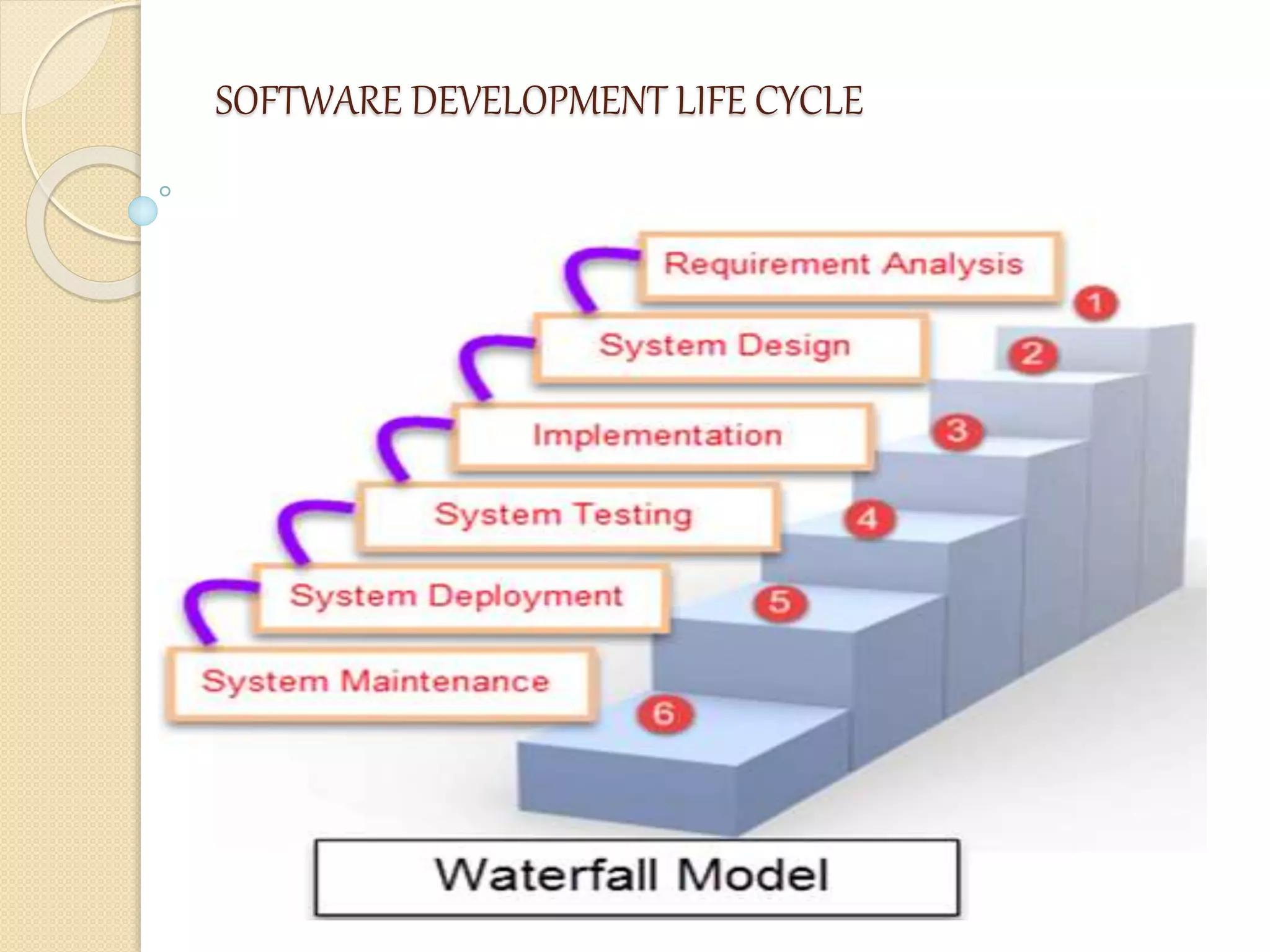
WATERFALL MODEL
CONCLUSION
REFERENCES
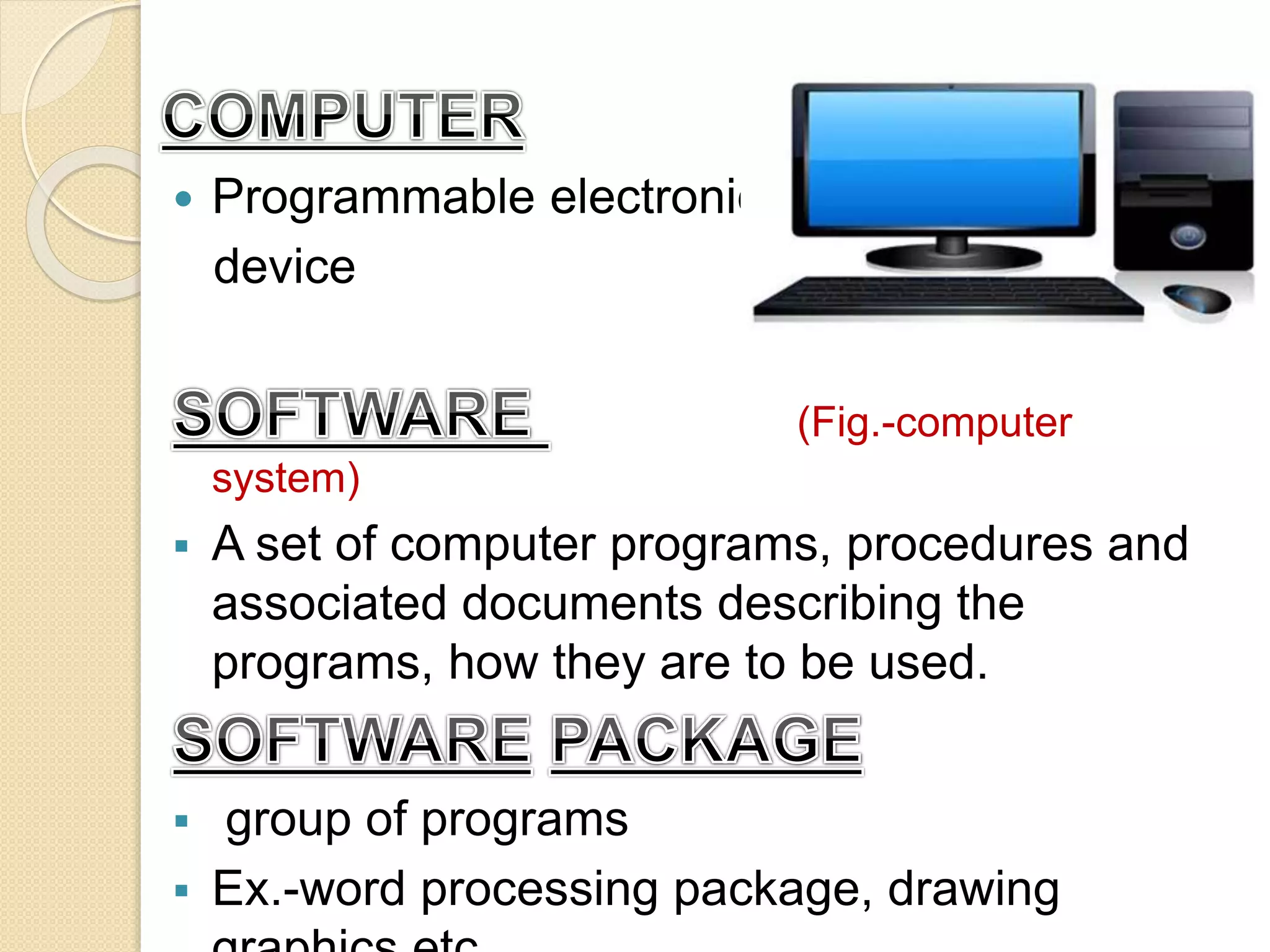
 Programmable electronic
device
(Fig.-computer
system)
 A set of computer programs, procedures and
associated documents describing the
programs, how they are to be used.
 group of programs
 Ex.-word processing package, drawing
HISTORY OF SOFTWARE
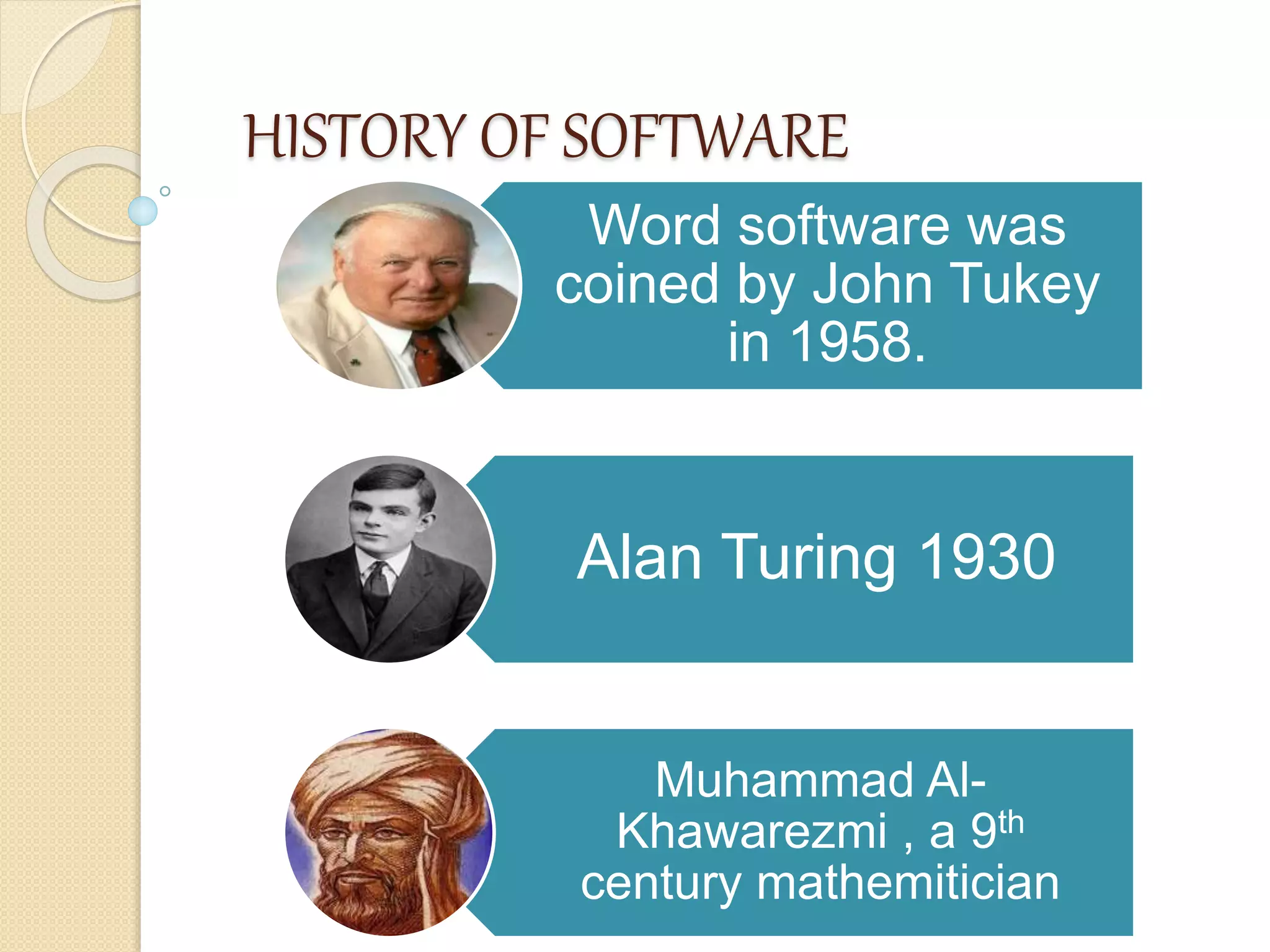
Word software was
coined by John Tukey
in 1958.
Alan Turing 1930
Muhammad Al-
Khawarezmi , a 9th
century mathemitician
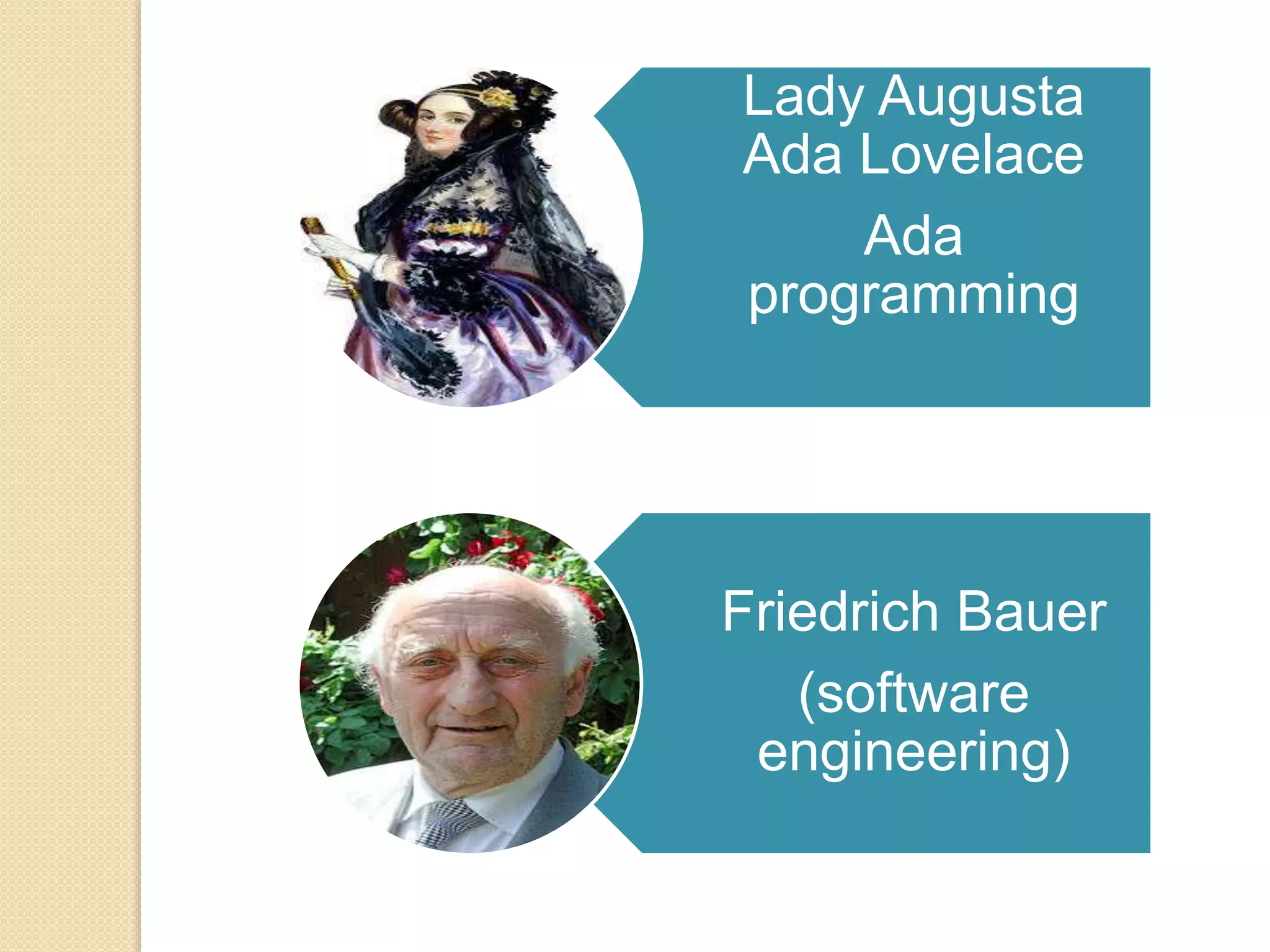
Lady Augusta
Ada Lovelace
Ada
programming
Friedrich Bauer
(software
engineering)
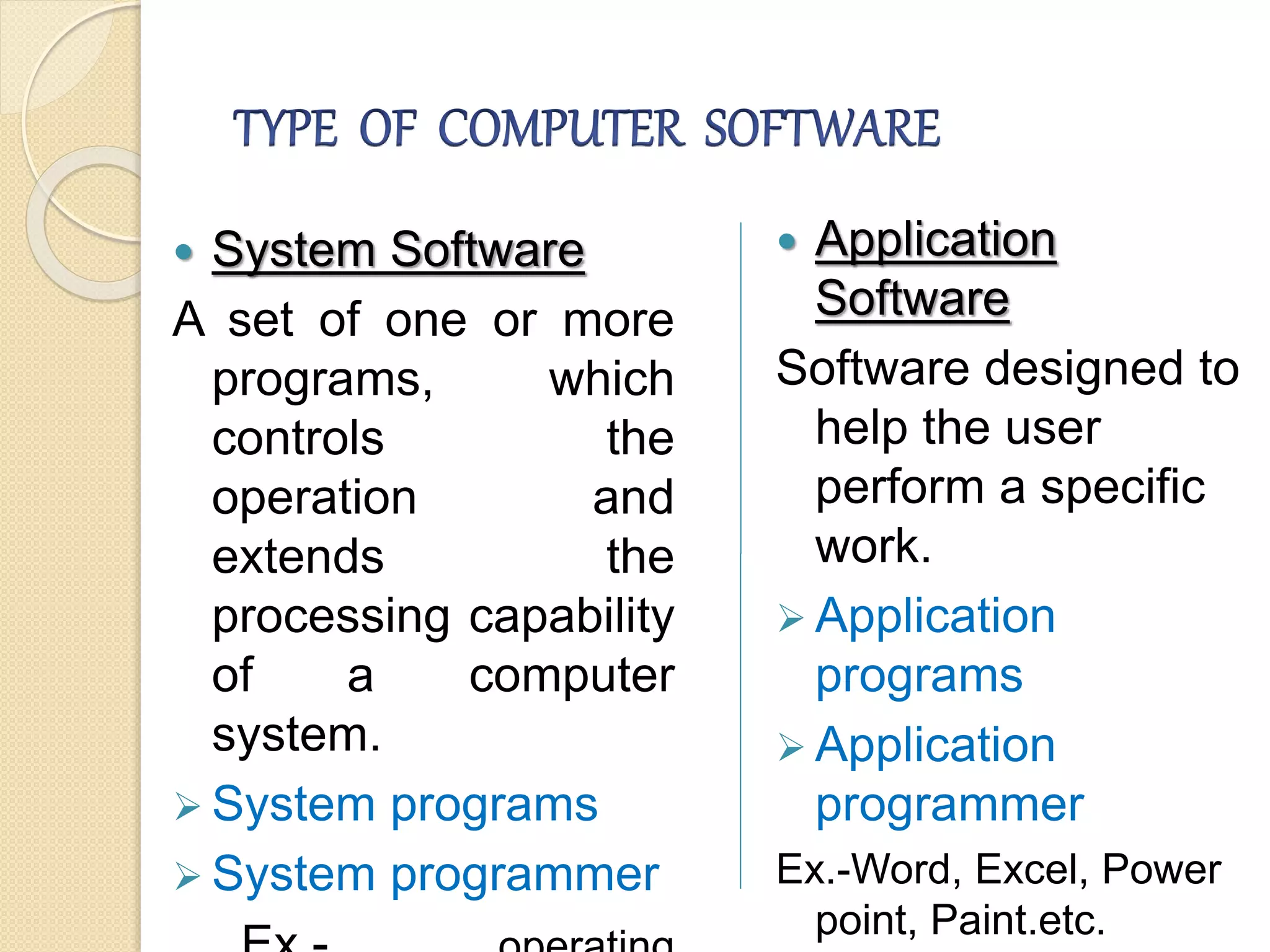
 System Software
A set of one or more
programs, which
controls the
operation and
extends the
processing capability
of a computer
system.
 System programs
 System programmer
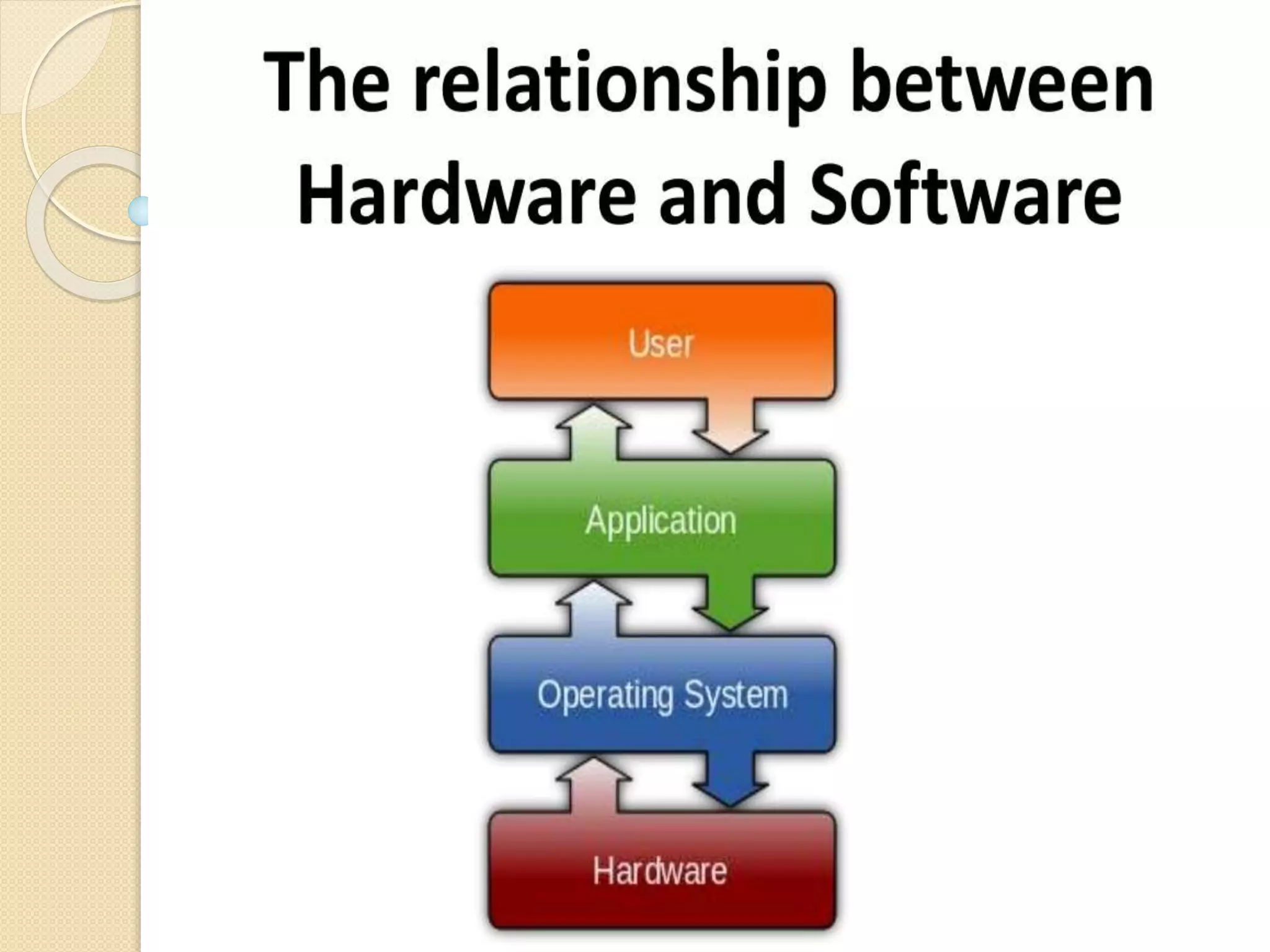
 Application
Software
Software designed to
help the user
perform a specific
work.
 Application
programs
 Application
programmer
Ex.-Word, Excel, Power
point, Paint.etc.
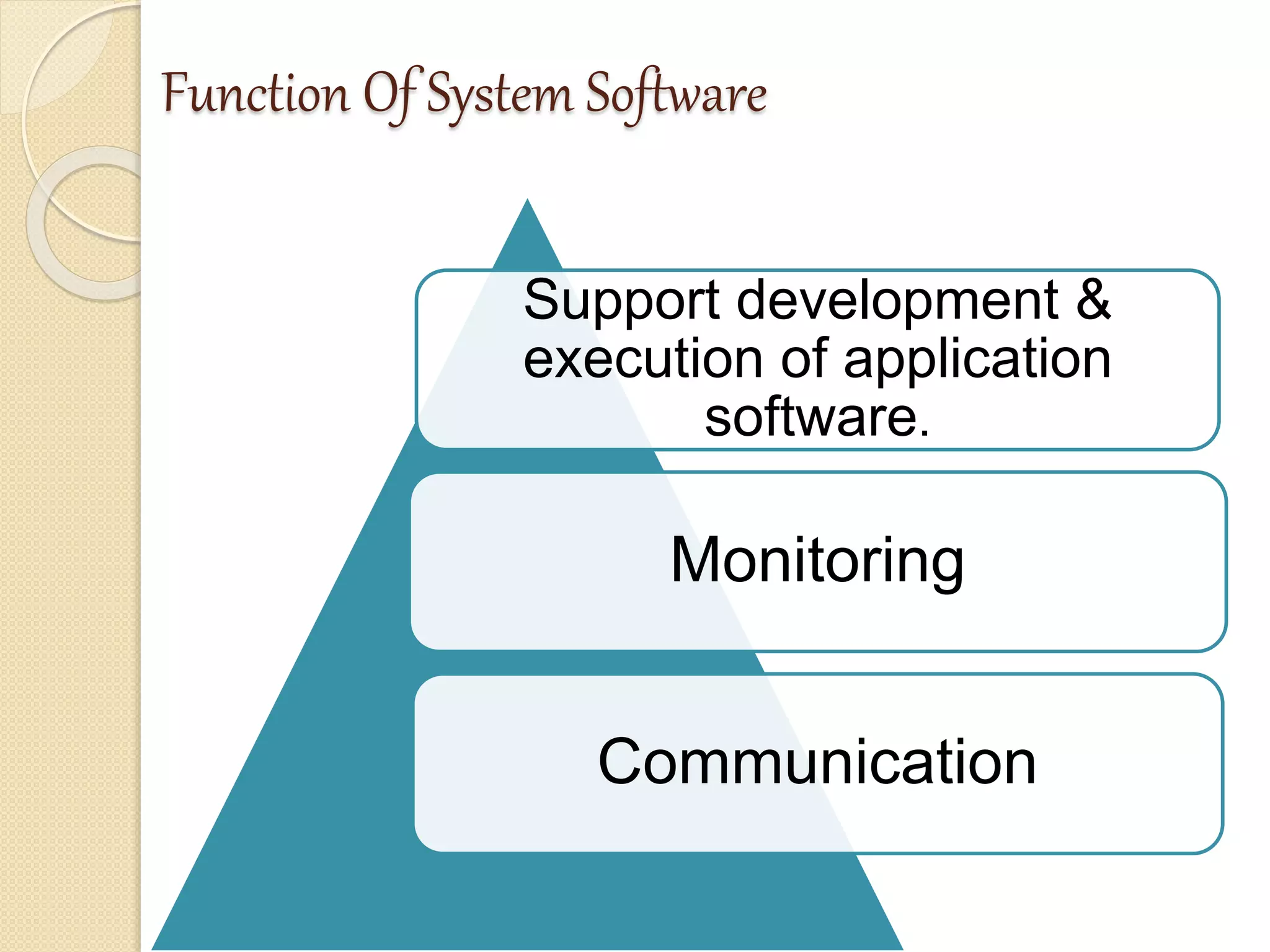
Function Of System Software
Support development &
execution of application
software.
Monitoring
Communication
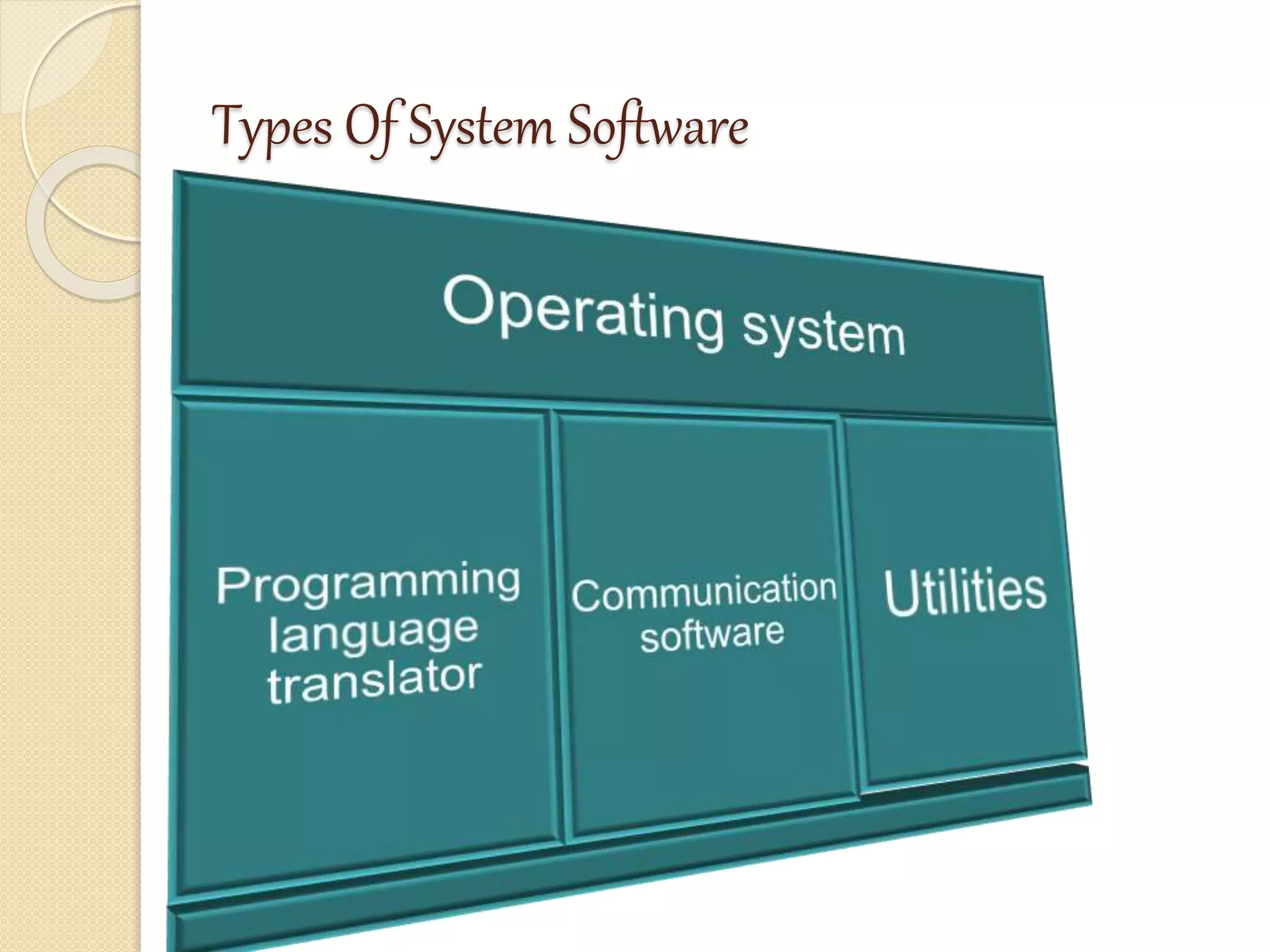
Types Of System Software
Type of application software
• Word-processing software
 Spreadsheet software
 Database software
 Graphics software
 Personal assistance software
 Education software
 Entertainment software
SOFTWARE DEVELOPMENT LIFE CYCLE
Forensic Software
FTK (Forensic Toolkit)
COFEE (Computer Online Forensic
Evidence
Extractor)
NIBIN (National Integrated Ballistic
Information Network)
SANS (Investigative forensic toolkit)
EnCase software
CONCLUSION
•Without system software we can not run the
computer and without application software we
can not do the work on the computer.
•For running the computer we need software.
REFERENCES
Computer Fundamentals by Sinha &Sinha
(2013)
Introduction to the history of computing
(springer)
Software Engineering by R.T. yeh , M.M. Tanik ,
W. Rossare , F. Cheng , & P. A. Ng.
Computer software

Computer software