CASPAM
Topic: Computer Networks
Submitted by: Kainat Fatima
Submitted to: Sir Shahzad
Roll no: BSM-16-16
Contents
 Computer Network
 Types of Computer Network
 LAN (Local Area Network)
 Advantages of LAN
 Disadvantages of LAN
 WAN (Wide Area Network)
 Advantages of WAN
 Disadvantages of WAN
 MAN (Metropolitan Area Network)
 Advantages of MAN
 Disadvantages of MAN
Computer Networks
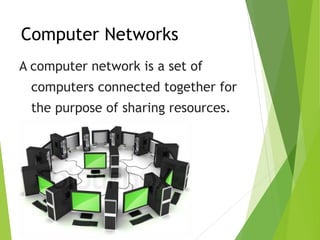
A computer network is a set of
computers connected together for
the purpose of sharing resources.
Types of Computer Networks
1) LAN – Local Area Network
2) WAN – Wide Area Network
3) MAN – Metropolitan Area Network
4) PAN – Personal Area Network
5) VPN – Virtual Private Network
6) CAN – Campus Area Network
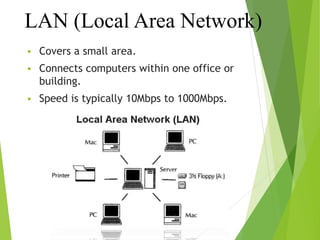
LAN (Local Area Network)
 Covers a small area.
 Connects computers within one office or
building.
 Speed is typically 10Mbps to 1000Mbps.
Node
A node is an individual computer
on a network.
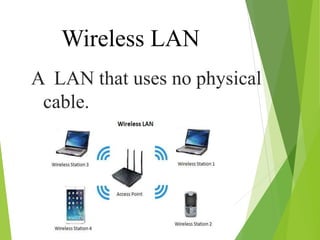
Wireless LAN
A LAN that uses no physical
cable.
Advantages of LAN
 Resource Sharing
 Communication
 Application Sharing
 Centralized IT Admin
 Centralized Data
 Internet Access Sharing
 Data Security & Management
Disadvantages of LAN
 Privacy Threat
 Expensive to Install
 Admin Time Required
 Data Security Concerns
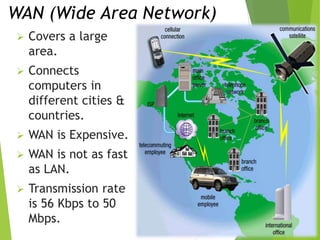
WAN (Wide Area Network)
 Covers a large
area.
 Connects
computers in
different cities &
countries.
 WAN is Expensive.
 WAN is not as fast
as LAN.
 Transmission rate
is 56 Kbps to 50
Mbps.
Advantages of WAN
 Communication Facilities
 Remote Data Entry
 Centralized Data
 Entertainment
Disadvantages of WAN
 Hardware, Software & setup Costs.
 Hardware & Software Management
Costs.
 Data Security concerns.
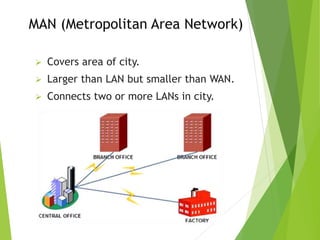
MAN (Metropolitan Area Network)
 Covers area of city.
 Larger than LAN but smaller than WAN.
 Connects two or more LANs in city.
Advantages of MAN
 Cover Large Area.
 Higher Data Speed.
Disadvantages of MAN
 Expensive.
 Difficult to Maintain.
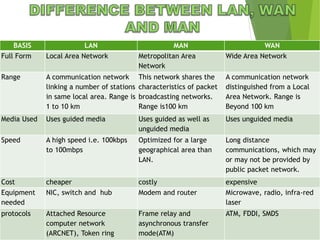
BASIS LAN MAN WAN
Full Form Local Area Network Metropolitan Area
Network
Wide Area Network
Range A communication network
linking a number of stations
in same local area. Range is
1 to 10 km
This network shares the
characteristics of packet
broadcasting networks.
Range is100 km
A communication network
distinguished from a Local
Area Network. Range is
Beyond 100 km
Media Used Uses guided media Uses guided as well as
unguided media
Uses unguided media
Speed A high speed i.e. 100kbps
to 100mbps
Optimized for a large
geographical area than
LAN.
Long distance
communications, which may
or may not be provided by
public packet network.
Cost cheaper costly expensive
Equipment
needed
NIC, switch and hub Modem and router Microwave, radio, infra-red
laser
protocols Attached Resource
computer network
(ARCNET), Token ring
Frame relay and
asynchronous transfer
mode(ATM)
ATM, FDDI, SMDS
Computer network

Computer network

  • 2.
    CASPAM Topic: Computer Networks Submittedby: Kainat Fatima Submitted to: Sir Shahzad Roll no: BSM-16-16
  • 3.
    Contents  Computer Network Types of Computer Network  LAN (Local Area Network)  Advantages of LAN  Disadvantages of LAN  WAN (Wide Area Network)  Advantages of WAN  Disadvantages of WAN  MAN (Metropolitan Area Network)  Advantages of MAN  Disadvantages of MAN
  • 4.
    Computer Networks A computernetwork is a set of computers connected together for the purpose of sharing resources.
  • 5.
    Types of ComputerNetworks 1) LAN – Local Area Network 2) WAN – Wide Area Network 3) MAN – Metropolitan Area Network 4) PAN – Personal Area Network 5) VPN – Virtual Private Network 6) CAN – Campus Area Network
  • 6.
    LAN (Local AreaNetwork)  Covers a small area.  Connects computers within one office or building.  Speed is typically 10Mbps to 1000Mbps.
  • 7.
    Node A node isan individual computer on a network.
  • 8.
    Wireless LAN A LANthat uses no physical cable.
  • 9.
    Advantages of LAN Resource Sharing  Communication  Application Sharing  Centralized IT Admin  Centralized Data  Internet Access Sharing  Data Security & Management
  • 10.
    Disadvantages of LAN Privacy Threat  Expensive to Install  Admin Time Required  Data Security Concerns
  • 11.
    WAN (Wide AreaNetwork)  Covers a large area.  Connects computers in different cities & countries.  WAN is Expensive.  WAN is not as fast as LAN.  Transmission rate is 56 Kbps to 50 Mbps.
  • 12.
    Advantages of WAN Communication Facilities  Remote Data Entry  Centralized Data  Entertainment
  • 13.
    Disadvantages of WAN Hardware, Software & setup Costs.  Hardware & Software Management Costs.  Data Security concerns.
  • 14.
    MAN (Metropolitan AreaNetwork)  Covers area of city.  Larger than LAN but smaller than WAN.  Connects two or more LANs in city.
  • 15.
    Advantages of MAN Cover Large Area.  Higher Data Speed.
  • 16.
    Disadvantages of MAN Expensive.  Difficult to Maintain.
  • 17.
    BASIS LAN MANWAN Full Form Local Area Network Metropolitan Area Network Wide Area Network Range A communication network linking a number of stations in same local area. Range is 1 to 10 km This network shares the characteristics of packet broadcasting networks. Range is100 km A communication network distinguished from a Local Area Network. Range is Beyond 100 km Media Used Uses guided media Uses guided as well as unguided media Uses unguided media Speed A high speed i.e. 100kbps to 100mbps Optimized for a large geographical area than LAN. Long distance communications, which may or may not be provided by public packet network. Cost cheaper costly expensive Equipment needed NIC, switch and hub Modem and router Microwave, radio, infra-red laser protocols Attached Resource computer network (ARCNET), Token ring Frame relay and asynchronous transfer mode(ATM) ATM, FDDI, SMDS