The Computer Keyboard
The Typewriter Area 
Character Keys 
The keys are marked with letters, 
numbers, and symbols. 
Shift Key 
Like the typewriter , pressing any letter 
and holding down the shift key 
simultaneously will give you capital 
letters. You can also use the shift key 
to type the symbol indicated at the 
upper portion of the key.
The Typewriter Area 
Caps Lock Key 
The caps lock key is just above the left 
shift key. It acts as an on-off switch. 
Pressing it once will capitalize all the 
letters you type. 
Tab Key 
Pressing this key usually causes the 
cursor to move more columns to the 
right
The Typewriter Area 
Enter Key 
It tells the computer you are done 
entering the command or have 
completed a line of text. 
Space Bar 
Press the space bar to enter a blank 
space on the screen instead of a 
character.
The Typewriter Area 
Ctrl and Alt Key 
These keys appear on your keyboard 
but don’t appear on a typewriter. Note 
location of these keys on your 
keyboard. You will use these keys in 
combination with the other keys. 
Backspace Key 
The backspace key deletes the 
character to the left of the cursor.
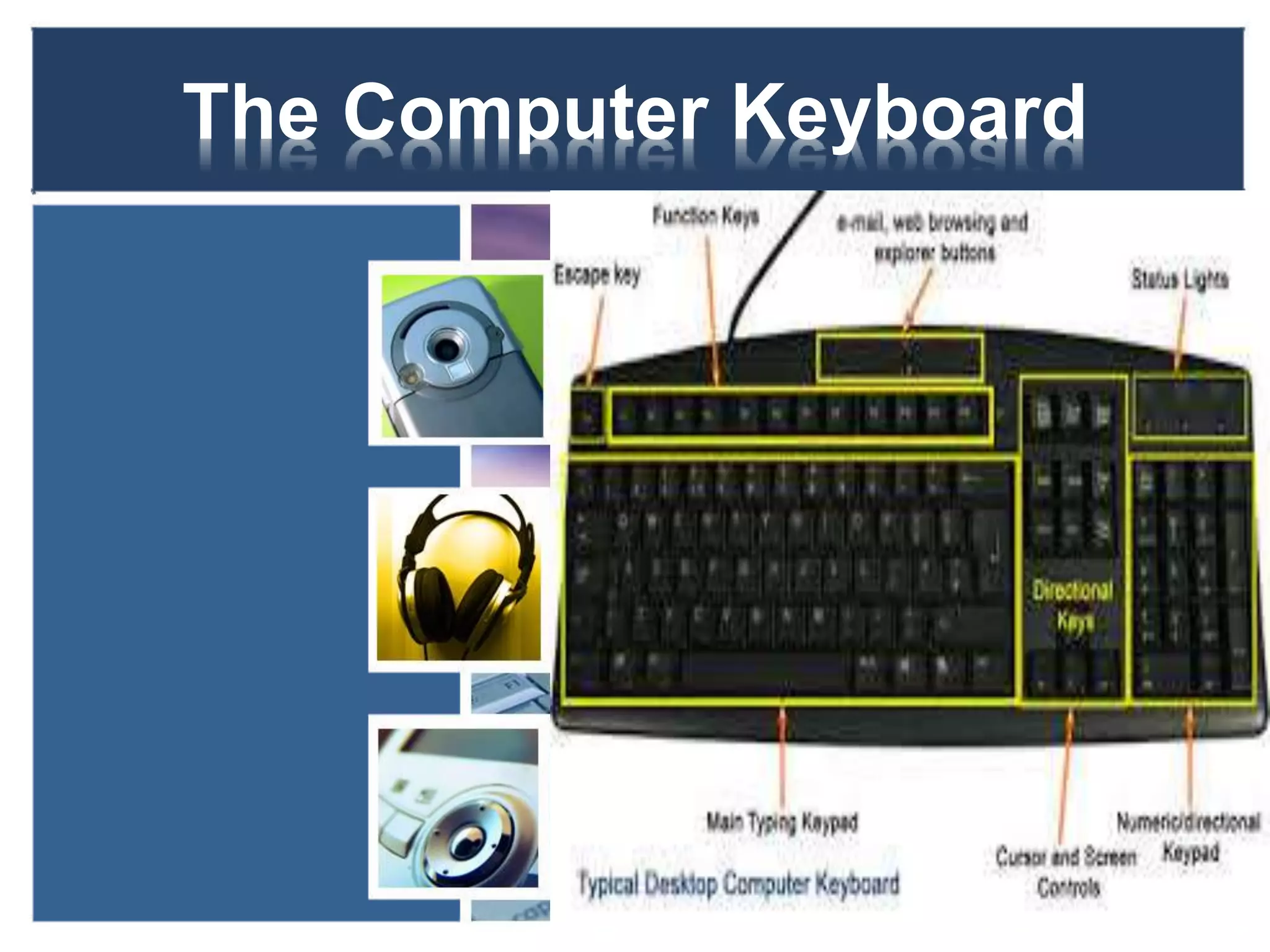
The Function Keys 
• Your keyboard will have keys 
labeled F1 through F12 called 
function keys. As you will learn, 
each type of software assigns 
unique functions to these keys.
The Numeric Keypad 
• The numeric keypad (which is on the 
right side of the keyboard) is like a 
calculator but to enter numbers from 
the keypad, you must press the 
numlock key once. The keypad exists 
to simplify your entry of numbers when 
you enter data into a spreadsheet or 
some other applications that requires 
the entry of many numbers.
The Arrow Keys 
• The arrow keys, or cursor control 
keys are used primarily by 
applications to let you move the 
cursor around the screen.
The Computer Keys 
• Print Screen Key 
– Pressing this key will give you an exact 
copy of the information displayed on 
the screen 
• Scroll Lock Key 
– This key locks scrolling of the 
“electronic page”. 
• Insert Key 
– This key allows you to insert characters 
to the left key of the cursor.
The Computer Keys 
• Delete Key 
– Press the delete key to delete a 
character at the cursor position. 
• Home & End Keys 
– It can cause the cursor to move to the 
top (Home) or to the bottom (End) of 
the screen.
The Computer Keys 
• Page Up & Page Down Keys 
– Pressing one usually causes the 
screen display to be entirely replaced. 
• Pause Key 
– Pressing this key will temporarily stop 
the scrolling of screen display 
• Esc Key 
– It is normally used to go back to a 
previous screen, to clear or to reset a 
command
Thanks for Copying!!!!!

Computer keyboard

  • 1.
  • 2.
    The Typewriter Area Character Keys The keys are marked with letters, numbers, and symbols. Shift Key Like the typewriter , pressing any letter and holding down the shift key simultaneously will give you capital letters. You can also use the shift key to type the symbol indicated at the upper portion of the key.
  • 3.
    The Typewriter Area Caps Lock Key The caps lock key is just above the left shift key. It acts as an on-off switch. Pressing it once will capitalize all the letters you type. Tab Key Pressing this key usually causes the cursor to move more columns to the right
  • 4.
    The Typewriter Area Enter Key It tells the computer you are done entering the command or have completed a line of text. Space Bar Press the space bar to enter a blank space on the screen instead of a character.
  • 5.
    The Typewriter Area Ctrl and Alt Key These keys appear on your keyboard but don’t appear on a typewriter. Note location of these keys on your keyboard. You will use these keys in combination with the other keys. Backspace Key The backspace key deletes the character to the left of the cursor.
  • 6.
    The Function Keys • Your keyboard will have keys labeled F1 through F12 called function keys. As you will learn, each type of software assigns unique functions to these keys.
  • 7.
    The Numeric Keypad • The numeric keypad (which is on the right side of the keyboard) is like a calculator but to enter numbers from the keypad, you must press the numlock key once. The keypad exists to simplify your entry of numbers when you enter data into a spreadsheet or some other applications that requires the entry of many numbers.
  • 8.
    The Arrow Keys • The arrow keys, or cursor control keys are used primarily by applications to let you move the cursor around the screen.
  • 9.
    The Computer Keys • Print Screen Key – Pressing this key will give you an exact copy of the information displayed on the screen • Scroll Lock Key – This key locks scrolling of the “electronic page”. • Insert Key – This key allows you to insert characters to the left key of the cursor.
  • 10.
    The Computer Keys • Delete Key – Press the delete key to delete a character at the cursor position. • Home & End Keys – It can cause the cursor to move to the top (Home) or to the bottom (End) of the screen.
  • 11.
    The Computer Keys • Page Up & Page Down Keys – Pressing one usually causes the screen display to be entirely replaced. • Pause Key – Pressing this key will temporarily stop the scrolling of screen display • Esc Key – It is normally used to go back to a previous screen, to clear or to reset a command
  • 12.