Lucrecia Guzman
What is CompTIA
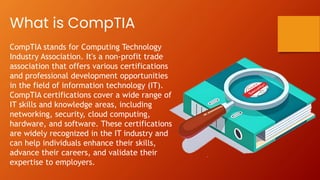
CompTIA stands for Computing Technology
Industry Association. It's a non-profit trade
association that offers various certifications
and professional development opportunities
in the field of information technology (IT).
CompTIA certifications cover a wide range of
IT skills and knowledge areas, including
networking, security, cloud computing,
hardware, and software. These certifications
are widely recognized in the IT industry and
can help individuals enhance their skills,
advance their careers, and validate their
expertise to employers.
For whom is CompTIA intended?
CompTIA certifications are intended for individuals
pursuing careers in the field of information technology
(IT), including professionals seeking to enhance their
skills, advance their careers, and validate their
expertise to employers.
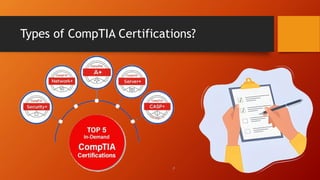
Types of CompTIA Certifications?
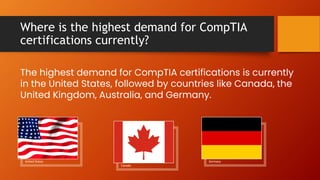
Where is the highest demand for CompTIA
certifications currently?
The highest demand for CompTIA certifications is currently
in the United States, followed by countries like Canada, the
United Kingdom, Australia, and Germany.
Germany
United States
Canada
What are some common job titles that individuals
with CompTIA certifications may hold?
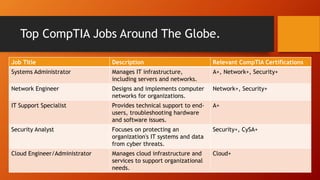
Top CompTIA Jobs Around The Globe.
Job Title Description Relevant CompTIA Certifications
Systems Administrator Manages IT infrastructure,
including servers and networks.
A+, Network+, Security+
Network Engineer Designs and implements computer
networks for organizations.
Network+, Security+
IT Support Specialist Provides technical support to end-
users, troubleshooting hardware
and software issues.
A+
Security Analyst Focuses on protecting an
organization's IT systems and data
from cyber threats.
Security+, CySA+
Cloud Engineer/Administrator Manages cloud infrastructure and
services to support organizational
needs.
Cloud+
Benefits of Having
CompTIA in your Resume
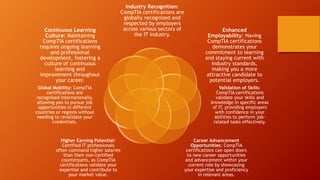
Industry Recognition:
CompTIA certifications are
globally recognized and
respected by employers
across various sectors of
the IT industry.
Enhanced
Employability: Having
CompTIA certifications
demonstrates your
commitment to learning
and staying current with
industry standards,
making you a more
attractive candidate to
potential employers.
Validation of Skills:
CompTIA certifications
validate your skills and
knowledge in specific areas
of IT, providing employers
with confidence in your
abilities to perform job-
related tasks effectively.
Career Advancement
Opportunities: CompTIA
certifications can open doors
to new career opportunities
and advancement within your
current role by showcasing
your expertise and proficiency
in relevant areas.
Higher Earning Potential:
Certified IT professionals
often command higher salaries
than their non-certified
counterparts, as CompTIA
certifications validate your
expertise and contribute to
your market value.
Global Mobility: CompTIA
certifications are
recognized internationally,
allowing you to pursue job
opportunities in different
countries or regions without
needing to revalidate your
credentials.
Continuous Learning
Culture: Maintaining
CompTIA certifications
requires ongoing learning
and professional
development, fostering a
culture of continuous
learning and
improvement throughout
your career.
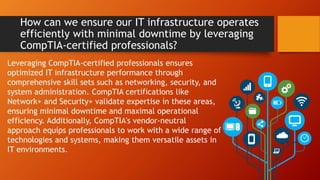
How can we ensure our IT infrastructure operates
efficiently with minimal downtime by leveraging
CompTIA-certified professionals?
Leveraging CompTIA-certified professionals ensures
optimized IT infrastructure performance through
comprehensive skill sets such as networking, security, and
system administration. CompTIA certifications like
Network+ and Security+ validate expertise in these areas,
ensuring minimal downtime and maximal operational
efficiency. Additionally, CompTIA's vendor-neutral
approach equips professionals to work with a wide range of
technologies and systems, making them versatile assets in
IT environments.
What measures can be taken to maintain patient data
integrity and confidentiality while optimizing electronic
health record (EHR) systems using CompTIA certifications?
CompTIA certifications are vital in maintaining patient
data integrity and confidentiality within healthcare
systems. Professionals with CompTIA Security+
certifications, for instance, possess expertise in securing
electronic health record (EHR) systems and ensuring
compliance with healthcare regulations such as HIPAA.
Furthermore, CompTIA's focus on cybersecurity best
practices equips healthcare organizations with the tools
and knowledge needed to protect sensitive medical
information from cyber threats.
How can CompTIA certifications be integrated into
educational programs to equip students with practical
IT skills for successful careers?
Integrating CompTIA certifications into educational
programs provides students with practical IT skills and
industry-recognized credentials. CompTIA's certification
tracks cover a broad range of topics, from foundational IT
knowledge (A+) to advanced cybersecurity (CySA+). By
earning CompTIA certifications, students gain valuable
hands-on experience and increase their employability in
the competitive technology job market, setting them up
for successful careers in various IT roles.
How can investing in CompTIA certifications for our workforce
drive business growth and competitiveness while reducing IT
support costs?
Investing in CompTIA certifications for the workforce
can drive business growth and competitiveness by
equipping employees with the latest IT skills and
knowledge. CompTIA-certified professionals
demonstrate proficiency in areas such as IT support,
cybersecurity, and cloud computing, enabling
organizations to adapt to technological
advancements and industry trends. Moreover,
CompTIA certifications are recognized globally,
providing organizations with a competitive advantage
in attracting top talent and expanding their market
reach.
What strategies can government agencies adopt to enhance
cybersecurity and ensure continuity of critical services with
CompTIA-certified professionals?
Government agencies can enhance cybersecurity
measures by leveraging CompTIA-certified
professionals who possess expertise in areas such as
network security, threat detection, and risk
management. Certifications like CompTIA Security+
and CySA+ validate professionals' skills in securing
sensitive data and mitigating cyber threats, making
them valuable assets in protecting critical
government infrastructure and services.
Choose The CompTIA Certification according
to your career.
For Best Certification Preparation There are
some authentic resources please visit.
•Official CompTIA Website: CompTIA
•Exam4sure: Exam4sure
•CompTIA Learning Paths: CompTIA Learning Paths

ComPTIA Overview | Comptia Security+ Book SY0-701

  • 1.
  • 2.
    What is CompTIA CompTIAstands for Computing Technology Industry Association. It's a non-profit trade association that offers various certifications and professional development opportunities in the field of information technology (IT). CompTIA certifications cover a wide range of IT skills and knowledge areas, including networking, security, cloud computing, hardware, and software. These certifications are widely recognized in the IT industry and can help individuals enhance their skills, advance their careers, and validate their expertise to employers.
  • 3.
    For whom isCompTIA intended? CompTIA certifications are intended for individuals pursuing careers in the field of information technology (IT), including professionals seeking to enhance their skills, advance their careers, and validate their expertise to employers.
  • 4.
    Types of CompTIACertifications?
  • 5.
    Where is thehighest demand for CompTIA certifications currently? The highest demand for CompTIA certifications is currently in the United States, followed by countries like Canada, the United Kingdom, Australia, and Germany. Germany United States Canada
  • 6.
    What are somecommon job titles that individuals with CompTIA certifications may hold?
  • 7.
    Top CompTIA JobsAround The Globe. Job Title Description Relevant CompTIA Certifications Systems Administrator Manages IT infrastructure, including servers and networks. A+, Network+, Security+ Network Engineer Designs and implements computer networks for organizations. Network+, Security+ IT Support Specialist Provides technical support to end- users, troubleshooting hardware and software issues. A+ Security Analyst Focuses on protecting an organization's IT systems and data from cyber threats. Security+, CySA+ Cloud Engineer/Administrator Manages cloud infrastructure and services to support organizational needs. Cloud+
  • 8.
  • 9.
    Industry Recognition: CompTIA certificationsare globally recognized and respected by employers across various sectors of the IT industry. Enhanced Employability: Having CompTIA certifications demonstrates your commitment to learning and staying current with industry standards, making you a more attractive candidate to potential employers. Validation of Skills: CompTIA certifications validate your skills and knowledge in specific areas of IT, providing employers with confidence in your abilities to perform job- related tasks effectively. Career Advancement Opportunities: CompTIA certifications can open doors to new career opportunities and advancement within your current role by showcasing your expertise and proficiency in relevant areas. Higher Earning Potential: Certified IT professionals often command higher salaries than their non-certified counterparts, as CompTIA certifications validate your expertise and contribute to your market value. Global Mobility: CompTIA certifications are recognized internationally, allowing you to pursue job opportunities in different countries or regions without needing to revalidate your credentials. Continuous Learning Culture: Maintaining CompTIA certifications requires ongoing learning and professional development, fostering a culture of continuous learning and improvement throughout your career.
  • 10.
    How can weensure our IT infrastructure operates efficiently with minimal downtime by leveraging CompTIA-certified professionals? Leveraging CompTIA-certified professionals ensures optimized IT infrastructure performance through comprehensive skill sets such as networking, security, and system administration. CompTIA certifications like Network+ and Security+ validate expertise in these areas, ensuring minimal downtime and maximal operational efficiency. Additionally, CompTIA's vendor-neutral approach equips professionals to work with a wide range of technologies and systems, making them versatile assets in IT environments.
  • 11.
    What measures canbe taken to maintain patient data integrity and confidentiality while optimizing electronic health record (EHR) systems using CompTIA certifications? CompTIA certifications are vital in maintaining patient data integrity and confidentiality within healthcare systems. Professionals with CompTIA Security+ certifications, for instance, possess expertise in securing electronic health record (EHR) systems and ensuring compliance with healthcare regulations such as HIPAA. Furthermore, CompTIA's focus on cybersecurity best practices equips healthcare organizations with the tools and knowledge needed to protect sensitive medical information from cyber threats.
  • 12.
    How can CompTIAcertifications be integrated into educational programs to equip students with practical IT skills for successful careers? Integrating CompTIA certifications into educational programs provides students with practical IT skills and industry-recognized credentials. CompTIA's certification tracks cover a broad range of topics, from foundational IT knowledge (A+) to advanced cybersecurity (CySA+). By earning CompTIA certifications, students gain valuable hands-on experience and increase their employability in the competitive technology job market, setting them up for successful careers in various IT roles.
  • 13.
    How can investingin CompTIA certifications for our workforce drive business growth and competitiveness while reducing IT support costs? Investing in CompTIA certifications for the workforce can drive business growth and competitiveness by equipping employees with the latest IT skills and knowledge. CompTIA-certified professionals demonstrate proficiency in areas such as IT support, cybersecurity, and cloud computing, enabling organizations to adapt to technological advancements and industry trends. Moreover, CompTIA certifications are recognized globally, providing organizations with a competitive advantage in attracting top talent and expanding their market reach.
  • 14.
    What strategies cangovernment agencies adopt to enhance cybersecurity and ensure continuity of critical services with CompTIA-certified professionals? Government agencies can enhance cybersecurity measures by leveraging CompTIA-certified professionals who possess expertise in areas such as network security, threat detection, and risk management. Certifications like CompTIA Security+ and CySA+ validate professionals' skills in securing sensitive data and mitigating cyber threats, making them valuable assets in protecting critical government infrastructure and services.
  • 15.
    Choose The CompTIACertification according to your career.
  • 16.
    For Best CertificationPreparation There are some authentic resources please visit. •Official CompTIA Website: CompTIA •Exam4sure: Exam4sure •CompTIA Learning Paths: CompTIA Learning Paths