Compressed Air Powered Engine
Under Guidance of Prof. Nitin Aher
Project by-
Utsav Rachh – B80400907
Abhishek Hingmire – B80400850
Mandar Peshwe – B80400904
Nachiket Ponde – B80400906
Index
• Introduction
– Motivation
– What’s a CAPE?
– Problem Definition
• Literature Survey
– Research work and Papers
Published
– Commercial Presence of
technology
• Project Concept
• Design Features
– Modified Cylinder Head
– Control System
– Pneumatic Circuit
• Performance of Air Engine
• Benefits of CAPE
• Conclusion
• Future Scope
• References
Department of Mechanical Engineering, JSCOE 2
Motivation
Department of Mechanical Engineering, JSCOE 3
Motivation
The world needs an
alternative to fossil fuels…
Department of Mechanical Engineering, JSCOE 4
What’s CAPE..?
A power producing device consuming
compressed air.
Compressed air is expanded inside an engine
cylinder to produce torque.
It produces no pollution.
It consumes no fuel; only the compressed air.
Department of Mechanical Engineering, JSCOE 5
Problem Definition
To convert a conventional two stroke spark ignition
engine into a zero pollution compressed air operated
engine as a practical sustainable alternative energy
technology solution.
Department of Mechanical Engineering, JSCOE 6
Research work and Papers Published
Department of Mechanical Engineering, JSCOE 7
Experimental Investigation on the Performance of a
Compressed-Air Driven Piston Engine
Chih-Yung Huang, Cheng-Kang Hu, Chih-Jie Yu and Cheng-Kuo Sung.
Fabrication of Compressed Air Engine
D. Ravi
Commercial Presence of Technology
Department of Mechanical Engineering, JSCOE 8
Motor Development International (MDI)
Zero Pollution Motors
TATA Motors
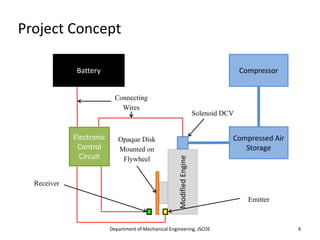
Project Concept
Compressor
Compressed Air
Storage
ModifiedEngine
Electronic
Control
Circuit
Battery
Connecting
Wires
Opaque Disk
Mounted on
Flywheel
Receiver
Emitter
Solenoid DCV
Department of Mechanical Engineering, JSCOE 9
Project Concept
Sensor Pair Sends a
Signal to control
circuit
Due to disk
interrupting the light
path between
sensor pair, valve
gets open.
Air comes in and
pushes piston
downwards.
Department of Mechanical Engineering, JSCOE 10
Project Concept
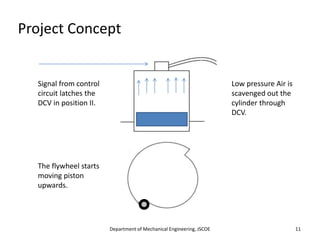
Signal from control
circuit latches the
DCV in position II.
Low pressure Air is
scavenged out the
cylinder through
DCV.
The flywheel starts
moving piston
upwards.
Department of Mechanical Engineering, JSCOE 11
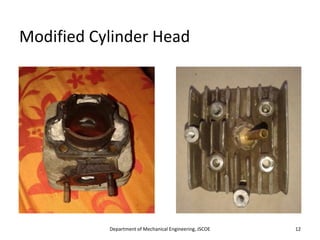
Modified Cylinder Head
Department of Mechanical Engineering, JSCOE 12
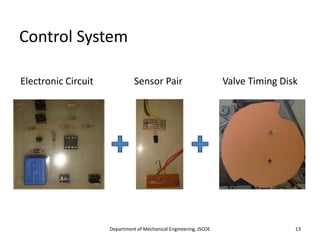
Control System
Electronic Circuit Sensor Pair Valve Timing Disk
Department of Mechanical Engineering, JSCOE 13
Control System
Components of Circuit-
Power supply
Voltage regulator
Voltage divider Network of
Resistors
Transistor
Comparator
Connectors
Department of Mechanical Engineering, JSCOE 14
Control System
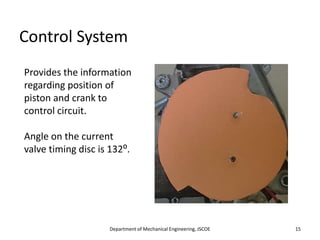
Provides the information
regarding position of
piston and crank to
control circuit.
Angle on the current
valve timing disc is 132⁰.
Department of Mechanical Engineering, JSCOE 15
Pneumatic Circuit
Department of Mechanical Engineering, JSCOE 16
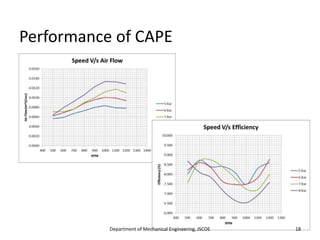
Performance of CAPE
Department of Mechanical Engineering, JSCOE 17
Performance of CAPE
Department of Mechanical Engineering, JSCOE 18
Benefits of CAPE
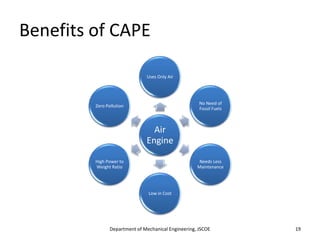
Air
Engine
Uses Only Air
No Need of
Fossil Fuels
Needs Less
Maintenance
Low in Cost
High Power to
Weight Ratio
Zero Pollution
Department of Mechanical Engineering, JSCOE 19
Conclusions
• Its possible to use Compressed Air to drive a Existing ICE’s by incorporating
a few simple modifications.
• Such a CAPE is capable of producing considerable power at substantially
low cost.
• Efficiency if CAPE is comparatively poor and a subject wherein more
efforts are expected.
• A CAPE produces absolutely no pollution.
• With successful completion of project the results confirm the
sustainability and effectiveness of CAPE as most promising technology to
eradicate the use of fossils and odds associated.
Department of Mechanical Engineering, JSCOE 20
Future Scope
Future
of CAPE
Multi-
cylinder
Engines
Recirculation
of Air
Higher
Torque and
Power
Improved
method of
Controlling
Valve Timing
Department of Mechanical Engineering, JSCOE 21
References
• Chih-Yung Huang, Cheng-Kang Hu, Chih-Jie Yu and Cheng-Kuo Sung,
Experimental Investigation on the Performance of a Compressed-
Air Driven Piston Engine, ISSN 1996-1073.
• Anirudh Addala & Srinivasu Gangada, Fabrication and Testing of
Compressed Air Car, Global Journal of Researches in Engineering
Mechanical and Mechanics Engineering Volume 13, Issue 1 Version
1.0, Year 2013.
• D. Ravi, Fabrication of Compressed Air Engine, Middle-East Journal
of Scientific Research 20 (9): 1075-1077, 2014 ISSN 1990-9233.
Department of Mechanical Engineering, JSCOE 22
We would like to answer your
queries…
Department of Mechanical Engineering, JSCOE 23
Thank You…
Department of Mechanical Engineering, JSCOE 24

Compressed Air Powered Engine

  • 1.
    Compressed Air PoweredEngine Under Guidance of Prof. Nitin Aher Project by- Utsav Rachh – B80400907 Abhishek Hingmire – B80400850 Mandar Peshwe – B80400904 Nachiket Ponde – B80400906
  • 2.
    Index • Introduction – Motivation –What’s a CAPE? – Problem Definition • Literature Survey – Research work and Papers Published – Commercial Presence of technology • Project Concept • Design Features – Modified Cylinder Head – Control System – Pneumatic Circuit • Performance of Air Engine • Benefits of CAPE • Conclusion • Future Scope • References Department of Mechanical Engineering, JSCOE 2
  • 3.
  • 4.
    Motivation The world needsan alternative to fossil fuels… Department of Mechanical Engineering, JSCOE 4
  • 5.
    What’s CAPE..? A powerproducing device consuming compressed air. Compressed air is expanded inside an engine cylinder to produce torque. It produces no pollution. It consumes no fuel; only the compressed air. Department of Mechanical Engineering, JSCOE 5
  • 6.
    Problem Definition To converta conventional two stroke spark ignition engine into a zero pollution compressed air operated engine as a practical sustainable alternative energy technology solution. Department of Mechanical Engineering, JSCOE 6
  • 7.
    Research work andPapers Published Department of Mechanical Engineering, JSCOE 7 Experimental Investigation on the Performance of a Compressed-Air Driven Piston Engine Chih-Yung Huang, Cheng-Kang Hu, Chih-Jie Yu and Cheng-Kuo Sung. Fabrication of Compressed Air Engine D. Ravi
  • 8.
    Commercial Presence ofTechnology Department of Mechanical Engineering, JSCOE 8 Motor Development International (MDI) Zero Pollution Motors TATA Motors
  • 9.
    Project Concept Compressor Compressed Air Storage ModifiedEngine Electronic Control Circuit Battery Connecting Wires OpaqueDisk Mounted on Flywheel Receiver Emitter Solenoid DCV Department of Mechanical Engineering, JSCOE 9
  • 10.
    Project Concept Sensor PairSends a Signal to control circuit Due to disk interrupting the light path between sensor pair, valve gets open. Air comes in and pushes piston downwards. Department of Mechanical Engineering, JSCOE 10
  • 11.
    Project Concept Signal fromcontrol circuit latches the DCV in position II. Low pressure Air is scavenged out the cylinder through DCV. The flywheel starts moving piston upwards. Department of Mechanical Engineering, JSCOE 11
  • 12.
    Modified Cylinder Head Departmentof Mechanical Engineering, JSCOE 12
  • 13.
    Control System Electronic CircuitSensor Pair Valve Timing Disk Department of Mechanical Engineering, JSCOE 13
  • 14.
    Control System Components ofCircuit- Power supply Voltage regulator Voltage divider Network of Resistors Transistor Comparator Connectors Department of Mechanical Engineering, JSCOE 14
  • 15.
    Control System Provides theinformation regarding position of piston and crank to control circuit. Angle on the current valve timing disc is 132⁰. Department of Mechanical Engineering, JSCOE 15
  • 16.
    Pneumatic Circuit Department ofMechanical Engineering, JSCOE 16
  • 17.
    Performance of CAPE Departmentof Mechanical Engineering, JSCOE 17
  • 18.
    Performance of CAPE Departmentof Mechanical Engineering, JSCOE 18
  • 19.
    Benefits of CAPE Air Engine UsesOnly Air No Need of Fossil Fuels Needs Less Maintenance Low in Cost High Power to Weight Ratio Zero Pollution Department of Mechanical Engineering, JSCOE 19
  • 20.
    Conclusions • Its possibleto use Compressed Air to drive a Existing ICE’s by incorporating a few simple modifications. • Such a CAPE is capable of producing considerable power at substantially low cost. • Efficiency if CAPE is comparatively poor and a subject wherein more efforts are expected. • A CAPE produces absolutely no pollution. • With successful completion of project the results confirm the sustainability and effectiveness of CAPE as most promising technology to eradicate the use of fossils and odds associated. Department of Mechanical Engineering, JSCOE 20
  • 21.
    Future Scope Future of CAPE Multi- cylinder Engines Recirculation ofAir Higher Torque and Power Improved method of Controlling Valve Timing Department of Mechanical Engineering, JSCOE 21
  • 22.
    References • Chih-Yung Huang,Cheng-Kang Hu, Chih-Jie Yu and Cheng-Kuo Sung, Experimental Investigation on the Performance of a Compressed- Air Driven Piston Engine, ISSN 1996-1073. • Anirudh Addala & Srinivasu Gangada, Fabrication and Testing of Compressed Air Car, Global Journal of Researches in Engineering Mechanical and Mechanics Engineering Volume 13, Issue 1 Version 1.0, Year 2013. • D. Ravi, Fabrication of Compressed Air Engine, Middle-East Journal of Scientific Research 20 (9): 1075-1077, 2014 ISSN 1990-9233. Department of Mechanical Engineering, JSCOE 22
  • 23.
    We would liketo answer your queries… Department of Mechanical Engineering, JSCOE 23
  • 24.
    Thank You… Department ofMechanical Engineering, JSCOE 24