COMPREHENSION 
SKILLS 
By: Lenie Mangubat
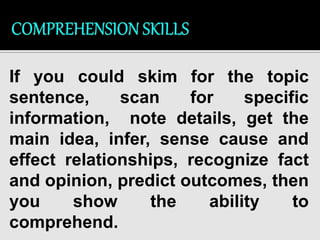
If you could skim for the topic 
sentence, scan for specific 
information, note details, get the 
main idea, infer, sense cause and 
effect relationships, recognize fact 
and opinion, predict outcomes, then 
you show the ability to 
comprehend.
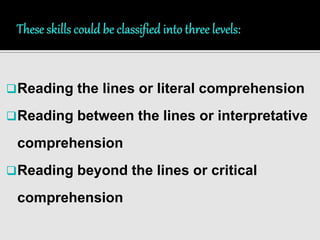
Reading the lines or literal comprehension 
Reading between the lines or interpretative 
comprehension 
Reading beyond the lines or critical 
comprehension
TO SKIM, examine the title and 
headings, read the first paragraph 
and last paragraph of the text to 
find out its main idea. Or you can 
also read the whole first paragraph 
and the first sentence of each of 
the succeeding paragraphs.
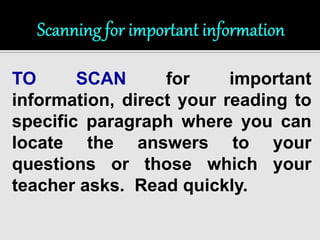
TO SCAN for important 
information, direct your reading to 
specific paragraph where you can 
locate the answers to your 
questions or those which your 
teacher asks. Read quickly.
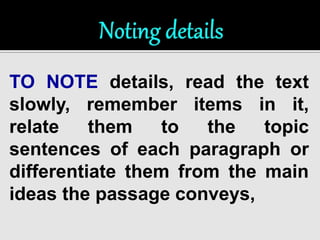
TO NOTE details, read the text 
slowly, remember items in it, 
relate them to the topic 
sentences of each paragraph or 
differentiate them from the main 
ideas the passage conveys,
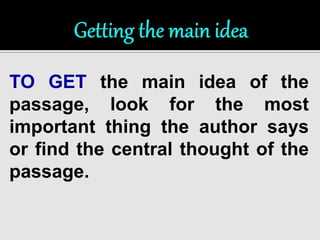
TO GET the main idea of the 
passage, look for the most 
important thing the author says 
or find the central thought of the 
passage.
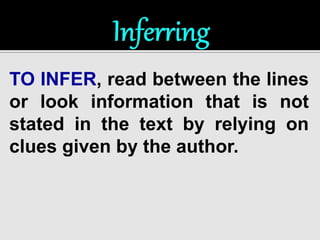
TO INFER, read between the lines 
or look information that is not 
stated in the text by relying on 
clues given by the author.
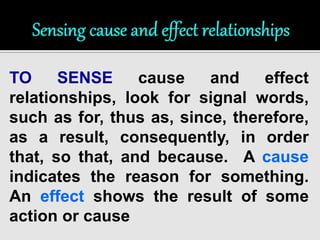
TO SENSE cause and effect 
relationships, look for signal words, 
such as for, thus as, since, therefore, 
as a result, consequently, in order 
that, so that, and because. A cause 
indicates the reason for something. 
An effect shows the result of some 
action or cause
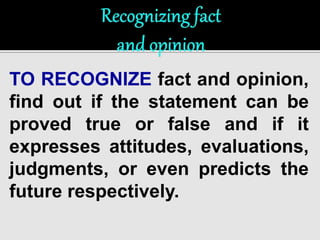
TO RECOGNIZE fact and opinion, 
find out if the statement can be 
proved true or false and if it 
expresses attitudes, evaluations, 
judgments, or even predicts the 
future respectively.
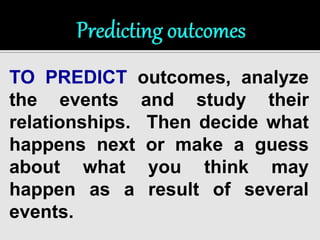
TO PREDICT outcomes, analyze 
the events and study their 
relationships. Then decide what 
happens next or make a guess 
about what you think may 
happen as a result of several 
events.

Comprehension Skills

  • 1.
  • 2.
    If you couldskim for the topic sentence, scan for specific information, note details, get the main idea, infer, sense cause and effect relationships, recognize fact and opinion, predict outcomes, then you show the ability to comprehend.
  • 3.
    Reading the linesor literal comprehension Reading between the lines or interpretative comprehension Reading beyond the lines or critical comprehension
  • 4.
    TO SKIM, examinethe title and headings, read the first paragraph and last paragraph of the text to find out its main idea. Or you can also read the whole first paragraph and the first sentence of each of the succeeding paragraphs.
  • 5.
    TO SCAN forimportant information, direct your reading to specific paragraph where you can locate the answers to your questions or those which your teacher asks. Read quickly.
  • 6.
    TO NOTE details,read the text slowly, remember items in it, relate them to the topic sentences of each paragraph or differentiate them from the main ideas the passage conveys,
  • 7.
    TO GET themain idea of the passage, look for the most important thing the author says or find the central thought of the passage.
  • 8.
    TO INFER, readbetween the lines or look information that is not stated in the text by relying on clues given by the author.
  • 9.
    TO SENSE causeand effect relationships, look for signal words, such as for, thus as, since, therefore, as a result, consequently, in order that, so that, and because. A cause indicates the reason for something. An effect shows the result of some action or cause
  • 10.
    TO RECOGNIZE factand opinion, find out if the statement can be proved true or false and if it expresses attitudes, evaluations, judgments, or even predicts the future respectively.
  • 11.
    TO PREDICT outcomes,analyze the events and study their relationships. Then decide what happens next or make a guess about what you think may happen as a result of several events.