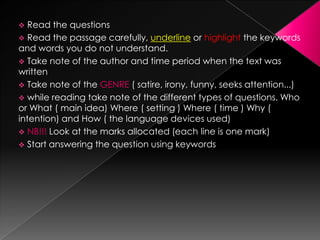

 Read the questions
 Read the passage carefully, underline or highlight the keywords
and words you do not understand.
 Take note of the author and time period when the text was
written
 Take note of the GENRE ( satire, irony, funny, seeks attention...)
 while reading take note of the different types of questions. Who
or What ( main idea) Where ( setting ) Where ( time ) Why (
intention) and How ( the language devices used)
 NB!!! Look at the marks allocated (each line is one mark)
 Start answering the question using keywords
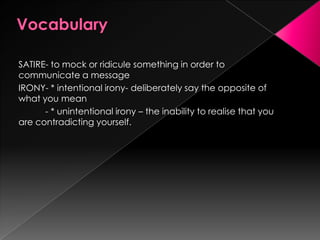
SATIRE- to mock or ridicule something in order to
communicate a message
IRONY- * intentional irony- deliberately say the opposite of
what you mean
- * unintentional irony – the inability to realise that you
are contradicting yourself.
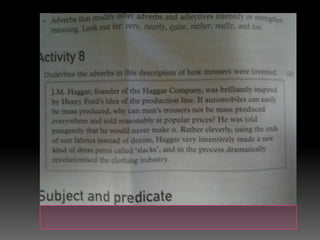
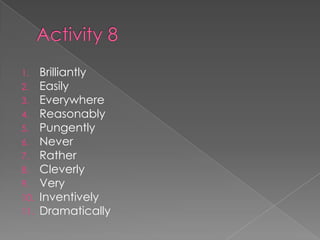
1. Brilliantly
2. Easily
3. Everywhere
4. Reasonably
5. Pungently
6. Never
7. Rather
8. Cleverly
9. Very
10. Inventively
11. Dramatically
Comprehension skills

Comprehension skills

  • 2.
     Read thequestions  Read the passage carefully, underline or highlight the keywords and words you do not understand.  Take note of the author and time period when the text was written  Take note of the GENRE ( satire, irony, funny, seeks attention...)  while reading take note of the different types of questions. Who or What ( main idea) Where ( setting ) Where ( time ) Why ( intention) and How ( the language devices used)  NB!!! Look at the marks allocated (each line is one mark)  Start answering the question using keywords
  • 3.
    SATIRE- to mockor ridicule something in order to communicate a message IRONY- * intentional irony- deliberately say the opposite of what you mean - * unintentional irony – the inability to realise that you are contradicting yourself.
  • 5.
    1. Brilliantly 2. Easily 3.Everywhere 4. Reasonably 5. Pungently 6. Never 7. Rather 8. Cleverly 9. Very 10. Inventively 11. Dramatically