MAKING COMPOST FROM BIODEGRADABLE WASTE
M A N I S H A S I N G H A L B 5 0
M A N A N J A I N B 5 1
B H AVA N A K U R R A B 5 2
U M E R Y O U S U F L O N E B 4 9
S A H A B A Z B 4 8
L O V E LY P R O F E S S I O N A L
U N I V E R S I T Y
INTRODUCTION
COMPOSTING, THE RECYCLING OF ORGANIC WASTE SUCH AS VEGETATION
AND FOOD WASTE REDUCES THE AMOUNT OF WASTE GOING TO LANDFILL
AND IS THEREFORE A RAPIDLY GROWING SECTOR. THIS IS A CORNERSTONE
OF ORGANIC GARDENING AND HAS MANY BENEFITS TO THE SCHOOL,
COMMUNITY AND ENVIRONMENT. MAKING COMPOST IS NOT ONLY ABOUT
PROVIDING SOIL AND PLANTS WITH A SOURCE OF FOOD, IT IS AN INTEGRAL
PART OF WORKING ORGANICALLY AND REDUCING WASTE. COMPOSTING
PROVIDES A USEFUL WAY FOR TEACHERS, PUPILS AND CATERING STAFF TO
EXPLORE EDUCATIONAL OPPORTUNITIES TOGETHER.
PROCEDURE
The compost mixtures comprises of household waste such as
tomatoes, pumpkin leaves, oranges, peppers, onions, rice husk,
woodchips and sawdust. For composting to occur in an optimum
manner five key factors need to be controlled, temperature, moisture
content, oxygen content, aterial particle size and nature of the
feedstock with particular importance to carbon over nitrogen ratio.
Generally materials that are green and moist tend to be high in
Nitrogen, while those that are brown and dry are high in Carbon.
RESULT
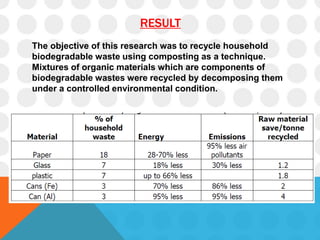
The objective of this research was to recycle household
biodegradable waste using composting as a technique.
Mixtures of organic materials which are components of
biodegradable wastes were recycled by decomposing them
under a controlled environmental condition.
CONT….
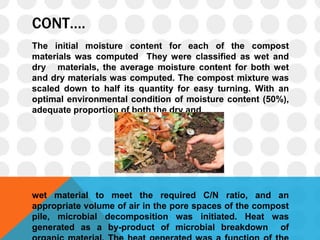
The initial moisture content for each of the compost
materials was computed They were classified as wet and
dry materials, the average moisture content for both wet
and dry materials was computed. The compost mixture was
scaled down to half its quantity for easy turning. With an
optimal environmental condition of moisture content (50%),
adequate proportion of both the dry and
wet material to meet the required C/N ratio, and an
appropriate volume of air in the pore spaces of the compost
pile, microbial decomposition was initiated. Heat was
generated as a by-product of microbial breakdown of
CONT……
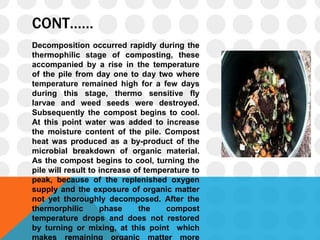
Decomposition occurred rapidly during the
thermophilic stage of composting, these
accompanied by a rise in the temperature
of the pile from day one to day two where
temperature remained high for a few days
during this stage, thermo sensitive fly
larvae and weed seeds were destroyed.
Subsequently the compost begins to cool.
At this point water was added to increase
the moisture content of the pile. Compost
heat was produced as a by-product of the
microbial breakdown of organic material.
As the compost begins to cool, turning the
pile will result to increase of temperature to
peak, because of the replenished oxygen
supply and the exposure of organic matter
not yet thoroughly decomposed. After the
thermorphilic phase the compost
temperature drops and does not restored
by turning or mixing, at this point which
makes remaining organic matter more
CONCLUSION
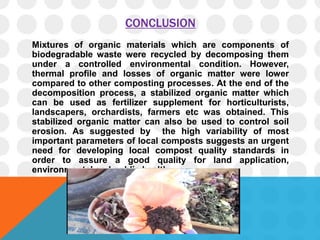
Mixtures of organic materials which are components of
biodegradable waste were recycled by decomposing them
under a controlled environmental condition. However,
thermal profile and losses of organic matter were lower
compared to other composting processes. At the end of the
decomposition process, a stabilized organic matter which
can be used as fertilizer supplement for horticulturists,
landscapers, orchardists, farmers etc was obtained. This
stabilized organic matter can also be used to control soil
erosion. As suggested by the high variability of most
important parameters of local composts suggests an urgent
need for developing local compost quality standards in
order to assure a good quality for land application,
environmental and public health.
REFERENCES
• Misra, R.V., R.N. Roy and Hiraoka, H. (2003). On farm
composting methods. Rome: FAO.
• Pace, M.G., B.E. Miller, K.L. Farrel-Poe (1995). The composting
process (AG-WM01).
Available online at
www.xtension,usu.edu/files/agpubs/agwmo1
• Baldwin, K.R. and Greenfield, J.T. (2000). Composting on the
organic farm, pp. 1 – 25,
Available online at www.cefs.ncsuedu

Compost from Biodegradable waste

  • 1.
    MAKING COMPOST FROMBIODEGRADABLE WASTE M A N I S H A S I N G H A L B 5 0 M A N A N J A I N B 5 1 B H AVA N A K U R R A B 5 2 U M E R Y O U S U F L O N E B 4 9 S A H A B A Z B 4 8 L O V E LY P R O F E S S I O N A L U N I V E R S I T Y
  • 2.
    INTRODUCTION COMPOSTING, THE RECYCLINGOF ORGANIC WASTE SUCH AS VEGETATION AND FOOD WASTE REDUCES THE AMOUNT OF WASTE GOING TO LANDFILL AND IS THEREFORE A RAPIDLY GROWING SECTOR. THIS IS A CORNERSTONE OF ORGANIC GARDENING AND HAS MANY BENEFITS TO THE SCHOOL, COMMUNITY AND ENVIRONMENT. MAKING COMPOST IS NOT ONLY ABOUT PROVIDING SOIL AND PLANTS WITH A SOURCE OF FOOD, IT IS AN INTEGRAL PART OF WORKING ORGANICALLY AND REDUCING WASTE. COMPOSTING PROVIDES A USEFUL WAY FOR TEACHERS, PUPILS AND CATERING STAFF TO EXPLORE EDUCATIONAL OPPORTUNITIES TOGETHER. PROCEDURE The compost mixtures comprises of household waste such as tomatoes, pumpkin leaves, oranges, peppers, onions, rice husk, woodchips and sawdust. For composting to occur in an optimum manner five key factors need to be controlled, temperature, moisture content, oxygen content, aterial particle size and nature of the feedstock with particular importance to carbon over nitrogen ratio. Generally materials that are green and moist tend to be high in Nitrogen, while those that are brown and dry are high in Carbon.
  • 3.
    RESULT The objective ofthis research was to recycle household biodegradable waste using composting as a technique. Mixtures of organic materials which are components of biodegradable wastes were recycled by decomposing them under a controlled environmental condition.
  • 4.
    CONT…. The initial moisturecontent for each of the compost materials was computed They were classified as wet and dry materials, the average moisture content for both wet and dry materials was computed. The compost mixture was scaled down to half its quantity for easy turning. With an optimal environmental condition of moisture content (50%), adequate proportion of both the dry and wet material to meet the required C/N ratio, and an appropriate volume of air in the pore spaces of the compost pile, microbial decomposition was initiated. Heat was generated as a by-product of microbial breakdown of
  • 5.
    CONT…… Decomposition occurred rapidlyduring the thermophilic stage of composting, these accompanied by a rise in the temperature of the pile from day one to day two where temperature remained high for a few days during this stage, thermo sensitive fly larvae and weed seeds were destroyed. Subsequently the compost begins to cool. At this point water was added to increase the moisture content of the pile. Compost heat was produced as a by-product of the microbial breakdown of organic material. As the compost begins to cool, turning the pile will result to increase of temperature to peak, because of the replenished oxygen supply and the exposure of organic matter not yet thoroughly decomposed. After the thermorphilic phase the compost temperature drops and does not restored by turning or mixing, at this point which makes remaining organic matter more
  • 6.
    CONCLUSION Mixtures of organicmaterials which are components of biodegradable waste were recycled by decomposing them under a controlled environmental condition. However, thermal profile and losses of organic matter were lower compared to other composting processes. At the end of the decomposition process, a stabilized organic matter which can be used as fertilizer supplement for horticulturists, landscapers, orchardists, farmers etc was obtained. This stabilized organic matter can also be used to control soil erosion. As suggested by the high variability of most important parameters of local composts suggests an urgent need for developing local compost quality standards in order to assure a good quality for land application, environmental and public health.
  • 7.
    REFERENCES • Misra, R.V.,R.N. Roy and Hiraoka, H. (2003). On farm composting methods. Rome: FAO. • Pace, M.G., B.E. Miller, K.L. Farrel-Poe (1995). The composting process (AG-WM01). Available online at www.xtension,usu.edu/files/agpubs/agwmo1 • Baldwin, K.R. and Greenfield, J.T. (2000). Composting on the organic farm, pp. 1 – 25, Available online at www.cefs.ncsuedu