An introduction to Home
Composting.
Presentation by Judy Burrage,
Master Composter.
Contents
 What composting is
 Why composting is a good thing
 Types of composting (hot and cold)
 What you can and can’t compost
 What you need to think about before you get started
 Where to site your bin
 What to do with your compost
 Common problems
 Where to buy a compost bin or get information about
making your own
 Where to get help or more information about home
composting
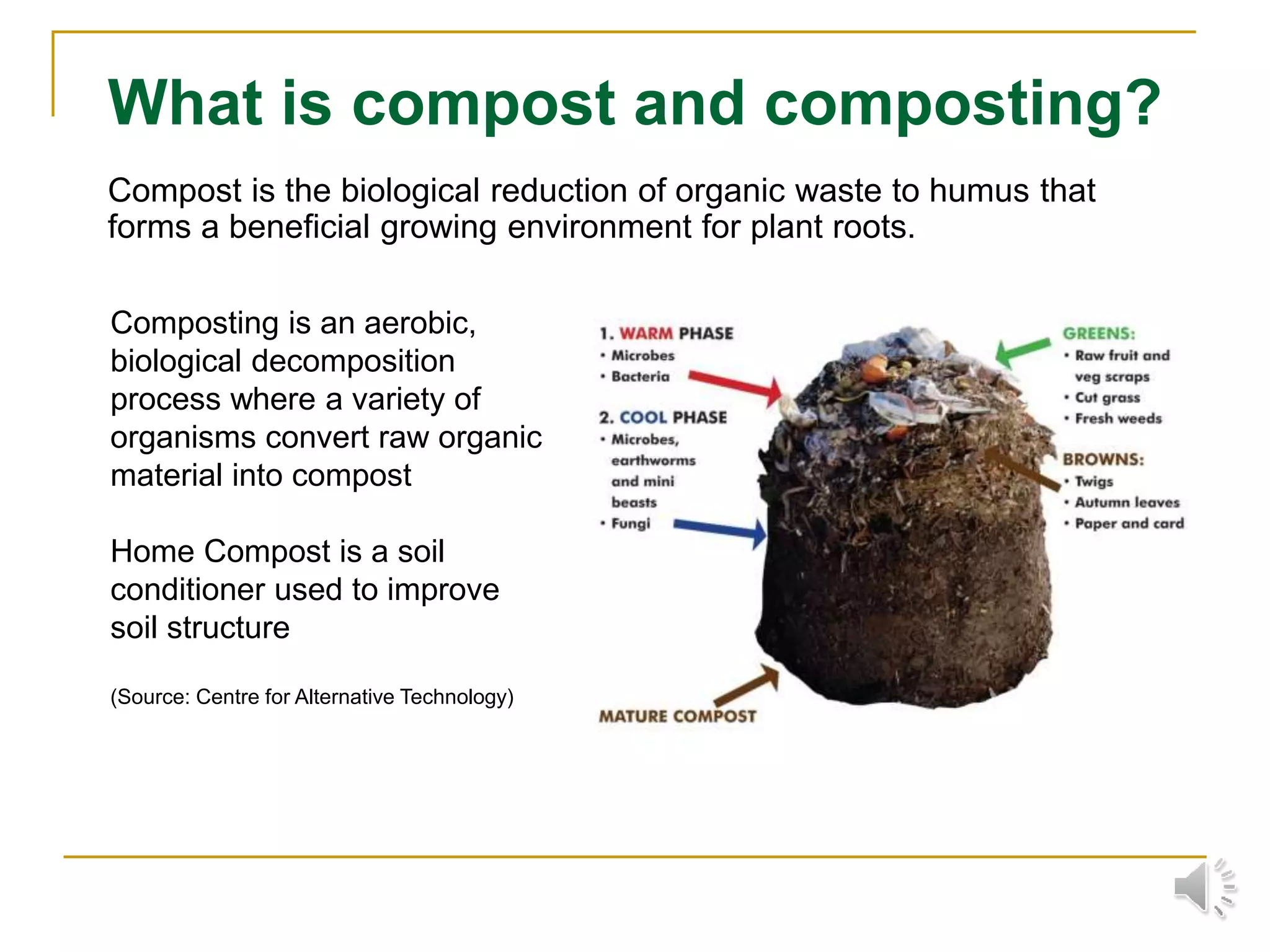
What is compost and composting?
Compost is the biological reduction of organic waste to humus that
forms a beneficial growing environment for plant roots.
Composting is an aerobic,
biological decomposition
process where a variety of
organisms convert raw organic
material into compost
Home Compost is a soil
conditioner used to improve
soil structure
(Source: Centre for Alternative Technology)
Why composting is a good thing
 It is good for the environment in several ways:
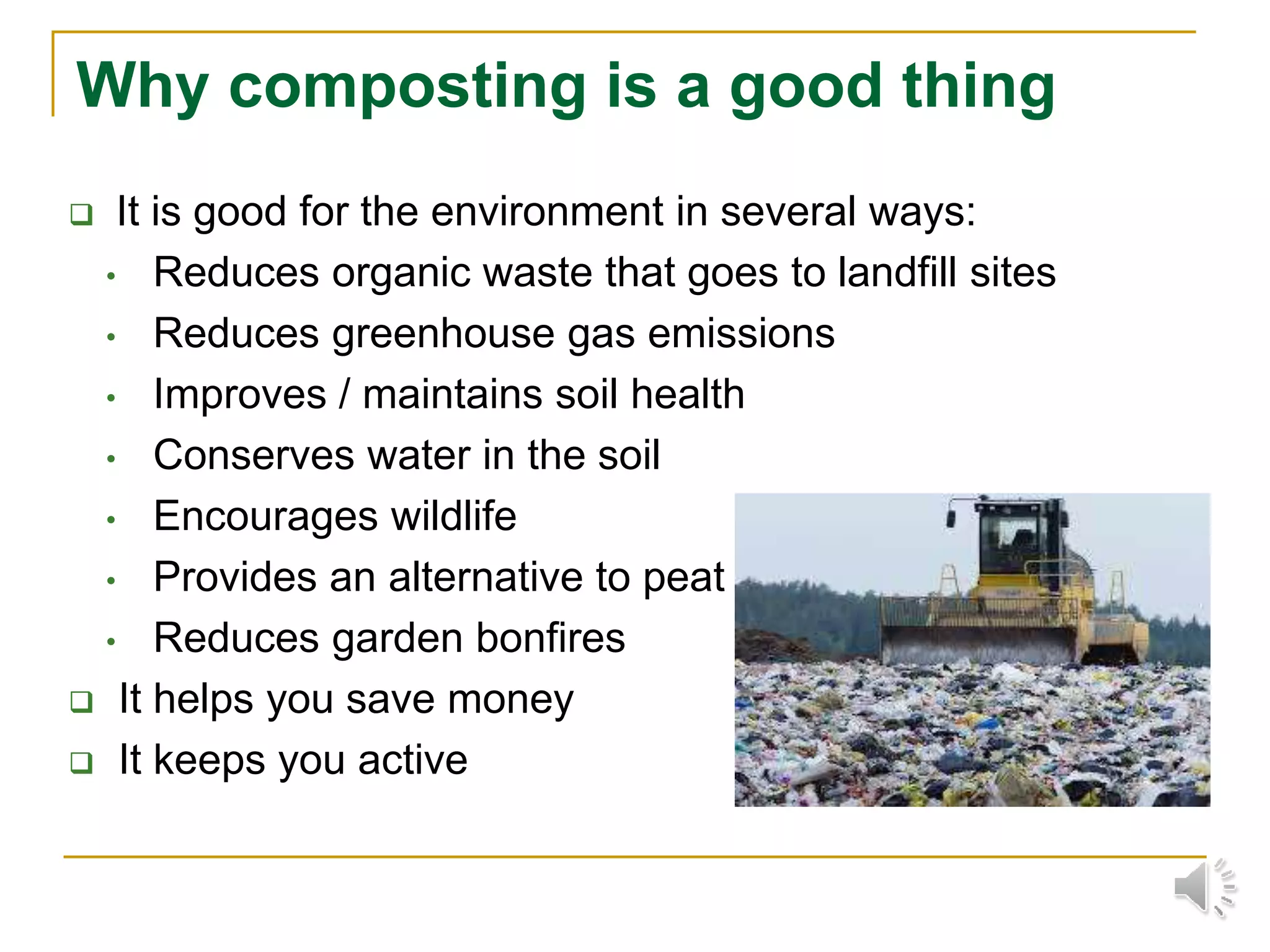
• Reduces organic waste that goes to landfill sites
• Reduces greenhouse gas emissions
• Improves / maintains soil health
• Conserves water in the soil
• Encourages wildlife
• Provides an alternative to peat compost
• Reduces garden bonfires
 It helps you save money
 It keeps you active
Types of composting
Cold
• For garden waste and uncooked peelings from the
kitchen
• Paper and cardboard
• Some items may need pre-treatment
• Takes around 18 months to make compost
• Inexpensive to get started
Hot
• Can compost everything a cold composter can and
cooked food, meat and dairy
• No pre-treatment needed
• Can compost in as little as 30 days
• More costly to get started
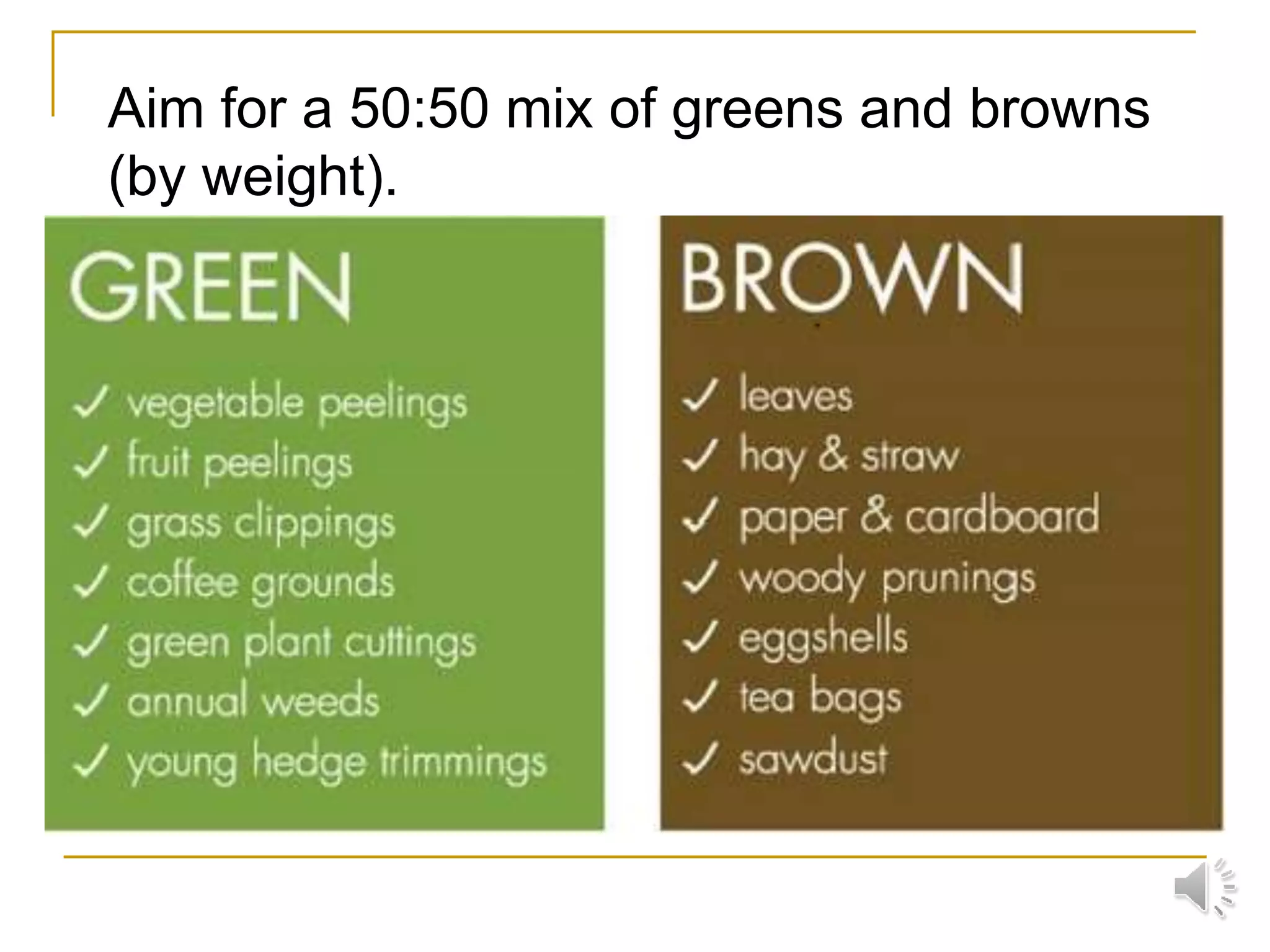
Aim for a 50:50 mix of greens and browns
(by weight).
Before you get started
• What are you going to be composting,
and how much material will you have to
compost?
• Where are you going to site your bin?
• What’s your budget?
Siting your compost bin
• Make sure your compost bin is somewhere accessible where you are likely
to use it. You can still screen it with plants / bamboo to make it more
attractive if need be.
• Aim for partial sun for cold compost bins, and partial shade for hot compost
bins.
• Any compost bins should be sited on level ground. Cold composting bins are
best sited on bare soil or grass, while hot composting bins are best sited on
concrete or paving. Though this is not critical for them to be effective!
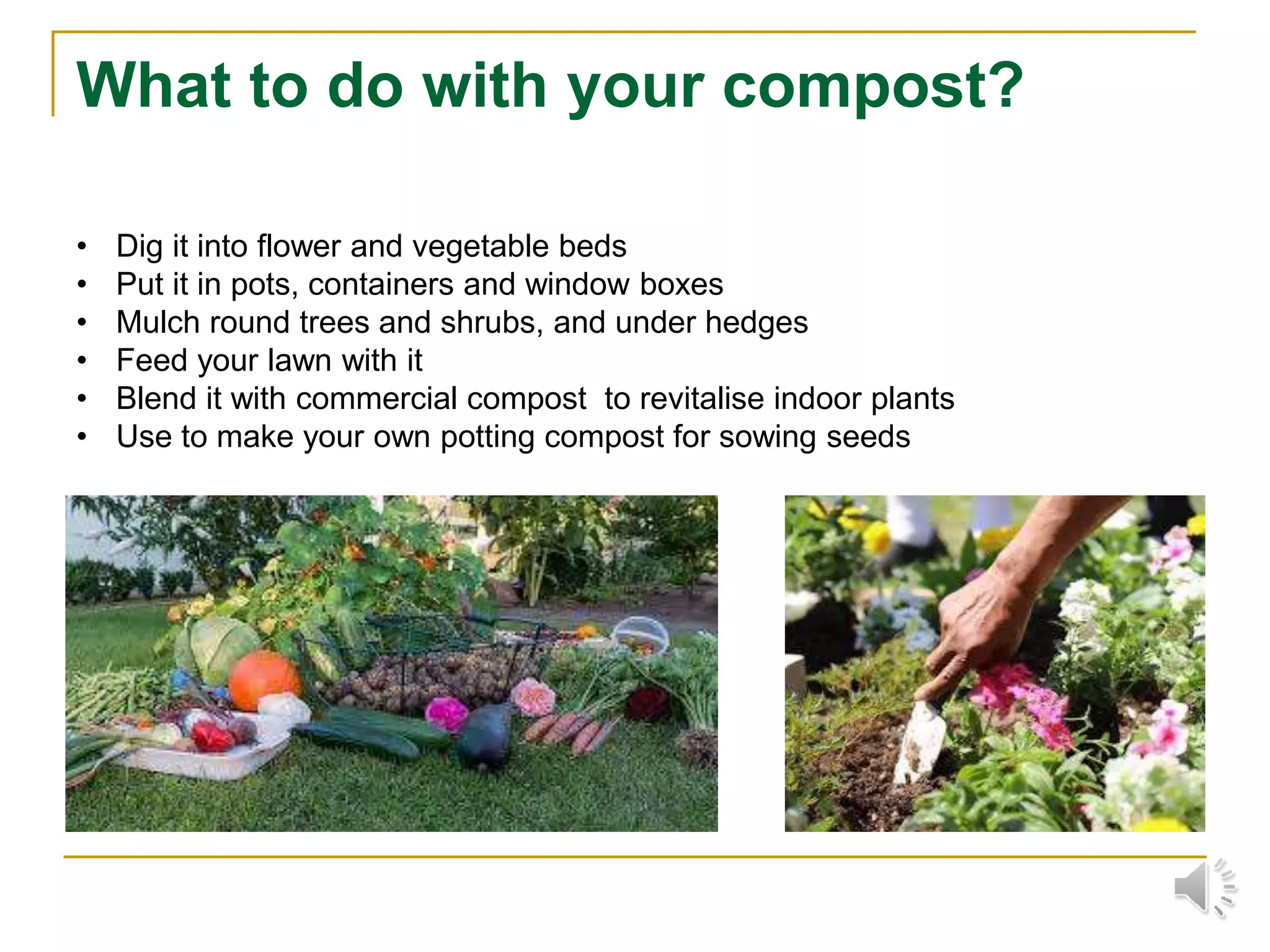
What to do with your compost?
• Dig it into flower and vegetable beds
• Put it in pots, containers and window boxes
• Mulch round trees and shrubs, and under hedges
• Feed your lawn with it
• Blend it with commercial compost to revitalise indoor plants
• Use to make your own potting compost for sowing seeds
Common problems
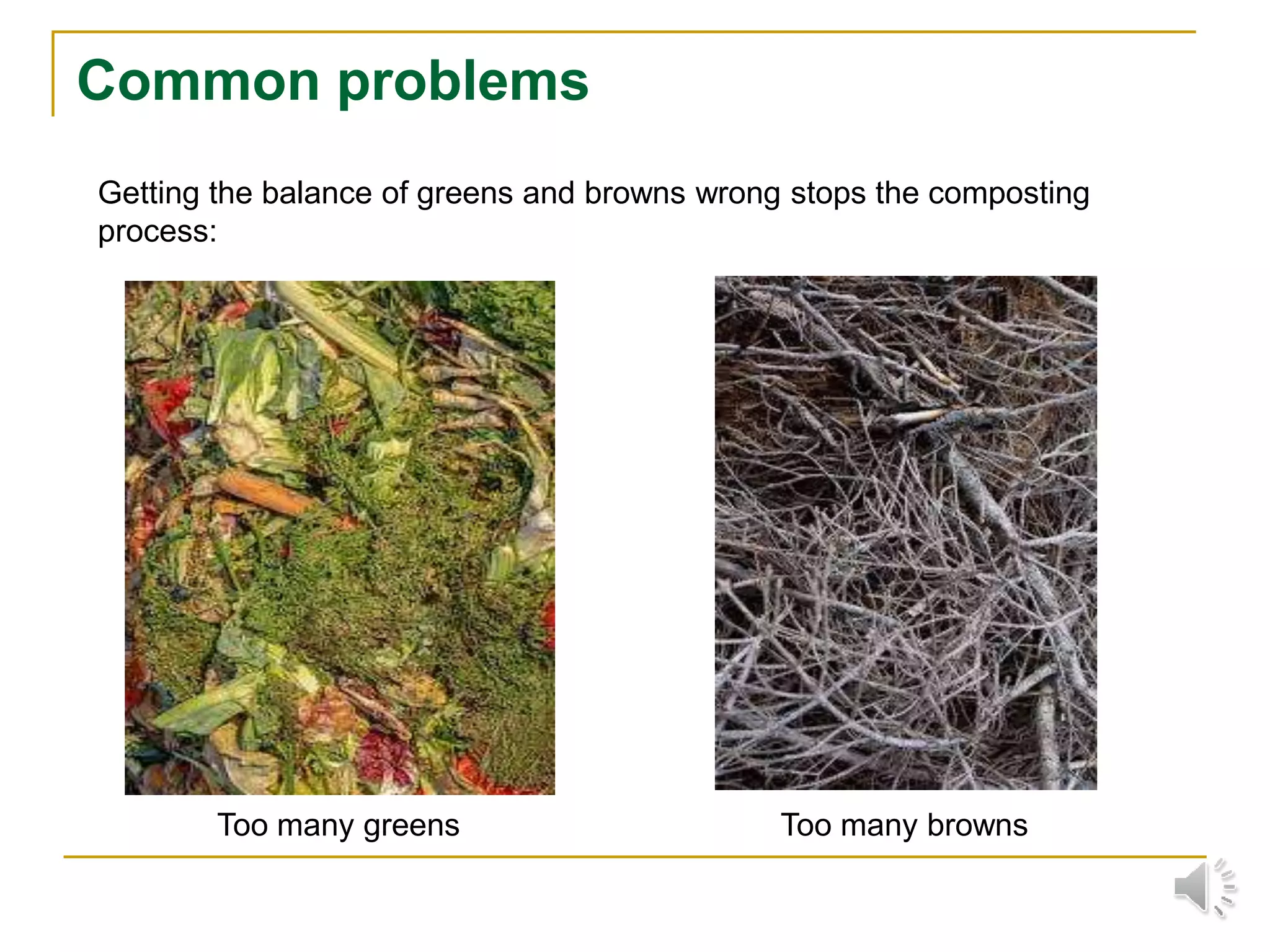
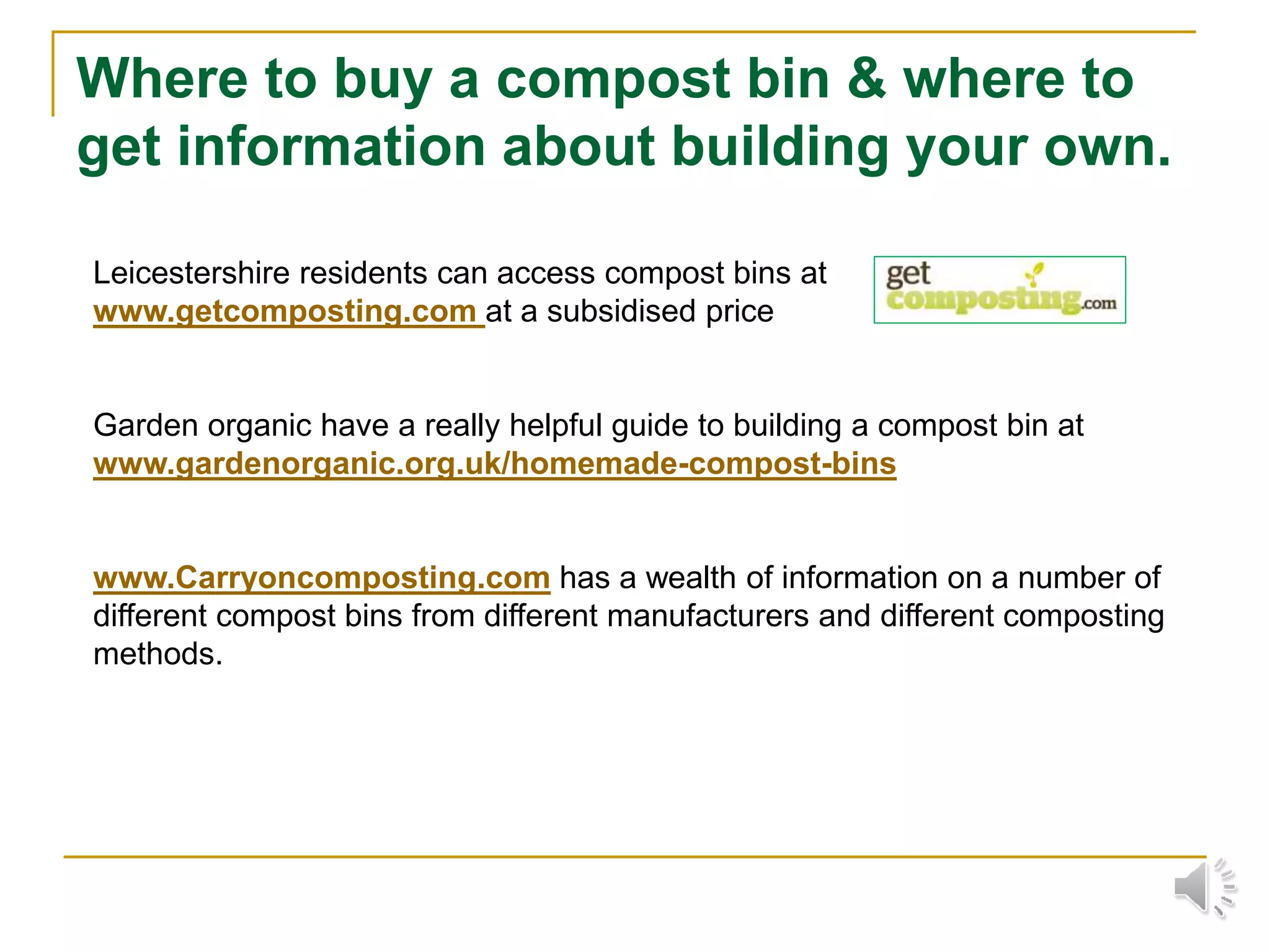
Too many greens Too many browns
Getting the balance of greens and browns wrong stops the composting
process:
Where to buy a compost bin & where to
get information about building your own.
Leicestershire residents can access compost bins at
www.getcomposting.com at a subsidised price
Garden organic have a really helpful guide to building a compost bin at
www.gardenorganic.org.uk/homemade-compost-bins
www.Carryoncomposting.com has a wealth of information on a number of
different compost bins from different manufacturers and different composting
methods.
Where to get help or more information
about home composting
The following are all useful websites :
www.gardenorganic.org.uk
www.Carryoncomposting.com
www.lesswaste.org.uk
If you live in Leicestershire, you can ask for the help of a Leicestershire
Master Composter by contacting Leicestershire County Council at
wasteprevention@leics.gov.uk, or by phone on 0116 3057 005
Thank you
for watching,
and
Happy Composting!

An introduction to home composting

  • 1.
    An introduction toHome Composting. Presentation by Judy Burrage, Master Composter.
  • 2.
    Contents  What compostingis  Why composting is a good thing  Types of composting (hot and cold)  What you can and can’t compost  What you need to think about before you get started  Where to site your bin  What to do with your compost  Common problems  Where to buy a compost bin or get information about making your own  Where to get help or more information about home composting
  • 3.
    What is compostand composting? Compost is the biological reduction of organic waste to humus that forms a beneficial growing environment for plant roots. Composting is an aerobic, biological decomposition process where a variety of organisms convert raw organic material into compost Home Compost is a soil conditioner used to improve soil structure (Source: Centre for Alternative Technology)
  • 4.
    Why composting isa good thing  It is good for the environment in several ways: • Reduces organic waste that goes to landfill sites • Reduces greenhouse gas emissions • Improves / maintains soil health • Conserves water in the soil • Encourages wildlife • Provides an alternative to peat compost • Reduces garden bonfires  It helps you save money  It keeps you active
  • 5.
    Types of composting Cold •For garden waste and uncooked peelings from the kitchen • Paper and cardboard • Some items may need pre-treatment • Takes around 18 months to make compost • Inexpensive to get started Hot • Can compost everything a cold composter can and cooked food, meat and dairy • No pre-treatment needed • Can compost in as little as 30 days • More costly to get started
  • 6.
    Aim for a50:50 mix of greens and browns (by weight).
  • 7.
    Before you getstarted • What are you going to be composting, and how much material will you have to compost? • Where are you going to site your bin? • What’s your budget?
  • 8.
    Siting your compostbin • Make sure your compost bin is somewhere accessible where you are likely to use it. You can still screen it with plants / bamboo to make it more attractive if need be. • Aim for partial sun for cold compost bins, and partial shade for hot compost bins. • Any compost bins should be sited on level ground. Cold composting bins are best sited on bare soil or grass, while hot composting bins are best sited on concrete or paving. Though this is not critical for them to be effective!
  • 9.
    What to dowith your compost? • Dig it into flower and vegetable beds • Put it in pots, containers and window boxes • Mulch round trees and shrubs, and under hedges • Feed your lawn with it • Blend it with commercial compost to revitalise indoor plants • Use to make your own potting compost for sowing seeds
  • 10.
    Common problems Too manygreens Too many browns Getting the balance of greens and browns wrong stops the composting process:
  • 11.
    Where to buya compost bin & where to get information about building your own. Leicestershire residents can access compost bins at www.getcomposting.com at a subsidised price Garden organic have a really helpful guide to building a compost bin at www.gardenorganic.org.uk/homemade-compost-bins www.Carryoncomposting.com has a wealth of information on a number of different compost bins from different manufacturers and different composting methods.
  • 12.
    Where to gethelp or more information about home composting The following are all useful websites : www.gardenorganic.org.uk www.Carryoncomposting.com www.lesswaste.org.uk If you live in Leicestershire, you can ask for the help of a Leicestershire Master Composter by contacting Leicestershire County Council at wasteprevention@leics.gov.uk, or by phone on 0116 3057 005
  • 13.