COMPOSITION FOR
VIDEO
CAMERA SHOTS
How a shot is framed.
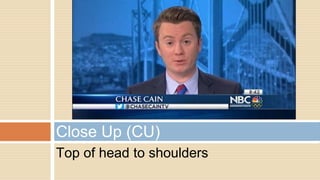
Top of head to shoulders
Close Up (CU)
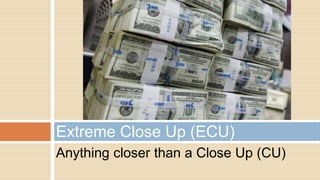
Anything closer than a Close Up (CU)
Extreme Close Up (ECU)
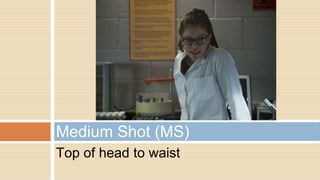
Top of head to waist
Medium Shot (MS)
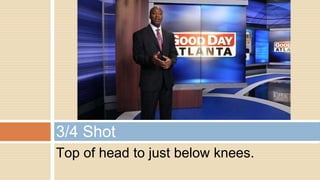
Top of head to just below knees.
3/4 Shot
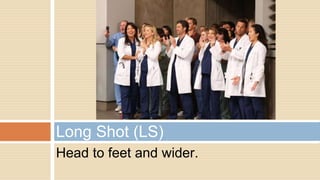
Head to feet and wider.
Long Shot (LS)
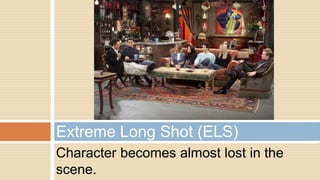
Character becomes almost lost in the
scene.
Extreme Long Shot (ELS)
MORE COMPOSITIONS
The following shots can be any of the previous as
well.
For example:
● An establishing shot AND a Long Shot.
● A two-shot AND a medium shot.
● An over the shoulder shot AND a close up.
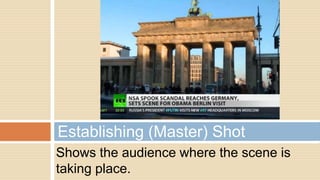
Shows the audience where the scene is
taking place.
Establishing (Master) Shot
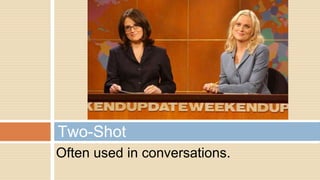
Often used in conversations.
Two-Shot
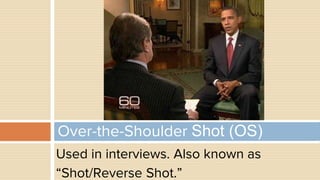
Used in interviews. Also known as
“Shot/Reverse Shot.”
Over-the-Shoulder Shot (OS)
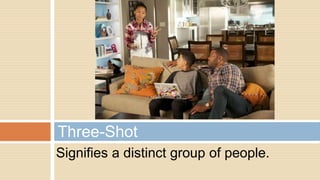
Signifies a distinct group of people.
Three-Shot
CAMERA ANGLES
Vertical position of the camera relative to the subject.
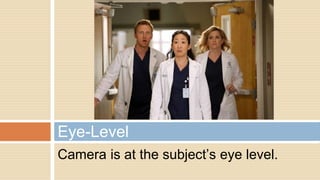
Camera is at the subject’s eye level.
Eye-Level
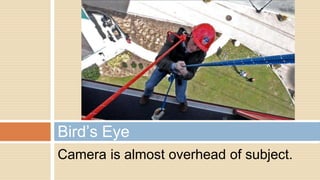
Camera is almost overhead of subject.
Bird’s Eye
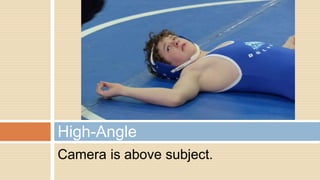
Camera is above subject.
High-Angle
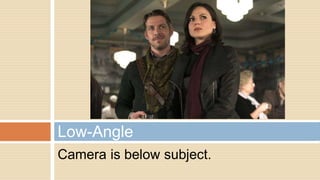
Camera is below subject.
Low-Angle
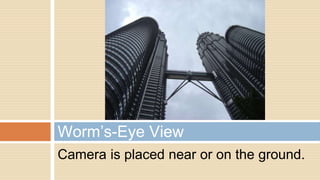
Camera is placed near or on the ground.
Worm’s-Eye View
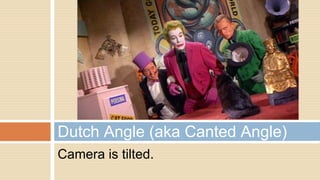
Camera is tilted.
Dutch Angle (aka Canted Angle)
THEORIES OF
COMPOSITION
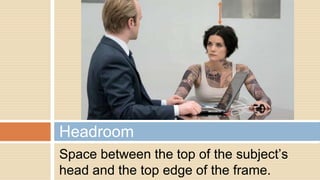
Space between the top of the subject’s
head and the top edge of the frame.
Headroom
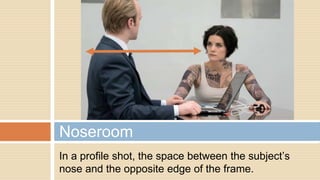
In a profile shot, the space between the subject’s
nose and the opposite edge of the frame.
Noseroom
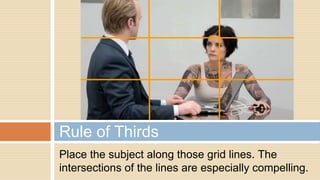
Place the subject along those grid lines. The
intersections of the lines are especially compelling.
Rule of Thirds

Composition for Video