Components Of Integrated Farming System
- Sai Naren
2022019124
Introduction to Integrated Farming Systems
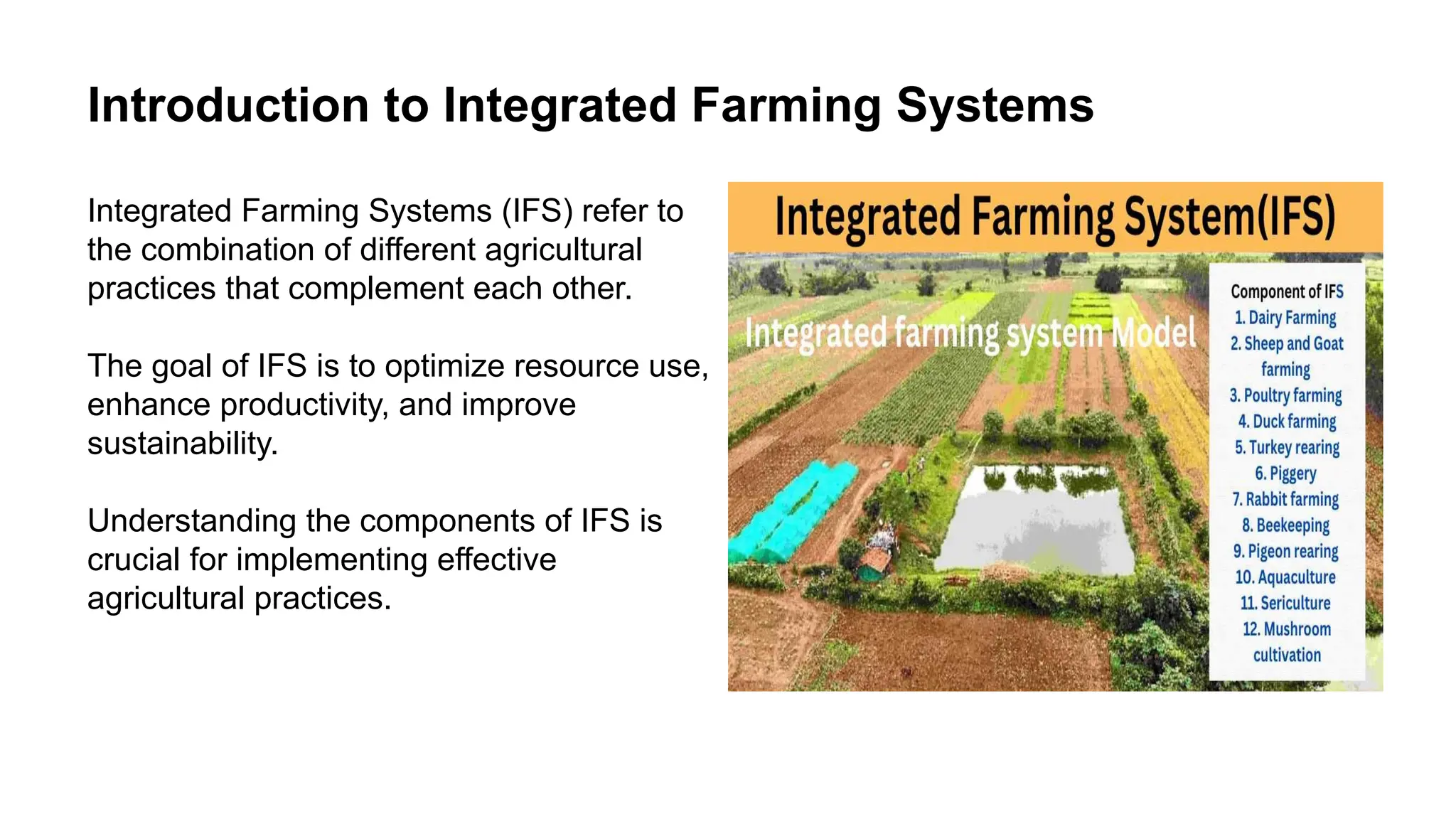
Integrated Farming Systems (IFS) refer to
the combination of different agricultural
practices that complement each other.
The goal of IFS is to optimize resource use,
enhance productivity, and improve
sustainability.
Understanding the components of IFS is
crucial for implementing effective
agricultural practices.
Crop Production
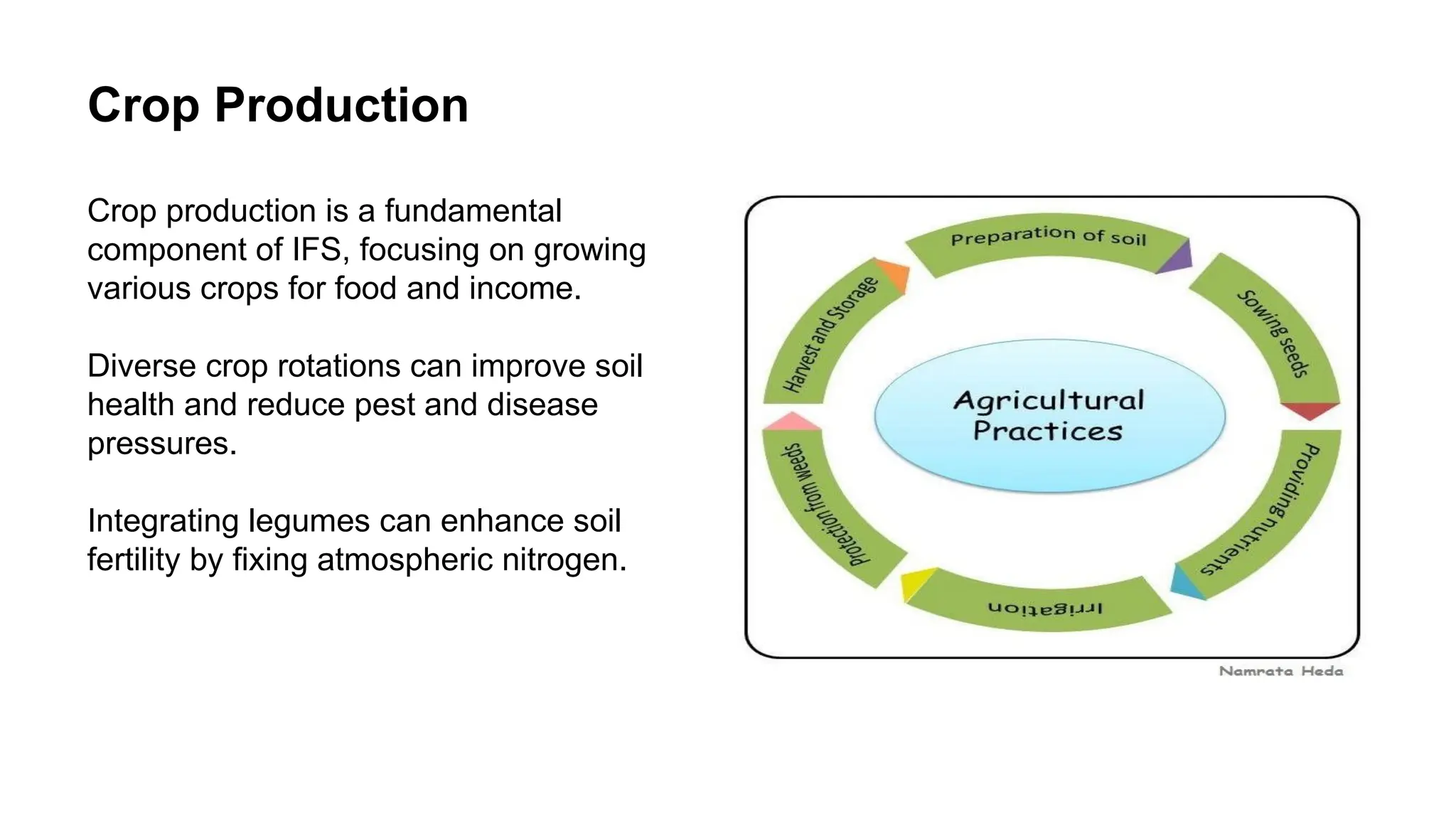
Crop production is a fundamental
component of IFS, focusing on growing
various crops for food and income.
Diverse crop rotations can improve soil
health and reduce pest and disease
pressures.
Integrating legumes can enhance soil
fertility by fixing atmospheric nitrogen.
Livestock Management
Livestock management involves raising
animals for meat, milk, eggs, or other
products.
Animals can provide manure, which serves
as an organic fertilizer for crops, closing the
nutrient loop.
Integrating livestock into farming systems
can also enhance soil structure and health.
Aquaculture
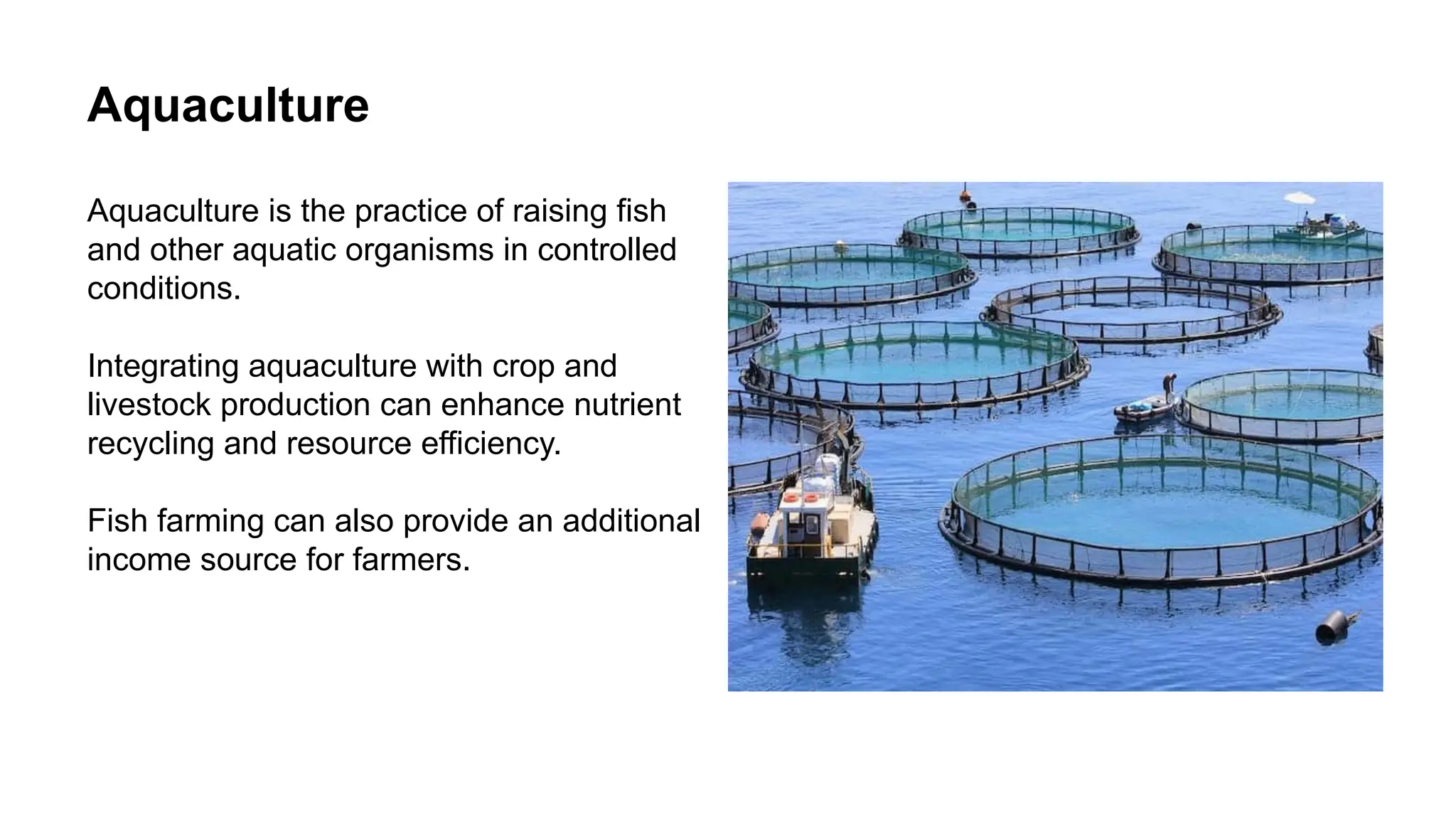
Aquaculture is the practice of raising fish
and other aquatic organisms in controlled
conditions.
Integrating aquaculture with crop and
livestock production can enhance nutrient
recycling and resource efficiency.
Fish farming can also provide an additional
income source for farmers.
Agroforestry
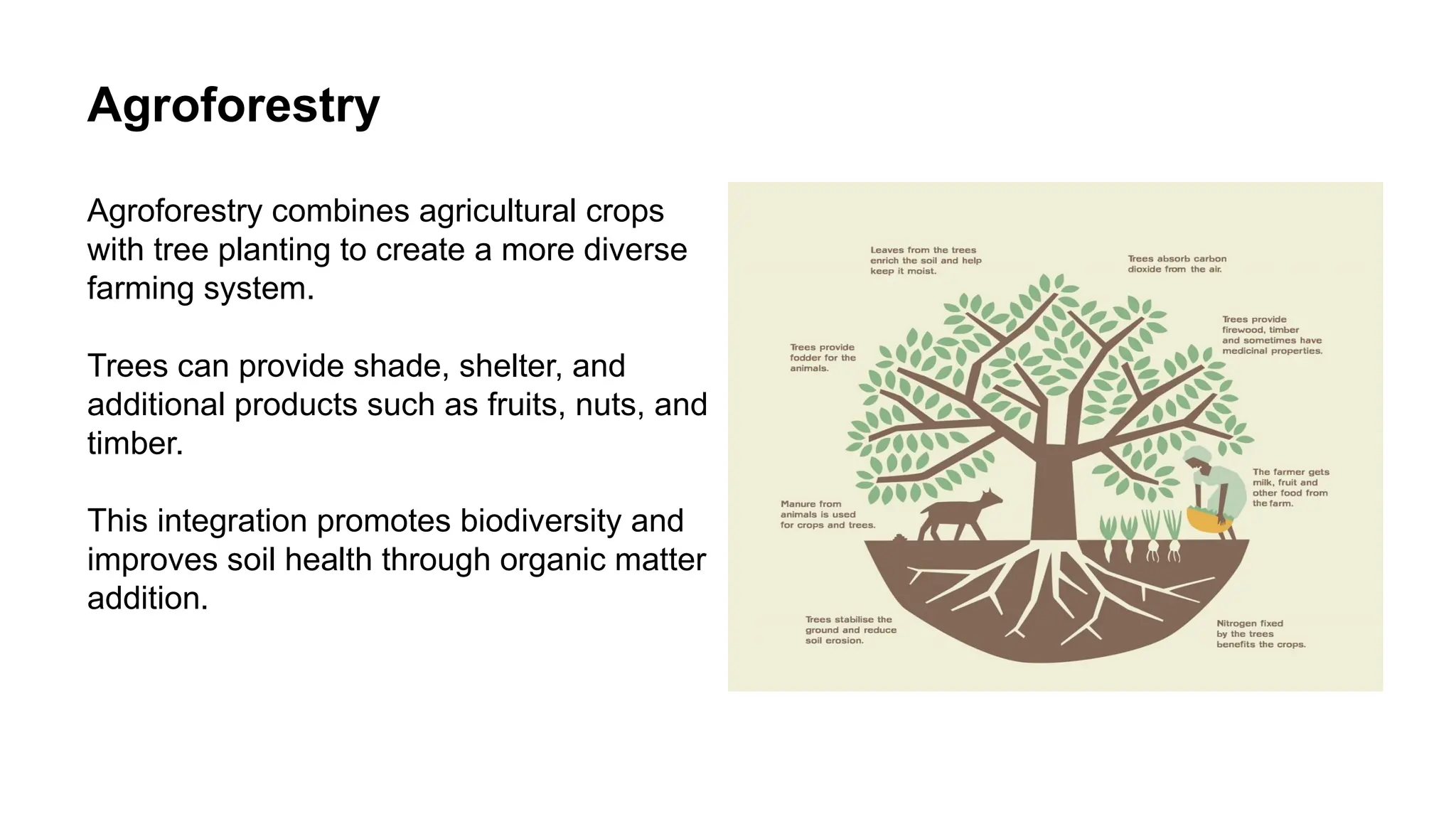
Agroforestry combines agricultural crops
with tree planting to create a more diverse
farming system.
Trees can provide shade, shelter, and
additional products such as fruits, nuts, and
timber.
This integration promotes biodiversity and
improves soil health through organic matter
addition.
Water Management
Water management is crucial for optimizing
water use efficiency in integrated farming
systems.
Techniques like rainwater harvesting and
drip irrigation can help conserve water
resources.
Managing water effectively supports crop
growth and livestock health, ensuring
system sustainability.
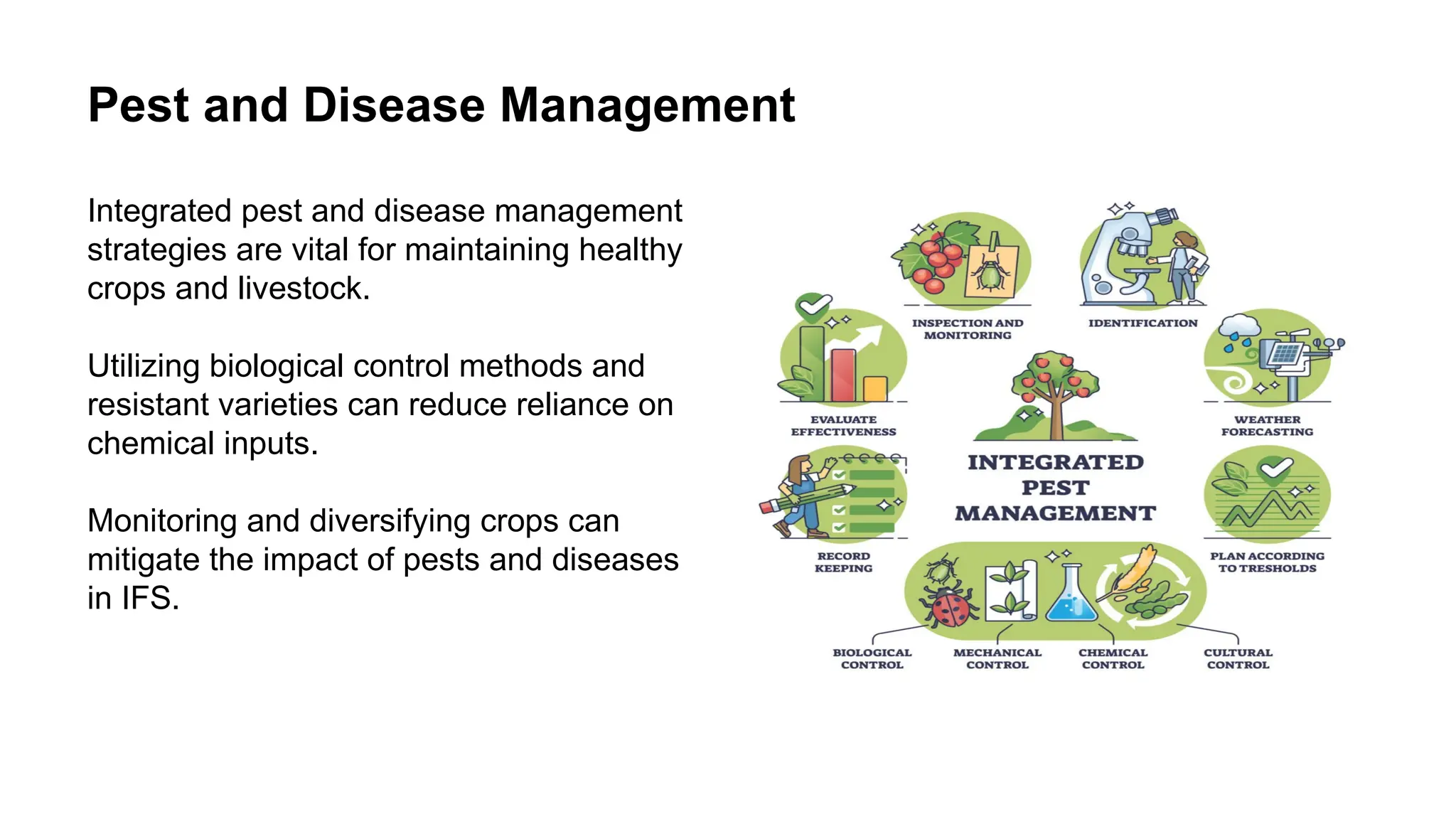
Pest and Disease Management
Integrated pest and disease management
strategies are vital for maintaining healthy
crops and livestock.
Utilizing biological control methods and
resistant varieties can reduce reliance on
chemical inputs.
Monitoring and diversifying crops can
mitigate the impact of pests and diseases
in IFS.
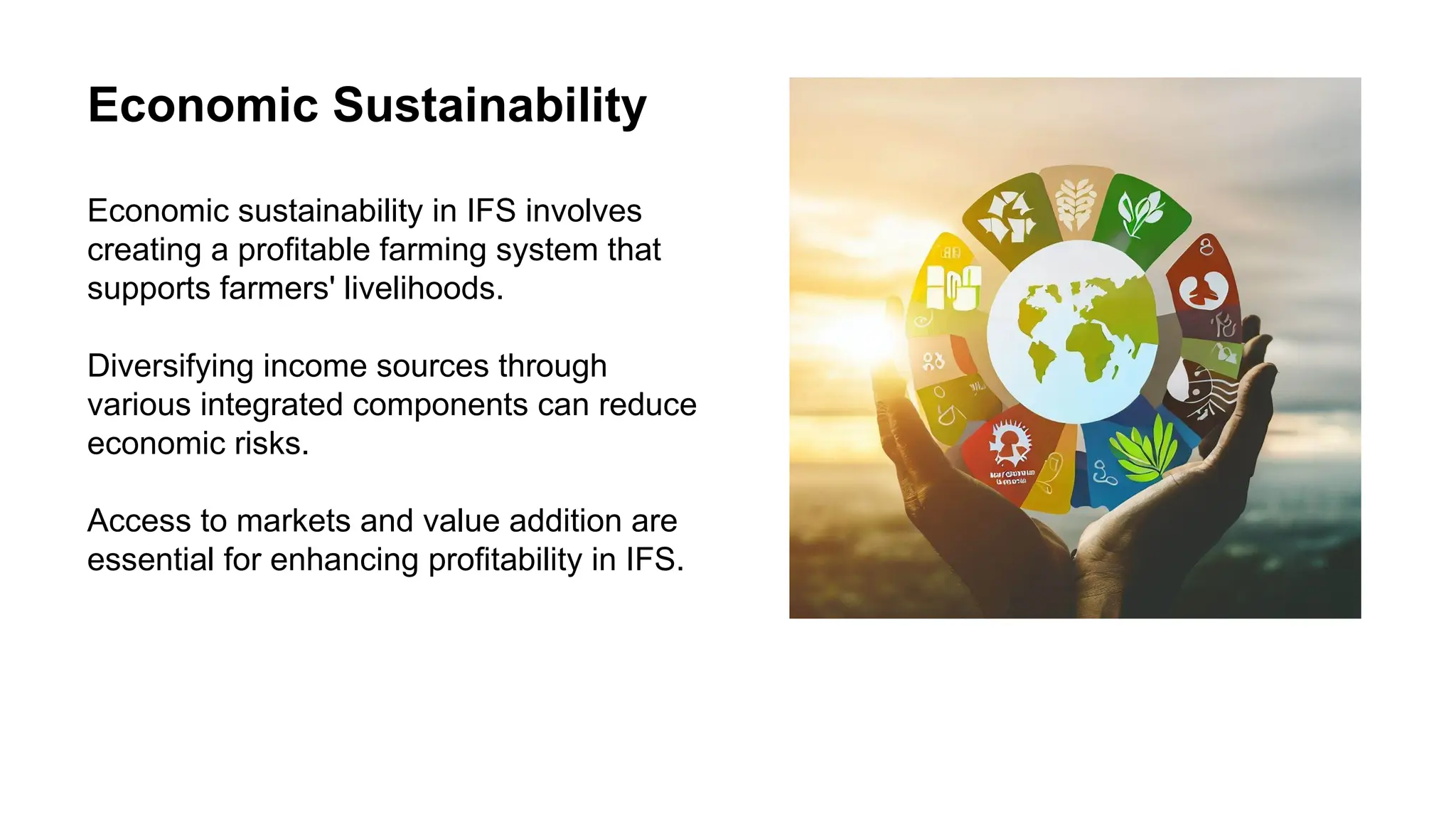
Economic Sustainability
Economic sustainability in IFS involves
creating a profitable farming system that
supports farmers' livelihoods.
Diversifying income sources through
various integrated components can reduce
economic risks.
Access to markets and value addition are
essential for enhancing profitability in IFS.
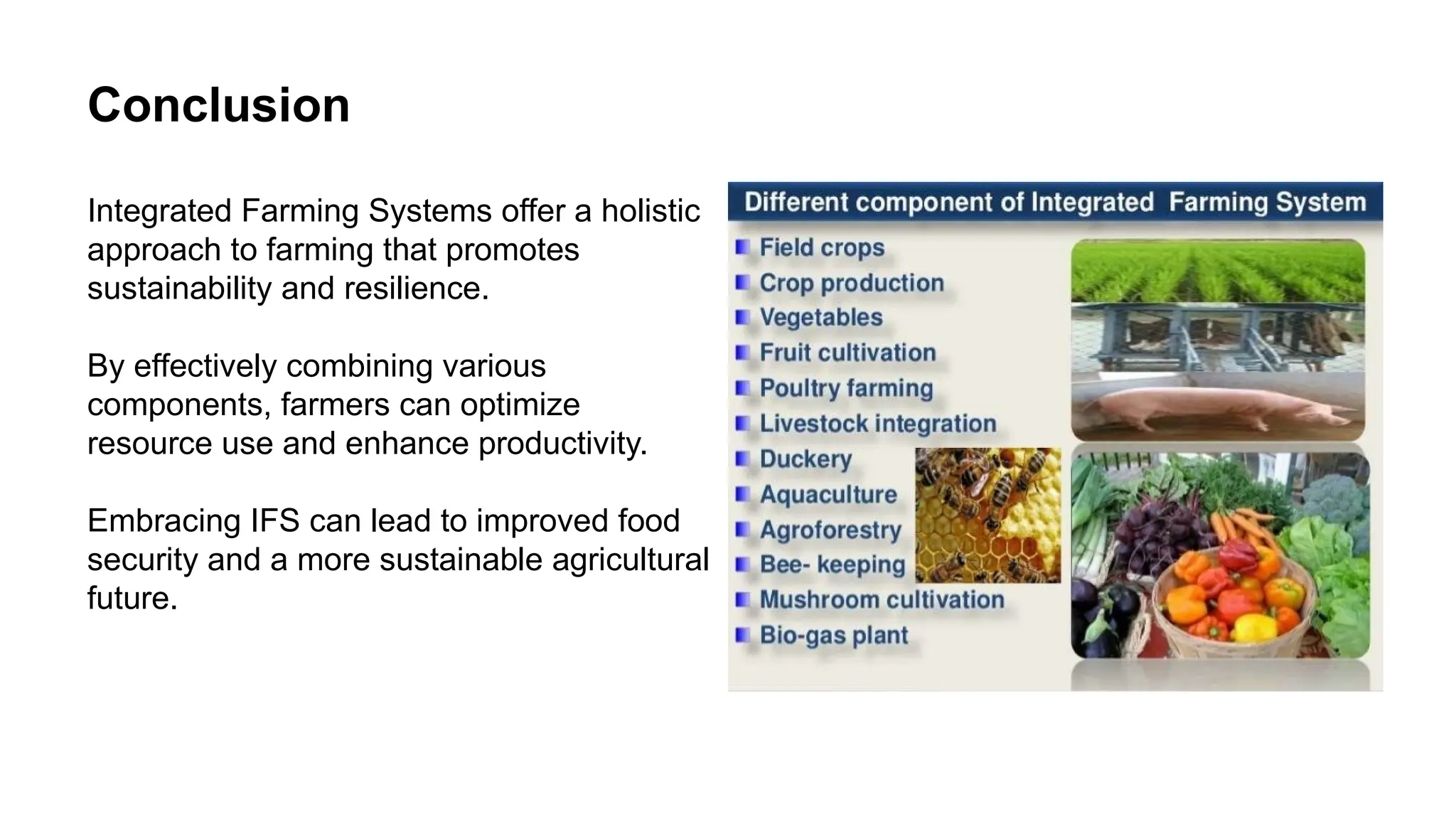
Conclusion
Integrated Farming Systems offer a holistic
approach to farming that promotes
sustainability and resilience.
By effectively combining various
components, farmers can optimize
resource use and enhance productivity.
Embracing IFS can lead to improved food
security and a more sustainable agricultural
future.
Components Of Integrated Farming System.pptx

Components Of Integrated Farming System.pptx

  • 1.
    Components Of IntegratedFarming System - Sai Naren 2022019124
  • 2.
    Introduction to IntegratedFarming Systems Integrated Farming Systems (IFS) refer to the combination of different agricultural practices that complement each other. The goal of IFS is to optimize resource use, enhance productivity, and improve sustainability. Understanding the components of IFS is crucial for implementing effective agricultural practices.
  • 3.
    Crop Production Crop productionis a fundamental component of IFS, focusing on growing various crops for food and income. Diverse crop rotations can improve soil health and reduce pest and disease pressures. Integrating legumes can enhance soil fertility by fixing atmospheric nitrogen.
  • 4.
    Livestock Management Livestock managementinvolves raising animals for meat, milk, eggs, or other products. Animals can provide manure, which serves as an organic fertilizer for crops, closing the nutrient loop. Integrating livestock into farming systems can also enhance soil structure and health.
  • 5.
    Aquaculture Aquaculture is thepractice of raising fish and other aquatic organisms in controlled conditions. Integrating aquaculture with crop and livestock production can enhance nutrient recycling and resource efficiency. Fish farming can also provide an additional income source for farmers.
  • 6.
    Agroforestry Agroforestry combines agriculturalcrops with tree planting to create a more diverse farming system. Trees can provide shade, shelter, and additional products such as fruits, nuts, and timber. This integration promotes biodiversity and improves soil health through organic matter addition.
  • 7.
    Water Management Water managementis crucial for optimizing water use efficiency in integrated farming systems. Techniques like rainwater harvesting and drip irrigation can help conserve water resources. Managing water effectively supports crop growth and livestock health, ensuring system sustainability.
  • 8.
    Pest and DiseaseManagement Integrated pest and disease management strategies are vital for maintaining healthy crops and livestock. Utilizing biological control methods and resistant varieties can reduce reliance on chemical inputs. Monitoring and diversifying crops can mitigate the impact of pests and diseases in IFS.
  • 9.
    Economic Sustainability Economic sustainabilityin IFS involves creating a profitable farming system that supports farmers' livelihoods. Diversifying income sources through various integrated components can reduce economic risks. Access to markets and value addition are essential for enhancing profitability in IFS.
  • 11.
    Conclusion Integrated Farming Systemsoffer a holistic approach to farming that promotes sustainability and resilience. By effectively combining various components, farmers can optimize resource use and enhance productivity. Embracing IFS can lead to improved food security and a more sustainable agricultural future.

Editor's Notes

  • #2 Image source: https://www.agristudoc.com/integrated-farming-system-models-objectives/
  • #3 Image source: https://www.pinterest.co.uk/pin/355784439296295137/
  • #4 Image source: https://upvey.com/business/livestock-farming-an-overview/
  • #5 Image source: https://www.conserve-energy-future.com/aquaculture-types-benefits-importance.php
  • #6 Image source: https://forestrypedia.com/agroforestry-system-detailed-note/
  • #7 Image source: https://www.americanrivers.org/conservation-resources/integrated-water-management/
  • #8 Image source: https://www.bizzybeeexterminators.com/blog/what-is-integrated-pest-management/
  • #9 Image source: https://ar.inspiredpencil.com/pictures-2023/economic-sustainability
  • #11 Image source: http://www.slideshare.net/BoyaSunil1/integrated-farming-system-by-dr-sunil