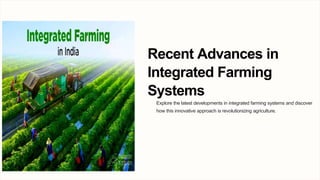
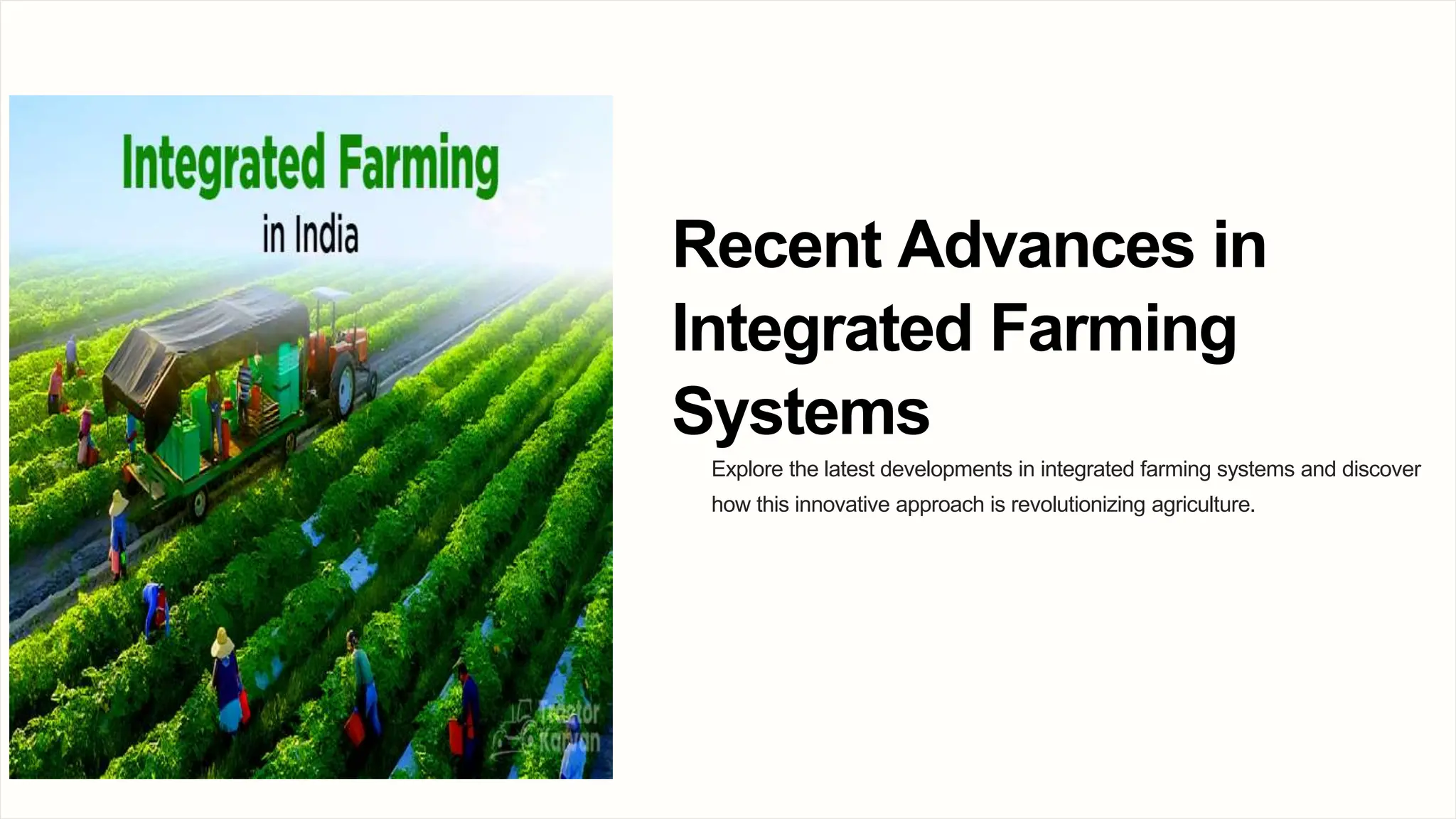
Recent Advances in
Integrated Farming
Systems
Explore the latest developments in integrated farming systems and discover
how this innovative approach is revolutionizing agriculture.
Unlocking the Power of
Integrated Farming Systems
Integrated farming systems combine different
agricultural activities to maximize resource
utilization and improve farm productivity. By
integrating activities like crop cultivation, livestock
rearing, and aquaculture, farmers create sustainable
and resilient farms with reduced environmental
impact and increased profitability. This synergy
leads to enhanced biodiversity, better soil health,
and increased food security.
Successful implementation requires careful
planning, management, and consideration of
interactions between components, market demand,
and social and economic context. By embracing
integrated farming systems, we can create a more
sustainable and equitable food system for all.
Advantages of Integrated Farming
Systems
1 Enhanced Sustainability 🌱
Integrated farming systems
promote resource efficiency,
minimize waste, and promote the
sustainable use of natural
resources.
2 Diversified Income Streams 💰
By integrating various agricultural
activities, farmers can generate additional
income from multiple sources, reducing
reliance on a single crop or livestock.
3 Nutrient Recycling 🔄
Integrated farming systems enable the
effective recycling of nutrients
between different components,
reducing the need for external
fertilizers and enhancing soil fertility.
4 Improved Pest and
Disease Management 🐛
Integrated farming systems utilize a range of
methods to control pests and diseases,
including biological control, crop rotation,
and intercropping, resulting in reduced
reliance on chemical pesticides.
5 Improved Soil Health 🌱
The integration of different crops and livestock contributes to improved soil
health, including increased organic matter content, enhanced soil structure
and fertility, and reduced soil erosion.
Components of Integrated Farming
Systems
Crop Production 🌾
Integrating different crops, such as grains,
vegetables, and fruits, enables optimal
utilization of available land and resources.
Livestock Rearing 🐄
Combining animal husbandry with crop
production allows the utilization of crop residues
as animal feed and the efficient recycling of
manure as organic fertilizer.
Aquaculture 🐟
Integrating fish farming with other agricultural
activities provides additional income and helps
maintain nutrient balance in water bodies.
Agroforestry 🌳
The incorporation of trees into the farm system
promotes biodiversity, provides shade, and
reduces soil erosion.
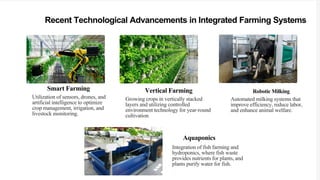
Recent Technological Advancements in Integrated Farming Systems
Smart Farming
Utilization of sensors, drones, and
artificial intelligence to optimize
crop management, irrigation, and
livestock monitoring.
Vertical Farming
Growing crops in vertically stacked
layers and utilizing controlled
environment technology for year-round
cultivation.
Aquaponics
Integration of fish farming and
hydroponics, where fish waste
provides nutrients for plants, and
plants purify water for fish.
Robotic Milking
Automated milking systems that
improve efficiency, reduce labor,
and enhance animal welfare.
Case Studies/Examples of Successful
Integrated Farming Systems
Case Study 1 🐄🌾
🌞
Successful integration of dairy
farming, crop cultivation, and
renewable energy production in
a holistic farm system that
maximizes resource utilization
and revenue generation.
Case Study 2 🐟🌾
🌾
Integrated rice-fish farming
system in Southeast Asia,
where fish thrive in flooded rice
fields, providing additional
income and pest control.
Case Study 3 🐓🍄
Integration of poultry farming
and mushroom cultivation,
where chicken manure is used
as substrate for mushroom
production, generating
additional income and reducing
waste.
Challenges in Implementing Integrated
Farming Systems
1 Knowledge and Awareness 📚
Farmers need access to training and
information to understand the benefits and
techniques of integrated farming systems.
2 Initial Investment 💲
Setting up an integrated farming system can
require significant capital investment for
infrastructure, equipment, and training.
3 Market Linkages 📊
Farmers need proper marketing channels
and value chains to ensure a fair return on
their integrated agricultural products.
4 Policy Support 📝
Supportive policies and regulations are
necessary to encourage farmers to adopt
integrated farming systems and overcome
potential barriers.
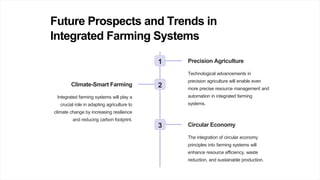
Future Prospects and Trends in
Integrated Farming Systems
1 Precision Agriculture
Technological advancements in
precision agriculture will enable even
more precise resource management and
automation in integrated farming
systems.
2
Climate-Smart Farming
Integrated farming systems will play a
crucial role in adapting agriculture to
climate change by increasing resilience
and reducing carbon footprint.
3 Circular Economy
The integration of circular economy
principles into farming systems will
enhance resource efficiency, waste
reduction, and sustainable production.

Recent-Advances-in-Integrated-Farming-Systems (1).pptx

  • 1.
    Recent Advances in IntegratedFarming Systems Explore the latest developments in integrated farming systems and discover how this innovative approach is revolutionizing agriculture.
  • 2.
    Unlocking the Powerof Integrated Farming Systems Integrated farming systems combine different agricultural activities to maximize resource utilization and improve farm productivity. By integrating activities like crop cultivation, livestock rearing, and aquaculture, farmers create sustainable and resilient farms with reduced environmental impact and increased profitability. This synergy leads to enhanced biodiversity, better soil health, and increased food security. Successful implementation requires careful planning, management, and consideration of interactions between components, market demand, and social and economic context. By embracing integrated farming systems, we can create a more sustainable and equitable food system for all.
  • 3.
    Advantages of IntegratedFarming Systems 1 Enhanced Sustainability 🌱 Integrated farming systems promote resource efficiency, minimize waste, and promote the sustainable use of natural resources. 2 Diversified Income Streams 💰 By integrating various agricultural activities, farmers can generate additional income from multiple sources, reducing reliance on a single crop or livestock. 3 Nutrient Recycling 🔄 Integrated farming systems enable the effective recycling of nutrients between different components, reducing the need for external fertilizers and enhancing soil fertility. 4 Improved Pest and Disease Management 🐛 Integrated farming systems utilize a range of methods to control pests and diseases, including biological control, crop rotation, and intercropping, resulting in reduced reliance on chemical pesticides. 5 Improved Soil Health 🌱 The integration of different crops and livestock contributes to improved soil health, including increased organic matter content, enhanced soil structure and fertility, and reduced soil erosion.
  • 4.
    Components of IntegratedFarming Systems Crop Production 🌾 Integrating different crops, such as grains, vegetables, and fruits, enables optimal utilization of available land and resources. Livestock Rearing 🐄 Combining animal husbandry with crop production allows the utilization of crop residues as animal feed and the efficient recycling of manure as organic fertilizer. Aquaculture 🐟 Integrating fish farming with other agricultural activities provides additional income and helps maintain nutrient balance in water bodies. Agroforestry 🌳 The incorporation of trees into the farm system promotes biodiversity, provides shade, and reduces soil erosion.
  • 5.
    Recent Technological Advancementsin Integrated Farming Systems Smart Farming Utilization of sensors, drones, and artificial intelligence to optimize crop management, irrigation, and livestock monitoring. Vertical Farming Growing crops in vertically stacked layers and utilizing controlled environment technology for year-round cultivation. Aquaponics Integration of fish farming and hydroponics, where fish waste provides nutrients for plants, and plants purify water for fish. Robotic Milking Automated milking systems that improve efficiency, reduce labor, and enhance animal welfare.
  • 6.
    Case Studies/Examples ofSuccessful Integrated Farming Systems Case Study 1 🐄🌾 🌞 Successful integration of dairy farming, crop cultivation, and renewable energy production in a holistic farm system that maximizes resource utilization and revenue generation. Case Study 2 🐟🌾 🌾 Integrated rice-fish farming system in Southeast Asia, where fish thrive in flooded rice fields, providing additional income and pest control. Case Study 3 🐓🍄 Integration of poultry farming and mushroom cultivation, where chicken manure is used as substrate for mushroom production, generating additional income and reducing waste.
  • 7.
    Challenges in ImplementingIntegrated Farming Systems 1 Knowledge and Awareness 📚 Farmers need access to training and information to understand the benefits and techniques of integrated farming systems. 2 Initial Investment 💲 Setting up an integrated farming system can require significant capital investment for infrastructure, equipment, and training. 3 Market Linkages 📊 Farmers need proper marketing channels and value chains to ensure a fair return on their integrated agricultural products. 4 Policy Support 📝 Supportive policies and regulations are necessary to encourage farmers to adopt integrated farming systems and overcome potential barriers.
  • 8.
    Future Prospects andTrends in Integrated Farming Systems 1 Precision Agriculture Technological advancements in precision agriculture will enable even more precise resource management and automation in integrated farming systems. 2 Climate-Smart Farming Integrated farming systems will play a crucial role in adapting agriculture to climate change by increasing resilience and reducing carbon footprint. 3 Circular Economy The integration of circular economy principles into farming systems will enhance resource efficiency, waste reduction, and sustainable production.