Competitive Brand StrategiesTraditional View- Strategies respond to what buyers want.But when buyers learn how to chose, the strategies create experiences and observation on which buyer learning is based.
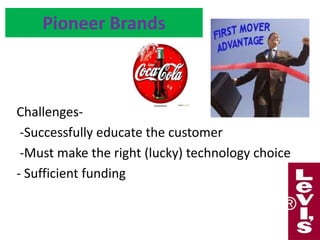
Pioneer BrandsChallenges- -Successfully educate the customer-Must make the right (lucky) technology choice- Sufficient funding
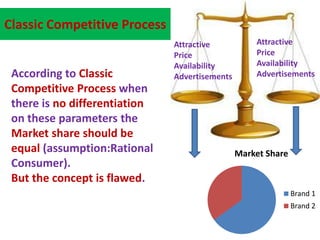
Classic Competitive ProcessAttractive PriceAvailability AdvertisementsAttractive PriceAvailability AdvertisementsAccording to Classic Competitive Process when there is no differentiation on these parameters the Market share should be equal (assumption:Rational Consumer).But the concept is flawed.
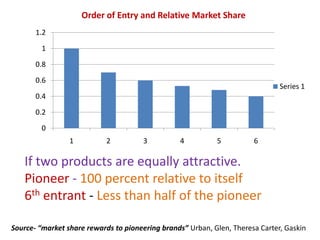
If two products are equally attractive. Pioneer - 100 percent relative to itself 6th entrant - Less than half of the pioneerSource- “market share rewards to pioneering brands” Urban, Glen, Theresa Carter, Gaskin
First Movers Advantage Preference FormationCategory Association – architectural standardsAwareness and RecallPreemptive PositioningPerceived Risk of other BrandsBuyer Entry
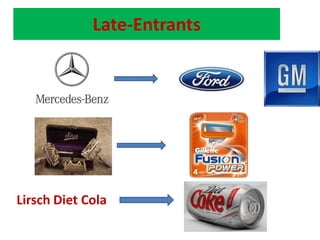
Late-EntrantsLirsch Diet Cola
Conditions for late EntrantsWell-educated buyers- own set of perceptionsRisk in technology – comparatively lowCompetitor set – well defined
Late Entry StrategyFast-following Strategy- Playing the game of the Pioneer in a better way with more resources.Differentiation Strategy- Recognizes power of the Pioneer and define themselves as fundamentally different.Innovation Strategy- Redefine what buyers know or perceive about the established brand and the market.
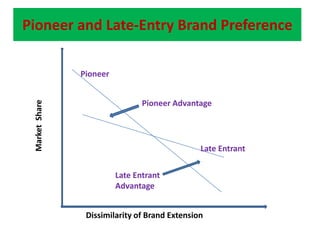
Pioneer and Late-Entry Brand PreferencePioneerPioneer AdvantageMarket  ShareLate EntrantLate Entrant AdvantageDissimilarity of Brand Extension
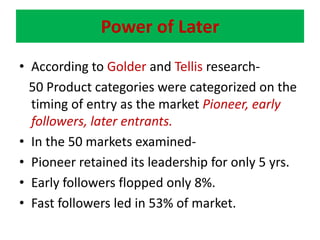
Power of LaterAccording to Golderand Tellisresearch-   50 Product categories were categorized on the timing of entry as the market Pioneer, early followers, later entrants.In the 50 markets examined-Pioneer retained its leadership for only 5 yrs.Early followers flopped only 8%.Fast followers led in 53% of market.
Competitive brand strategies

Competitive brand strategies

  • 1.
    Competitive Brand StrategiesTraditionalView- Strategies respond to what buyers want.But when buyers learn how to chose, the strategies create experiences and observation on which buyer learning is based.
  • 2.
    Pioneer BrandsChallenges- -Successfullyeducate the customer-Must make the right (lucky) technology choice- Sufficient funding
  • 3.
    Classic Competitive ProcessAttractivePriceAvailability AdvertisementsAttractive PriceAvailability AdvertisementsAccording to Classic Competitive Process when there is no differentiation on these parameters the Market share should be equal (assumption:Rational Consumer).But the concept is flawed.
  • 4.
    If two productsare equally attractive. Pioneer - 100 percent relative to itself 6th entrant - Less than half of the pioneerSource- “market share rewards to pioneering brands” Urban, Glen, Theresa Carter, Gaskin
  • 5.
    First Movers AdvantagePreference FormationCategory Association – architectural standardsAwareness and RecallPreemptive PositioningPerceived Risk of other BrandsBuyer Entry
  • 6.
  • 7.
    Conditions for lateEntrantsWell-educated buyers- own set of perceptionsRisk in technology – comparatively lowCompetitor set – well defined
  • 8.
    Late Entry StrategyFast-followingStrategy- Playing the game of the Pioneer in a better way with more resources.Differentiation Strategy- Recognizes power of the Pioneer and define themselves as fundamentally different.Innovation Strategy- Redefine what buyers know or perceive about the established brand and the market.
  • 9.
    Pioneer and Late-EntryBrand PreferencePioneerPioneer AdvantageMarket ShareLate EntrantLate Entrant AdvantageDissimilarity of Brand Extension
  • 10.
    Power of LaterAccordingto Golderand Tellisresearch- 50 Product categories were categorized on the timing of entry as the market Pioneer, early followers, later entrants.In the 50 markets examined-Pioneer retained its leadership for only 5 yrs.Early followers flopped only 8%.Fast followers led in 53% of market.