+ 
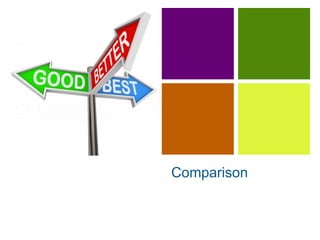
Comparison
+ 
Comparative Form 
 We use the comparative form to show the difference 
or compare and contrast two objects or people and 
we use THAN before what or who we are comparing 
to: 
Maria is taller than Juan. 
Miami is more modern than Lima.
+ RULES 
TYPE OF ADJECTIVE SPELLING RULE COMPARTIVE 
Most 1 syllable 
adjectives. 
Add -er 
Older 
Brighter 
BUT! Dry Drier 
1 syllable adjectives 
ending in –e. 
Add -r 
Nicer 
Safer 
1 syllable adjectives 
ending in consonant + 
vowel + consonant. 
Double the last 
consonant and ad -er 
Bigger 
Fatter 
BUT! New Newer 
2 syllable adjectives 
ending in –y. 
Drop the –y and add – 
ier. 
Easier 
Noisier 
2 syllable adjectives 
not ending in –y. 
Put MORE before the 
adjective. 
More mature 
More patient 
Adjectives with 3 
syllables or more 
Put MORE before the 
adjective. 
More aggressive 
More organised
+ 
Comparative than 
John is older than Sue. 
The pound is more expensive than the dollar.
+ 
Superlative Form 
 The superlative is the form of an adjective or adverb 
that shows which thing has that quality above or 
below the level of the others: 
Brian is the tallest student in the class 
Paris in the most beautiful city in the world
+ RULES 
TYPE OF ADJECTIVE SPELLING RULE COMPARTIVE 
Most 1 syllable 
adjectives. 
Add –est. 
Richest 
Oldest 
BUT! Dry Driest 
1 syllable adjectives 
ending in –e. 
Add –st. 
Nicest 
Safest 
1 syllable adjectives 
ending in consonant + 
vowel + consonant. 
Double the last 
consonant and ad – 
est. 
Biggest 
Thinnest 
BUT! New Newest 
2 syllable adjectives 
ending in –y. 
Drop the –y and add – 
iest. 
Happiest 
Funniest 
2 syllable adjectives 
not ending in –y. 
Put MOST before the 
adjective. 
Most boring 
Most patient 
Adjectives with 3 
syllables or more 
Put MOST before the 
adjective. 
Most popular 
Most attractive
+ 
 Of adjectives or adverbs is used before superlatives 
in sentences we use THE… (OF/IN) when we 
compare one person, animal, thing, idea or situation 
with several of the same kind. 
That’s the most ridiculous idea I've ever Heard. 
Peter is the tallest boy in his class.
+ 
of all / period of time. 
The + Superlative + 
in + place / group of 
people. 
Nick is the best student in his class. 
Rudolf Nurejev was the most important dances of 
the 20th century.
+ 
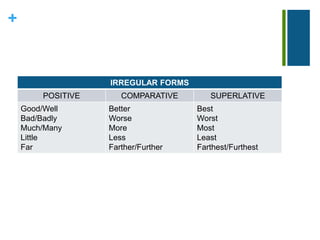
IRREGULAR FORMS 
POSITIVE COMPARATIVE SUPERLATIVE 
Good/Well 
Bad/Badly 
Much/Many 
Little 
Far 
Better 
Worse 
More 
Less 
Farther/Further 
Best 
Worst 
Most 
Least 
Farthest/Furthest
+ 
NOTE 
 
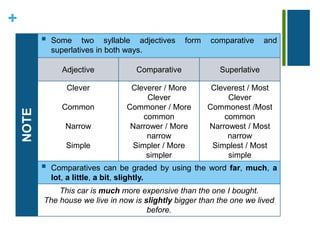
Some two syllable adjectives form comparative and 
superlatives in both ways. 
Adjective Comparative Superlative 
Clever 
Common 
Narrow 
Simple 
Cleverer / More 
Clever 
Commoner / More 
common 
Narrower / More 
narrow 
Simpler / More 
simpler 
Cleverest / Most 
Clever 
Commonest /Most 
common 
Narrowest / Most 
narrow 
Simplest / Most 
simple 
 
Comparatives can be graded by using the word far, much, a 
lot, a little, a bit, slightly. 
This car is much more expensive than the one I bought. 
The house we live in now is slightly bigger than the one we lived 
before.
+ 
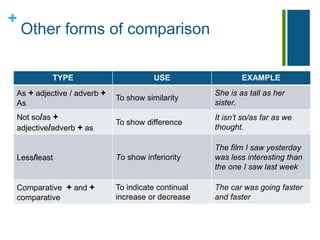
Other forms of comparison 
TYPE USE EXAMPLE 
As + adjective / adverb + 
As 
To show similarity 
She is as tall as her 
sister. 
Not so/as + 
adjective/adverb + as 
To show difference 
It isn’t so/as far as we 
thought. 
Less/least To show inferiority 
The film I saw yesterday 
was less interesting than 
the one I saw last week 
Comparative + and + 
comparative 
To indicate continual 
increase or decrease 
The car was going faster 
and faster

Comparison

  • 1.
  • 2.
    + Comparative Form  We use the comparative form to show the difference or compare and contrast two objects or people and we use THAN before what or who we are comparing to: Maria is taller than Juan. Miami is more modern than Lima.
  • 3.
    + RULES TYPEOF ADJECTIVE SPELLING RULE COMPARTIVE Most 1 syllable adjectives. Add -er Older Brighter BUT! Dry Drier 1 syllable adjectives ending in –e. Add -r Nicer Safer 1 syllable adjectives ending in consonant + vowel + consonant. Double the last consonant and ad -er Bigger Fatter BUT! New Newer 2 syllable adjectives ending in –y. Drop the –y and add – ier. Easier Noisier 2 syllable adjectives not ending in –y. Put MORE before the adjective. More mature More patient Adjectives with 3 syllables or more Put MORE before the adjective. More aggressive More organised
  • 4.
    + Comparative than John is older than Sue. The pound is more expensive than the dollar.
  • 5.
    + Superlative Form  The superlative is the form of an adjective or adverb that shows which thing has that quality above or below the level of the others: Brian is the tallest student in the class Paris in the most beautiful city in the world
  • 6.
    + RULES TYPEOF ADJECTIVE SPELLING RULE COMPARTIVE Most 1 syllable adjectives. Add –est. Richest Oldest BUT! Dry Driest 1 syllable adjectives ending in –e. Add –st. Nicest Safest 1 syllable adjectives ending in consonant + vowel + consonant. Double the last consonant and ad – est. Biggest Thinnest BUT! New Newest 2 syllable adjectives ending in –y. Drop the –y and add – iest. Happiest Funniest 2 syllable adjectives not ending in –y. Put MOST before the adjective. Most boring Most patient Adjectives with 3 syllables or more Put MOST before the adjective. Most popular Most attractive
  • 7.
    +  Ofadjectives or adverbs is used before superlatives in sentences we use THE… (OF/IN) when we compare one person, animal, thing, idea or situation with several of the same kind. That’s the most ridiculous idea I've ever Heard. Peter is the tallest boy in his class.
  • 8.
    + of all/ period of time. The + Superlative + in + place / group of people. Nick is the best student in his class. Rudolf Nurejev was the most important dances of the 20th century.
  • 9.
    + IRREGULAR FORMS POSITIVE COMPARATIVE SUPERLATIVE Good/Well Bad/Badly Much/Many Little Far Better Worse More Less Farther/Further Best Worst Most Least Farthest/Furthest
  • 10.
    + NOTE  Some two syllable adjectives form comparative and superlatives in both ways. Adjective Comparative Superlative Clever Common Narrow Simple Cleverer / More Clever Commoner / More common Narrower / More narrow Simpler / More simpler Cleverest / Most Clever Commonest /Most common Narrowest / Most narrow Simplest / Most simple  Comparatives can be graded by using the word far, much, a lot, a little, a bit, slightly. This car is much more expensive than the one I bought. The house we live in now is slightly bigger than the one we lived before.
  • 11.
    + Other formsof comparison TYPE USE EXAMPLE As + adjective / adverb + As To show similarity She is as tall as her sister. Not so/as + adjective/adverb + as To show difference It isn’t so/as far as we thought. Less/least To show inferiority The film I saw yesterday was less interesting than the one I saw last week Comparative + and + comparative To indicate continual increase or decrease The car was going faster and faster