COMMUNITY STRUCTURES
Mr. James Arniel A. Sarno
Recognize essential characteristics
of communities in terms of elements
and structures.
Analyze the functions of communities
in terms of structures.
1.
2.
Learning Targets:
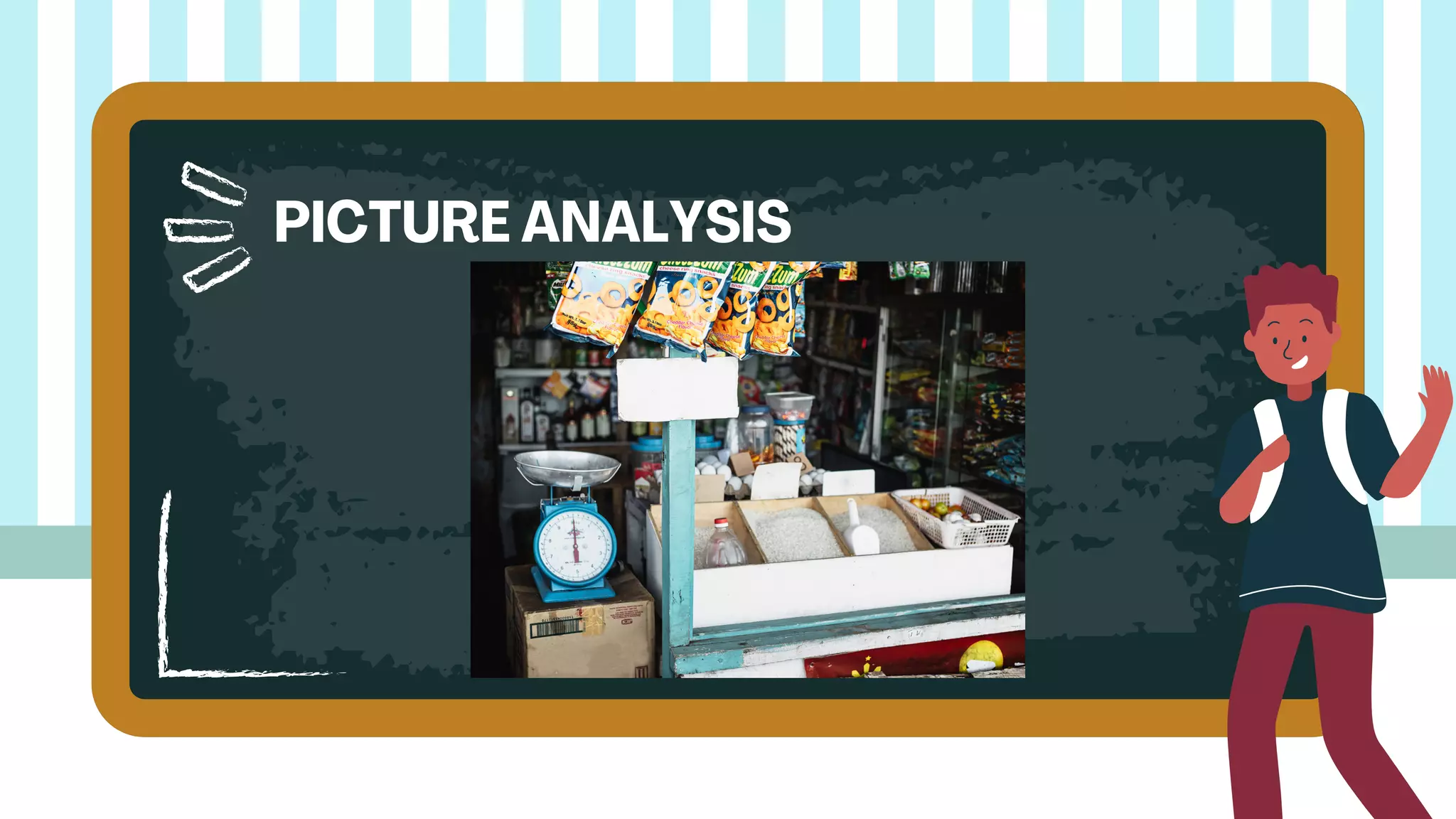
PICTURE ANALYSIS
PICTURE ANALYSIS
PICTURE ANALYSIS
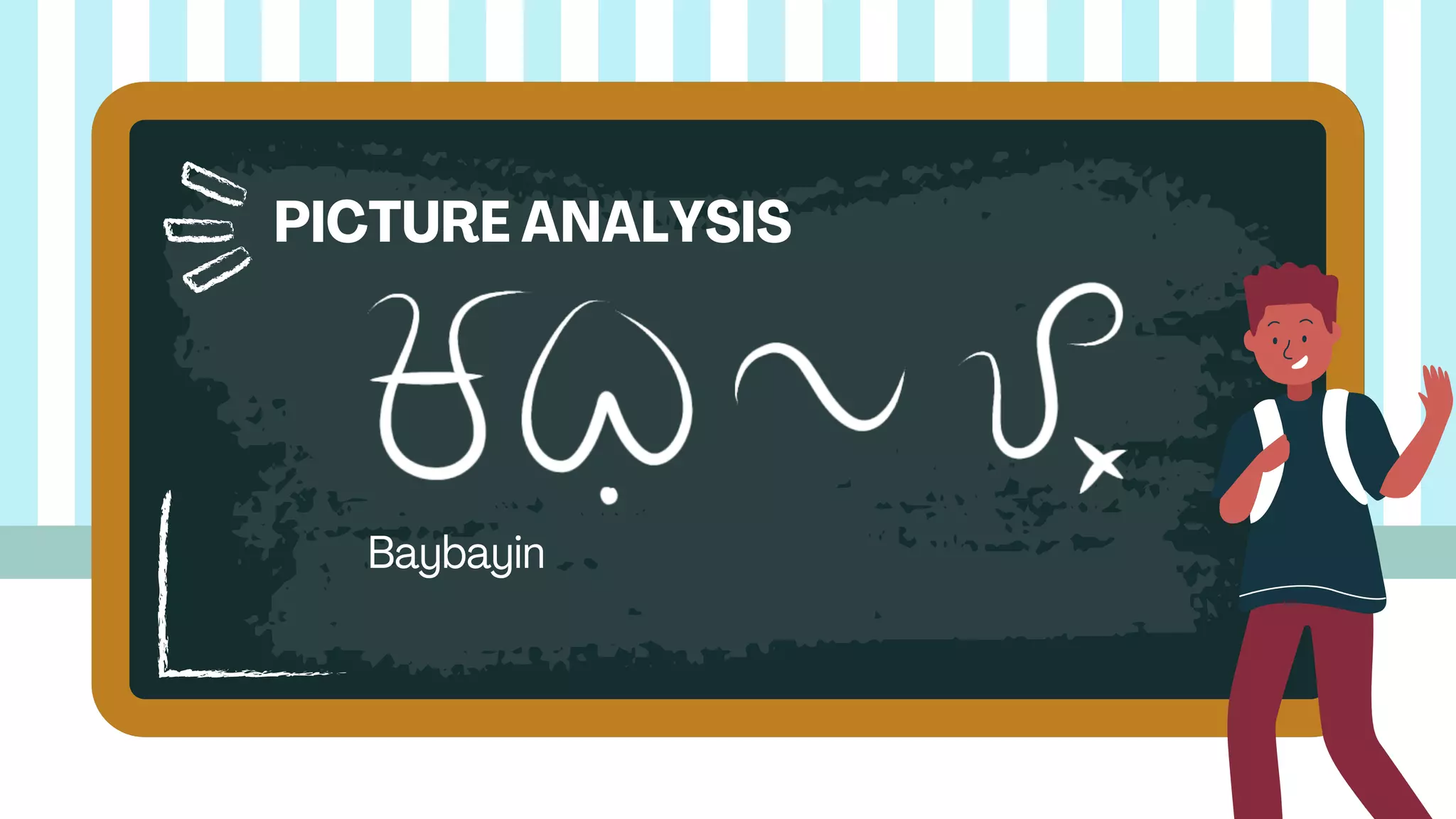
Baybayin
PICTURE ANALYSIS
PICTURE ANALYSIS
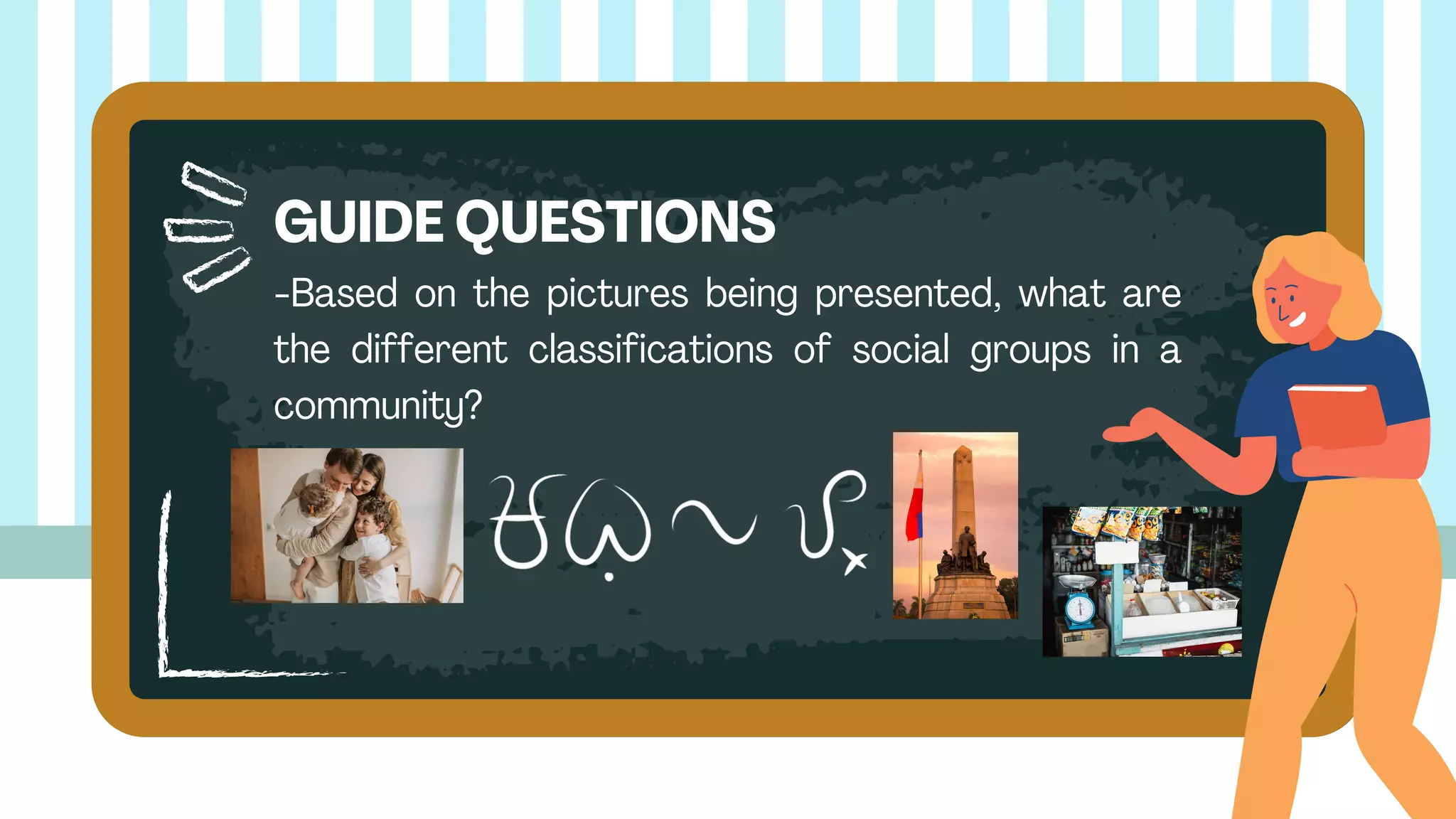
-Based on the pictures being presented, what are
the different classifications of social groups in a
community?
GUIDE QUESTIONS
A community consists of:
SOCIAL, CULTURAL, POLITICAL and ECONOMIC
structures
COMMUNITY STRUCTURES
-refers to the rules and expectations that people
develop in the community over time to help regulate
and manage their interaction with one another.
ELEMENTS
-social institutions
-social groups
-statuses
-roles
COMMUNITY SOCIAL STRUCTURE
Social Institutions
-established patterns of belief and behavior that are
centered on addressing basic social needs of people
in the community.
-family, religion, economy, education,
government, and health care
COMMUNITY SOCIAL STRUCTURE
Social Groups
-Primary/Secondary Group - family, peers and
neighborhood/political parties, clubs
-Informal/Formal Groups - groups bonded by
common likes, interests, attitudes/created by an
organization to fullfil task
-In-groups/Out-groups
COMMUNITY SOCIAL STRUCTURE
Status
-the position or rank a person holds,
-It can be ascribed status or achieved status.
ASCRIBED
- which is assigned at birth
ACHIEVED
- acquired based on merit or accomplishment
COMMUNITY SOCIAL STRUCTURE
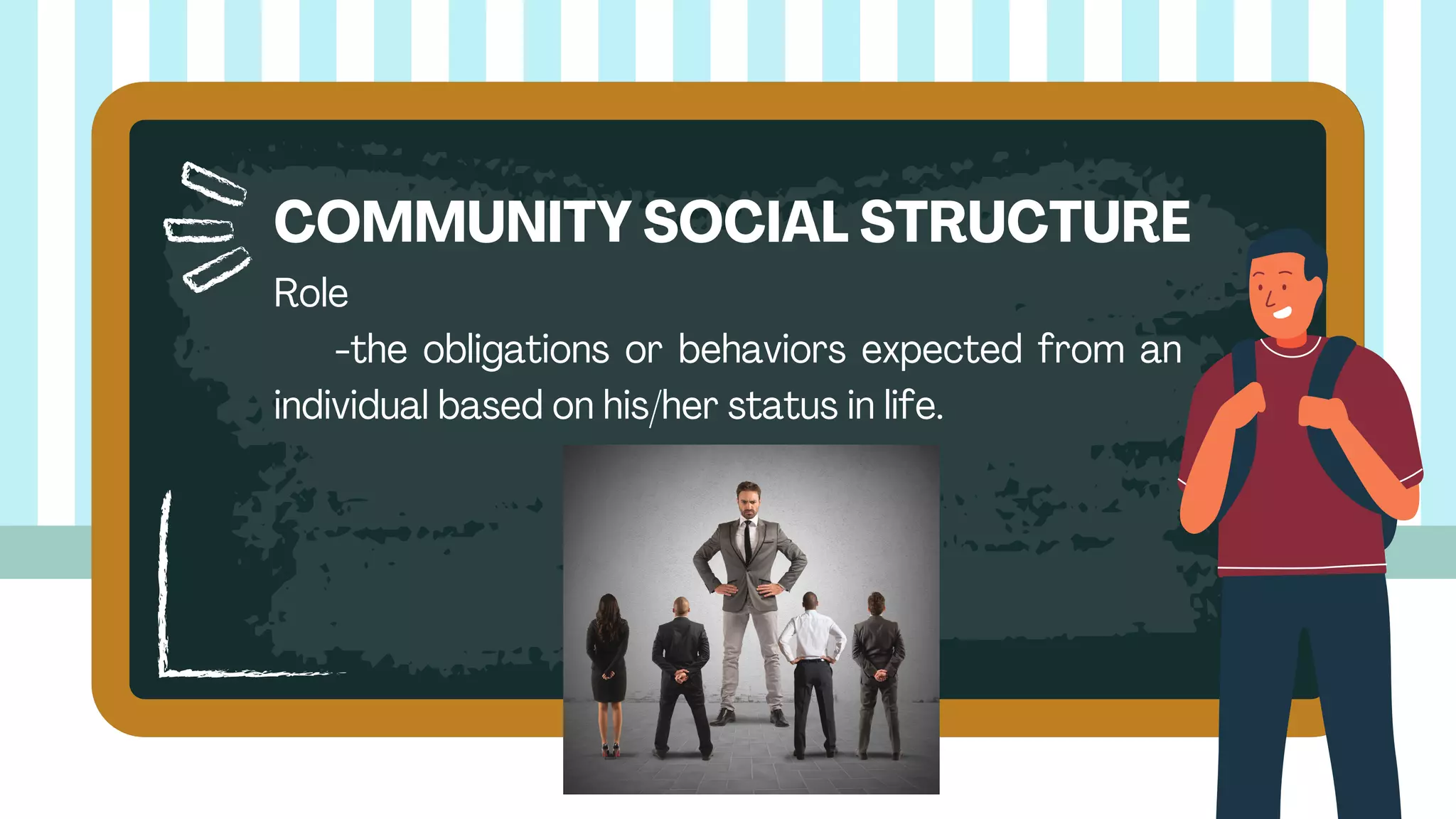
Role
-the obligations or behaviors expected from an
individual based on his/her status in life.
COMMUNITY SOCIAL STRUCTURE
-refers to the institutionalized patterns of ways of
life that are shared, learned, developed, and
accepted by people in the community.
It consists Symbols and Languages, Norms, Values
and Beliefs, Rituals, and Artifacts
COMMUNITY CULTURAL STRUCTURE
Symbols and Languages
Symbols are the shared words, gestures, objects, or
signals that people in a community use to convey and
develop recognizable meanings.
Language is a symbolic system that allows people to
develop complex thoughts and record and explain
new ideas either verbal or nonverbal means.
COMMUNITY CULTURAL STRUCTURE
Norms
-refer to specific cultural expectations on how to
behave in a given situation.
-it further divided into folkways, mores and laws.
-Folkways-are general standards of behavior that
people in the community adhere to.
-Mores-the strict norms that control moral and
ethical behavior
COMMUNITY CULTURAL STRUCTURE
Norms
-Laws-the proscriptive and prescriptive norms
written in a legal code.
Values and Beliefs
-values-the abstract standards in a community that
define the ideal principles of what is good, just and
desirable.
COMMUNITY CULTURAL STRUCTURE
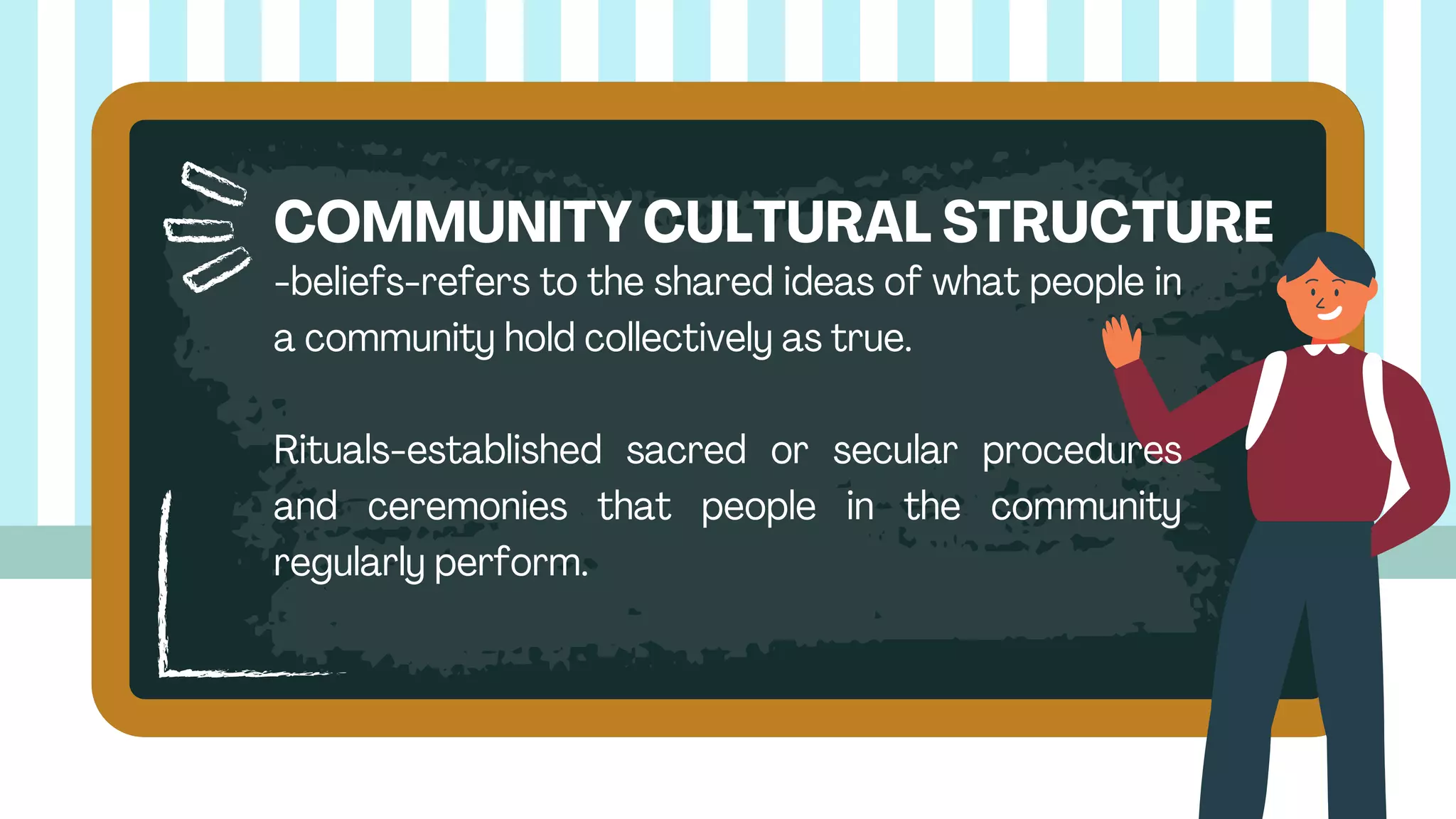
-beliefs-refers to the shared ideas of what people in
a community hold collectively as true.
Rituals-established sacred or secular procedures
and ceremonies that people in the community
regularly perform.
COMMUNITY CULTURAL STRUCTURE
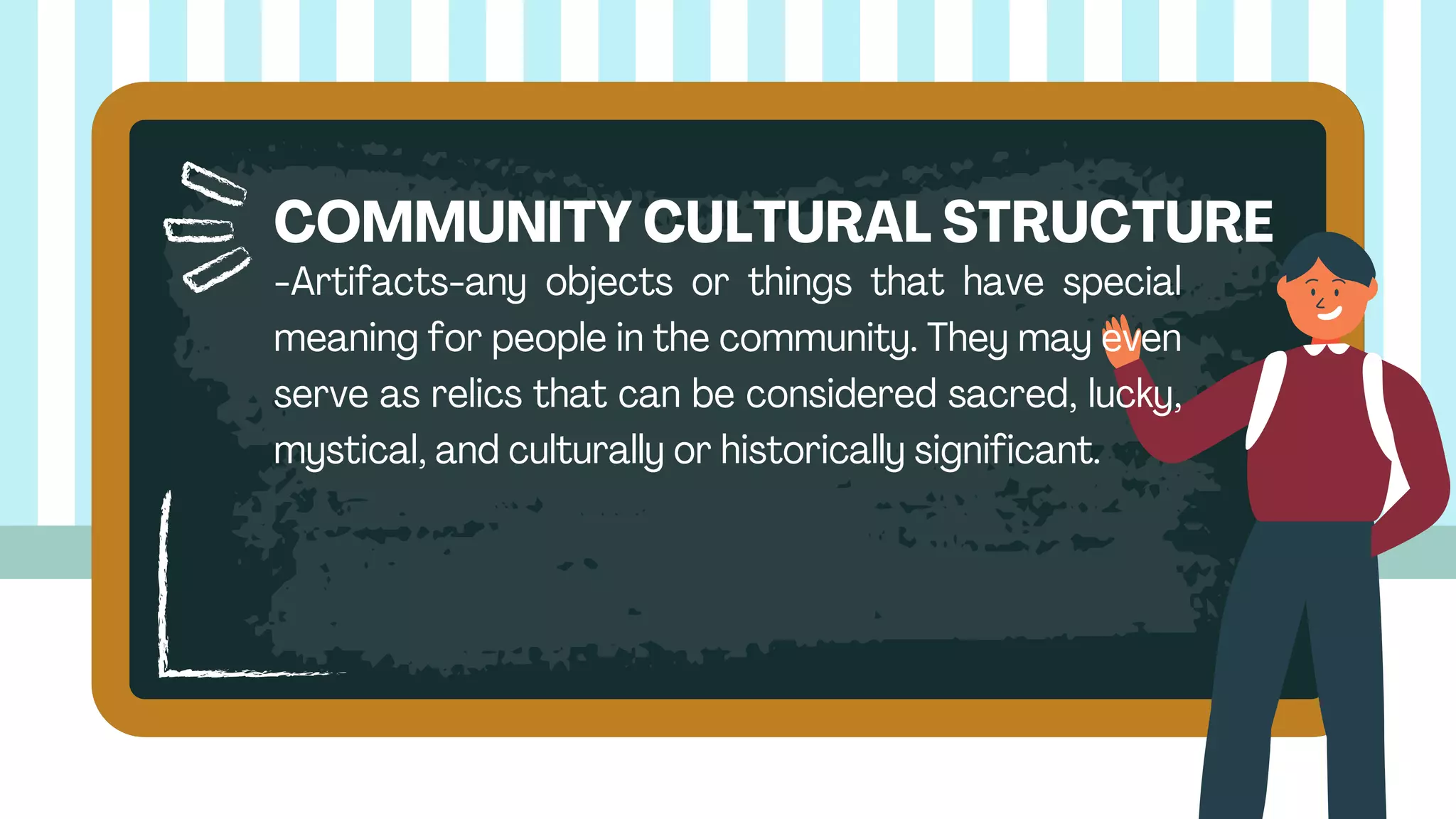
-Artifacts-any objects or things that have special
meaning for people in the community. They may even
serve as relics that can be considered sacred, lucky,
mystical, and culturally or historically significant.
COMMUNITY CULTURAL STRUCTURE
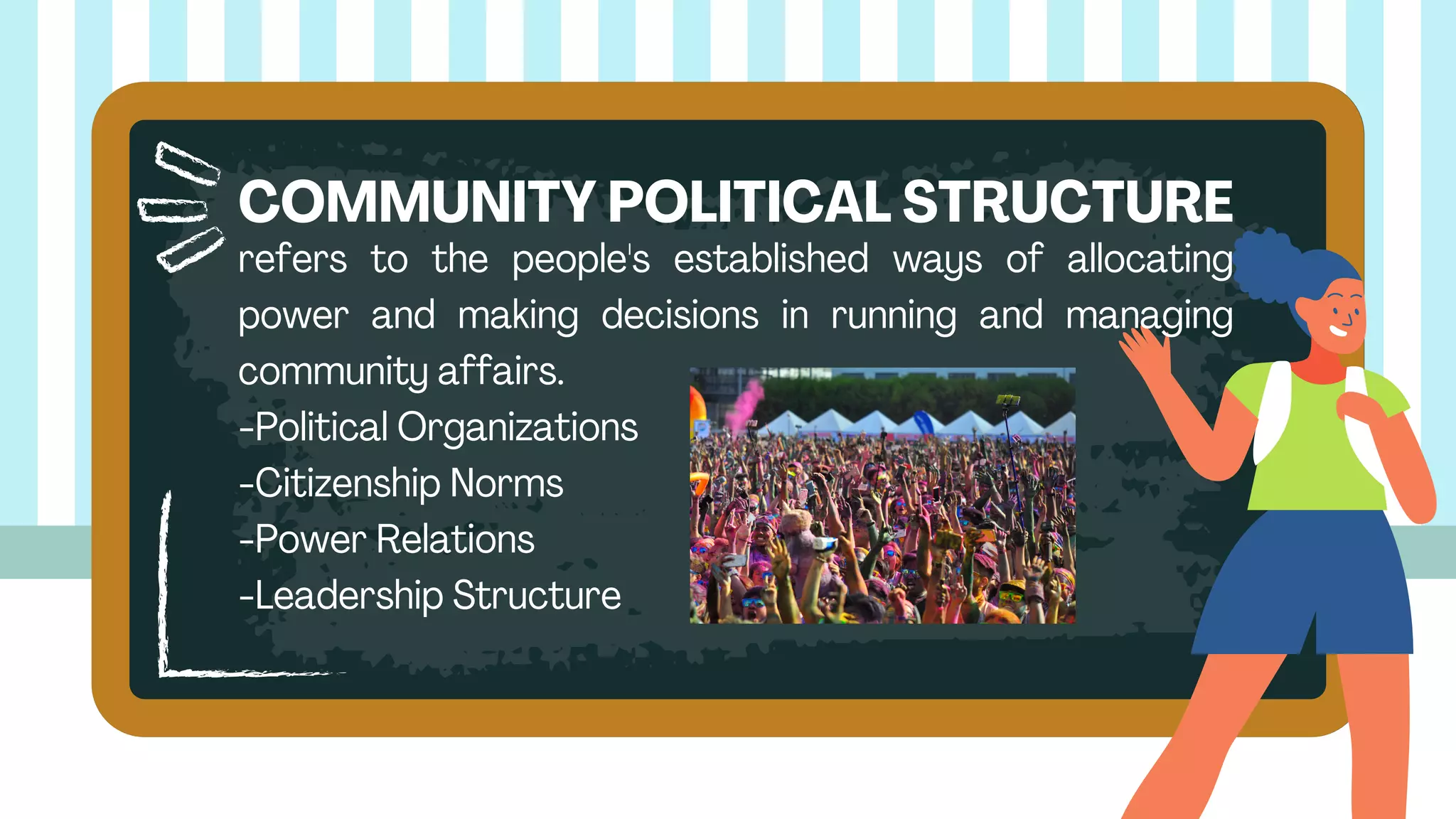
refers to the people's established ways of allocating
power and making decisions in running and managing
community affairs.
-Political Organizations
-Citizenship Norms
-Power Relations
-Leadership Structure
COMMUNITY POLITICAL STRUCTURE
pertains to various organized ways and means
through which the people in the community produce
goods and services, allocate limited resources, and
generate wealth in order to satisfy their needs and
wants.
COMMUNITY ECONOMIC STRUCTURE
Capital Assets - refer to a property or anything that
is owned and has an economic value, which is
exected to generate profit for a long period of time.
-Human Capital
-Social Capital
-Natural Capital
-Physical Capital
-Financial Capital
COMMUNITY ECONOMIC STRUCTURE
Vulnerability Context-pertains to the insecurity in
the well-being of individuals and households in the
community
Business Climate-refers to the attitudes, laws,
regulations, and policies of the government and
lending institutions toward businesses, enterprises,
and business activities.
COMMUNITY ECONOMIC STRUCTURE
Trade-pertains to small-, medium-, and even large-
scale enterprises and business activities involving the
sale and purchase of goods, services, and
information.
COMMUNITY ECONOMIC STRUCTURE
THAT'S ALL FOR TODAY!
See you tomorrow!

Community Structures.pdf

  • 1.
  • 2.
    Recognize essential characteristics ofcommunities in terms of elements and structures. Analyze the functions of communities in terms of structures. 1. 2. Learning Targets:
  • 3.
  • 4.
  • 5.
  • 6.
  • 7.
  • 8.
    -Based on thepictures being presented, what are the different classifications of social groups in a community? GUIDE QUESTIONS
  • 9.
    A community consistsof: SOCIAL, CULTURAL, POLITICAL and ECONOMIC structures COMMUNITY STRUCTURES
  • 10.
    -refers to therules and expectations that people develop in the community over time to help regulate and manage their interaction with one another. ELEMENTS -social institutions -social groups -statuses -roles COMMUNITY SOCIAL STRUCTURE
  • 11.
    Social Institutions -established patternsof belief and behavior that are centered on addressing basic social needs of people in the community. -family, religion, economy, education, government, and health care COMMUNITY SOCIAL STRUCTURE
  • 12.
    Social Groups -Primary/Secondary Group- family, peers and neighborhood/political parties, clubs -Informal/Formal Groups - groups bonded by common likes, interests, attitudes/created by an organization to fullfil task -In-groups/Out-groups COMMUNITY SOCIAL STRUCTURE
  • 13.
    Status -the position orrank a person holds, -It can be ascribed status or achieved status. ASCRIBED - which is assigned at birth ACHIEVED - acquired based on merit or accomplishment COMMUNITY SOCIAL STRUCTURE
  • 14.
    Role -the obligations orbehaviors expected from an individual based on his/her status in life. COMMUNITY SOCIAL STRUCTURE
  • 15.
    -refers to theinstitutionalized patterns of ways of life that are shared, learned, developed, and accepted by people in the community. It consists Symbols and Languages, Norms, Values and Beliefs, Rituals, and Artifacts COMMUNITY CULTURAL STRUCTURE
  • 16.
    Symbols and Languages Symbolsare the shared words, gestures, objects, or signals that people in a community use to convey and develop recognizable meanings. Language is a symbolic system that allows people to develop complex thoughts and record and explain new ideas either verbal or nonverbal means. COMMUNITY CULTURAL STRUCTURE
  • 17.
    Norms -refer to specificcultural expectations on how to behave in a given situation. -it further divided into folkways, mores and laws. -Folkways-are general standards of behavior that people in the community adhere to. -Mores-the strict norms that control moral and ethical behavior COMMUNITY CULTURAL STRUCTURE
  • 18.
    Norms -Laws-the proscriptive andprescriptive norms written in a legal code. Values and Beliefs -values-the abstract standards in a community that define the ideal principles of what is good, just and desirable. COMMUNITY CULTURAL STRUCTURE
  • 19.
    -beliefs-refers to theshared ideas of what people in a community hold collectively as true. Rituals-established sacred or secular procedures and ceremonies that people in the community regularly perform. COMMUNITY CULTURAL STRUCTURE
  • 20.
    -Artifacts-any objects orthings that have special meaning for people in the community. They may even serve as relics that can be considered sacred, lucky, mystical, and culturally or historically significant. COMMUNITY CULTURAL STRUCTURE
  • 21.
    refers to thepeople's established ways of allocating power and making decisions in running and managing community affairs. -Political Organizations -Citizenship Norms -Power Relations -Leadership Structure COMMUNITY POLITICAL STRUCTURE
  • 22.
    pertains to variousorganized ways and means through which the people in the community produce goods and services, allocate limited resources, and generate wealth in order to satisfy their needs and wants. COMMUNITY ECONOMIC STRUCTURE
  • 23.
    Capital Assets -refer to a property or anything that is owned and has an economic value, which is exected to generate profit for a long period of time. -Human Capital -Social Capital -Natural Capital -Physical Capital -Financial Capital COMMUNITY ECONOMIC STRUCTURE
  • 24.
    Vulnerability Context-pertains tothe insecurity in the well-being of individuals and households in the community Business Climate-refers to the attitudes, laws, regulations, and policies of the government and lending institutions toward businesses, enterprises, and business activities. COMMUNITY ECONOMIC STRUCTURE
  • 25.
    Trade-pertains to small-,medium-, and even large- scale enterprises and business activities involving the sale and purchase of goods, services, and information. COMMUNITY ECONOMIC STRUCTURE
  • 26.
    THAT'S ALL FORTODAY! See you tomorrow!