Communities of Practice… pathing the cowpaths GTANSW Presentation  Annual Conference 2007 by Martin Pluss [email_address] 0402824959 http://www.bahiker.com/pictures/eastbay/garin/websize/097trail.jpg http://static.flickr.com/35/70225221_e0ca739f93.jpg
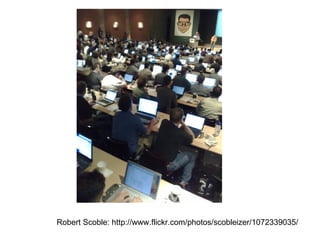
Robert Scoble: http://www.flickr.com/photos/scobleizer/1072339035/


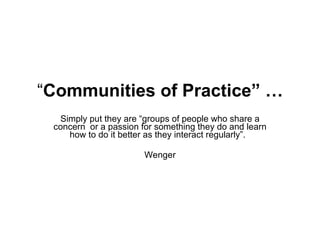
“ Communities of Practice” … Simply put they are “groups of people who share a concern  or a passion for something they do and learn how to do it better as they interact regularly”.  Wenger
The  Model A learning theory conceptualized by Jean Lave and Etienne Wenger proposing  the idea that  Learning is social and comes largely from our experience of participating in daily life  A process of engagement in a 'community of practice'. 
According to Wenger… CoP defines itself along 3 dimensions: What it is about   Joint enterprise  as understood and continually renegotiated by its members. How it functions  Mutual engagement that bind members together What capability it has produced   Shared repertoire  of communal resources (routines, artefacts, vocabulary, styles, etc.) developed over time ( http://www.infed.org/biblio/communities_of_practice.htm )
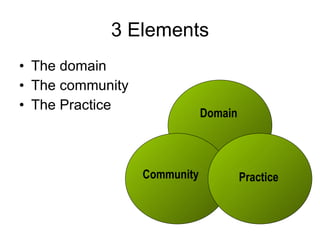
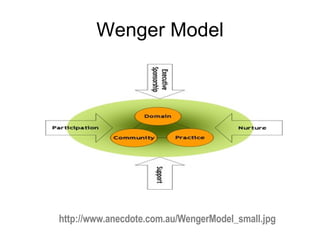
3 Elements The domain The community The Practice Domain Community Practice
Domain (Defines the issues) Members have …  Identity  defined by a shared area of interest Commitment   to domain Shared competence
Community   (People who care about the domain) Members… Participate  in joint activities & discussions Help  each other Share  information Build relationships  so that they learn from each other
Practice  (Shared ideas, tools, info., goals) Members are … Practitioners Develop a shared repertoire of resources Experiences Stories Tools Ways of addressing recurring problems
Key Features of CoPs Communication: Managed by making connections Shared Domain of Practice, knowledge and resources Focus on value, mutual exchange and learning Crosses operational, functional and organizational boundaries Defined by people, not tasks
What CoPs Do Facilitate collaboration/communication Develop/Identify Subject Matter Experts  Filter out incorrect information by peer groups Capture knowledge (intellectual capital)  Prevent re-inventing the wheel by sharing knowledge and experiences Share successful (best) practices Decrease learning curve Increase organizational learning
Benefits of a CoPs Access to knowledge and experience  Build relationships with those who have expertise in a particular domain Develop best practices through discussions and sharing of ideas Learn how others have solved problems, instead of reinventing the wheel  Keep up-to-date at the time and pace of the individual member Develop a community spirit.


Facebook founder Mark Zuckerberg. http://www.smh.com.au/news/web/facebook-founder-stole-our-idea/2007/07/25/1185043156358.html
 
 
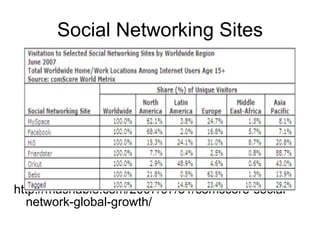
Social Networking Sites http://mashable.com/2007/07/31/comscore-social-network-global-growth/


Wenger Model http://www.anecdote.com.au/WengerModel_small.jpg
 
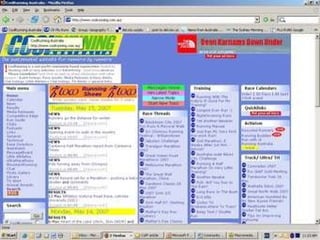
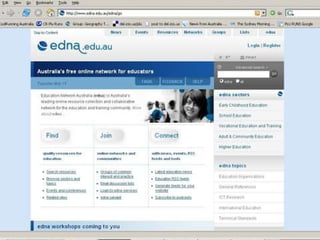
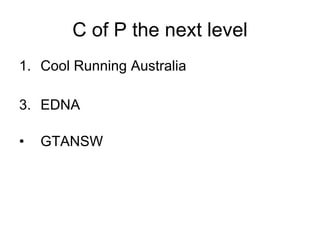
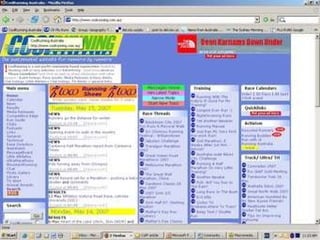
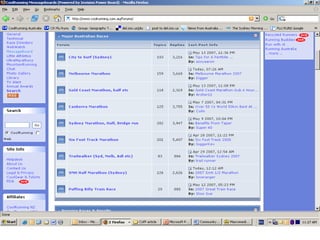
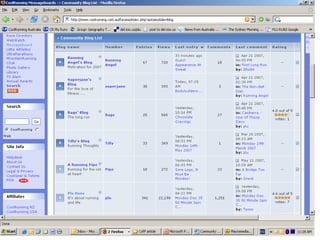
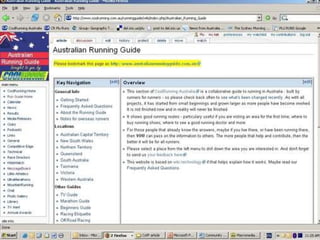
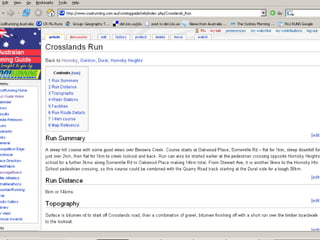
C of P the next level Cool Running Australia  EDNA GTANSW


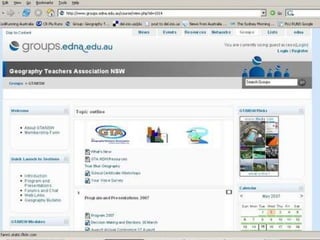
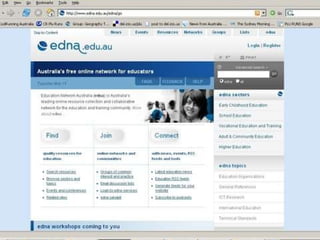
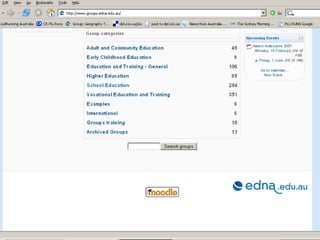
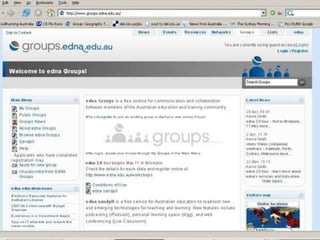
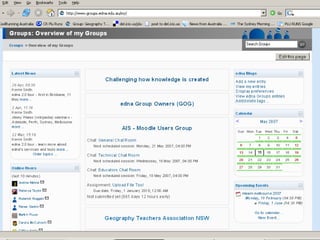
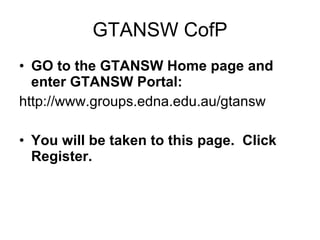
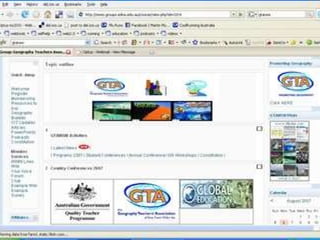
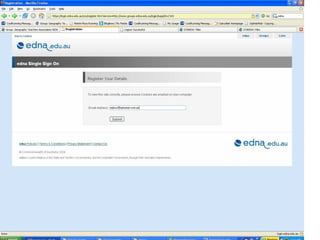
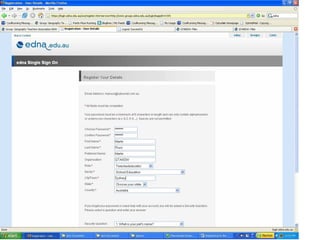
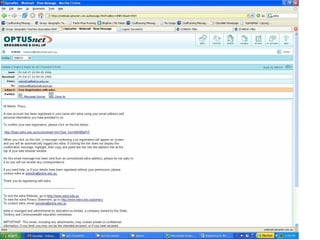
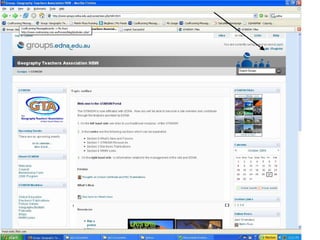
GTANSW CofP GO to the GTANSW Home page and enter GTANSW Portal:  http://www.groups.edna.edu.au/gtansw You will be taken to this page.  Click Register.


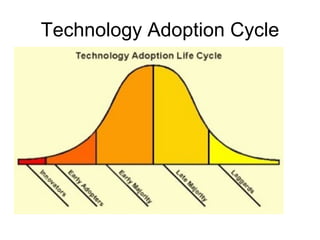
Technology Adoption Cycle


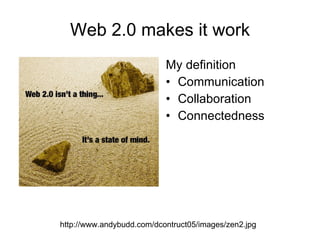
Web 2.0 makes it work My definition Communication Collaboration Connectedness http://www.andybudd.com/dcontruct05/images/zen2.jpg
Top 13 Web 2.0 Products  www.bloglines.com  rss feeder www.del.icio.us  online favourites www.flickr.com   online photos www.wikispaces.com  collaborative learning www.youtube.com  online videos www.facebook.com  social networking www.43things.com  goals organiser spreadsheets.google.com  online spreadsheets podomatic.com  host your own podcasts www.rollyo.com /  roll your own search engine www.digg.com  collaborative  favourites  www.ning.com /  social networking www.secondlife.com  3d online digital world www.gliffy.com /  draw and share diagrams on the web
A Student Survey “Why do I have to watch a teacher struggle  to use yesterday’s technology?” The Next Curve Mick Waters 2006 A Conference in Belfast
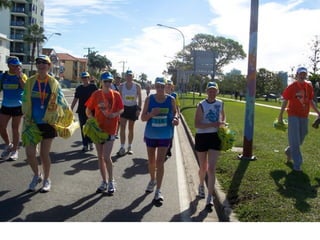
Lisa Smith  Batchen – Ultra Runner "Twenty years from now you will be more disappointed by the things you didn't do than by the ones you did do. So throw off the bowlines. Sail away from the safe harbor. Catch the trade winds in your sails. Explore. Dream. Discover."     --Mark Twain
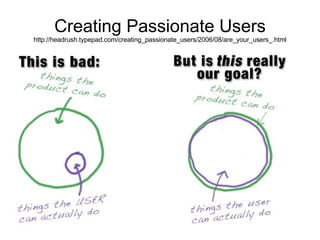
Creating Passionate Users http://headrush.typepad.com/creating_passionate_users/2006/08/are_your_users_.html
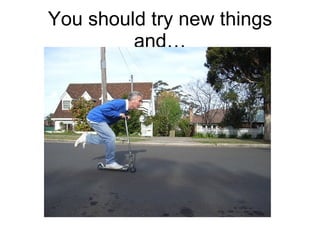
You should try new things and…
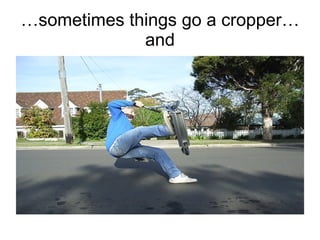
… sometimes things go a cropper…and
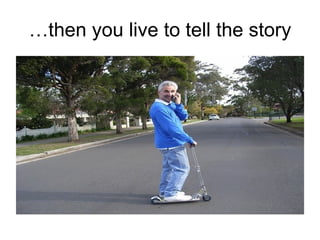
… then you live to tell the story

Community of Practice

  • 1.
    Communities of Practice…pathing the cowpaths GTANSW Presentation Annual Conference 2007 by Martin Pluss [email_address] 0402824959 http://www.bahiker.com/pictures/eastbay/garin/websize/097trail.jpg http://static.flickr.com/35/70225221_e0ca739f93.jpg
  • 2.
  • 3.
  • 4.
  • 5.
  • 6.
  • 7.
  • 8.
  • 9.
    “ Communities ofPractice” … Simply put they are “groups of people who share a concern or a passion for something they do and learn how to do it better as they interact regularly”. Wenger
  • 10.
    The ModelA learning theory conceptualized by Jean Lave and Etienne Wenger proposing the idea that Learning is social and comes largely from our experience of participating in daily life A process of engagement in a 'community of practice'. 
  • 11.
    According to Wenger…CoP defines itself along 3 dimensions: What it is about Joint enterprise as understood and continually renegotiated by its members. How it functions Mutual engagement that bind members together What capability it has produced Shared repertoire of communal resources (routines, artefacts, vocabulary, styles, etc.) developed over time ( http://www.infed.org/biblio/communities_of_practice.htm )
  • 12.
    3 Elements Thedomain The community The Practice Domain Community Practice
  • 13.
    Domain (Defines theissues) Members have … Identity defined by a shared area of interest Commitment to domain Shared competence
  • 14.
    Community (People who care about the domain) Members… Participate in joint activities & discussions Help each other Share information Build relationships so that they learn from each other
  • 15.
    Practice (Sharedideas, tools, info., goals) Members are … Practitioners Develop a shared repertoire of resources Experiences Stories Tools Ways of addressing recurring problems
  • 16.
    Key Features ofCoPs Communication: Managed by making connections Shared Domain of Practice, knowledge and resources Focus on value, mutual exchange and learning Crosses operational, functional and organizational boundaries Defined by people, not tasks
  • 17.
    What CoPs DoFacilitate collaboration/communication Develop/Identify Subject Matter Experts Filter out incorrect information by peer groups Capture knowledge (intellectual capital) Prevent re-inventing the wheel by sharing knowledge and experiences Share successful (best) practices Decrease learning curve Increase organizational learning
  • 18.
    Benefits of aCoPs Access to knowledge and experience Build relationships with those who have expertise in a particular domain Develop best practices through discussions and sharing of ideas Learn how others have solved problems, instead of reinventing the wheel Keep up-to-date at the time and pace of the individual member Develop a community spirit.
  • 19.
  • 20.
  • 21.
  • 22.
  • 23.
  • 24.
  • 25.
  • 26.
  • 27.
  • 28.
  • 29.
  • 30.
  • 31.
  • 32.
  • 33.
  • 34.
  • 35.
    Facebook founder MarkZuckerberg. http://www.smh.com.au/news/web/facebook-founder-stole-our-idea/2007/07/25/1185043156358.html
  • 36.
  • 37.
  • 38.
    Social Networking Siteshttp://mashable.com/2007/07/31/comscore-social-network-global-growth/
  • 39.
  • 40.
  • 41.
  • 42.
  • 43.
  • 44.
  • 45.
    C of Pthe next level Cool Running Australia EDNA GTANSW
  • 46.
  • 47.
  • 48.
  • 49.
  • 50.
  • 51.
  • 52.
  • 53.
  • 54.
  • 55.
  • 56.
  • 57.
  • 58.
    GTANSW CofP GOto the GTANSW Home page and enter GTANSW Portal: http://www.groups.edna.edu.au/gtansw You will be taken to this page. Click Register.
  • 59.
  • 60.
  • 61.
  • 62.
  • 63.
  • 64.
  • 65.
  • 66.
  • 67.
  • 68.
  • 69.
  • 70.
  • 71.
  • 72.
  • 73.
  • 74.
  • 75.
  • 76.
    Web 2.0 makesit work My definition Communication Collaboration Connectedness http://www.andybudd.com/dcontruct05/images/zen2.jpg
  • 77.
    Top 13 Web2.0 Products www.bloglines.com rss feeder www.del.icio.us online favourites www.flickr.com online photos www.wikispaces.com collaborative learning www.youtube.com online videos www.facebook.com social networking www.43things.com goals organiser spreadsheets.google.com online spreadsheets podomatic.com host your own podcasts www.rollyo.com / roll your own search engine www.digg.com collaborative favourites www.ning.com / social networking www.secondlife.com 3d online digital world www.gliffy.com / draw and share diagrams on the web
  • 78.
    A Student Survey“Why do I have to watch a teacher struggle to use yesterday’s technology?” The Next Curve Mick Waters 2006 A Conference in Belfast
  • 79.
    Lisa Smith Batchen – Ultra Runner "Twenty years from now you will be more disappointed by the things you didn't do than by the ones you did do. So throw off the bowlines. Sail away from the safe harbor. Catch the trade winds in your sails. Explore. Dream. Discover."     --Mark Twain
  • 80.
    Creating Passionate Usershttp://headrush.typepad.com/creating_passionate_users/2006/08/are_your_users_.html
  • 81.
    You should trynew things and…
  • 82.
    … sometimes thingsgo a cropper…and
  • 83.
    … then youlive to tell the story