Business as Usual
or
Community Business
There are estimated to be over 7,000 community
businesses in England
They generate more than £1 billion of income each
year
The hold £2.1 billion of assets
The employ over 36,000 people
They work with around 200,000 volunteers
Community Business
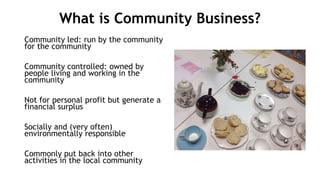
What is Community Business?
Community led: run by the community
for the community
Community controlled: owned by
people living and working in the
community
Not for personal profit but generate a
financial surplus
Socially and (very often)
environmentally responsible
Commonly put back into other
activities in the local community
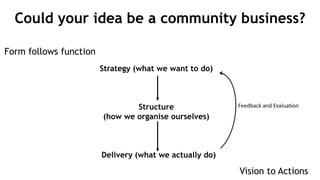
Could your idea be a community business?
Strategy (what we want to do)
Structure
(how we organise ourselves)
Delivery (what we actually do)
Form follows function
Vision to Actions
Feedback and Evaluation
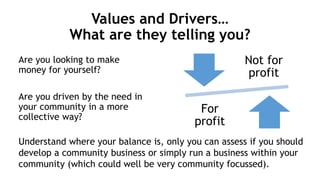
Values and Drivers…
What are they telling you?
Are you looking to make
money for yourself?
Are you driven by the need in
your community in a more
collective way?
Not for
profit
For
profit
Understand where your balance is, only you can assess if you should
develop a community business or simply run a business within your
community (which could well be very community focussed).
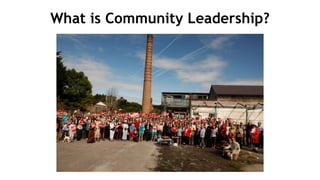
What is Community Leadership?
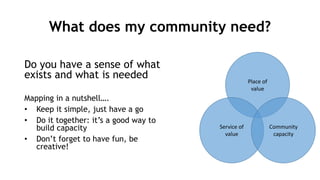
What does my community need?
Do you have a sense of what
exists and what is needed
Mapping in a nutshell….
• Keep it simple, just have a go
• Do it together: it’s a good way to
build capacity
• Don’t forget to have fun, be
creative!
Place of
value
Service of
value
Community
capacity
Community Business
Play Your Cards Right
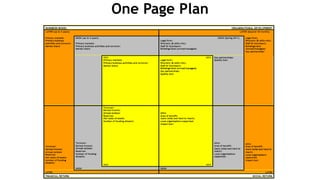
One Page Plan
Some more questions …
just to start you thinking
1. What’s missing from your community (it could be a service, a facility,
or an activity)?
2. What have you got that’s not being used as well as it could be
(buildings, land, etc)?
3. Who have you got (other people, organisations)?
4. What other resources do you have (time, money, connections)?
5. What is the first thing to do to make this happen?
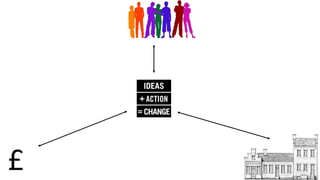
£
Resources 1
History of communities owning their own assets
There’s a long history of communities owning their own assets, to find out more and get ideas see:
http://locality.org.uk/resources/history-community-asset-ownership
Further resources – the following are all useful places to pick up information on all forms of support needed to
develop your organisation, develop you plan and secure funding and finance.
• Community Matters: http://www.communitymatters.org.uk
• Plunkett Foundation: http://www.plunkett.co.uk
• Co-operatives UK: http://www.uk.coop
• Social Enterprise Coalition: http://www.socialenterprise.org.uk
• Social Firms UK: http://www.socialfirmsuk.co.uk
• School for Social Entrepreneurs: http://www.the-sse.org
• Action with Communities in Rural England: http://www.acre.org.uk
• Community Enterprise Scotland: http://communityenterprise.co.uk
• Community Enterprise Wales: http://www.cewales.org
• Community Enterprise Network: http://www.communityenterprisenetwork.org
• Know How Non Profit - http://knowhownonprofit.org
There are lots of good sources of information about choosing the right legal structure and organisation form for
what you want to do. Have a look at the following for starters:
• https://www.gov.uk/government/publications/legal-forms-for-business-a-guide
• http://knowhownonprofit.org/basics/setting-up-a-charity/legal-forms-for-non-profits-1
• http://www.uk.coop/our-work/select-structure-tool
• https://unltd.org.uk/portfolio/3-7-determining-the-right-legal-structure-for-your-social-enterprise
• https://www.gov.uk/government/organisations/office-of-the-regulator-of-community-interest-companies
• Law Works - http://www.lawworks.org.uk
Or why not make a trip to your local Council for Voluntary Services, to find out where your nearest one is:
• Scottish Council for Voluntary Organisations - http://www.scvo.org.uk
• Northern Ireland Council for Voluntary Action - http://www.nicva.org
• Wales Council for Voluntary Action - http://www.wcva.org.uk
• National Association for Voluntary and Community Action - http://www.navca.org.uk
Resources 1
Choosing legal structure and organisation form
• Power to Change – support for community businesses http://www.powertochange.org.uk
• Big Lottery - Asset transfer and capital programmes
http://www.biglotteryfund.org.uk/research/communities-and-places/community-assets
• Heritage Lottery Fund - http://www.hlf.org.uk
• Sport England - https://www.sportengland.org/funding
• Social Investment Business - http://www.sibgroup.org.uk
• Charity Bank http://www.charitybank.org
• Charities Aid Foundation - https://www.cafonline.org
• Community Development Finance Institution http://www.cdfa.org.uk
• Government Funding Database http://govfundingpublic.nics.gov.uk
• Association of Charitable Foundations - http://www.acf.org.uk – see Links to ACF Member Trusts and
Foundations
• New Philanthropy Capital http://www.thinknpc.org
• Community Shares http://www.communityshares.org.uk
• UK Crowdfunding http://www.ukcfa.org.uk
Resources 3
Some funders
Locality - http://locality.org.uk
Development Trusts Northern Ireland - http://dtni.org.uk/
Development Trusts Association Scotland - http://www.dtascot.org.uk
Development Trusts Association Wales - http://www.dtawales.org.uk
National Community Land Trusts Network - http://www.communitylandtrusts.org.uk
Community Right to Buy – Scotland Only
• http://www.gov.scot/Topics/farmingrural/Rural/rural-land/right-to-buy/Community
Community Rights – England Only
• http://mycommunity.org.uk
Community Right to Reclaim Land
• https://www.gov.uk/government/policies/giving-people-more-power-over-what-happens-in-their-neighbourhood/supporting-
pages/community-right-to-reclaim-land
The Right to Contest
• https://www.gov.uk/right-to-contest
Meanwhile Use
http://www.meanwhile.org.uk
Resources 4
Community Rights and other Mechanisms
Support with planning – Planning Aid offers advice and support:
• Planning Aid England: http://www.rtpi.org.uk/planning-aid
• Planning Aid Scotland: http://www.pas.org.uk
• Planning Aid Wales: http://www.planningaidwales.org.uk
• Planning Aid Northern Ireland: http://www.newryandmourne.gov.uk
Other Resources
• Royal Institute of British Architects
http://www.architecture.com/RIBA/Professionalsupport/RIBAOutlinePlanofWork2013
.aspx
• Locality, To Have and to Hold: http://locality.org.uk/resources/hold
• Community Buildings Checker: http://www.communitybuildingschecker.org.uk
• So you want to build a house: http://locality.org.uk/resources/build-house
Resources 5
Support with Planning and Feasibility work
Dave Chapman
Triformis Limited
t: + 44 (0) 7825 175 867
e: dave@triformis.co.uk
w: www.triformis.co.uk

Community business presentation 29 10-2017

  • 1.
  • 2.
    There are estimatedto be over 7,000 community businesses in England They generate more than £1 billion of income each year The hold £2.1 billion of assets The employ over 36,000 people They work with around 200,000 volunteers Community Business
  • 4.
    What is CommunityBusiness? Community led: run by the community for the community Community controlled: owned by people living and working in the community Not for personal profit but generate a financial surplus Socially and (very often) environmentally responsible Commonly put back into other activities in the local community
  • 5.
    Could your ideabe a community business? Strategy (what we want to do) Structure (how we organise ourselves) Delivery (what we actually do) Form follows function Vision to Actions Feedback and Evaluation
  • 6.
    Values and Drivers… Whatare they telling you? Are you looking to make money for yourself? Are you driven by the need in your community in a more collective way? Not for profit For profit Understand where your balance is, only you can assess if you should develop a community business or simply run a business within your community (which could well be very community focussed).
  • 7.
    What is CommunityLeadership?
  • 8.
    What does mycommunity need? Do you have a sense of what exists and what is needed Mapping in a nutshell…. • Keep it simple, just have a go • Do it together: it’s a good way to build capacity • Don’t forget to have fun, be creative! Place of value Service of value Community capacity
  • 9.
  • 10.
  • 11.
    Some more questions… just to start you thinking 1. What’s missing from your community (it could be a service, a facility, or an activity)? 2. What have you got that’s not being used as well as it could be (buildings, land, etc)? 3. Who have you got (other people, organisations)? 4. What other resources do you have (time, money, connections)? 5. What is the first thing to do to make this happen?
  • 12.
  • 13.
    Resources 1 History ofcommunities owning their own assets There’s a long history of communities owning their own assets, to find out more and get ideas see: http://locality.org.uk/resources/history-community-asset-ownership Further resources – the following are all useful places to pick up information on all forms of support needed to develop your organisation, develop you plan and secure funding and finance. • Community Matters: http://www.communitymatters.org.uk • Plunkett Foundation: http://www.plunkett.co.uk • Co-operatives UK: http://www.uk.coop • Social Enterprise Coalition: http://www.socialenterprise.org.uk • Social Firms UK: http://www.socialfirmsuk.co.uk • School for Social Entrepreneurs: http://www.the-sse.org • Action with Communities in Rural England: http://www.acre.org.uk • Community Enterprise Scotland: http://communityenterprise.co.uk • Community Enterprise Wales: http://www.cewales.org • Community Enterprise Network: http://www.communityenterprisenetwork.org • Know How Non Profit - http://knowhownonprofit.org
  • 14.
    There are lotsof good sources of information about choosing the right legal structure and organisation form for what you want to do. Have a look at the following for starters: • https://www.gov.uk/government/publications/legal-forms-for-business-a-guide • http://knowhownonprofit.org/basics/setting-up-a-charity/legal-forms-for-non-profits-1 • http://www.uk.coop/our-work/select-structure-tool • https://unltd.org.uk/portfolio/3-7-determining-the-right-legal-structure-for-your-social-enterprise • https://www.gov.uk/government/organisations/office-of-the-regulator-of-community-interest-companies • Law Works - http://www.lawworks.org.uk Or why not make a trip to your local Council for Voluntary Services, to find out where your nearest one is: • Scottish Council for Voluntary Organisations - http://www.scvo.org.uk • Northern Ireland Council for Voluntary Action - http://www.nicva.org • Wales Council for Voluntary Action - http://www.wcva.org.uk • National Association for Voluntary and Community Action - http://www.navca.org.uk Resources 1 Choosing legal structure and organisation form
  • 15.
    • Power toChange – support for community businesses http://www.powertochange.org.uk • Big Lottery - Asset transfer and capital programmes http://www.biglotteryfund.org.uk/research/communities-and-places/community-assets • Heritage Lottery Fund - http://www.hlf.org.uk • Sport England - https://www.sportengland.org/funding • Social Investment Business - http://www.sibgroup.org.uk • Charity Bank http://www.charitybank.org • Charities Aid Foundation - https://www.cafonline.org • Community Development Finance Institution http://www.cdfa.org.uk • Government Funding Database http://govfundingpublic.nics.gov.uk • Association of Charitable Foundations - http://www.acf.org.uk – see Links to ACF Member Trusts and Foundations • New Philanthropy Capital http://www.thinknpc.org • Community Shares http://www.communityshares.org.uk • UK Crowdfunding http://www.ukcfa.org.uk Resources 3 Some funders
  • 16.
    Locality - http://locality.org.uk DevelopmentTrusts Northern Ireland - http://dtni.org.uk/ Development Trusts Association Scotland - http://www.dtascot.org.uk Development Trusts Association Wales - http://www.dtawales.org.uk National Community Land Trusts Network - http://www.communitylandtrusts.org.uk Community Right to Buy – Scotland Only • http://www.gov.scot/Topics/farmingrural/Rural/rural-land/right-to-buy/Community Community Rights – England Only • http://mycommunity.org.uk Community Right to Reclaim Land • https://www.gov.uk/government/policies/giving-people-more-power-over-what-happens-in-their-neighbourhood/supporting- pages/community-right-to-reclaim-land The Right to Contest • https://www.gov.uk/right-to-contest Meanwhile Use http://www.meanwhile.org.uk Resources 4 Community Rights and other Mechanisms
  • 17.
    Support with planning– Planning Aid offers advice and support: • Planning Aid England: http://www.rtpi.org.uk/planning-aid • Planning Aid Scotland: http://www.pas.org.uk • Planning Aid Wales: http://www.planningaidwales.org.uk • Planning Aid Northern Ireland: http://www.newryandmourne.gov.uk Other Resources • Royal Institute of British Architects http://www.architecture.com/RIBA/Professionalsupport/RIBAOutlinePlanofWork2013 .aspx • Locality, To Have and to Hold: http://locality.org.uk/resources/hold • Community Buildings Checker: http://www.communitybuildingschecker.org.uk • So you want to build a house: http://locality.org.uk/resources/build-house Resources 5 Support with Planning and Feasibility work
  • 18.
    Dave Chapman Triformis Limited t:+ 44 (0) 7825 175 867 e: dave@triformis.co.uk w: www.triformis.co.uk

Editor's Notes

  • #4 What is community business?
  • #5 Local people lead their development and management; this is what is meant by community led. So, they come from the neighbourhood or community they serve. They are owned by people living and working in the community or neighbourhood they are serving. Often common and collective ownership is important, sometimes they are charities. Local people determine how the business develops. So they are community controlled. Sometimes there is a Board of Trustees elected from a wide membership of local people, sometimes they are co-operatives. Whatever the structure local people ultimately determine how, when and what the development of the business is/will be. They all aim to be financially self-sustaining. So, whilst they often need to use grants, donations, fundraising activity or loans to start up, they all have plans which they follow in order to stand alone through their trading activity They generate a financial surplus. However, this is usually ploughed back into the business or other activities in the local community – often funding things that cannot otherwise be funded. Many are socially and environmentally responsible. They all work to be as inclusive in their communities and neighbourhoods as possible and often they are seeking to reduce their impact on the environment. Opportunity here to talk about examples and to consider the key elements of a community business: Locally rooted: They are rooted in a particular geographical place and respond to its needs. For example, that could be high levels of urban deprivation or rural isolation. Trading for the benefit of the local community: They are businesses. Their income comes from things like renting out space in their buildings, trading as cafes, selling produce they grow or generating energy. Accountable to the local community: They are accountable to local people, for example through a community shares offer that creates members who have a voice in the business’s direction. Broad community impact: They benefit and impact their local community as a whole. They often morph into the hub of a neighbourhood, where all types of local groups gather, for example to access broadband or get training in vital life skills.
  • #6 Practicalities Phase 1: Identification of shared purpose (for you or not for profit) Phase 2: Recruitment and formation (who are your fellow travellers?) Phase 3: Concept development (mapping and need, do you know your community?) Phase 4: Feasibility and Action Planning (business planning) Commonly phases 1, 2 and 3 all work together, they don’t follow a linear pattern!
  • #7 Values seldom change over time, but they are often ignored in the day-to-day ‘busy-ness’ of the organisation. You might adjust or change your mission, as you diversify. You will probably develop your activities. EXERCISE WHOLE GROUP: What are your values/what are your organisations values … and principles? Are these shared by everyone? Are they assumed, talked about, written down? Do you have a clear sense of your/your new organisations values? How about your mission and vision? These might change but you need to know where you are traveling from! There is a value in mapping your values with those of funders/investors – where are the matches?
  • #8 Its not about those in positions of power and authority. Its about recognising the need to engage and involve others, trying to work as inclusively as possible. Consider: Building on pre-existing networks and relationships Working together is hard work and involves commitment There needs to be ‘buy in’ – a must get it done mentality helps Quick wins are important and lead to more substantive work – how about Meanwhile? There needs to be a critical mass of people with the capacity to commit time to the project
  • #9 Where to start… Do you know your community? Do you have a sense of what exists and what is needed? How do you find out – practical mapping of your community. Also ask others who may have done it.