INTRODUCTION
A research projectcannot be considered complete until its results are
effectively communicated to its users and consumers. Therefore,
communication of the research findings is one of the essential and final steps
of the research process. The dissemination of the research findings is
achieved through either written or oral
3.
PURPOSE
1. Promotion oflearning of new knowledge among professionals
2. Expansion of the base for the evidence-based practices
3. Improving the health care outcomes or client care out comes by refining
the existing body of professional knowledge
4.
CRITERIA FOR COMMUNICATINGTHE RESEARCH
1. Selecting proper channel for communicating
2. Knowing the consumers
3. Developing an effective prefer writing a research report
1. Decide on authorship
2. Deciding about the content
3. Preparing outline of report
4. Careful selection of a journal for publication of
report
5. Careful review of the author's manuscript
guideline
5.
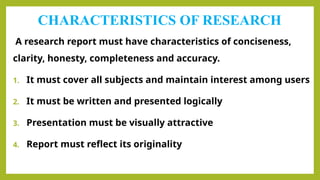
CHARACTERISTICS OF RESEARCH
Aresearch report must have characteristics of conciseness,
clarity, honesty, completeness and accuracy.
1. It must cover all subjects and maintain interest among users
2. It must be written and presented logically
3. Presentation must be visually attractive
4. Report must reflect its originality
6.
STEPS IN WRITINGREPORT
1. Logical analysis of subject matter
2. Re writing and polishing rough draft
3. Preparation of final outline
4. Review or modification outline
5. Preparation of final bibliography
6. Writing the final draft
7.
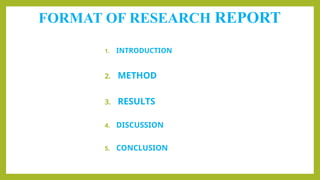
FORMAT OF RESEARCHREPORT
1. INTRODUCTION
2. METHOD
3. RESULTS
4. DISCUSSION
5. CONCLUSION
8.
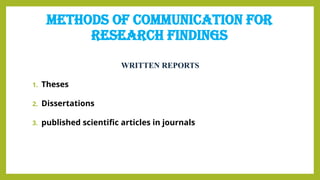
METHODS OF COMMUNICATIONFOR
RESEARCH FINDINGS
WRITTEN REPORTS
1. Theses
2. Dissertations
3. published scientific articles in journals
9.
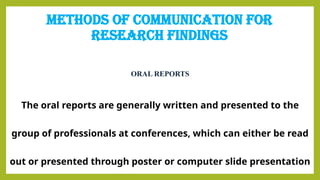
METHODS OF COMMUNICATIONFOR
RESEARCH FINDINGS
ORAL REPORTS
The oral reports are generally written and presented to the
group of professionals at conferences, which can either be read
out or presented through poster or computer slide presentation
10.
UTILIZATION OF NURSINGRESEARCH
In recent days in nursing the need for research based
practice is still widely accepted but unfortunately many
current nursing interventions are based on traditions rather
than science.
11.
TYPES OF RESEARCHUTILIZATION
1. Indirect research utilization
2. Direct research utilization
3. Persuasive research utilization
12.
BARRIERS RELATED TONURSE
1. Nurses lack time to actively participate in conducting and
implementing research
2. Do not understand the important of research
3. It is a minute and difficult component of UG program
4. Our health care scenario pays little attention to research
5. Staff nurses may not read nursing research journals
6. Research reports are presented to researcher and the reports
are not reaching to nurses who can practically use these new
ideas.
13.
BARRIERS RELATED TONURSES ORGANIZATION RESEARCH
COMMUNICATION
Lack of knowledge about the
scientific research process.
Lack of interest of higher
authority to change or adopt new
practice.
Overwhelming patient load.
Lack of time to do quality
research.
Lack of recognition in terms of
salary, incentive and promotion.
Lack of resources.
Lack of knowledge on statistical analysis and tests.
Lack of knowledge in writing research report
Lack of resources related to publication and
literature.
Lack of communication skills to higher authorities
like administrator, research committee, funding
agencies, etc.
14.
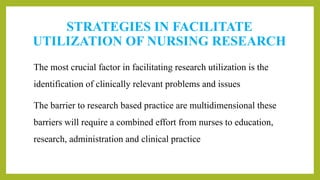
STRATEGIES IN FACILITATE
UTILIZATIONOF NURSING RESEARCH
The most crucial factor in facilitating research utilization is the
identification of clinically relevant problems and issues
The barrier to research based practice are multidimensional these
barriers will require a combined effort from nurses to education,
research, administration and clinical practice
15.
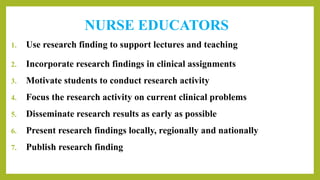
NURSE EDUCATORS
1. Useresearch finding to support lectures and teaching
2. Incorporate research findings in clinical assignments
3. Motivate students to conduct research activity
4. Focus the research activity on current clinical problems
5. Disseminate research results as early as possible
6. Present research findings locally, regionally and nationally
7. Publish research finding
16.
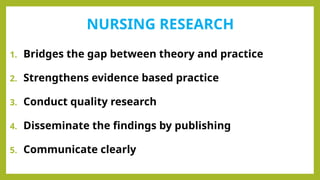
NURSING RESEARCH
1. Bridgesthe gap between theory and practice
2. Strengthens evidence based practice
3. Conduct quality research
4. Disseminate the findings by publishing
5. Communicate clearly
17.
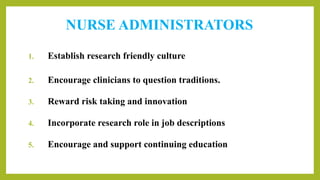
NURSE ADMINISTRATORS
1. Establishresearch friendly culture
2. Encourage clinicians to question traditions.
3. Reward risk taking and innovation
4. Incorporate research role in job descriptions
5. Encourage and support continuing education
18.
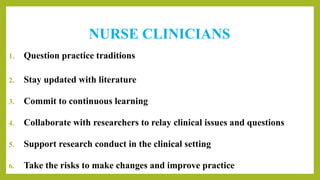
NURSE CLINICIANS
1. Questionpractice traditions
2. Stay updated with literature
3. Commit to continuous learning
4. Collaborate with researchers to relay clinical issues and questions
5. Support research conduct in the clinical setting
6. Take the risks to make changes and improve practice
19.
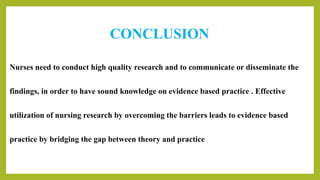
CONCLUSION
Nurses need toconduct high quality research and to communicate or disseminate the
findings, in order to have sound knowledge on evidence based practice . Effective
utilization of nursing research by overcoming the barriers leads to evidence based
practice by bridging the gap between theory and practice





![ONFH[AVN HIP] -TRIPLE REGIME -A NOVAL SURGICAL CONCEPT .pptx](https://cdn.slidesharecdn.com/ss_thumbnails/onfhavnhip2026koaconcalicutdrgokuldevdrmashraf-260210064517-213ec005-thumbnail.jpg?width=640&height=640&fit=bounds)


![PERI-PROSTHETIC FRACTURE NAIL-PLATE CONSTRUCT [NPC].pptx](https://cdn.slidesharecdn.com/ss_thumbnails/drarunkumardrmohamedashrafperiprostheticfrasturenail-plateconstructnpc-260209164459-7e9d15a1-thumbnail.jpg?width=640&height=640&fit=bounds)


