Downloaded 56 times
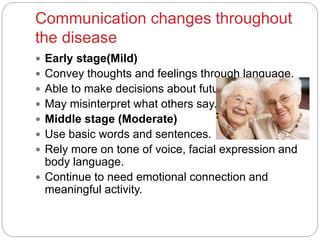
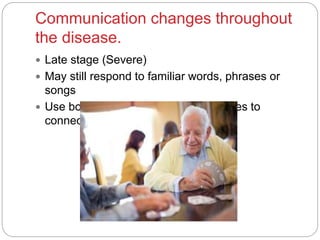
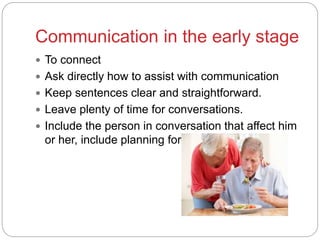
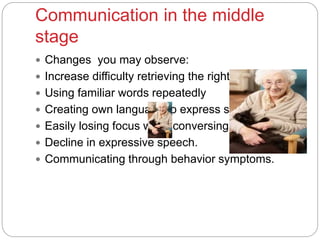

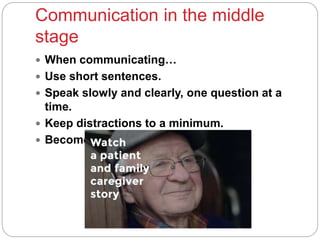
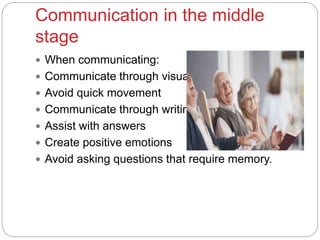

This document discusses strategies for communicating with individuals who have Alzheimer's or other forms of dementia. It explains that as the disease progresses, people with dementia experience changes in their ability to communicate verbally and their primary methods of communication. In the early stages, it is important to speak directly to the individual, keep sentences clear and allow time for responses. In the middle stages, it recommends using short sentences, speaking slowly, minimizing distractions and communicating through visual cues. For the late stages, the document notes that communication is reduced but sensory connections like touch and music can still be meaningful.


