Customer Loyalty
T hat Drives
Business Results
David P. Scurlock
Training and Development that
Drives Business Results
Research
 Field Experience
 Business Week March 9th
   The Customer Service Elite
 Harvard Business Review (Feb. 07)
   Understanding the customer experience
 The Ultimate Question –Driving Good
  Profits and True Growth
   Fred Reichheld - author
Definitions
  Customer Satisfaction
      State of being gratified
      Compensation for a wrong
      Act of fulfilling a desire or need

  Customer Loyalty
    Feelings of allegiance
    The act of binding yourself (intellectually or
     emotionally) to a course of action
    Commitment, dedication.
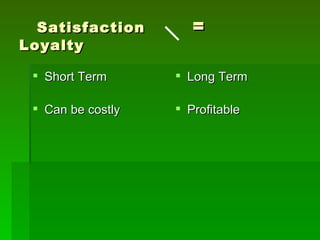
Satisfaction        =
Loyalty

  Short Term       Long Term

  Can be costly    Profitable
True Customer Loyalty

  Customer Loyalty measures the
           emotional attachment
   that a customer has with your
           product/service/organization.

 That attachment is created through
  relationships developed by your
  employees.
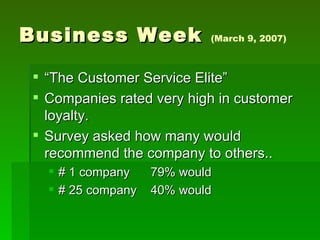
Business Week              (March 9, 2007)


 “The Customer Service Elite”
 Companies rated very high in customer
  loyalty.
 Survey asked how many would
  recommend the company to others..
   # 1 company    79% would
   # 25 company   40% would
The Loyalty Effect*
  Products are homogenous

  Technology is leveling the playing field

  Lots of information available

  Customer service is the difference and a link to
   loyalty.

    *”The Ultimate Question- Driving Good Profits and True Growth” Fred Reichheld
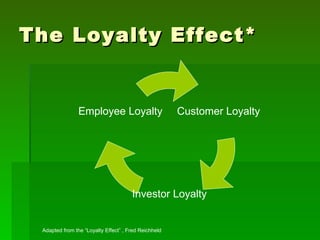
The Loyalty Effect*


                Employee Loyalty                      Customer Loyalty


                                      Investor Loyalty


 Adapted from the “Loyalty Effect” , Fred Reichheld
The Loyalty Effect

 Central gauge that integrates
  all dimensions of business and
 measures how well company is
 creating value for its customers.
  What do they want? What do they like
  about your offer? What is missing?
  What can be improved ? Why do they go
  to the competitor?
The Loyalty Impact
  Competitive Advantage

  Employee Morale

  Unexpected gains in
      Productivity
      Growth
      Reduced cost
Customer Loyalty
Starts With The
Employees
 Southwest Airlines Example
   Hire “Attitude” Look for the following
    skills
     Empathy
     Listening Skills
     Problem Solving Skills
 Don’t rely on resumes
   Use behavior based interviewing
   “Past experiences predicts future
     behavior”
Train Existing
Employees
  Listening Skills
    Pivotal communication skill
    Key to internal communication between
     employees.
    Key to developing emotional connection
     between front-line employees and
     customers.
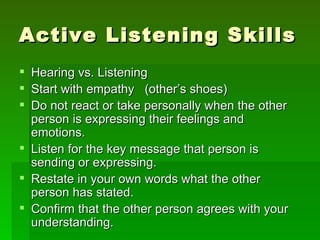
Active Listening Skills
 Hearing vs. Listening
 Start with empathy (other’s shoes)
 Do not react or take personally when the other
  person is expressing their feelings and
  emotions.
 Listen for the key message that person is
  sending or expressing.
 Restate in your own words what the other
  person has stated.
 Confirm that the other person agrees with your
  understanding.
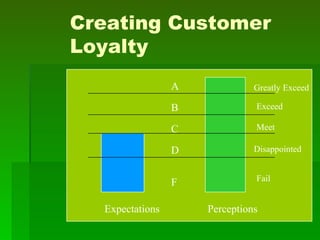
Creating Customer
Loyalty
                 A             Greatly Exceed

                 B             Exceed

                 C             Meet

                 D             Disappointed


                 F             Fail


  Expectations       Perceptions
Creating Customer
 Loyalty
 If the customers perceptions exceed their
  expectations customers are highly satisfied
  and develop loyalty.

 If their perceptions are about equal the
  customers are neither satisfied or dissatisfied.
  They are somewhere in the zone of
  indifference.

 If their perceptions are below expectations
  customers move to a degree of
  dissatisfaction resulting in disloyalty.
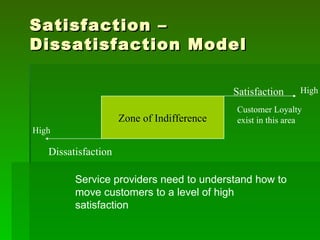
Satisfaction –
Dissatisfaction Model

                                            Satisfaction     High

                                            Customer Loyalty
                     Zone of Indifference   exist in this area
High

   Dissatisfaction

         Service providers need to understand how to
         move customers to a level of high
         satisfaction
What Customers
Expect
  Process
  Execution
    Predictable
    Repeatable

  Empower them with information

  First Time Resolutions
Do you have any Fred
Taylor’s ?
 Southwest Airlines

 Customer Communications Specialist

 Focuses on Service Recovery

 Communicates resolutions to field
Service Recovery
 Listen to the concerns of the customer

 Listen to what the customer wants.

 Make it easy for the customer to resolve
  their concern.

 One size solution doesn’t fits all
The Four Steps of
  Service Recovery
 Apologize sincerely- don’t become
  defensive or make excuses. Show
  empathy.

 Fix the problem- Listen, empathize, and
  ask open-ended questions that allow the
  customer to express what they really
  want. Act quickly with a sense of
  urgency
The Four Steps of
  Service Recovery
 Do something extra as atonement-
 does not have to be expensive or elaborate.
 Show the customer that you appreciate their
 business, you’re sorry for what happen, and
 you want to add value to the relationship.

 Follow up- A call from management or the
 service person to ensure that the customer is
 satisfied.
U.S. Office of Consumer
     Affairs Findings
 Of the customers who register a complaint,
  between 54 and 70 percent will do business
  again with the organization if their complaints
  are resolved. That figure goes up to a
  staggering 95 percent if customers feel that
  complaints are resolved quickly!
Service Sells

  Enhance the perception of your brand in
   the eyes of the customers during the
   service interaction.
  Service Margins (post sale)
      30% to 200% greater than product margins
      25% of total revenue
      50% of operating profits
T hank you

David P. Scurlock

Customer Loyalty Dps

  • 1.
    Customer Loyalty T hatDrives Business Results David P. Scurlock Training and Development that Drives Business Results
  • 2.
    Research  Field Experience Business Week March 9th  The Customer Service Elite  Harvard Business Review (Feb. 07)  Understanding the customer experience  The Ultimate Question –Driving Good Profits and True Growth  Fred Reichheld - author
  • 3.
    Definitions  CustomerSatisfaction  State of being gratified  Compensation for a wrong  Act of fulfilling a desire or need  Customer Loyalty  Feelings of allegiance  The act of binding yourself (intellectually or emotionally) to a course of action  Commitment, dedication.
  • 4.
    Satisfaction = Loyalty  Short Term  Long Term  Can be costly  Profitable
  • 5.
    True Customer Loyalty  Customer Loyalty measures the emotional attachment that a customer has with your product/service/organization. That attachment is created through relationships developed by your employees.
  • 6.
    Business Week (March 9, 2007)  “The Customer Service Elite”  Companies rated very high in customer loyalty.  Survey asked how many would recommend the company to others..  # 1 company 79% would  # 25 company 40% would
  • 7.
    The Loyalty Effect*  Products are homogenous  Technology is leveling the playing field  Lots of information available  Customer service is the difference and a link to loyalty.  *”The Ultimate Question- Driving Good Profits and True Growth” Fred Reichheld
  • 8.
    The Loyalty Effect* Employee Loyalty Customer Loyalty Investor Loyalty Adapted from the “Loyalty Effect” , Fred Reichheld
  • 9.
    The Loyalty Effect Central gauge that integrates all dimensions of business and measures how well company is creating value for its customers. What do they want? What do they like about your offer? What is missing? What can be improved ? Why do they go to the competitor?
  • 10.
    The Loyalty Impact  Competitive Advantage  Employee Morale  Unexpected gains in  Productivity  Growth  Reduced cost
  • 11.
    Customer Loyalty Starts WithThe Employees  Southwest Airlines Example  Hire “Attitude” Look for the following skills  Empathy  Listening Skills  Problem Solving Skills  Don’t rely on resumes  Use behavior based interviewing  “Past experiences predicts future behavior”
  • 12.
    Train Existing Employees Listening Skills  Pivotal communication skill  Key to internal communication between employees.  Key to developing emotional connection between front-line employees and customers.
  • 13.
    Active Listening Skills Hearing vs. Listening  Start with empathy (other’s shoes)  Do not react or take personally when the other person is expressing their feelings and emotions.  Listen for the key message that person is sending or expressing.  Restate in your own words what the other person has stated.  Confirm that the other person agrees with your understanding.
  • 14.
    Creating Customer Loyalty A Greatly Exceed B Exceed C Meet D Disappointed F Fail Expectations Perceptions
  • 15.
    Creating Customer Loyalty If the customers perceptions exceed their expectations customers are highly satisfied and develop loyalty.  If their perceptions are about equal the customers are neither satisfied or dissatisfied. They are somewhere in the zone of indifference.  If their perceptions are below expectations customers move to a degree of dissatisfaction resulting in disloyalty.
  • 16.
    Satisfaction – Dissatisfaction Model Satisfaction High Customer Loyalty Zone of Indifference exist in this area High Dissatisfaction Service providers need to understand how to move customers to a level of high satisfaction
  • 17.
    What Customers Expect Process  Execution  Predictable  Repeatable  Empower them with information  First Time Resolutions
  • 18.
    Do you haveany Fred Taylor’s ?  Southwest Airlines  Customer Communications Specialist  Focuses on Service Recovery  Communicates resolutions to field
  • 19.
    Service Recovery  Listento the concerns of the customer  Listen to what the customer wants.  Make it easy for the customer to resolve their concern.  One size solution doesn’t fits all
  • 20.
    The Four Stepsof Service Recovery  Apologize sincerely- don’t become defensive or make excuses. Show empathy.  Fix the problem- Listen, empathize, and ask open-ended questions that allow the customer to express what they really want. Act quickly with a sense of urgency
  • 21.
    The Four Stepsof Service Recovery  Do something extra as atonement- does not have to be expensive or elaborate. Show the customer that you appreciate their business, you’re sorry for what happen, and you want to add value to the relationship.  Follow up- A call from management or the service person to ensure that the customer is satisfied.
  • 22.
    U.S. Office ofConsumer Affairs Findings  Of the customers who register a complaint, between 54 and 70 percent will do business again with the organization if their complaints are resolved. That figure goes up to a staggering 95 percent if customers feel that complaints are resolved quickly!
  • 23.
    Service Sells Enhance the perception of your brand in the eyes of the customers during the service interaction.  Service Margins (post sale)  30% to 200% greater than product margins  25% of total revenue  50% of operating profits
  • 24.
    T hank you DavidP. Scurlock

Editor's Notes

  • #2 The focus of this presentation is on identifying those factors and activities that create customer loyalty.
  • #3 The concepts and activities suggested in this presentation come from these sources.
  • #4 Formal definitions show the difference between satisfaction and loyalty.
  • #5 The point is that is business satisfaction does equal or always equate to loyalty.
  • #6 This is the “operational” or “functional” definition of customer loyalty.
  • #7 In a survey and study published in BW the best company had 79% of respondents say they would recommend them. The point is you won’t get 100%. Identify those customers will recommend you and leverage them.
  • #8 Customer service can make a difference in establishing customer loyalty.
  • #9 Starting with employee loyalty it impacts customer loyalty which impacts investor loyalty. One affects the other.
  • #10 These are the key questions that will help determine if what your company is offering and what your employees are doing are helping to create customer loyalty.
  • #11 As more loyalty customers are created there are other benefit that can impact your organization.
  • #12 The common denominator between companies that have a loyal customer base have loyalty employees. It starts with employees.
  • #13 For existing employees the one pivotal skill that can have the greatest impact on communication between employees and customers is listening skills. This will ultimately lead to the emotional connection between customers and your company..
  • #14 Here is what is meant by active listening. It is a skill that can be taught.
  • #15 This chart illustrates that customer loyalty is created when the perceptions of the customers exceed their expectations. Employees create this. Listening and responding appropriately is the key to creating this.
  • #16 Describes the previous chart.
  • #17 This diagram illustrates that many customers are neither highly satisfied or highly dissatisfied but somewhere in between. This is referred as the zone of indifference. These customers don’t have a high degree of loyalty, they are subject to next best deal that might be out there. Understanding how to move the right customers to the high degree of satisfaction which leads to customer loyalty is the key.
  • #18 When surveyed and the information is “distilled” customers expect the following.
  • #19 Fred Taylor is a real person at Southwest Airlines that focuses on service recovery and acts as a Single Point of Contact to get information ultimately to the customer. This results in meeting the expectations of the customers discussed on the previous slide especially during service recovery.
  • #20 Keys to service recovery. When properly executed service recovery can move a customer from the zone of indifference or potential dissatisfaction to a high degree of satisfaction and loyalty. This process should be well defined for your business and all employees should be trained in the process and steps outlined on the next two slides.
  • #23 In summary solving customer concerns can have a direct impact on the financial results of your organization.