Download as PDF, PPTX
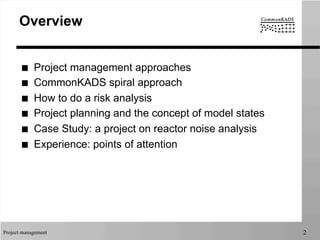
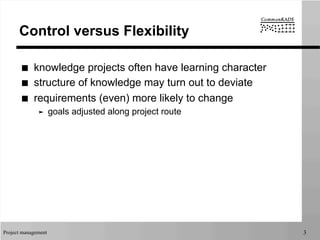
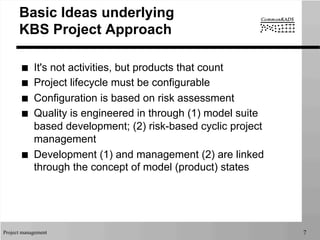
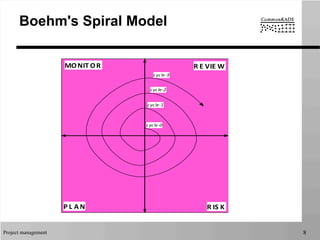
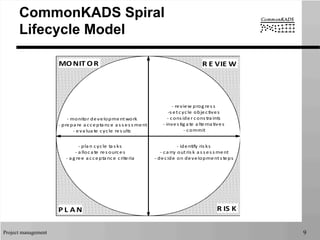
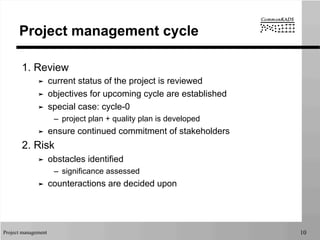
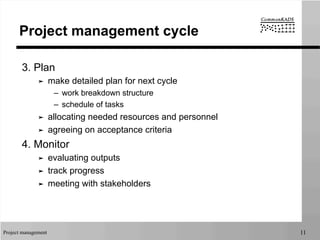
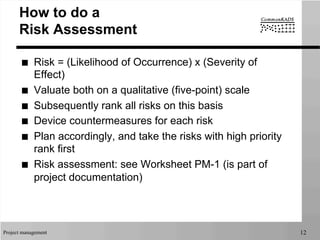
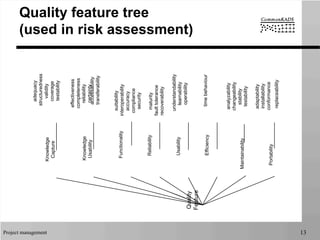
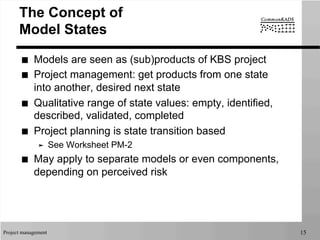
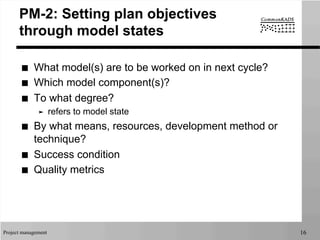
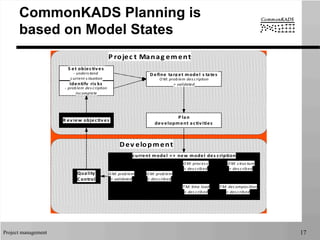
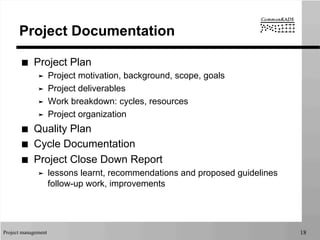

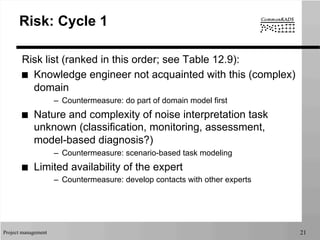
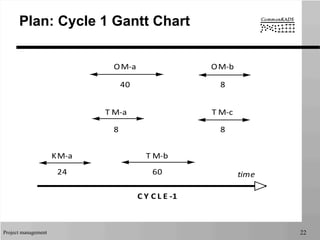

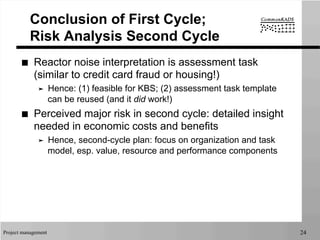
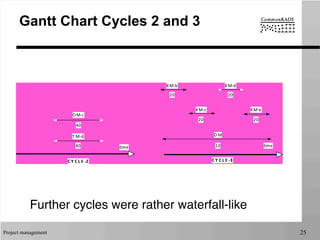
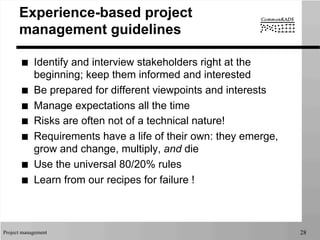

1. Project management for knowledge-based systems requires balancing control and flexibility due to the learning nature of knowledge projects and likelihood of changing requirements. 2. The CommonKADS spiral lifecycle model uses a cyclic project management approach based on evaluating product states such as empty, identified, described, and validated. 3. Risk analysis and prioritization is a key part of project planning in each cycle to identify obstacles and decide on countermeasures.


