Moon Herb Zero
After studying this course , you
should be able to:
1. Know what’s respiratory system.
2. Know what’s common cold.
3. Know what’s zero mode of actions.
4. Know the selling point of zero
5. Hunt and target the interested customer.
6. Know market competitors and make use
of their weakness.
The Respiratory System
4
Respiratory System Functions
• Supplies the body with oxygen and disposes
of carbon dioxide
• Filters inspired air
• Produces sound
• Contains receptors for smell
• Rids the body of some excess water and heat
• Helps regulate blood PH
5
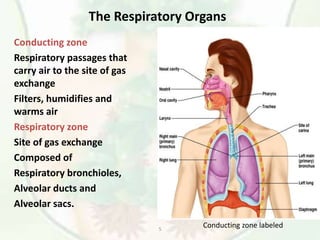
The Respiratory Organs
Conducting zone
Respiratory passages that
carry air to the site of gas
exchange
Filters, humidifies and
warms air
Respiratory zone
Site of gas exchange
Composed of
Respiratory bronchioles,
Alveolar ducts and
Alveolar sacs.
Conducting zone labeled
6
Functions of the Respiratory System
Consists of an upper respiratory tract (nose to larynx) and a
lower respiratory tract ( trachea onwards) .
Conducting portion transports air.
- includes the nose, nasal cavity, pharynx, larynx, trachea,
and progressively smaller airways, from the primary
bronchi to the terminal bronchioles
Respiratory portion carries out gas exchange.
- composed of small airways called respiratory
bronchioles and alveolar ducts as well as air sacs called
alveoli
7
Ventilation
Breathing = “pulmonary ventilation”
Two phases
Inspiration (inhalation) – air in
Expiration (exhalation) – air out
RESPIRATORY DISEASES
• Bronchitis
• Asthma
• COPD
• Emphysema
• Lung Cancer
• Others…..
Immunity
• Is the capacity to:
 Recognise the intrusion of material foreign to the body
and to immobilise cells and cell products to help
remove that particular sort of foreign material with
greater speed and effectiveness…
The defence mechanisms of the human body
Prevent entry of
microorganisms
Defence mechanisms
Passive mechanisms Active mechanisms
Destroy pathogens once
inside the body
Defence mechanisms
PASSIVE MECHANISMS ACTIVE MECHANISMS
First Line of Defence
1.Skin
2.Mucous membranes
[+ secretions of both]
NON SPECIFIC INNATE
IMMUNITY
SPECIFIC ACQUIRED/
ADAPTIVE IMMUNITY
Second Line of Defence
1. Inflammation
2. Fever
3. Complement Proteins
4. Natural Killer Cells
Third Line of Defence
1. Humoral Immunity
2. Cell-Mediated
Immunity
How cold virus infection occur ?
How cold virus infection occurs ?
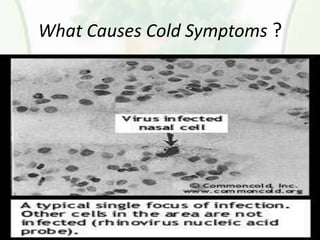
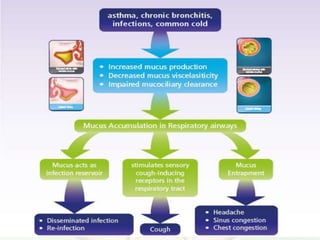
What Causes Cold Symptoms ?
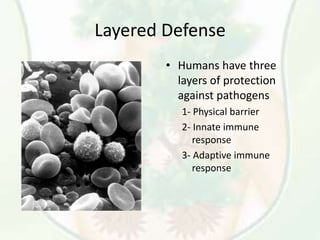
Layered Defense
• Humans have three
layers of protection
against pathogens
1- Physical barrier
2- Innate immune
response
3- Adaptive immune
response
Innate Immune System
• A non-specific
response to
pathogens
• Many different WBC
• Phagocytes, mast
cells, eosinophils,
basophils, and
natural killer cells.
• Attack and destroy
(phagocytosis)
histamine is released by:
 mast cells located in tissues
 Basophils
Natural killer cells (NK cells)
 do not attack invading microbes
macrophage
monocyte
Precursor
cell
NK cell
1.Body cells
invaded by
viruses
2. Cancer
cells
Adaptive Immunity
• Immune system has a
memory
• It can produce
antibodies to certain
pathogens
• Next time pathogen
enters body antibodies
deactivate, and tag it
for destruction
Vaccines
• Rely on adaptive
immunity
• Inject inactive
pathogen
• Body develops
antibodies
• If invaded, you
already have the
antibodies to fight it
off
Allergies
• Overactive immune
system
• Body identifies
harmless substance
as a pathogen
• Produces immune
defense (sneezing,
watery eyes,
coughing, mucus
production increase)
22
Common cold
What Is a Common Cold?
• A common cold is an illness caused by a virus infection located in
the upper respiratory tract.
• Colds last on average for one week. Mild colds may last only 2 or
3 days while severe colds may last for up to 2 weeks.
• Signs and symptoms of a common cold may include:
• Runny or stuffy nose
• Itchy or sore throat
• Cough
• Congestion
• Slight body aches or a mild headache
• Sneezing
• Watery eyes
• Low-grade fever (up to 1020 F)
What causes Common Cold ?
• More than 200 different types of viruses cause
common cold.
• The rhinovirus is the most common culprit, and it's
highly contagious.
• Because so many different viruses can cause common
cold, & new cold viruses constantly develop i.e. the
viral strains are not stable, the body never builds
resistance against all of them.
• For this reason , colds are a frequent & recurring
problem.
WHAT CAUSES COMMON COLD
SYMPTOMS ?
• Cold symptoms are due mainly to the body's
response to the infection. When a nasal cell is
infected by a cold virus, the body responds by
activating parts of the immune system and some
nervous system reflexes.
• The immune system contains a variety of natural
substances called inflammatory mediators.
Inflammatory mediators help to protect the body
from infection and other harmful events. Some
inflammatory mediators are released when nasal
cells are infected by a cold virus.
• When activated by a cold virus infection,
inflammatory mediators cause dilatation and
leakage of blood vessels and mucus gland
secretion.
• Inflammatory mediators also activate sneeze and
cough reflexes and stimulate pain nerve fibers.
These events are what lead to the symptoms of a
cold.
• The inflammatory mediators include histamine,
kinins, interleukins, and the prostaglandins.
• The individual symptoms of a cold are caused by
the action of particular inflammatory mediators,
although there is some overlapping.
• Twenty-five percent of people who acquire cold
virus infection do not develop symptoms.
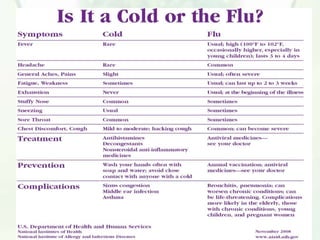
What is the difference between
Common Cold & Flu (Influenza) ?
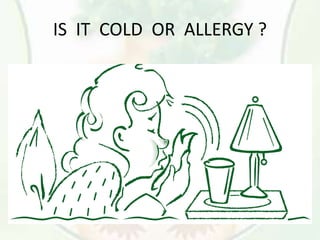
IS IT COLD OR ALLERGY ?
What are risk factors for acquiring the
common cold?
• There are various factors that may increase
the chances of acquiring the common cold,
including the following:
• Age: Infants and young children are more
likely to develop the common cold because
they have not yet developed immunity to
many of the implicated viruses.
• Seasonal variation: Individuals more
commonly acquire the common cold during
the fall and winter, or during the rainy
season (in warmer climates). This is felt to
occur because people tend to stay indoors
and are in closer proximity to one another.
• Weakened immune system: Individuals with
a poorly functioning immune system are
more likely to develop the common cold.
When should a Physician be consulted ?
• Fever of 1020 F or higher
• High fever accompanied by aches and fatigue
• Fever accompanied by sweating, chills and a
cough with colored phlegm
• Symptoms that get worse instead of better or
last more than about 10 days
How to prevent Common Cold?
• Wash your hands
• Scrub your stuff
• Use tissues
• Don’t share
• Steer clear of colds
• Consider the alternatives : Vitamin C, Echinacea and
Zinc
• Drink lots of fluids: Water, juice, tea and warm soup
• Try chicken soup: anti-inflammatory & relieves
congestion
• Get some rest
How Colds Are Spread ?
COUGH
 Expulsion of respiratory secretion or foreign
particles or irritant or excessive mucus from air
passages
 Symptom of an underlying respiratory and/or
cardiovascular pathology
Causes of cough :
Mechanism of cough
Stimulation of mechano-or chemoreceptors (throat, respiratory
passages or stretch receptors in lungs)
Afferent impulses to cough centre (medulla)
Efferent impulses via parasympathetic & motor
nerves to diaphragm, intercostal muscles & lung
Increased contraction of diaghramatic, abdominal &
intercostal (ribs) muscles noisy expiration
(cough)
Types of cough
A) Acute cough =lasting<3 weeks
B) Chronic cough =lasing >8 weeks
Cough may be
i) Un productive (dry) cough OR
ii) Productive cough (sputum)
Most common causes of cough
• Common cold,
• Upper/lower respiratory tract infection
• Allergic rhinitis
• Smoking
• Chronic bronchitis
• Pulmonary tuberculosis
• Asthma
• Gastroesophageal reflux
• Pneumonia
• Congestive heart failure
• Bronchiectasis
• Use of drugs (e.g., Angiotensin-converting enzyme inhibitors)
Treatment Of common cold
Treatment of Common cold & Cough
1) Antitussives (cough Centre suppressants)
2) Expectorants (Mucokinetics)
3) Mucolytics
4) Antihistamines
5) Bronchodilators
6) Pharyngeal Demulcents
7) Pain Relievers
syrup taste
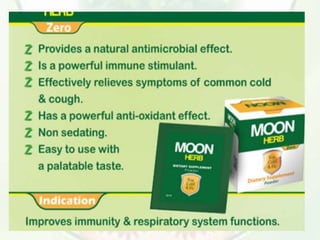
Moon Herb Zero
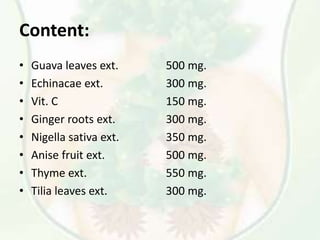
Content:
• Guava leaves ext.
• Echinacae ext.
• Vit. C
• Ginger roots ext.
• Nigella sativa ext.
• Anise fruit ext.
• Thyme ext.
• Tilia leaves ext.
500 mg.
300 mg.
150 mg.
300 mg.
350 mg.
500 mg.
550 mg.
300 mg.
Immune stimulant
• Echinacea: increase the total leukocyte,
neutrophil and monocyte counts, and percentage
of NK cells during a common cold. (1)
• Vitamin C: stimulant of leukocyte functions,
especially of neutrophil and monocyte
movement.
• Vitamin C: resulted in improvement of several
components of human immune parameters, such
as antimicrobial and natural killer cell activities,
lymphocyte proliferation, chemotaxis, and
DTH(Delayed-Type Hypersensitivity).(2-5)
• Ginger: has been found to activate T-cells,
according to the 2008 “BMC Complementary
and Alternative Medicine” article.
• Nigella sativa ext.: In contrast to its enhancing
effect of on the T cell mediated immune
response, N. sativa constituents have shown a
tendency to down regulate B cell-mediated
immunity.(15,16)
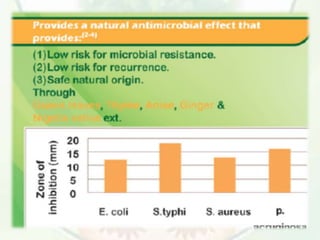
Potent anti-microbial
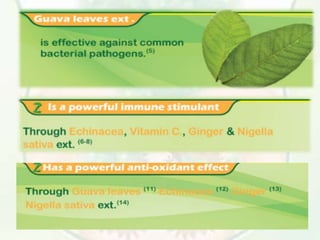
• Guava leaves: are rich in flavonoids, especially
quercetin. These compounds have antibacterial activity
and contributing to the antidiarrheal effects.(6)
• Guava leaves extracts: have strong properties against
some bacteria that cause diarrhea, and bronchitis such
as Staphylococcus, Salmonella, Shigella, Bacillus,
Escherichia coli, Clostridium, and Pseudomonas.(7)
• Thyme: has antiseptic-like qualities as well as being an
effective germicide. Thyme will kill the whooping
cough bacteria while making it easier to breath with its
antispasmodic action.(8)
• Nigella sativa ext.: Showed anti-bacterial activity against
several bacterial strains, including Escheri-chia coli, Bacillus
subtilis, Streptococcus faecalis, Staphylococcus aureus, and
Pseudomonas aeruginosa, as well as against the pathogenic
yeast Candida albicans and fungus.(17,18)
• Anise extract: inhibit the growth of a range of bacteria
including Escherichia coli and Staphylococcus aureus, and also
exhibited antifungal activity against Candida albicans and
other organisms.(11)
• Ginger: The chloroform extract was more effective when
compared to other extracts. However, E. coli, Enterobacter
aerogenes, Klebsiella pneumoniae, Pseudomonas aeruginosa,
Proteus mirabilis and Yersinia enterocolitica.(14)
Relieve symptoms
• Thyme: offers antispasmodic, sedative and
expectorant qualities. It is excellent as calming
coughing.
• Tilia: induce sweating for feverish colds and
infections, reduce nasal congestion, and relieve
throat irritation and cough.
• Anise: is an excellent remedy for asthma,
bronchitis cough as well as digestive disorders
such as flatulence, bloating, colicky stomach pain,
nausea and indigestion.
Potent anti-oxidant
• Guava leaves ext.: showed effects on scavenging hydroxyl radicals
and inhibiting lipid peroxidation in the dose-dependent manner.(10)
• Echinacea: lipophilic alkamides and water-soluble caffeic acid
derivatives are effective antioxidants in free radical generation
systems.(12)
• Ginger: have different antioxidant activity assays like DPPH (2,2-
diphenyl-1-picrylhydrazyl) radical scavenging activity, superoxide
radical scavenging activity, metal chelating activity and lipid
peroxidation activity.(13)
• Nigella sativa ext.: protected against hepatotoxicity coinciding with
improvement in serum lipid profile decreasing the liver enzyme
levels, and increasing the reduced anti-oxidant enzyme
levels.(19,20)
Summary
• Potent immune stimulant agent.
• Strong relieves symptoms for cough & common cold.
• Have antibacterial properties against E. coli, Bacillus
subtilis, Streptococcus faecalis, Staphylococcus
aureus, and Pseudomonas aeruginosa.
• Have antidiarrheal effects.
• Offers antioxidant properties, antispasmodic,
sedative and expectorant qualities.
• High safety profile.
• Palatable taste.
Indication & doses
It helps as adjuvant therapy in :
• Decreased Immunity.
• Cough & common cold.
• Bronchitis.
• Diarrhea.
• Maldigestion.
• Dose: Once daily
REFERENCES
1. Sun LZY, Currier NL, Miller SC. 1999. The American coneflower: A prophylactic role involving nonspecific
immunity. J Altern Compl Med 5: 437–446.
2. Anderson R, Smit MJ, Joone GK, van Straden AM: Vitamin C and cellular immune functions: protection against
hypochlorous acid mediated inactivation of glyceraldehyde-3-phosphate dehydrogenase and ATP generation in
human leucocytes as a possible mechanism of ascorbate-mediated immunostimulation. Ann NY Acad Sci 1990;
587: 34–48.
3. Levy R, Shriker O, Porath A, Riesenberg K, Schlaeffer F: Vitamin C for the treatment of recurrent furunculosis in
patients with impaired neutrophil functions. J Infect Dis 1996; 173: 1502–1505.
4. Jacob RA, Kelley DS, Pianalto FS, Swendseid ME, Henning SM, Zhang JZ, Ames BN, Fraga CG, Peters JH:
Immunocompetence and oxidant defense during ascorbate depletion of healthy men. Am J Clin Nutr 1991; 54:
1302S–1309S.
5. Heuser G, Vojdani A: Enhancement of natural killer cell activity and T and B cell function by buffered vitamin C
in patients exposed to toxic chemicals; the role of protein kinase-C. Immunopharmacol Immunotoxicol 1997;
19: 291–312.
6. S. Kim and D. Y. C. Fung, “Antibacterial effect of crude water-solublearrowroot (Puerariae radix) tea extracts on
food-bornepathogens in liquid medium,” Letters in Applied Microbiology, vol. 39, no. 4, pp. 319–325, 2004.
7. S. I. Abdelrahim, A. Z. Almagboul, M. E. A. Omer, andA. Elegami, “Antimicrobial activity of Psidium guajava
L.,Fitoterapia, vol. 73, no. 7-8, pp. 713–715, 2002.
8. Barnes J, Anderson L, Phillipson J. Herbal Medicines: A Guide for Healthcare Professionals . 2nd ed. London:
Pharmaceutical Press; 2002:323-324.
9. Aguirre-Hernandez E, Martinez AL, Gonzalez-Trujano ME, Moreno J, Vibrans H, Soto-Hernandez M.
Pharmacological evaluation of the anxiolytic and sedative effects of Tilia americana L. var. mexicana in mice. J
Ethnopharmacol . 2007;109:140-145.
10. Wang B., Jiao S., Liu H., Hong J., Study on antioxidative activities of Psidium guajava Linn leaves extracts, Wei
Sheng Yan Jiu, 36(3): 298-300, (2007).
11. Ramadan et al., 1972; Ibrahim and Ogunmodeli, 1991; Shukla and Tripathi, 1987 Okuyama et al., 1995; Sokmen
et al., 1999.
12. Dalby-Brown L, Barsett H, Landbo AK, Meyer AS and Molgaard P, Synergistic antioxidative effects of alkamides,
caffeic acid derivatives, and polysaccharide fractions from Echinacea purpurea on in vitro oxidation of human
low-density lipoprotein. J. Agric. Food Chem, 53:9413–9423, (2005).
13. Tarwadi K and Agte V 2005 Antioxidant and micronutrient quality of fruit and root vegetables from the Indian
subcontinent and their comparative performance with green leafy vegetables and fruits. J. Sci. Food Agric. 85
1469–1476.
14. Policegoudra RS, Abiraj K, Channe Gowda D and Aradhya SM 2007b Isolation and characterization of antioxidant
and antibacterial compound from mango ginger (Curcuma amada Roxb.) rhizome. J. Chromatogr. B 852 40–48.
15. Haq A, Lobo PI, Al-Tufail M, Rama NR, Al-Sedairy ST. Immunomodulatory effect of Nigella sativa proteins
fractionated by ion exchange chromatography. Int J Immunopharmacol 1999;21:283– 95.
16. Swamy SM, Tan BK. Cytotoxic and immunopotentiating effects of ethanolic extract of Nigella sativa L. seeds. J
Ethnopharmacol 2000;70:1– 7.
17. Hanafy MS, Hatem ME. Studies on the antimicrobial activity of Nigella sativa seed (black cumin). J
Ethnopharmacol 1991;34:275–8.
18. Khan MA, Ashfaq MK, Zuberi HS, Mahmood MS, Gilani AH. The in vivo antifungal activity of the aqueous extract
from Nigella sativa seeds. Phytother Res 2003;17:183– 6.
19. El-Dakhakhny M, Mady NI, Halim MA. Nigella sativa L. oil protects against induced hepatotoxicity and improves
serum lipid profile in rats. Arzneimittelforschung 2000;50:832– 6.
20. Kanter M, Meral I, Dede S, Gunduz H, Cemek M, Ozbek H, et al. Effects of Nigella sativa L. and Urtica dioica L. on
lipid peroxidation, antioxidant enzyme systems and some liver enzymes in CCl4-treated rats. J Vet Med A Physiol
Pathol Clin Med 2003;50:264– 8.

Common Cold & Cough by using Herbal extracts

  • 1.
  • 2.
    After studying thiscourse , you should be able to: 1. Know what’s respiratory system. 2. Know what’s common cold. 3. Know what’s zero mode of actions. 4. Know the selling point of zero 5. Hunt and target the interested customer. 6. Know market competitors and make use of their weakness.
  • 3.
  • 4.
    4 Respiratory System Functions •Supplies the body with oxygen and disposes of carbon dioxide • Filters inspired air • Produces sound • Contains receptors for smell • Rids the body of some excess water and heat • Helps regulate blood PH
  • 5.
    5 The Respiratory Organs Conductingzone Respiratory passages that carry air to the site of gas exchange Filters, humidifies and warms air Respiratory zone Site of gas exchange Composed of Respiratory bronchioles, Alveolar ducts and Alveolar sacs. Conducting zone labeled
  • 6.
    6 Functions of theRespiratory System Consists of an upper respiratory tract (nose to larynx) and a lower respiratory tract ( trachea onwards) . Conducting portion transports air. - includes the nose, nasal cavity, pharynx, larynx, trachea, and progressively smaller airways, from the primary bronchi to the terminal bronchioles Respiratory portion carries out gas exchange. - composed of small airways called respiratory bronchioles and alveolar ducts as well as air sacs called alveoli
  • 7.
    7 Ventilation Breathing = “pulmonaryventilation” Two phases Inspiration (inhalation) – air in Expiration (exhalation) – air out
  • 8.
    RESPIRATORY DISEASES • Bronchitis •Asthma • COPD • Emphysema • Lung Cancer • Others…..
  • 10.
    Immunity • Is thecapacity to:  Recognise the intrusion of material foreign to the body and to immobilise cells and cell products to help remove that particular sort of foreign material with greater speed and effectiveness…
  • 11.
    The defence mechanismsof the human body Prevent entry of microorganisms Defence mechanisms Passive mechanisms Active mechanisms Destroy pathogens once inside the body
  • 12.
    Defence mechanisms PASSIVE MECHANISMSACTIVE MECHANISMS First Line of Defence 1.Skin 2.Mucous membranes [+ secretions of both] NON SPECIFIC INNATE IMMUNITY SPECIFIC ACQUIRED/ ADAPTIVE IMMUNITY Second Line of Defence 1. Inflammation 2. Fever 3. Complement Proteins 4. Natural Killer Cells Third Line of Defence 1. Humoral Immunity 2. Cell-Mediated Immunity
  • 13.
    How cold virusinfection occur ?
  • 14.
    How cold virusinfection occurs ?
  • 15.
    What Causes ColdSymptoms ?
  • 16.
    Layered Defense • Humanshave three layers of protection against pathogens 1- Physical barrier 2- Innate immune response 3- Adaptive immune response
  • 17.
    Innate Immune System •A non-specific response to pathogens • Many different WBC • Phagocytes, mast cells, eosinophils, basophils, and natural killer cells. • Attack and destroy (phagocytosis)
  • 18.
    histamine is releasedby:  mast cells located in tissues  Basophils Natural killer cells (NK cells)  do not attack invading microbes macrophage monocyte Precursor cell NK cell 1.Body cells invaded by viruses 2. Cancer cells
  • 19.
    Adaptive Immunity • Immunesystem has a memory • It can produce antibodies to certain pathogens • Next time pathogen enters body antibodies deactivate, and tag it for destruction
  • 20.
    Vaccines • Rely onadaptive immunity • Inject inactive pathogen • Body develops antibodies • If invaded, you already have the antibodies to fight it off
  • 21.
    Allergies • Overactive immune system •Body identifies harmless substance as a pathogen • Produces immune defense (sneezing, watery eyes, coughing, mucus production increase)
  • 22.
  • 23.
  • 24.
    What Is aCommon Cold? • A common cold is an illness caused by a virus infection located in the upper respiratory tract. • Colds last on average for one week. Mild colds may last only 2 or 3 days while severe colds may last for up to 2 weeks. • Signs and symptoms of a common cold may include: • Runny or stuffy nose • Itchy or sore throat • Cough • Congestion • Slight body aches or a mild headache • Sneezing • Watery eyes • Low-grade fever (up to 1020 F)
  • 25.
    What causes CommonCold ? • More than 200 different types of viruses cause common cold. • The rhinovirus is the most common culprit, and it's highly contagious. • Because so many different viruses can cause common cold, & new cold viruses constantly develop i.e. the viral strains are not stable, the body never builds resistance against all of them. • For this reason , colds are a frequent & recurring problem.
  • 26.
    WHAT CAUSES COMMONCOLD SYMPTOMS ? • Cold symptoms are due mainly to the body's response to the infection. When a nasal cell is infected by a cold virus, the body responds by activating parts of the immune system and some nervous system reflexes. • The immune system contains a variety of natural substances called inflammatory mediators. Inflammatory mediators help to protect the body from infection and other harmful events. Some inflammatory mediators are released when nasal cells are infected by a cold virus.
  • 27.
    • When activatedby a cold virus infection, inflammatory mediators cause dilatation and leakage of blood vessels and mucus gland secretion. • Inflammatory mediators also activate sneeze and cough reflexes and stimulate pain nerve fibers. These events are what lead to the symptoms of a cold. • The inflammatory mediators include histamine, kinins, interleukins, and the prostaglandins. • The individual symptoms of a cold are caused by the action of particular inflammatory mediators, although there is some overlapping. • Twenty-five percent of people who acquire cold virus infection do not develop symptoms.
  • 28.
    What is thedifference between Common Cold & Flu (Influenza) ?
  • 30.
    IS IT COLDOR ALLERGY ?
  • 32.
    What are riskfactors for acquiring the common cold? • There are various factors that may increase the chances of acquiring the common cold, including the following: • Age: Infants and young children are more likely to develop the common cold because they have not yet developed immunity to many of the implicated viruses. • Seasonal variation: Individuals more commonly acquire the common cold during the fall and winter, or during the rainy season (in warmer climates). This is felt to occur because people tend to stay indoors and are in closer proximity to one another. • Weakened immune system: Individuals with a poorly functioning immune system are more likely to develop the common cold.
  • 33.
    When should aPhysician be consulted ? • Fever of 1020 F or higher • High fever accompanied by aches and fatigue • Fever accompanied by sweating, chills and a cough with colored phlegm • Symptoms that get worse instead of better or last more than about 10 days
  • 34.
    How to preventCommon Cold? • Wash your hands • Scrub your stuff • Use tissues • Don’t share • Steer clear of colds • Consider the alternatives : Vitamin C, Echinacea and Zinc • Drink lots of fluids: Water, juice, tea and warm soup • Try chicken soup: anti-inflammatory & relieves congestion • Get some rest
  • 35.
    How Colds AreSpread ?
  • 36.
    How Colds AreSpread ?
  • 37.
  • 38.
     Expulsion ofrespiratory secretion or foreign particles or irritant or excessive mucus from air passages  Symptom of an underlying respiratory and/or cardiovascular pathology Causes of cough :
  • 39.
    Mechanism of cough Stimulationof mechano-or chemoreceptors (throat, respiratory passages or stretch receptors in lungs) Afferent impulses to cough centre (medulla) Efferent impulses via parasympathetic & motor nerves to diaphragm, intercostal muscles & lung Increased contraction of diaghramatic, abdominal & intercostal (ribs) muscles noisy expiration (cough)
  • 40.
    Types of cough A)Acute cough =lasting<3 weeks B) Chronic cough =lasing >8 weeks Cough may be i) Un productive (dry) cough OR ii) Productive cough (sputum)
  • 41.
    Most common causesof cough • Common cold, • Upper/lower respiratory tract infection • Allergic rhinitis • Smoking • Chronic bronchitis • Pulmonary tuberculosis • Asthma • Gastroesophageal reflux • Pneumonia • Congestive heart failure • Bronchiectasis • Use of drugs (e.g., Angiotensin-converting enzyme inhibitors)
  • 42.
  • 43.
    Treatment of Commoncold & Cough 1) Antitussives (cough Centre suppressants) 2) Expectorants (Mucokinetics) 3) Mucolytics 4) Antihistamines 5) Bronchodilators 6) Pharyngeal Demulcents 7) Pain Relievers
  • 44.
  • 45.
  • 46.
    Content: • Guava leavesext. • Echinacae ext. • Vit. C • Ginger roots ext. • Nigella sativa ext. • Anise fruit ext. • Thyme ext. • Tilia leaves ext. 500 mg. 300 mg. 150 mg. 300 mg. 350 mg. 500 mg. 550 mg. 300 mg.
  • 51.
    Immune stimulant • Echinacea:increase the total leukocyte, neutrophil and monocyte counts, and percentage of NK cells during a common cold. (1) • Vitamin C: stimulant of leukocyte functions, especially of neutrophil and monocyte movement. • Vitamin C: resulted in improvement of several components of human immune parameters, such as antimicrobial and natural killer cell activities, lymphocyte proliferation, chemotaxis, and DTH(Delayed-Type Hypersensitivity).(2-5)
  • 52.
    • Ginger: hasbeen found to activate T-cells, according to the 2008 “BMC Complementary and Alternative Medicine” article. • Nigella sativa ext.: In contrast to its enhancing effect of on the T cell mediated immune response, N. sativa constituents have shown a tendency to down regulate B cell-mediated immunity.(15,16)
  • 53.
    Potent anti-microbial • Guavaleaves: are rich in flavonoids, especially quercetin. These compounds have antibacterial activity and contributing to the antidiarrheal effects.(6) • Guava leaves extracts: have strong properties against some bacteria that cause diarrhea, and bronchitis such as Staphylococcus, Salmonella, Shigella, Bacillus, Escherichia coli, Clostridium, and Pseudomonas.(7) • Thyme: has antiseptic-like qualities as well as being an effective germicide. Thyme will kill the whooping cough bacteria while making it easier to breath with its antispasmodic action.(8)
  • 54.
    • Nigella sativaext.: Showed anti-bacterial activity against several bacterial strains, including Escheri-chia coli, Bacillus subtilis, Streptococcus faecalis, Staphylococcus aureus, and Pseudomonas aeruginosa, as well as against the pathogenic yeast Candida albicans and fungus.(17,18) • Anise extract: inhibit the growth of a range of bacteria including Escherichia coli and Staphylococcus aureus, and also exhibited antifungal activity against Candida albicans and other organisms.(11) • Ginger: The chloroform extract was more effective when compared to other extracts. However, E. coli, Enterobacter aerogenes, Klebsiella pneumoniae, Pseudomonas aeruginosa, Proteus mirabilis and Yersinia enterocolitica.(14)
  • 55.
    Relieve symptoms • Thyme:offers antispasmodic, sedative and expectorant qualities. It is excellent as calming coughing. • Tilia: induce sweating for feverish colds and infections, reduce nasal congestion, and relieve throat irritation and cough. • Anise: is an excellent remedy for asthma, bronchitis cough as well as digestive disorders such as flatulence, bloating, colicky stomach pain, nausea and indigestion.
  • 56.
    Potent anti-oxidant • Guavaleaves ext.: showed effects on scavenging hydroxyl radicals and inhibiting lipid peroxidation in the dose-dependent manner.(10) • Echinacea: lipophilic alkamides and water-soluble caffeic acid derivatives are effective antioxidants in free radical generation systems.(12) • Ginger: have different antioxidant activity assays like DPPH (2,2- diphenyl-1-picrylhydrazyl) radical scavenging activity, superoxide radical scavenging activity, metal chelating activity and lipid peroxidation activity.(13) • Nigella sativa ext.: protected against hepatotoxicity coinciding with improvement in serum lipid profile decreasing the liver enzyme levels, and increasing the reduced anti-oxidant enzyme levels.(19,20)
  • 57.
    Summary • Potent immunestimulant agent. • Strong relieves symptoms for cough & common cold. • Have antibacterial properties against E. coli, Bacillus subtilis, Streptococcus faecalis, Staphylococcus aureus, and Pseudomonas aeruginosa. • Have antidiarrheal effects. • Offers antioxidant properties, antispasmodic, sedative and expectorant qualities. • High safety profile. • Palatable taste.
  • 58.
    Indication & doses Ithelps as adjuvant therapy in : • Decreased Immunity. • Cough & common cold. • Bronchitis. • Diarrhea. • Maldigestion. • Dose: Once daily
  • 59.
    REFERENCES 1. Sun LZY,Currier NL, Miller SC. 1999. The American coneflower: A prophylactic role involving nonspecific immunity. J Altern Compl Med 5: 437–446. 2. Anderson R, Smit MJ, Joone GK, van Straden AM: Vitamin C and cellular immune functions: protection against hypochlorous acid mediated inactivation of glyceraldehyde-3-phosphate dehydrogenase and ATP generation in human leucocytes as a possible mechanism of ascorbate-mediated immunostimulation. Ann NY Acad Sci 1990; 587: 34–48. 3. Levy R, Shriker O, Porath A, Riesenberg K, Schlaeffer F: Vitamin C for the treatment of recurrent furunculosis in patients with impaired neutrophil functions. J Infect Dis 1996; 173: 1502–1505. 4. Jacob RA, Kelley DS, Pianalto FS, Swendseid ME, Henning SM, Zhang JZ, Ames BN, Fraga CG, Peters JH: Immunocompetence and oxidant defense during ascorbate depletion of healthy men. Am J Clin Nutr 1991; 54: 1302S–1309S. 5. Heuser G, Vojdani A: Enhancement of natural killer cell activity and T and B cell function by buffered vitamin C in patients exposed to toxic chemicals; the role of protein kinase-C. Immunopharmacol Immunotoxicol 1997; 19: 291–312. 6. S. Kim and D. Y. C. Fung, “Antibacterial effect of crude water-solublearrowroot (Puerariae radix) tea extracts on food-bornepathogens in liquid medium,” Letters in Applied Microbiology, vol. 39, no. 4, pp. 319–325, 2004. 7. S. I. Abdelrahim, A. Z. Almagboul, M. E. A. Omer, andA. Elegami, “Antimicrobial activity of Psidium guajava L.,Fitoterapia, vol. 73, no. 7-8, pp. 713–715, 2002. 8. Barnes J, Anderson L, Phillipson J. Herbal Medicines: A Guide for Healthcare Professionals . 2nd ed. London: Pharmaceutical Press; 2002:323-324. 9. Aguirre-Hernandez E, Martinez AL, Gonzalez-Trujano ME, Moreno J, Vibrans H, Soto-Hernandez M. Pharmacological evaluation of the anxiolytic and sedative effects of Tilia americana L. var. mexicana in mice. J Ethnopharmacol . 2007;109:140-145. 10. Wang B., Jiao S., Liu H., Hong J., Study on antioxidative activities of Psidium guajava Linn leaves extracts, Wei Sheng Yan Jiu, 36(3): 298-300, (2007).
  • 60.
    11. Ramadan etal., 1972; Ibrahim and Ogunmodeli, 1991; Shukla and Tripathi, 1987 Okuyama et al., 1995; Sokmen et al., 1999. 12. Dalby-Brown L, Barsett H, Landbo AK, Meyer AS and Molgaard P, Synergistic antioxidative effects of alkamides, caffeic acid derivatives, and polysaccharide fractions from Echinacea purpurea on in vitro oxidation of human low-density lipoprotein. J. Agric. Food Chem, 53:9413–9423, (2005). 13. Tarwadi K and Agte V 2005 Antioxidant and micronutrient quality of fruit and root vegetables from the Indian subcontinent and their comparative performance with green leafy vegetables and fruits. J. Sci. Food Agric. 85 1469–1476. 14. Policegoudra RS, Abiraj K, Channe Gowda D and Aradhya SM 2007b Isolation and characterization of antioxidant and antibacterial compound from mango ginger (Curcuma amada Roxb.) rhizome. J. Chromatogr. B 852 40–48. 15. Haq A, Lobo PI, Al-Tufail M, Rama NR, Al-Sedairy ST. Immunomodulatory effect of Nigella sativa proteins fractionated by ion exchange chromatography. Int J Immunopharmacol 1999;21:283– 95. 16. Swamy SM, Tan BK. Cytotoxic and immunopotentiating effects of ethanolic extract of Nigella sativa L. seeds. J Ethnopharmacol 2000;70:1– 7. 17. Hanafy MS, Hatem ME. Studies on the antimicrobial activity of Nigella sativa seed (black cumin). J Ethnopharmacol 1991;34:275–8. 18. Khan MA, Ashfaq MK, Zuberi HS, Mahmood MS, Gilani AH. The in vivo antifungal activity of the aqueous extract from Nigella sativa seeds. Phytother Res 2003;17:183– 6. 19. El-Dakhakhny M, Mady NI, Halim MA. Nigella sativa L. oil protects against induced hepatotoxicity and improves serum lipid profile in rats. Arzneimittelforschung 2000;50:832– 6. 20. Kanter M, Meral I, Dede S, Gunduz H, Cemek M, Ozbek H, et al. Effects of Nigella sativa L. and Urtica dioica L. on lipid peroxidation, antioxidant enzyme systems and some liver enzymes in CCl4-treated rats. J Vet Med A Physiol Pathol Clin Med 2003;50:264– 8.

Editor's Notes

  • #24 25/11/2019
  • #54 a yellow crystalline pigment present in plants, used as a food supplement to reduce allergic responses or boost immunity. "Due to the poor bioavailability of quercetin , this author utilizes a water-soluble quercetin analogue - quercetin chalcone