ANTIBIOTICS
IN ICU
Presenter-Dr. Riya Rautela
Moderator-Dr. Santosh Sharma
OBJECTIVES
•Introduction to Antibiotics in ICU
•Classification of antibiotics
•Types of Antibiotics Used in ICU
•Indications
•Pharmacokinetics and Pharmacodynamics
•Antibiotic Stewardship Programs
•Common Infections in ICU
•Diagnosis and Empiric Therapy
•Antibiotic Resistance
•Take Home Message
INTRODUCTION
• Critical care patients are at a heightened risk for infections.
• Effective and timely use of antibiotics is crucial.
• Suspect an infection: select antibiotic-optimally treat infection while minimizing
adverse effects.
• Goal is to minimize resistance.
INVESTIGATIONS :
• CBC, LFT, KFT, coagulation profile( D-Dimer ), Serum lactate
• Peripheral blood picture
• aerobic and anaerobic culture from at least 2 different sites
• Urinalysis
• Microbiologic cultures( sputum, urine, intravascular catheter wound, surgical site ,
body fluids)
• ABG
• Imaging( CXR, USG, CT Chest/ abdomen)
• Procalcitonin( rising trend )
Initial Resuscitative Therapy
I. Fluids ( hemodynamic monitoring )
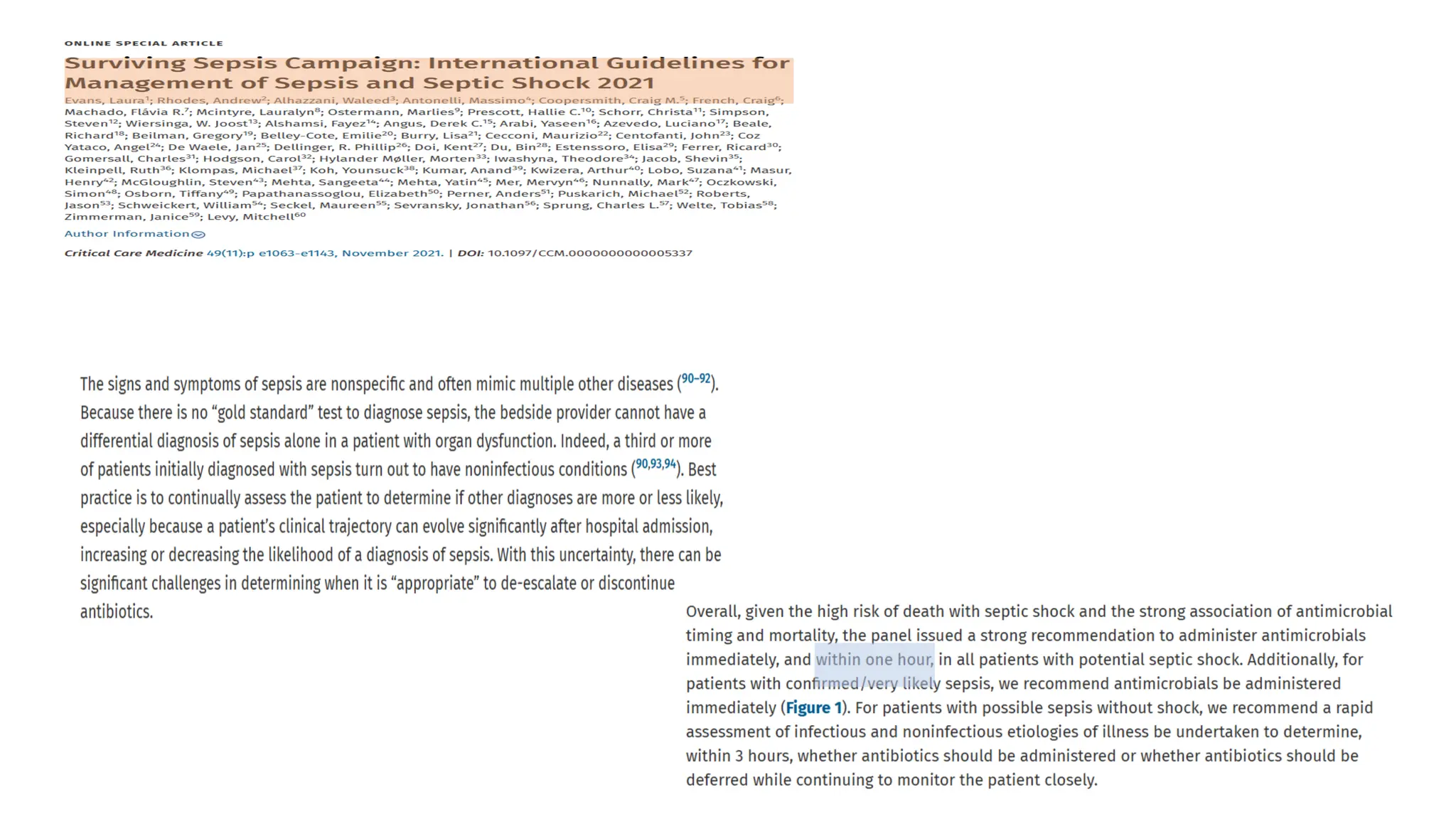
II. Empiric antibiotic therapy ( within first hour)
III.Identification of suspected source
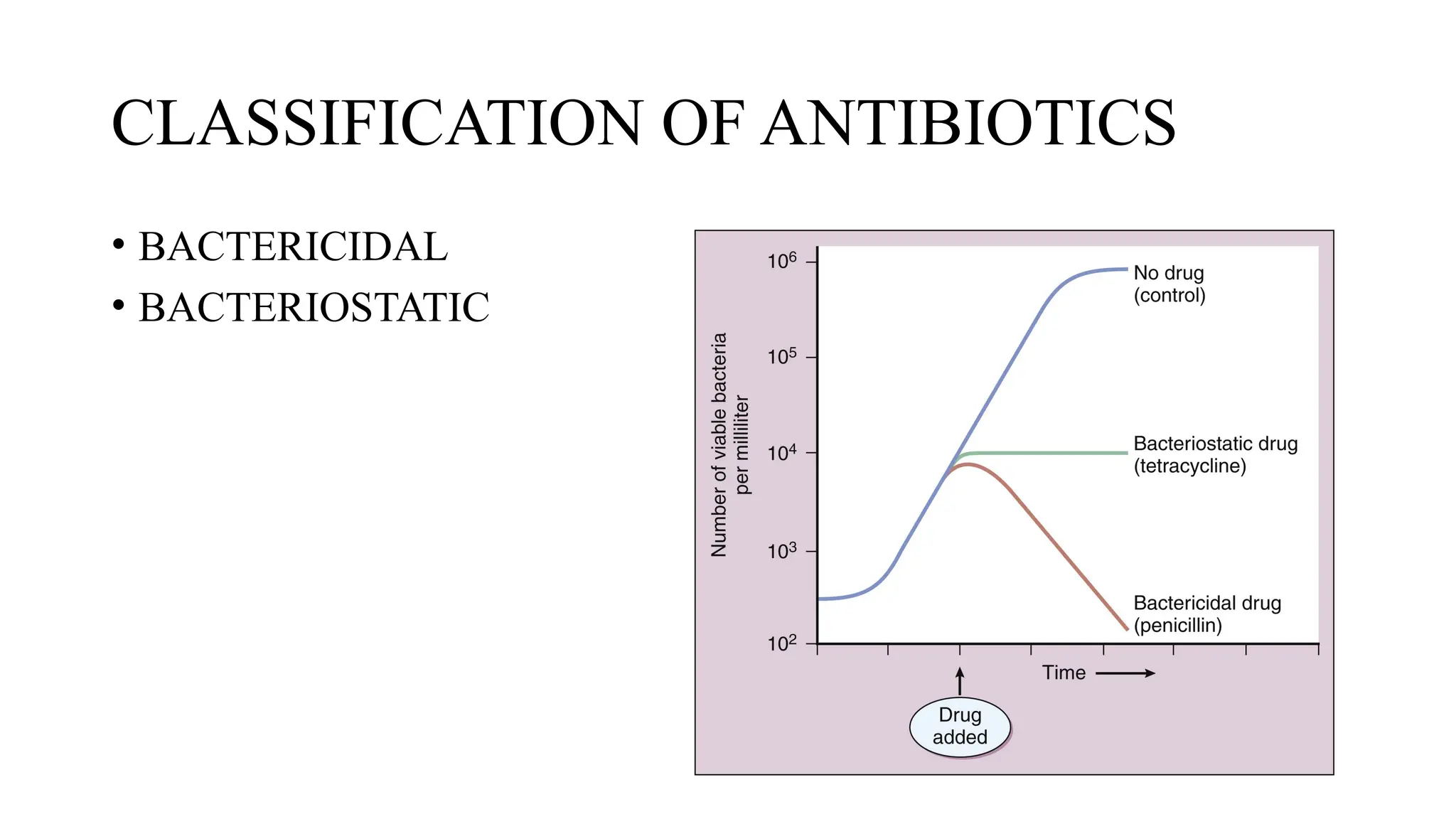
CLASSIFICATION OF ANTIBIOTICS
• BACTERICIDAL
• BACTERIOSTATIC
Antimicrobials classified-
• Time dependent
• Concentration dependent
• Conc dependent with time dependence
• The effect of time dependent AM, such as beta lactams , depend on
cumulative percentage of time over 24 hr by which free AM conc
exceeds MIC .
KILL CHARACTERISTICS
• PD determines relationship between antibiotic conc. & respective
effect on target pathogens, relying on MIC which reflects in vitro
susceptibility of pathogen.
• Therefore, PD connects PK exposure (serum conc.) to drug’s
pharmacological ( killing or growth inhibition capacity) and toxic
effects.
• When MIC increases, PK exposure should do same to guarantee an
optimal PK/PD index.
• In conc dependent antibiotic such as aminoglycosides, their effect
depends on peak conc divided by MIC( Peak/MIC)
• The higher the antibiotic conc, the greater the extent and rate of
bactericidal activity.
• The effect of conc dependent drugs with time dependence, such as FQ
and glycopeptides is determined by AUC 0-24hr divided by MIC
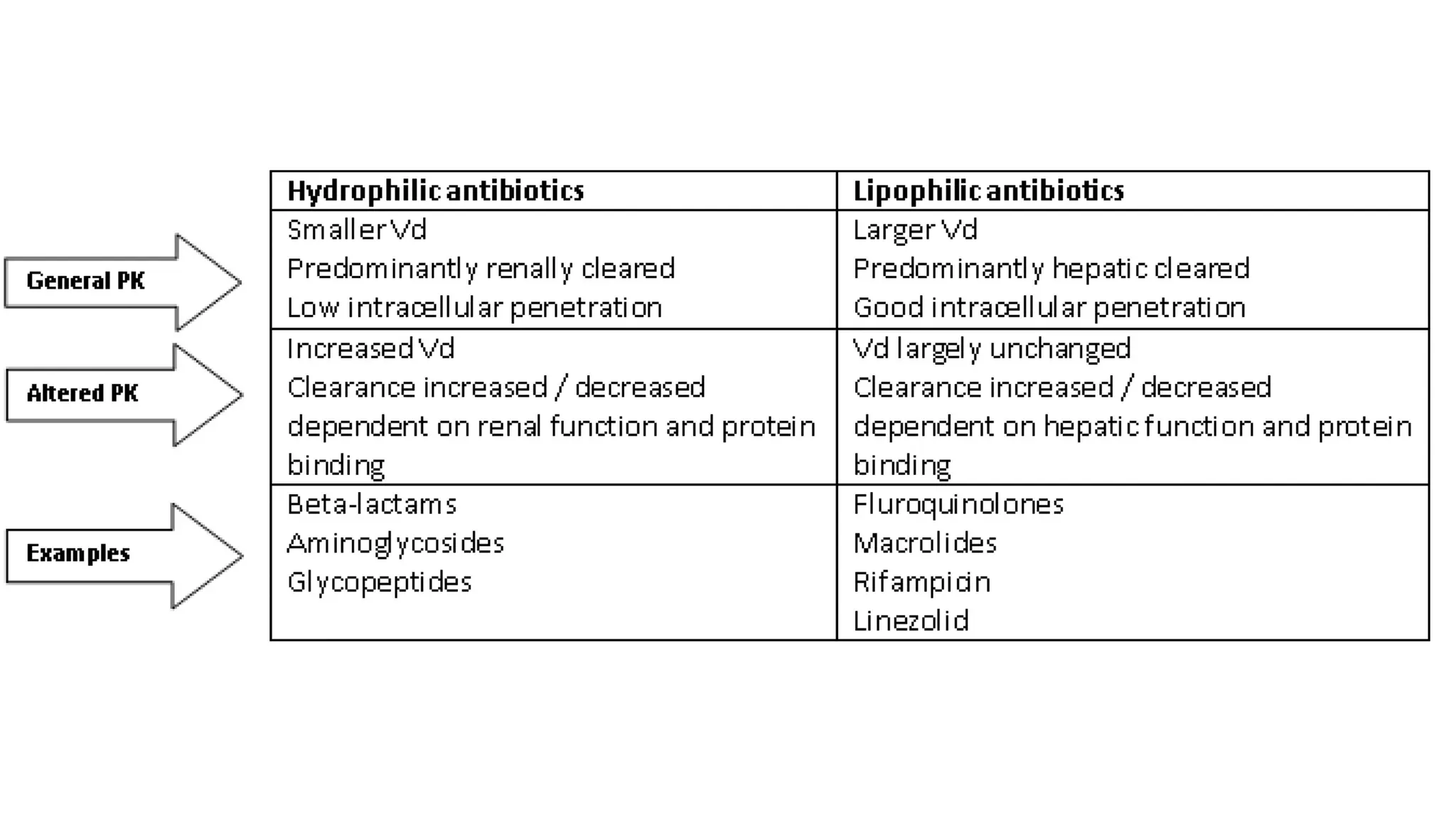
• According to physicochemical properties, antibiotics classified as-
• Hydrophilic( AG, beta-lactams, glycopeptides)
• Lipophilic( FQ, macrolides, lincosamides)
• Hydrophilics are characterized by tissue distribution limited to
extracellular space with majority dependent on renal clearance.
• Lipophilics have intracellular accumulation and dependent on hepatic
clearance.
• Hydrophilics more so than lipophilic drugs affected by PK alterations
in ICU patients( Vd expansion, capillary leakage, volume
resuscitation).
• This will determine need for adjustment of loading and maintenance
dose of hydrophilics.
MECHANISM OF ACTION
COMMON ORGANISMS
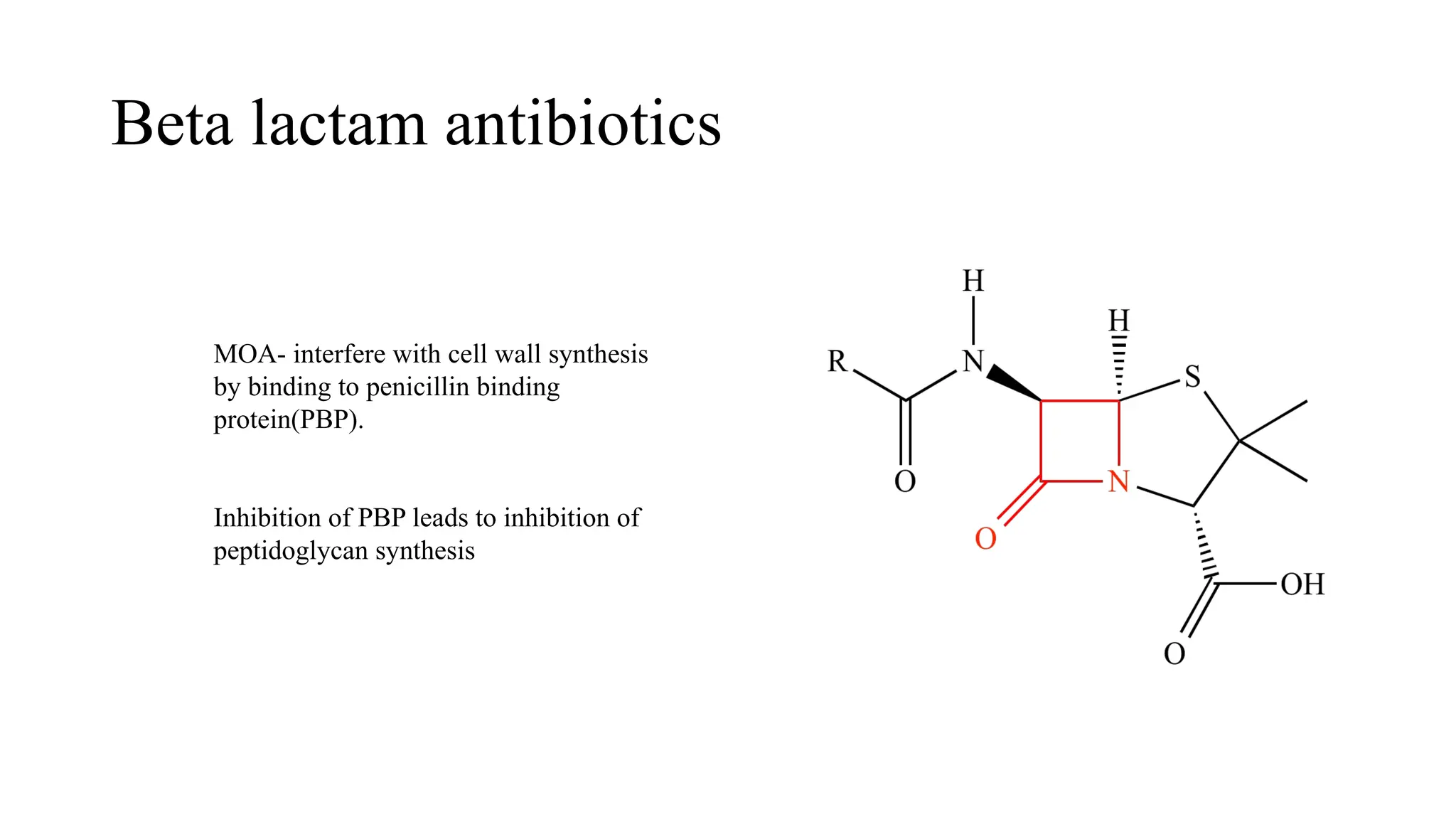
Beta lactam antibiotics
MOA- interfere with cell wall synthesis
by binding to penicillin binding
protein(PBP).
Inhibition of PBP leads to inhibition of
peptidoglycan synthesis
•Penicillin G- im and iv
•Penicillin V – oral
•Penicillinase resistance penicillin- methicillin, nafcillin, oxacillin, cloxacillin, dicloxacillin
•Aminopenicillin- effective against Gram –ve bacteria. Ampicillin, amoxicillin
first line therapy for acute otitis media
•Antipseudomonal penicillin-
• Carboxypenicillin- ( ticarcillin, carbenicillin)
• Ureidopenicillin-( mezlocillin, azlocillin, piperacillin)
• Active against Pseudomonas , E coli, kleibsiella, Anaerobes. Lower activity against Gram+ve
• Often used with aminoglycosides when treating pseudomonal infection.
• Parenterally.
• Beta lactamase inhibitor-
• Clavulanic acid- combined with amoxycillin
• Sulbactam- combined with ampicillin (sulbactam is alone used to treat
Acinetobacter)
• Piperacillin+ tazobactam: Penicillin of choice for ESBL organisms
• Dose- 1.5-3g 6hr amoxicillin+sulbactam
• 2.25-4.5g 6hr piperacillin-tazobactam
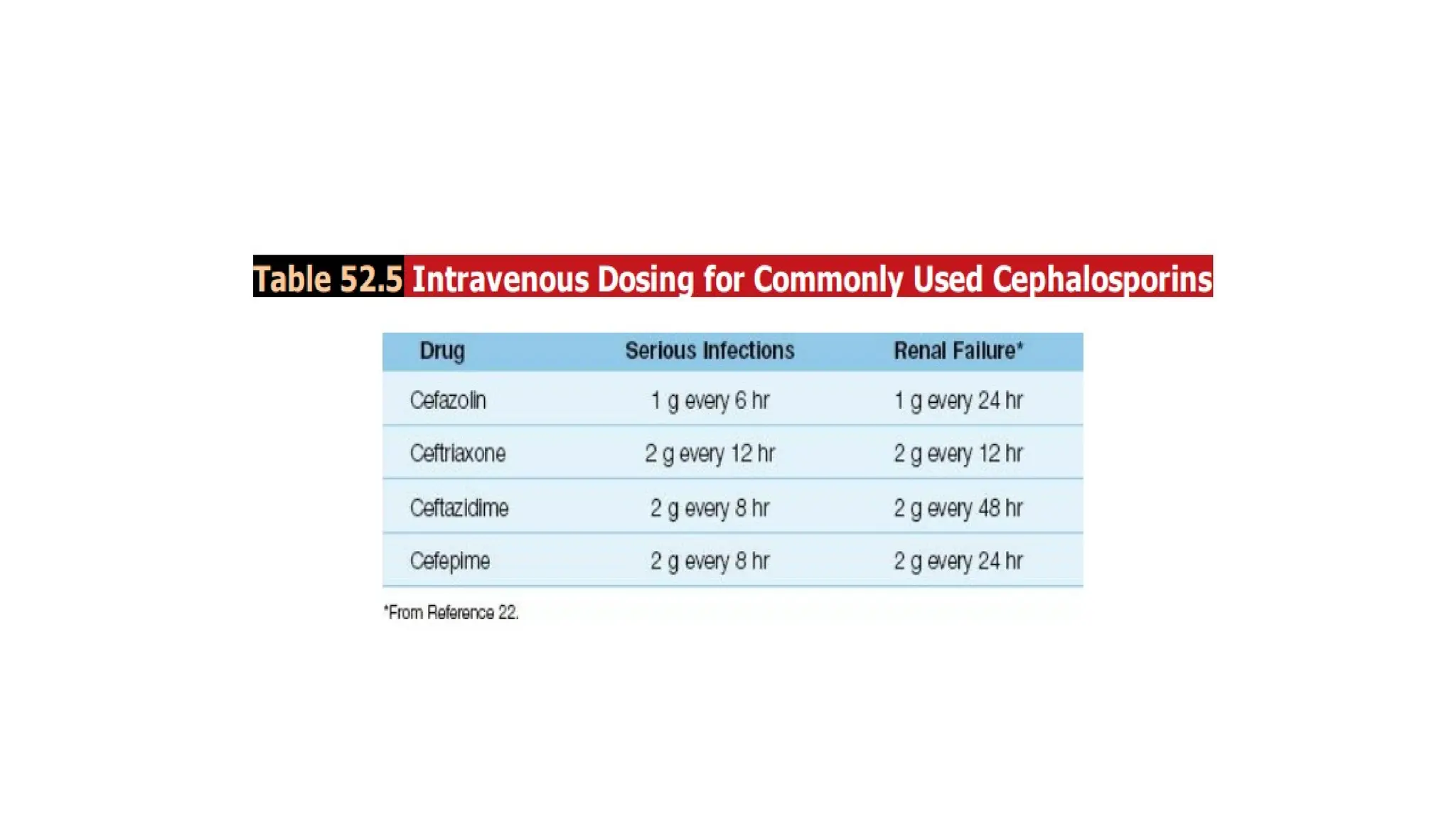
CEPHALOSPORINS
FIRST SECOND THIRD FOURTH FIFTH
EXAMPLES Cephazolin
Cephalexin
Cefuroxime Ceftriaxone
Cefotaxime
Ceftazidime
Cefoperazone
Cefepime Ceftolazone
Ceftaroline
ANAEROBES - + - - +
GRAM + ve +
Staph, Strep
+ Strep+
Staph-
++ +
GRAM -ve +
Ecoli, Proteus,
Kleibsiella
better ++
N gonorrhea,
Enterobacter,
Pseudomonas( ce
ftazidime)
+++ +
MRSA - - - - ++
MONOBACTAM
• Novel beta lactam antibiotic
• Other ring missing, hence monobactam
• Acts by binding to specific penicillin binding protein ( PBPs)
• At low conc. – inhibit Gram –ve enteric bacilli and H. influenzae
• At moderate conc.- inhibit pseudomonas
• Does not inhibit Gram +ve cocci or fecal anaerobes
• Resistant to gram –ve beta lactamases
• DOSE- 1-2 g 8hrly
• Example- AZTREONAM ( im/iv)
• Narrow antibacterial spectrum-
• Aerobic gram –ve rods
• Anti pseudomonal activity > piperacillin + tazobactam but < carbapenem
• Spectrum resembling aminoglycosides.
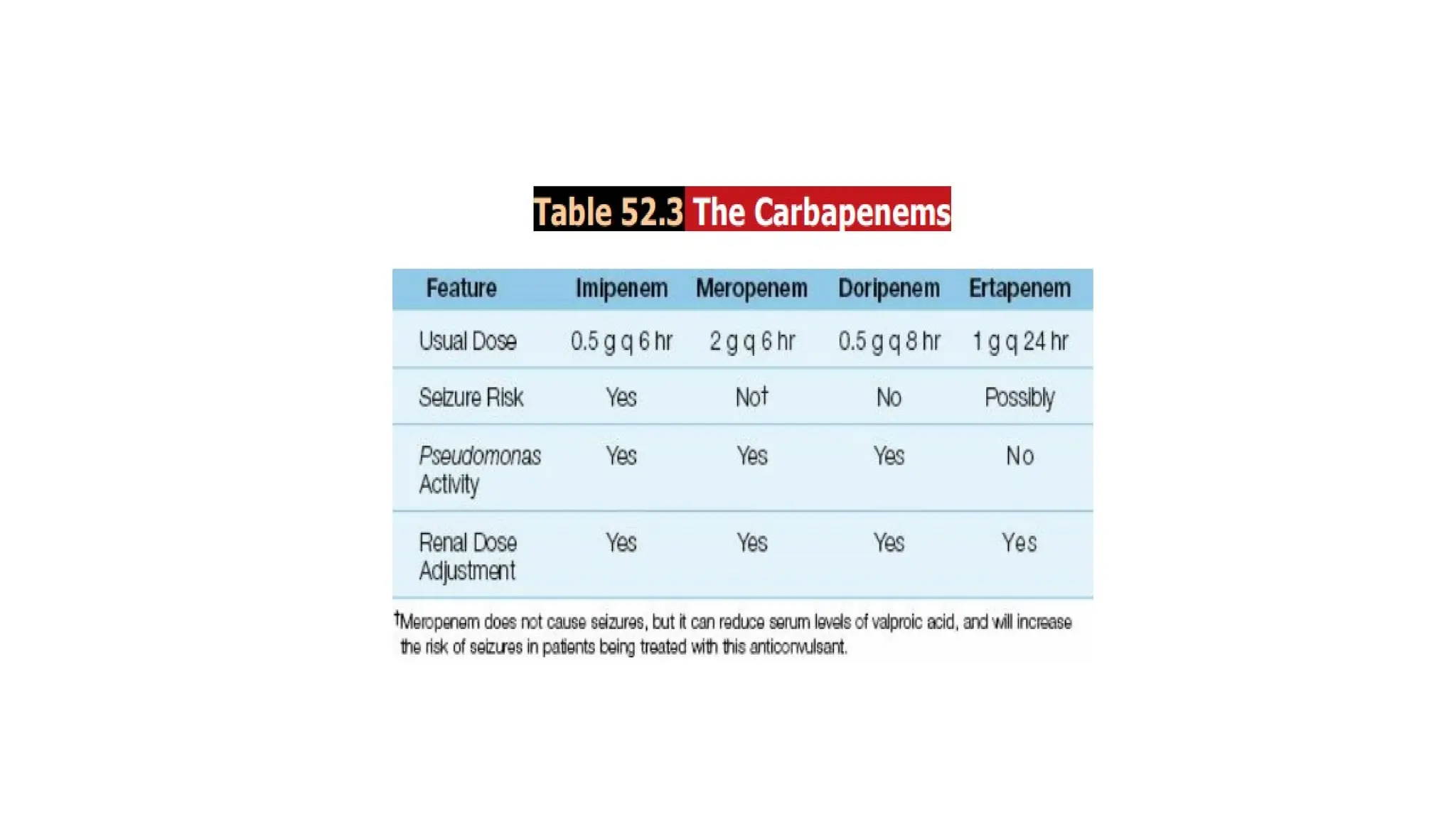
CARBAPENEM
• Broadest spectrum beta lactam.
• Staph( except MRSA), Strep ( highly resistant ), Nesisseria,
Hemophilus, Proteus, Pseudomonas, Kleibsiella, anaerobes
( excluding Clostridium difficle)
• Example- Imipenem, Meropenem, Ertapenem
• Stable to ESBLs
• Hydrolysed by MBLs and carbapenemases- can lead to resistance.
Imipenem
• Inhibits penicillinase producing staphylococci.
• Rapid hydrolysis by dihydropeptidase 1 located on brush border of
renal tubular cells
• Hence given in combination with cilastatin
• Dose- imipenem + cilastatin – 0.5 G IV 6 HOURLY ( max 4g/day)
• Effective in hospital acquired respiratory, urinary, abdominal, pelvic,
skin, soft tissue infections including cancer, AIDS, and neutropenic
patients
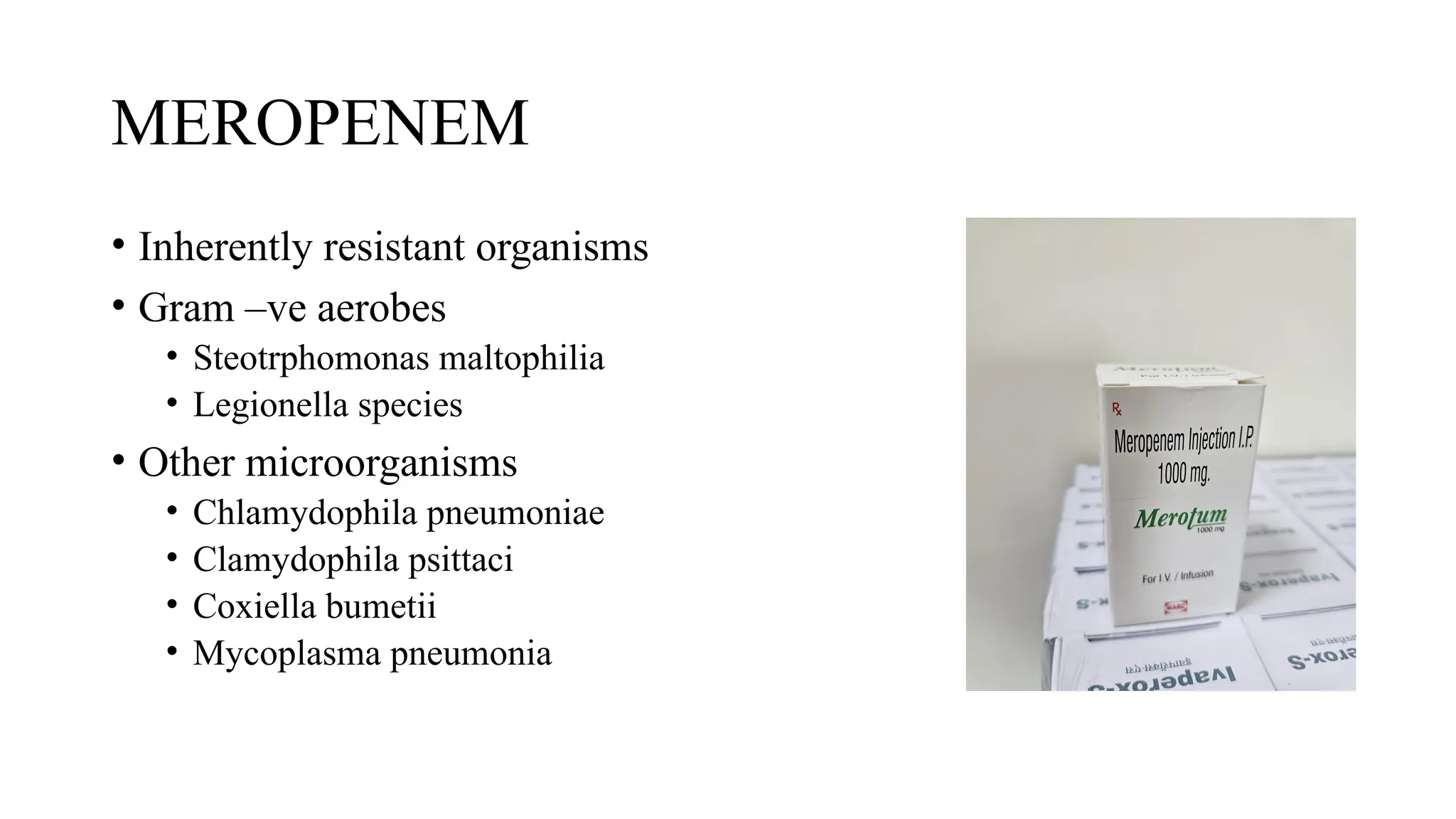
MEROPENEM
• Inherently resistant organisms
• Gram –ve aerobes
• Steotrphomonas maltophilia
• Legionella species
• Other microorganisms
• Chlamydophila pneumoniae
• Clamydophila psittaci
• Coxiella bumetii
• Mycoplasma pneumonia
VANCOMYCIN (GLYCOPEPTIDES)
• Inhibits synthesis of cell wall phopholipids and prevent cross-linking of
peptidoglycans at an earlier step than beta lactams
• gram + BACTERIA, Strep. pneumo., Enterococcus, Staph.epidermis and MRSA
• Nephrotoxic, ototoxic
• Resistance- VRSA and VRE increasing
• Adverse effects- fever, chills, phlebitis, red man syndrome( slow injection and
prophylactic antihistamines)
• Half life is over 200 hrs in patients with ESRD ( Normal 6-10 hrs)
• DOSE- 15mg/kg LD followed by 30 mg/kg continuous infusion
POLYMYXINS
• Disrupt the bacterial cell membrane.
• Colistin also exert ant-endotoxin activity.
• Spectrum- Gram –ve.
• Polymyxin B- bacterial skin infections caused by Gram –ve
( Pseudomonas)
• Polymyxin E/ Colistin- Against MDR Gram –ve
organisms( pseudomonas, Enterobacter, Klebsiella) Organisms that
produce NDM-1 beta lacatamase
• Side effect- nephrotoxic
• DOSE- 20000-25000 IU/kg f/b 1.25-1.5mg/kg 12hr
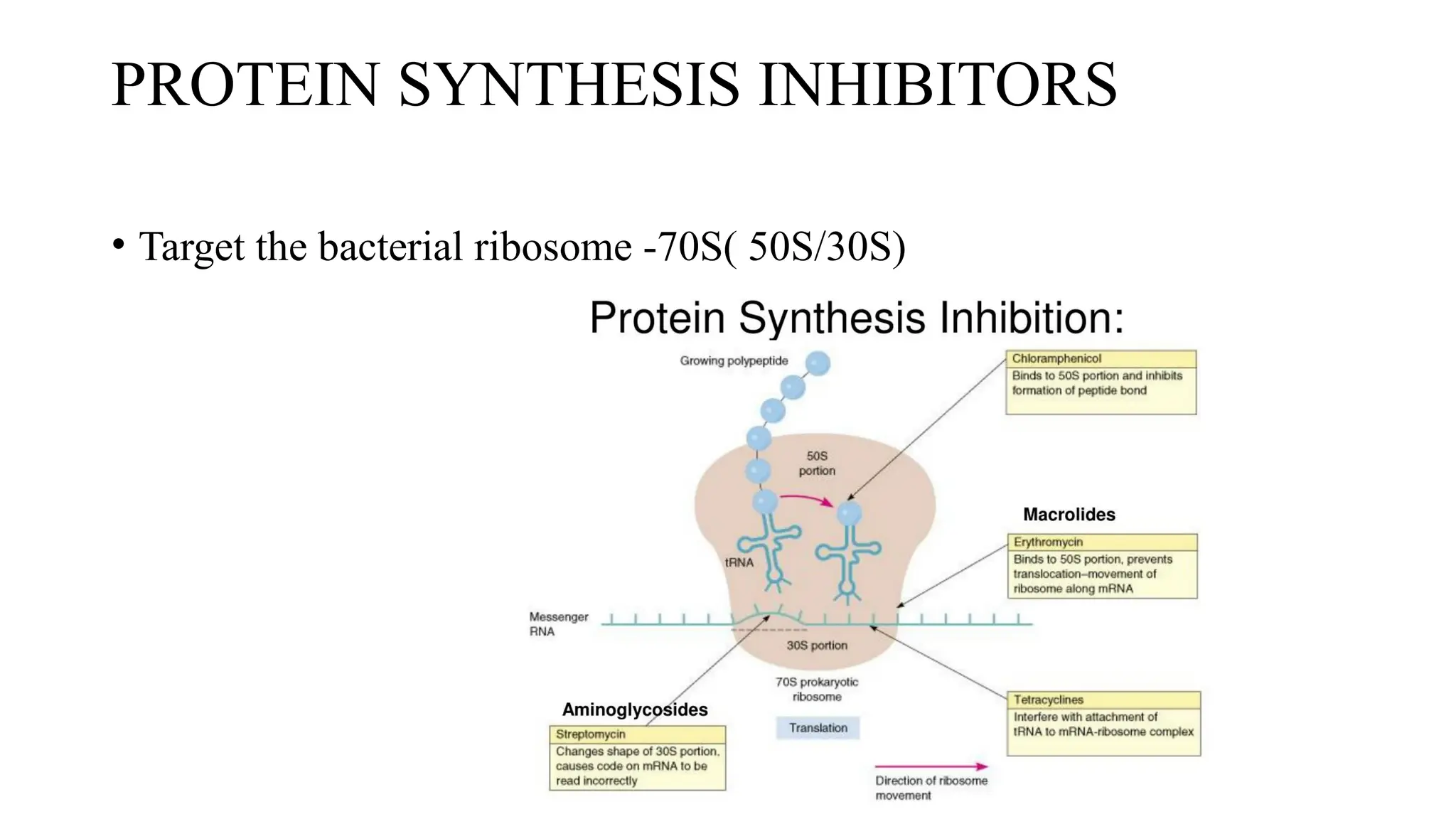
PROTEIN SYNTHESIS INHIBITORS
• Target the bacterial ribosome -70S( 50S/30S)
AMINOGLYCOSIDES
• Bactericidal
• Example- gentamicin, tobramycin, amikacin,
• Against aerobic, facultative and gram -ve bacilli. Have excellent
activity against Pseudomonas except gentamicin
• Parenteral
• Nephrotoxic, ototoxic- Concentrates in endolymph and perilymph.
KFT imp during their therapy.
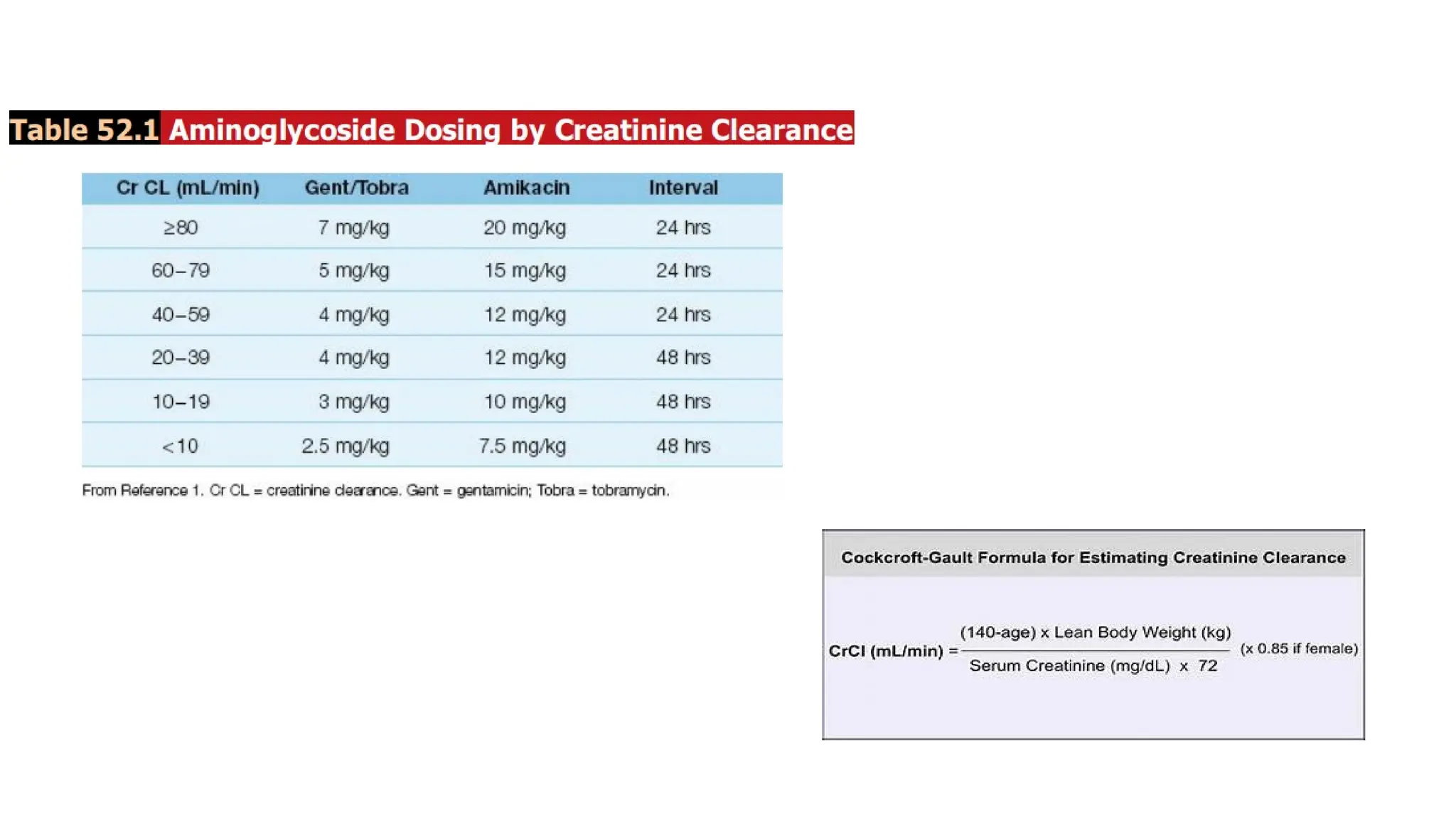
• POST ANTIBIOTIC EFFECT
• Aminoglycoside exhibit concentration dependent killing.
• They also possess post antibiotic effect.( even after half life, even
levels have decreased, bacteria are still inhibited)
• Single daily dosing at least as effective as and no more toxic than
multiple dosing.
• Dose- 15mg/kg
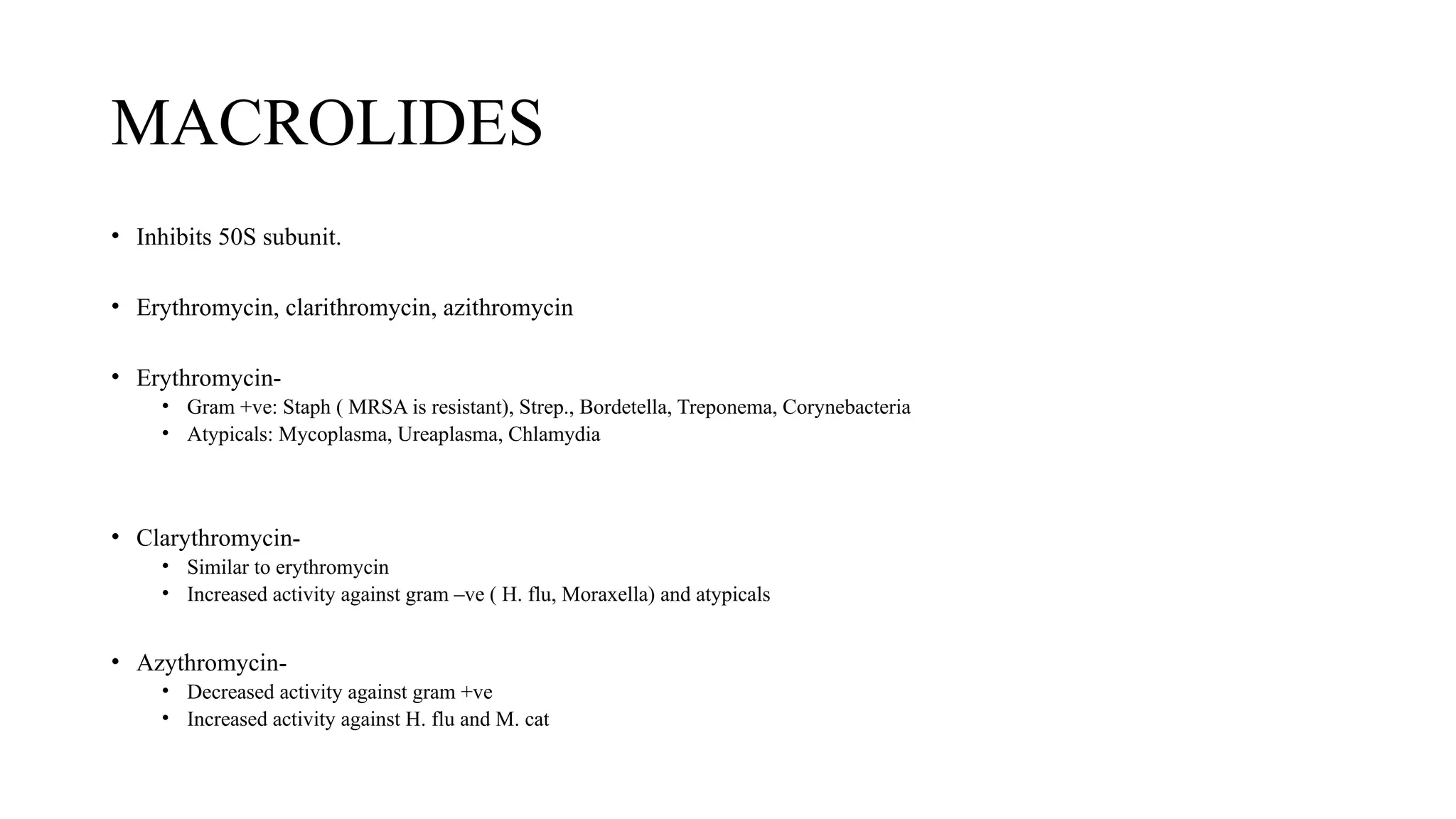
MACROLIDES
• Inhibits 50S subunit.
• Erythromycin, clarithromycin, azithromycin
• Erythromycin-
• Gram +ve: Staph ( MRSA is resistant), Strep., Bordetella, Treponema, Corynebacteria
• Atypicals: Mycoplasma, Ureaplasma, Chlamydia
• Clarythromycin-
• Similar to erythromycin
• Increased activity against gram –ve ( H. flu, Moraxella) and atypicals
• Azythromycin-
• Decreased activity against gram +ve
• Increased activity against H. flu and M. cat
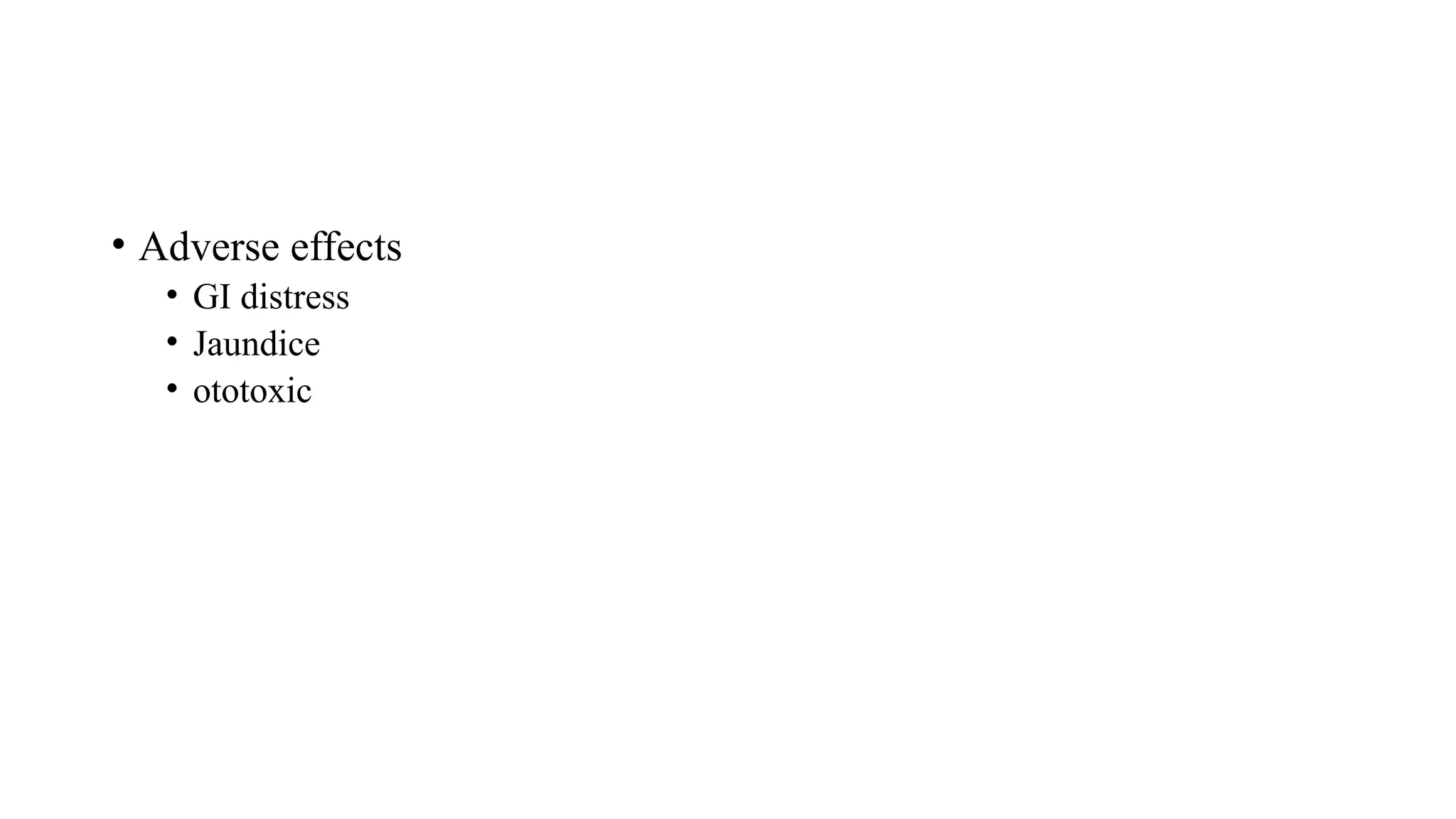
• Adverse effects
• GI distress
• Jaundice
• ototoxic
CLINDAMYCIN
• Iv/oral ( lincosamide)
• Irreversibly binds the 50S subunit
• Strep, Staph ( some MRSA), B. fragilis, anaerobes
• Does not cover Clostridium difficle
• Used for deep neck space infections, chronic tonsillo-pharyngitis,
odontogenic abscess ( anaerobes) and surgical prophylaxis in
contaminated wounds
• Side effect- abdominal pain, diarrhoea
LINEZOLID
• Oxazolidinone- inhibits initiation complex of
bacterial protein synthesis
• Dose- iv/PO 600 mg BD ( good oral
bioavailability)
• Antibiotic spectrum- gram +ve
• Similar cure rates when compared to vancomycin
• Maybe superior to vancomycin for MRSA pneumonia
and VRE
• Side effects- myelosuppression ,
thrombocytopenia( monitor platelet count)
TIGECYCLINE
• First glycylcycline.
• Broad spectrum including MRSA, VRE, Acinetobacter, ESBL
producing enterobacteriace
• Poor oral absorption.
• Does not cover Pseudomonas
• Bacteriostatic and low serum levels so not to be used for septicemia
• Commonly used in as last resort for complicated intraabdominal
infection, skin soft tissue infections
• Dose- 100mg iv bolus followed by 50 mg BD
• Resistance in Acinetobacter is fast emerging
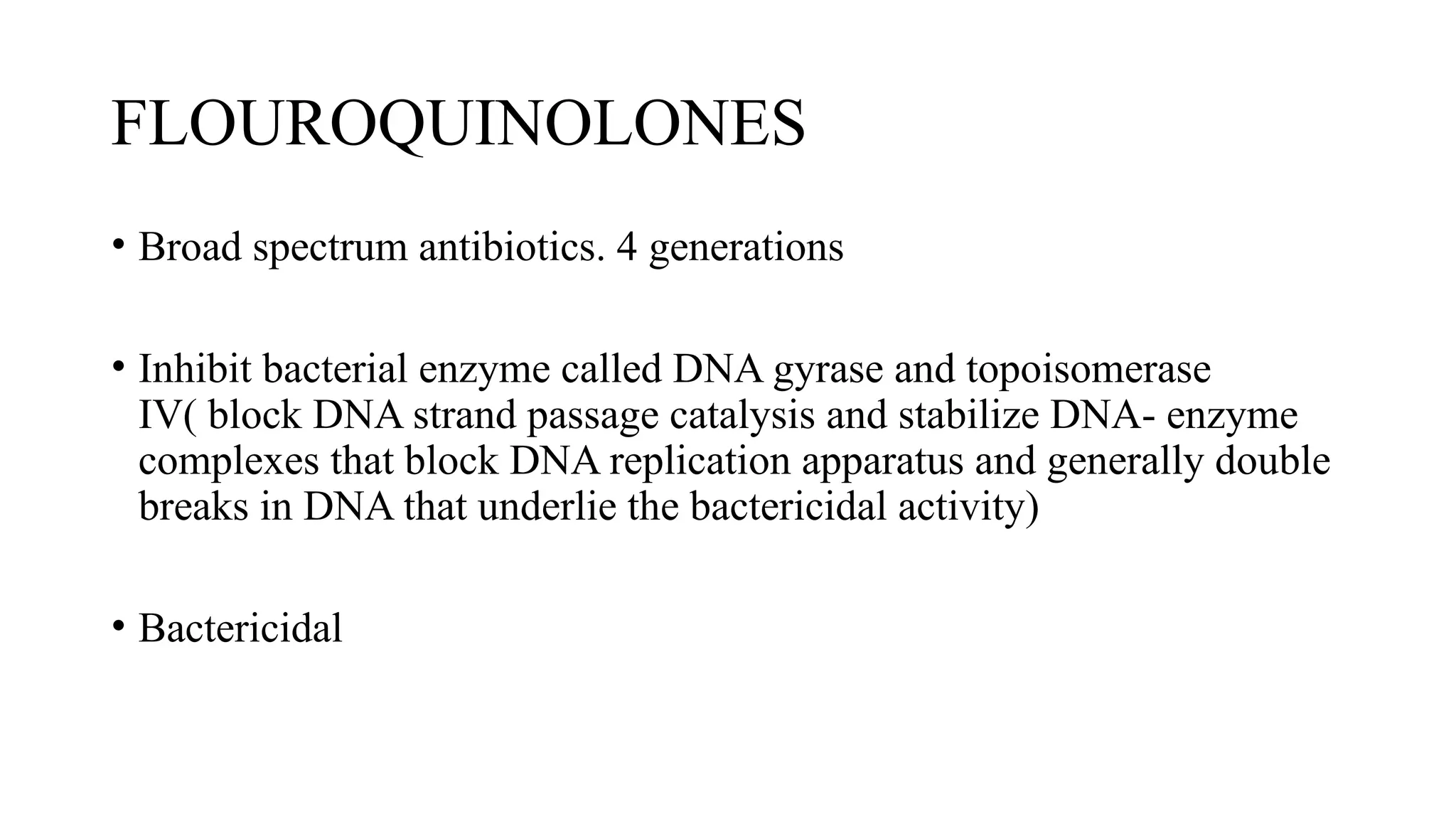
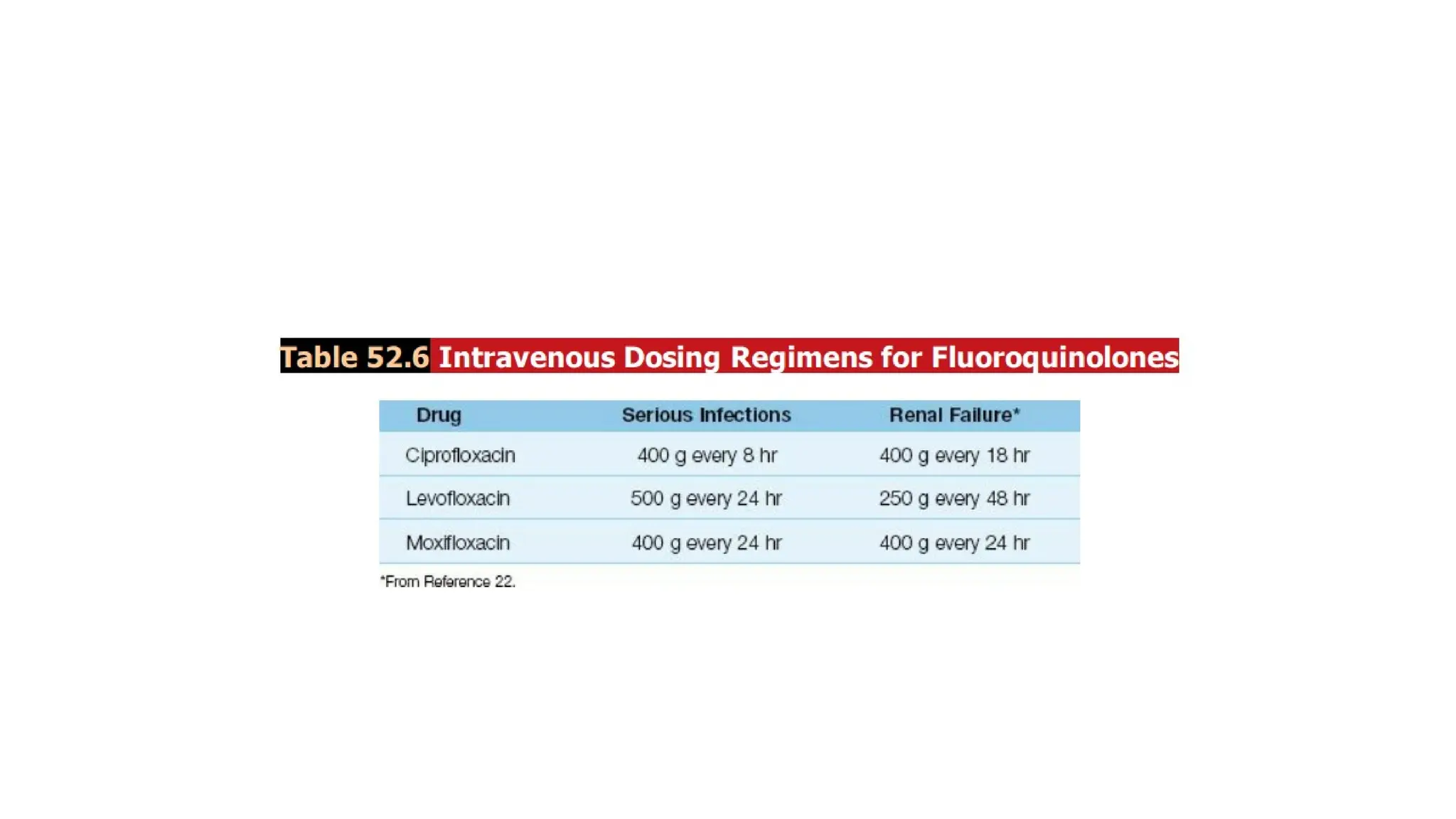
FLOUROQUINOLONES
• Broad spectrum antibiotics. 4 generations
• Inhibit bacterial enzyme called DNA gyrase and topoisomerase
IV( block DNA strand passage catalysis and stabilize DNA- enzyme
complexes that block DNA replication apparatus and generally double
breaks in DNA that underlie the bactericidal activity)
• Bactericidal
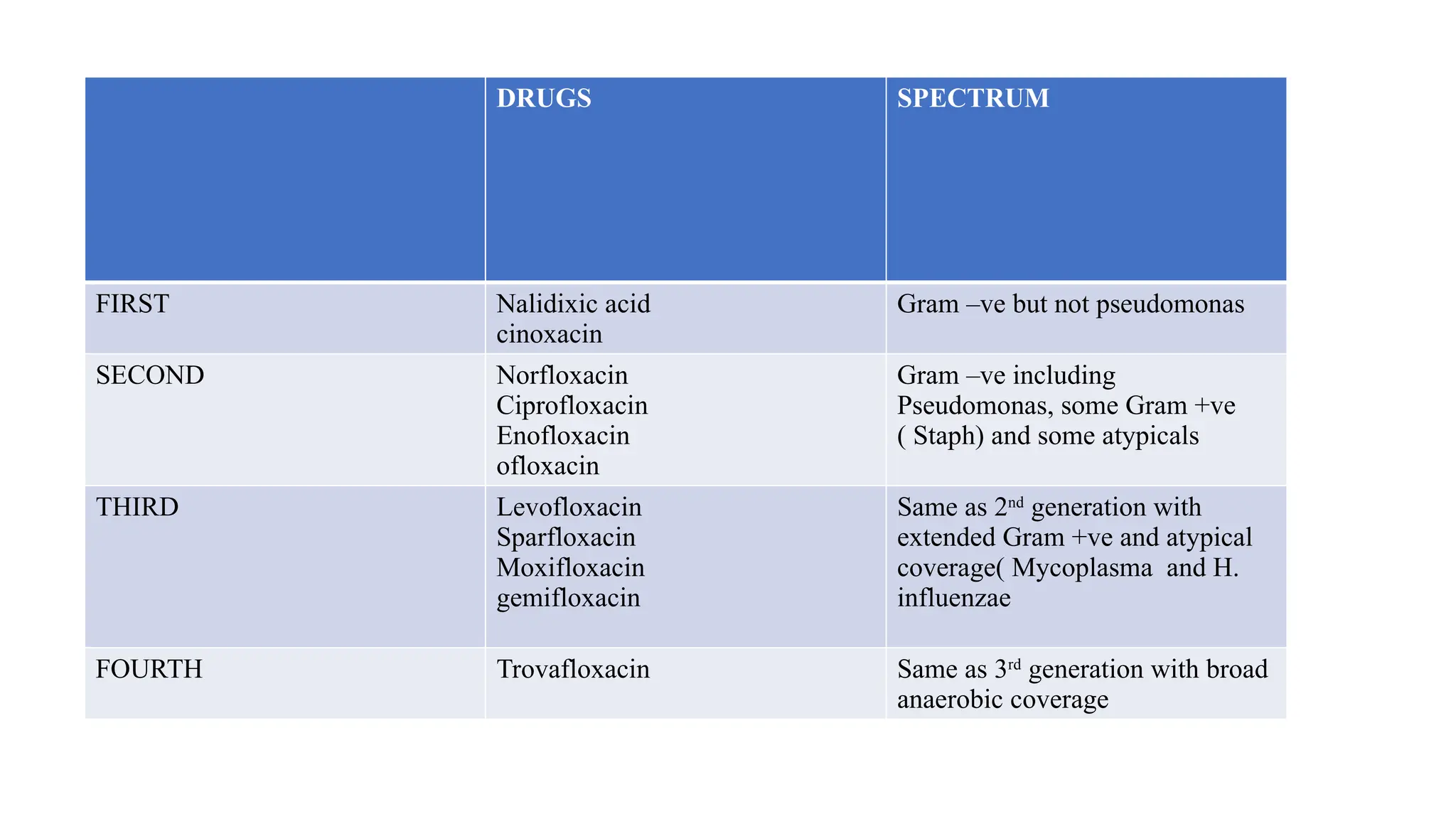
DRUGS SPECTRUM
FIRST Nalidixic acid
cinoxacin
Gram –ve but not pseudomonas
SECOND Norfloxacin
Ciprofloxacin
Enofloxacin
ofloxacin
Gram –ve including
Pseudomonas, some Gram +ve
( Staph) and some atypicals
THIRD Levofloxacin
Sparfloxacin
Moxifloxacin
gemifloxacin
Same as 2nd
generation with
extended Gram +ve and atypical
coverage( Mycoplasma and H.
influenzae
FOURTH Trovafloxacin Same as 3rd
generation with broad
anaerobic coverage
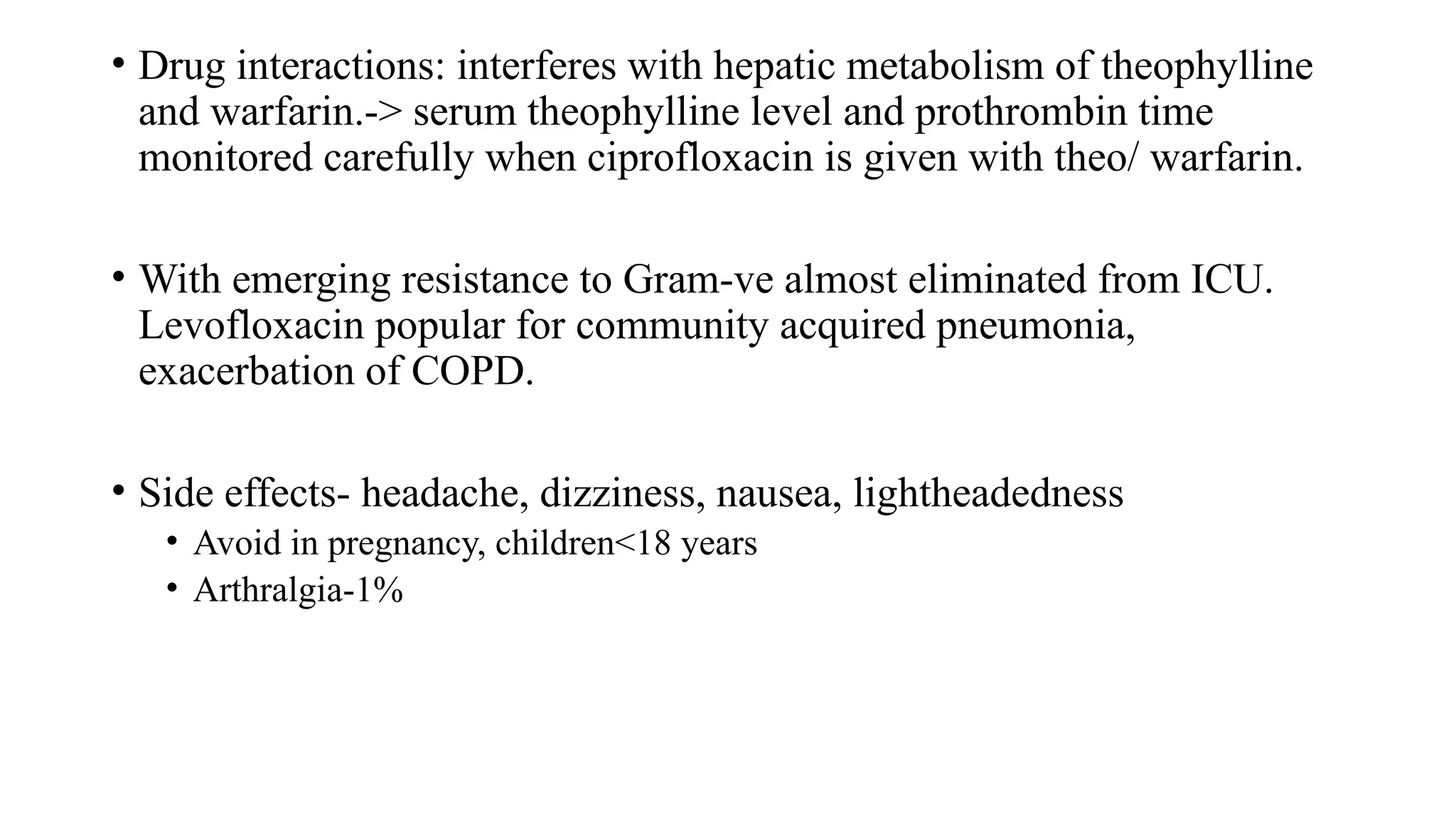
• Drug interactions: interferes with hepatic metabolism of theophylline
and warfarin.-> serum theophylline level and prothrombin time
monitored carefully when ciprofloxacin is given with theo/ warfarin.
• With emerging resistance to Gram-ve almost eliminated from ICU.
Levofloxacin popular for community acquired pneumonia,
exacerbation of COPD.
• Side effects- headache, dizziness, nausea, lightheadedness
• Avoid in pregnancy, children<18 years
• Arthralgia-1%
SULFONAMIDES
• Bacteriostaic
• In higher conc may act as bactericidal
• Against Strep. pyogens, H influenzae, V. cholerae
• Used to prevent UTI
• Structural analogues of PABA, inhibit bacterial
folate synthase and inhibit formation of folate.
• Don’t affect human folate ( use preformed folate)
• Resistance- mutation /transfer of resistance by
plasmids.
TRIMETHOPRIM
• Bacteriostatic
• A diaminopyrimidine related pyrimethamine ( folate antagonist
) inhibits dihydrofolate reductase
• Used for UTI or resp tract infection
• Against gram –ve bacilli and few gram +ve organism
• Sulfonamide and trimethoprim combination becomes bactericidal.
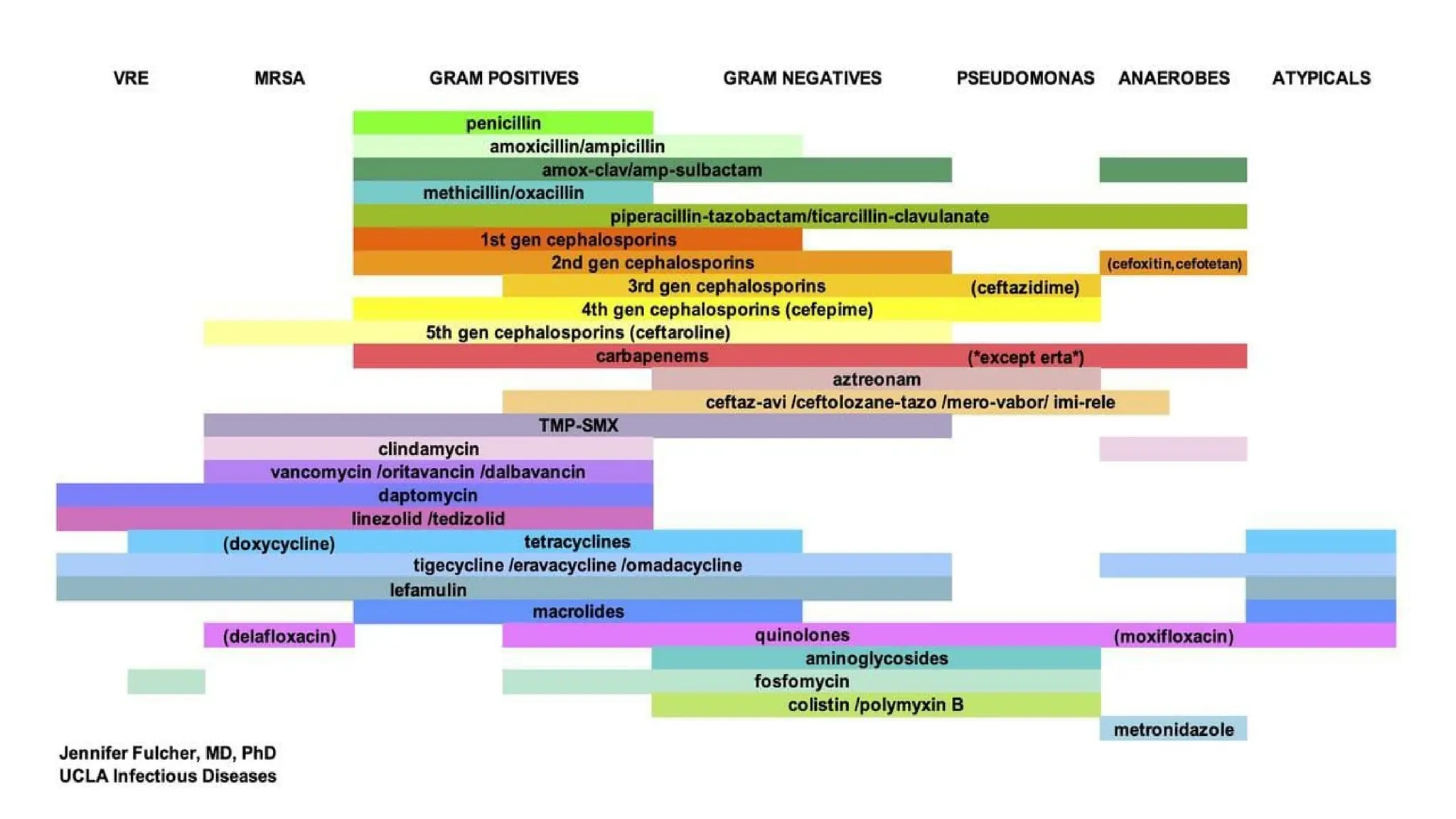
ANTIBIOTICS FOR ANAEROBES
METRONID
AZOLE
CARBAPEN
EM
BETA
LACTAMS
CLINDAMY
CIN
2ND
GEN
CEPHALOS
PORINS
MOXIFLOX
ACIN
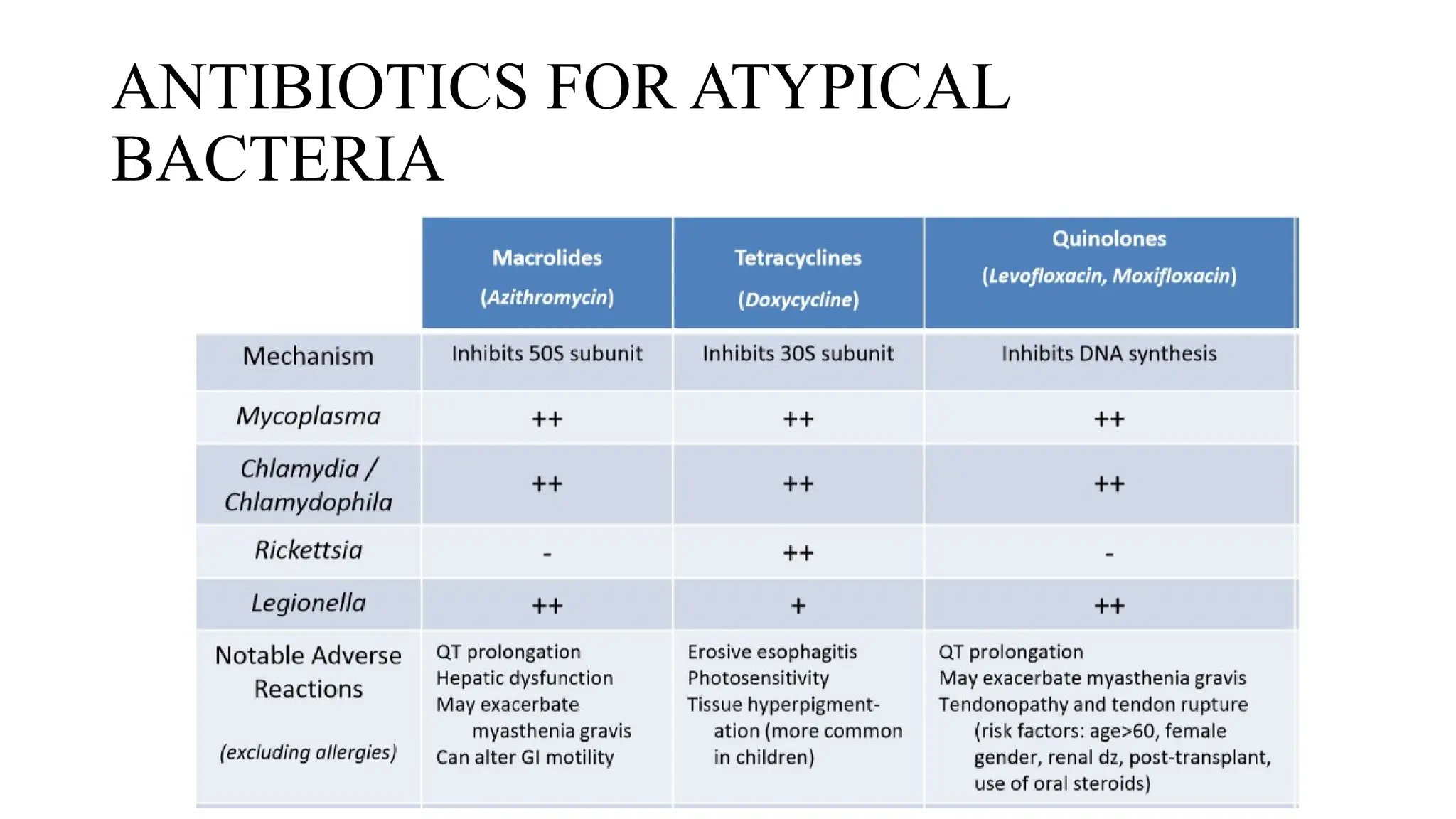
ANTIBIOTICS FOR ATYPICAL
BACTERIA
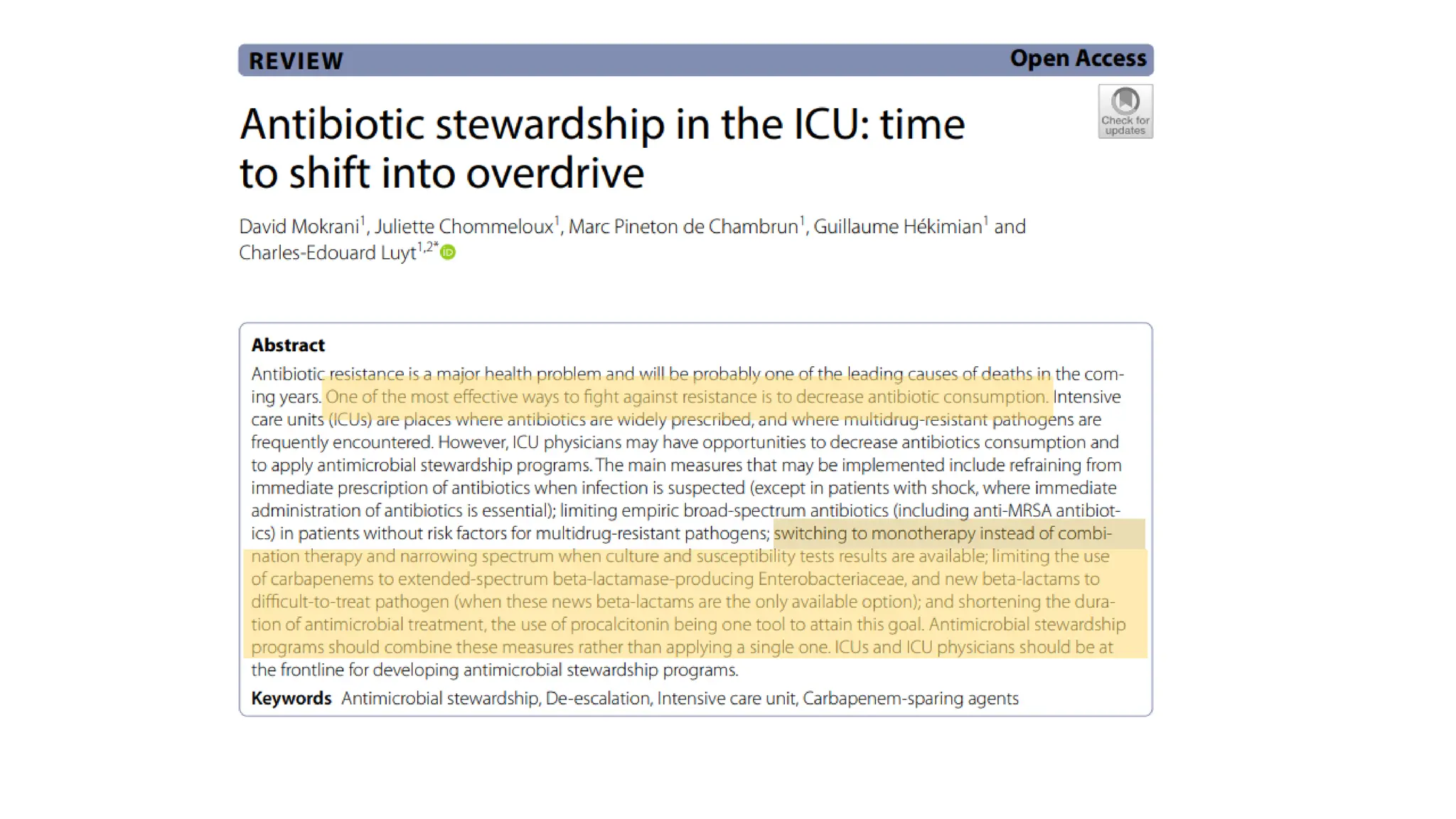
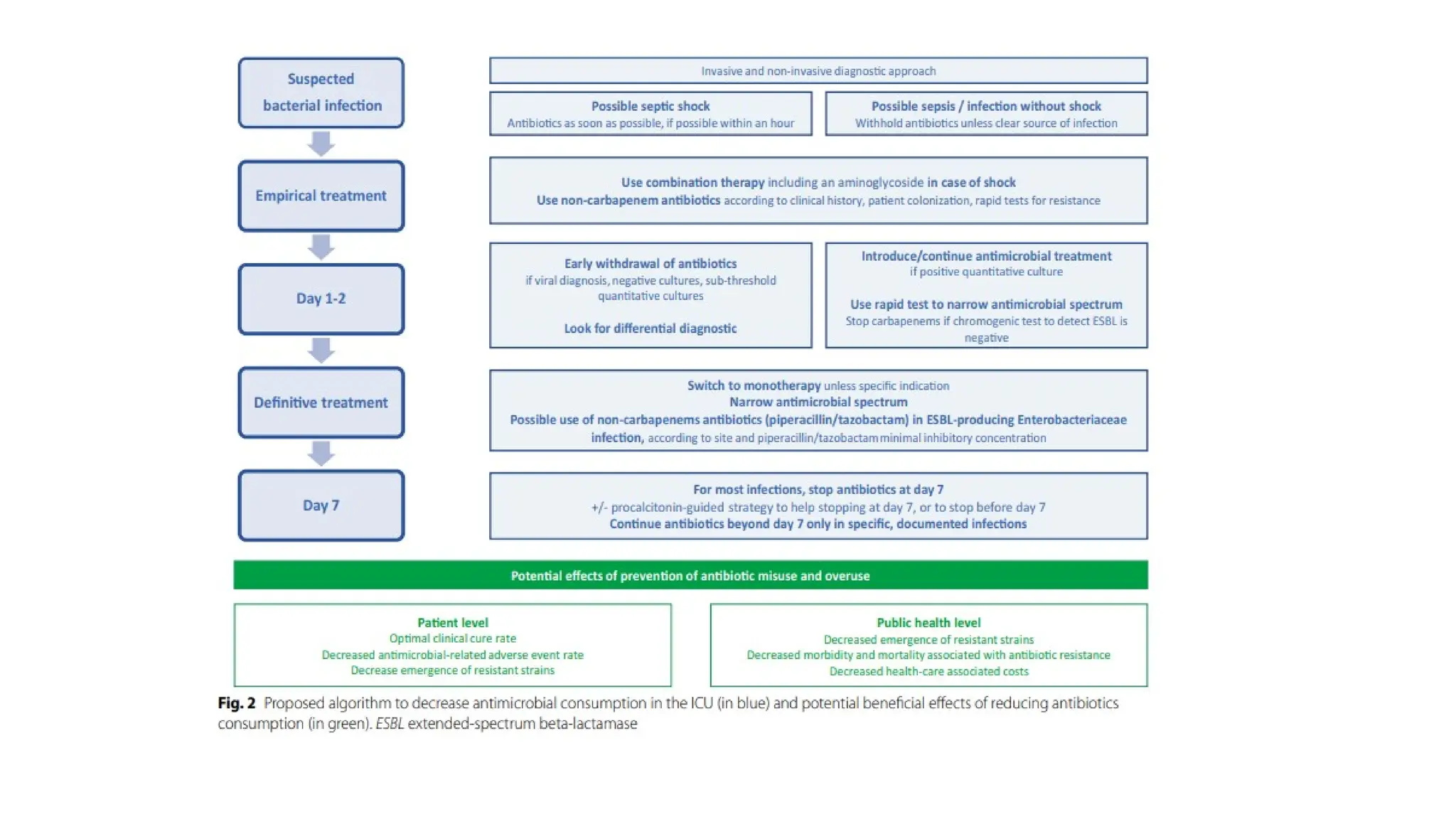
ANTIBIOTIC STEWARDSHIP
• A coherent set of actions which promote antimicrobials use in
sustainable way for effective therapy, prevent adverse outcomes and
reduce antimicrobial resistance.
• Limit broad spectrum antibiotics
• De-escalation
• Monotherapy
• Dose optimization using PK data
• Reduction of duration of antimicrobial treatment
Purpose OF ASP
• Optimization of proper use of antibiotics
• Antibiotic usage cost effective
• Maintain quality in patient care
• Prevent generation of antimicrobial resistance.
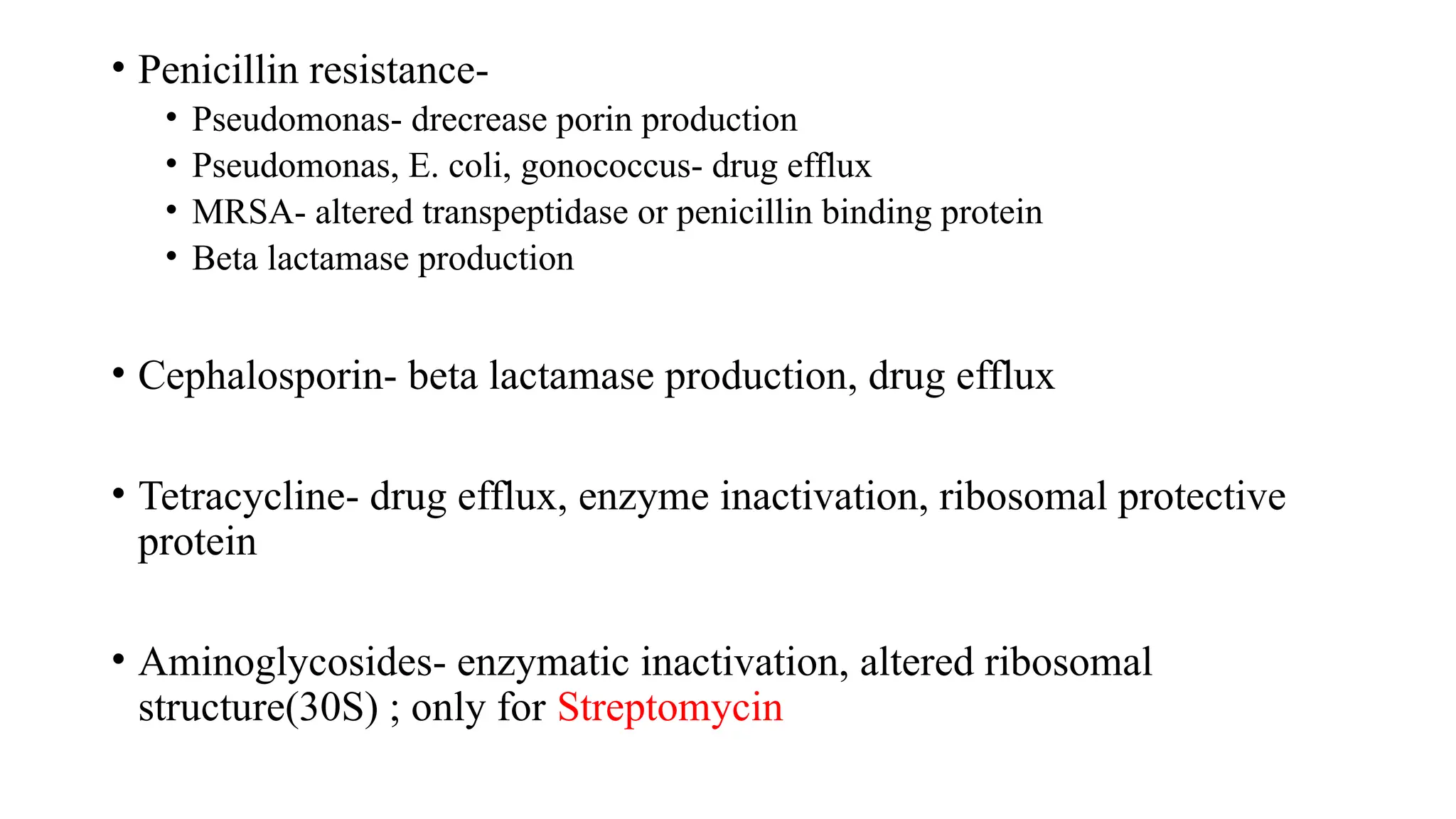
MECHANISM OF RESISTANCE
• Penicillin resistance-
• Pseudomonas- drecrease porin production
• Pseudomonas, E. coli, gonococcus- drug efflux
• MRSA- altered transpeptidase or penicillin binding protein
• Beta lactamase production
• Cephalosporin- beta lactamase production, drug efflux
• Tetracycline- drug efflux, enzyme inactivation, ribosomal protective
protein
• Aminoglycosides- enzymatic inactivation, altered ribosomal
structure(30S) ; only for Streptomycin
• Macrolides- enzymatic inactivation, drug efflux, altered ribosomal
structure, methylation of ribosomes; coded by ERM
( erythromycin ribosomal methylase gene) gene.
• Linezolid- mutation of binding site.
• Clindamycin- enzymatic inactivation, altered ribosomal structure.
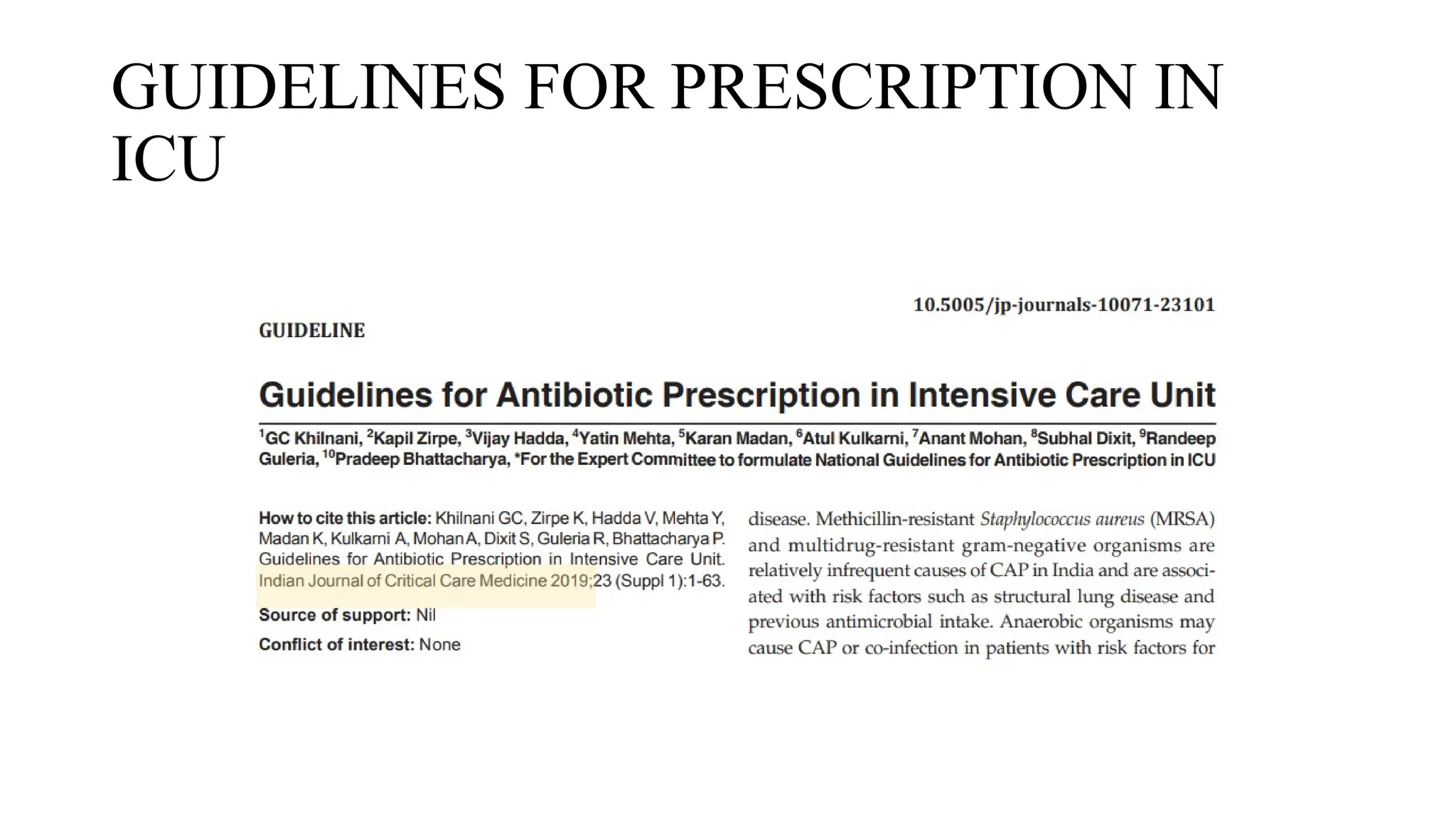
GUIDELINES FOR PRESCRIPTION IN
ICU
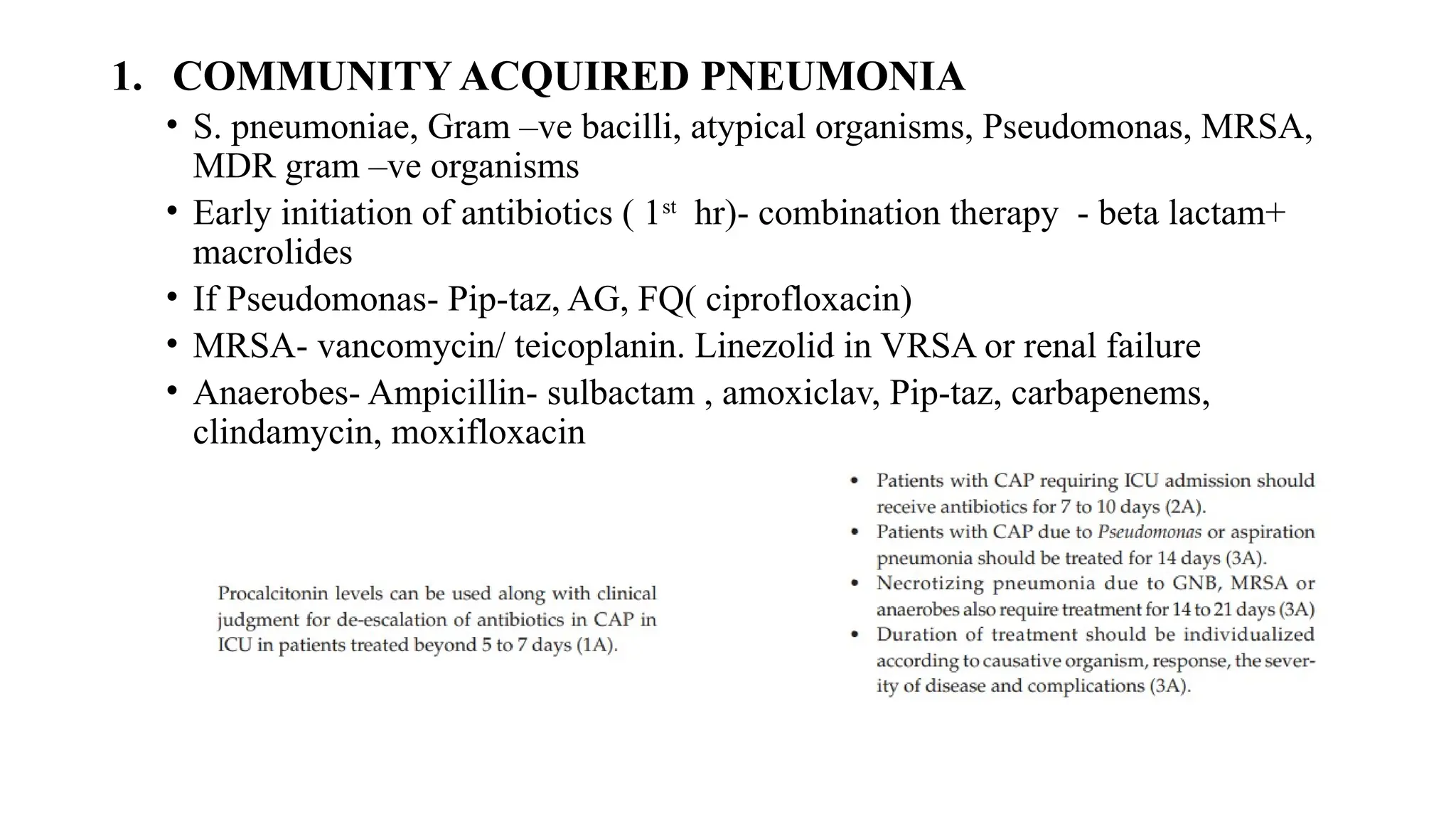
1. COMMUNITY ACQUIRED PNEUMONIA
• S. pneumoniae, Gram –ve bacilli, atypical organisms, Pseudomonas, MRSA,
MDR gram –ve organisms
• Early initiation of antibiotics ( 1st
hr)- combination therapy - beta lactam+
macrolides
• If Pseudomonas- Pip-taz, AG, FQ( ciprofloxacin)
• MRSA- vancomycin/ teicoplanin. Linezolid in VRSA or renal failure
• Anaerobes- Ampicillin- sulbactam , amoxiclav, Pip-taz, carbapenems,
clindamycin, moxifloxacin
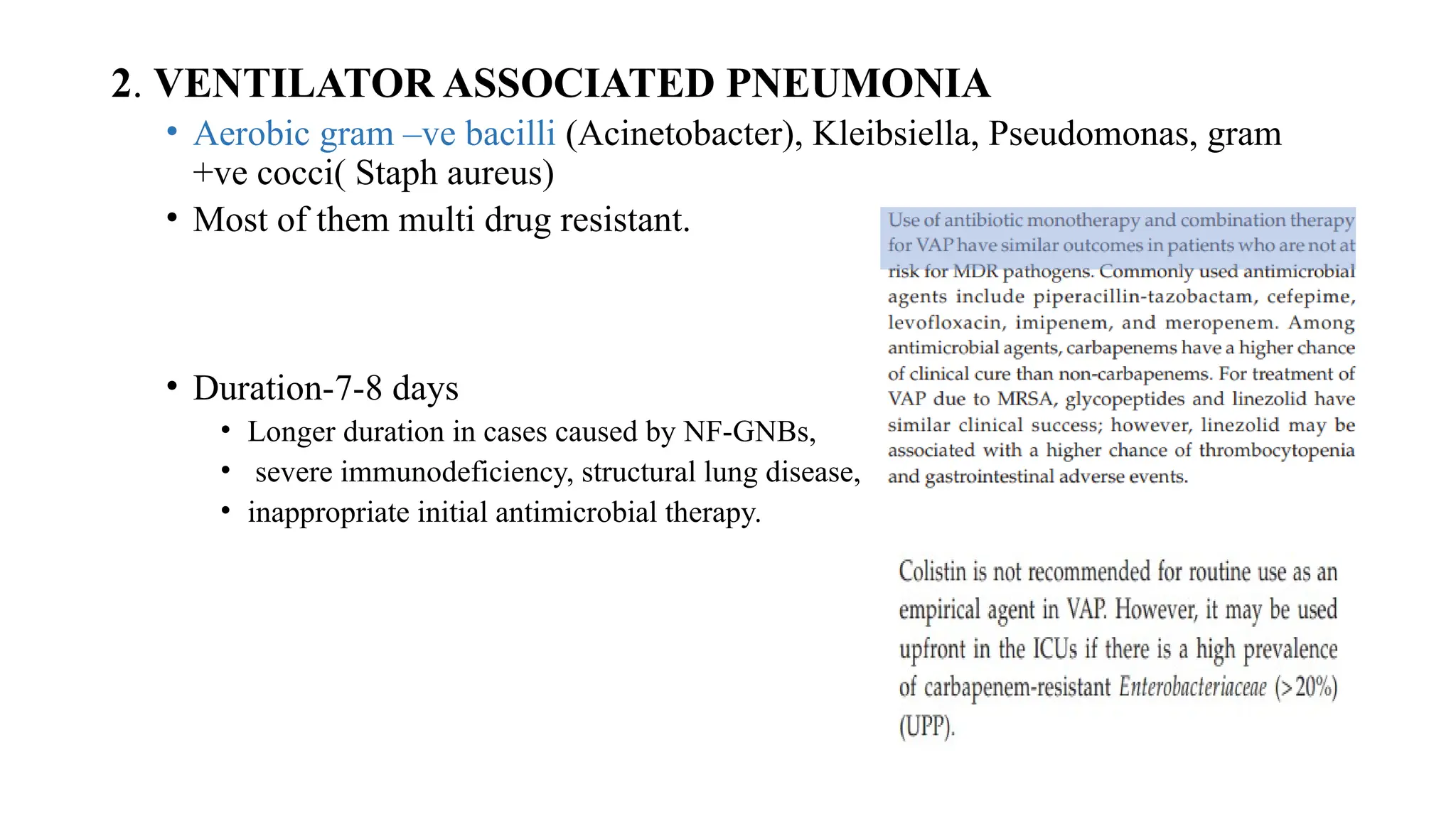
2. VENTILATOR ASSOCIATED PNEUMONIA
• Aerobic gram –ve bacilli (Acinetobacter), Kleibsiella, Pseudomonas, gram
+ve cocci( Staph aureus)
• Most of them multi drug resistant.
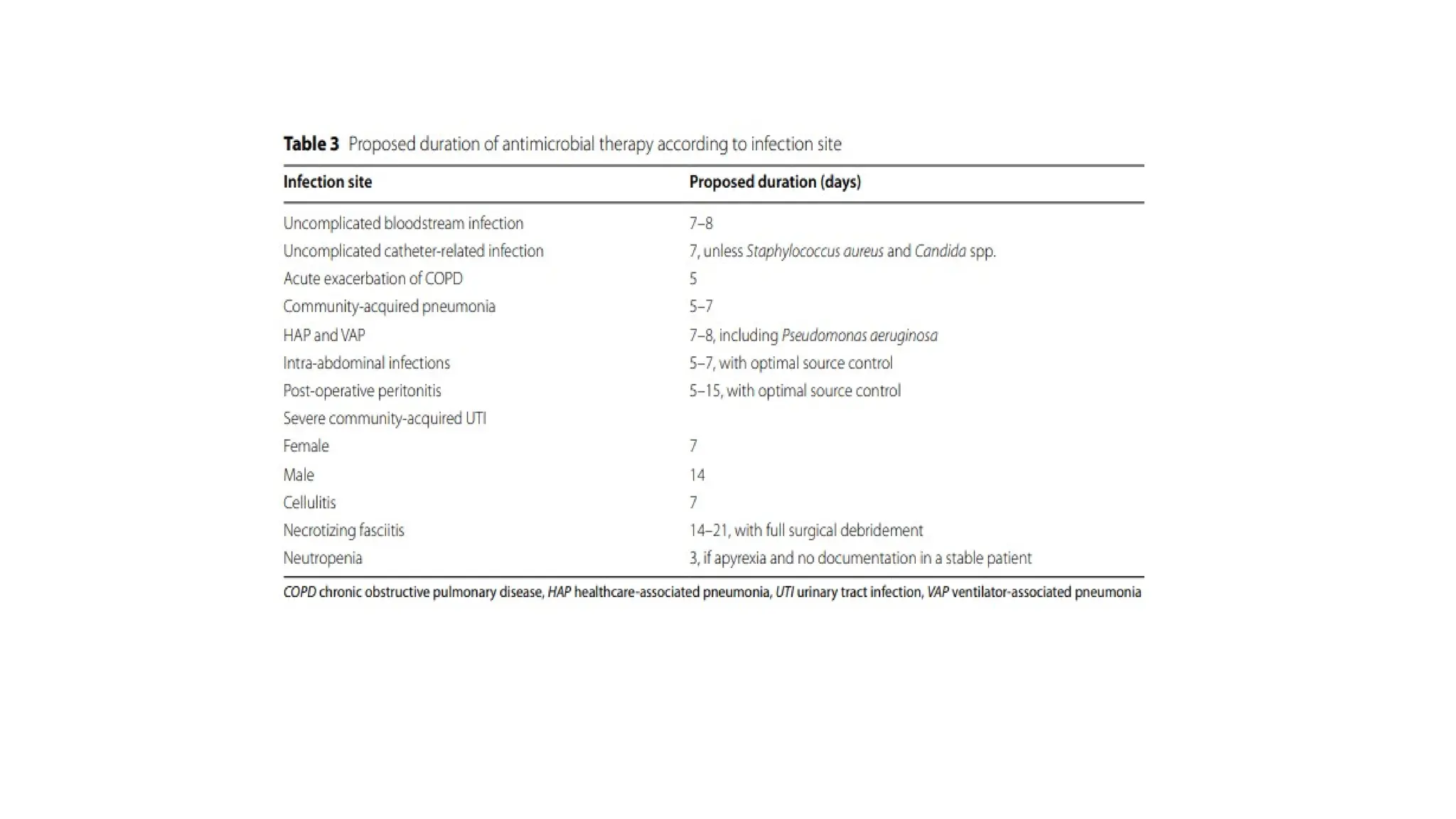
• Duration-7-8 days
• Longer duration in cases caused by NF-GNBs,
• severe immunodeficiency, structural lung disease,
• inappropriate initial antimicrobial therapy.
VAP: assess risk for MDR pathogen
and mortality
Low MDR pathogen risk and
low mortality risk
High MDR pathogen risk/ 15% mortality
risk
Antibiotic monotherapy:
ertapenem, ceftriaxone,
cefotaxime, moxiflox, levoflox
No septic shock
Septic shock
Single gram –ve
agent+/- MRSA
therapy
Dual Gram-
pseudomonal
coverage+/-
MRSA therapy
3. Catheter related blood stream infections
• Coagulase-ve staph, S. aureus, Enterococcus, Candida
• Vancomycin, teicoplanin, linezolid- effective in CRBSI due to MRSA/
MR-CONS.
• Gram –ves – carbapenems, Fourth gen cephalosporins, beta lactams,
AG
• Empirical- Gram +ve and Gram –ve , if candidemia, add fluconazole.
• Duration- 7 days. For fungal cause, minimum 14 days.
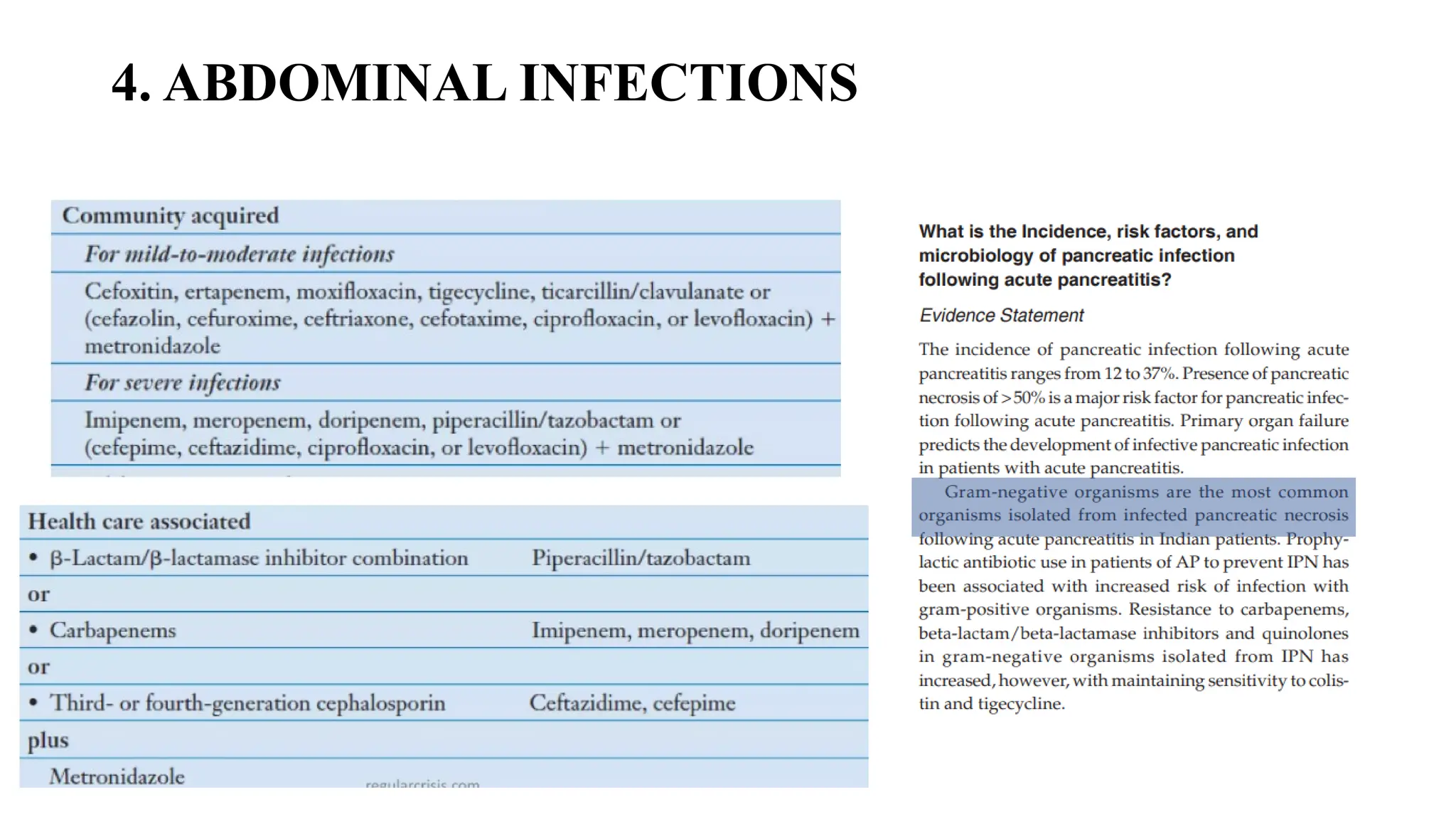
4. ABDOMINAL INFECTIONS
5. MENINGITIS
• Strep. pneumoniae, Neisseria menigitides, H. influenzae, Listeria
• 3rd
generation cephalosporin plus vancomycin
• Add ampicillin/ amoxicillin if > 50 yrs
• If beta lactams c/i, chloramphenicol+vancomycin
• Duration-10-14 days for Strep. pneumonia,
14-21 days for Strep. Agalactiae
7 days for Neisseria, H. influenzae
21 days for Listeria
6. SKIN & SOFT TISSUE INFECTIONS
• Staph aureus, E. coli, Pseudomonas, MRSA , ESBLs Strep. Pyogens
• Duration-
• Nonpurulent SSTIs- 5 days
• Sever SSTIs with organ dysfunction- 2-3 weeks
TAKE HOME MESSAGE
• Initial empirical antimicrobial therapy should be started within 1 hr when infection
is suspected.
• Investigations , cultures are sent .
• Start with broad spectrum antibiotics then de-escalate to narrow spectrum once
culture and sensitive available.
• ASP and De-escalation- include monotherapy , narrowing antimicrobial spectrum,
sparing broad spectrums
• Discontinuation of antibiotics in absence of infections.
• Tailored treatment.
Identify the infection syndrome
Suspect the bugs
Start appropriate empirical
antibiotics
ANTIBIOTICS IN ICU.pptx anasthesia set up

ANTIBIOTICS IN ICU.pptx anasthesia set up

  • 1.
    ANTIBIOTICS IN ICU Presenter-Dr. RiyaRautela Moderator-Dr. Santosh Sharma
  • 2.
    OBJECTIVES •Introduction to Antibioticsin ICU •Classification of antibiotics •Types of Antibiotics Used in ICU •Indications •Pharmacokinetics and Pharmacodynamics •Antibiotic Stewardship Programs •Common Infections in ICU •Diagnosis and Empiric Therapy •Antibiotic Resistance •Take Home Message
  • 3.
    INTRODUCTION • Critical carepatients are at a heightened risk for infections. • Effective and timely use of antibiotics is crucial. • Suspect an infection: select antibiotic-optimally treat infection while minimizing adverse effects. • Goal is to minimize resistance.
  • 4.
    INVESTIGATIONS : • CBC,LFT, KFT, coagulation profile( D-Dimer ), Serum lactate • Peripheral blood picture • aerobic and anaerobic culture from at least 2 different sites • Urinalysis • Microbiologic cultures( sputum, urine, intravascular catheter wound, surgical site , body fluids) • ABG • Imaging( CXR, USG, CT Chest/ abdomen) • Procalcitonin( rising trend )
  • 5.
    Initial Resuscitative Therapy I.Fluids ( hemodynamic monitoring ) II. Empiric antibiotic therapy ( within first hour) III.Identification of suspected source
  • 7.
    CLASSIFICATION OF ANTIBIOTICS •BACTERICIDAL • BACTERIOSTATIC
  • 8.
    Antimicrobials classified- • Timedependent • Concentration dependent • Conc dependent with time dependence • The effect of time dependent AM, such as beta lactams , depend on cumulative percentage of time over 24 hr by which free AM conc exceeds MIC .
  • 9.
  • 10.
    • PD determinesrelationship between antibiotic conc. & respective effect on target pathogens, relying on MIC which reflects in vitro susceptibility of pathogen. • Therefore, PD connects PK exposure (serum conc.) to drug’s pharmacological ( killing or growth inhibition capacity) and toxic effects. • When MIC increases, PK exposure should do same to guarantee an optimal PK/PD index.
  • 11.
    • In concdependent antibiotic such as aminoglycosides, their effect depends on peak conc divided by MIC( Peak/MIC) • The higher the antibiotic conc, the greater the extent and rate of bactericidal activity. • The effect of conc dependent drugs with time dependence, such as FQ and glycopeptides is determined by AUC 0-24hr divided by MIC
  • 13.
    • According tophysicochemical properties, antibiotics classified as- • Hydrophilic( AG, beta-lactams, glycopeptides) • Lipophilic( FQ, macrolides, lincosamides) • Hydrophilics are characterized by tissue distribution limited to extracellular space with majority dependent on renal clearance. • Lipophilics have intracellular accumulation and dependent on hepatic clearance.
  • 15.
    • Hydrophilics moreso than lipophilic drugs affected by PK alterations in ICU patients( Vd expansion, capillary leakage, volume resuscitation). • This will determine need for adjustment of loading and maintenance dose of hydrophilics.
  • 16.
  • 18.
  • 20.
    Beta lactam antibiotics MOA-interfere with cell wall synthesis by binding to penicillin binding protein(PBP). Inhibition of PBP leads to inhibition of peptidoglycan synthesis
  • 21.
    •Penicillin G- imand iv •Penicillin V – oral •Penicillinase resistance penicillin- methicillin, nafcillin, oxacillin, cloxacillin, dicloxacillin •Aminopenicillin- effective against Gram –ve bacteria. Ampicillin, amoxicillin first line therapy for acute otitis media •Antipseudomonal penicillin- • Carboxypenicillin- ( ticarcillin, carbenicillin) • Ureidopenicillin-( mezlocillin, azlocillin, piperacillin) • Active against Pseudomonas , E coli, kleibsiella, Anaerobes. Lower activity against Gram+ve • Often used with aminoglycosides when treating pseudomonal infection. • Parenterally.
  • 22.
    • Beta lactamaseinhibitor- • Clavulanic acid- combined with amoxycillin • Sulbactam- combined with ampicillin (sulbactam is alone used to treat Acinetobacter) • Piperacillin+ tazobactam: Penicillin of choice for ESBL organisms • Dose- 1.5-3g 6hr amoxicillin+sulbactam • 2.25-4.5g 6hr piperacillin-tazobactam
  • 23.
    CEPHALOSPORINS FIRST SECOND THIRDFOURTH FIFTH EXAMPLES Cephazolin Cephalexin Cefuroxime Ceftriaxone Cefotaxime Ceftazidime Cefoperazone Cefepime Ceftolazone Ceftaroline ANAEROBES - + - - + GRAM + ve + Staph, Strep + Strep+ Staph- ++ + GRAM -ve + Ecoli, Proteus, Kleibsiella better ++ N gonorrhea, Enterobacter, Pseudomonas( ce ftazidime) +++ + MRSA - - - - ++
  • 26.
    MONOBACTAM • Novel betalactam antibiotic • Other ring missing, hence monobactam • Acts by binding to specific penicillin binding protein ( PBPs) • At low conc. – inhibit Gram –ve enteric bacilli and H. influenzae • At moderate conc.- inhibit pseudomonas • Does not inhibit Gram +ve cocci or fecal anaerobes • Resistant to gram –ve beta lactamases • DOSE- 1-2 g 8hrly
  • 27.
    • Example- AZTREONAM( im/iv) • Narrow antibacterial spectrum- • Aerobic gram –ve rods • Anti pseudomonal activity > piperacillin + tazobactam but < carbapenem • Spectrum resembling aminoglycosides.
  • 28.
    CARBAPENEM • Broadest spectrumbeta lactam. • Staph( except MRSA), Strep ( highly resistant ), Nesisseria, Hemophilus, Proteus, Pseudomonas, Kleibsiella, anaerobes ( excluding Clostridium difficle) • Example- Imipenem, Meropenem, Ertapenem • Stable to ESBLs • Hydrolysed by MBLs and carbapenemases- can lead to resistance.
  • 29.
    Imipenem • Inhibits penicillinaseproducing staphylococci. • Rapid hydrolysis by dihydropeptidase 1 located on brush border of renal tubular cells • Hence given in combination with cilastatin • Dose- imipenem + cilastatin – 0.5 G IV 6 HOURLY ( max 4g/day) • Effective in hospital acquired respiratory, urinary, abdominal, pelvic, skin, soft tissue infections including cancer, AIDS, and neutropenic patients
  • 30.
    MEROPENEM • Inherently resistantorganisms • Gram –ve aerobes • Steotrphomonas maltophilia • Legionella species • Other microorganisms • Chlamydophila pneumoniae • Clamydophila psittaci • Coxiella bumetii • Mycoplasma pneumonia
  • 32.
    VANCOMYCIN (GLYCOPEPTIDES) • Inhibitssynthesis of cell wall phopholipids and prevent cross-linking of peptidoglycans at an earlier step than beta lactams • gram + BACTERIA, Strep. pneumo., Enterococcus, Staph.epidermis and MRSA • Nephrotoxic, ototoxic • Resistance- VRSA and VRE increasing • Adverse effects- fever, chills, phlebitis, red man syndrome( slow injection and prophylactic antihistamines) • Half life is over 200 hrs in patients with ESRD ( Normal 6-10 hrs) • DOSE- 15mg/kg LD followed by 30 mg/kg continuous infusion
  • 33.
    POLYMYXINS • Disrupt thebacterial cell membrane. • Colistin also exert ant-endotoxin activity. • Spectrum- Gram –ve. • Polymyxin B- bacterial skin infections caused by Gram –ve ( Pseudomonas) • Polymyxin E/ Colistin- Against MDR Gram –ve organisms( pseudomonas, Enterobacter, Klebsiella) Organisms that produce NDM-1 beta lacatamase • Side effect- nephrotoxic • DOSE- 20000-25000 IU/kg f/b 1.25-1.5mg/kg 12hr
  • 34.
    PROTEIN SYNTHESIS INHIBITORS •Target the bacterial ribosome -70S( 50S/30S)
  • 35.
    AMINOGLYCOSIDES • Bactericidal • Example-gentamicin, tobramycin, amikacin, • Against aerobic, facultative and gram -ve bacilli. Have excellent activity against Pseudomonas except gentamicin • Parenteral • Nephrotoxic, ototoxic- Concentrates in endolymph and perilymph. KFT imp during their therapy.
  • 36.
    • POST ANTIBIOTICEFFECT • Aminoglycoside exhibit concentration dependent killing. • They also possess post antibiotic effect.( even after half life, even levels have decreased, bacteria are still inhibited) • Single daily dosing at least as effective as and no more toxic than multiple dosing. • Dose- 15mg/kg
  • 38.
    MACROLIDES • Inhibits 50Ssubunit. • Erythromycin, clarithromycin, azithromycin • Erythromycin- • Gram +ve: Staph ( MRSA is resistant), Strep., Bordetella, Treponema, Corynebacteria • Atypicals: Mycoplasma, Ureaplasma, Chlamydia • Clarythromycin- • Similar to erythromycin • Increased activity against gram –ve ( H. flu, Moraxella) and atypicals • Azythromycin- • Decreased activity against gram +ve • Increased activity against H. flu and M. cat
  • 39.
    • Adverse effects •GI distress • Jaundice • ototoxic
  • 40.
    CLINDAMYCIN • Iv/oral (lincosamide) • Irreversibly binds the 50S subunit • Strep, Staph ( some MRSA), B. fragilis, anaerobes • Does not cover Clostridium difficle • Used for deep neck space infections, chronic tonsillo-pharyngitis, odontogenic abscess ( anaerobes) and surgical prophylaxis in contaminated wounds • Side effect- abdominal pain, diarrhoea
  • 41.
    LINEZOLID • Oxazolidinone- inhibitsinitiation complex of bacterial protein synthesis • Dose- iv/PO 600 mg BD ( good oral bioavailability) • Antibiotic spectrum- gram +ve • Similar cure rates when compared to vancomycin • Maybe superior to vancomycin for MRSA pneumonia and VRE • Side effects- myelosuppression , thrombocytopenia( monitor platelet count)
  • 42.
    TIGECYCLINE • First glycylcycline. •Broad spectrum including MRSA, VRE, Acinetobacter, ESBL producing enterobacteriace • Poor oral absorption. • Does not cover Pseudomonas • Bacteriostatic and low serum levels so not to be used for septicemia • Commonly used in as last resort for complicated intraabdominal infection, skin soft tissue infections • Dose- 100mg iv bolus followed by 50 mg BD • Resistance in Acinetobacter is fast emerging
  • 43.
    FLOUROQUINOLONES • Broad spectrumantibiotics. 4 generations • Inhibit bacterial enzyme called DNA gyrase and topoisomerase IV( block DNA strand passage catalysis and stabilize DNA- enzyme complexes that block DNA replication apparatus and generally double breaks in DNA that underlie the bactericidal activity) • Bactericidal
  • 44.
    DRUGS SPECTRUM FIRST Nalidixicacid cinoxacin Gram –ve but not pseudomonas SECOND Norfloxacin Ciprofloxacin Enofloxacin ofloxacin Gram –ve including Pseudomonas, some Gram +ve ( Staph) and some atypicals THIRD Levofloxacin Sparfloxacin Moxifloxacin gemifloxacin Same as 2nd generation with extended Gram +ve and atypical coverage( Mycoplasma and H. influenzae FOURTH Trovafloxacin Same as 3rd generation with broad anaerobic coverage
  • 46.
    • Drug interactions:interferes with hepatic metabolism of theophylline and warfarin.-> serum theophylline level and prothrombin time monitored carefully when ciprofloxacin is given with theo/ warfarin. • With emerging resistance to Gram-ve almost eliminated from ICU. Levofloxacin popular for community acquired pneumonia, exacerbation of COPD. • Side effects- headache, dizziness, nausea, lightheadedness • Avoid in pregnancy, children<18 years • Arthralgia-1%
  • 47.
    SULFONAMIDES • Bacteriostaic • Inhigher conc may act as bactericidal • Against Strep. pyogens, H influenzae, V. cholerae • Used to prevent UTI • Structural analogues of PABA, inhibit bacterial folate synthase and inhibit formation of folate. • Don’t affect human folate ( use preformed folate) • Resistance- mutation /transfer of resistance by plasmids.
  • 48.
    TRIMETHOPRIM • Bacteriostatic • Adiaminopyrimidine related pyrimethamine ( folate antagonist ) inhibits dihydrofolate reductase • Used for UTI or resp tract infection • Against gram –ve bacilli and few gram +ve organism • Sulfonamide and trimethoprim combination becomes bactericidal.
  • 49.
  • 50.
  • 53.
    ANTIBIOTIC STEWARDSHIP • Acoherent set of actions which promote antimicrobials use in sustainable way for effective therapy, prevent adverse outcomes and reduce antimicrobial resistance. • Limit broad spectrum antibiotics • De-escalation • Monotherapy • Dose optimization using PK data • Reduction of duration of antimicrobial treatment
  • 54.
    Purpose OF ASP •Optimization of proper use of antibiotics • Antibiotic usage cost effective • Maintain quality in patient care • Prevent generation of antimicrobial resistance.
  • 55.
  • 56.
    • Penicillin resistance- •Pseudomonas- drecrease porin production • Pseudomonas, E. coli, gonococcus- drug efflux • MRSA- altered transpeptidase or penicillin binding protein • Beta lactamase production • Cephalosporin- beta lactamase production, drug efflux • Tetracycline- drug efflux, enzyme inactivation, ribosomal protective protein • Aminoglycosides- enzymatic inactivation, altered ribosomal structure(30S) ; only for Streptomycin
  • 57.
    • Macrolides- enzymaticinactivation, drug efflux, altered ribosomal structure, methylation of ribosomes; coded by ERM ( erythromycin ribosomal methylase gene) gene. • Linezolid- mutation of binding site. • Clindamycin- enzymatic inactivation, altered ribosomal structure.
  • 61.
  • 62.
    1. COMMUNITY ACQUIREDPNEUMONIA • S. pneumoniae, Gram –ve bacilli, atypical organisms, Pseudomonas, MRSA, MDR gram –ve organisms • Early initiation of antibiotics ( 1st hr)- combination therapy - beta lactam+ macrolides • If Pseudomonas- Pip-taz, AG, FQ( ciprofloxacin) • MRSA- vancomycin/ teicoplanin. Linezolid in VRSA or renal failure • Anaerobes- Ampicillin- sulbactam , amoxiclav, Pip-taz, carbapenems, clindamycin, moxifloxacin
  • 63.
    2. VENTILATOR ASSOCIATEDPNEUMONIA • Aerobic gram –ve bacilli (Acinetobacter), Kleibsiella, Pseudomonas, gram +ve cocci( Staph aureus) • Most of them multi drug resistant. • Duration-7-8 days • Longer duration in cases caused by NF-GNBs, • severe immunodeficiency, structural lung disease, • inappropriate initial antimicrobial therapy.
  • 64.
    VAP: assess riskfor MDR pathogen and mortality Low MDR pathogen risk and low mortality risk High MDR pathogen risk/ 15% mortality risk Antibiotic monotherapy: ertapenem, ceftriaxone, cefotaxime, moxiflox, levoflox No septic shock Septic shock Single gram –ve agent+/- MRSA therapy Dual Gram- pseudomonal coverage+/- MRSA therapy
  • 65.
    3. Catheter relatedblood stream infections • Coagulase-ve staph, S. aureus, Enterococcus, Candida • Vancomycin, teicoplanin, linezolid- effective in CRBSI due to MRSA/ MR-CONS. • Gram –ves – carbapenems, Fourth gen cephalosporins, beta lactams, AG • Empirical- Gram +ve and Gram –ve , if candidemia, add fluconazole. • Duration- 7 days. For fungal cause, minimum 14 days.
  • 67.
  • 68.
    5. MENINGITIS • Strep.pneumoniae, Neisseria menigitides, H. influenzae, Listeria • 3rd generation cephalosporin plus vancomycin • Add ampicillin/ amoxicillin if > 50 yrs • If beta lactams c/i, chloramphenicol+vancomycin • Duration-10-14 days for Strep. pneumonia, 14-21 days for Strep. Agalactiae 7 days for Neisseria, H. influenzae 21 days for Listeria
  • 69.
    6. SKIN &SOFT TISSUE INFECTIONS • Staph aureus, E. coli, Pseudomonas, MRSA , ESBLs Strep. Pyogens • Duration- • Nonpurulent SSTIs- 5 days • Sever SSTIs with organ dysfunction- 2-3 weeks
  • 70.
    TAKE HOME MESSAGE •Initial empirical antimicrobial therapy should be started within 1 hr when infection is suspected. • Investigations , cultures are sent . • Start with broad spectrum antibiotics then de-escalate to narrow spectrum once culture and sensitive available. • ASP and De-escalation- include monotherapy , narrowing antimicrobial spectrum, sparing broad spectrums • Discontinuation of antibiotics in absence of infections. • Tailored treatment.
  • 71.
    Identify the infectionsyndrome Suspect the bugs Start appropriate empirical antibiotics