COLOSTOMY / ILEOSTOMY CARE
By : VANESA K. DOYDORA, BSN
RN
Objectives :
 Define colostomy and
purpose.
 Illustrate indication of
colostomy
 Illustrate types and classification of colostomy
 Demonstrate colostomy care procedure.
 Understanding the needs of colostomy care.
 Understanding the warning signs and complication
of colostomy
 Discuss nursing management for colostomy
care.
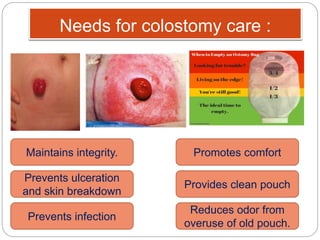
Needs for colostomy care :
Maintains integrity.
Prevents ulceration
and skin breakdown
Prevents infection
Promotes comfort
Provides clean pouch
Reduces odor from
overuse of old pouch.
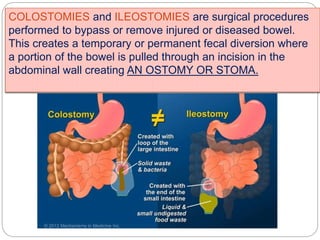
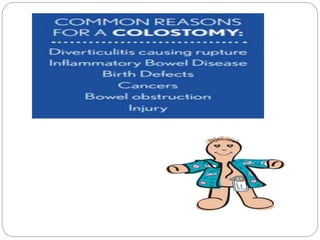
COLOSTOMIES and ILEOSTOMIES are surgical procedures
performed to bypass or remove injured or diseased bowel.
This creates a temporary or permanent fecal diversion where
a portion of the bowel is pulled through an incision in the
abdominal wall creating AN OSTOMY OR STOMA.
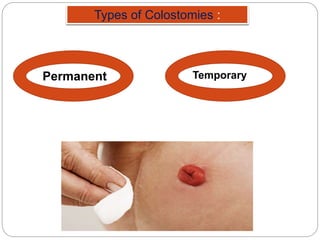
Types of Colostomies :
Permanent Temporary
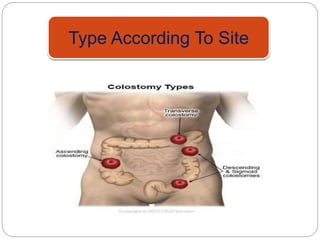
Type According To Site
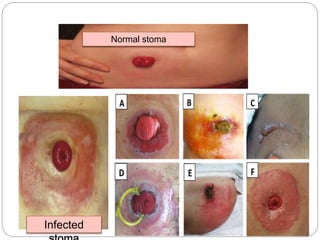
Normal stoma
Infected
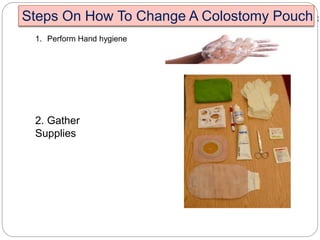
Steps On How To Change A Colostomy Pouch :
1. Perform Hand hygiene
2. Gather
Supplies
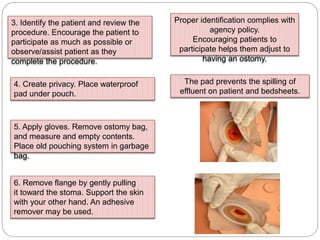
3. Identify the patient and review the
procedure. Encourage the patient to
participate as much as possible or
observe/assist patient as they
complete the procedure.
Proper identification complies with
agency policy.
Encouraging patients to
participate helps them adjust to
having an ostomy.
4. Create privacy. Place waterproof
pad under pouch.
The pad prevents the spilling of
effluent on patient and bedsheets.
5. Apply gloves. Remove ostomy bag,
and measure and empty contents.
Place old pouching system in garbage
bag.
6. Remove flange by gently pulling
it toward the stoma. Support the skin
with your other hand. An adhesive
remover may be used.
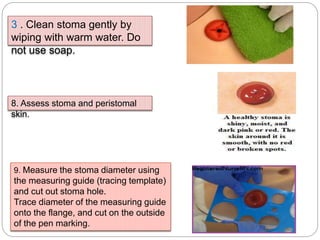
3 . Clean stoma gently by
wiping with warm water. Do
not use soap.
8. Assess stoma and peristomal
skin.
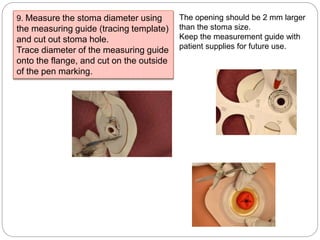
9. Measure the stoma diameter using
the measuring guide (tracing template)
and cut out stoma hole.
Trace diameter of the measuring guide
onto the flange, and cut on the outside
of the pen marking.
9. Measure the stoma diameter using
the measuring guide (tracing template)
and cut out stoma hole.
Trace diameter of the measuring guide
onto the flange, and cut on the outside
of the pen marking.
The opening should be 2 mm larger
than the stoma size.
Keep the measurement guide with
patient supplies for future use.
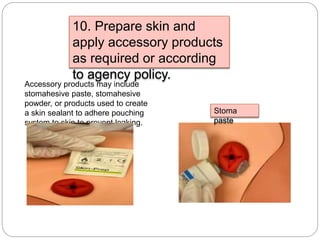
10. Prepare skin and
apply accessory products
as required or according
to agency policy.
Accessory products may include
stomahesive paste, stomahesive
powder, or products used to create
a skin sealant to adhere pouching
system to skin to prevent leaking.
Stoma
paste
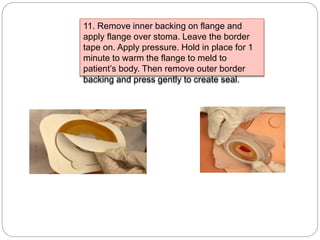
11. Remove inner backing on flange and
apply flange over stoma. Leave the border
tape on. Apply pressure. Hold in place for 1
minute to warm the flange to meld to
patient’s body. Then remove outer border
backing and press gently to create seal.
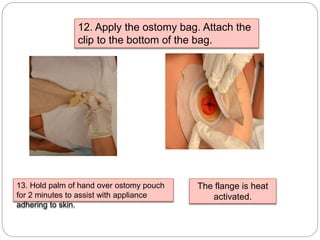
12. Apply the ostomy bag. Attach the
clip to the bottom of the bag.
13. Hold palm of hand over ostomy pouch
for 2 minutes to assist with appliance
adhering to skin.
The flange is heat
activated.
14. Clean up supplies,
and place patient in a
comfortable position.
Remove garbage from
patient’s room.
15. Perform hand hygiene
16. Document procedure.
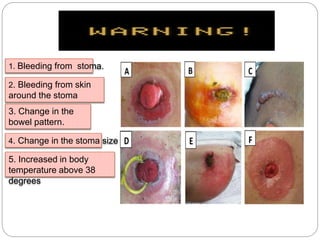
1. Bleeding from stoma.
2. Bleeding from skin
around the stoma
3. Change in the
bowel pattern.
4. Change in the stoma size
5. Increased in body
temperature above 38
degrees
Nursing diagnosis:
Impaired skin interity related to presence of stoma.
Pain related to abdominal incision as manifested by pain scor
Colostomy care

Colostomy care

  • 1.
    COLOSTOMY / ILEOSTOMYCARE By : VANESA K. DOYDORA, BSN RN
  • 2.
    Objectives :  Definecolostomy and purpose.  Illustrate indication of colostomy  Illustrate types and classification of colostomy  Demonstrate colostomy care procedure.  Understanding the needs of colostomy care.  Understanding the warning signs and complication of colostomy  Discuss nursing management for colostomy care.
  • 3.
    Needs for colostomycare : Maintains integrity. Prevents ulceration and skin breakdown Prevents infection Promotes comfort Provides clean pouch Reduces odor from overuse of old pouch.
  • 4.
    COLOSTOMIES and ILEOSTOMIESare surgical procedures performed to bypass or remove injured or diseased bowel. This creates a temporary or permanent fecal diversion where a portion of the bowel is pulled through an incision in the abdominal wall creating AN OSTOMY OR STOMA.
  • 5.
    Types of Colostomies: Permanent Temporary
  • 6.
  • 11.
  • 12.
    Steps On HowTo Change A Colostomy Pouch : 1. Perform Hand hygiene 2. Gather Supplies
  • 13.
    3. Identify thepatient and review the procedure. Encourage the patient to participate as much as possible or observe/assist patient as they complete the procedure. Proper identification complies with agency policy. Encouraging patients to participate helps them adjust to having an ostomy. 4. Create privacy. Place waterproof pad under pouch. The pad prevents the spilling of effluent on patient and bedsheets. 5. Apply gloves. Remove ostomy bag, and measure and empty contents. Place old pouching system in garbage bag. 6. Remove flange by gently pulling it toward the stoma. Support the skin with your other hand. An adhesive remover may be used.
  • 14.
    3 . Cleanstoma gently by wiping with warm water. Do not use soap. 8. Assess stoma and peristomal skin. 9. Measure the stoma diameter using the measuring guide (tracing template) and cut out stoma hole. Trace diameter of the measuring guide onto the flange, and cut on the outside of the pen marking.
  • 15.
    9. Measure thestoma diameter using the measuring guide (tracing template) and cut out stoma hole. Trace diameter of the measuring guide onto the flange, and cut on the outside of the pen marking. The opening should be 2 mm larger than the stoma size. Keep the measurement guide with patient supplies for future use.
  • 16.
    10. Prepare skinand apply accessory products as required or according to agency policy. Accessory products may include stomahesive paste, stomahesive powder, or products used to create a skin sealant to adhere pouching system to skin to prevent leaking. Stoma paste
  • 17.
    11. Remove innerbacking on flange and apply flange over stoma. Leave the border tape on. Apply pressure. Hold in place for 1 minute to warm the flange to meld to patient’s body. Then remove outer border backing and press gently to create seal.
  • 18.
    12. Apply theostomy bag. Attach the clip to the bottom of the bag. 13. Hold palm of hand over ostomy pouch for 2 minutes to assist with appliance adhering to skin. The flange is heat activated.
  • 19.
    14. Clean upsupplies, and place patient in a comfortable position. Remove garbage from patient’s room. 15. Perform hand hygiene 16. Document procedure.
  • 20.
    1. Bleeding fromstoma. 2. Bleeding from skin around the stoma 3. Change in the bowel pattern. 4. Change in the stoma size 5. Increased in body temperature above 38 degrees
  • 21.
    Nursing diagnosis: Impaired skininterity related to presence of stoma. Pain related to abdominal incision as manifested by pain scor