MRS.PRASANNA.K
NURSING TUTOR
GANGA COLLEGE OF NURSING
COIMBATORE
COLOSTOMY CARE
INTRODUCTION
• A STOMA is a surgical created opening in the body
between the skin and a hallow viscus.
• Abdomen stomas are mainly used to divert faeces or
urine out of the body where it can be collected in a bag at
the skin level.
• Is the surgical procedure creation of an opening (ie.
Stoma) into the colon intestine through the abdominal
wall.
TYPES OF OSTOMIES
• GASTROSTOMY ; opening through the abdominal wall into
the stomach.
• JEJUNOSTOMY ; opening through the abdominal wall into
the jejunum.
• ILEOSTOMY ; opening of the abdominal wall into the ileum.
• COLOSTOMY ; opening of the abdominal wall into the colon.
TYPES OF COLOSTOMY
Type of colostomy according to site :
A. The ascending colostomy.
B. The transverse loop colostomy.
C. The transverse double barreled colostomy
D. The descending colostomy
E. The sigmoid colostomy.
Characteristics of faeces according to the site of
colostomy:
1.Ileostomy: produces liquid and frequent , contain digestive enzymes
which
damage the skin, and must be pouched at all time.
2. Ascending colostomy: is similar to an ileostomy but odor is a problem
requiring control.
3. Transverse colostomy: it produces mal odor, mushy (thicker) drainage
because some of the liquid has been reabsorbed.
4. Descending colostomy: produces increasingly solid drainage.
5. Sigmoid colostomy emits stool almost identical to that normally passed
through the rectum.
WARNING SIGNS
! Bleeding from stoma.
! Bleeding from the skin around the stoma.
! Change in the bowel pattern.
! Change in the stoma size.
! Increased in the body temperature above 38 C.
COMPLICATIONS
! Leakage.
! Prolapse.
! Obstruction or stenosis.
! Stoma become edematous and enlarged.
NEED FOR THE COLOSTOMY CARE
1. To maintains integrity of stoma and peristomal skin (skin surrounding
stoma )
2.To prevents lesions ,ulcerations ,excoriation ,and other skin breakdown
caused by fecal contaminants
3. To prevents infection
4. To promotes general comfort and positive self-image /self-concept
5. To provides clean ostomy pouch for fecal evacuation
6. To reduces odor from overuse of old pouch
CHANGING OF OSTOMY BAG
1. Gather equipment:
• Appropriate Pouch
• Adapt Ring or Stoma Paste
• Stoma Powder/ 3M No Sting Skin Barrier Wipe
• Washcloths (wet and dry)/Paper Towel
• Optional: mild, no residue, water based soap
• Scissors
• Measuring Guide
• Garbage bag
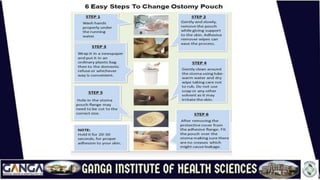
2. Empty the pouch.
3. Remove the skin barrier by using the “push-pull method” against your skin. Discard the
pouch by placing it in a plastic bag. Remember to save the clamp if using this type of closure.
4. Use a dry cloth to remove the Adapt Ring or paste. Clean the skin
well using warm water (You may use a washcloth or paper towels).
Do not abrade or injure the skin. Be sure that skin around the stoma is
completely dry before applying the faceplate.
5. Measure your ostomy by using the measuring guide provided in
your pouch box.
6. Cut the pouch opening to the EXACT size and shape of your
stoma. Making a pattern can be helpful. Your ostomy will be
swollen for 6-8 weeks after surgery and will gradually get smaller, so
the size of the opening in the faceplate will change. If using a 2 piece
system you may snap the wafer and pouch together before applying.
7. If the skin around the ostomy is red and irritated, place a dusting
of Stoma Powder on the skin. Wipe off the excess powder and seal it
with 3M No Sting Skin Barrier.
8. Skin folds or wrinkles may require a filler or caulking agent.
Stoma Paste – Remove the protective paper from the adhesive
side of the faceplate and apply an even bead of paste to the around
the rim of the cut hole. Set aside.
Adapt Ring - Shape the ring to fit comfortably around the
ostomy and apply directly to the skin around the stoma.
9. Apply the faceplate over the ostomy, centering the opening
evenly. It may be placed right onto the Adapt Ring, if you are
using one.
10. Massage the skin barrier using light pressure around the
stoma. Start directly next to the ostomy and work out toward the
edges. The warmth of your hands and the pressure will help to
seal the paste or Adapt Ring.
11. Close the bottom of the appliance with a clamp or with the
attached strip. Hold your palm over the appliance and against
your body for a few minutes.
12. Attach the ostomy belt, if you use one.
• Comfort alteration in the abdominal pain related to abdominal
incision.
• Impaired skin integrity related to presence of stoma.
• Body image disturbance related to presence of stoma.
• Knowledge deficit related to stoma care and lack of experience.
• Dress child with loose fitting clothe that does not press on the
colostomy.
• Inform the doctor if there any bleeding from the stoma or the skin
around it.
• Observe any change in the bowel pattern or size of the stoma.
• Check child temperature and report in case of fever.
COLOSTOMY CARE.pptx for nursing students

COLOSTOMY CARE.pptx for nursing students

  • 1.
  • 2.
  • 3.
    INTRODUCTION • A STOMAis a surgical created opening in the body between the skin and a hallow viscus. • Abdomen stomas are mainly used to divert faeces or urine out of the body where it can be collected in a bag at the skin level.
  • 4.
    • Is thesurgical procedure creation of an opening (ie. Stoma) into the colon intestine through the abdominal wall.
  • 5.
    TYPES OF OSTOMIES •GASTROSTOMY ; opening through the abdominal wall into the stomach. • JEJUNOSTOMY ; opening through the abdominal wall into the jejunum. • ILEOSTOMY ; opening of the abdominal wall into the ileum. • COLOSTOMY ; opening of the abdominal wall into the colon.
  • 6.
    TYPES OF COLOSTOMY Typeof colostomy according to site : A. The ascending colostomy. B. The transverse loop colostomy. C. The transverse double barreled colostomy D. The descending colostomy E. The sigmoid colostomy.
  • 7.
    Characteristics of faecesaccording to the site of colostomy: 1.Ileostomy: produces liquid and frequent , contain digestive enzymes which damage the skin, and must be pouched at all time. 2. Ascending colostomy: is similar to an ileostomy but odor is a problem requiring control. 3. Transverse colostomy: it produces mal odor, mushy (thicker) drainage because some of the liquid has been reabsorbed. 4. Descending colostomy: produces increasingly solid drainage. 5. Sigmoid colostomy emits stool almost identical to that normally passed through the rectum.
  • 8.
    WARNING SIGNS ! Bleedingfrom stoma. ! Bleeding from the skin around the stoma. ! Change in the bowel pattern. ! Change in the stoma size. ! Increased in the body temperature above 38 C.
  • 9.
    COMPLICATIONS ! Leakage. ! Prolapse. !Obstruction or stenosis. ! Stoma become edematous and enlarged.
  • 10.
    NEED FOR THECOLOSTOMY CARE 1. To maintains integrity of stoma and peristomal skin (skin surrounding stoma ) 2.To prevents lesions ,ulcerations ,excoriation ,and other skin breakdown caused by fecal contaminants 3. To prevents infection 4. To promotes general comfort and positive self-image /self-concept 5. To provides clean ostomy pouch for fecal evacuation 6. To reduces odor from overuse of old pouch
  • 11.
    CHANGING OF OSTOMYBAG 1. Gather equipment: • Appropriate Pouch • Adapt Ring or Stoma Paste • Stoma Powder/ 3M No Sting Skin Barrier Wipe • Washcloths (wet and dry)/Paper Towel • Optional: mild, no residue, water based soap • Scissors • Measuring Guide • Garbage bag 2. Empty the pouch. 3. Remove the skin barrier by using the “push-pull method” against your skin. Discard the pouch by placing it in a plastic bag. Remember to save the clamp if using this type of closure.
  • 12.
    4. Use adry cloth to remove the Adapt Ring or paste. Clean the skin well using warm water (You may use a washcloth or paper towels). Do not abrade or injure the skin. Be sure that skin around the stoma is completely dry before applying the faceplate. 5. Measure your ostomy by using the measuring guide provided in your pouch box. 6. Cut the pouch opening to the EXACT size and shape of your stoma. Making a pattern can be helpful. Your ostomy will be swollen for 6-8 weeks after surgery and will gradually get smaller, so the size of the opening in the faceplate will change. If using a 2 piece system you may snap the wafer and pouch together before applying.
  • 13.
    7. If theskin around the ostomy is red and irritated, place a dusting of Stoma Powder on the skin. Wipe off the excess powder and seal it with 3M No Sting Skin Barrier. 8. Skin folds or wrinkles may require a filler or caulking agent. Stoma Paste – Remove the protective paper from the adhesive side of the faceplate and apply an even bead of paste to the around the rim of the cut hole. Set aside. Adapt Ring - Shape the ring to fit comfortably around the ostomy and apply directly to the skin around the stoma.
  • 14.
    9. Apply thefaceplate over the ostomy, centering the opening evenly. It may be placed right onto the Adapt Ring, if you are using one. 10. Massage the skin barrier using light pressure around the stoma. Start directly next to the ostomy and work out toward the edges. The warmth of your hands and the pressure will help to seal the paste or Adapt Ring. 11. Close the bottom of the appliance with a clamp or with the attached strip. Hold your palm over the appliance and against your body for a few minutes. 12. Attach the ostomy belt, if you use one.
  • 16.
    • Comfort alterationin the abdominal pain related to abdominal incision. • Impaired skin integrity related to presence of stoma. • Body image disturbance related to presence of stoma. • Knowledge deficit related to stoma care and lack of experience.
  • 17.
    • Dress childwith loose fitting clothe that does not press on the colostomy. • Inform the doctor if there any bleeding from the stoma or the skin around it. • Observe any change in the bowel pattern or size of the stoma. • Check child temperature and report in case of fever.