Humaera Sultana
Lecturer
Department of English
Z.H. Sikder University of Science &
Technology
Colonialism & Post-colonialism
Colonialism
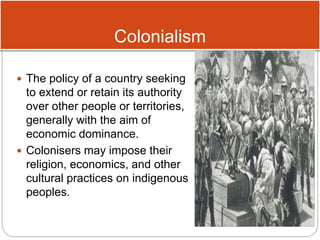
 The policy of a country seeking
to extend or retain its authority
over other people or territories,
generally with the aim of
economic dominance.
 Colonisers may impose their
religion, economics, and other
cultural practices on indigenous
peoples.
Postcolonialism
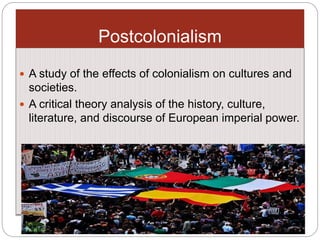
 A study of the effects of colonialism on cultures and
societies.
 A critical theory analysis of the history, culture,
literature, and discourse of European imperial power.
 The consensus in the field is that "post-colonial"
(with a hyphen) signifies a period that comes
chronologically "after" colonialism.
 "Postcolonial," on the other hand, signals the
persisting impact of colonization across time
periods and geographical regions.
Key Terms in Post-Colonial
Theory
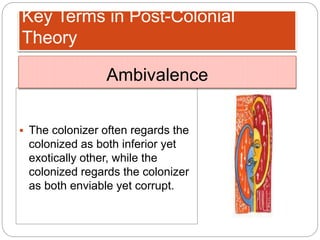
 The colonizer often regards the
colonized as both inferior yet
exotically other, while the
colonized regards the colonizer
as both enviable yet corrupt.
Ambivalence
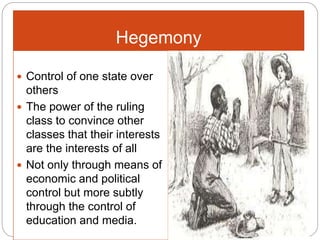
Hegemony
 Control of one state over
others
 The power of the ruling
class to convince other
classes that their interests
are the interests of all
 Not only through means of
economic and political
control but more subtly
through the control of
education and media.
Identity
The way in which an
individual and/or
group defines itself.
Identity is important to
self-concept, social
mores, and national
understanding.
Hybridity
Mixure of two
cultures, religion or
races
Mixture of the
colonized
experience and the
colonial influence
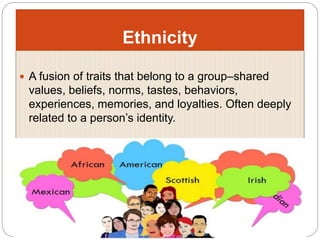
Ethnicity
 A fusion of traits that belong to a group–shared
values, beliefs, norms, tastes, behaviors,
experiences, memories, and loyalties. Often deeply
related to a person’s identity.
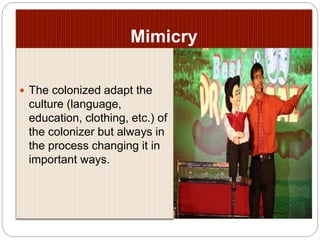
Mimicry
 The colonized adapt the
culture (language,
education, clothing, etc.) of
the colonizer but always in
the process changing it in
important ways.
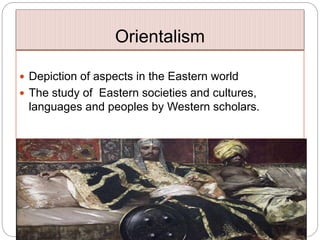
Orientalism
 Depiction of aspects in the Eastern world
 The study of Eastern societies and cultures,
languages and peoples by Western scholars.
Other
 The social and/or psychological ways in which one
group excludes or marginalizes another group.
 By declaring someone "Other," persons tend to
stress what makes them dissimilar from or opposite
of another, and this carries over into the way they
represent others, especially through stereotypical
images.
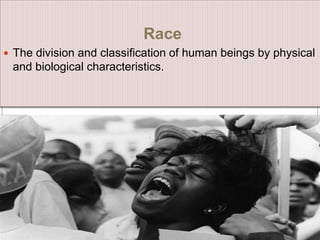
Race
 The division and classification of human beings by physical
and biological characteristics.
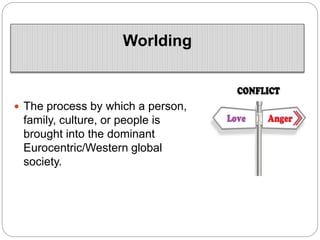
Worlding
 The process by which a person,
family, culture, or people is
brought into the dominant
Eurocentric/Western global
society.
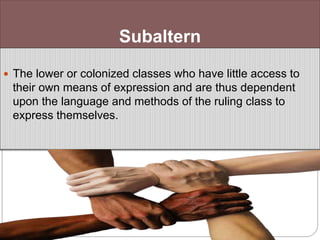
Subaltern
 The lower or colonized classes who have little access to
their own means of expression and are thus dependent
upon the language and methods of the ruling class to
express themselves.
Analyses of post-colonial literature
 Historical aspect
Trace the history of colonialism and subjugation
during the colonial period. In this case, there’s
always the subject and the object of colonialism.
 Physical and psychological aspect
Oppression and intimidation, are the ways to make
colonized feel weak, frightened, devaluate pride,
submissive, and obedient to the colonizer.
 Ideological aspect
In whose perspective it is narrated , colonizer or
colonized?
 Gender aspect
Man as colonizer, woman as colonized.
 Cultural aspect
Domination of a certain culture, including ethnicity,
race and religion.
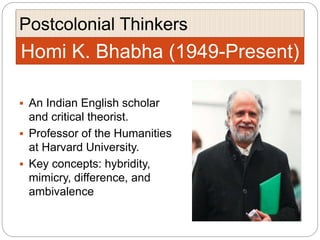
Postcolonial Thinkers
 An Indian English scholar
and critical theorist.
 Professor of the Humanities
at Harvard University.
 Key concepts: hybridity,
mimicry, difference, and
ambivalence
Homi K. Bhabha (1949-Present)
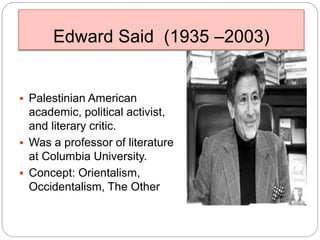
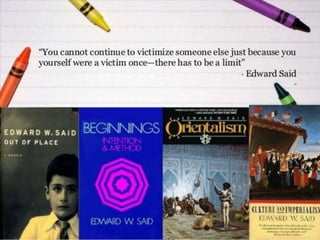
Edward Said (1935 –2003)
 Palestinian American
academic, political activist,
and literary critic.
 Was a professor of literature
at Columbia University.
 Concept: Orientalism,
Occidentalism, The Other
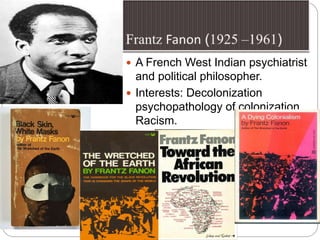
 A French West Indian psychiatrist
and political philosopher.
 Interests: Decolonization
psychopathology of colonization,
Racism.
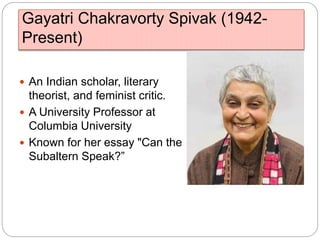
Gayatri Chakravorty Spivak (1942-
Present)
 An Indian scholar, literary
theorist, and feminist critic.
 A University Professor at
Columbia University
 Known for her essay "Can the
Subaltern Speak?”
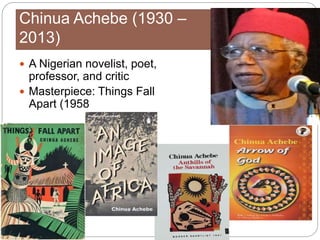
Chinua Achebe (1930 –
2013)
 A Nigerian novelist, poet,
professor, and critic
 Masterpiece: Things Fall
Apart (1958
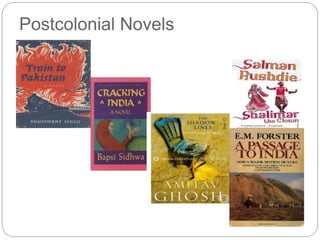
Postcolonial Novels
Thank You

Colonialism & postcolonialism

  • 1.
    Humaera Sultana Lecturer Department ofEnglish Z.H. Sikder University of Science & Technology Colonialism & Post-colonialism
  • 2.
    Colonialism  The policyof a country seeking to extend or retain its authority over other people or territories, generally with the aim of economic dominance.  Colonisers may impose their religion, economics, and other cultural practices on indigenous peoples.
  • 3.
    Postcolonialism  A studyof the effects of colonialism on cultures and societies.  A critical theory analysis of the history, culture, literature, and discourse of European imperial power.
  • 4.
     The consensusin the field is that "post-colonial" (with a hyphen) signifies a period that comes chronologically "after" colonialism.  "Postcolonial," on the other hand, signals the persisting impact of colonization across time periods and geographical regions.
  • 5.
    Key Terms inPost-Colonial Theory  The colonizer often regards the colonized as both inferior yet exotically other, while the colonized regards the colonizer as both enviable yet corrupt. Ambivalence
  • 6.
    Hegemony  Control ofone state over others  The power of the ruling class to convince other classes that their interests are the interests of all  Not only through means of economic and political control but more subtly through the control of education and media.
  • 7.
    Identity The way inwhich an individual and/or group defines itself. Identity is important to self-concept, social mores, and national understanding. Hybridity Mixure of two cultures, religion or races Mixture of the colonized experience and the colonial influence
  • 8.
    Ethnicity  A fusionof traits that belong to a group–shared values, beliefs, norms, tastes, behaviors, experiences, memories, and loyalties. Often deeply related to a person’s identity.
  • 9.
    Mimicry  The colonizedadapt the culture (language, education, clothing, etc.) of the colonizer but always in the process changing it in important ways.
  • 10.
    Orientalism  Depiction ofaspects in the Eastern world  The study of Eastern societies and cultures, languages and peoples by Western scholars.
  • 11.
    Other  The socialand/or psychological ways in which one group excludes or marginalizes another group.  By declaring someone "Other," persons tend to stress what makes them dissimilar from or opposite of another, and this carries over into the way they represent others, especially through stereotypical images.
  • 12.
    Race  The divisionand classification of human beings by physical and biological characteristics.
  • 13.
    Worlding  The processby which a person, family, culture, or people is brought into the dominant Eurocentric/Western global society.
  • 14.
    Subaltern  The loweror colonized classes who have little access to their own means of expression and are thus dependent upon the language and methods of the ruling class to express themselves.
  • 15.
    Analyses of post-colonialliterature  Historical aspect Trace the history of colonialism and subjugation during the colonial period. In this case, there’s always the subject and the object of colonialism.  Physical and psychological aspect Oppression and intimidation, are the ways to make colonized feel weak, frightened, devaluate pride, submissive, and obedient to the colonizer.
  • 16.
     Ideological aspect Inwhose perspective it is narrated , colonizer or colonized?  Gender aspect Man as colonizer, woman as colonized.  Cultural aspect Domination of a certain culture, including ethnicity, race and religion.
  • 17.
    Postcolonial Thinkers  AnIndian English scholar and critical theorist.  Professor of the Humanities at Harvard University.  Key concepts: hybridity, mimicry, difference, and ambivalence Homi K. Bhabha (1949-Present)
  • 18.
    Edward Said (1935–2003)  Palestinian American academic, political activist, and literary critic.  Was a professor of literature at Columbia University.  Concept: Orientalism, Occidentalism, The Other
  • 20.
     A FrenchWest Indian psychiatrist and political philosopher.  Interests: Decolonization psychopathology of colonization, Racism.
  • 21.
    Gayatri Chakravorty Spivak(1942- Present)  An Indian scholar, literary theorist, and feminist critic.  A University Professor at Columbia University  Known for her essay "Can the Subaltern Speak?”
  • 22.
    Chinua Achebe (1930– 2013)  A Nigerian novelist, poet, professor, and critic  Masterpiece: Things Fall Apart (1958
  • 23.
  • 24.