COGNITIVE AND METACOGNITIVE
STRATEGIES
By: Lilibeth Gaviria Betancourt
COGNITIVE STRATEGIES
The cognitive strategies are facilitators of knowledge,
those that operate directly on information collecting,
analyzing, understanding, processing and storing
information. in general are processes domain to
monitor the functioning of mental activities.
The cognitive strategies are handling skills himself
that the student acquires, for governing the process to
pay attention, understand, think and solve problems.
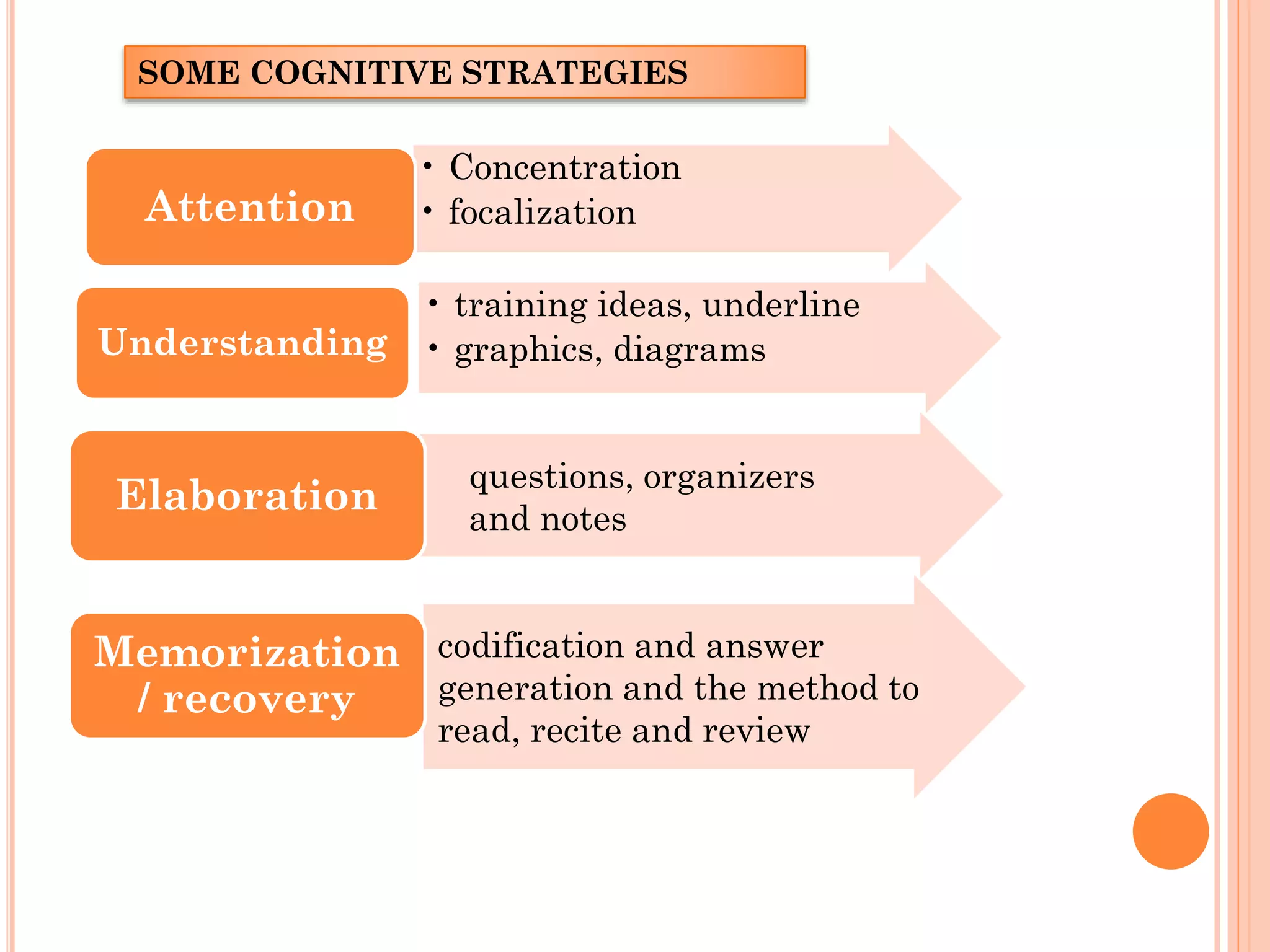
SOME COGNITIVE STRATEGIES
• Concentration
• focalizationAttention
• training ideas, underline
• graphics, diagramsUnderstanding
Elaboration
Memorization
/ recovery
questions, organizers
and notes
codification and answer
generation and the method to
read, recite and review
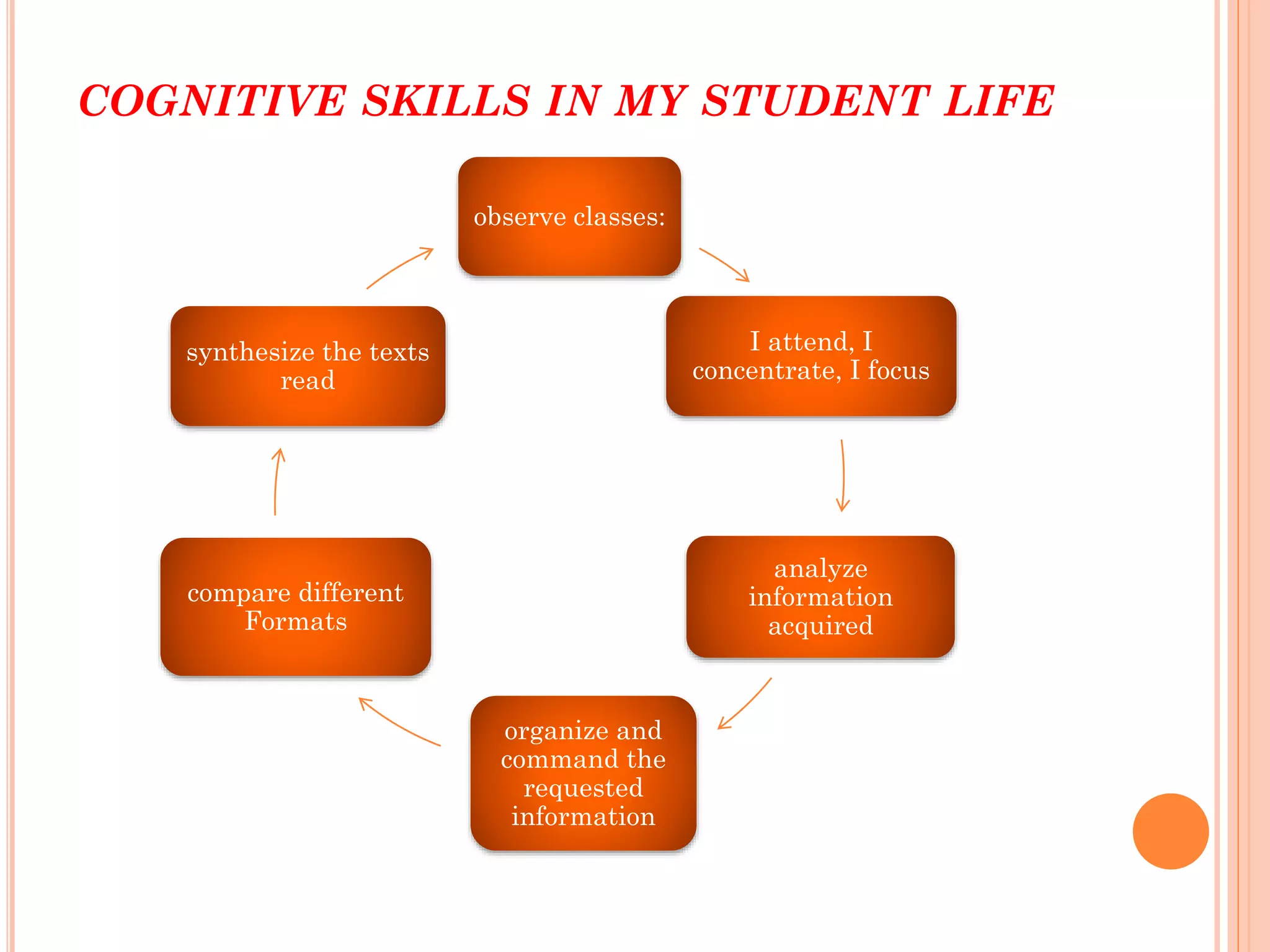
COGNITIVE SKILLS IN MY STUDENT LIFE
observe classes:
I attend, I
concentrate, I focus
analyze
information
acquired
organize and
command the
requested
information
compare different
Formats
synthesize the texts
read
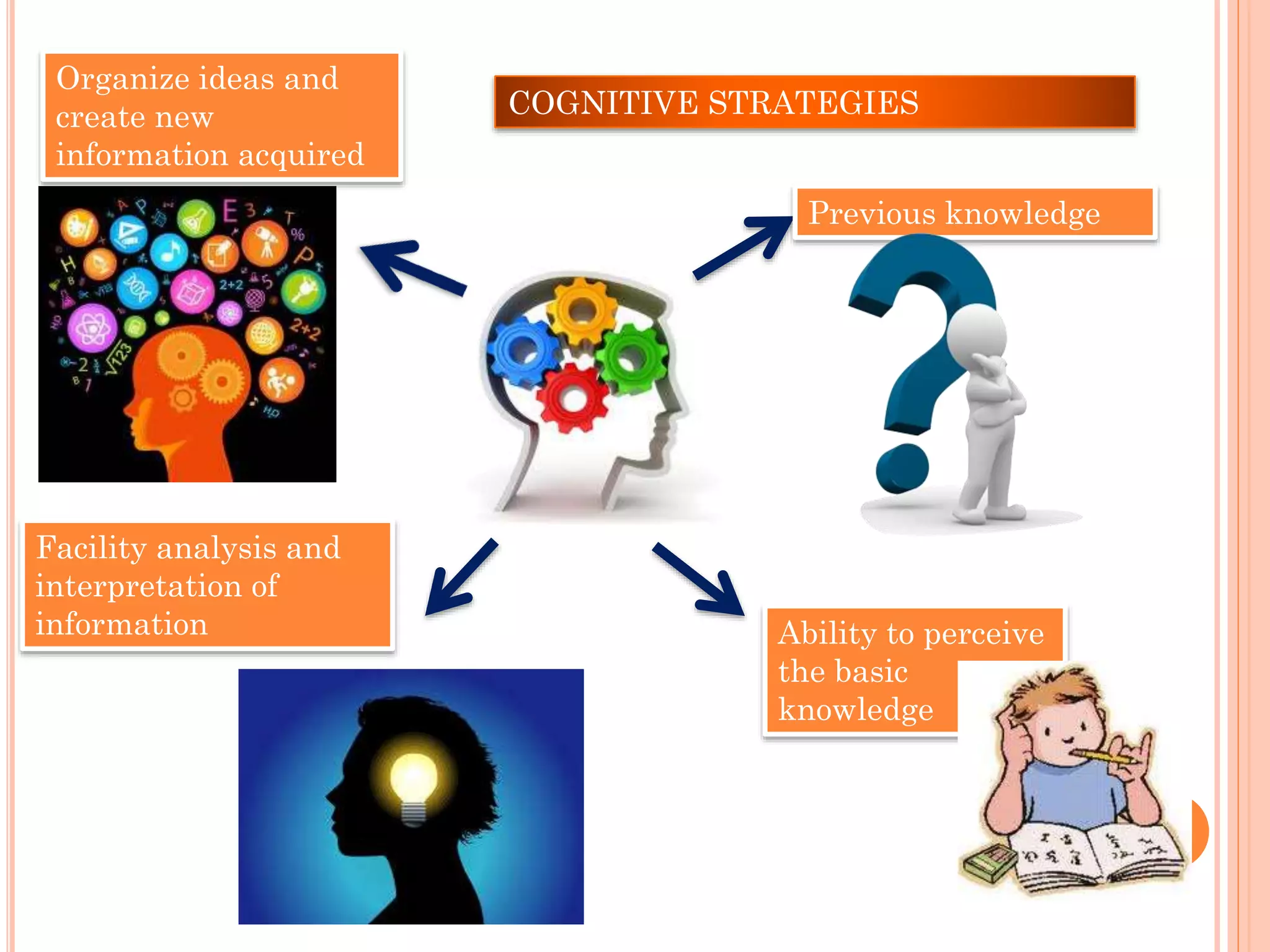
Previous knowledge
Ability to perceive
the basic
knowledge
Facility analysis and
interpretation of
information
Organize ideas and
create new
information acquired
COGNITIVE STRATEGIES
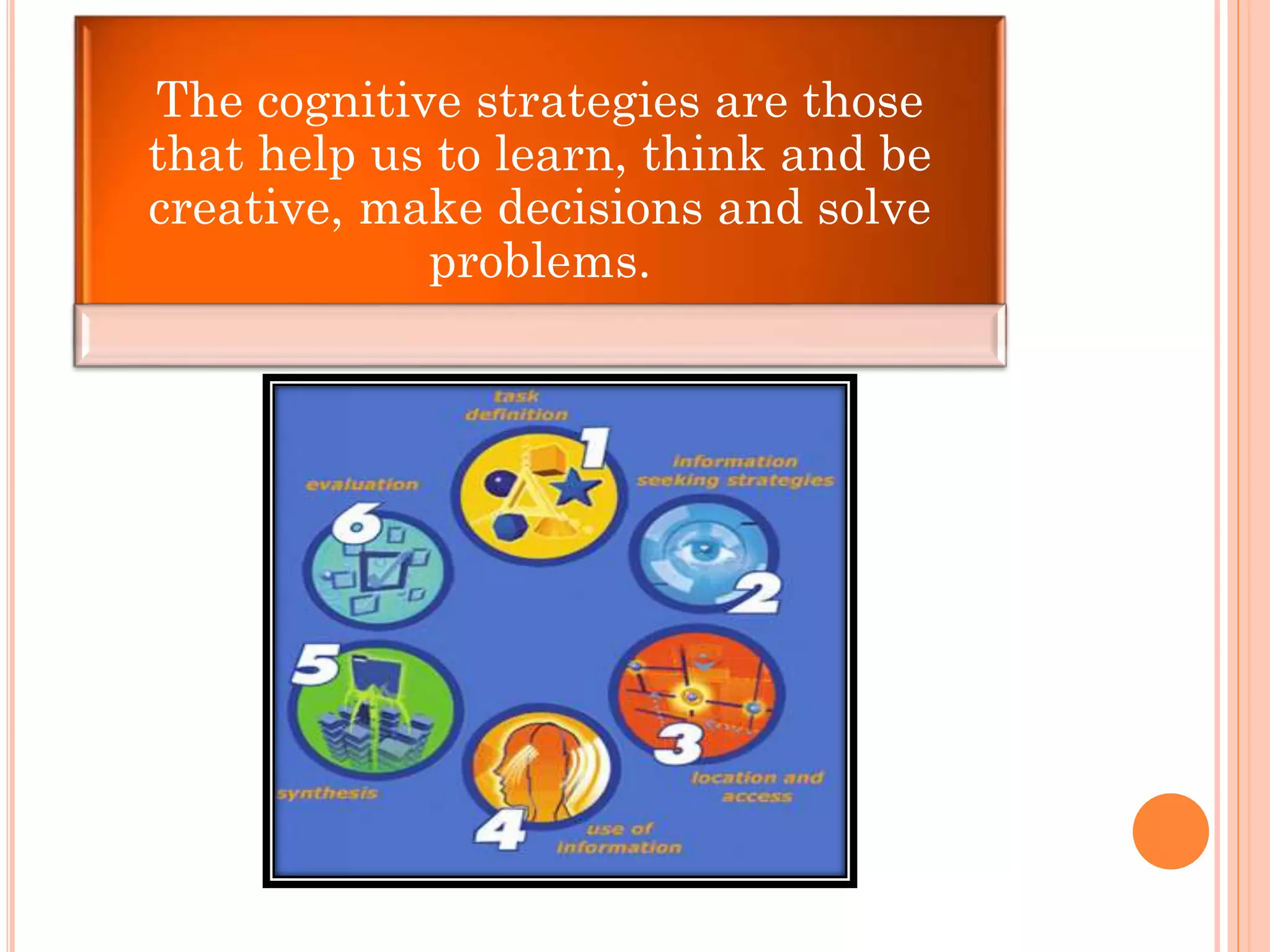
The cognitive strategies are those
that help us to learn, think and be
creative, make decisions and solve
problems.
METACOGNITIVE STRATEGIES
Metacognitive strategies are mental activities that
we execute for processing the information for the
purpose of giving an understandable meaning for
us. these strategies also help us analyze the
processes we use to know, learn and solve
problems, i.e. having knowledge about the cognitive
processes themselves controlling and regulating
the use of these processes
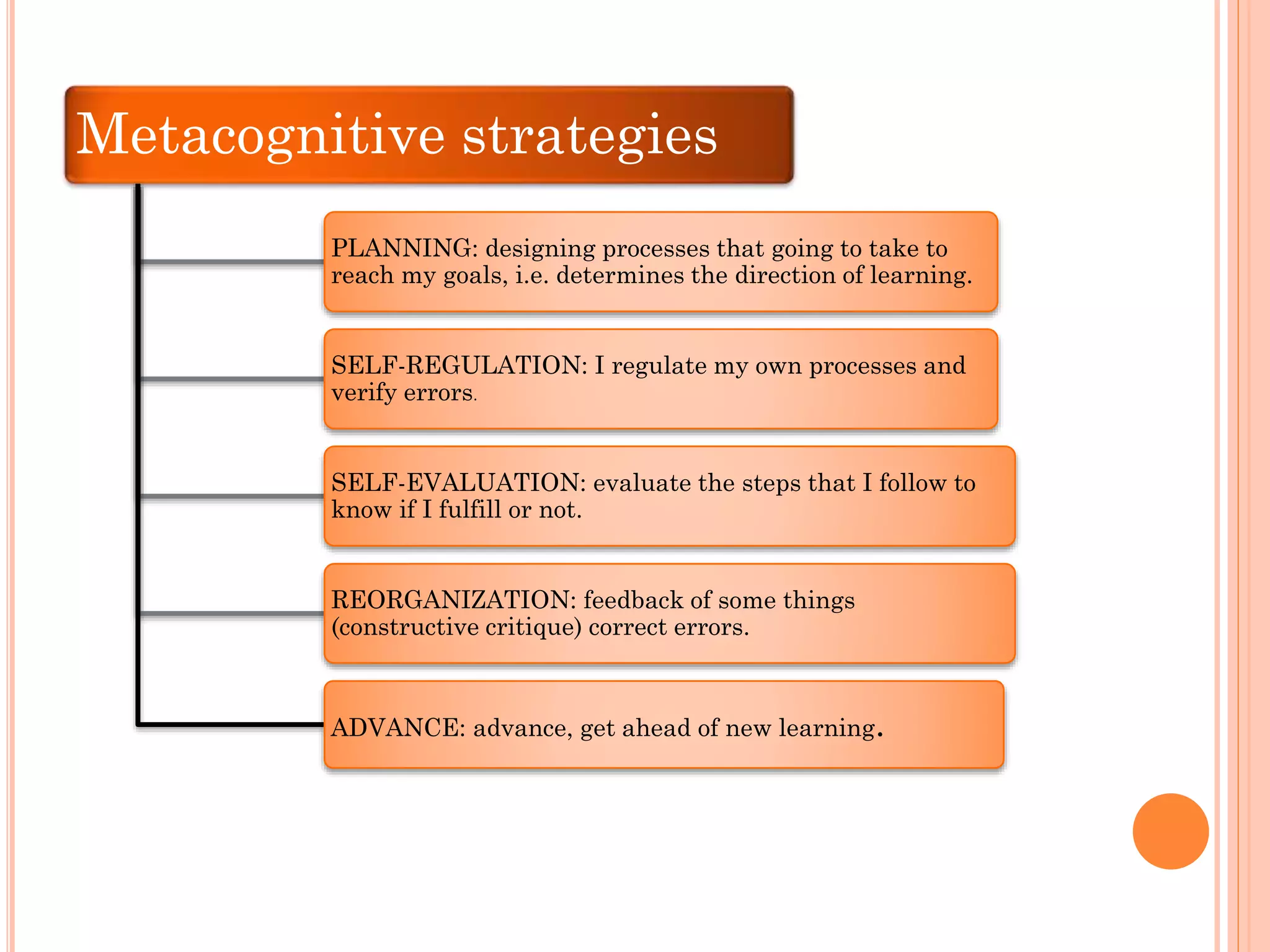
Metacognitive strategies
PLANNING: designing processes that going to take to
reach my goals, i.e. determines the direction of learning.
SELF-REGULATION: I regulate my own processes and
verify errors.
SELF-EVALUATION: evaluate the steps that I follow to
know if I fulfill or not.
REORGANIZATION: feedback of some things
(constructive critique) correct errors.
ADVANCE: advance, get ahead of new learning.
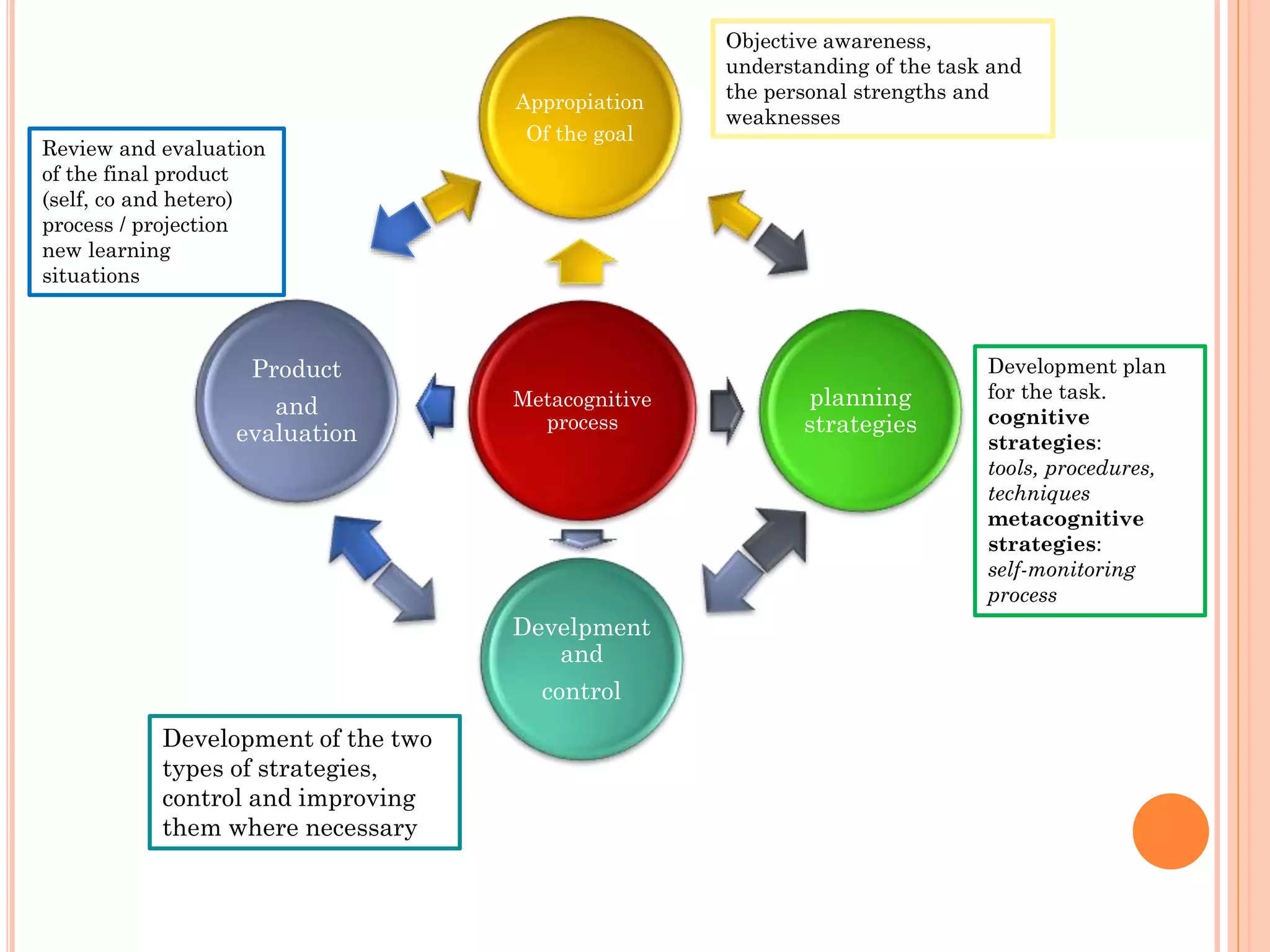
Metacognitive
process
Appropiation
Of the goal
planning
strategies
Develpment
and
control
Product
and
evaluation
Objective awareness,
understanding of the task and
the personal strengths and
weaknesses
Development plan
for the task.
cognitive
strategies:
tools, procedures,
techniques
metacognitive
strategies:
self-monitoring
process
Development of the two
types of strategies,
control and improving
them where necessary
Review and evaluation
of the final product
(self, co and hetero)
process / projection
new learning
situations
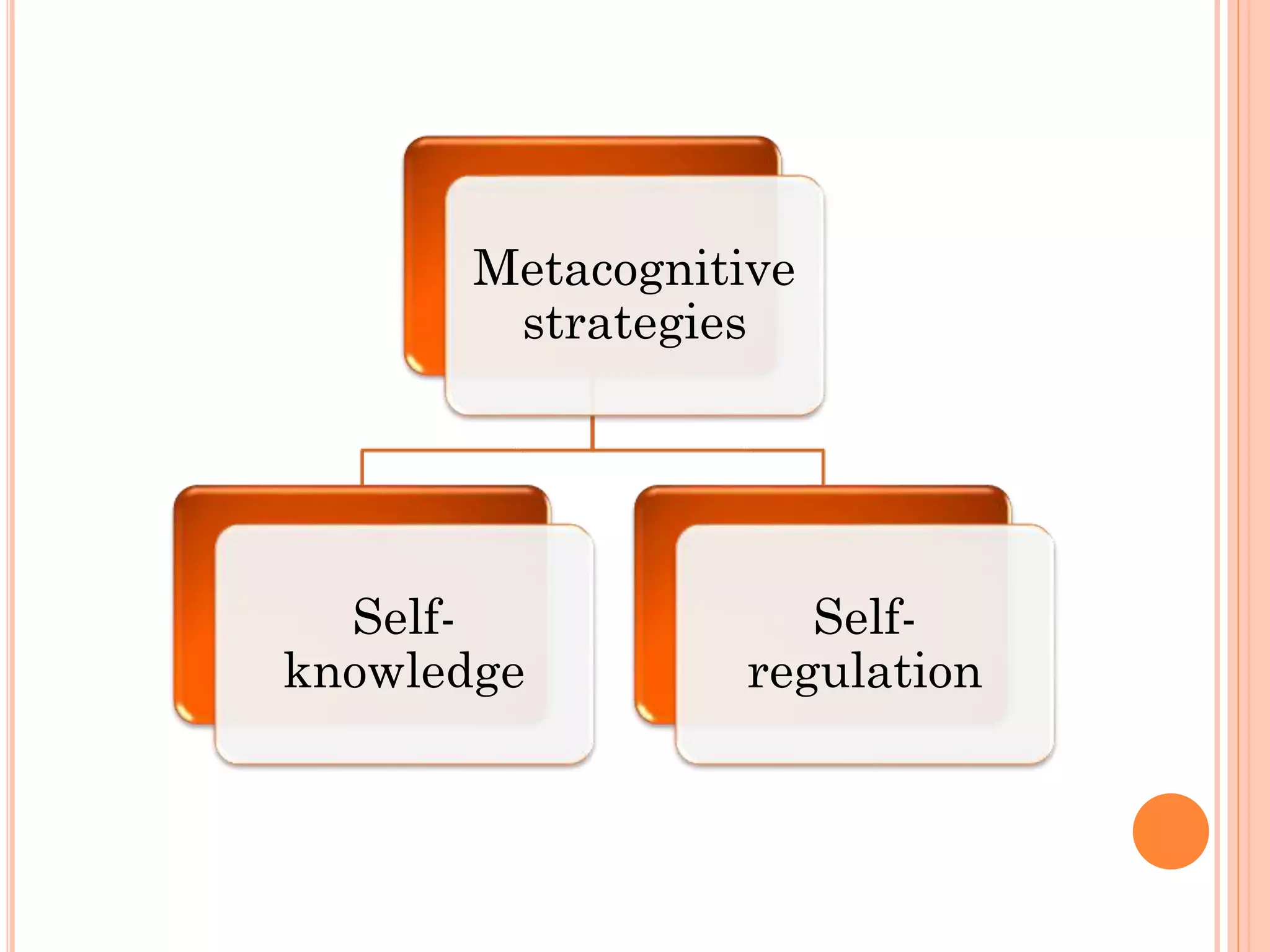
Metacognitive
strategies
Self-
knowledge
Self-
regulation
Metacognitive strategies are cognitive tools that
require our previous knowledge and the
appropriate resources for to build, understand
and generalize them to so promote a significant
learning.

Cognitive and metacognitive

  • 1.
    COGNITIVE AND METACOGNITIVE STRATEGIES By:Lilibeth Gaviria Betancourt
  • 2.
    COGNITIVE STRATEGIES The cognitivestrategies are facilitators of knowledge, those that operate directly on information collecting, analyzing, understanding, processing and storing information. in general are processes domain to monitor the functioning of mental activities. The cognitive strategies are handling skills himself that the student acquires, for governing the process to pay attention, understand, think and solve problems.
  • 3.
    SOME COGNITIVE STRATEGIES •Concentration • focalizationAttention • training ideas, underline • graphics, diagramsUnderstanding Elaboration Memorization / recovery questions, organizers and notes codification and answer generation and the method to read, recite and review
  • 4.
    COGNITIVE SKILLS INMY STUDENT LIFE observe classes: I attend, I concentrate, I focus analyze information acquired organize and command the requested information compare different Formats synthesize the texts read
  • 5.
    Previous knowledge Ability toperceive the basic knowledge Facility analysis and interpretation of information Organize ideas and create new information acquired COGNITIVE STRATEGIES
  • 6.
    The cognitive strategiesare those that help us to learn, think and be creative, make decisions and solve problems.
  • 7.
    METACOGNITIVE STRATEGIES Metacognitive strategiesare mental activities that we execute for processing the information for the purpose of giving an understandable meaning for us. these strategies also help us analyze the processes we use to know, learn and solve problems, i.e. having knowledge about the cognitive processes themselves controlling and regulating the use of these processes
  • 8.
    Metacognitive strategies PLANNING: designingprocesses that going to take to reach my goals, i.e. determines the direction of learning. SELF-REGULATION: I regulate my own processes and verify errors. SELF-EVALUATION: evaluate the steps that I follow to know if I fulfill or not. REORGANIZATION: feedback of some things (constructive critique) correct errors. ADVANCE: advance, get ahead of new learning.
  • 9.
    Metacognitive process Appropiation Of the goal planning strategies Develpment and control Product and evaluation Objectiveawareness, understanding of the task and the personal strengths and weaknesses Development plan for the task. cognitive strategies: tools, procedures, techniques metacognitive strategies: self-monitoring process Development of the two types of strategies, control and improving them where necessary Review and evaluation of the final product (self, co and hetero) process / projection new learning situations
  • 10.
  • 11.
    Metacognitive strategies arecognitive tools that require our previous knowledge and the appropriate resources for to build, understand and generalize them to so promote a significant learning.