Codes and Conventions
of a Double Page Spread
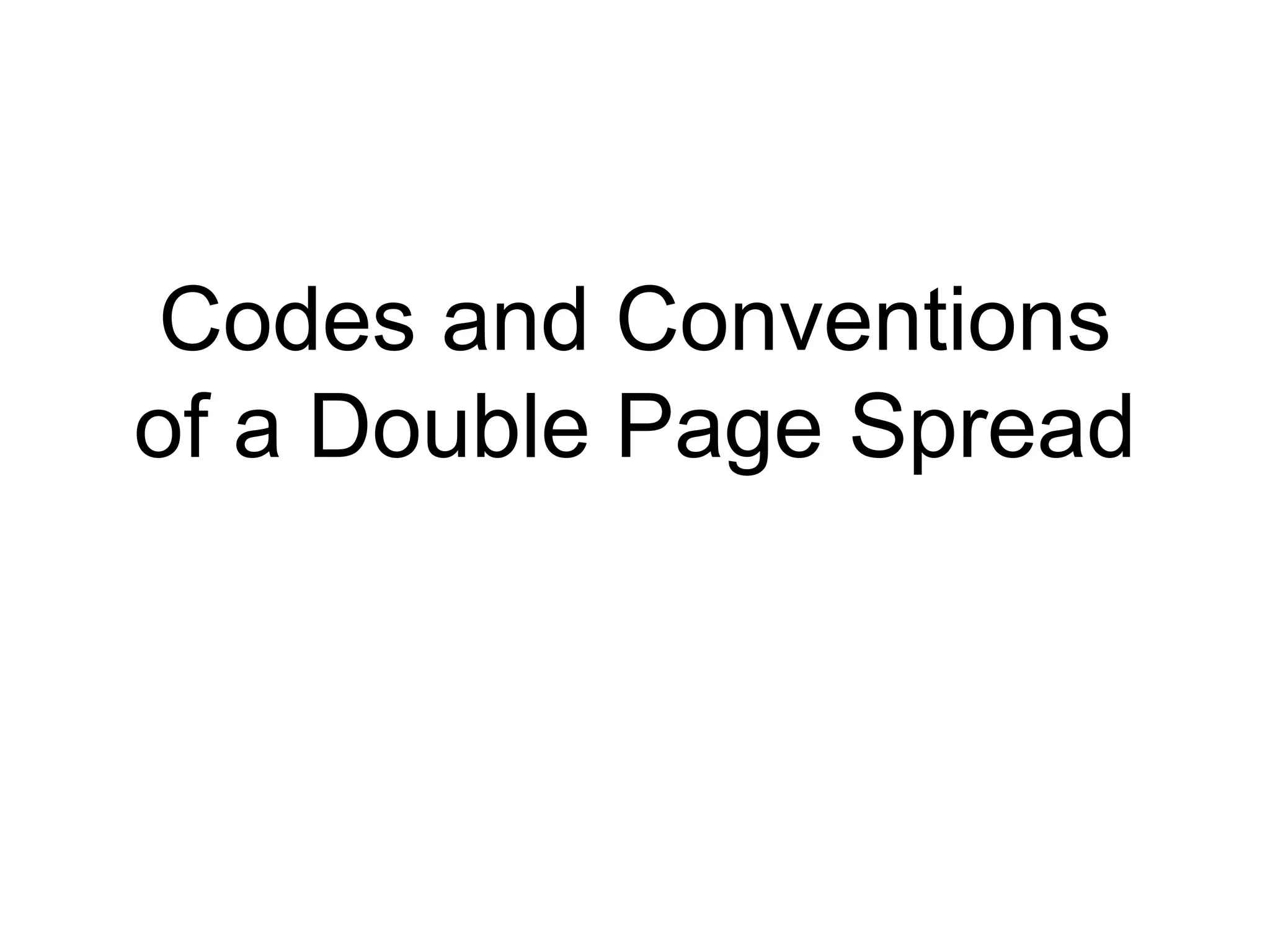
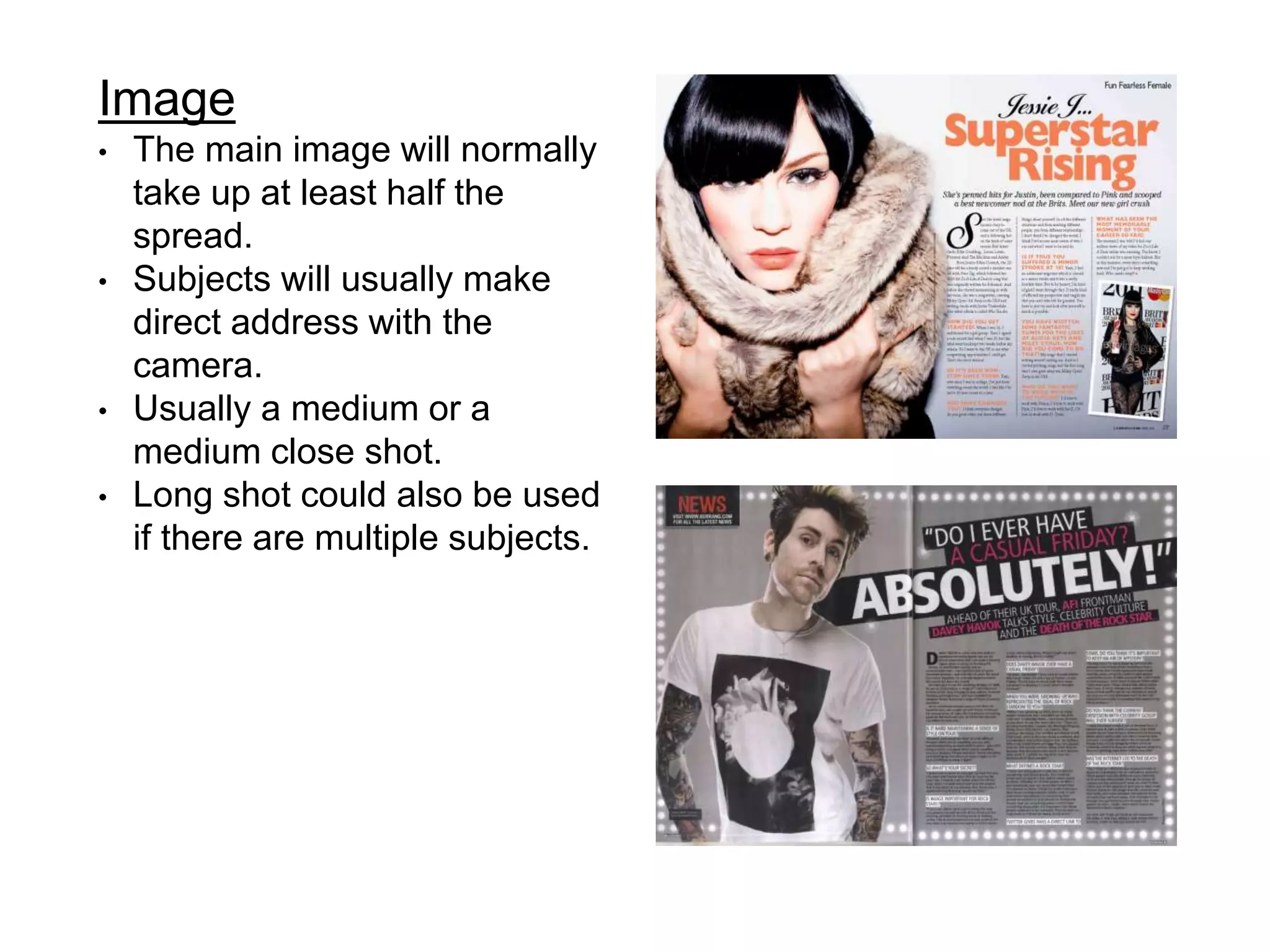
Image
• The main image will normally
take up at least half the
spread.
• Subjects will usually make
direct address with the
camera.
• Usually a medium or a
medium close shot.
• Long shot could also be used
if there are multiple subjects.
Headline
• The headline of the article is
the largest font on the page
and is dominant over the
smaller body text.
• The headline normally has it’s
own font to make it stand out
, so the audience know that it
is the headline for the double
page spread.
Standfirst
• The standfirst is like an
introduction to the celebrity
that is included.
• Some readers may not know
who the celebrity is just from
the images, therefore
introducing them would save
some readers from not
knowing who they're reading
about.
Drop caps
• Most double page spreads
use drop caps that show the
reader where the article
starts.
• Other techniques are also
used e.g. capitals, bold or
different coloured text.
Inserts
• Inserts can be made up from
facts about the band/ artist,
quotes from an outside
source or even just
something linked to the
article.
• They will be usually in a
different coloured font to
attract the reader.
• Positioned in-between the
body.
Bleeding
• Bleeding is where the image
overlaps onto the second
page.
• This is a typical code and
conventions of a music
magazine as it makes it look
professional and improves
the quality of the magazine.
Body
• The text size on a double
page spread is usually 11pt
and aerial font. However,
some magazines make the
font connote the genre.
• The text is set into columns,
usually 2-4 columns. This
makes the text look tidy and
easy to read.
• The body will normally only
ever take up half of the
double page spread.
Captions
• A quote from the interview is
sometimes presented as the
headline.
• Normally positioned by the
image or sometimes in the
text to break it up.
• The quotes used are normally
controversial or shocking to
grip the reader.
Line break
• A line break is used to break
up the text in the body.
• A drop line is used to create
this code and convention or
even indented text on the left
side.
Columns
• The text is set into columns,
usually 2-4 columns. This
makes the text look tidy and
easy to read.
• Looks less to read than there
actually is.
Page Numbers
• The page number is usually
positioned on the outside
corner of the double page
spread.
Colour Scheme
• Will follow the same colour
scheme that is ran throughout
the magazine.
• Uses simple colours so it is
not overpowering.
• The colour scheme can also
be used to highlight the genre
of the magazine.

Codes and conventions of dps

  • 1.
    Codes and Conventions ofa Double Page Spread
  • 2.
    Image • The mainimage will normally take up at least half the spread. • Subjects will usually make direct address with the camera. • Usually a medium or a medium close shot. • Long shot could also be used if there are multiple subjects.
  • 3.
    Headline • The headlineof the article is the largest font on the page and is dominant over the smaller body text. • The headline normally has it’s own font to make it stand out , so the audience know that it is the headline for the double page spread.
  • 4.
    Standfirst • The standfirstis like an introduction to the celebrity that is included. • Some readers may not know who the celebrity is just from the images, therefore introducing them would save some readers from not knowing who they're reading about.
  • 5.
    Drop caps • Mostdouble page spreads use drop caps that show the reader where the article starts. • Other techniques are also used e.g. capitals, bold or different coloured text.
  • 6.
    Inserts • Inserts canbe made up from facts about the band/ artist, quotes from an outside source or even just something linked to the article. • They will be usually in a different coloured font to attract the reader. • Positioned in-between the body.
  • 7.
    Bleeding • Bleeding iswhere the image overlaps onto the second page. • This is a typical code and conventions of a music magazine as it makes it look professional and improves the quality of the magazine.
  • 8.
    Body • The textsize on a double page spread is usually 11pt and aerial font. However, some magazines make the font connote the genre. • The text is set into columns, usually 2-4 columns. This makes the text look tidy and easy to read. • The body will normally only ever take up half of the double page spread.
  • 9.
    Captions • A quotefrom the interview is sometimes presented as the headline. • Normally positioned by the image or sometimes in the text to break it up. • The quotes used are normally controversial or shocking to grip the reader.
  • 10.
    Line break • Aline break is used to break up the text in the body. • A drop line is used to create this code and convention or even indented text on the left side.
  • 11.
    Columns • The textis set into columns, usually 2-4 columns. This makes the text look tidy and easy to read. • Looks less to read than there actually is.
  • 12.
    Page Numbers • Thepage number is usually positioned on the outside corner of the double page spread.
  • 13.
    Colour Scheme • Willfollow the same colour scheme that is ran throughout the magazine. • Uses simple colours so it is not overpowering. • The colour scheme can also be used to highlight the genre of the magazine.