PRESENTED BY:
Kshirabdhi Tanaya
MHN Tutor,SUM nursing college,SOA DTU BBSR
ETHICS
Ethics is the study of good conduct, character and
motives. It is concerned with determining what is good
or valuables for all people.
Ethics has a broader base of interest and that includes
personal behavior and issues of character, such as
kindness , tolerance and generosity.
Ethical issues are different from legal issues. Laws are
enforced by the system and content of law is
determined by systems of government. The law guides
the public behavior that will affect others and that will
preserve community.
VALUE AND MORALS
A value is a personal belief about the worth you hold
an idea, a custom or an object. The values for an
idea, a custom, or an object. The values reflect your
cultural and social influences.
Eg: If you are living in rural place, you may value the
environment differently from someone who visits
rural areas for a short time.
Morals usually refer to judgment about behavior
Ex:-It is bad to steal candy (based on a value of
honesty). Helping a friend is a good thing to do .
Ethics is the study of ideals of right and wrong
behavior.
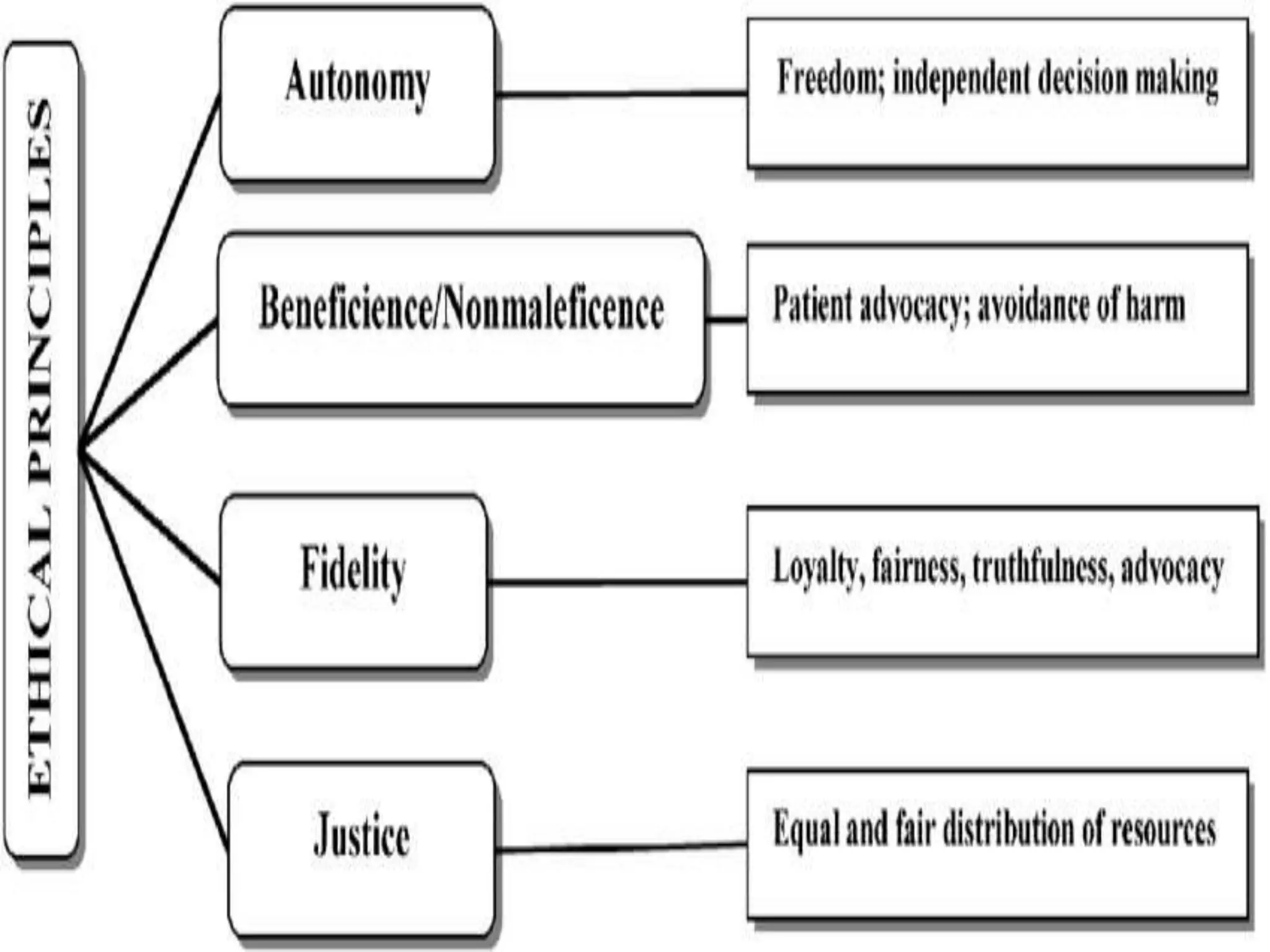
ETHICAL PRINCIPLES
Autonomy: Independence ; self
determination ; self reliance
Justice: Fairness or equity
Fidelity: Faithfulness; To keep promises
Veracity: Truthfulnss
Beneficence: Actively seeking benefits ;
Promotion of good
Non maleficience: Actively seeking to do no
harm
CODE OF ETHICS
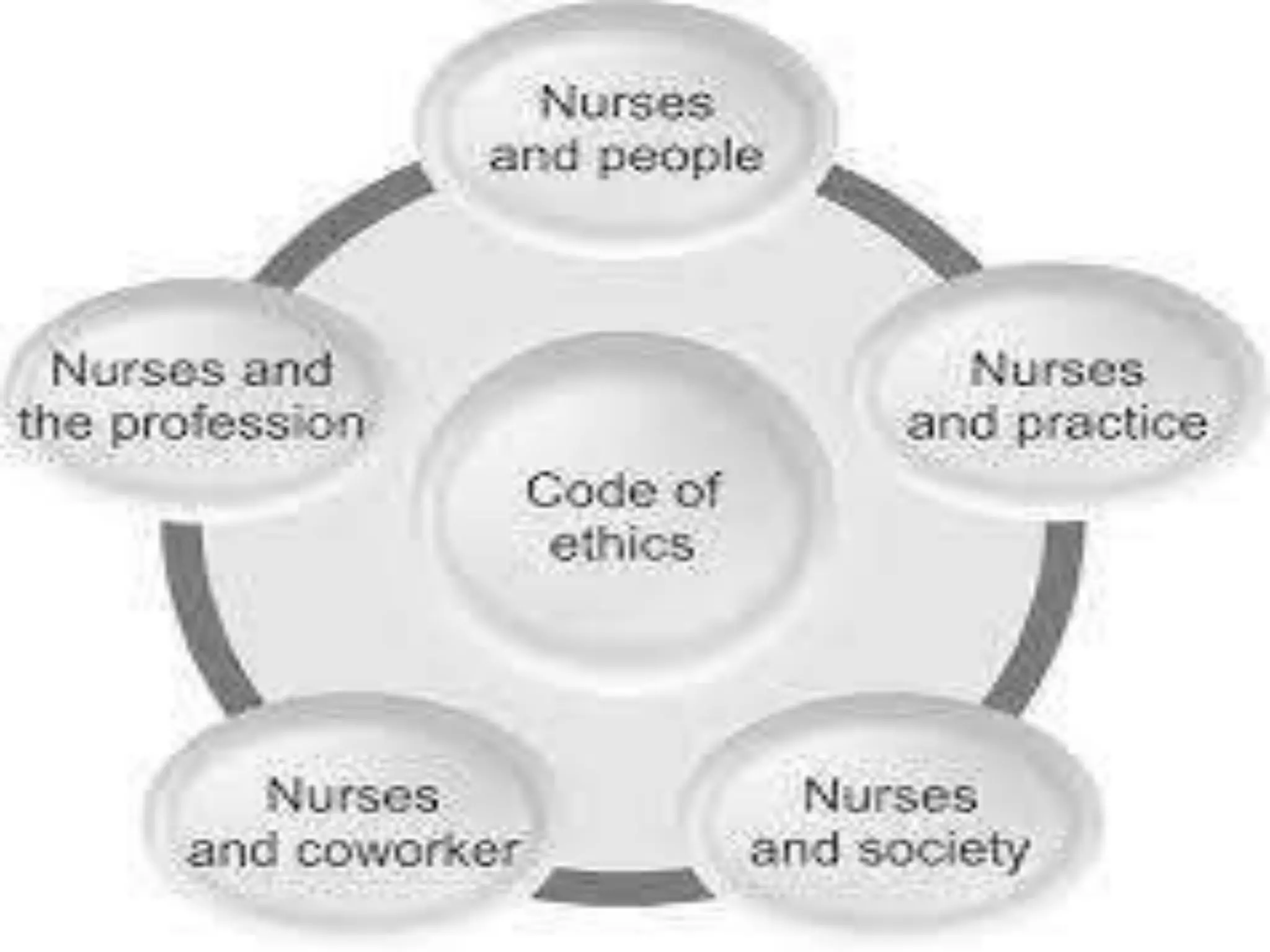
The International Council of Nursing (ICN) code for
nurses (1973) explains about the responsibilities of
the nurse to other people, to practice, to society, to
co-workers, and to the profession as a whole.
Ethical concepts applied to nursing:
The fundamental responsibility of the nurse is
fourfold that is : to promote health, to prevent
illness, to restore health and to alleviate suffering.
Nurses and people
The nurses primary responsibility is to those people
who require nursing care.
The nurses are providing care ,promotes an
environment in which the values,customs and spiritual
beliefs of the individual are respected.
The nurse holds in confidence personal information and
judgment in sharing this information and uses judgment
in sharing this information.
The code of ethics guides the nurse in two general areas
of ethical behavior towards being served. One is person’s
values, customs and religious beliefs must be respected.
Another is personal information about this person must
be held in confidence or shared only with judgments.
Nurses and practices
The nurse carries personal responsibility for nursing
practices and for maintaining competence by continual
learning.
 The nurse maintains the highest standards of nursing
care possible within the reality of a specific situation.
The nurse uses judgment in relation to individual
competence when accepting and delegating
responsibilities.
The nurse when acting in a professional capacity
should at all times maintain standards of professional
conduct.
Nurses and society
The nurse shares with other citizens the responsibility for
initiating and supporting action to meet the health and
social needs of the public.
The code states the responsibility of the nurse for
positive promotion of health for the public by both
initiating and supporting of health for the public by both
initiating and supporting action to meet the health and
social needs.
Social needs are important because they are often
closely related to the health needs of the people .
Eg: Poverty leads to lack of food and malnutrition which
may cause serious illnesses especially in children.
So, helping to meet social needs of the general public is
the responsibilities of nurses.
Nurses and co-workers
The nurse maintains a co-operative relationship
with co-workers in nursing and other fields.
The nurse takes appropriate action to
safeguard the individual when his care is
endangered by a co-worker or any other
person.
Nurses and profession
The nurse plays the major role in determining and
implementing desirable standards of nursing practices
and nursing education
The nurse is active in developing a core of professional
knowledge.
The nurse ,acting through the professional organization
,participate in establishing and maintaining equitable
social and economic working conditions in nursing.
Code of ethics in nursing

Code of ethics in nursing

  • 1.
    PRESENTED BY: Kshirabdhi Tanaya MHNTutor,SUM nursing college,SOA DTU BBSR
  • 2.
    ETHICS Ethics is thestudy of good conduct, character and motives. It is concerned with determining what is good or valuables for all people. Ethics has a broader base of interest and that includes personal behavior and issues of character, such as kindness , tolerance and generosity. Ethical issues are different from legal issues. Laws are enforced by the system and content of law is determined by systems of government. The law guides the public behavior that will affect others and that will preserve community.
  • 3.
    VALUE AND MORALS Avalue is a personal belief about the worth you hold an idea, a custom or an object. The values for an idea, a custom, or an object. The values reflect your cultural and social influences. Eg: If you are living in rural place, you may value the environment differently from someone who visits rural areas for a short time. Morals usually refer to judgment about behavior Ex:-It is bad to steal candy (based on a value of honesty). Helping a friend is a good thing to do . Ethics is the study of ideals of right and wrong behavior.
  • 4.
    ETHICAL PRINCIPLES Autonomy: Independence; self determination ; self reliance Justice: Fairness or equity Fidelity: Faithfulness; To keep promises Veracity: Truthfulnss Beneficence: Actively seeking benefits ; Promotion of good Non maleficience: Actively seeking to do no harm
  • 7.
    CODE OF ETHICS TheInternational Council of Nursing (ICN) code for nurses (1973) explains about the responsibilities of the nurse to other people, to practice, to society, to co-workers, and to the profession as a whole. Ethical concepts applied to nursing: The fundamental responsibility of the nurse is fourfold that is : to promote health, to prevent illness, to restore health and to alleviate suffering.
  • 9.
    Nurses and people Thenurses primary responsibility is to those people who require nursing care. The nurses are providing care ,promotes an environment in which the values,customs and spiritual beliefs of the individual are respected. The nurse holds in confidence personal information and judgment in sharing this information and uses judgment in sharing this information. The code of ethics guides the nurse in two general areas of ethical behavior towards being served. One is person’s values, customs and religious beliefs must be respected. Another is personal information about this person must be held in confidence or shared only with judgments.
  • 11.
    Nurses and practices Thenurse carries personal responsibility for nursing practices and for maintaining competence by continual learning.  The nurse maintains the highest standards of nursing care possible within the reality of a specific situation. The nurse uses judgment in relation to individual competence when accepting and delegating responsibilities. The nurse when acting in a professional capacity should at all times maintain standards of professional conduct.
  • 13.
    Nurses and society Thenurse shares with other citizens the responsibility for initiating and supporting action to meet the health and social needs of the public. The code states the responsibility of the nurse for positive promotion of health for the public by both initiating and supporting of health for the public by both initiating and supporting action to meet the health and social needs. Social needs are important because they are often closely related to the health needs of the people . Eg: Poverty leads to lack of food and malnutrition which may cause serious illnesses especially in children. So, helping to meet social needs of the general public is the responsibilities of nurses.
  • 15.
    Nurses and co-workers Thenurse maintains a co-operative relationship with co-workers in nursing and other fields. The nurse takes appropriate action to safeguard the individual when his care is endangered by a co-worker or any other person.
  • 17.
    Nurses and profession Thenurse plays the major role in determining and implementing desirable standards of nursing practices and nursing education The nurse is active in developing a core of professional knowledge. The nurse ,acting through the professional organization ,participate in establishing and maintaining equitable social and economic working conditions in nursing.