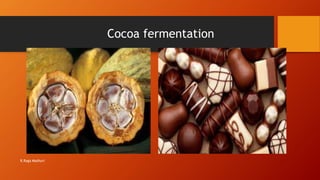
Cocoa fermentation
R.Raga Madhuri
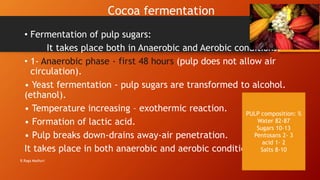
Cocoa fermentation
• Fermentation of pulp sugars:
It takes place both in Anaerobic and Aerobic conditions:
• 1- Anaerobic phase - first 48 hours (pulp does not allow air
circulation).
• Yeast fermentation - pulp sugars are transformed to alcohol.
(ethanol).
• Temperature increasing – exothermic reaction.
• Formation of lactic acid.
• Pulp breaks down-drains away-air penetration.
It takes place in both anaerobic and aerobic conditions
PULP composition: %
Water 82-87
Sugars 10-13
Pentosans 2- 3
acid 1- 2
Salts 8-10
R.Raga Madhuri
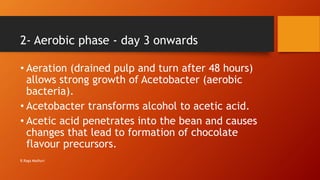
2- Aerobic phase - day 3 onwards
• Aeration (drained pulp and turn after 48 hours)
allows strong growth of Acetobacter (aerobic
bacteria).
• Acetobacter transforms alcohol to acetic acid.
• Acetic acid penetrates into the bean and causes
changes that lead to formation of chocolate
flavour precursors.
R.Raga Madhuri
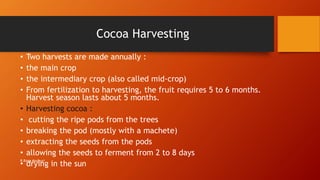
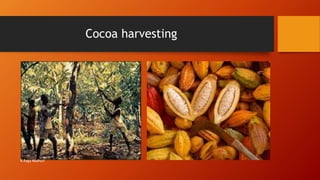
Cocoa Harvesting
• Two harvests are made annually :
• the main crop
• the intermediary crop (also called mid-crop)
• From fertilization to harvesting, the fruit requires 5 to 6 months.
Harvest season lasts about 5 months.
• Harvesting cocoa :
• cutting the ripe pods from the trees
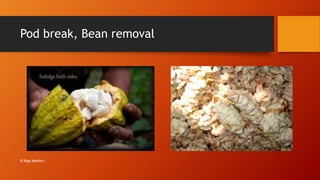
• breaking the pod (mostly with a machete)
• extracting the seeds from the pods
• allowing the seeds to ferment from 2 to 8 days
• drying in the sun
R.Raga Madhuri
Cocoa harvesting
R.Raga Madhuri
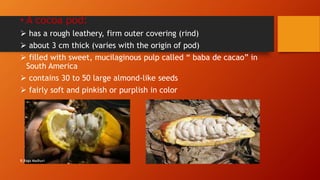
• A cocoa pod:
 has a rough leathery, firm outer covering (rind)
 about 3 cm thick (varies with the origin of pod)
 filled with sweet, mucilaginous pulp called “ baba de cacao” in
South America
 contains 30 to 50 large almond-like seeds
 fairly soft and pinkish or purplish in color
R.Raga Madhuri
Pod break, Bean removal
R.Raga Madhuri
Fermentation
 Fermentation of cocoa beans :
• removes the mucilaginous pulp
• develops flavor and aroma precursors
• reduces bitterness
• kills the germ of the seed and loosens the testa .
 Standard methods adopted for fermentation:
• Heap
• Box Tray
• BasketR.Raga Madhuri
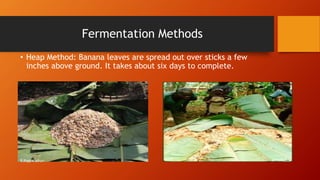
Fermentation Methods
• Heap Method: Banana leaves are spread out over sticks a few
inches above ground. It takes about six days to complete.
R.Raga Madhuri
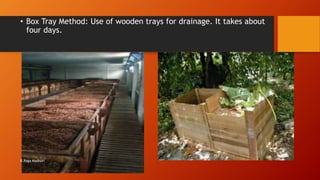
• Box Tray Method: Use of wooden trays for drainage. It takes about
four days.
R.Raga Madhuri
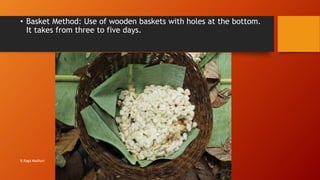
• Basket Method: Use of wooden baskets with holes at the bottom.
It takes from three to five days.
R.Raga Madhuri
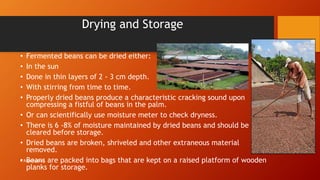
Drying and Storage
• Fermented beans can be dried either:
• In the sun
• Done in thin layers of 2 - 3 cm depth.
• With stirring from time to time.
• Properly dried beans produce a characteristic cracking sound upon
compressing a fistful of beans in the palm.
• Or can scientifically use moisture meter to check dryness.
• There is 6 -8% of moisture maintained by dried beans and should be
cleared before storage.
• Dried beans are broken, shriveled and other extraneous material
removed.
• Beans are packed into bags that are kept on a raised platform of wooden
planks for storage.
R.Raga Madhuri
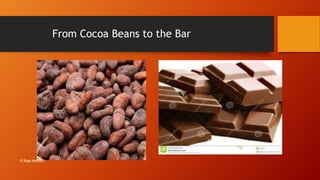
From Cocoa Beans to the Bar
R.Raga Madhuri
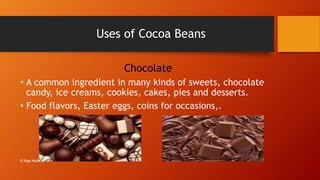
Uses of Cocoa Beans
Chocolate
• A common ingredient in many kinds of sweets, chocolate
candy, ice creams, cookies, cakes, pies and desserts.
• Food flavors, Easter eggs, coins for occasions,.
R.Raga Madhuri
Health Benefits of Cocoa and Chocolate
• Cocoa and dark chocolate may keep high blood pressure down and
reduce the blood's ability to clot, thus the risk of stroke and heart
attacks may be reduced.
• A 15-year study of elderly men published in the Archives of
Internal Medicine in 2006 found a 50% reduction in cardiovascular
mortality and a 47% reduction in all-cause mortality for the men
regularly consuming the most cocoa, compared to those
consuming the least.
R.Raga Madhuri
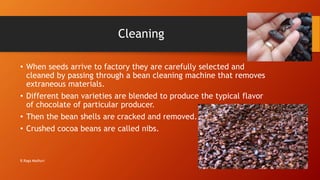
Cleaning
• When seeds arrive to factory they are carefully selected and
cleaned by passing through a bean cleaning machine that removes
extraneous materials.
• Different bean varieties are blended to produce the typical flavor
of chocolate of particular producer.
• Then the bean shells are cracked and removed.
• Crushed cocoa beans are called nibs.
R.Raga Madhuri
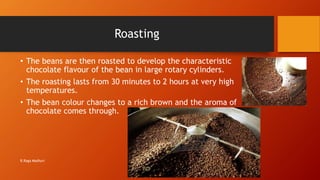
Roasting
• The beans are then roasted to develop the characteristic
chocolate flavour of the bean in large rotary cylinders.
• The roasting lasts from 30 minutes to 2 hours at very high
temperatures.
• The bean colour changes to a rich brown and the aroma of
chocolate comes through.
R.Raga Madhuri
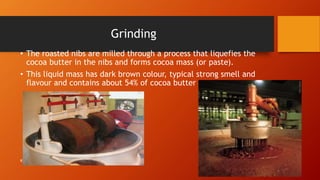
Grinding
• The roasted nibs are milled through a process that liquefies the
cocoa butter in the nibs and forms cocoa mass (or paste).
• This liquid mass has dark brown colour, typical strong smell and
flavour and contains about 54% of cocoa butter
R.Raga Madhuri
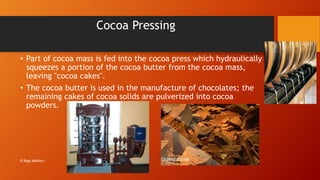
Cocoa Pressing
• Part of cocoa mass is fed into the cocoa press which hydraulically
squeezes a portion of the cocoa butter from the cocoa mass,
leaving "cocoa cakes".
• The cocoa butter is used in the manufacture of chocolates; the
remaining cakes of cocoa solids are pulverized into cocoa
powders.
R.Raga Madhuri

Cocoa fermentation

  • 1.
  • 2.
    Cocoa fermentation • Fermentationof pulp sugars: It takes place both in Anaerobic and Aerobic conditions: • 1- Anaerobic phase - first 48 hours (pulp does not allow air circulation). • Yeast fermentation - pulp sugars are transformed to alcohol. (ethanol). • Temperature increasing – exothermic reaction. • Formation of lactic acid. • Pulp breaks down-drains away-air penetration. It takes place in both anaerobic and aerobic conditions PULP composition: % Water 82-87 Sugars 10-13 Pentosans 2- 3 acid 1- 2 Salts 8-10 R.Raga Madhuri
  • 3.
    2- Aerobic phase- day 3 onwards • Aeration (drained pulp and turn after 48 hours) allows strong growth of Acetobacter (aerobic bacteria). • Acetobacter transforms alcohol to acetic acid. • Acetic acid penetrates into the bean and causes changes that lead to formation of chocolate flavour precursors. R.Raga Madhuri
  • 4.
    Cocoa Harvesting • Twoharvests are made annually : • the main crop • the intermediary crop (also called mid-crop) • From fertilization to harvesting, the fruit requires 5 to 6 months. Harvest season lasts about 5 months. • Harvesting cocoa : • cutting the ripe pods from the trees • breaking the pod (mostly with a machete) • extracting the seeds from the pods • allowing the seeds to ferment from 2 to 8 days • drying in the sun R.Raga Madhuri
  • 5.
  • 6.
    • A cocoapod:  has a rough leathery, firm outer covering (rind)  about 3 cm thick (varies with the origin of pod)  filled with sweet, mucilaginous pulp called “ baba de cacao” in South America  contains 30 to 50 large almond-like seeds  fairly soft and pinkish or purplish in color R.Raga Madhuri
  • 7.
    Pod break, Beanremoval R.Raga Madhuri
  • 8.
    Fermentation  Fermentation ofcocoa beans : • removes the mucilaginous pulp • develops flavor and aroma precursors • reduces bitterness • kills the germ of the seed and loosens the testa .  Standard methods adopted for fermentation: • Heap • Box Tray • BasketR.Raga Madhuri
  • 9.
    Fermentation Methods • HeapMethod: Banana leaves are spread out over sticks a few inches above ground. It takes about six days to complete. R.Raga Madhuri
  • 10.
    • Box TrayMethod: Use of wooden trays for drainage. It takes about four days. R.Raga Madhuri
  • 11.
    • Basket Method:Use of wooden baskets with holes at the bottom. It takes from three to five days. R.Raga Madhuri
  • 12.
    Drying and Storage •Fermented beans can be dried either: • In the sun • Done in thin layers of 2 - 3 cm depth. • With stirring from time to time. • Properly dried beans produce a characteristic cracking sound upon compressing a fistful of beans in the palm. • Or can scientifically use moisture meter to check dryness. • There is 6 -8% of moisture maintained by dried beans and should be cleared before storage. • Dried beans are broken, shriveled and other extraneous material removed. • Beans are packed into bags that are kept on a raised platform of wooden planks for storage. R.Raga Madhuri
  • 13.
    From Cocoa Beansto the Bar R.Raga Madhuri
  • 14.
    Uses of CocoaBeans Chocolate • A common ingredient in many kinds of sweets, chocolate candy, ice creams, cookies, cakes, pies and desserts. • Food flavors, Easter eggs, coins for occasions,. R.Raga Madhuri
  • 15.
    Health Benefits ofCocoa and Chocolate • Cocoa and dark chocolate may keep high blood pressure down and reduce the blood's ability to clot, thus the risk of stroke and heart attacks may be reduced. • A 15-year study of elderly men published in the Archives of Internal Medicine in 2006 found a 50% reduction in cardiovascular mortality and a 47% reduction in all-cause mortality for the men regularly consuming the most cocoa, compared to those consuming the least. R.Raga Madhuri
  • 16.
    Cleaning • When seedsarrive to factory they are carefully selected and cleaned by passing through a bean cleaning machine that removes extraneous materials. • Different bean varieties are blended to produce the typical flavor of chocolate of particular producer. • Then the bean shells are cracked and removed. • Crushed cocoa beans are called nibs. R.Raga Madhuri
  • 17.
    Roasting • The beansare then roasted to develop the characteristic chocolate flavour of the bean in large rotary cylinders. • The roasting lasts from 30 minutes to 2 hours at very high temperatures. • The bean colour changes to a rich brown and the aroma of chocolate comes through. R.Raga Madhuri
  • 18.
    Grinding • The roastednibs are milled through a process that liquefies the cocoa butter in the nibs and forms cocoa mass (or paste). • This liquid mass has dark brown colour, typical strong smell and flavour and contains about 54% of cocoa butter R.Raga Madhuri
  • 19.
    Cocoa Pressing • Partof cocoa mass is fed into the cocoa press which hydraulically squeezes a portion of the cocoa butter from the cocoa mass, leaving "cocoa cakes". • The cocoa butter is used in the manufacture of chocolates; the remaining cakes of cocoa solids are pulverized into cocoa powders. R.Raga Madhuri