Managing change with
The Transition Model
#ChangeManagement
www.nathanwood.consulting
Leading change can be difficult as
many find it uncomfortable, often
resisting and opposing it initially
www.nathanwood.consulting
Time
3
BARGAINING
Overwhelmed
Helplessness
Hostility
Flight
1
DENIAL
Avoidance
Confusion
Elation
Shock
Fear
2
ANGER
Frustration
Irritation
Anxiety
4
DEPRESSION
Struggling to find meaning
Reaching out to others
Telling one’s story
5
ACCEPTANCE
Exploring options
New plans
Moving on
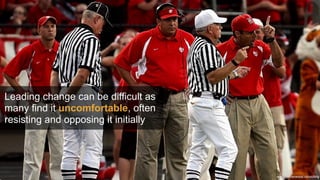
The Five Stages of Grief theory,
shows how people are affected by
dramatic life events such as change
www.nathanwood.consulting
PHASE 2 PHASE 3
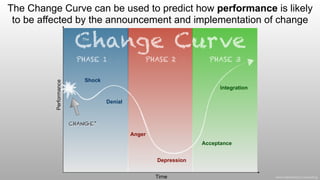
The Change Curve can be used to predict how performance is likely
to be affected by the announcement and implementation of change
Time
Performance
Shock
Denial
Anger
Depression
Acceptance
Integration
CHANGE”
Change CurveThe
PHASE 1 PHASE 2 PHASE 3
www.nathanwood.consulting
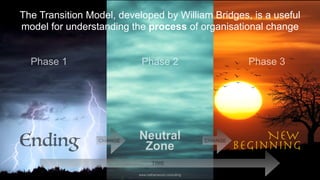
CHANGE CHANGE
TIME
Ending Neutral New
BeginningZone
The Transition Model, developed by William Bridges, is a useful
model for understanding the process of organisational change
Phase 1 Phase 2 Phase 3
www.nathanwood.consulting
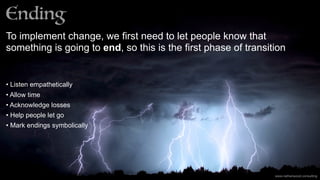
Ending
To implement change, we first need to let people know that
something is going to end, so this is the first phase of transition
• Listen empathetically
• Allow time
• Acknowledge losses
• Help people let go
• Mark endings symbolically
www.nathanwood.consulting
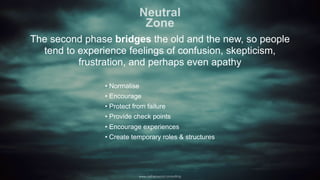
Neutral
Zone
The second phase bridges the old and the new, so people
tend to experience feelings of confusion, skepticism,
frustration, and perhaps even apathy
• Normalise
• Encourage
• Protect from failure
• Provide check points
• Encourage experiences
• Create temporary roles & structures
www.nathanwood.consulting
New
Beginning
The final phase is one of high energy, acceptance, and
excitement, with followers being more receptive to
learning and committing to the change
• Dramatise new identity
• Redesign roles collaboratively
• Provide support & training
• Look for and create quick wins
www.nathanwood.consulting
Nathan Wood
Nathan Wood is a former professional sportsman and youth
international, mentor/assessor to Level 3 sports coaches, 

and a certified Level 4 master coach.

Now operating a sports performance consultancy, he works with a
diverse range of athletes, coaches, parents, and organisations,
helping them to realise their true sporting potential.
Let’s connect
linkedin.com/in/nathan-wood-coaching
twitter.com/NathanTheoWood
facebook.com/NathanWoodConsulting
instagram.com/nathantheowood
slideshare.net/NathanWood44
w w w . n a t h a n w o o d . c o n s u l t i n g

Managing Change with The Transition Model

  • 1.
    Managing change with TheTransition Model #ChangeManagement www.nathanwood.consulting
  • 2.
    Leading change canbe difficult as many find it uncomfortable, often resisting and opposing it initially www.nathanwood.consulting
  • 3.
    Time 3 BARGAINING Overwhelmed Helplessness Hostility Flight 1 DENIAL Avoidance Confusion Elation Shock Fear 2 ANGER Frustration Irritation Anxiety 4 DEPRESSION Struggling to findmeaning Reaching out to others Telling one’s story 5 ACCEPTANCE Exploring options New plans Moving on The Five Stages of Grief theory, shows how people are affected by dramatic life events such as change www.nathanwood.consulting
  • 4.
    PHASE 2 PHASE3 The Change Curve can be used to predict how performance is likely to be affected by the announcement and implementation of change Time Performance Shock Denial Anger Depression Acceptance Integration CHANGE” Change CurveThe PHASE 1 PHASE 2 PHASE 3 www.nathanwood.consulting
  • 5.
    CHANGE CHANGE TIME Ending NeutralNew BeginningZone The Transition Model, developed by William Bridges, is a useful model for understanding the process of organisational change Phase 1 Phase 2 Phase 3 www.nathanwood.consulting
  • 6.
    Ending To implement change,we first need to let people know that something is going to end, so this is the first phase of transition • Listen empathetically • Allow time • Acknowledge losses • Help people let go • Mark endings symbolically www.nathanwood.consulting
  • 7.
    Neutral Zone The second phasebridges the old and the new, so people tend to experience feelings of confusion, skepticism, frustration, and perhaps even apathy • Normalise • Encourage • Protect from failure • Provide check points • Encourage experiences • Create temporary roles & structures www.nathanwood.consulting
  • 8.
    New Beginning The final phaseis one of high energy, acceptance, and excitement, with followers being more receptive to learning and committing to the change • Dramatise new identity • Redesign roles collaboratively • Provide support & training • Look for and create quick wins www.nathanwood.consulting
  • 9.
    Nathan Wood Nathan Woodis a former professional sportsman and youth international, mentor/assessor to Level 3 sports coaches, and a certified Level 4 master coach. Now operating a sports performance consultancy, he works with a diverse range of athletes, coaches, parents, and organisations, helping them to realise their true sporting potential. Let’s connect linkedin.com/in/nathan-wood-coaching twitter.com/NathanTheoWood facebook.com/NathanWoodConsulting instagram.com/nathantheowood slideshare.net/NathanWood44 w w w . n a t h a n w o o d . c o n s u l t i n g