


INTEGRATING CONSULTING & COACHING INTO YOUR PRACTICE
                       AS A TRUSTED ADVISOR/MASTER PRACTITIONER

                                         PRESENTED BY DR. SHAYNE TRACY

                                              DATE JUNE 7TH 2012


© 2012 Odyssey Consulting Institute TM
Presented By
                                         Dr. Shayne Tracy


© 2012 Odyssey Consulting Institute TM
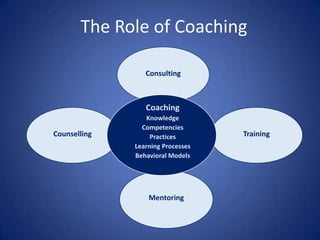
The Role of Coaching

                 Consulting


                 Coaching
                  Knowledge
                Competencies
Counselling        Practices       Training
              Learning Processes
              Behavioral Models


                  Mentoring
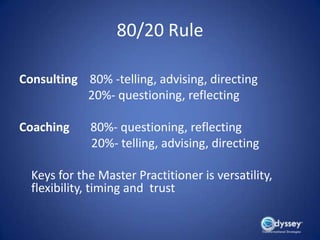
80/20 Rule

Consulting 80% -telling, advising, directing
           20%- questioning, reflecting

Coaching     80%- questioning, reflecting
             20%- telling, advising, directing

  Keys for the Master Practitioner is versatility,
  flexibility, timing and trust
What Is Coaching?
• Coaching is creating a safe, supportive, trust
  based environment for someone to have their
  “internal conversation” out loud
• Coaching lives in language—language of
  change—change language, reframe, refocus
• Coaching is creating a context for planned, self
  directed action and focused results
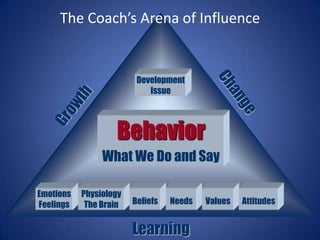
The Coach’s Arena of Influence


                         Development
                            Issue


                   Behavior
                What We Do and Say

Emotions   Physiology
Feelings    The Brain   Beliefs   Needs   Values   Attitudes


                        Learning
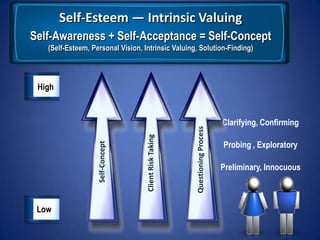
Self-Esteem — Intrinsic Valuing
Self-Awareness + Self-Acceptance = Self-Concept
   (Self-Esteem, Personal Vision, Intrinsic Valuing, Solution-Finding)


 High


                                                                              Clarifying, Confirming


                                                        Questioning Process
                                   Client Risk Taking
                                                                              Probing , Exploratory
                   Self-Concept


                                                                              Preliminary, Innocuous


 Low
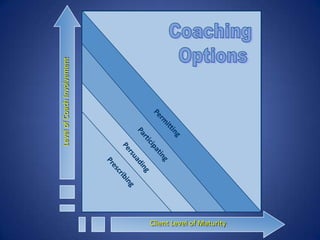
Level of Coach Involvement


Client Level of Maturity
The Four Dimensions of Coaching
1. The Client’s Story
• Coaches recognize the significance of the “story”
   to the client
• The coach encourages the client to share their
   “story” which provides context that may range
   from simple to complex issues and challenges
• Coaches must never underestimate the value of
   simply exhaustive and non-judgmental listening
The Four Dimensions of Coaching

1. The Client’s Story
• Experienced coaches manage the client’s
  story-telling, knowing that they need less
  information than the client may think
• Less experienced coaches may fall into the
  trap of believing they must understand all
  dimensions of the story
The Story
Coach: “That was a very interesting strategy
session we had with the Executive Team
today?”……….
“Tell me from your perspective what you saw
happening with the team”
The Four Dimensions of Coaching
2. The Client’s Thinking (cognitive) process
• This level enables the coach to get beyond the
  client story to examine how and what the
  client thinks
• The coach may challenge the client to
  challenge their thinking, when the coach has
  identified that the client’s thinking may be
  flawed, limited, or negative
The Four Dimensions of Coaching
2. The Client’s Thinking (cognitive) process
• The coach must not presume to be the arbiter
  of sound and unsound thinking
• Coaches must be highly vigilant in not
  imposing their own world views, values and
  judgments on their clients
• The coach will encourage clients to retain their
  prerogative on choice of action in dealing with
  their personal/business situations
Thinking
Coach “ So you think that four out of the 6
Team members are really buying in to the new
product marketing strategy?”
“What makes you think that?”
The Four Dimensions of Coaching
3. The Client’s Feelings (affective/attitude response)
• When the client identifies their key issues there will always
  be an emotional response
• Coaches may miss this or are unsure how to react to this
  reality
• One aspect of this confusion is that “feelings work” may
  appear more like “counseling”
• Coaches may be unclear or uncomfortable as to boundaries
  and emotional expression, and may consciously or
  unconsciously try to shut it down
The Four Dimensions ofCoaching
3. The Client’s Feelings (affective response)
• A key coaching skill is the ability to appropriately
  facilitate “emotional expression”
• Sometimes it is the very breakthrough that is urgently
  needed for the client to get unstuck
• Clients may often bring heightened feelings into the
  room, whether the coach expects or appreciates it
Feelings
 Coach: “ How do you feel about the current
 situation, particularly with the 2 who haven’t
 bought in?” “You appear to have some strong
 feelings about this situation”……….silence is
 golden in coaching


Principle: You cannot problem-solve without
  emotional clarity
The Four Dimensions of Coaching
4. The Coach’s Use of Self
• The coach’s use of self is a “higher order” skill
  that can define the difference between good
  and great coaching
• The coach’s use of self may be described as
  the ability to put words around those intuitive
  moments of discrete discernment where we
  identify and synthesize the client’s “total
  messaging”
Use of Self
Coach: So what you are telling me is that the
strategy will go ahead regardless as to whether
the 2 “delinquents” aren’t supporting it’?
CEO: “Yes”
Coach: I’d like to revisit the reasons the 2
executives aren’t engaged. I believe it’s critical we
have their commitment. Can we have more
discussion on ways to get these guys committed?
The Seven Powers of Questions
• Questions demand answers
• Questions stimulate thought
• Questions give us information
• Questions encourage people to talk
• People believe what they say more than what
  you say
• The questioner is in control
• Questions show that you care
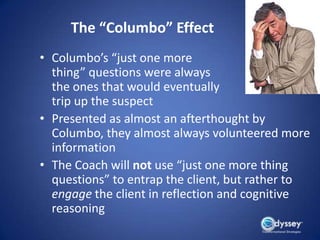
The “Columbo” Effect
• Columbo’s “just one more
  thing” questions were always
  the ones that would eventually
  trip up the suspect
• Presented as almost an afterthought by
  Columbo, they almost always volunteered more
  information
• The Coach will not use “just one more thing
  questions” to entrap the client, but rather to
  engage the client in reflection and cognitive
  reasoning
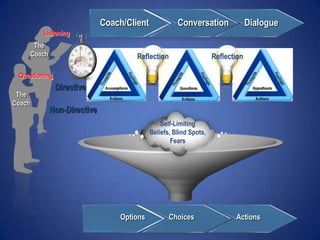
Coach/Client             Conversation               Dialogue
           Listening
         The
        Coach                            Reflection                    Reflection
                       Timing
 Questioning
                 Directive
 The
Coach
                Non-Directive
                                                   Self-Limiting
                                               Beliefs, Blind Spots,
                                                       Fears


                                    Options           Choices                 Actions
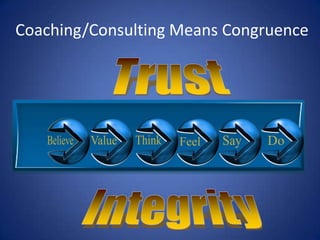
Coaching/Consulting Means Congruence
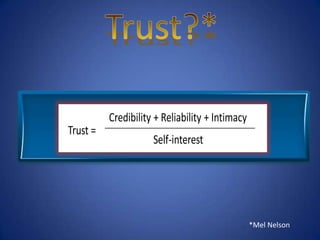
Credibility + Reliability + Intimacy
Trust =
                     Self-interest


                                                 *Mel Nelson
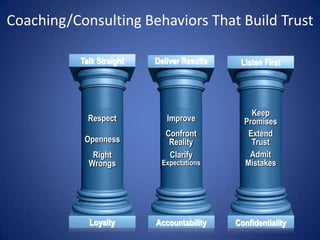
Coaching/Consulting Behaviors That Build Trust

           Talk Straight   Deliver Results    Listen First


                                                 Keep
             Respect          Improve          Promises
                              Confront          Extend
            Openness           Reality           Trust
              Right            Clarify          Admit
             Wrongs          Expectations      Mistakes


             Loyalty       Accountability    Confidentiality
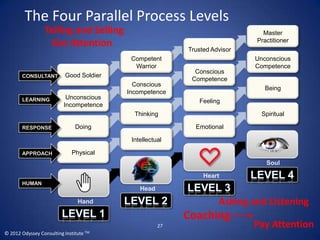
The Four Parallel Process Levels
                  Telling and Selling                                         Master
                                                                            Practitioner
                    Get Attention
                                                          Trusted Advisor
                                           Competent                        Unconscious
                                            Warrior                         Competence
                                                            Conscious
       CONSULTANT          Good Soldier
                                                           Competence
                                            Conscious
                                                                               Being
                                          Incompetence
       LEARNING            Unconscious
                                                             Feeling
                          Incompetence
                                            Thinking                          Spiritual

       RESPONSE                Doing                        Emotional

                                           Intellectual

       APPROACH               Physical
                                                                               Soul

                                                               Heart
       HUMAN
                                              Head

                                Hand                                Asking and Listening
                                                          Coaching
                                                     27                     Pay Attention
© 2012 Odyssey Consulting Institute TM
To a butterfly who wants to learn new flying skills,
         e.g. hovering in mid-air like a hummingbird:
•   The consultant says: Here’s the program I have designed so that you can learn how
    to hover in mid-air like a hummingbird. And here’s the bill.
•   The mentor says: Pay close attention to me, and to what I do with my wings so I
    can hover in mid-air like a hummingbird. Now it’s your turn to give it a try. No, no,
    no. Not that way. This way. See it? Now you.
•   The counselor says: So, what you’re saying is that you want to learn how to hover
    in mid-air, just like a hummingbird. Is that what you mean?
•   The therapist says: We’ve concluded that this is a much more efficient way of
    doing what you want to learn. By following this guideline, you won’t experience
    those many difficulties. You’ll learn faster and won’t forget it.
•   The coach says: And how soon would you like to be flying like a hummingbird? In
    what ways could you acquire the necessary skills to do it? Who could help you with
    it? What’s your action plan? When are you going to start?


    Sandro DaSilva
NOW OPEN QUESTION AND ANSWER
                                         TIME


© 2012 Odyssey Consulting Institute TM
JOIN US FOR THE NEXT ODYSSEY
                           MOVEMENT - Q&A SESSION

                                 Title Monetizing Your Value
                                 Date July 12th 2012
                                 Presenter Brent Patmos


© 2012 Odyssey Consulting Institute TM

Coaching and Consulting

  • 1.
    INTEGRATING CONSULTING &COACHING INTO YOUR PRACTICE AS A TRUSTED ADVISOR/MASTER PRACTITIONER PRESENTED BY DR. SHAYNE TRACY DATE JUNE 7TH 2012 © 2012 Odyssey Consulting Institute TM
  • 2.
    Presented By Dr. Shayne Tracy © 2012 Odyssey Consulting Institute TM
  • 3.
    The Role ofCoaching Consulting Coaching Knowledge Competencies Counselling Practices Training Learning Processes Behavioral Models Mentoring
  • 4.
    80/20 Rule Consulting 80%-telling, advising, directing 20%- questioning, reflecting Coaching 80%- questioning, reflecting 20%- telling, advising, directing Keys for the Master Practitioner is versatility, flexibility, timing and trust
  • 5.
    What Is Coaching? •Coaching is creating a safe, supportive, trust based environment for someone to have their “internal conversation” out loud • Coaching lives in language—language of change—change language, reframe, refocus • Coaching is creating a context for planned, self directed action and focused results
  • 6.
    The Coach’s Arenaof Influence Development Issue Behavior What We Do and Say Emotions Physiology Feelings The Brain Beliefs Needs Values Attitudes Learning
  • 7.
    Self-Esteem — IntrinsicValuing Self-Awareness + Self-Acceptance = Self-Concept (Self-Esteem, Personal Vision, Intrinsic Valuing, Solution-Finding) High Clarifying, Confirming Questioning Process Client Risk Taking Probing , Exploratory Self-Concept Preliminary, Innocuous Low
  • 8.
    Level of CoachInvolvement Client Level of Maturity
  • 9.
    The Four Dimensionsof Coaching 1. The Client’s Story • Coaches recognize the significance of the “story” to the client • The coach encourages the client to share their “story” which provides context that may range from simple to complex issues and challenges • Coaches must never underestimate the value of simply exhaustive and non-judgmental listening
  • 10.
    The Four Dimensionsof Coaching 1. The Client’s Story • Experienced coaches manage the client’s story-telling, knowing that they need less information than the client may think • Less experienced coaches may fall into the trap of believing they must understand all dimensions of the story
  • 11.
    The Story Coach: “Thatwas a very interesting strategy session we had with the Executive Team today?”………. “Tell me from your perspective what you saw happening with the team”
  • 12.
    The Four Dimensionsof Coaching 2. The Client’s Thinking (cognitive) process • This level enables the coach to get beyond the client story to examine how and what the client thinks • The coach may challenge the client to challenge their thinking, when the coach has identified that the client’s thinking may be flawed, limited, or negative
  • 13.
    The Four Dimensionsof Coaching 2. The Client’s Thinking (cognitive) process • The coach must not presume to be the arbiter of sound and unsound thinking • Coaches must be highly vigilant in not imposing their own world views, values and judgments on their clients • The coach will encourage clients to retain their prerogative on choice of action in dealing with their personal/business situations
  • 14.
    Thinking Coach “ Soyou think that four out of the 6 Team members are really buying in to the new product marketing strategy?” “What makes you think that?”
  • 15.
    The Four Dimensionsof Coaching 3. The Client’s Feelings (affective/attitude response) • When the client identifies their key issues there will always be an emotional response • Coaches may miss this or are unsure how to react to this reality • One aspect of this confusion is that “feelings work” may appear more like “counseling” • Coaches may be unclear or uncomfortable as to boundaries and emotional expression, and may consciously or unconsciously try to shut it down
  • 16.
    The Four DimensionsofCoaching 3. The Client’s Feelings (affective response) • A key coaching skill is the ability to appropriately facilitate “emotional expression” • Sometimes it is the very breakthrough that is urgently needed for the client to get unstuck • Clients may often bring heightened feelings into the room, whether the coach expects or appreciates it
  • 17.
    Feelings Coach: “How do you feel about the current situation, particularly with the 2 who haven’t bought in?” “You appear to have some strong feelings about this situation”……….silence is golden in coaching Principle: You cannot problem-solve without emotional clarity
  • 18.
    The Four Dimensionsof Coaching 4. The Coach’s Use of Self • The coach’s use of self is a “higher order” skill that can define the difference between good and great coaching • The coach’s use of self may be described as the ability to put words around those intuitive moments of discrete discernment where we identify and synthesize the client’s “total messaging”
  • 20.
    Use of Self Coach:So what you are telling me is that the strategy will go ahead regardless as to whether the 2 “delinquents” aren’t supporting it’? CEO: “Yes” Coach: I’d like to revisit the reasons the 2 executives aren’t engaged. I believe it’s critical we have their commitment. Can we have more discussion on ways to get these guys committed?
  • 21.
    The Seven Powersof Questions • Questions demand answers • Questions stimulate thought • Questions give us information • Questions encourage people to talk • People believe what they say more than what you say • The questioner is in control • Questions show that you care
  • 22.
    The “Columbo” Effect •Columbo’s “just one more thing” questions were always the ones that would eventually trip up the suspect • Presented as almost an afterthought by Columbo, they almost always volunteered more information • The Coach will not use “just one more thing questions” to entrap the client, but rather to engage the client in reflection and cognitive reasoning
  • 23.
    Coach/Client Conversation Dialogue Listening The Coach Reflection Reflection Timing Questioning Directive The Coach Non-Directive Self-Limiting Beliefs, Blind Spots, Fears Options Choices Actions
  • 24.
  • 25.
    Credibility + Reliability+ Intimacy Trust = Self-interest *Mel Nelson
  • 26.
    Coaching/Consulting Behaviors ThatBuild Trust Talk Straight Deliver Results Listen First Keep Respect Improve Promises Confront Extend Openness Reality Trust Right Clarify Admit Wrongs Expectations Mistakes Loyalty Accountability Confidentiality
  • 27.
    The Four ParallelProcess Levels Telling and Selling Master Practitioner Get Attention Trusted Advisor Competent Unconscious Warrior Competence Conscious CONSULTANT Good Soldier Competence Conscious Being Incompetence LEARNING Unconscious Feeling Incompetence Thinking Spiritual RESPONSE Doing Emotional Intellectual APPROACH Physical Soul Heart HUMAN Head Hand Asking and Listening Coaching 27 Pay Attention © 2012 Odyssey Consulting Institute TM
  • 28.
    To a butterflywho wants to learn new flying skills, e.g. hovering in mid-air like a hummingbird: • The consultant says: Here’s the program I have designed so that you can learn how to hover in mid-air like a hummingbird. And here’s the bill. • The mentor says: Pay close attention to me, and to what I do with my wings so I can hover in mid-air like a hummingbird. Now it’s your turn to give it a try. No, no, no. Not that way. This way. See it? Now you. • The counselor says: So, what you’re saying is that you want to learn how to hover in mid-air, just like a hummingbird. Is that what you mean? • The therapist says: We’ve concluded that this is a much more efficient way of doing what you want to learn. By following this guideline, you won’t experience those many difficulties. You’ll learn faster and won’t forget it. • The coach says: And how soon would you like to be flying like a hummingbird? In what ways could you acquire the necessary skills to do it? Who could help you with it? What’s your action plan? When are you going to start? Sandro DaSilva
  • 29.
    NOW OPEN QUESTIONAND ANSWER TIME © 2012 Odyssey Consulting Institute TM
  • 30.
    JOIN US FORTHE NEXT ODYSSEY MOVEMENT - Q&A SESSION Title Monetizing Your Value Date July 12th 2012 Presenter Brent Patmos © 2012 Odyssey Consulting Institute TM