Ten Steps to Building a High Performance High Value OrganizationDr. Shayne G. Tracy
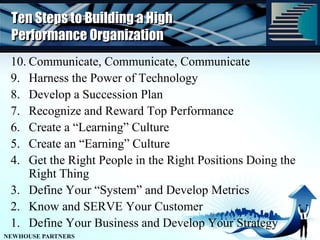
Ten Steps to Building a High Performance Organization10.	Communicate, Communicate, Communicate9.  	Harness the Power of Technology8.  	Develop a Succession Plan7.  	Recognize and Reward Top Performance6.  	Create a “Learning” Culture5.  	Create an “Earning” Culture4.  	Get the Right People in the Right Positions Doing the Right Thing3.  	Define Your “System” and Develop Metrics 2.  	Know and SERVE Your Customer 1.  	Define Your Business and Develop Your Strategy
Building an Asset...NOT Just a Business!“What choice can I make and action can I take in this moment to create the greatest net value?”—Peter Demarest, Answering the Central Question
Define Your Business and Develop Your StrategyWhat business are you really in?What value do you create and deliver?“The value of any currency is defined by the receiver, not by the holder...”—Dr. Donald M. CarmontIs your “currency” current?How often to you re-visit your strategic plan?Do you have a third pair of eyes?
Know and SERVE Your Customer“One who knows the customer best has no competition!”Who is your customer? Who do you WANT to be your customers?Have you applied the 80/20 rule to determine which customers drive value and margins?What customers should you “fire”!Are you creating a unique customer experienceLoyal customers build your brand and asset
Define Your “System” and Develop MetricsMap your business processes from the customer’s experienceInspect your system of processes for impediments to delivering the ultimate customer experienceMAP (measure, assess, plan) your metrics for each processDevelop scorecards for the four dimensionsPeople, operations, finance, and customer
Get the Right People in the Right Positions Doing the Right ThingWhich positions create the greatest value?Are you properly recruiting, selecting, hiring and compensating appropriate to value creation?Are you investing “value” in positions that don’t generate “value”?Are you valuing people who create value?
Create an “Earning” CultureChoose to develop an earning culture: not a culture of entitlement or fearIn an earning culture, job security is possible but not promisedAn earning culture is a culture where value is rewarded, not perfunctory performanceAn earning culture differentiates between poor performers and top performers
Recognize and Reward Top PerformanceRecognition begins with compensation commensurate with contribution (value for value)Recognition doesn’t have to be financialDon’t overlook the “power of appreciation”The best reward systems are those where workers are involved in determining what will be rewarded and how
Create a “Learning” CultureA “learning” culture is first and foremost a culture that views the workplace as the classroomAll mistakes, successes, and everything that occurs is embraced as “lessons learned”Learning organizations link their training and development to:Strategic intentEmployee development: developing leaders from the shop floor to the top floorCareer development and succession
Develop a Succession PlanDon’t wait for retirement to overtake you before you develop your exit strategy and succession planEmployees that are coached, mentored, valued and engaged remain loyal and are your best pool of candidates for future leadershipDo you have a replacement that you are mentoring and grooming to take over?
Harness the Power of TechnologyRecognize that technology is a “support” system and shold not “supplant” your core business modelTechnology is an enabler to accelerate the achievement of your strategyDon’t sacrifice “high touch” at the altar of “high tech”
Communicate, Communicate, CommunicateCommunication is the lubricant that makes the machinery of your organization functionCommunicate is more than “telling”Communication is ultimately “understanding”Effective leaders achieve this by being among their people, listening to their people, engaging their people, and keeping everyone informedOperate on a “first-to-know” basisOpenness builds the trust that builds your value
                  Thank you     www.newhousepartners.com

Ten Steps To Building A High Performance Organization

  • 1.
    Ten Steps toBuilding a High Performance High Value OrganizationDr. Shayne G. Tracy
  • 2.
    Ten Steps toBuilding a High Performance Organization10. Communicate, Communicate, Communicate9. Harness the Power of Technology8. Develop a Succession Plan7. Recognize and Reward Top Performance6. Create a “Learning” Culture5. Create an “Earning” Culture4. Get the Right People in the Right Positions Doing the Right Thing3. Define Your “System” and Develop Metrics 2. Know and SERVE Your Customer 1. Define Your Business and Develop Your Strategy
  • 3.
    Building an Asset...NOTJust a Business!“What choice can I make and action can I take in this moment to create the greatest net value?”—Peter Demarest, Answering the Central Question
  • 4.
    Define Your Businessand Develop Your StrategyWhat business are you really in?What value do you create and deliver?“The value of any currency is defined by the receiver, not by the holder...”—Dr. Donald M. CarmontIs your “currency” current?How often to you re-visit your strategic plan?Do you have a third pair of eyes?
  • 5.
    Know and SERVEYour Customer“One who knows the customer best has no competition!”Who is your customer? Who do you WANT to be your customers?Have you applied the 80/20 rule to determine which customers drive value and margins?What customers should you “fire”!Are you creating a unique customer experienceLoyal customers build your brand and asset
  • 6.
    Define Your “System”and Develop MetricsMap your business processes from the customer’s experienceInspect your system of processes for impediments to delivering the ultimate customer experienceMAP (measure, assess, plan) your metrics for each processDevelop scorecards for the four dimensionsPeople, operations, finance, and customer
  • 7.
    Get the RightPeople in the Right Positions Doing the Right ThingWhich positions create the greatest value?Are you properly recruiting, selecting, hiring and compensating appropriate to value creation?Are you investing “value” in positions that don’t generate “value”?Are you valuing people who create value?
  • 8.
    Create an “Earning”CultureChoose to develop an earning culture: not a culture of entitlement or fearIn an earning culture, job security is possible but not promisedAn earning culture is a culture where value is rewarded, not perfunctory performanceAn earning culture differentiates between poor performers and top performers
  • 9.
    Recognize and RewardTop PerformanceRecognition begins with compensation commensurate with contribution (value for value)Recognition doesn’t have to be financialDon’t overlook the “power of appreciation”The best reward systems are those where workers are involved in determining what will be rewarded and how
  • 10.
    Create a “Learning”CultureA “learning” culture is first and foremost a culture that views the workplace as the classroomAll mistakes, successes, and everything that occurs is embraced as “lessons learned”Learning organizations link their training and development to:Strategic intentEmployee development: developing leaders from the shop floor to the top floorCareer development and succession
  • 11.
    Develop a SuccessionPlanDon’t wait for retirement to overtake you before you develop your exit strategy and succession planEmployees that are coached, mentored, valued and engaged remain loyal and are your best pool of candidates for future leadershipDo you have a replacement that you are mentoring and grooming to take over?
  • 12.
    Harness the Powerof TechnologyRecognize that technology is a “support” system and shold not “supplant” your core business modelTechnology is an enabler to accelerate the achievement of your strategyDon’t sacrifice “high touch” at the altar of “high tech”
  • 13.
    Communicate, Communicate, CommunicateCommunicationis the lubricant that makes the machinery of your organization functionCommunicate is more than “telling”Communication is ultimately “understanding”Effective leaders achieve this by being among their people, listening to their people, engaging their people, and keeping everyone informedOperate on a “first-to-know” basisOpenness builds the trust that builds your value
  • 14.
    Thank you www.newhousepartners.com