John Sunderland-Wright

Introduction to Enterprise Mentoring
Today’s programme

• The background to mentoring
• Advanced skills and tools required by the mentor
   • Sports model
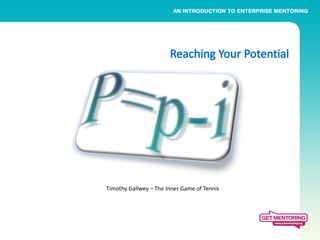
   • P=p-I
   • Go Mad thinking and the GROW model
• Practicing Helping each other and yourself
• A quick review of your learning
• Next steps?
Inspiration…

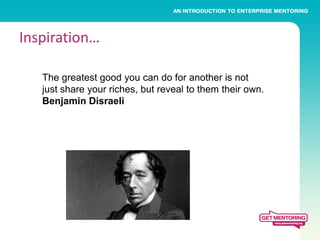
   The greatest good you can do for another is not
   just share your riches, but reveal to them their own.
   Benjamin Disraeli
Role of the Mentor

• Brainstorm what you think is involved in
  mentoring and the variety of roles and
  behaviours a good mentor needs.
• Feedback in 5 minutes.


Mentor Skills
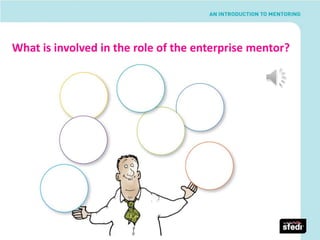
What is involved in the role of the enterprise mentor?
The benefits of mentoring


• For the mentee?
• For the mentor?
Benefits of mentoring for the mentee
•   Increased self awareness and understanding
•   Provided with a sounding board for feedback
•   Support for ideas and critical reflection
•   Assumptions and beliefs are challenged in a safe and supportive way
•   Experience of different options/paths
•   A safe environment to try out ideas
•   A source of stretch and challenge
•   Expands personal network and learning
•   Accelerates personal development
•   Increases self confidence and self esteem
Benefits of mentoring for the mentor
•   Personal fulfilment from investing in others
•   Communication, mentoring and coaching skills
•   Enjoyment from seeing others succeed
•   Feels ‘valued’ as a role model
•   Stimulates own learning of business enterprise
•   Opportunity to take time out and reflect
•   Renewed focus on future career or opportunities
•   Develops new insight into own self
•   Gains an appreciation of an entrepreneurs pressures
•   Improves own development and performance
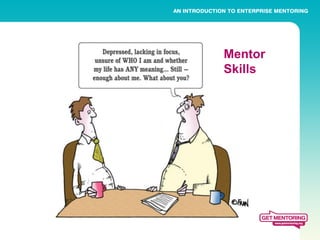
Mentor
Skills
Mentor Skills
•   Listening
•   Questioning
•   Actions and goals (GROW)
•   Offer challenge
•   Offer support
•   Give and receive Feedback
•   Build Rapport
•   Invite Critical reflection and CPD
How good are your communication skills?
• I would like to tell you a short story….
Break
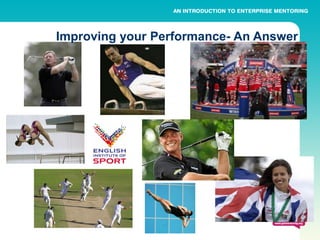
Improving your Performance- An Answer
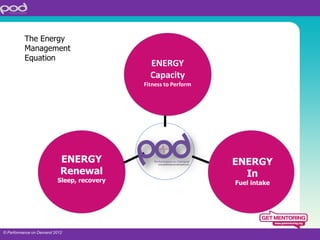
The Energy
          Management
          Equation
                                             ENERGY
                                             Capacity
                                           Fitness to Perform


                           ENERGY                               ENERGY
                           Renewal                                In
                         Sleep, recovery                        Fuel intake


© Performance on Demand 2012
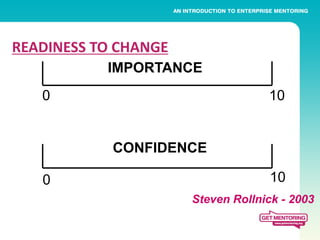
READINESS TO CHANGE
           IMPORTANCE
   0                               10


            CONFIDENCE

   0                                10
                      Steven Rollnick - 2003
Timothy Gallwey – The Inner Game of Tennis
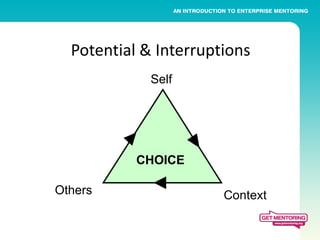
Potential & Interruptions
             Self


           CHOICE

Others                 Context
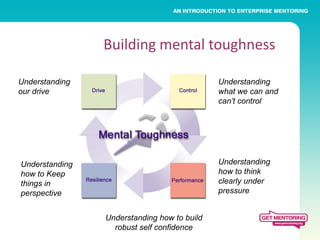
Building mental toughness

Understanding                                Understanding
our drive                                    what we can and
                                             can’t control


Understanding                                Understanding
how to Keep                                  how to think
things in                                    clearly under
perspective                                  pressure


                Understanding how to build
                  robust self confidence
Thinking clearly under pressure
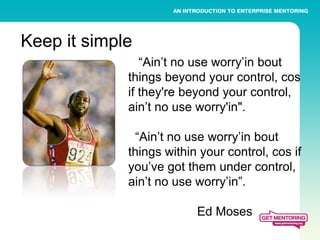
Keep it simple
                “Ain’t no use worry’in bout
             things beyond your control, cos
             if they're beyond your control,
             ain’t no use worry'in".

              “Ain’t no use worry’in bout
             things within your control, cos if
             you’ve got them under control,
             ain’t no use worry’in”.

                          Ed Moses
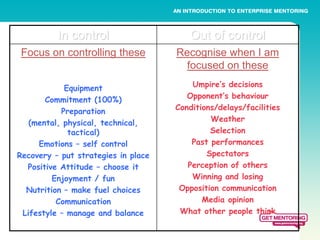
In control                     Out of control
 Focus on controlling these          Recognise when I am
                                       focused on these

            Equipment                    Umpire’s decisions
       Commitment (100%)                Opponent’s behaviour
           Preparation               Conditions/delays/facilities
   (mental, physical, technical,              Weather
             tactical)                        Selection
     Emotions – self control             Past performances
Recovery – put strategies in place           Spectators
  Positive Attitude – choose it         Perception of others
         Enjoyment / fun                 Winning and losing
  Nutrition – make fuel choices       Opposition communication
          Communication                     Media opinion
 Lifestyle – manage and balance       What other people think
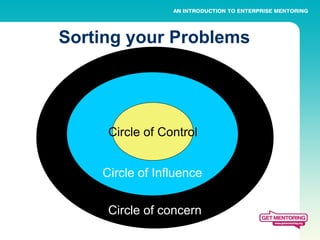
Sorting your Problems


     Circle of Control


    Circle of Influence


     Circle of concern
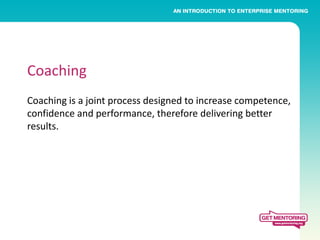
Coaching
Coaching is a joint process designed to increase competence,
confidence and performance, therefore delivering better
results.
The Role of the Coach
To help them to succeed, giving them the tools and insights
to maintain the improvement.

To help them reach their own conclusions about the best way
to achieve an improved performance.
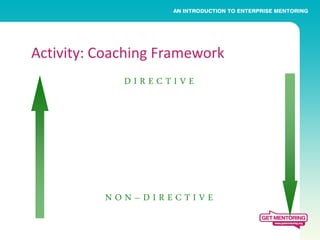
Activity: Coaching Framework
             DIRECTIVE


          NON–DIRECTIVE
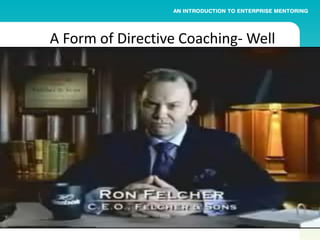
A Form of Directive Coaching- Well
                        not really!
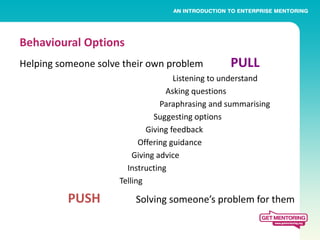
Behavioural Options
Helping someone solve their own problem           PULL
                                     Listening to understand
                                   Asking questions
                                 Paraphrasing and summarising
                               Suggesting options
                             Giving feedback
                           Offering guidance
                         Giving advice
                       Instructing
                     Telling

          PUSH           Solving someone’s problem for them
Activity: Coaching Practise 1

 •Use the Directive approach with your coachee on a problem
 they are facing at work
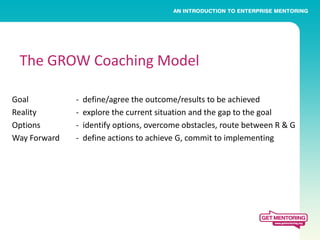
The GROW Coaching Model

Goal          -   define/agree the outcome/results to be achieved
Reality       -   explore the current situation and the gap to the goal
Options       -   identify options, overcome obstacles, route between R & G
Way Forward   -   define actions to achieve G, commit to implementing
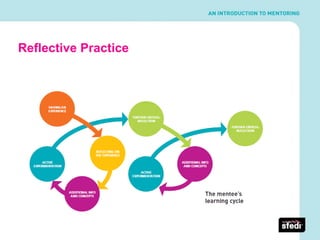
Reflective Practice
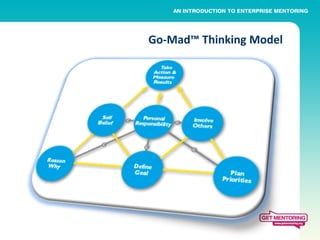
Go-Mad™ Thinking Model
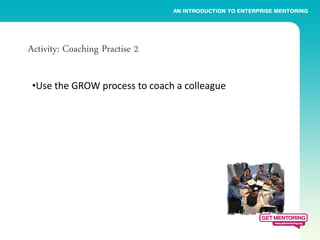
Activity: Coaching Practise 2

 •Use the GROW process to coach a colleague
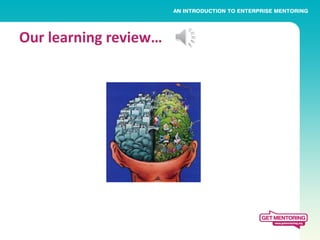
Our learning review…
Helping them to see things differently
Multi-choice questionnaire…
Next steps…

• Completed multi choice questionnaire (we will sort your
  certificate)

• Mentors become an IOEE mentor (FoC) and IOEE will pick up
  your match up with a carefully chosen mentee

• Plan to deliver the equivalent of one free hour of mentoring
  per month (within 2 years)
Resources & Support
  For support;
• http://mentor.ioee.co.uk/resources
  For Accreditation options – Blue Orchid in the North West
• http://www.theblueorchid.co.uk/
  QA & practice sharing Portal
• www.mentorsme.com
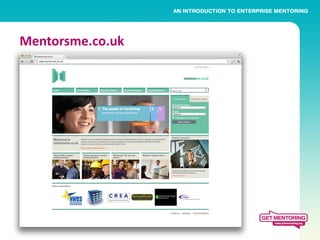
Mentorsme.co.uk
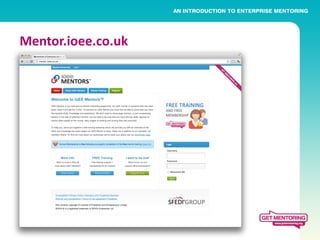
Mentor.ioee.co.uk
Contact Points
Sarah Trouten
e. sarah.trouten@sfedi.co.uk
t. 0845 467 4928

Amanda Dudman
e. amanda.dudman@sfedi.co.uk
t. 0844 870 8787
m. 07968 982568
Thank you and
Introduction to Enterprise Mentoring
                              enjoy your
                           mentoring journey

                            John Sunderland-
                                 Wright

Introduction To Enterprise Mentoring Slides For Psybt

  • 1.
  • 2.
    Today’s programme • Thebackground to mentoring • Advanced skills and tools required by the mentor • Sports model • P=p-I • Go Mad thinking and the GROW model • Practicing Helping each other and yourself • A quick review of your learning • Next steps?
  • 3.
    Inspiration… The greatest good you can do for another is not just share your riches, but reveal to them their own. Benjamin Disraeli
  • 4.
    Role of theMentor • Brainstorm what you think is involved in mentoring and the variety of roles and behaviours a good mentor needs. • Feedback in 5 minutes. Mentor Skills
  • 5.
    What is involvedin the role of the enterprise mentor?
  • 6.
    The benefits ofmentoring • For the mentee? • For the mentor?
  • 7.
    Benefits of mentoringfor the mentee • Increased self awareness and understanding • Provided with a sounding board for feedback • Support for ideas and critical reflection • Assumptions and beliefs are challenged in a safe and supportive way • Experience of different options/paths • A safe environment to try out ideas • A source of stretch and challenge • Expands personal network and learning • Accelerates personal development • Increases self confidence and self esteem
  • 8.
    Benefits of mentoringfor the mentor • Personal fulfilment from investing in others • Communication, mentoring and coaching skills • Enjoyment from seeing others succeed • Feels ‘valued’ as a role model • Stimulates own learning of business enterprise • Opportunity to take time out and reflect • Renewed focus on future career or opportunities • Develops new insight into own self • Gains an appreciation of an entrepreneurs pressures • Improves own development and performance
  • 9.
  • 10.
    Mentor Skills • Listening • Questioning • Actions and goals (GROW) • Offer challenge • Offer support • Give and receive Feedback • Build Rapport • Invite Critical reflection and CPD
  • 11.
    How good areyour communication skills? • I would like to tell you a short story….
  • 12.
  • 13.
  • 14.
    The Energy Management Equation ENERGY Capacity Fitness to Perform ENERGY ENERGY Renewal In Sleep, recovery Fuel intake © Performance on Demand 2012
  • 15.
    READINESS TO CHANGE IMPORTANCE 0 10 CONFIDENCE 0 10 Steven Rollnick - 2003
  • 16.
    Timothy Gallwey –The Inner Game of Tennis
  • 17.
    Potential & Interruptions Self CHOICE Others Context
  • 19.
    Building mental toughness Understanding Understanding our drive what we can and can’t control Understanding Understanding how to Keep how to think things in clearly under perspective pressure Understanding how to build robust self confidence
  • 20.
  • 21.
    Keep it simple “Ain’t no use worry’in bout things beyond your control, cos if they're beyond your control, ain’t no use worry'in". “Ain’t no use worry’in bout things within your control, cos if you’ve got them under control, ain’t no use worry’in”. Ed Moses
  • 22.
    In control Out of control Focus on controlling these Recognise when I am focused on these Equipment Umpire’s decisions Commitment (100%) Opponent’s behaviour Preparation Conditions/delays/facilities (mental, physical, technical, Weather tactical) Selection Emotions – self control Past performances Recovery – put strategies in place Spectators Positive Attitude – choose it Perception of others Enjoyment / fun Winning and losing Nutrition – make fuel choices Opposition communication Communication Media opinion Lifestyle – manage and balance What other people think
  • 23.
    Sorting your Problems Circle of Control Circle of Influence Circle of concern
  • 24.
    Coaching Coaching is ajoint process designed to increase competence, confidence and performance, therefore delivering better results.
  • 25.
    The Role ofthe Coach To help them to succeed, giving them the tools and insights to maintain the improvement. To help them reach their own conclusions about the best way to achieve an improved performance.
  • 26.
    Activity: Coaching Framework DIRECTIVE NON–DIRECTIVE
  • 27.
    A Form ofDirective Coaching- Well not really!
  • 28.
    Behavioural Options Helping someonesolve their own problem PULL Listening to understand Asking questions Paraphrasing and summarising Suggesting options Giving feedback Offering guidance Giving advice Instructing Telling PUSH Solving someone’s problem for them
  • 29.
    Activity: Coaching Practise1 •Use the Directive approach with your coachee on a problem they are facing at work
  • 30.
    The GROW CoachingModel Goal - define/agree the outcome/results to be achieved Reality - explore the current situation and the gap to the goal Options - identify options, overcome obstacles, route between R & G Way Forward - define actions to achieve G, commit to implementing
  • 31.
  • 32.
  • 33.
    Activity: Coaching Practise2 •Use the GROW process to coach a colleague
  • 34.
  • 35.
    Helping them tosee things differently
  • 36.
  • 37.
    Next steps… • Completedmulti choice questionnaire (we will sort your certificate) • Mentors become an IOEE mentor (FoC) and IOEE will pick up your match up with a carefully chosen mentee • Plan to deliver the equivalent of one free hour of mentoring per month (within 2 years)
  • 38.
    Resources & Support For support; • http://mentor.ioee.co.uk/resources For Accreditation options – Blue Orchid in the North West • http://www.theblueorchid.co.uk/ QA & practice sharing Portal • www.mentorsme.com
  • 39.
  • 40.
  • 41.
    Contact Points Sarah Trouten e.sarah.trouten@sfedi.co.uk t. 0845 467 4928 Amanda Dudman e. amanda.dudman@sfedi.co.uk t. 0844 870 8787 m. 07968 982568
  • 42.
    Thank you and Introductionto Enterprise Mentoring enjoy your mentoring journey John Sunderland- Wright