

Central nervous system (CNS) stimulants
Bestha chakrapani M.pharm..,
Associate professor
Department of pharmacology
chakrispecial@gmail.com
9618279507
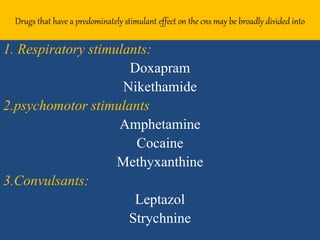
Drugs that have a predominately stimulant effect on the cns may be broadly divided into
1. Respiratory stimulants:
Doxapram
Nikethamide
2.psychomotor stimulants
Amphetamine
Cocaine
Methyxanthine
3.Convulsants:
Leptazol
Strychnine
Respiratory stimulants are also called analeptics.
These drugs stimulate respiration and are some
times used to treat respiratory failure.
Though they may bring about temporary
improvement in respiration.
The mortality is not reduced.
They have a low safety margin and may produce
convulsions.
Doxapram appears to act mainly on the brain stem
and spinal cord and increase the activity of
respiratory and vasomotor centers.
Adverse effects are
Nausea,
Cough,
 Restlessness,
Hypertension,
Tachycardia,
Arrhythmias
Convulsions.
uses
Doxapram is occasionally used IV as an
analeptic in acute respiratory failure.
Apnea in premature infants not responding to
Theophylline.
nikethamide
Is not used because of the risk of convulsions.
Psychomotor stimulants:
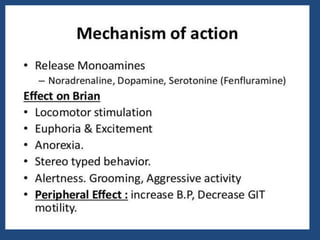
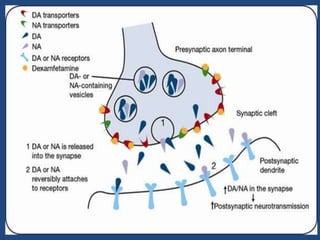
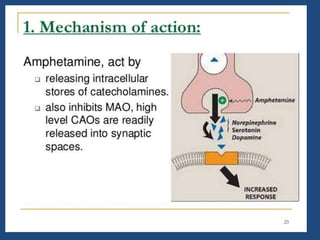
Amphetamine and dextroamphetamine are
sympathomimetic drugs.
Psychomotor stimulants
Amphetamine and dextroamphetamine are
sympathomimetic drugs.
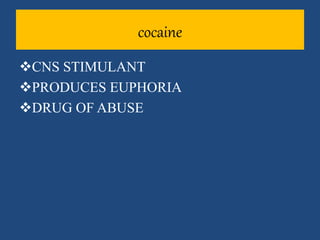
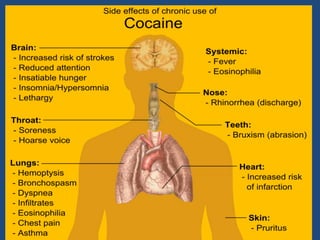
cocaine
CNS STIMULANT
PRODUCES EUPHORIA
DRUG OF ABUSE
methylxanthines
Caffeine ,Theophylline and theobromine are
the naturally occurring xanthenes alkaloids.
The beverages –coffee contains ,caffeine, tea
contains Theophylline and caffeine ;coca has
caffeine and theobromine.
actions
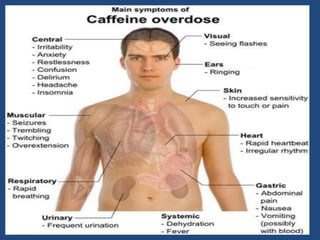
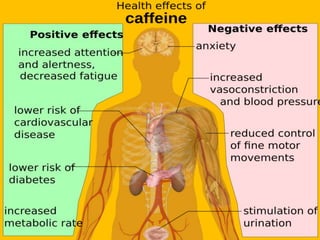
CNS :caffeine and Theophylline are cns stimulants .
They bring about an increase in mental alertness.
A reduction of fatigue, produce a sense of well –being and
improve motor activity and performance with a clearer flow
thought .
Caffeine stimulates the respiratory center.
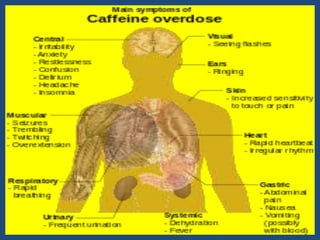
Higher doses produce irritability nervousness
,restlessness,insomina,excitement, and headache.
High doses can result inconvulsions.
uses
Head ache:
Because of the effect of caffeine on cerebral
blood vessels ,it is combined with ergotamine
for the relief of migraine headache.
Caffeine is also combined with aspirin
/paracetamol for the treatment of headache.
Bronchial asthma: theophylline is used in the
treatment of bronchial asthma.

Central nervous stimulants

  • 1.
    Central nervous system(CNS) stimulants Bestha chakrapani M.pharm.., Associate professor Department of pharmacology chakrispecial@gmail.com 9618279507
  • 4.
    Drugs that havea predominately stimulant effect on the cns may be broadly divided into 1. Respiratory stimulants: Doxapram Nikethamide 2.psychomotor stimulants Amphetamine Cocaine Methyxanthine 3.Convulsants: Leptazol Strychnine
  • 8.
    Respiratory stimulants arealso called analeptics. These drugs stimulate respiration and are some times used to treat respiratory failure. Though they may bring about temporary improvement in respiration. The mortality is not reduced. They have a low safety margin and may produce convulsions.
  • 10.
    Doxapram appears toact mainly on the brain stem and spinal cord and increase the activity of respiratory and vasomotor centers. Adverse effects are Nausea, Cough,  Restlessness, Hypertension, Tachycardia, Arrhythmias Convulsions.
  • 11.
    uses Doxapram is occasionallyused IV as an analeptic in acute respiratory failure. Apnea in premature infants not responding to Theophylline.
  • 12.
    nikethamide Is not usedbecause of the risk of convulsions. Psychomotor stimulants: Amphetamine and dextroamphetamine are sympathomimetic drugs.
  • 13.
    Psychomotor stimulants Amphetamine anddextroamphetamine are sympathomimetic drugs.
  • 17.
  • 23.
    methylxanthines Caffeine ,Theophylline andtheobromine are the naturally occurring xanthenes alkaloids. The beverages –coffee contains ,caffeine, tea contains Theophylline and caffeine ;coca has caffeine and theobromine.
  • 24.
    actions CNS :caffeine andTheophylline are cns stimulants . They bring about an increase in mental alertness. A reduction of fatigue, produce a sense of well –being and improve motor activity and performance with a clearer flow thought . Caffeine stimulates the respiratory center. Higher doses produce irritability nervousness ,restlessness,insomina,excitement, and headache. High doses can result inconvulsions.
  • 25.
    uses Head ache: Because ofthe effect of caffeine on cerebral blood vessels ,it is combined with ergotamine for the relief of migraine headache. Caffeine is also combined with aspirin /paracetamol for the treatment of headache. Bronchial asthma: theophylline is used in the treatment of bronchial asthma.