BY P.HARIKA
IMPORTANT POINTS
 What is cloud computing?
 Mechanism of cloud computing
 Before cloud computing how it was
 After cloud computing how it changed
 Types of cloud computing and where they are
used
 Applications of cloud computing
 Usage of cloud computing
 Advantages of cloud computing
 Financial profits for the country by using it
What is cloud computing
• cloud computing means storing and accessing data
and programs over the Internet instead of your
computer's hard drive.
• It is a service that helps you to perform the tasks
over the internet.
• The users can access resources as they need them.
• The term “cloud” refers the internet.
Cloud computing:
•Cloud computing consists of software and hardware
available on the internet managed by third party
services
•The authorized user can reach the cloud for
resources when they need it.
•The users can manage their data in cloud by storing
it in various devices.
•It is one of the best way to run business.
Secured cloud computing
* The data stored in the cloud are accessed by the
authenticated users via passwords or tokens
* The users just ‘plug in’ and access the resources.
* The company or the individuals pay for not using
the system but they can pay only for the computing
power and services they use.
* The online storage is safe and secured
How do you actually work with “cloud” ?
•You just need the personal computer with internet
connection.
•You need to access to the cloud services to make use
of it.
•Put whatever you want inside the cloud or make use
of servers, software’s, etc., you need
•Disconnect it once you have done release it back to
the cloud.
•Pay for the server utilized, processing power used
and bandwidth consumed.
TYPES OF CLOUD
 Private cloud
 Public cloud
 Community cloud
 Hybrid cloud
Public cloud
 A public cloud is one based on the
standard cloud computing model, in which a
service provider makes resources, such as
applications and storage, available to the
general public over the Internet. Public cloud
services may be free or offered on a pay-per-
usage model.
Private cloud
 Private cloud is a type of cloud computing that
delivers similar advantages to public
cloud.Unlike public clouds, which deliver
services to multiple organizations, a private
cloud is dedicated to a single organization.
Community cloud
 A community cloud is a multi-
tenant infrastructure that is shared among
several organizations from a specific group
with common computing concerns.
Hybrid cloud
 Hybrid cloud is a cloud computing
environment which uses a mix of on-
premises, private cloud and third-party, public
cloud services , hybrid cloud gives businesses
greater flexibility and more data deployment
options.
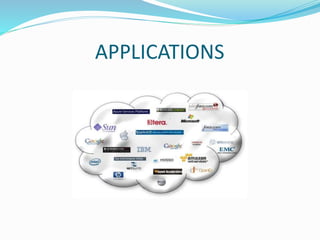
APPLICATIONS
EXAMPLES
 Educational institutions:-
 Ability for the students to access data
anywhere, anytime, to enroll in online classes
and to participate in group activities.
 Development:-
 It applies to areas such as banking,
agriculture, health and science.
Best example for cloud computing
•Electricity bill
• Turn on your lights and meter starts running. Once it is
switched off, meter stops.
• You will pay only for the power utilized.
The same concept applies in the cloud computing.
“pay for what you use”
Top most uses of cloud computing
 Infrastructure as a service (Iaas) and platform
as a service (PaaS)
 Private cloud and hybrid cloud
 Test and development
 Big data analytics
 File storage
 Disaster recovery
 Backup
Advantages of Cloud Computing
 Cost Savings
 Reliability
 Manageability
 Strategic Edge
 Security
Financial profits
 Clever Use Of Hardware
 Power Saver
 Saving on Server Costs
 Timely Payments
 No Need for Reserves
Cloud computing ppt

Cloud computing ppt

  • 1.
  • 2.
    IMPORTANT POINTS  Whatis cloud computing?  Mechanism of cloud computing  Before cloud computing how it was  After cloud computing how it changed  Types of cloud computing and where they are used  Applications of cloud computing  Usage of cloud computing  Advantages of cloud computing  Financial profits for the country by using it
  • 3.
    What is cloudcomputing • cloud computing means storing and accessing data and programs over the Internet instead of your computer's hard drive. • It is a service that helps you to perform the tasks over the internet. • The users can access resources as they need them. • The term “cloud” refers the internet.
  • 4.
    Cloud computing: •Cloud computingconsists of software and hardware available on the internet managed by third party services •The authorized user can reach the cloud for resources when they need it. •The users can manage their data in cloud by storing it in various devices. •It is one of the best way to run business.
  • 5.
    Secured cloud computing *The data stored in the cloud are accessed by the authenticated users via passwords or tokens * The users just ‘plug in’ and access the resources. * The company or the individuals pay for not using the system but they can pay only for the computing power and services they use. * The online storage is safe and secured
  • 6.
    How do youactually work with “cloud” ? •You just need the personal computer with internet connection. •You need to access to the cloud services to make use of it. •Put whatever you want inside the cloud or make use of servers, software’s, etc., you need •Disconnect it once you have done release it back to the cloud. •Pay for the server utilized, processing power used and bandwidth consumed.
  • 7.
    TYPES OF CLOUD Private cloud  Public cloud  Community cloud  Hybrid cloud
  • 8.
    Public cloud  Apublic cloud is one based on the standard cloud computing model, in which a service provider makes resources, such as applications and storage, available to the general public over the Internet. Public cloud services may be free or offered on a pay-per- usage model.
  • 9.
    Private cloud  Privatecloud is a type of cloud computing that delivers similar advantages to public cloud.Unlike public clouds, which deliver services to multiple organizations, a private cloud is dedicated to a single organization.
  • 10.
    Community cloud  Acommunity cloud is a multi- tenant infrastructure that is shared among several organizations from a specific group with common computing concerns.
  • 11.
    Hybrid cloud  Hybridcloud is a cloud computing environment which uses a mix of on- premises, private cloud and third-party, public cloud services , hybrid cloud gives businesses greater flexibility and more data deployment options.
  • 12.
  • 13.
    EXAMPLES  Educational institutions:- Ability for the students to access data anywhere, anytime, to enroll in online classes and to participate in group activities.  Development:-  It applies to areas such as banking, agriculture, health and science.
  • 14.
    Best example forcloud computing •Electricity bill • Turn on your lights and meter starts running. Once it is switched off, meter stops. • You will pay only for the power utilized. The same concept applies in the cloud computing. “pay for what you use”
  • 15.
    Top most usesof cloud computing  Infrastructure as a service (Iaas) and platform as a service (PaaS)  Private cloud and hybrid cloud  Test and development  Big data analytics  File storage  Disaster recovery  Backup
  • 16.
    Advantages of CloudComputing  Cost Savings  Reliability  Manageability  Strategic Edge  Security
  • 17.
    Financial profits  CleverUse Of Hardware  Power Saver  Saving on Server Costs  Timely Payments  No Need for Reserves

Editor's Notes

  • #4 What is cloud computing * Cloud computing is a service that helps you to perform the tasks over the internet. The users can access resources as they need them. * The term “cloud” refers the internet.
  • #5 Cloud computing Cloud computing consists of software and hardware available on the internet managed by third party services The authorized user can reach the cloud for resources when they need it. The users can manage their data in cloud by storing it in various devices. It is one of the best way to run business.
  • #6 Secured cloud computing The data stored in the cloud are accessed by the authenticated users via passwords or tokens The users just ‘plug in’ and access the resources. The company or the individuals are paying for not using the system but now they can pay only for the computing power and services they use. The online storage is safe and secured
  • #7 How do you actually work with “cloud” ? You just need the personal computer with internet connection. You need to access to the cloud services to make use of it. Put whatever you want inside the cloud or make use of servers, software’s, etc., you need Disconnect it once you have done release it back to the cloud. Pay for the server utilized, processing power used and bandwidth consumed.
  • #15 Best example for cloud computing Electricity bill Turn on your lights and meter starts running. Once it is switched off, meter stops. You will pay only for the power utilized. The same concept applies in the cloud computing. “pay for what you use”