Cloud Computing
         the era started…..


        Srinivasula Reddy G
?
            Let us learn..

In June 2009, a study conducted by VersionOne
found that41%       of senior IT professionals
actually don't know what cloud computing is and
two-thirds of senior finance professionals are
confused by this concept
Outline
   What is Cloud Computing ?
   History
   Why Cloud Computing?
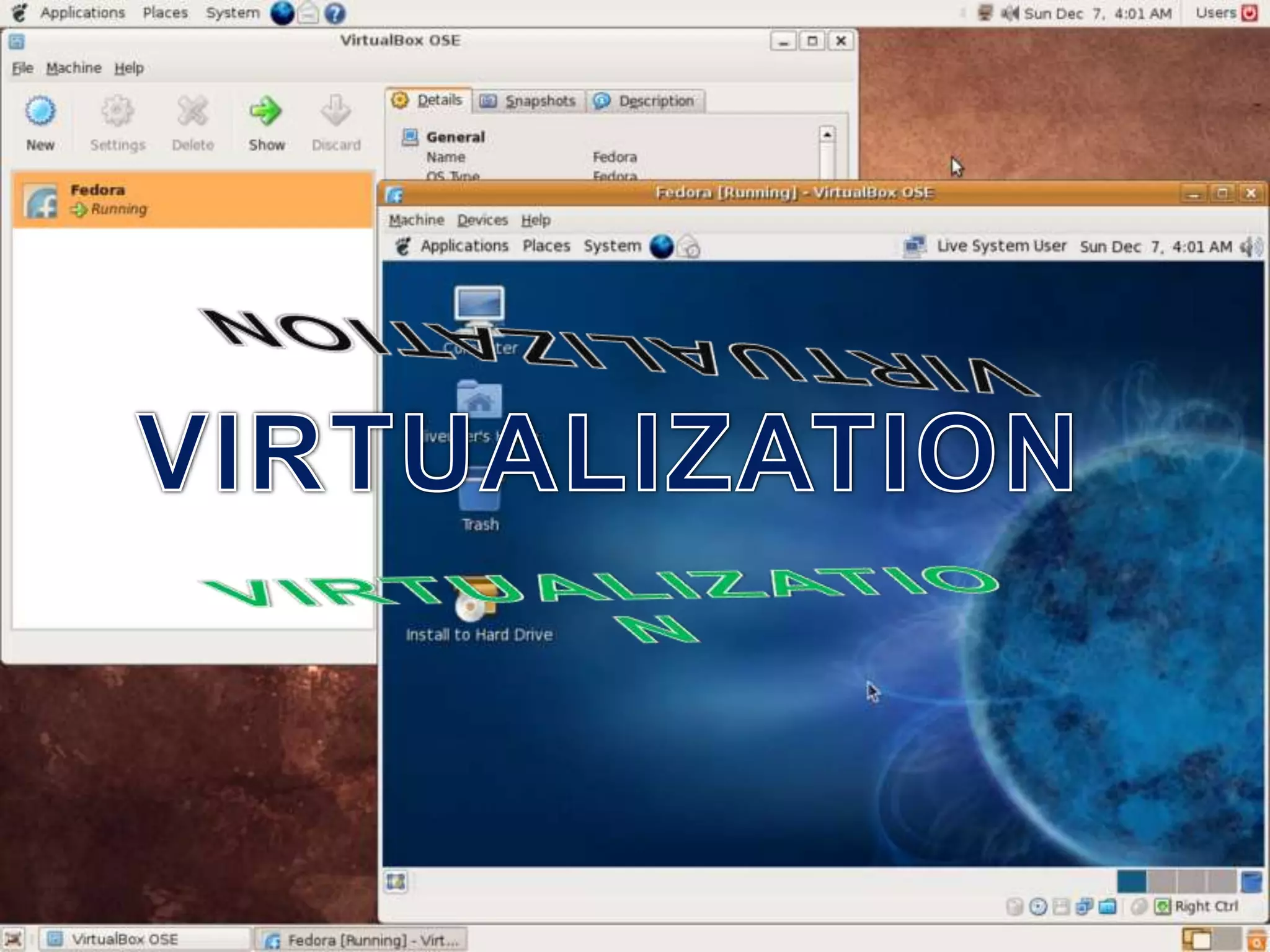
   VIRTUALIZATION
   Services Provided by Cloud Computing
   Service Providers of Cloud Computing
   Cloud Architecture
   Pros and Cons of Cloud Computing
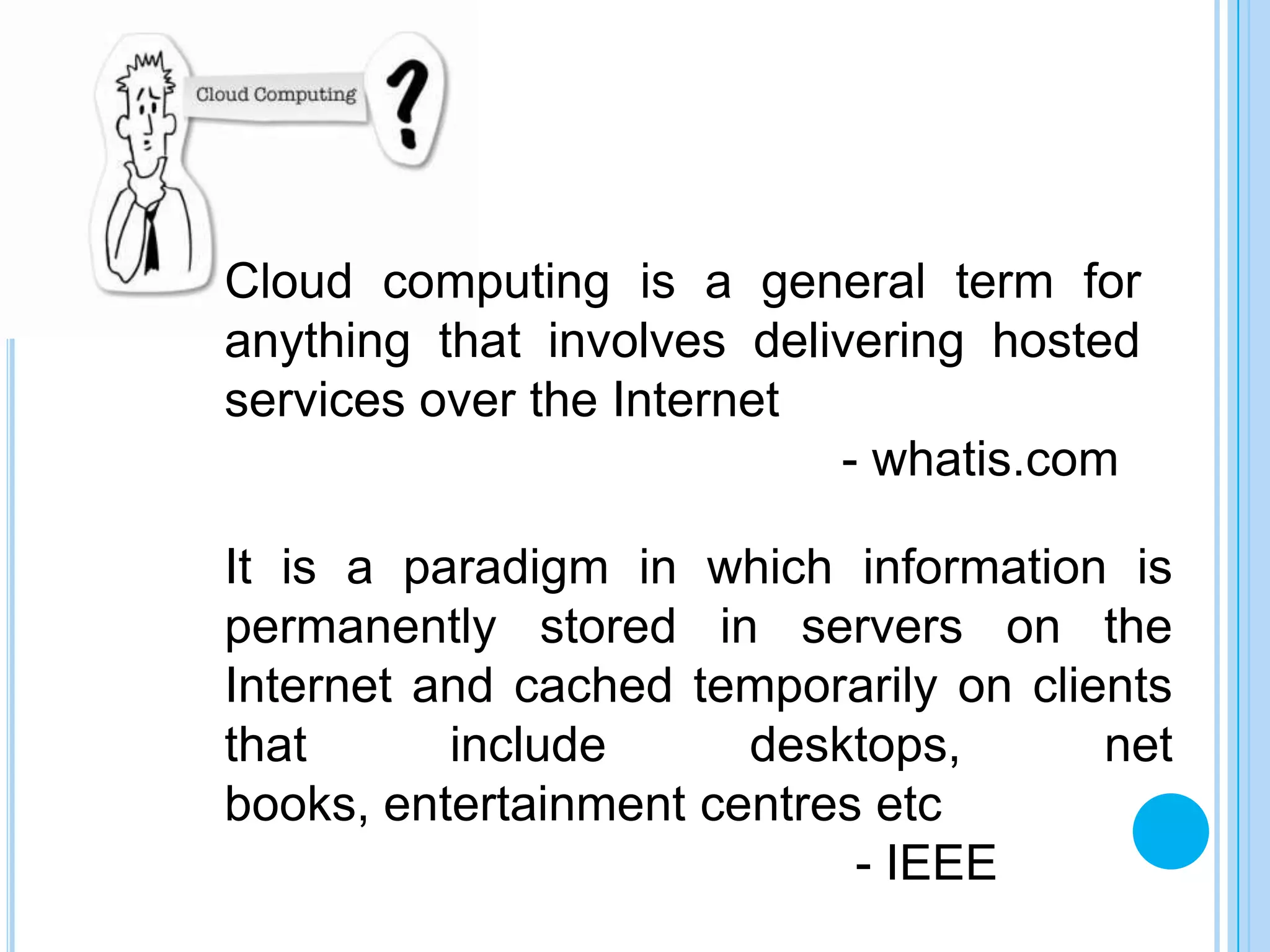
Cloud computing is a general term for
anything that involves delivering hosted
services over the Internet
                           - whatis.com

It is a paradigm in which information is
permanently stored in servers on the
Internet and cached temporarily on clients
that      include      desktops,       net
books, entertainment centres etc
                            - IEEE
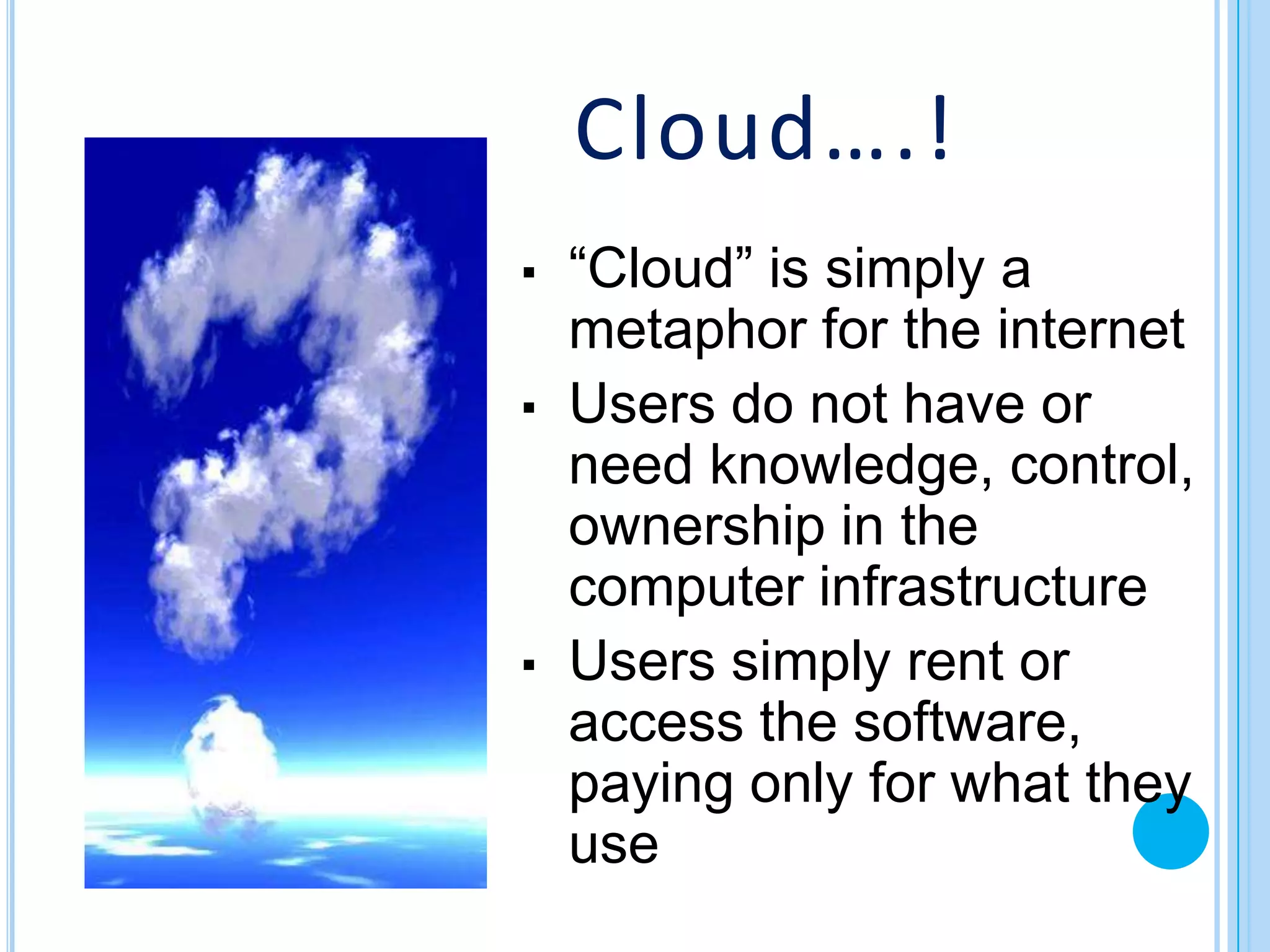
Cloud….!
▪   “Cloud” is simply a
    metaphor for the internet
▪   Users do not have or
    need knowledge, control,
    ownership in the
    computer infrastructure
▪   Users simply rent or
    access the software,
    paying only for what they
    use
History
   In 1960’s, John McCarthy, "computation
    may someday be organized as a public
    utility”
   Idea that revolutionized Cloud Computing:
     Utility computing by Amazon


     Grid computing


   “In some ways, the cloud is a natural next
    step from the grid-utility model,” said Frank
    Gens, an analyst at the research firm IDC
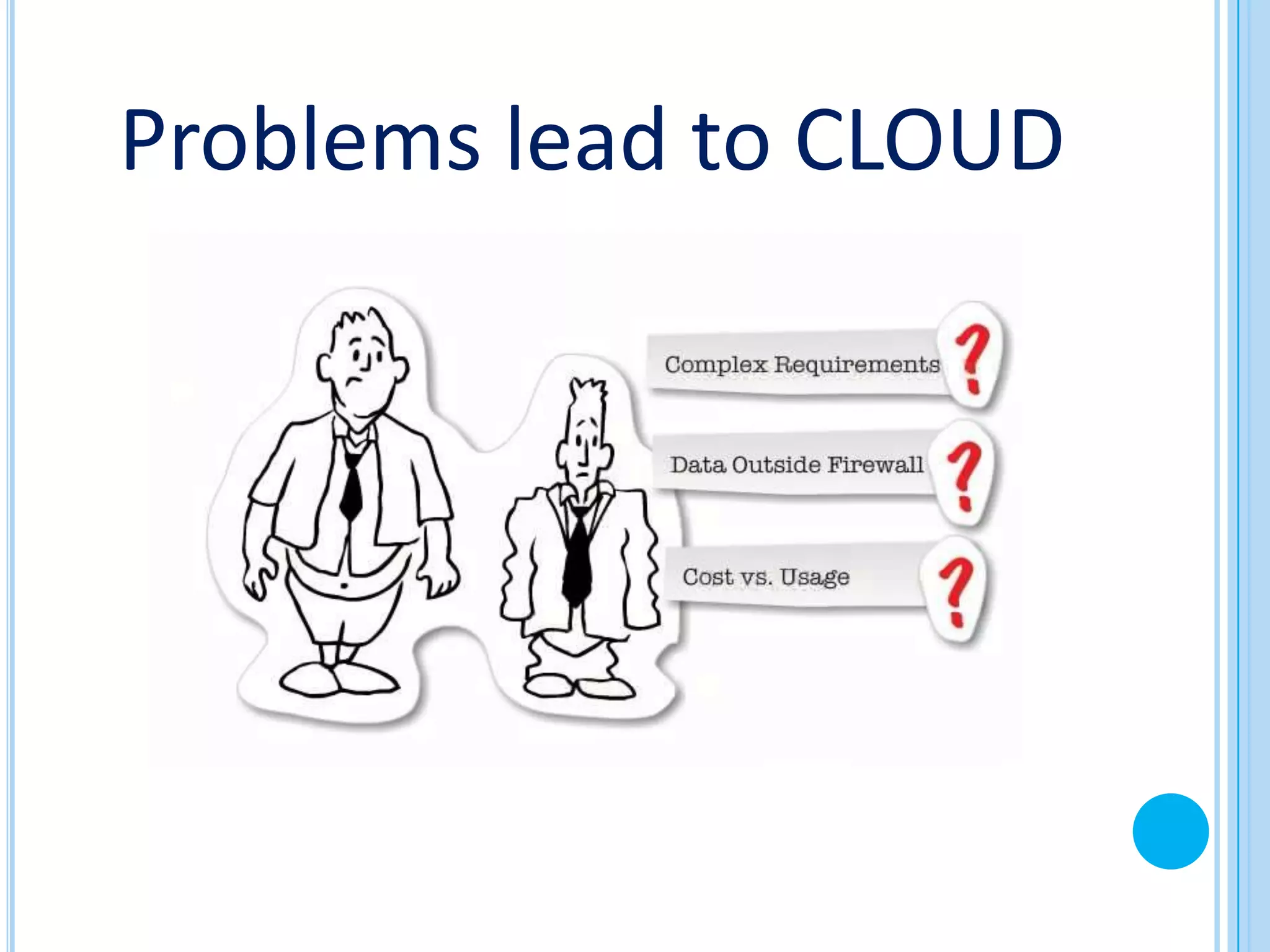
Problems lead to CLOUD
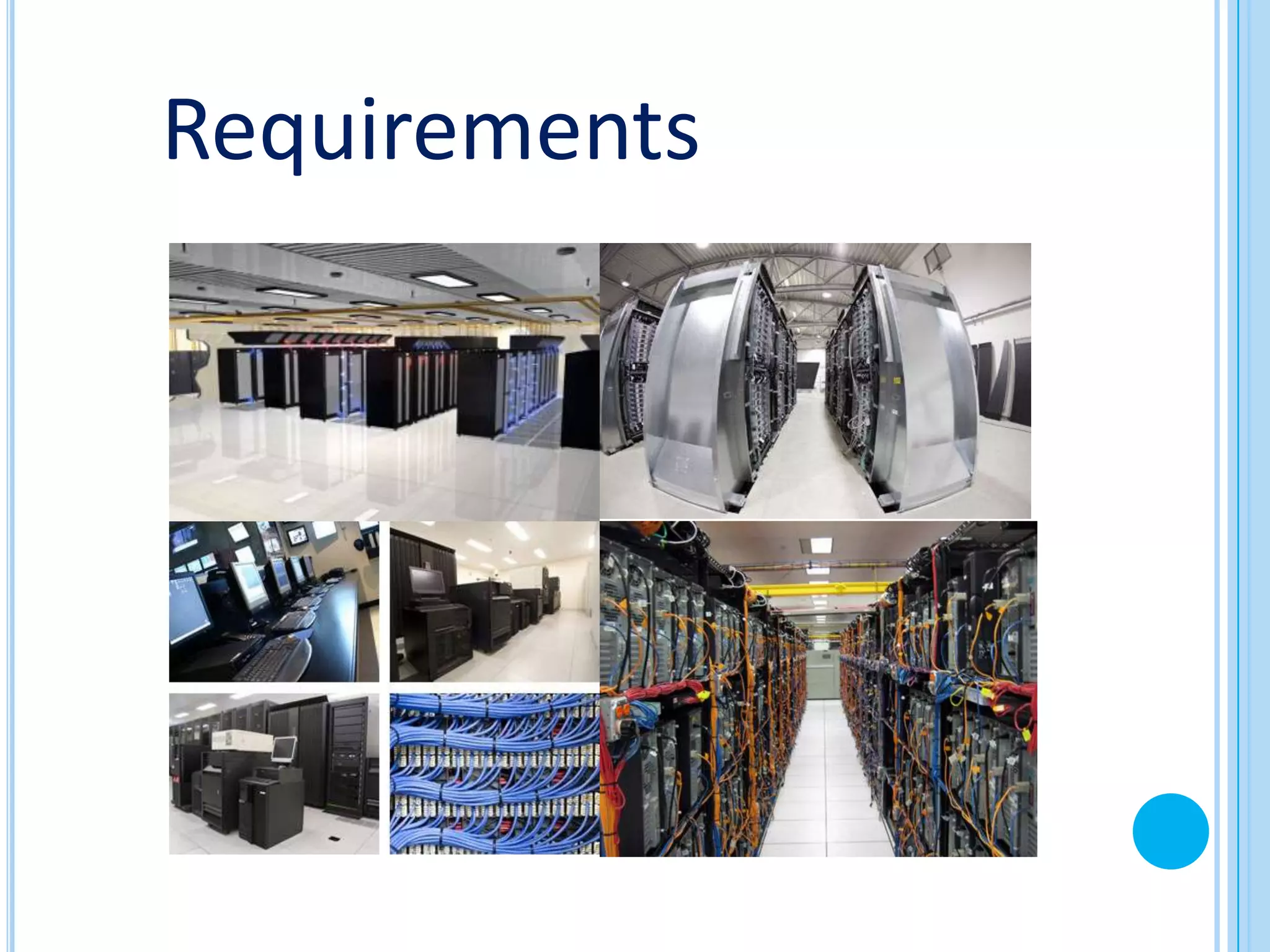
Requirements
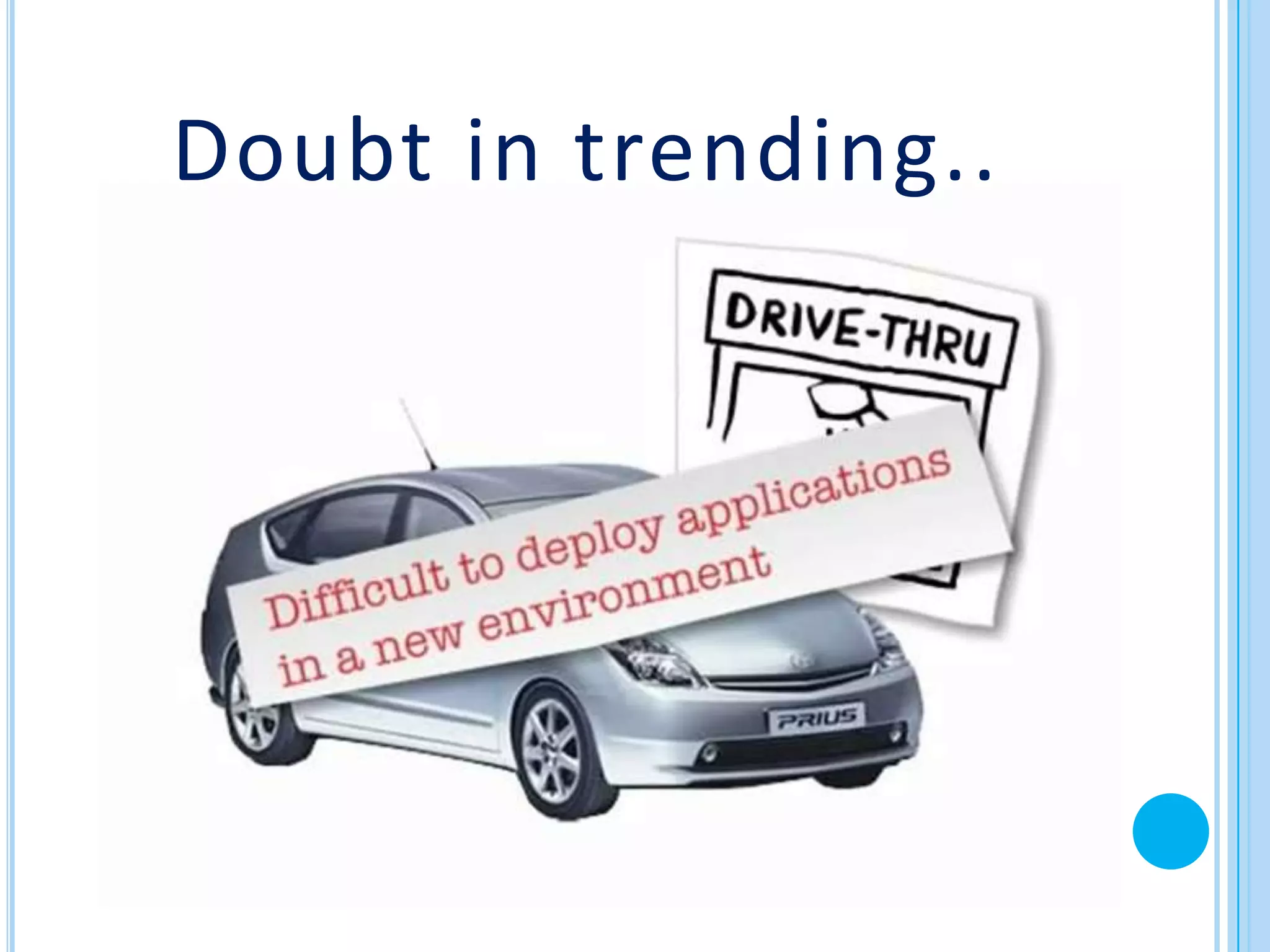
Doubt in trending..
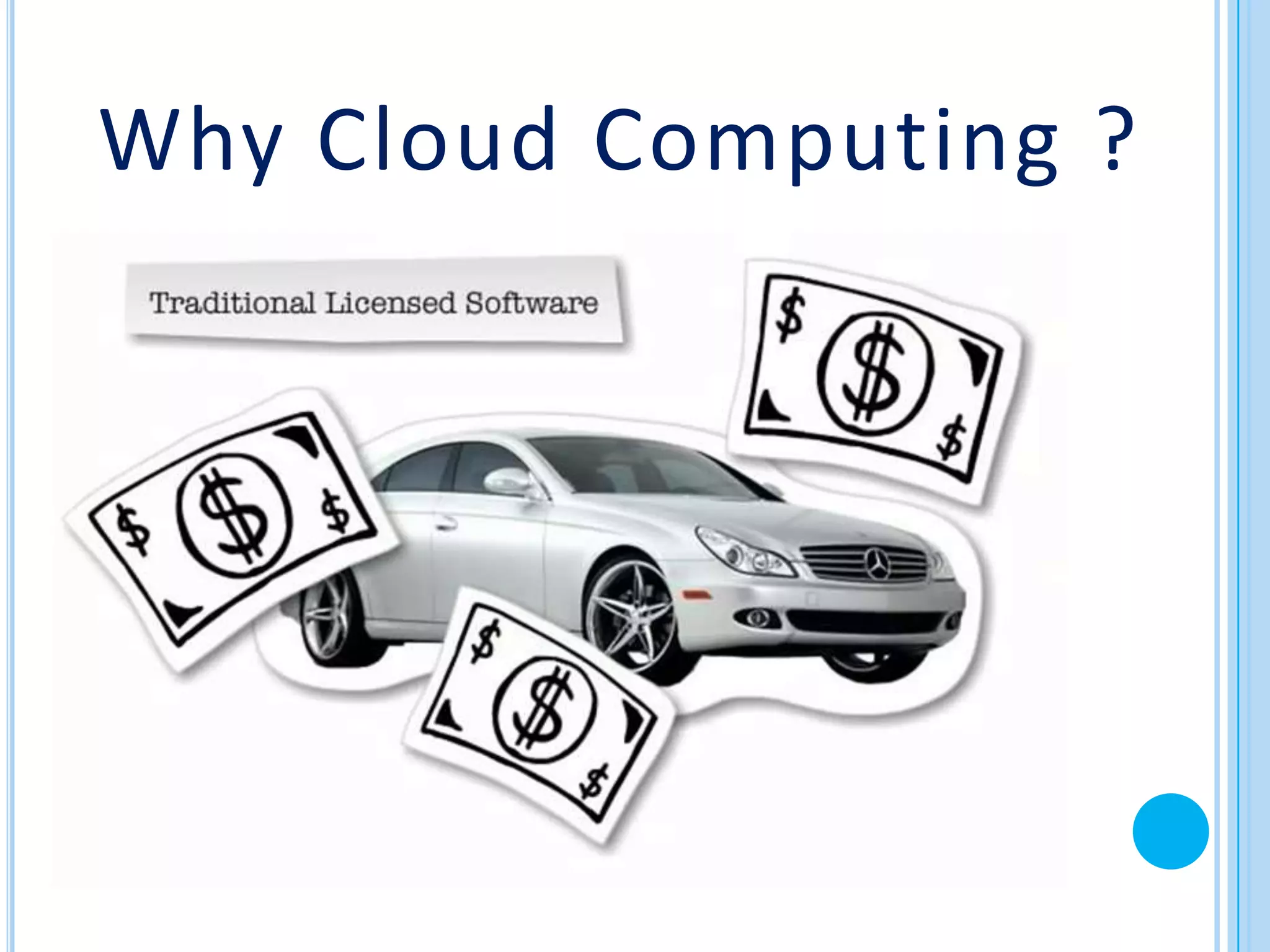
Why Cloud Computing ?
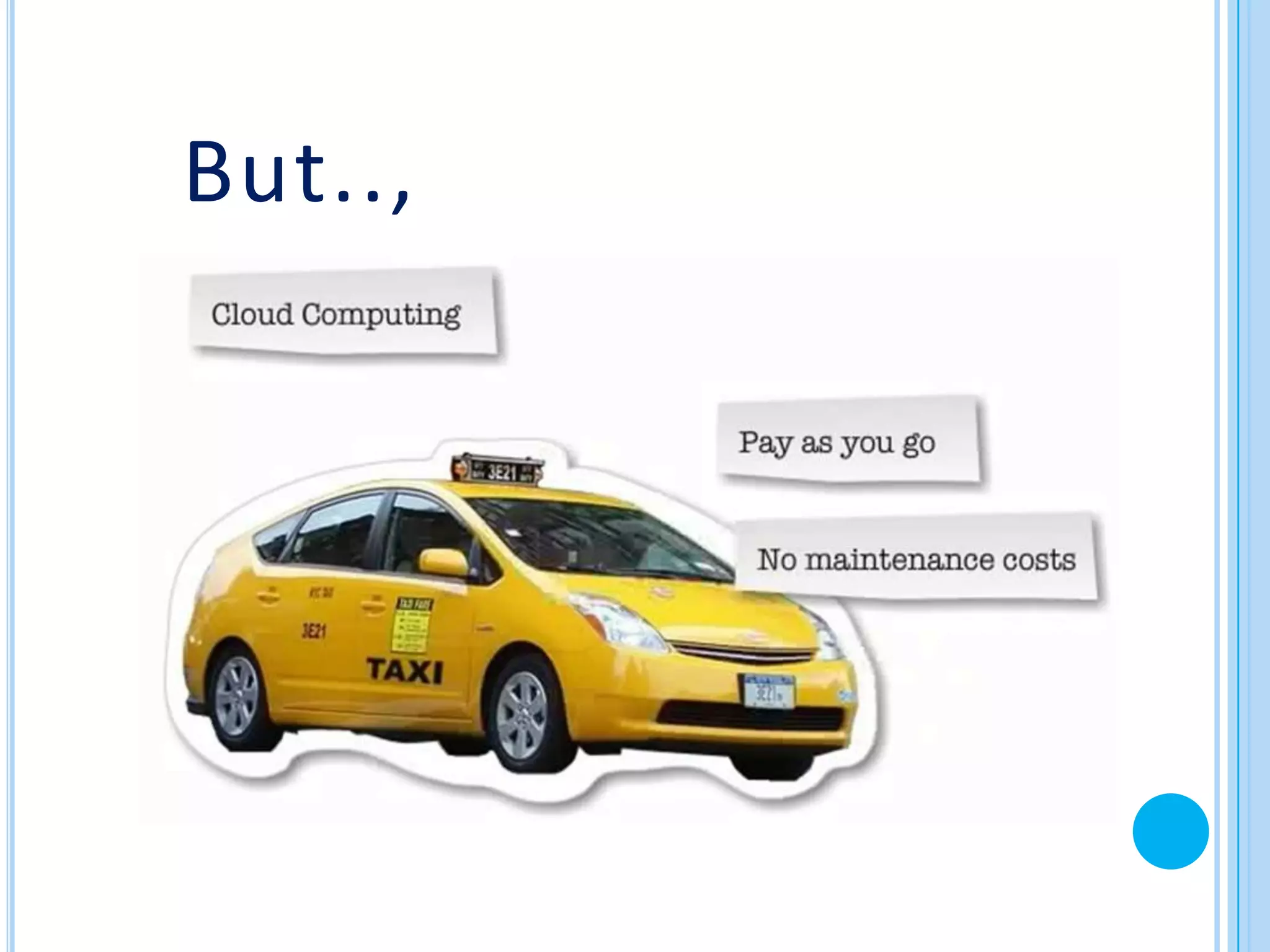
But..,
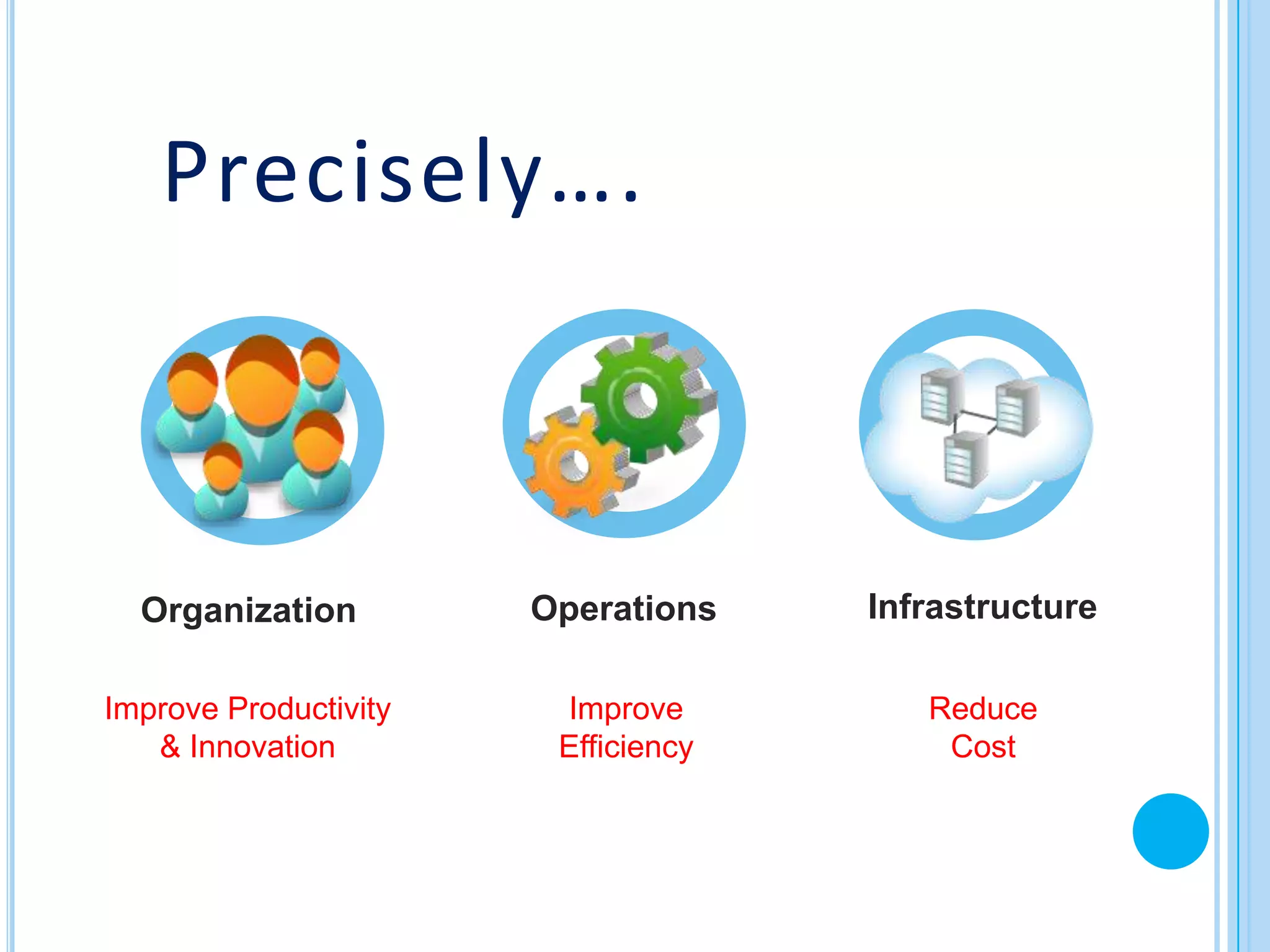
Precisely….


  Organization         Operations    Infrastructure

Improve Productivity    Improve         Reduce
   & Innovation         Efficiency       Cost
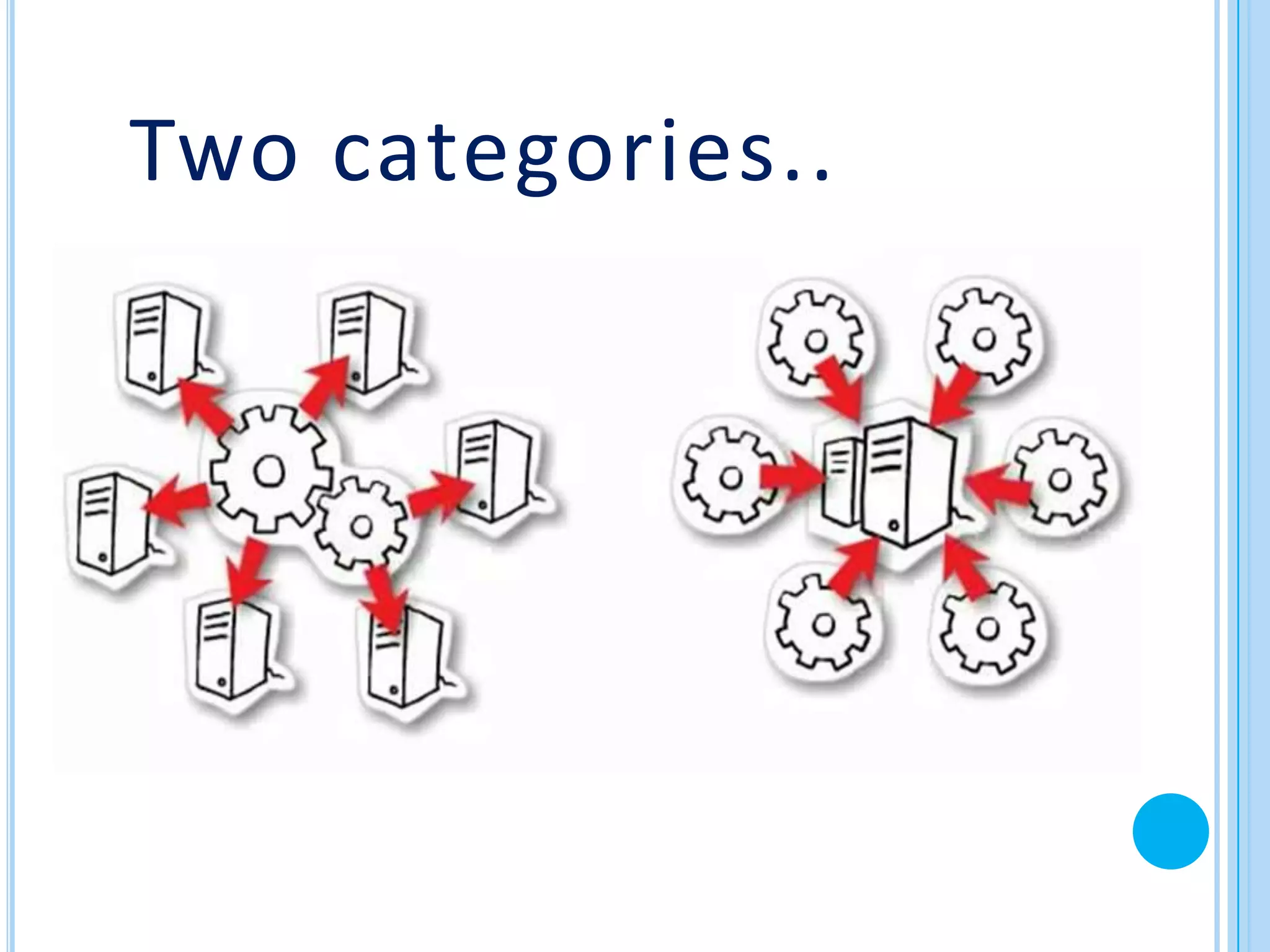
Two categories..
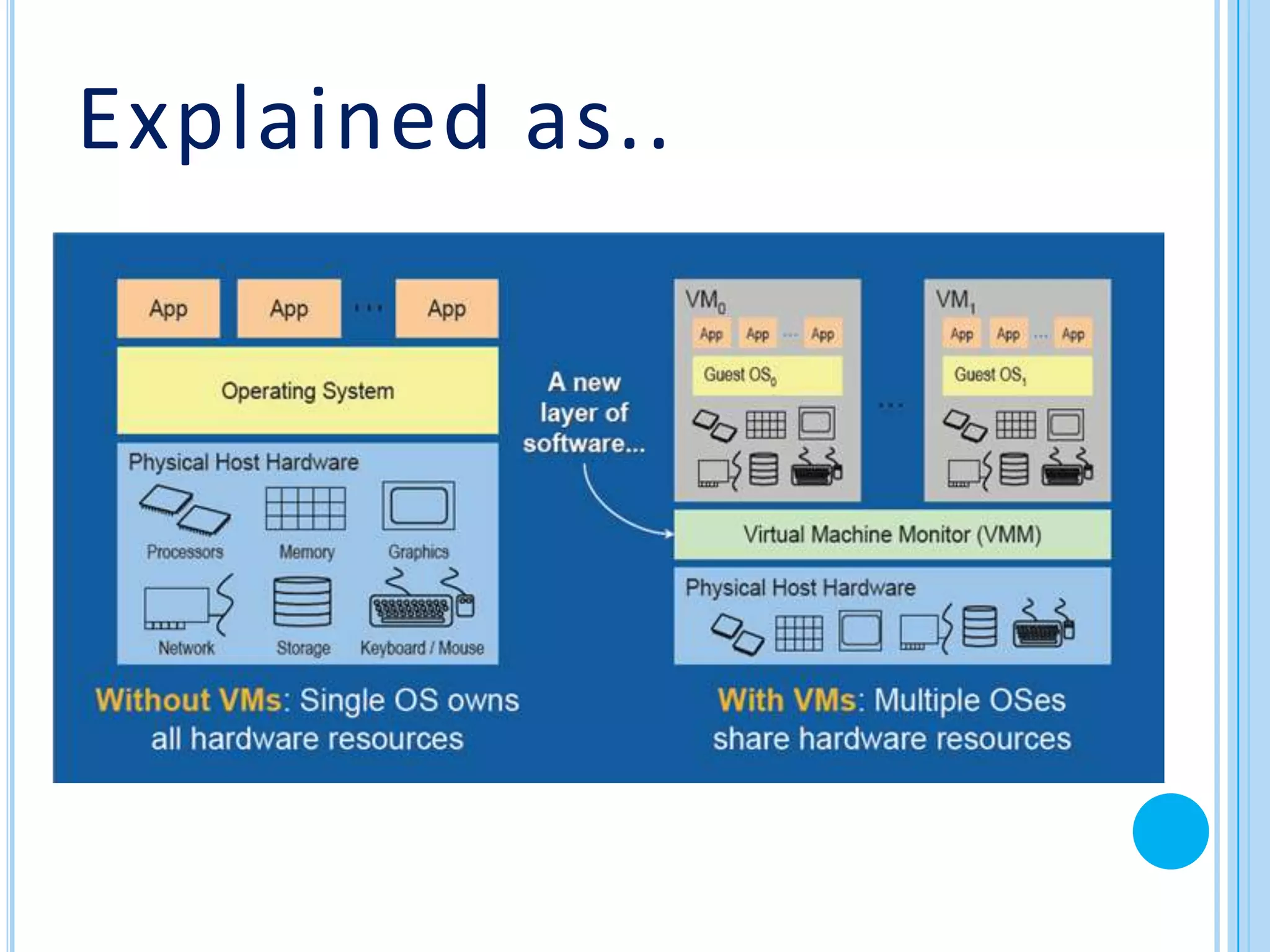
Explained as..
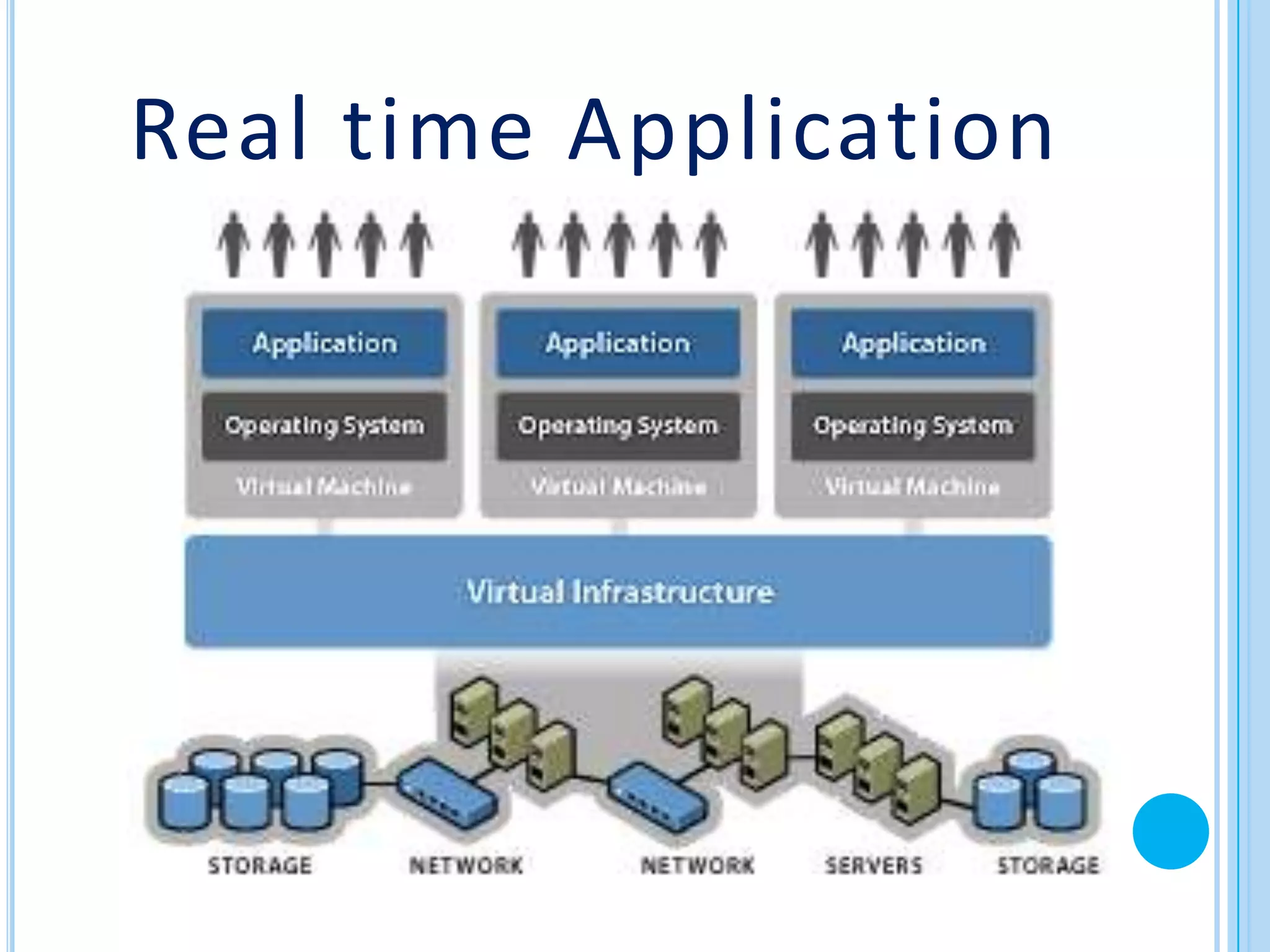
Real time Application
Positives
   Server Consolidation
   Dynamic Load Balancing
   Disaster Recovery
   Virtual Desktops
   Reduction in cost of infrastructure
   Reduce power utilization cost (GREEN
COMPUTING)
   Virtualization – The Cloud Computing Enabler
Negatives
   Magnified physical failures
   Degraded performance
   New skills
   Complex root cause analysis
   New management tools
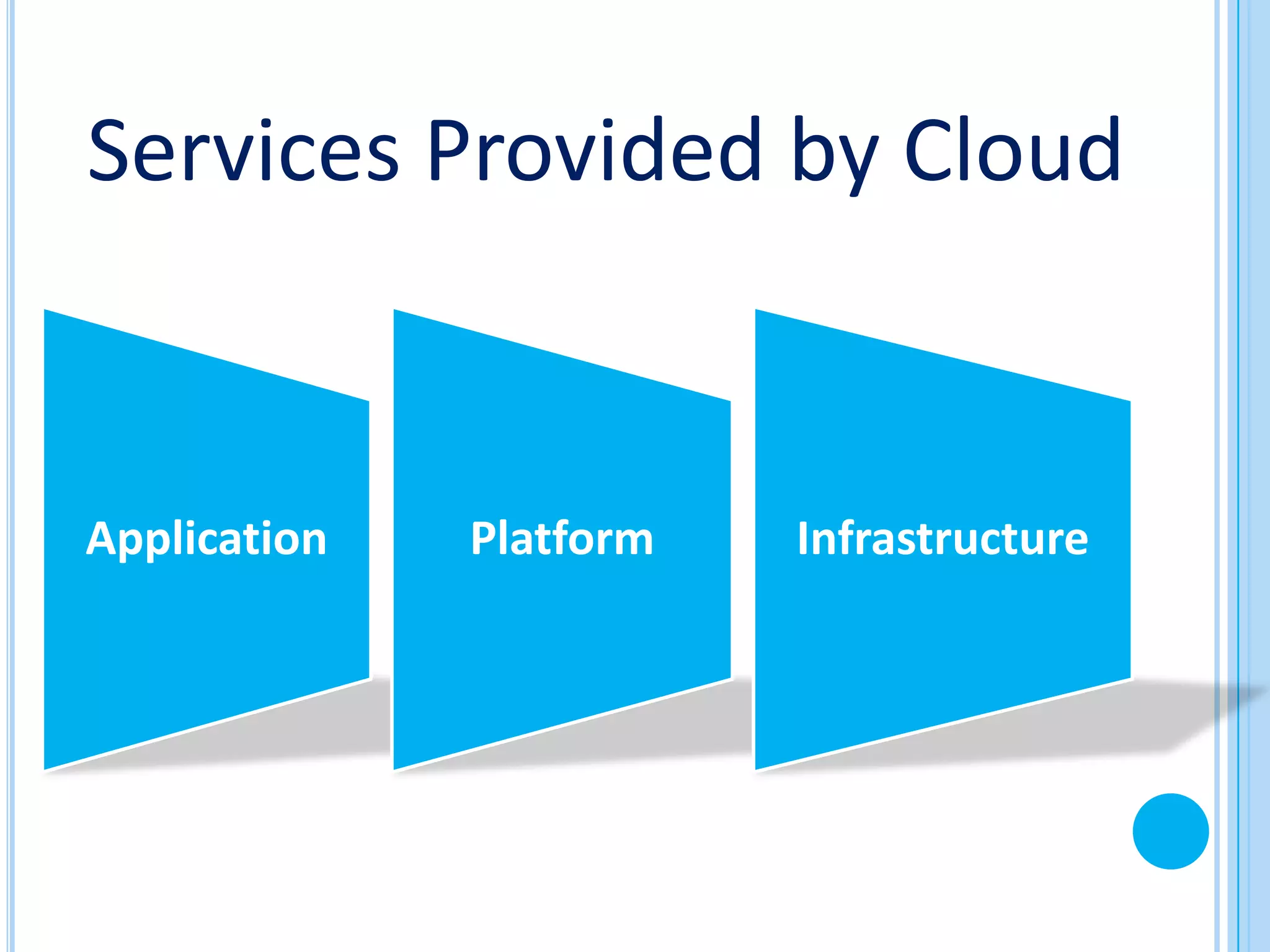
Services Provided by Cloud


Application   Platform   Infrastructure
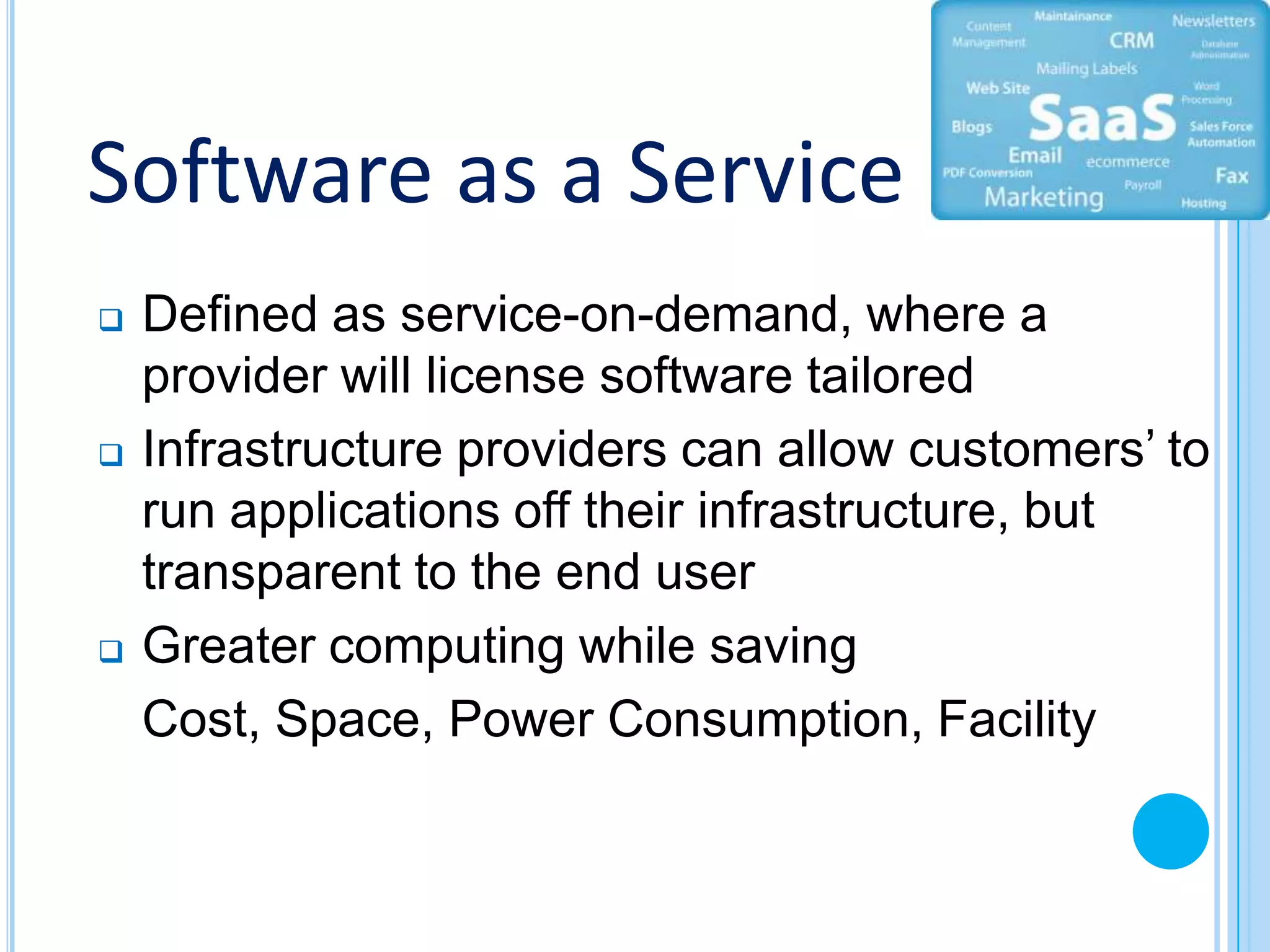
Software as a Service
   Defined as service-on-demand, where a
    provider will license software tailored
   Infrastructure providers can allow customers’ to
    run applications off their infrastructure, but
    transparent to the end user
   Greater computing while saving
    Cost, Space, Power Consumption, Facility
Platform as a Service
   Provides all the facilities necessary to support
    the complete process of building and delivering
    web applications and services, all available
    over the internet
   Infrastructure providers can transparently alter
    the platforms for their customers’ unique needs
   Google App Engine, SalesForce platform
Infrastructure as a Service
   Defined as delivery of computer infrastructure
    as a service
   Infrastructure providers can dynamically
    allocate resources for service providers
   Allows cost savings for the service
    providers, since they do not need to operate
    their own datacenter
   Amazon’s EC2, GoGrid
Major Service
Providers for
   CLOUD
“GoogleBurst “
“ Elastic 101”
  Cloud Compute Cloud “Amazon EC2”
   “Azure”
 IBM also made upcomputing capacity in a
 Network resizable
  Provides offers “private” cloud ofservices
                          of millions computing
                                          cheap
   Internet-scale cloud computing and
    servers, hosted in Microsoft data staggering
     platform that would store centers
   services using IBM blue services software.
     cloud

 Instead ofthehelpincluding numerousand the
   amounts of data, required to obtain copies
    Designed putting information out on
    Reduces to timedevelopers quickly and
   of the world wide web manage, and distribute
  internetcreate, deploy, companies data center
    easily it makes space from weeks to
    boot new server the
   Makes search faster, helping ferret out
 into its own cloud. applications on blocked off
    web services and This cloud is the
    minutes
   internet.to billions
 from the developers of queries in a capacityof
 answers internet using firewalls. fraction
 Allows                to pay only for
 athat they actually use
    second
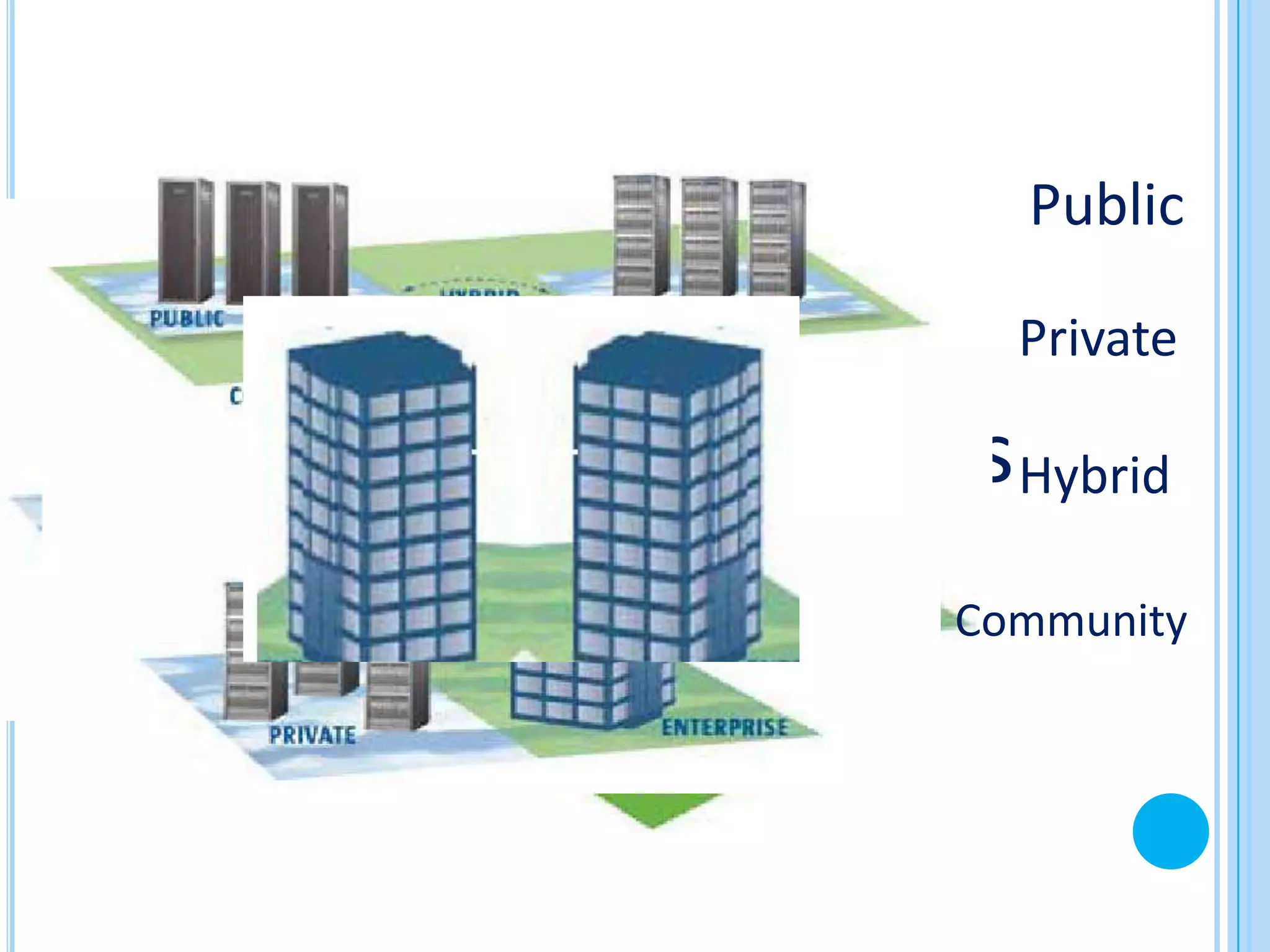
Public

                    Private

Deployment models Hybrid
                  Community
Strong Points
   Reduced Hardware equipment for end users
   Instant Software Updates
   Accessibility
   Less Expensive
   Better Collaboration
   Pay for what you use
   Flexible
   Need not invest on multiple licensing
Weak points
   Security Issues
   Internet connection
   Location of Servers
   Time for Transition
   Speed
I conclude that…
                   The
      SUPER
    COMPUTER
           is SKY
         in the
cLouD
 cLouD cLouD          cOmpUtiNg
          cOmpUtiNg
 cOmpUtiNg cLouD
     cLouD
     cOmpUtiNg  cOmpUtiNg
                      cLouD
cLouD        cLouD
                      cOmpUtiNg
                  cLouD
cOmpUtiNg cOmpUtiNg
       cLouD
                  cOmpUtiNg
 cLouDcOmpUtiNg
            cLouD     cLouD
 cOmpUtiNgcOmpUtiNg   cOmpUtiNg
DISCUSSIONS
THANK U

Cloud Computing

  • 1.
    Cloud Computing the era started….. Srinivasula Reddy G
  • 2.
    ? Let us learn.. In June 2009, a study conducted by VersionOne found that41% of senior IT professionals actually don't know what cloud computing is and two-thirds of senior finance professionals are confused by this concept
  • 3.
    Outline  What is Cloud Computing ?  History  Why Cloud Computing?  VIRTUALIZATION  Services Provided by Cloud Computing  Service Providers of Cloud Computing  Cloud Architecture  Pros and Cons of Cloud Computing
  • 4.
    Cloud computing isa general term for anything that involves delivering hosted services over the Internet - whatis.com It is a paradigm in which information is permanently stored in servers on the Internet and cached temporarily on clients that include desktops, net books, entertainment centres etc - IEEE
  • 5.
    Cloud….! ▪ “Cloud” is simply a metaphor for the internet ▪ Users do not have or need knowledge, control, ownership in the computer infrastructure ▪ Users simply rent or access the software, paying only for what they use
  • 6.
    History  In 1960’s, John McCarthy, "computation may someday be organized as a public utility”  Idea that revolutionized Cloud Computing:  Utility computing by Amazon  Grid computing  “In some ways, the cloud is a natural next step from the grid-utility model,” said Frank Gens, an analyst at the research firm IDC
  • 7.
  • 8.
  • 9.
  • 10.
  • 11.
  • 12.
    Precisely…. Organization Operations Infrastructure Improve Productivity Improve Reduce & Innovation Efficiency Cost
  • 14.
  • 15.
  • 16.
  • 17.
    Positives  Server Consolidation  Dynamic Load Balancing  Disaster Recovery  Virtual Desktops  Reduction in cost of infrastructure  Reduce power utilization cost (GREEN COMPUTING)  Virtualization – The Cloud Computing Enabler
  • 18.
    Negatives  Magnified physical failures  Degraded performance  New skills  Complex root cause analysis  New management tools
  • 19.
    Services Provided byCloud Application Platform Infrastructure
  • 20.
    Software as aService  Defined as service-on-demand, where a provider will license software tailored  Infrastructure providers can allow customers’ to run applications off their infrastructure, but transparent to the end user  Greater computing while saving Cost, Space, Power Consumption, Facility
  • 21.
    Platform as aService  Provides all the facilities necessary to support the complete process of building and delivering web applications and services, all available over the internet  Infrastructure providers can transparently alter the platforms for their customers’ unique needs  Google App Engine, SalesForce platform
  • 22.
    Infrastructure as aService  Defined as delivery of computer infrastructure as a service  Infrastructure providers can dynamically allocate resources for service providers  Allows cost savings for the service providers, since they do not need to operate their own datacenter  Amazon’s EC2, GoGrid
  • 23.
  • 24.
    “GoogleBurst “ “ Elastic101” Cloud Compute Cloud “Amazon EC2” “Azure”  IBM also made upcomputing capacity in a  Network resizable  Provides offers “private” cloud ofservices of millions computing cheap  Internet-scale cloud computing and servers, hosted in Microsoft data staggering platform that would store centers services using IBM blue services software. cloud  Instead ofthehelpincluding numerousand the amounts of data, required to obtain copies Designed putting information out on Reduces to timedevelopers quickly and of the world wide web manage, and distribute internetcreate, deploy, companies data center easily it makes space from weeks to boot new server the Makes search faster, helping ferret out  into its own cloud. applications on blocked off web services and This cloud is the minutes internet.to billions from the developers of queries in a capacityof answers internet using firewalls. fraction  Allows to pay only for athat they actually use second
  • 25.
    Public Private Deployment models Hybrid Community
  • 26.
    Strong Points  Reduced Hardware equipment for end users  Instant Software Updates  Accessibility  Less Expensive  Better Collaboration  Pay for what you use  Flexible  Need not invest on multiple licensing
  • 27.
    Weak points  Security Issues  Internet connection  Location of Servers  Time for Transition  Speed
  • 28.
    I conclude that… The SUPER COMPUTER is SKY in the
  • 29.
    cLouD cLouD cLouD cOmpUtiNg cOmpUtiNg cOmpUtiNg cLouD cLouD cOmpUtiNg cOmpUtiNg cLouD cLouD cLouD cOmpUtiNg cLouD cOmpUtiNg cOmpUtiNg cLouD cOmpUtiNg cLouDcOmpUtiNg cLouD cLouD cOmpUtiNgcOmpUtiNg cOmpUtiNg
  • 30.
  • 31.