Name - Piyush Kiran Rodge Email ID – rodgepiyush@gmail.com
Clinical Trials
Defination :-
“A type of research study that test the
drug on human or new medicine
before it comes to the Market.”
 It is a life cycle of any product how it
comes to the market after doing the
various testing.
 Clinical Trials play an integral role in the
development of new medical approaches.
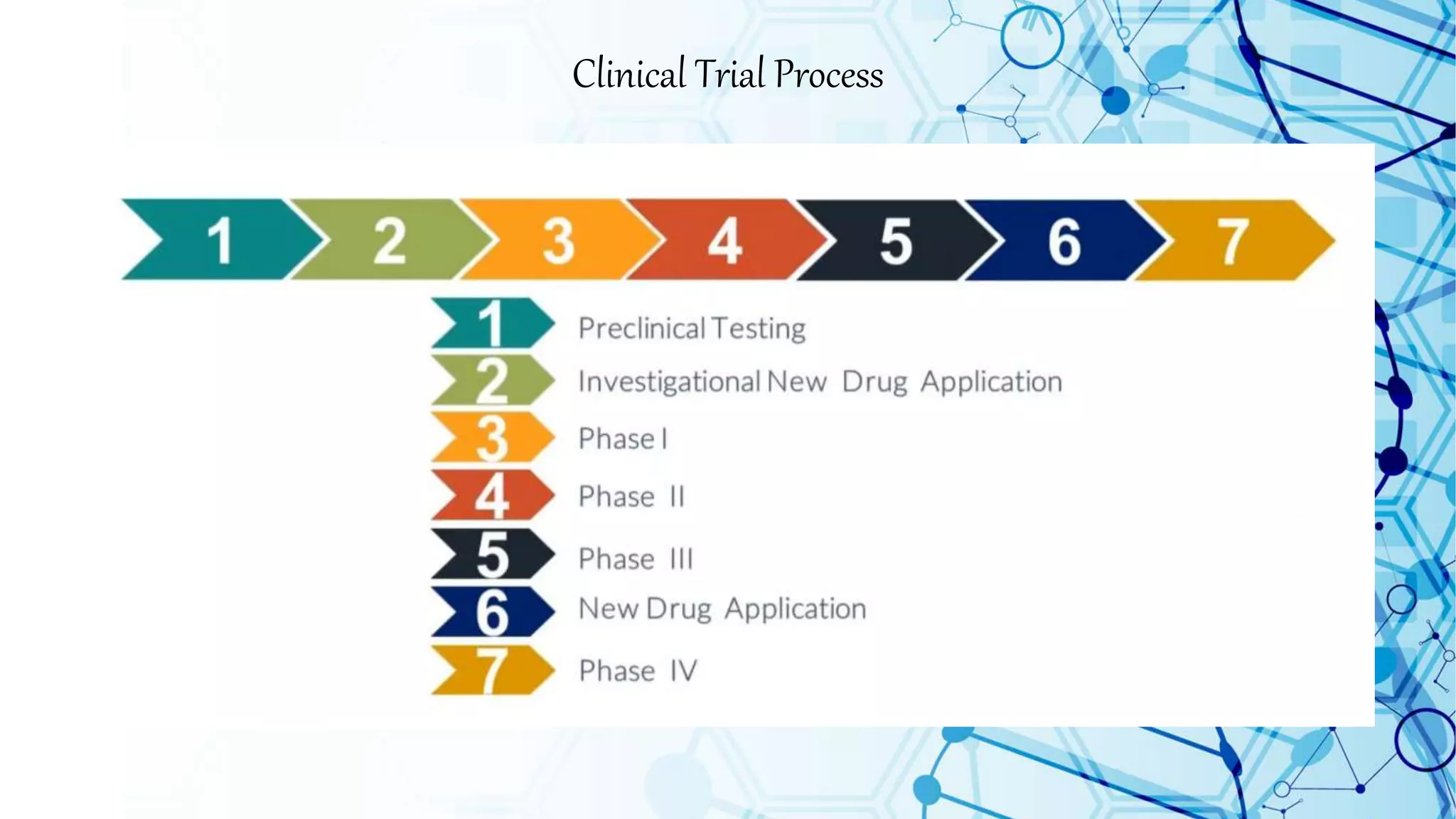
Clinical Trial Process
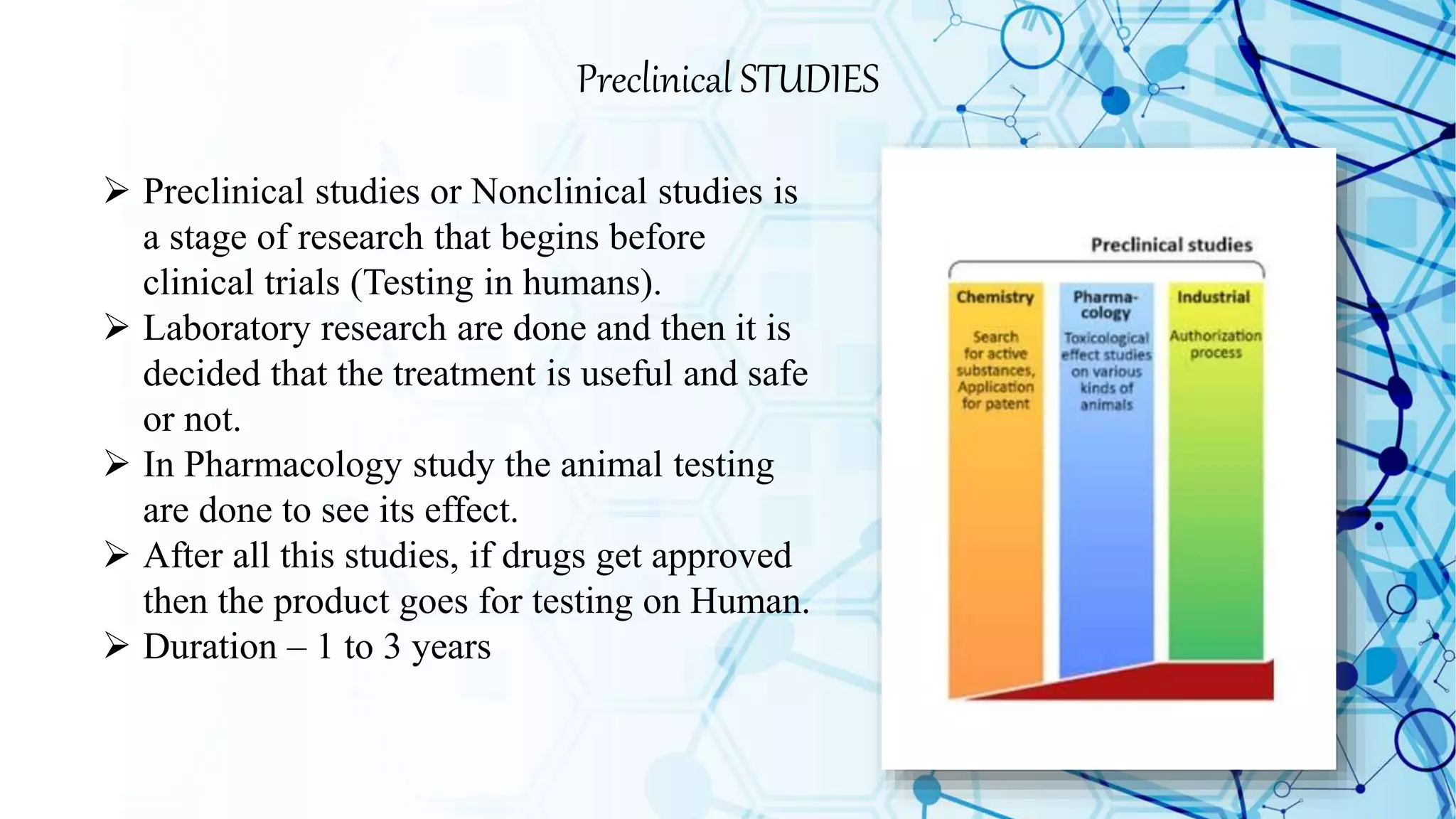
Preclinical STUDIES
 Preclinical studies or Nonclinical studies is
a stage of research that begins before
clinical trials (Testing in humans).
 Laboratory research are done and then it is
decided that the treatment is useful and safe
or not.
 In Pharmacology study the animal testing
are done to see its effect.
 After all this studies, if drugs get approved
then the product goes for testing on Human.
 Duration – 1 to 3 years
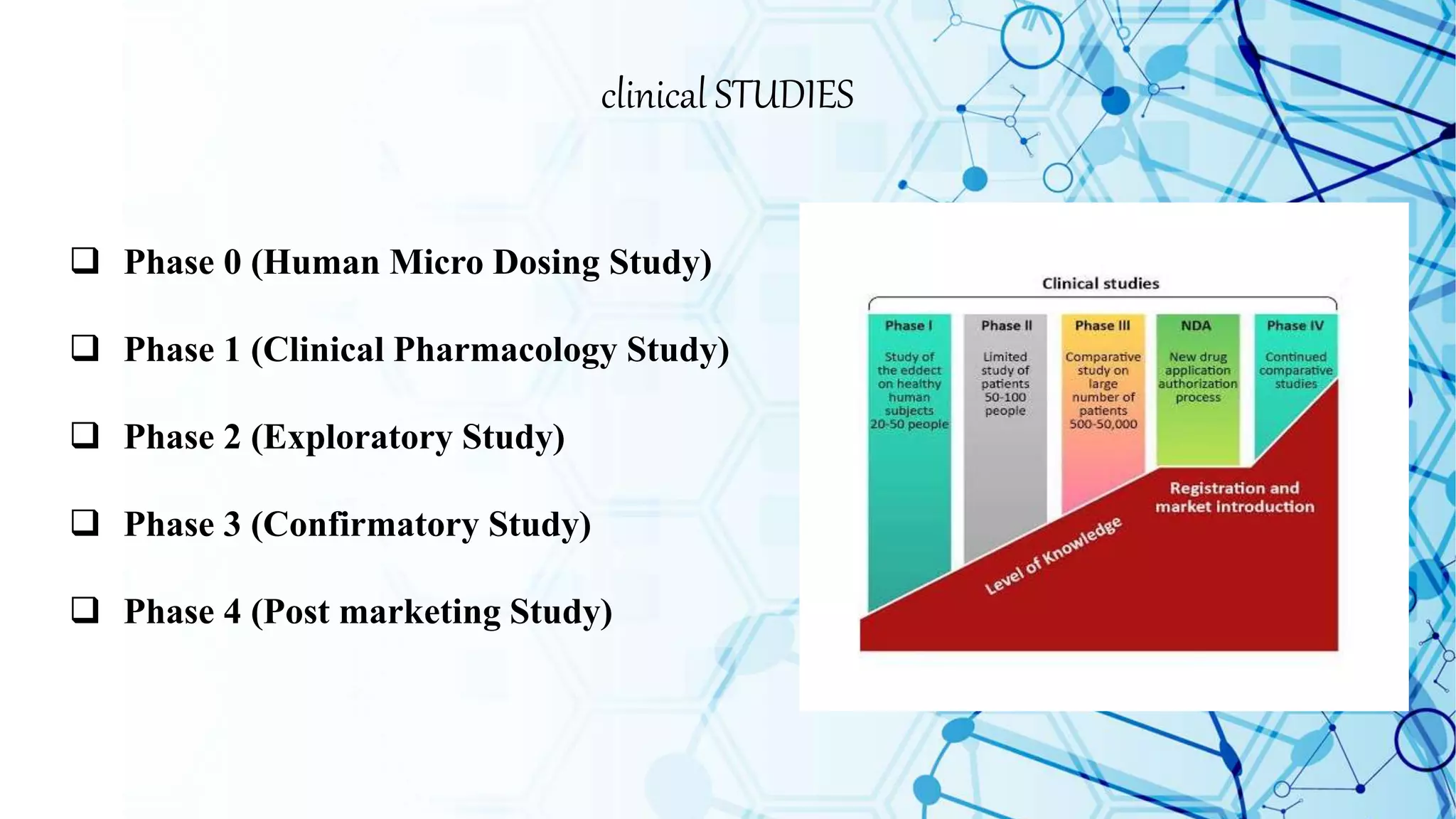
clinical STUDIES
 Phase 0 (Human Micro Dosing Study)
 Phase 1 (Clinical Pharmacology Study)
 Phase 2 (Exploratory Study)
 Phase 3 (Confirmatory Study)
 Phase 4 (Post marketing Study)
clinical STUDIES
PHASE 0
 Phase 0 is also called as Human Micro Dosing Study.
 In Phase 0, small amount doses of New Drug are tested on
few peoples (10-15 patients).
 They test that how drug acts on the Human Body and how it
responds.
 If the medication acts differently than expected, the
investigators will likely to do some additional preclinical
research before deciding whether to continue the trial.
 After this, if drug get passed then futher drug goes to the
Phase 1 studies .
PHASE 1
 Phase 1 is also called as Clinical Pharmacology Study.
 New treatment or therapies are tested in a small group
of people (20-80 peoples) to determine safety and
identify side effect.
 Phase 1 studies sometimes include people with vitiligo
(skin infection) but some are also healthy patient
without any medical conditions are also included.
 The investigator have usually completed animal trials
with the drug and now want to know if there are any
harmful effect of the drug on the human beings.
 Phase 1 studies last for several months.
 Approximately 70% of drug goes to next phase.
PHASE 2
 Test are performed on larger group of people
with a medical condition
 (100-300 peoples) for further safety and
treatment effectiveness studies.
 These trial are done for different doses of a
medication or concentration of a product to
determine which works the best.
 After that they also notice that any side effect
may occur or not.
 Phase 2 studies can last from several months to
2 years.
 Phase 2 is also called as Exploratory Study.
 Approximately 33% of drug goes to next phase
PHASE 3
 Phase 3 is divided into two phases that are Phase 3A and Phase
3B, Phase 3A studies are done before the NDA (New Drug
Application) and Phase 3B studies are done after the NDA
approval but sometime only Phase 3 is carried out to gather the
information about efficacy and safety of the product.
 In this trial may compare which group of patients has better
survival rates.
 Test the safety and how well a new treatment works compared
with a standards treatment.
 The studies are done on large number of peoples (1000-3000
peoples).
 Phase 3 is also called as Confirmatory Study.
 Approximately 25-30% of drug goes to next phase.
FDA Approval
 After all 3 phases passed then the
product goes to the NDA.
 The NDA is submitted the product
detail to the Licencing Authority like
FDA (Food and Drug
Administration.)
 That body gives approval and then it
gets marketing permission.
PHASE 4
 It also called “Post Marketing Studies”, these trials are
conducted to obtain more information about risk,
benefits and best use of drug or therapy after the U.S
Food and Drug Administration (FDA) has approved it.
 During the phase 4 period, researcher review what
happens when people in real world situations use the
treatment.
 In this phase large number of participants (around more
than 10,000) are present.
 These studies provide information about side effects and
efficacy that wasn’t detected during earlier phase studies.
 Approximately 70-90% of drug goes to next Phase.
Thank You!!

Clinical Trials

  • 1.
    Name - PiyushKiran Rodge Email ID – rodgepiyush@gmail.com
  • 2.
    Clinical Trials Defination :- “Atype of research study that test the drug on human or new medicine before it comes to the Market.”  It is a life cycle of any product how it comes to the market after doing the various testing.  Clinical Trials play an integral role in the development of new medical approaches.
  • 3.
  • 4.
    Preclinical STUDIES  Preclinicalstudies or Nonclinical studies is a stage of research that begins before clinical trials (Testing in humans).  Laboratory research are done and then it is decided that the treatment is useful and safe or not.  In Pharmacology study the animal testing are done to see its effect.  After all this studies, if drugs get approved then the product goes for testing on Human.  Duration – 1 to 3 years
  • 5.
    clinical STUDIES  Phase0 (Human Micro Dosing Study)  Phase 1 (Clinical Pharmacology Study)  Phase 2 (Exploratory Study)  Phase 3 (Confirmatory Study)  Phase 4 (Post marketing Study)
  • 6.
    clinical STUDIES PHASE 0 Phase 0 is also called as Human Micro Dosing Study.  In Phase 0, small amount doses of New Drug are tested on few peoples (10-15 patients).  They test that how drug acts on the Human Body and how it responds.  If the medication acts differently than expected, the investigators will likely to do some additional preclinical research before deciding whether to continue the trial.  After this, if drug get passed then futher drug goes to the Phase 1 studies .
  • 7.
    PHASE 1  Phase1 is also called as Clinical Pharmacology Study.  New treatment or therapies are tested in a small group of people (20-80 peoples) to determine safety and identify side effect.  Phase 1 studies sometimes include people with vitiligo (skin infection) but some are also healthy patient without any medical conditions are also included.  The investigator have usually completed animal trials with the drug and now want to know if there are any harmful effect of the drug on the human beings.  Phase 1 studies last for several months.  Approximately 70% of drug goes to next phase.
  • 8.
    PHASE 2  Testare performed on larger group of people with a medical condition  (100-300 peoples) for further safety and treatment effectiveness studies.  These trial are done for different doses of a medication or concentration of a product to determine which works the best.  After that they also notice that any side effect may occur or not.  Phase 2 studies can last from several months to 2 years.  Phase 2 is also called as Exploratory Study.  Approximately 33% of drug goes to next phase
  • 9.
    PHASE 3  Phase3 is divided into two phases that are Phase 3A and Phase 3B, Phase 3A studies are done before the NDA (New Drug Application) and Phase 3B studies are done after the NDA approval but sometime only Phase 3 is carried out to gather the information about efficacy and safety of the product.  In this trial may compare which group of patients has better survival rates.  Test the safety and how well a new treatment works compared with a standards treatment.  The studies are done on large number of peoples (1000-3000 peoples).  Phase 3 is also called as Confirmatory Study.  Approximately 25-30% of drug goes to next phase.
  • 10.
    FDA Approval  Afterall 3 phases passed then the product goes to the NDA.  The NDA is submitted the product detail to the Licencing Authority like FDA (Food and Drug Administration.)  That body gives approval and then it gets marketing permission.
  • 11.
    PHASE 4  Italso called “Post Marketing Studies”, these trials are conducted to obtain more information about risk, benefits and best use of drug or therapy after the U.S Food and Drug Administration (FDA) has approved it.  During the phase 4 period, researcher review what happens when people in real world situations use the treatment.  In this phase large number of participants (around more than 10,000) are present.  These studies provide information about side effects and efficacy that wasn’t detected during earlier phase studies.  Approximately 70-90% of drug goes to next Phase.
  • 12.