Climate science: The basics
INÉS CAMILLONI
IPCC AR5 Lead Author
Dept. of Atmospheric and Oceanic Sciences/CIMA
University of Buenos Aires/CONICET, Argentina
Outreach Event on the IPCC Role, Activities and Findings
Media Workshop
29 November 2016
Kingston, Jamaica
What is climate change?
Why does the climate change?
What can we expect?
What can we do?
What is climate change?
Climate change refers to a variation in the state of
the climate that persists for an extended period.
Change in the state
of the climate
Changes in the mean
and/or the variability
of its properties
How can the climate change?
-50
-40
-30
-20
-10
0
10
20
30
40
50
0 5 10 15 20 25 30 35 40 45 50 55 60
-50
-40
-30
-20
-10
0
10
20
30
40
50
0 5 10 15 20 25 30 35 40 45 50 55 60
-50
-40
-30
-20
-10
0
10
20
30
40
50
0 5 10 15 20 25 30 35 40 45 50 55 60
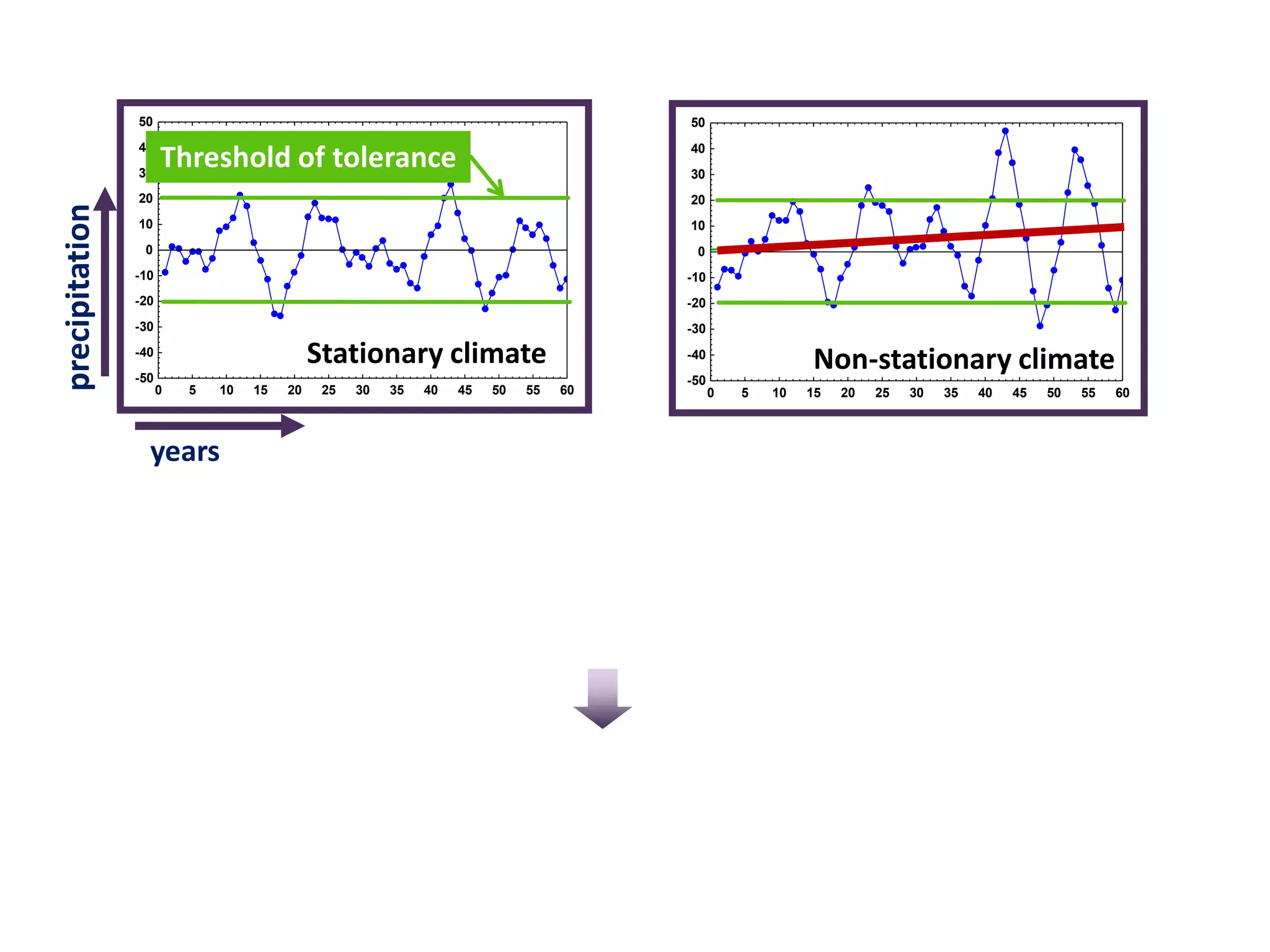
Change in the mean
Change in the mean
& variability
years
precipitation
Stationary climate
Non-stationary climate
Climate change refers to a variation in the state of
the climate that persists for an extended period.
Change in the state of
the climate
Changes in the mean
and/or the variability
of its properties
Decades or longer
Changes persistent for an
extended period
Why do we care about
climate change?
-50
-40
-30
-20
-10
0
10
20
30
40
50
0 5 10 15 20 25 30 35 40 45 50 55 60
-50
-40
-30
-20
-10
0
10
20
30
40
50
0 5 10 15 20 25 30 35 40 45 50 55 60
years
precipitation
Threshold of tolerance
Stationary climate Non-stationary climate
Vulnerability
Level of propensity or predisposition to be adversely
affected by climate change effects.
Mitigation
A human intervention on climate change causes to
reduce its negative impacts.
Adaptation
Adjustment to actual or expected climate of human and
natural systems to moderate or avoid harm or exploit
beneficial opportunities.
Why does climate change?
Natural forcing
 Fluctuations in the solar output
 Variability of the Earth’s orbit around the sun
 Variability of the Earth’s axial tilt
ASTRONOMICAL
 Volcanic aerosols injected in the atmosphere
 Continental drift
 Orogenic movements
GEOLOGICAL
Land-use
change:
deforestation,
urbanization
Changes in the
atmospheric
composition:
aerosols
Changes in the
atmospheric
composition:
greenhouse
gases (GHG)
Anthropogenic forcing
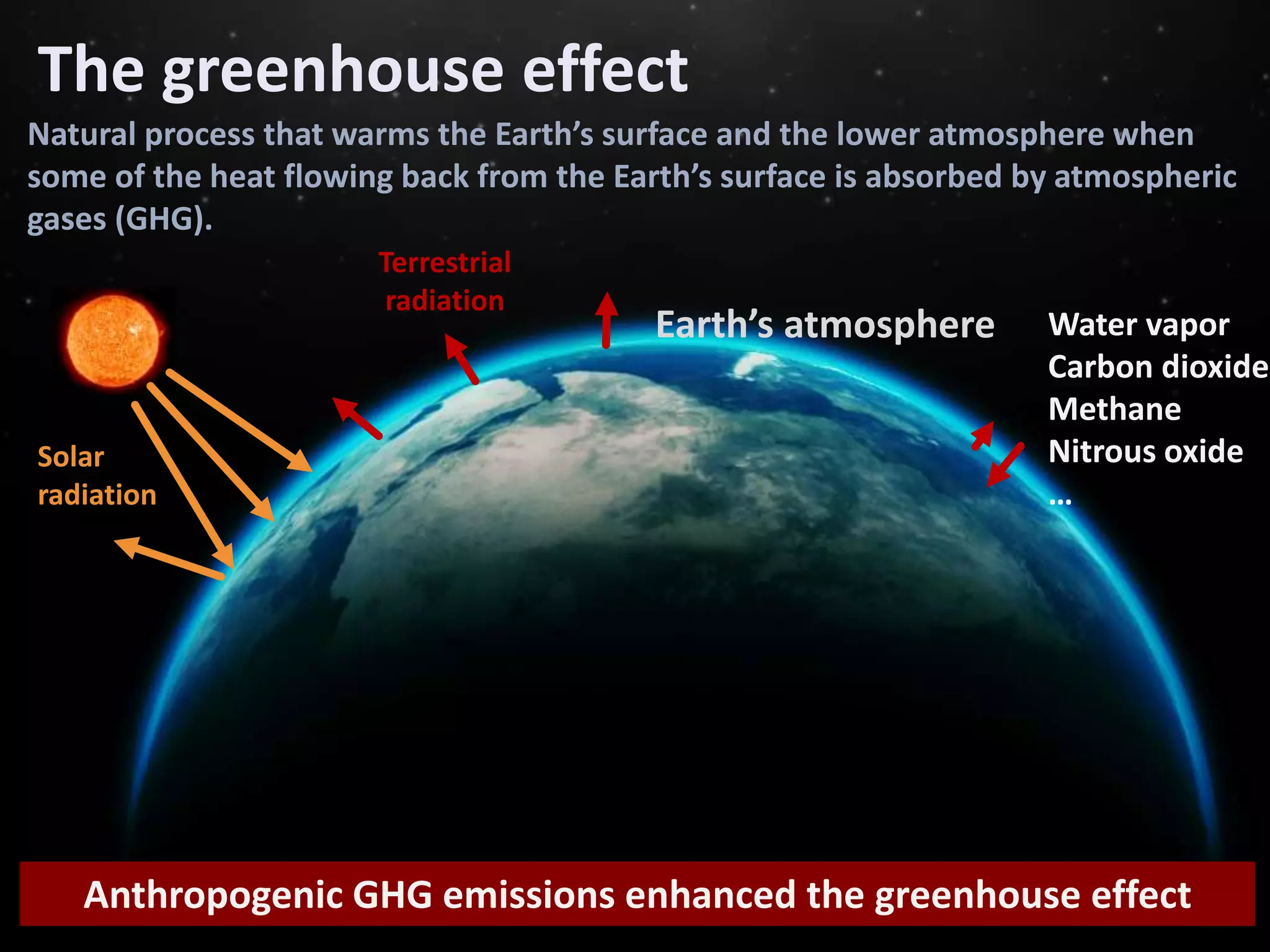
Earth’s atmosphere Water vapor
Carbon dioxide
Methane
Nitrous oxide
…
The greenhouse effect
Natural process that warms the Earth’s surface and the lower atmosphere when
some of the heat flowing back from the Earth’s surface is absorbed by atmospheric
gases (GHG).
Solar
radiation
Terrestrial
radiation
Anthropogenic GHG emissions enhanced the greenhouse effect
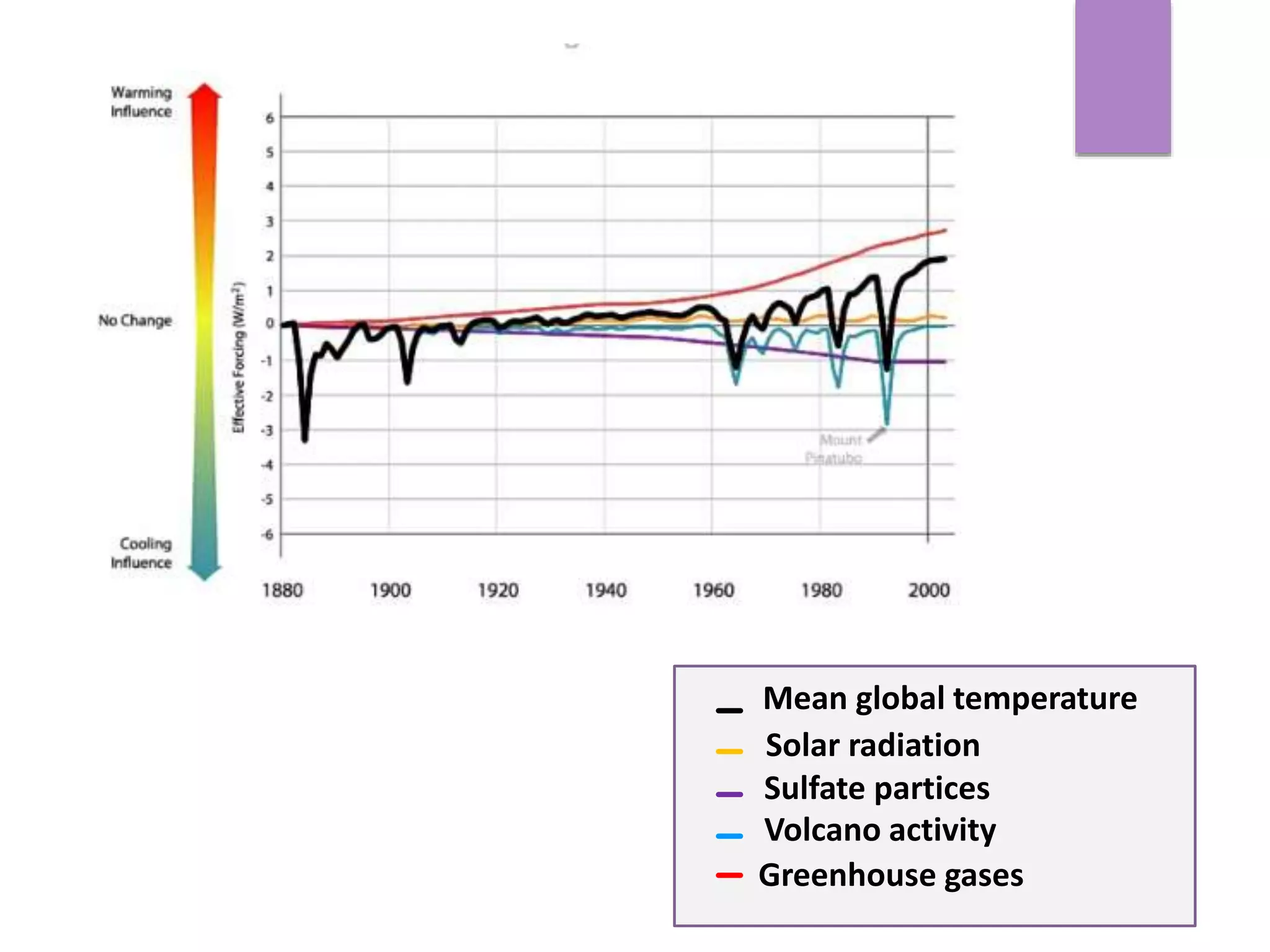
Attribution of climate change
Mean global temperature
Solar radiation
Sulfate partices
Volcano activity
Greenhouse gases
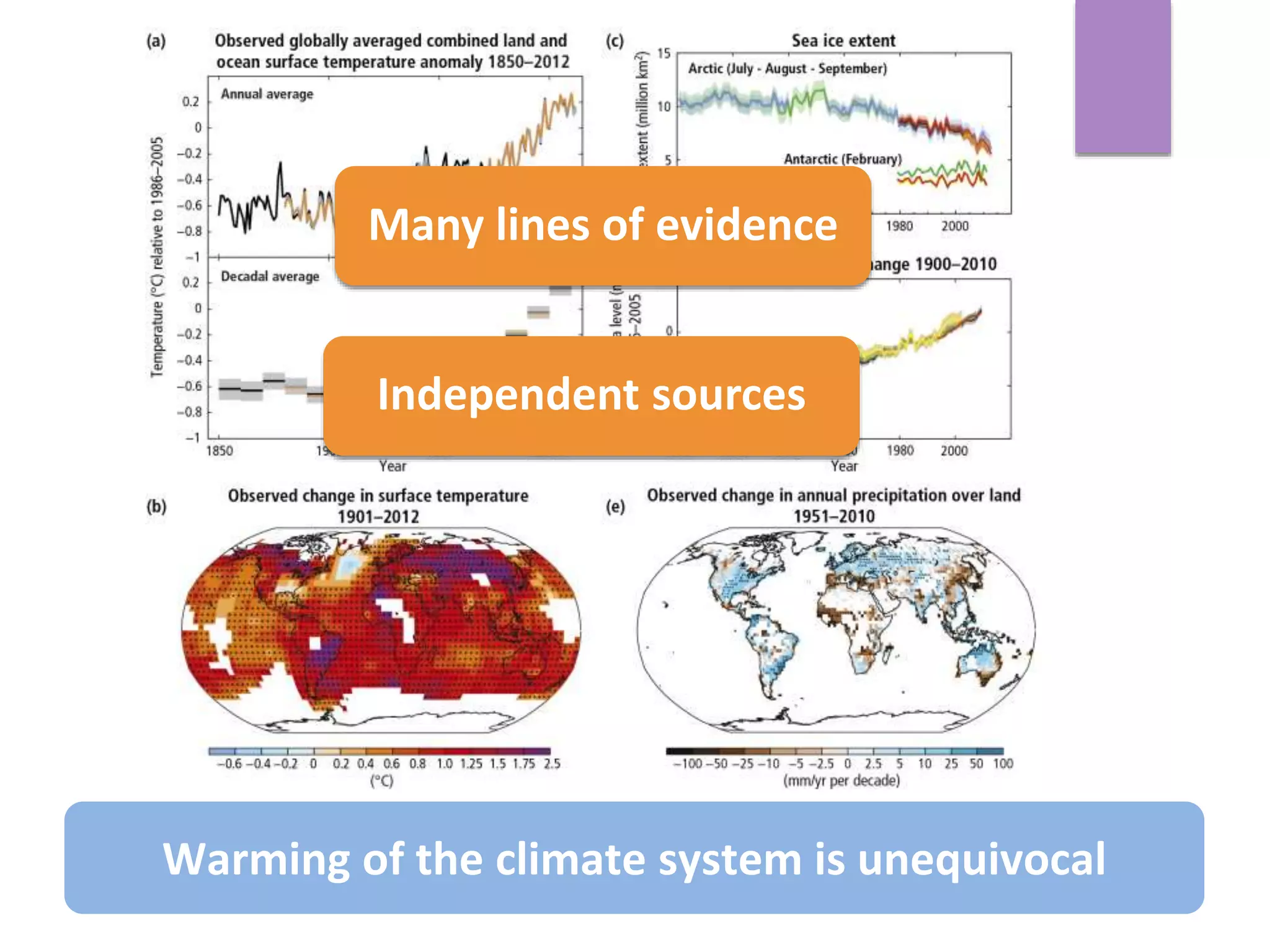
Evidences: Observed changes
Warming of the climate system is unequivocal
Independent sources
Many lines of evidence
What can we expect?
What is a climate scenario?
Description of the possible future state of the
climate system due to changes in the
atmospheric composition due to human
activities.
¿How climate
scenarios are
build?
Global climate models
Anthropogenic forcing scenarios
RCPs: Representative Concentration Pathways
> 1370 ppm
850 ppm
650 ppm
490 ppm
Atmospheric CO2eq
Anthropogenic forcing scenarios
0.3-1.7C
2.6-4.8C
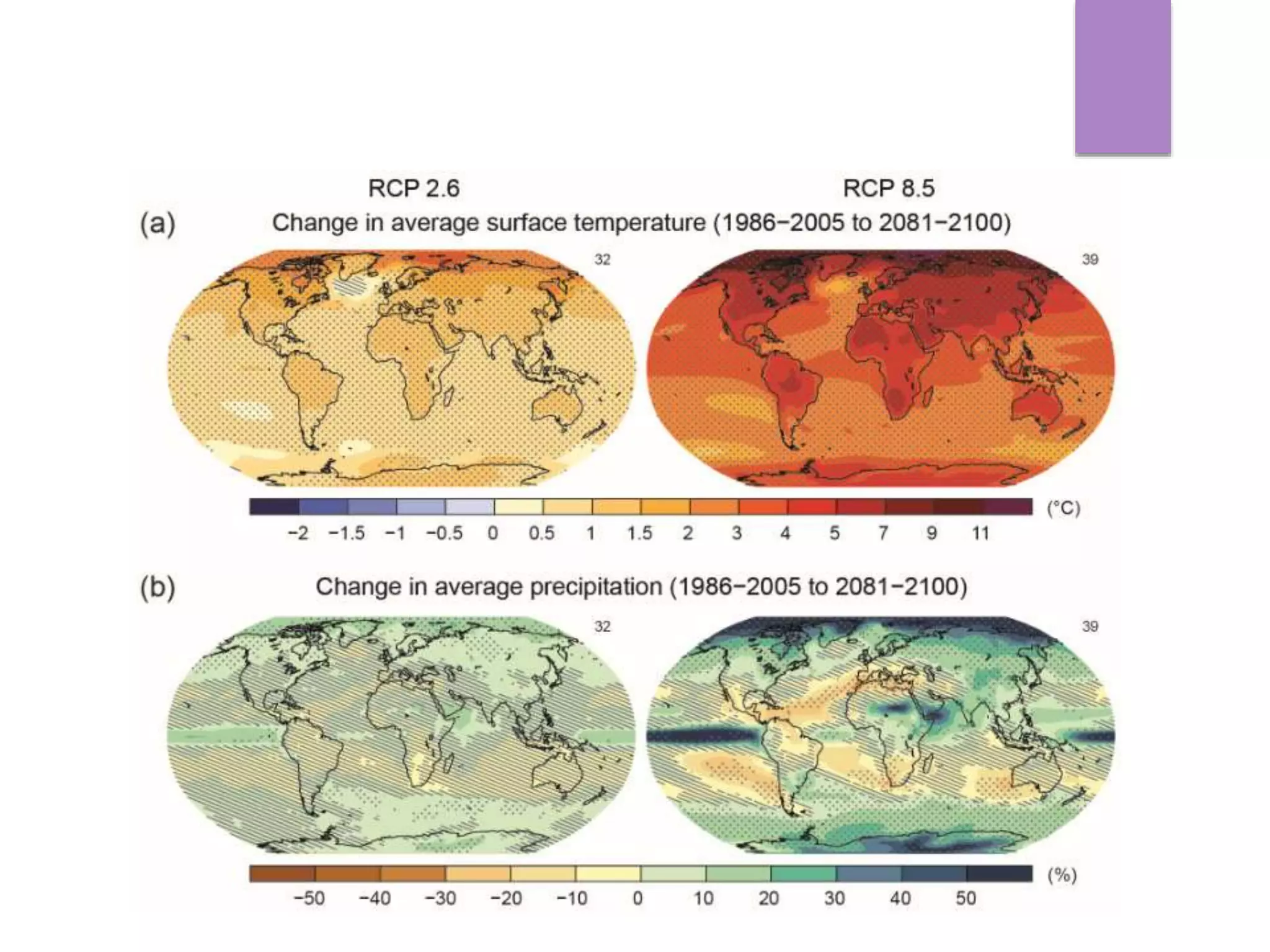
Global temperature change for the end of the 21st century is
likely to exceed 1.5°C relative to 1850 for all scenarios
(IPCC2013,Fig.SPM.7a)
(IPCC2013,Fig.SPM.9)
Global mean sea level will continue to rise during the 21st century
0.26 m
0.98 m
What can we do?
Production
Consumption
Mitigation
options
Integration of
infrastructures,
technologies,
institutions and
regulations
Adaptation
options
CULTURAL TRANSFORMATION
Some obstacles for local/regional
adaptation & mitigation …
Short-term
economic
planning
Professional
practices
Scientific
uncertainties
Policies
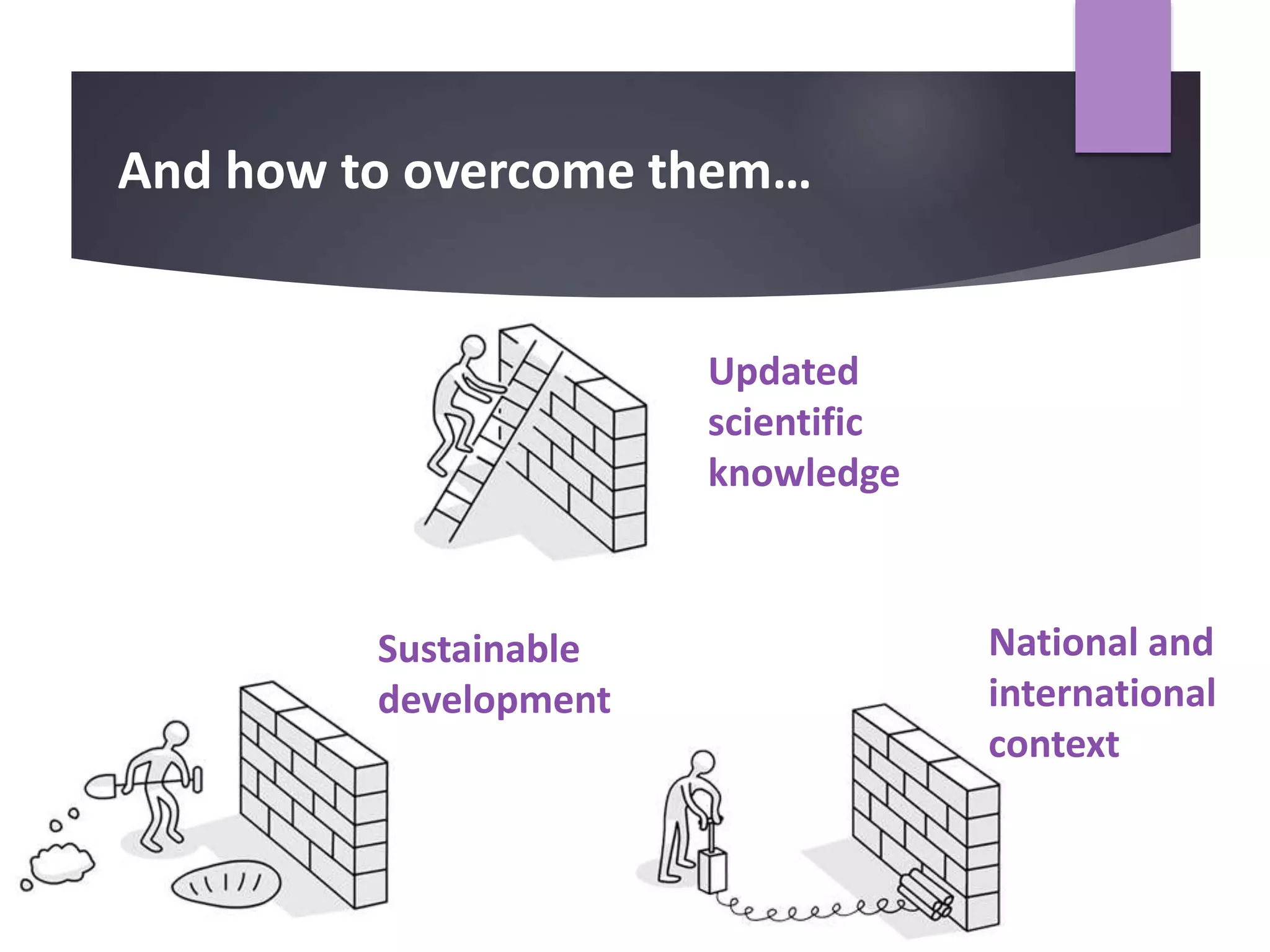
And how to overcome them…
Updated
scientific
knowledge
Sustainable
development
National and
international
context
Climate science: The basics

Climate science: The basics