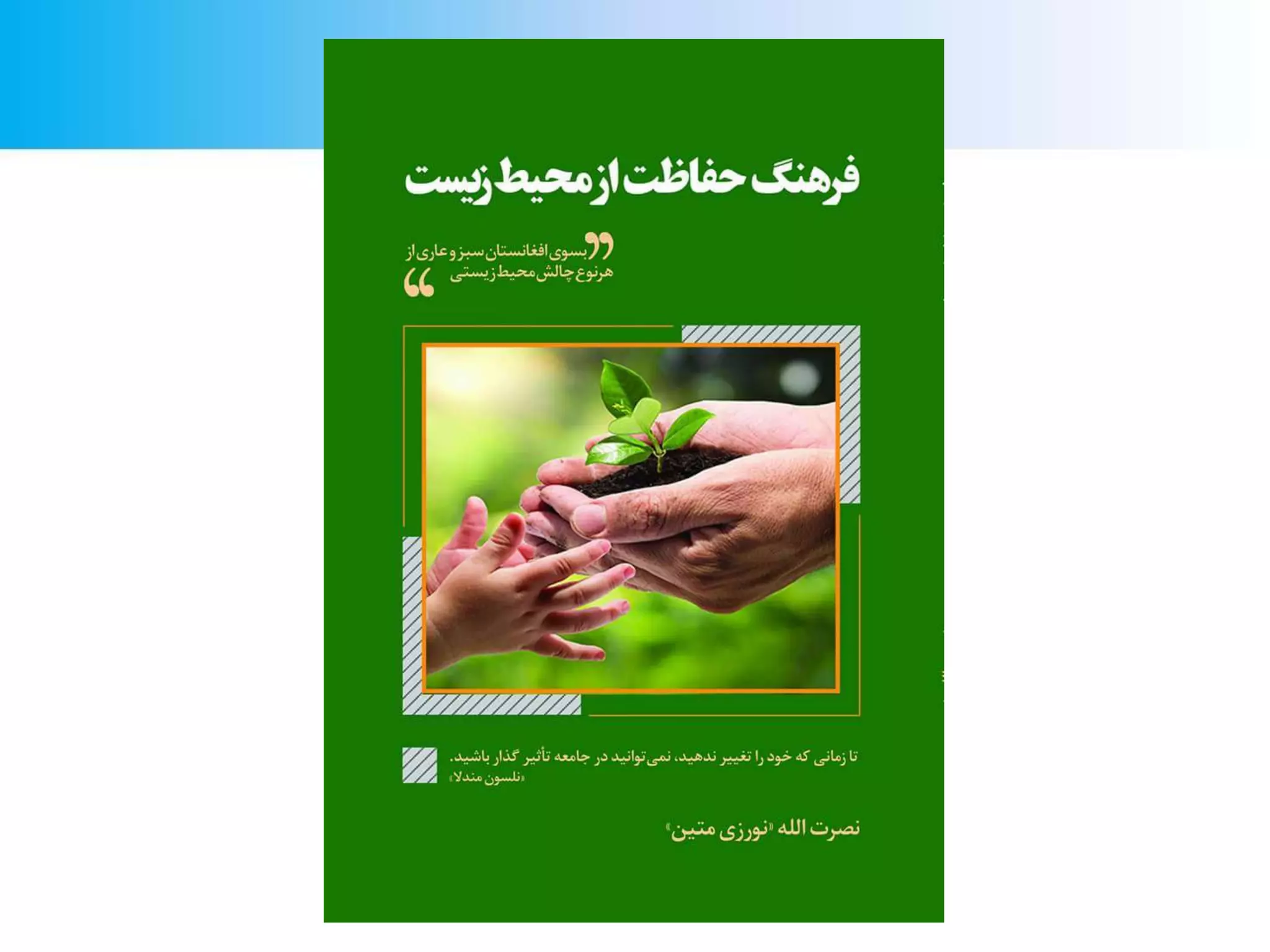
Presenter: Nasratullah Mateen
Environment and NRs Activist and Writer
Topics to Cover:
• Distinguishing climate from weather
• Science of Climate Change
• Causes of Climate Change
• Impacts of Climate Change
• What can we do
• Climate Activism
Workshop Objectives
List the following things about climate science and climate change:
Exercise: What Do You Know?
3 Things you know about the topic
2 things you want to learn
1 question you want to ask
Pair yourself to the one sitting on your right hand side
and discuss your answers.
Weather
• The actual state of the atmosphere in a period of several hours up
to a few days (in a given place).
Climate
• A statistical description in terms of the mean and variability of
relevant quantities over a period ranging from months to
thousands or millions of years (IPCC).
• The classical period is 30 years, which are most often surface
variables such as temperature, precipitation, and wind.
• Climate in a wider sense is the state, including a statistical
description, of the climate system (World Meteorological
Organization (WMO)).
Climate vs. Weather
•Temperature
•Wind
•Clouds
•Precipitation
•Humidity
•Storms (cyclones!)
Characteristics of Weather and Climate
Air
Water
Life
Land
Ice
Earth System (Interaction)
Atmosphere (all air)
Hydrosphere (all water)
Biosphere (all living things)
Geosphere (solid portion
of the earth)
Cryosphere (frozen water
part of the earth)
IPCC, 3rd Assessment Report:
Climate change: a statistically significant variation in either the
mean state of the climate or in its variability, persisting for an
extended period (typically decades or longer).
UNFCCC, Article 1:
“climate change”: “a change of climate which is attributed directly
or indirectly to human activity that alters the composition of the
global atmosphere and which is in addition to natural climate
variability observed over comparable time periods.”
What is Climate Change?
What are the
Primary Indicators
of Climate
Change?
What are the Primary Indicators of
Climate Change?
 Natural Causes
Volcanic eruptions
Ocean currents
Solar Variation
Earth’s movements
Causes of Climate Change
 Greenhouse gases
 Deforestation
 Coal mining
 Burning of fossil fuels
 Industrial processes
 Agriculture
Human Causes
(Anthropogenic or Man-made Causes)
RISE IN SEA LEVEL
Effects of Climate Change
Melting ice sheets  Sea level rise
Heavy rainfall across the globe
Effects of Climate Change
Extreme drought
Effects of Climate Change
Decline in crop productivity
Effects of Climate Change
Ecosystems are changing
Effects of Climate Change
Hurricanes
Effects of Climate Change
Rise in temperature
Effects of Climate Change
Carbon dioxide acidifies seawater
• CO2 and carbonate (which plankton use to make shells) combine in the
ocean.
• The ocean is already more acidic than it was 50 years ago.
CO2 CO2
Ocean
Atmosphere
“shelled-critters”
Effects of Climate Change
Causes of Climate Change
Green House Gases and Earth’s
Greenhouse Effect
Actual Greenhouse vs. the Greenhouse
Effect - Similar But Not Quite The Same
GHE#1 - Natural
Earth’s Natural Greenhouse Effect
GHE#2 - Humans
Human-caused Global Warming
GHE#3-Text
The science of global warming is based on well-understood
physical principles. There is NO scientific debate about
this!
Due to human activities, there are now 40% more
greenhouse gases in the atmosphere than there were a
few hundred years ago.
The Earth has already warmed as the consequence of this,
and scientists expect that the next 20 to 100 years the
world will warm a lot more!
GHGs Trap Heat
Increasing greenhouse gases trap more heat
GHGs Trap Heat
Atmospheric Lifespan of Greenhouse Gases
2008 Global CO2 Emissions From Fossil Fuel Combustion
and Some Industrial Processes: Country comparisons
Source: National CO2 Emissions from Fossil-Fuel Burning, Cement Manufacture, and Gas Flaring: 1751-2008.
Any questions
till now?
Climate Change Impacts
If it is:
• Hotter?
• Dryer?
• Windier?
What happens to your area?
Extreme Flooding at Bangkok in October 2011
Climate Change Impacts
Consequences of Climate Change
For example:
 Temperature
increase
 Sea level rise
 More rain
Agriculture and food
security
Crop yields, irrigation demands...
Forests
Composition, health and
productivity...
Water resources
Water supply, water quality...
Coastal areas
Erosion, inundation, cost of
prevention...
Species and natural areas
Biodiversity, modification of
ecosystems...
Human health
Infectious diseases, human
settlements...
Consequences of
climate change:
Changes and Impacts in Context
Impacts of climate change on water resources
Warmer temperatures  Drier soils
 Drier vegetation  More and larger fires  More
Erosion and Stream Sedimentation  Less fish
 Less high-quality food.
What are the consequences of increased rainfall?
Cascade of Changes
Global Population
 The world
population is
expected to rise
throughout the 21st
century, although
this growth is
projected to
decelerate markedly
in 2050 to 2100.
 Currently, the world
population’s annual
growth rate is 1.1%.
Effects on Health
Greta Thunberg
Thank You For
Your Attention

From climate change to climate action

  • 1.
    Presenter: Nasratullah Mateen Environmentand NRs Activist and Writer
  • 3.
    Topics to Cover: •Distinguishing climate from weather • Science of Climate Change • Causes of Climate Change • Impacts of Climate Change • What can we do • Climate Activism Workshop Objectives
  • 4.
    List the followingthings about climate science and climate change: Exercise: What Do You Know? 3 Things you know about the topic 2 things you want to learn 1 question you want to ask Pair yourself to the one sitting on your right hand side and discuss your answers.
  • 5.
    Weather • The actualstate of the atmosphere in a period of several hours up to a few days (in a given place). Climate • A statistical description in terms of the mean and variability of relevant quantities over a period ranging from months to thousands or millions of years (IPCC). • The classical period is 30 years, which are most often surface variables such as temperature, precipitation, and wind. • Climate in a wider sense is the state, including a statistical description, of the climate system (World Meteorological Organization (WMO)). Climate vs. Weather
  • 6.
  • 7.
    Air Water Life Land Ice Earth System (Interaction) Atmosphere(all air) Hydrosphere (all water) Biosphere (all living things) Geosphere (solid portion of the earth) Cryosphere (frozen water part of the earth)
  • 8.
    IPCC, 3rd AssessmentReport: Climate change: a statistically significant variation in either the mean state of the climate or in its variability, persisting for an extended period (typically decades or longer). UNFCCC, Article 1: “climate change”: “a change of climate which is attributed directly or indirectly to human activity that alters the composition of the global atmosphere and which is in addition to natural climate variability observed over comparable time periods.” What is Climate Change?
  • 9.
    What are the PrimaryIndicators of Climate Change?
  • 10.
    What are thePrimary Indicators of Climate Change?
  • 12.
     Natural Causes Volcaniceruptions Ocean currents Solar Variation Earth’s movements Causes of Climate Change
  • 13.
     Greenhouse gases Deforestation  Coal mining  Burning of fossil fuels  Industrial processes  Agriculture Human Causes (Anthropogenic or Man-made Causes)
  • 15.
    RISE IN SEALEVEL Effects of Climate Change Melting ice sheets  Sea level rise
  • 16.
    Heavy rainfall acrossthe globe Effects of Climate Change
  • 17.
  • 18.
    Decline in cropproductivity Effects of Climate Change
  • 19.
  • 20.
  • 21.
    Rise in temperature Effectsof Climate Change
  • 22.
    Carbon dioxide acidifiesseawater • CO2 and carbonate (which plankton use to make shells) combine in the ocean. • The ocean is already more acidic than it was 50 years ago. CO2 CO2 Ocean Atmosphere “shelled-critters” Effects of Climate Change
  • 23.
  • 24.
    Green House Gasesand Earth’s Greenhouse Effect
  • 25.
    Actual Greenhouse vs.the Greenhouse Effect - Similar But Not Quite The Same
  • 26.
    GHE#1 - Natural Earth’sNatural Greenhouse Effect
  • 27.
  • 28.
    GHE#3-Text The science ofglobal warming is based on well-understood physical principles. There is NO scientific debate about this! Due to human activities, there are now 40% more greenhouse gases in the atmosphere than there were a few hundred years ago. The Earth has already warmed as the consequence of this, and scientists expect that the next 20 to 100 years the world will warm a lot more!
  • 29.
  • 30.
    Increasing greenhouse gasestrap more heat GHGs Trap Heat
  • 31.
    Atmospheric Lifespan ofGreenhouse Gases
  • 32.
    2008 Global CO2Emissions From Fossil Fuel Combustion and Some Industrial Processes: Country comparisons Source: National CO2 Emissions from Fossil-Fuel Burning, Cement Manufacture, and Gas Flaring: 1751-2008.
  • 33.
  • 34.
  • 35.
    If it is: •Hotter? • Dryer? • Windier? What happens to your area?
  • 36.
    Extreme Flooding atBangkok in October 2011
  • 37.
  • 38.
    Consequences of ClimateChange For example:  Temperature increase  Sea level rise  More rain Agriculture and food security Crop yields, irrigation demands... Forests Composition, health and productivity... Water resources Water supply, water quality... Coastal areas Erosion, inundation, cost of prevention... Species and natural areas Biodiversity, modification of ecosystems... Human health Infectious diseases, human settlements... Consequences of climate change:
  • 41.
  • 42.
    Impacts of climatechange on water resources
  • 46.
    Warmer temperatures Drier soils  Drier vegetation  More and larger fires  More Erosion and Stream Sedimentation  Less fish  Less high-quality food. What are the consequences of increased rainfall? Cascade of Changes
  • 47.
    Global Population  Theworld population is expected to rise throughout the 21st century, although this growth is projected to decelerate markedly in 2050 to 2100.  Currently, the world population’s annual growth rate is 1.1%.
  • 48.
  • 55.
  • 59.