By: Heather Jo Reynolds
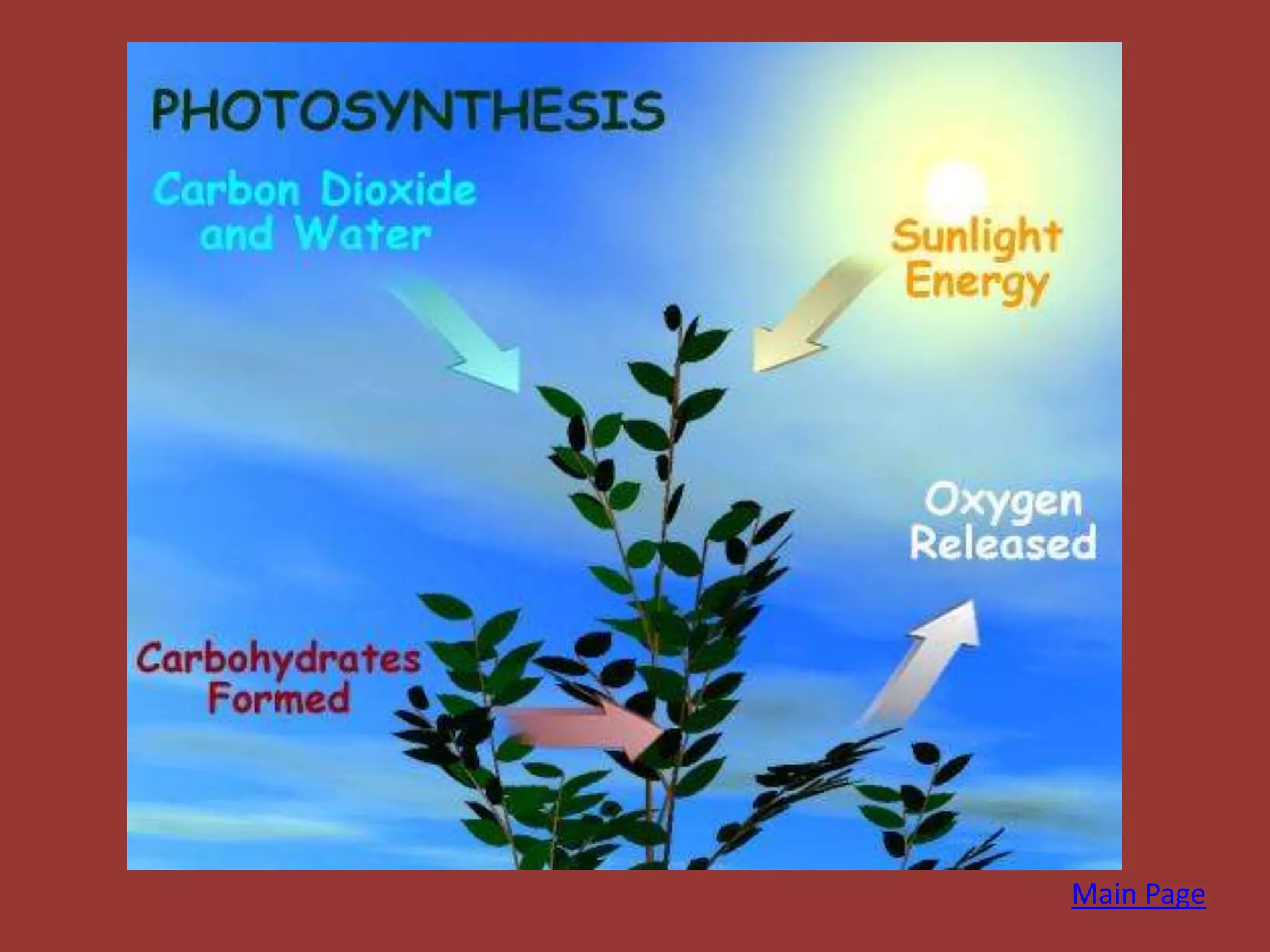
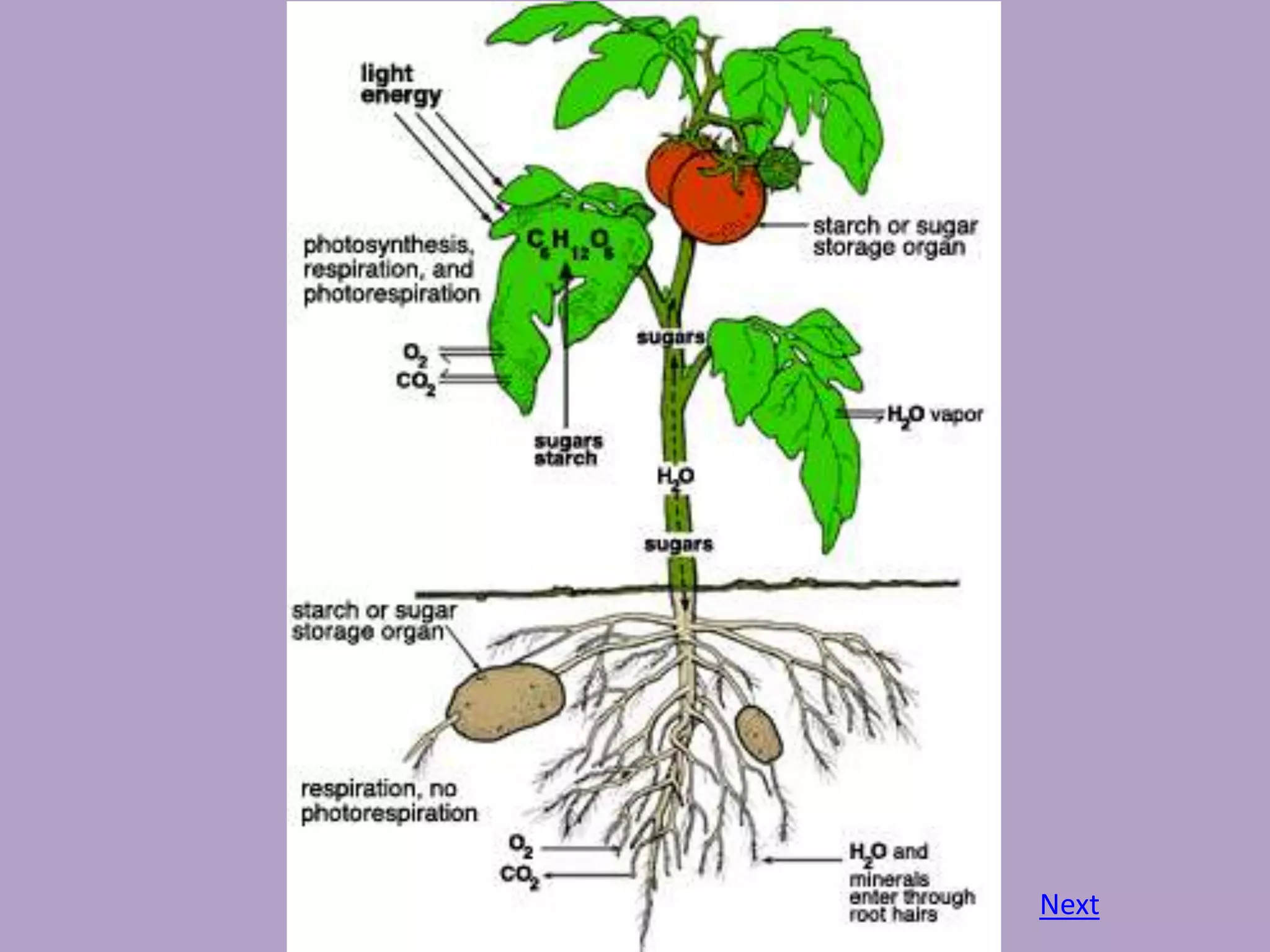
Plants are photosynthetic, which means
they gather their food energy directly from
sunlight.

This process is known as photosynthesis.

In order for plants to complete
photosynthesis, they need to have a
supply of:
      -Sunlight
      -Carbon dioxide
      -Water
      -Mineral nutrients from the dirt


                                              Next
• During
  photosynthesis, plants
  release oxygen for us to
  breath.

  They also use a slight
  intake of oxygen at night
  for parts of the plant that
  do not perform
  photosynthesis, such as
  the roots.

  The structure of a plant is
  adapted to gathering the
  things that the plant needs
Main Page
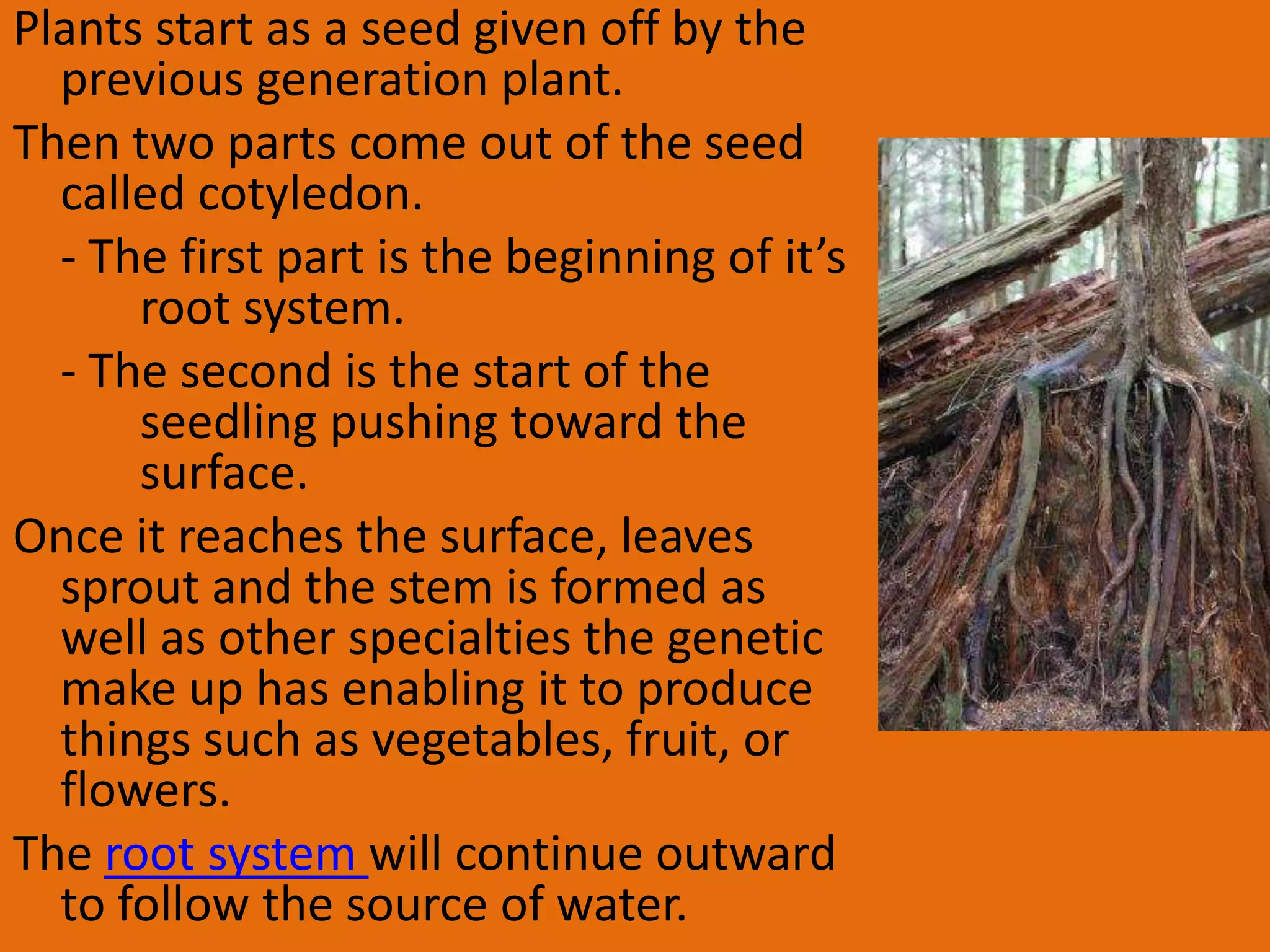
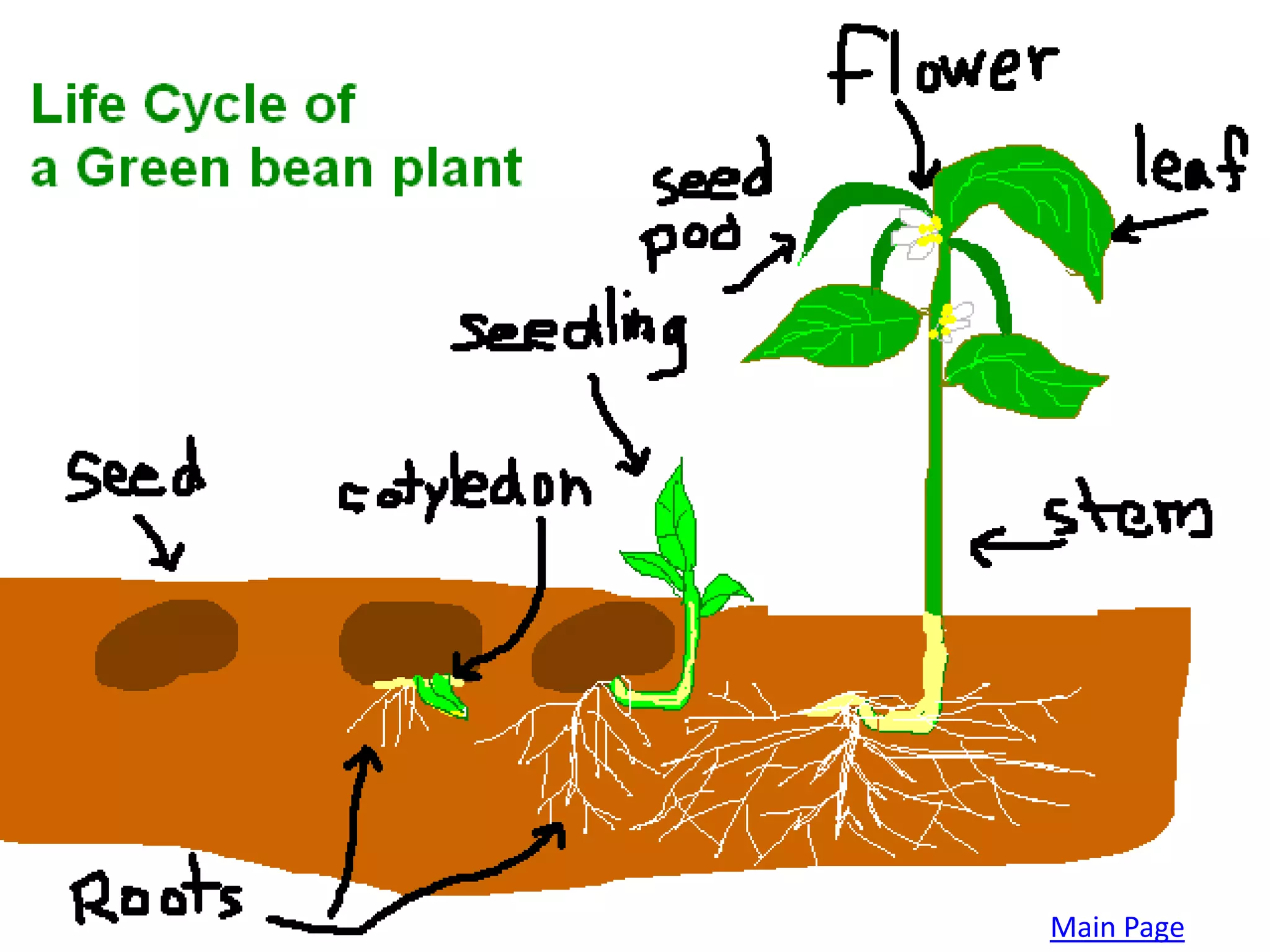
Plants start as a seed given off by the
  previous generation plant.
Then two parts come out of the seed
  called cotyledon.
  - The first part is the beginning of it’s
      root system.
  - The second is the start of the
      seedling pushing toward the
      surface.
Once it reaches the surface, leaves
  sprout and the stem is formed as
  well as other specialties the genetic
  make up has enabling it to produce
  things such as vegetables, fruit, or
  flowers.
The root system will continue outward
  to follow the source of water.
Main Page
Special Structures
Some parts of plants
are greatly modified, and
these may look very different
from the "typical“ plants we
are use to. However they are
all adaptations to help the
plant better survive in their
environment.
 For example:
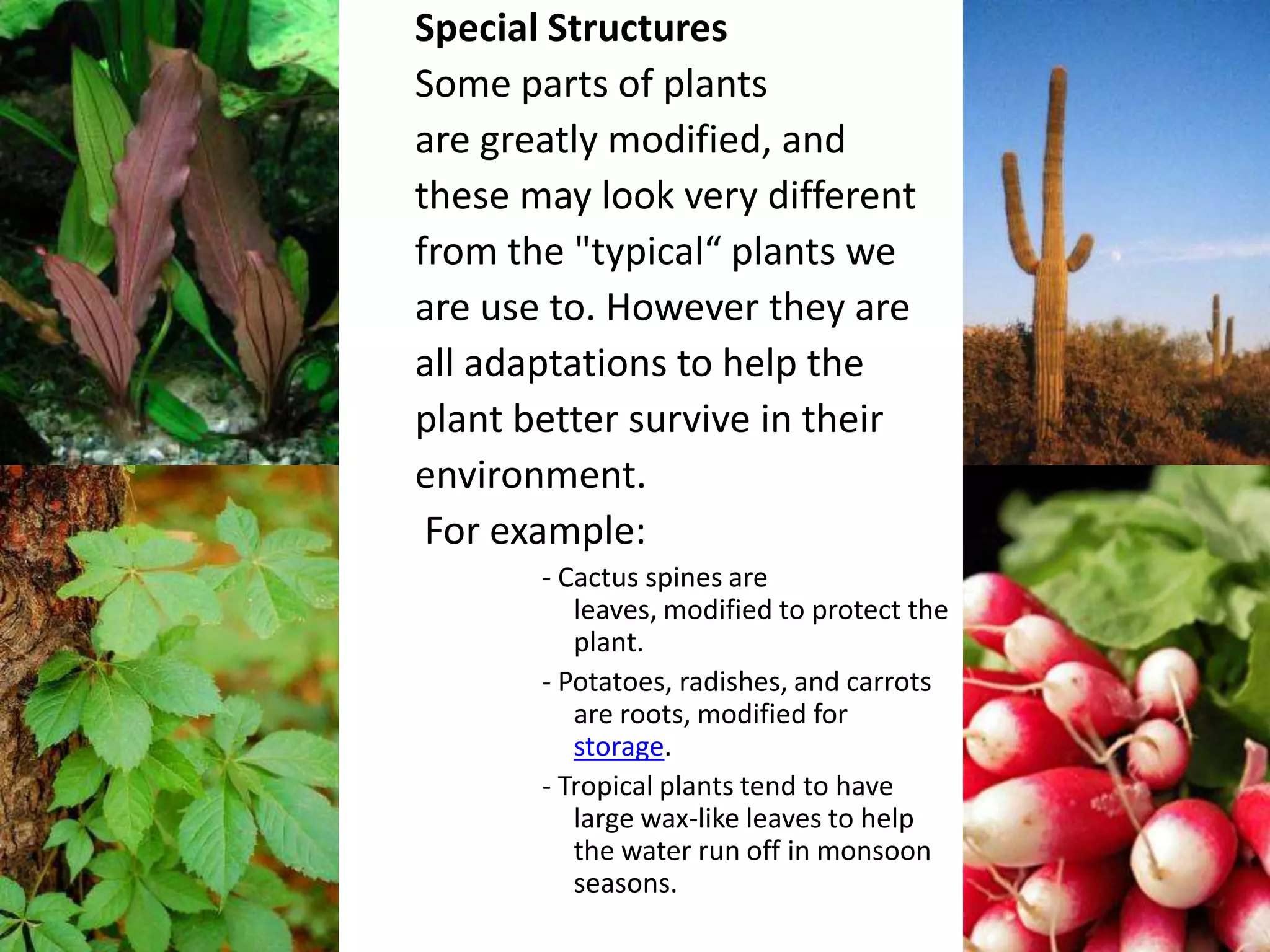
       - Cactus spines are
          leaves, modified to protect the
          plant.
       - Potatoes, radishes, and carrots
          are roots, modified for
          storage.
       - Tropical plants tend to have
          large wax-like leaves to help
          the water run off in monsoon
          seasons.
Next
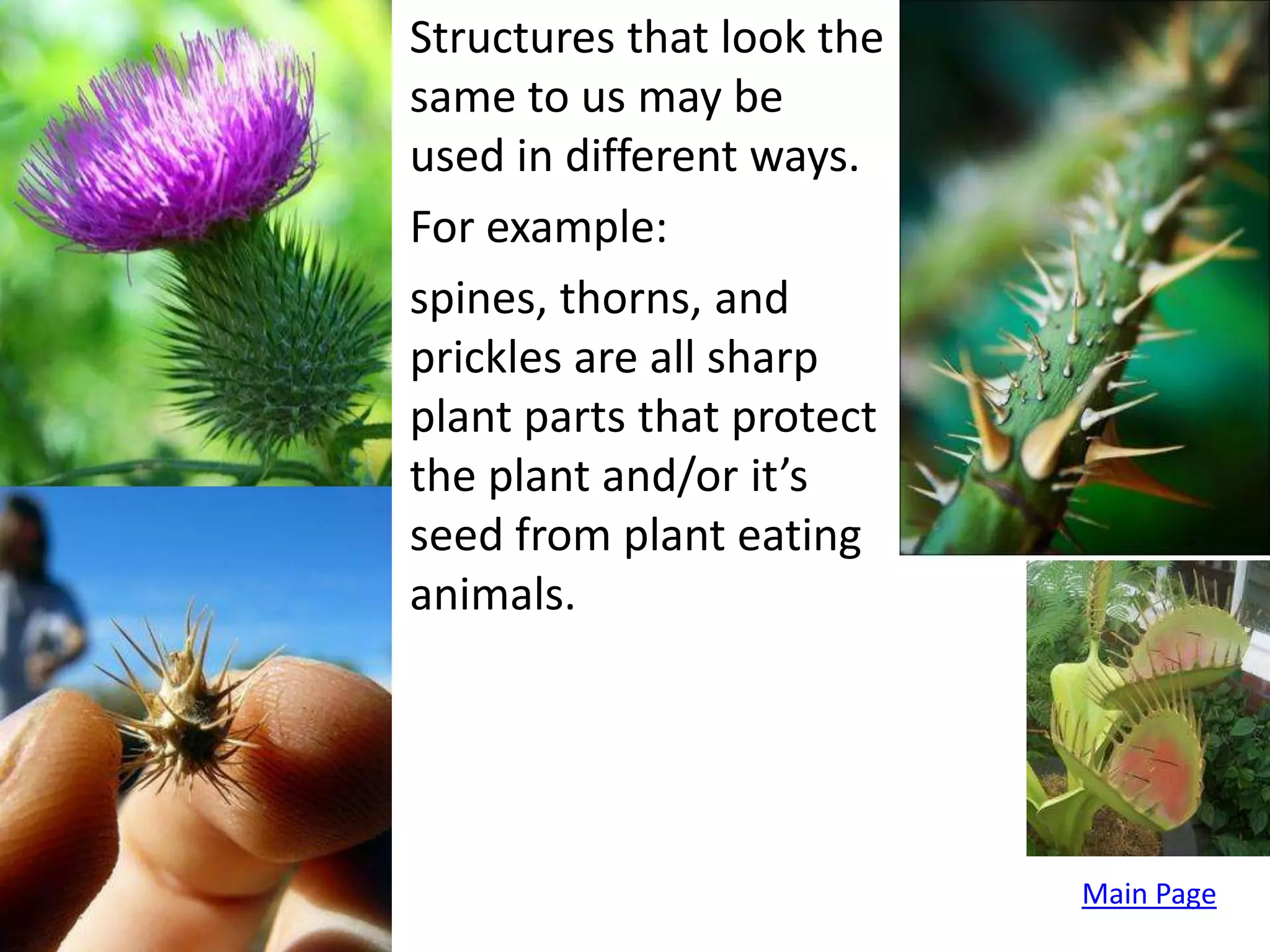
Structures that look the
same to us may be
used in different ways.
For example:
spines, thorns, and
prickles are all sharp
plant parts that protect
the plant and/or it’s
seed from plant eating
animals.


                           Main Page
Plants can reproduce within
  it’s self known as, asexual
  reproduction.
• It is very easy to clone
  plants, and many plants
  can grow from cuttings or
  broken plant parts.

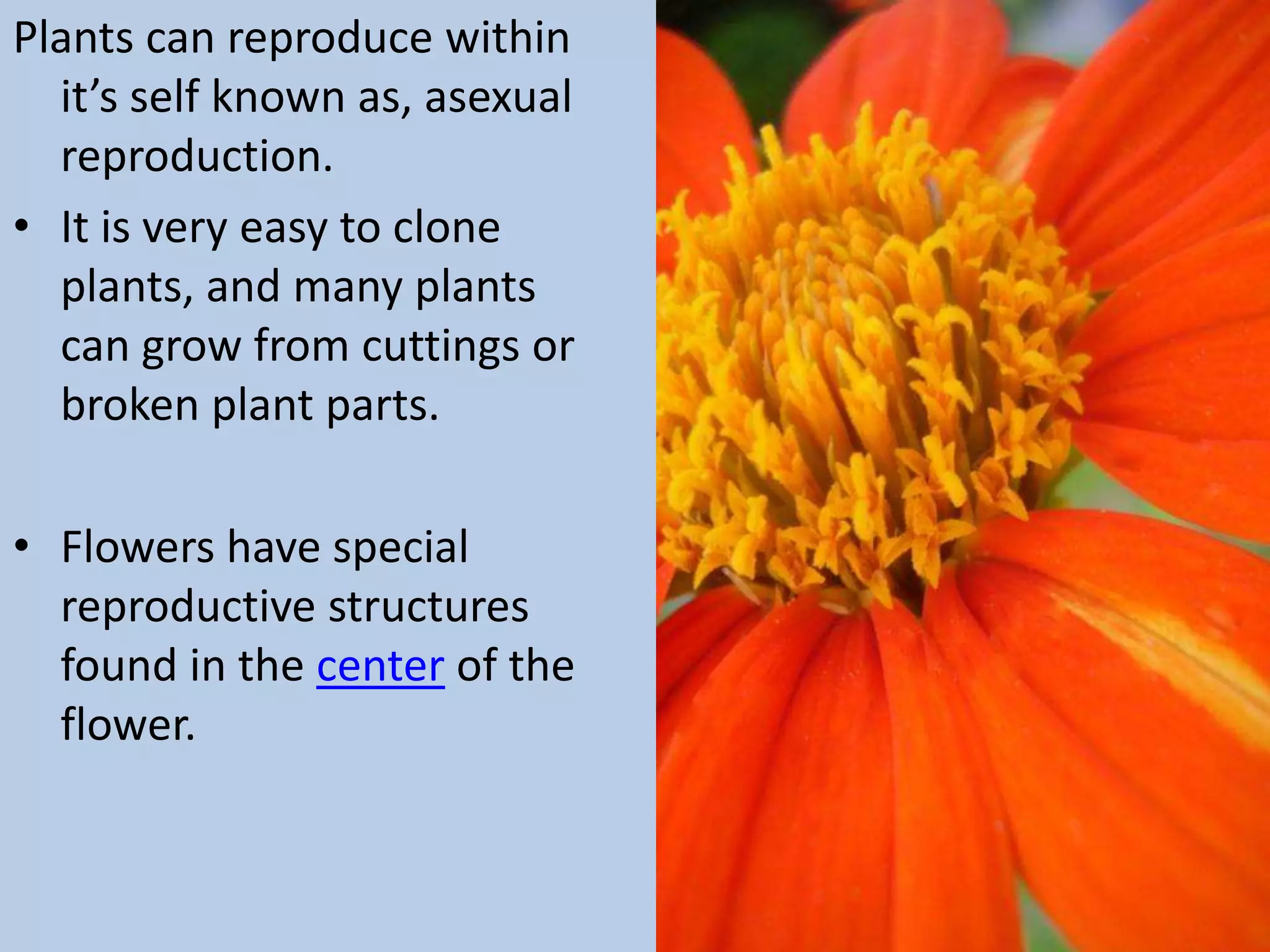
• Flowers have special
  reproductive structures
  found in the center of the
  flower.
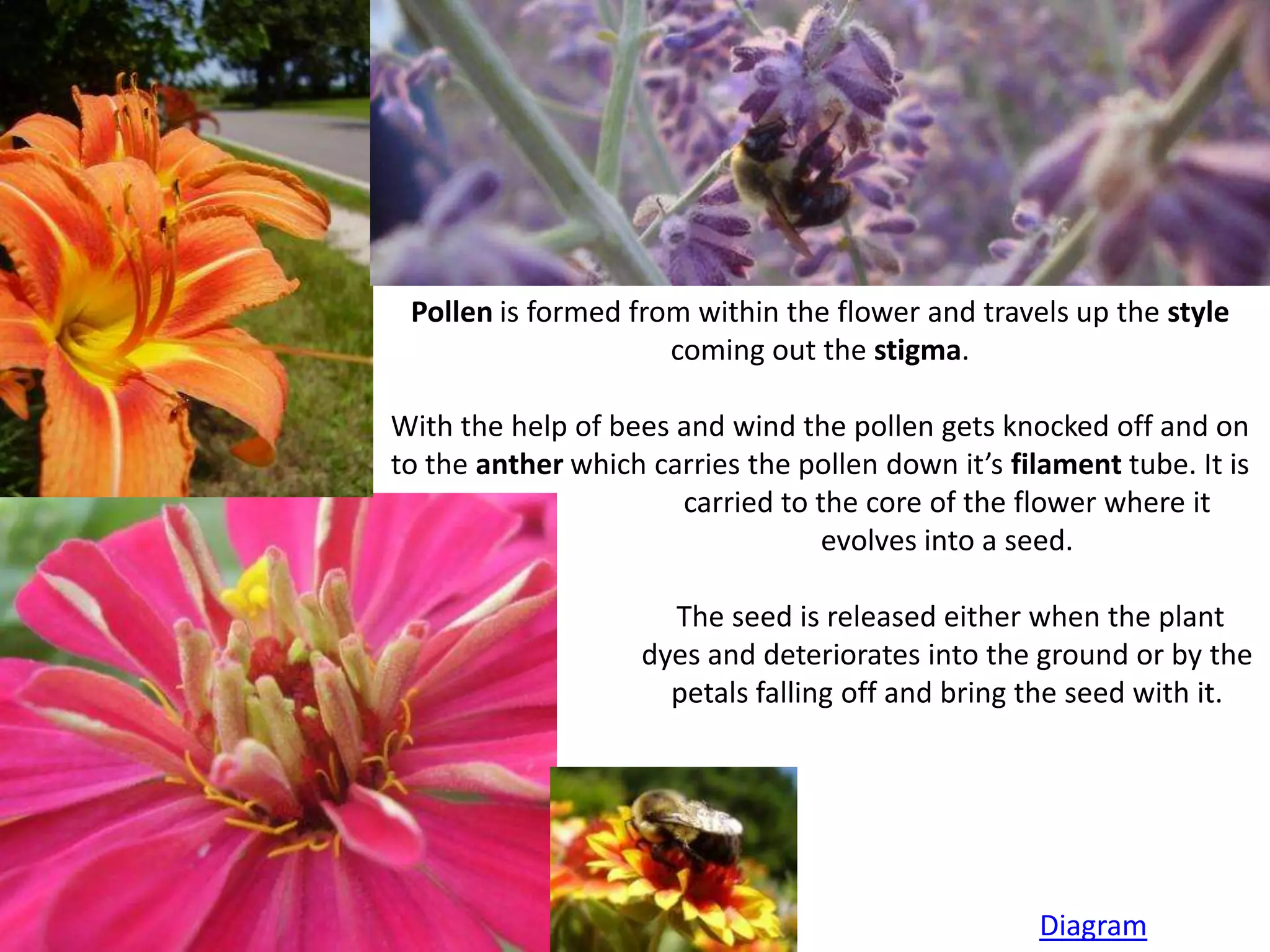
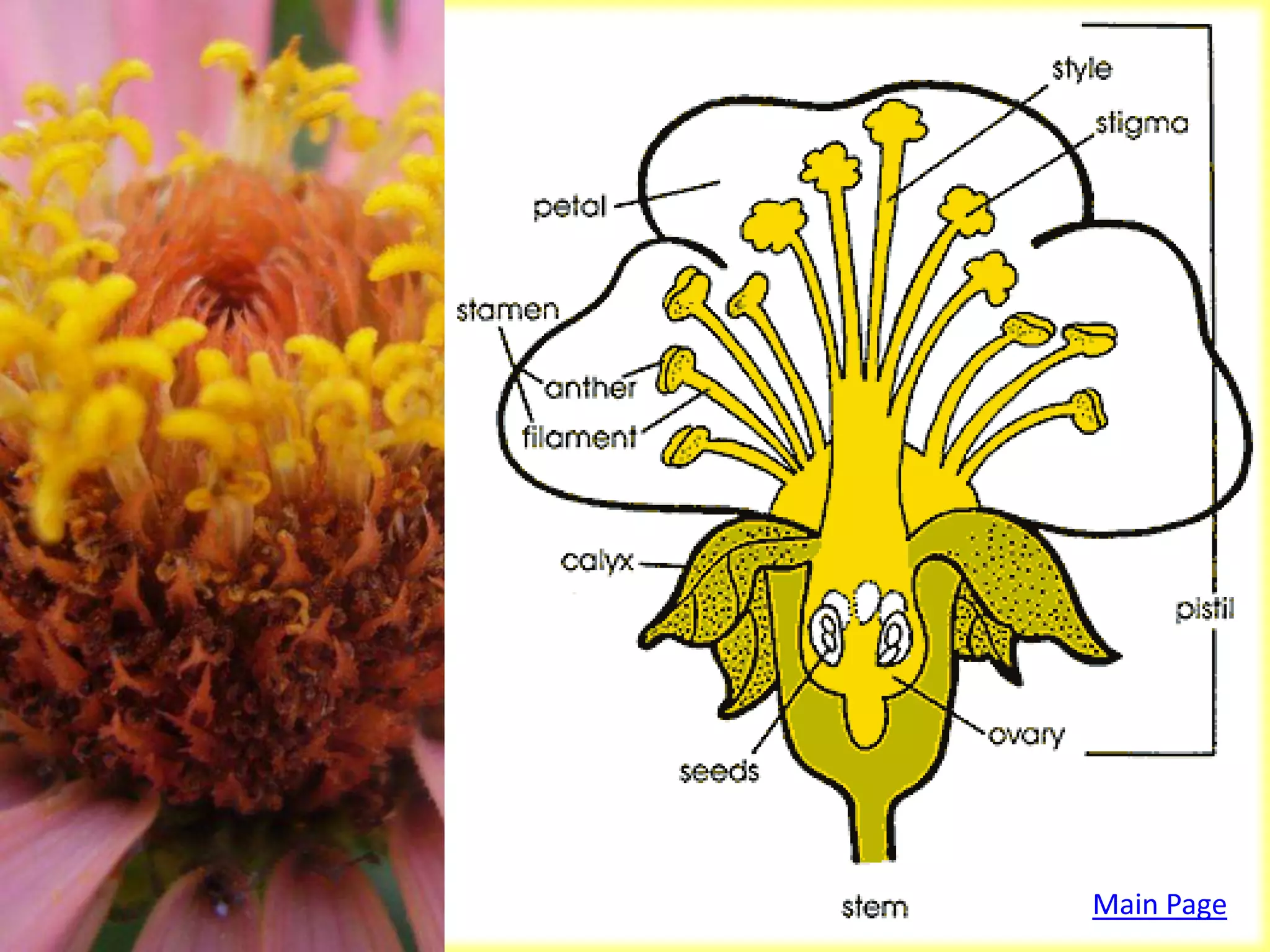
Pollen is formed from within the flower and travels up the style
                     coming out the stigma.

With the help of bees and wind the pollen gets knocked off and on
to the anther which carries the pollen down it’s filament tube. It is
                      carried to the core of the flower where it
                                  evolves into a seed.

                      The seed is released either when the plant
                    dyes and deteriorates into the ground or by the
                      petals falling off and bring the seed with it.


                                                    Diagram
Main Page
Plant video


              Main Page
Plants do one of two things. They either
go dormant until the weather permits or
decompose.

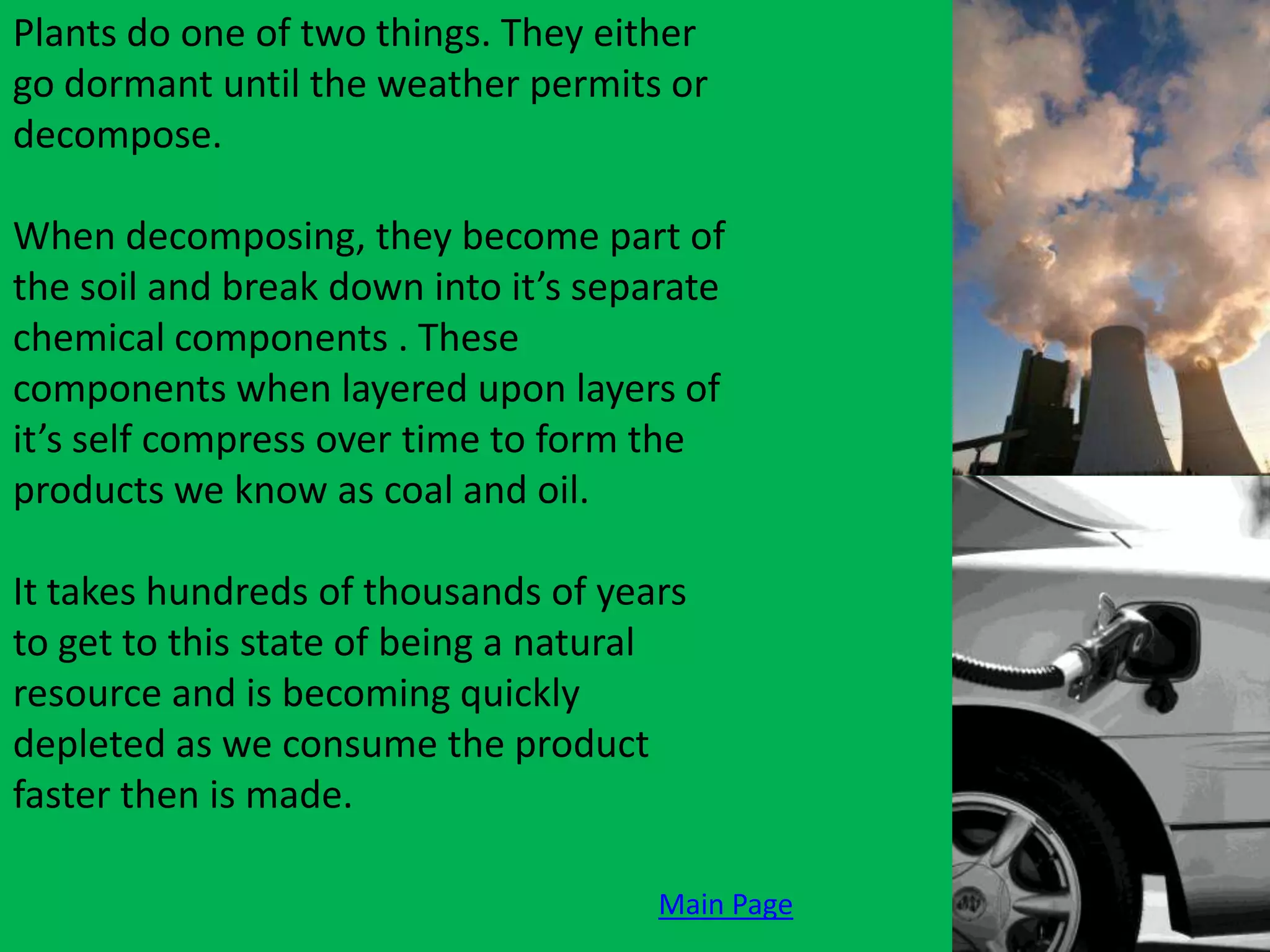
When decomposing, they become part of
the soil and break down into it’s separate
chemical components . These
components when layered upon layers of
it’s self compress over time to form the
products we know as coal and oil.

It takes hundreds of thousands of years
to get to this state of being a natural
resource and is becoming quickly
depleted as we consume the product
faster then is made.

                                      Main Page

The Growth of Plants

  • 1.
  • 2.
    Plants are photosynthetic,which means they gather their food energy directly from sunlight. This process is known as photosynthesis. In order for plants to complete photosynthesis, they need to have a supply of: -Sunlight -Carbon dioxide -Water -Mineral nutrients from the dirt Next
  • 3.
    • During photosynthesis, plants release oxygen for us to breath. They also use a slight intake of oxygen at night for parts of the plant that do not perform photosynthesis, such as the roots. The structure of a plant is adapted to gathering the things that the plant needs
  • 4.
  • 5.
    Plants start asa seed given off by the previous generation plant. Then two parts come out of the seed called cotyledon. - The first part is the beginning of it’s root system. - The second is the start of the seedling pushing toward the surface. Once it reaches the surface, leaves sprout and the stem is formed as well as other specialties the genetic make up has enabling it to produce things such as vegetables, fruit, or flowers. The root system will continue outward to follow the source of water.
  • 6.
  • 7.
    Special Structures Some partsof plants are greatly modified, and these may look very different from the "typical“ plants we are use to. However they are all adaptations to help the plant better survive in their environment. For example: - Cactus spines are leaves, modified to protect the plant. - Potatoes, radishes, and carrots are roots, modified for storage. - Tropical plants tend to have large wax-like leaves to help the water run off in monsoon seasons.
  • 8.
  • 9.
    Structures that lookthe same to us may be used in different ways. For example: spines, thorns, and prickles are all sharp plant parts that protect the plant and/or it’s seed from plant eating animals. Main Page
  • 10.
    Plants can reproducewithin it’s self known as, asexual reproduction. • It is very easy to clone plants, and many plants can grow from cuttings or broken plant parts. • Flowers have special reproductive structures found in the center of the flower.
  • 11.
    Pollen is formedfrom within the flower and travels up the style coming out the stigma. With the help of bees and wind the pollen gets knocked off and on to the anther which carries the pollen down it’s filament tube. It is carried to the core of the flower where it evolves into a seed. The seed is released either when the plant dyes and deteriorates into the ground or by the petals falling off and bring the seed with it. Diagram
  • 12.
  • 13.
    Plant video Main Page
  • 14.
    Plants do oneof two things. They either go dormant until the weather permits or decompose. When decomposing, they become part of the soil and break down into it’s separate chemical components . These components when layered upon layers of it’s self compress over time to form the products we know as coal and oil. It takes hundreds of thousands of years to get to this state of being a natural resource and is becoming quickly depleted as we consume the product faster then is made. Main Page