Classroom Management


 Some times it feels like we are
         herding cats.
Session Objective
• We will differentiate between effective and
  ineffective learning environment and
  engagement strategies.
Welcome to Classroom Management!

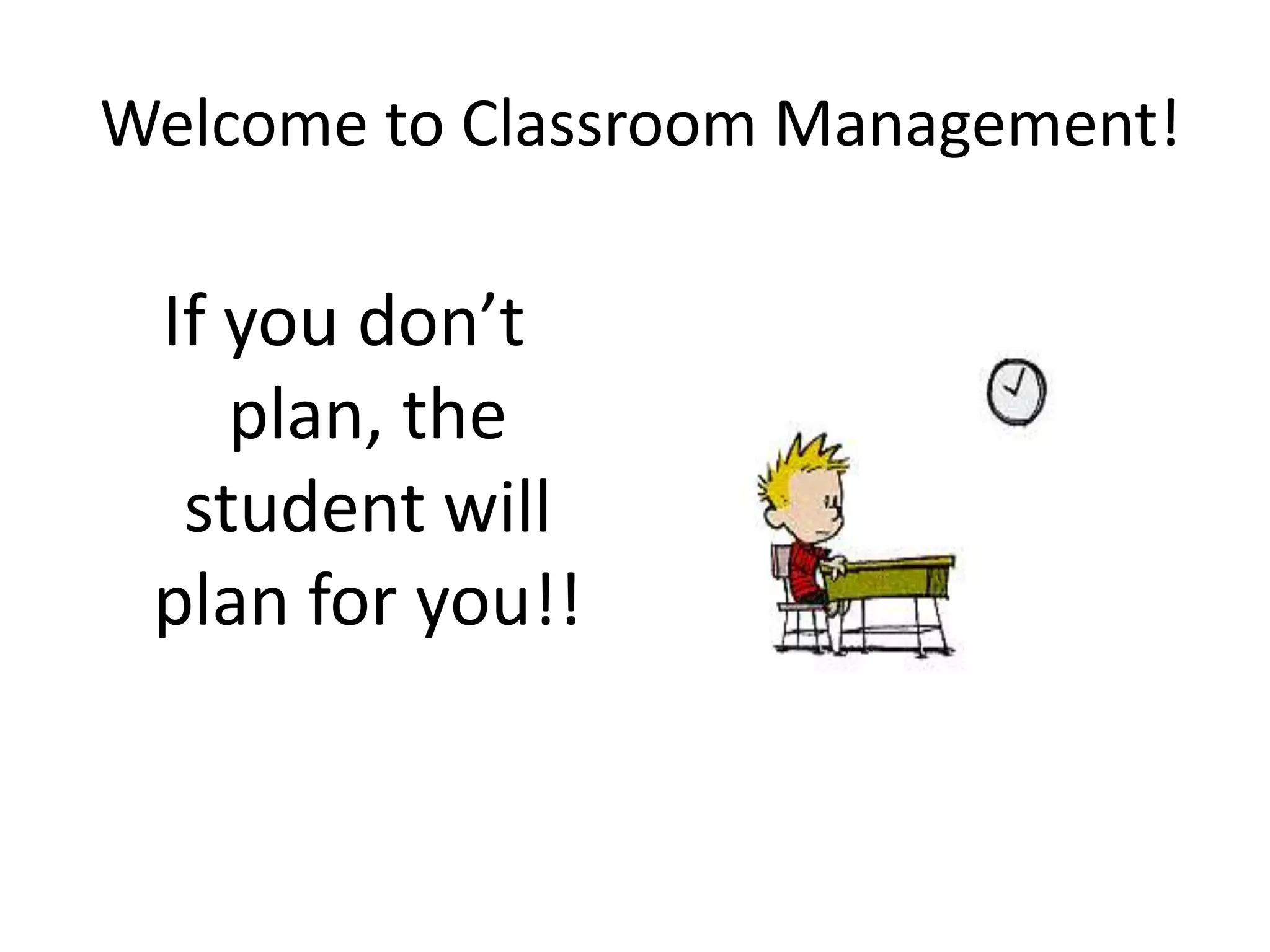
 If you don’t
    plan, the
  student will
 plan for you!!
Think, Pair, Share
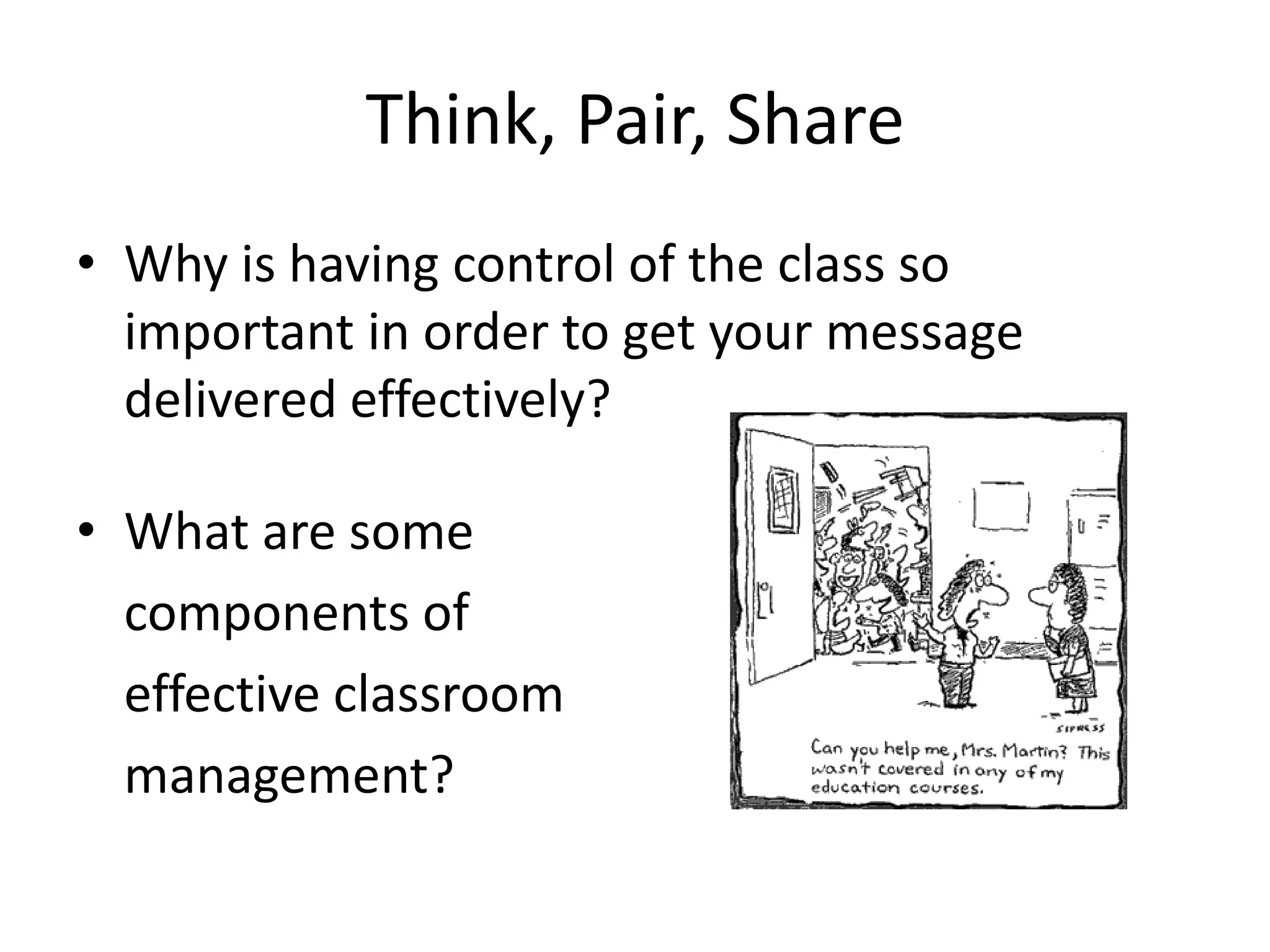
• Why is having control of the class so
  important in order to get your message
  delivered effectively?

• What are some
  components of
  effective classroom
  management?
What is Classroom Management?
•   Classroom management is ways of
    organizing the resources, pupils and helpers
    so that teaching and learning can proceed in
    an efficient and safe manner.
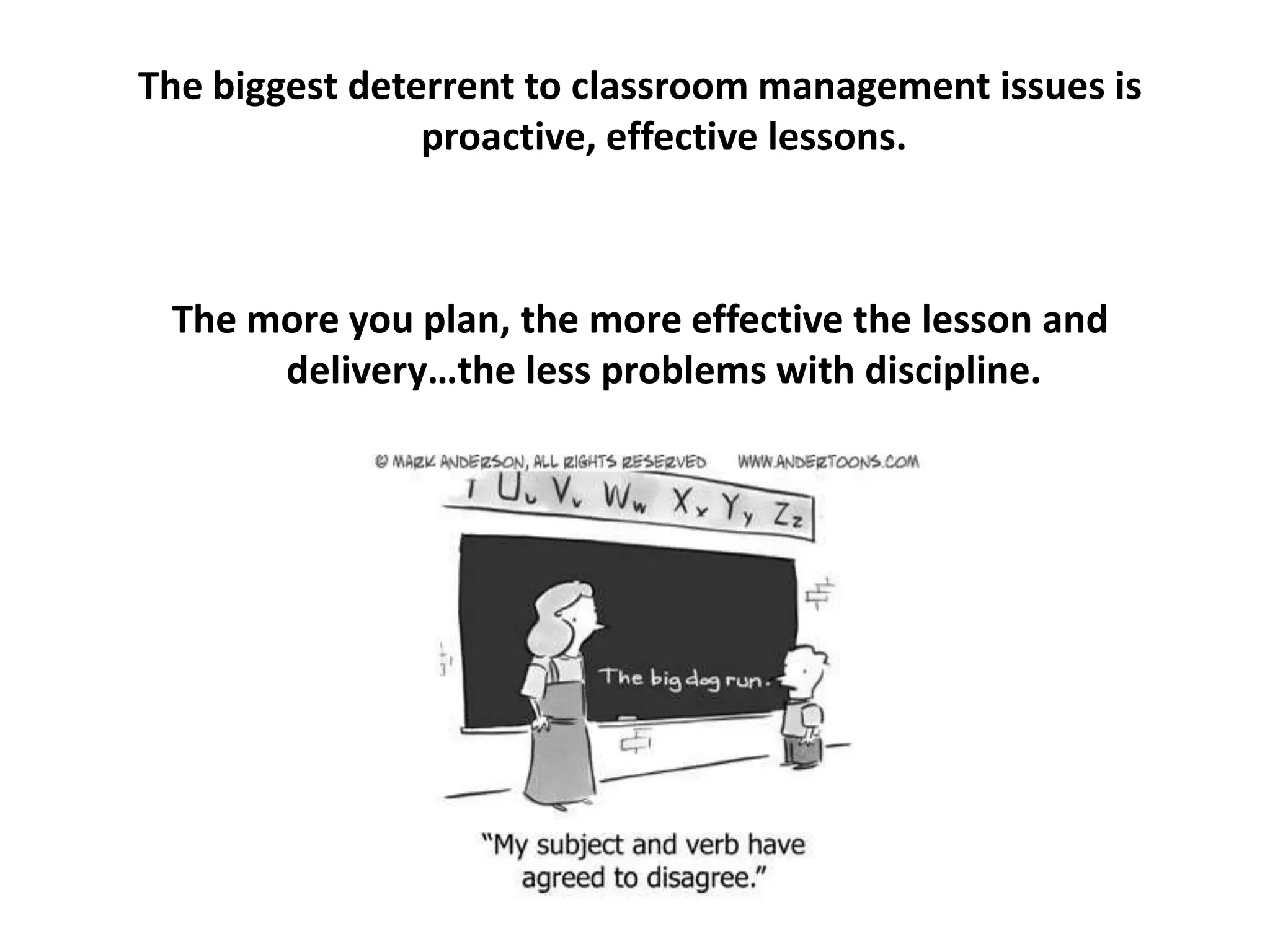
The biggest deterrent to classroom management issues is
                proactive, effective lessons.


 The more you plan, the more effective the lesson and
      delivery…the less problems with discipline.
Classroom Management
• Classroom Management involves establishing
  procedures, having rules, and reducing
  discipline problems.

• Why do students cause
  discipline problems?
Students misbehave for several reasons:

• They are bored.
• They don’t know the purpose of your presentation.
• They don’t understand how the information that you
  are delivering applies to them.
• Instruction is uninteresting
• The pace of the instruction is incorrect (too fast, or too
  slow).
• Not enough interaction between and among peers.
"Listen" To The Students’ Misbehavior.

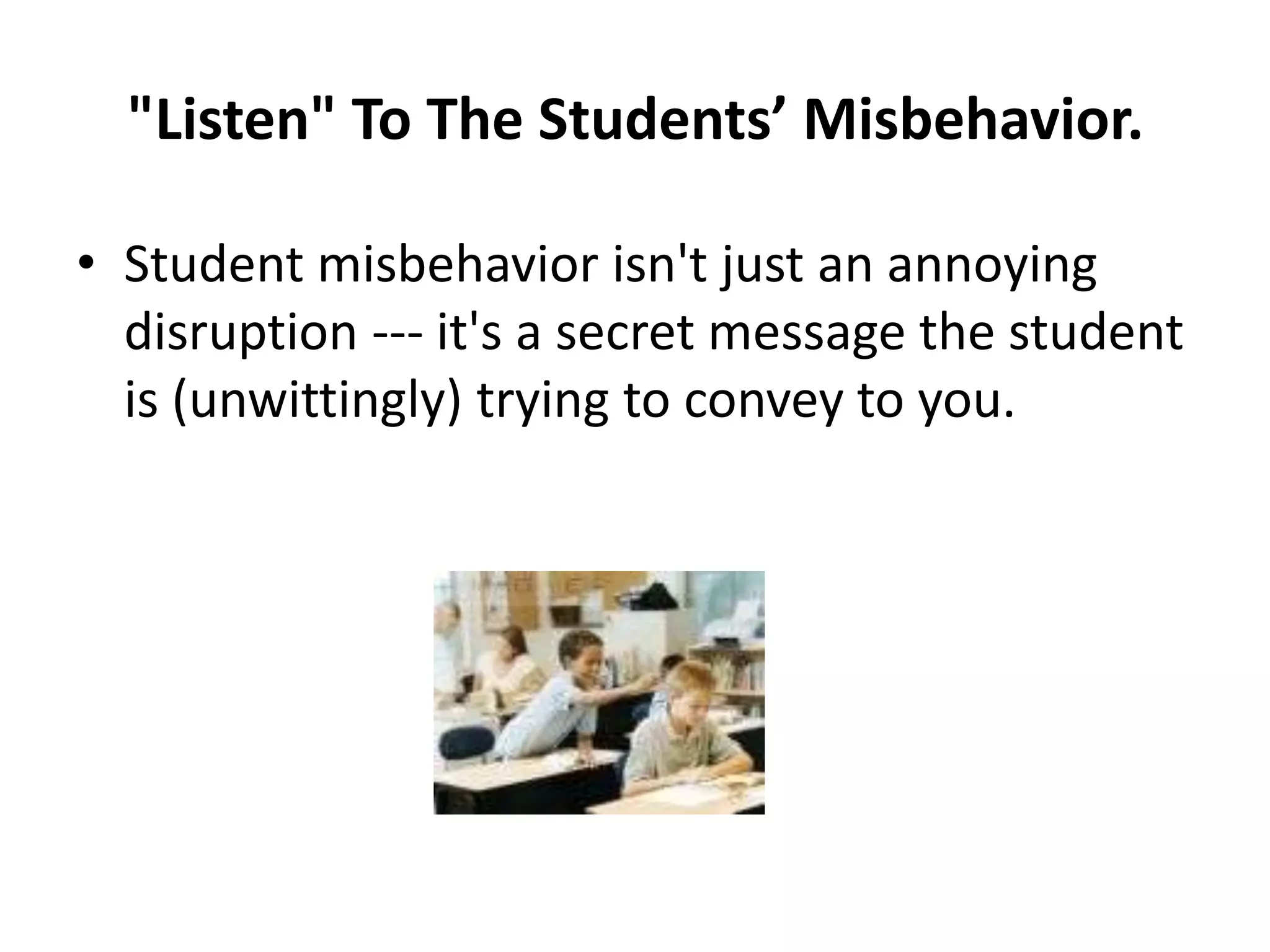
• Student misbehavior isn't just an annoying
  disruption --- it's a secret message the student
  is (unwittingly) trying to convey to you.
Guiding Values of
          Classroom Management

•   Fairness
•   Firmness
•   Consistency
•   Developmental
    appropriateness
Principles of Classroom
     Management
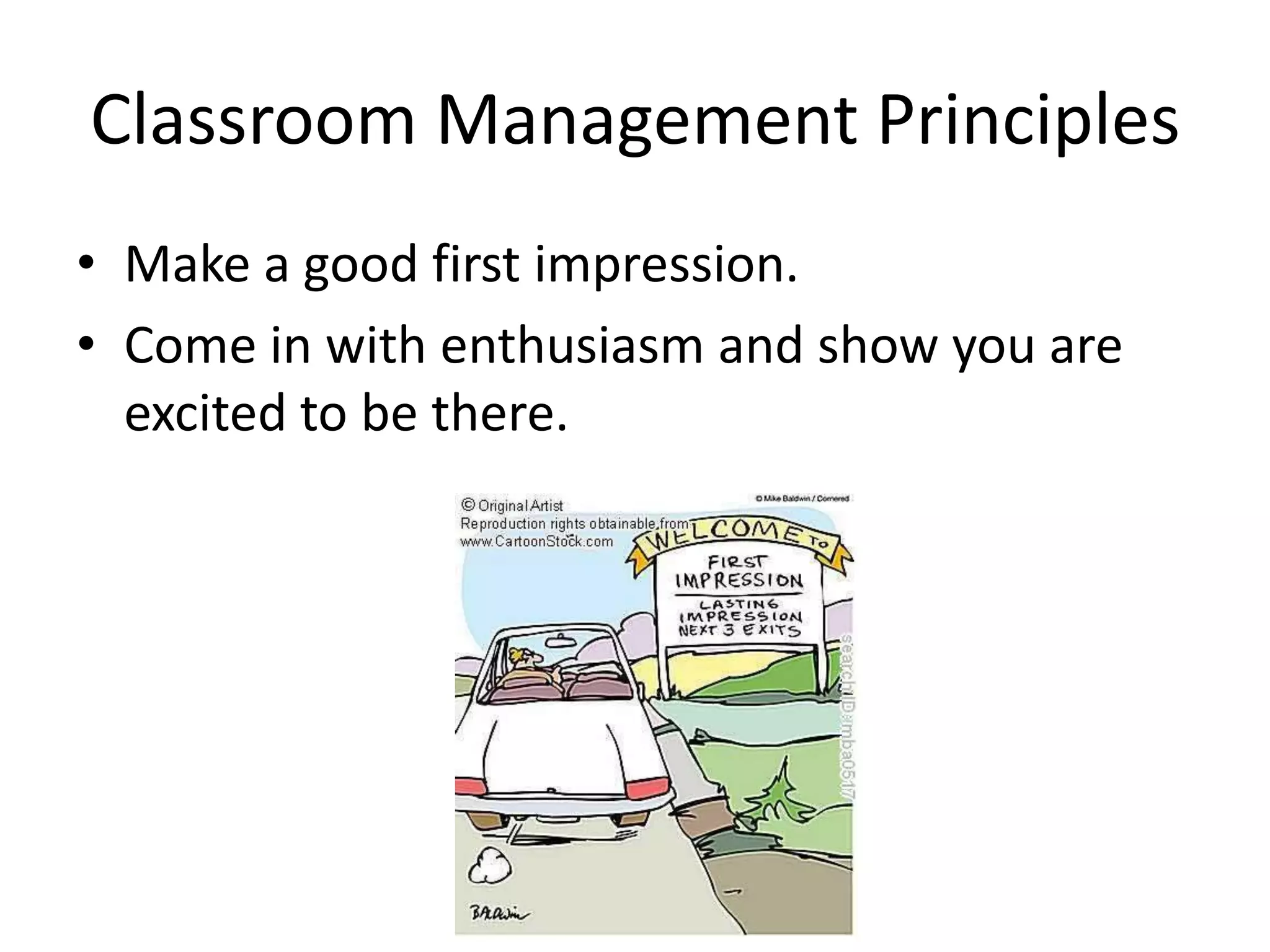
Classroom Management Principles
• Make a good first impression.
• Come in with enthusiasm and show you are
  excited to be there.
Classroom Management Principles
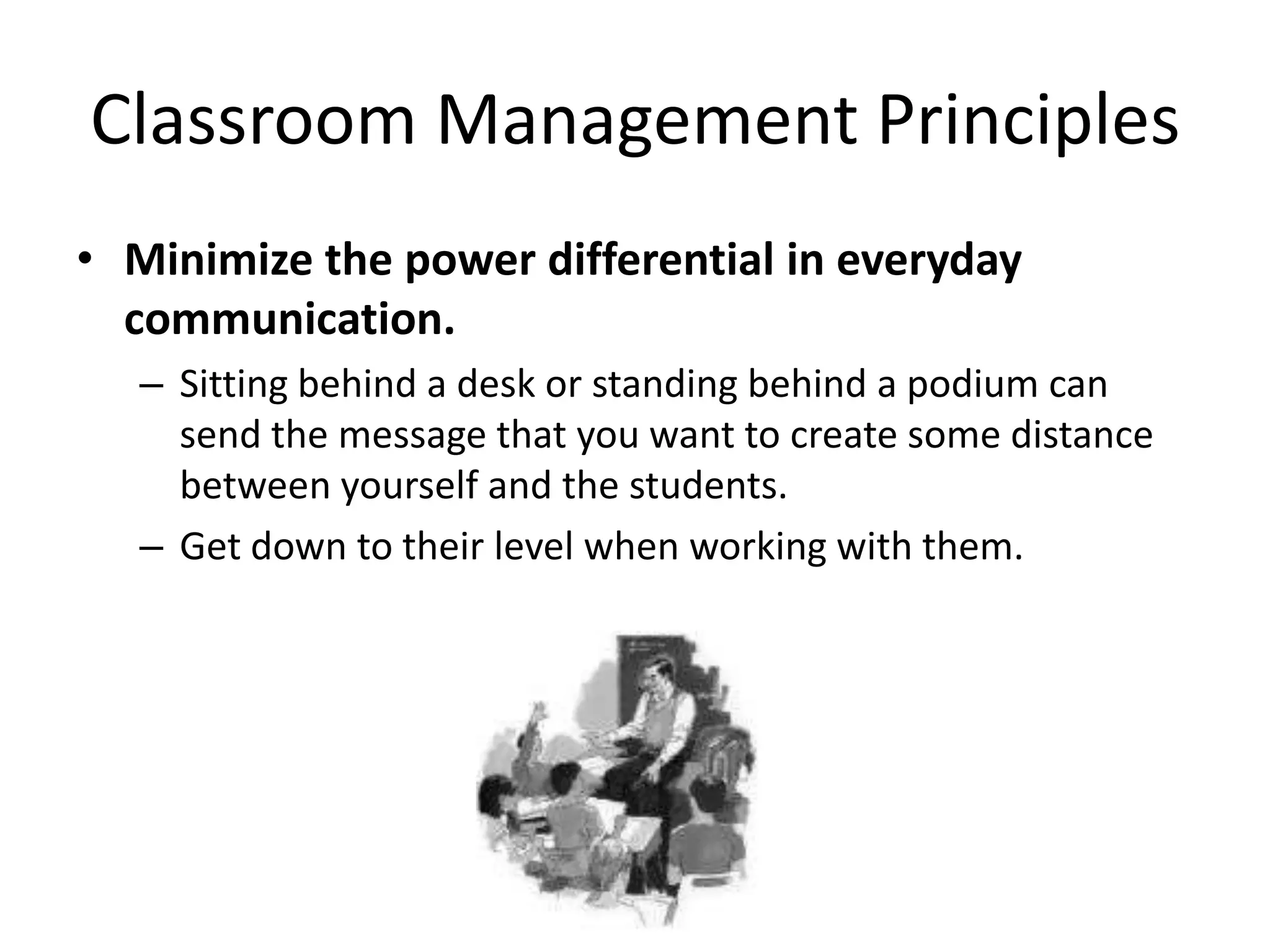
• Minimize the power differential in everyday
  communication.
   – Sitting behind a desk or standing behind a podium can
     send the message that you want to create some distance
     between yourself and the students.
   – Get down to their level when working with them.
Classroom Management Principles

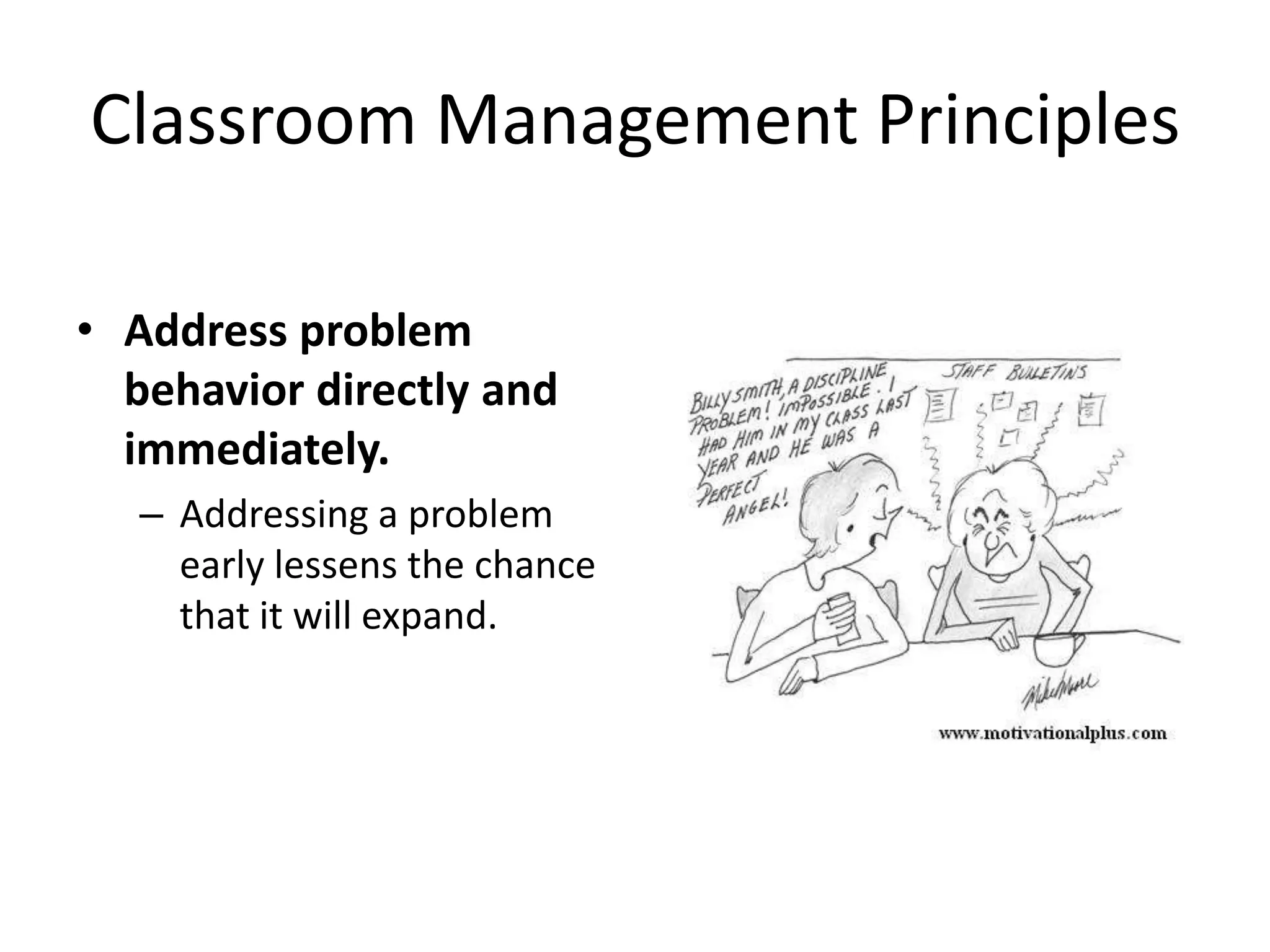
• Address problem
  behavior directly and
  immediately.
   – Addressing a problem
     early lessens the chance
     that it will expand.
Classroom Management Principles
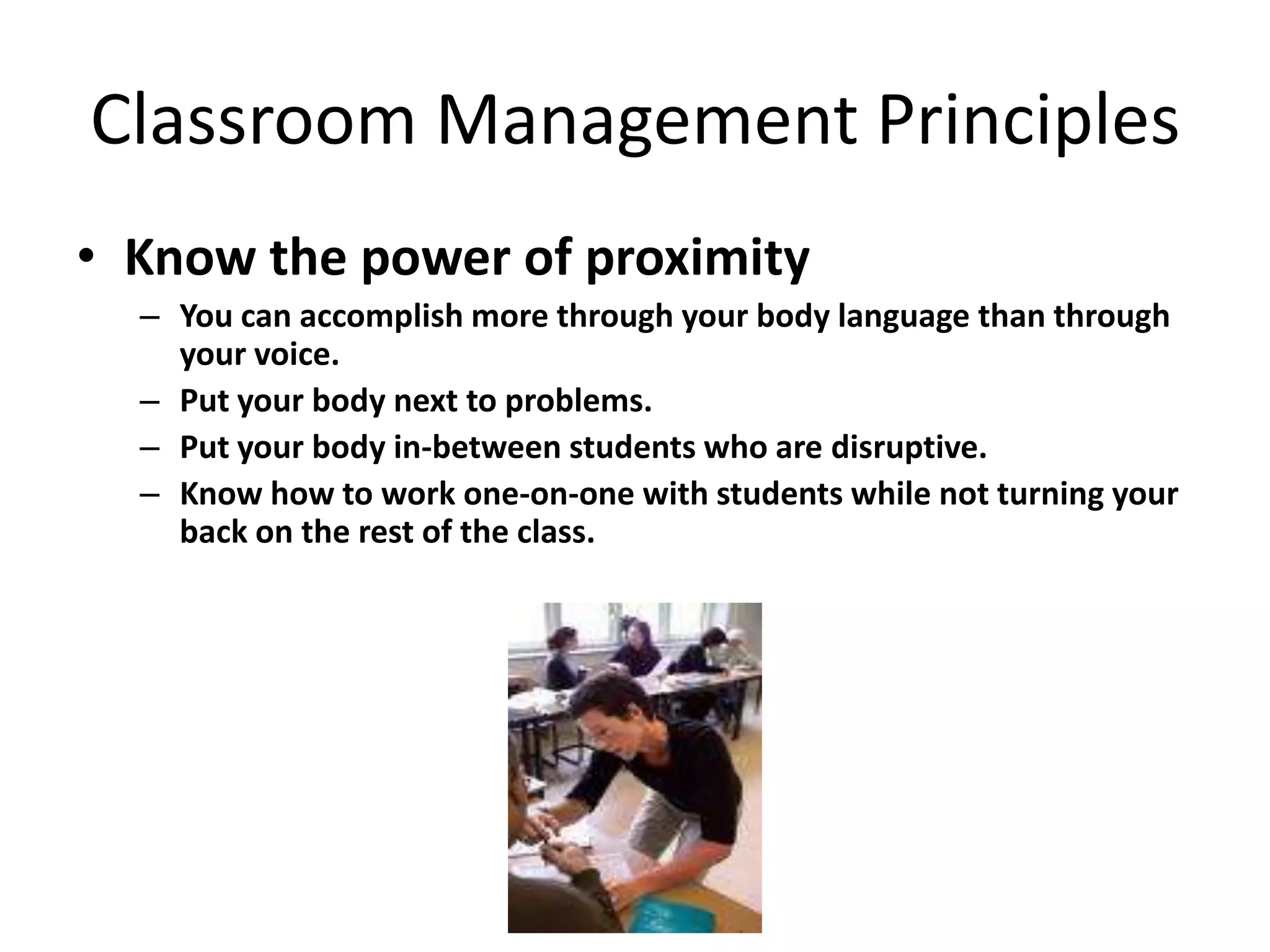
• Know the power of proximity
  – You can accomplish more through your body language than through
    your voice.
  – Put your body next to problems.
  – Put your body in-between students who are disruptive.
  – Know how to work one-on-one with students while not turning your
    back on the rest of the class.
Classroom Management Principles
•       Think Prevention
    –     Consider how you can manage the learning process to prevent
          undesirable behaviors (i.e. classroom set-up, opportunities for
          students to interact, active involvement, clear communication of
          expectations, structuring for success).
Classroom Management Principles
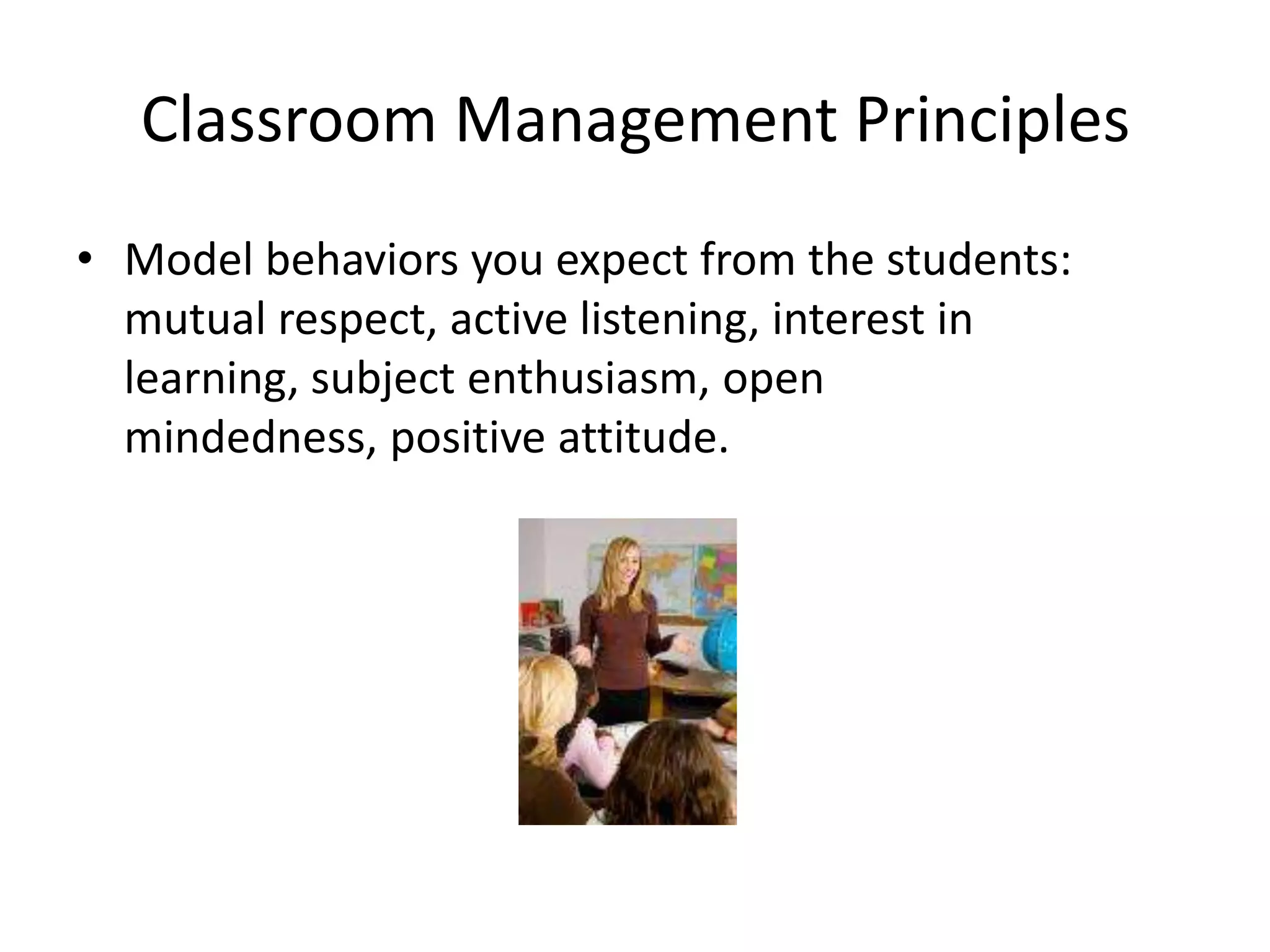
• Model behaviors you expect from the students:
  mutual respect, active listening, interest in
  learning, subject enthusiasm, open
  mindedness, positive attitude.
Classroom Management Principles

• Know the schools’ procedures regarding such things as code
  of conduct

• Make your lessons relevant
  and interesting to your students.
  Use examples that interest students.

• Teach positively and show your enthusiasm. Passion is
  contagious.
Classroom Management Principles
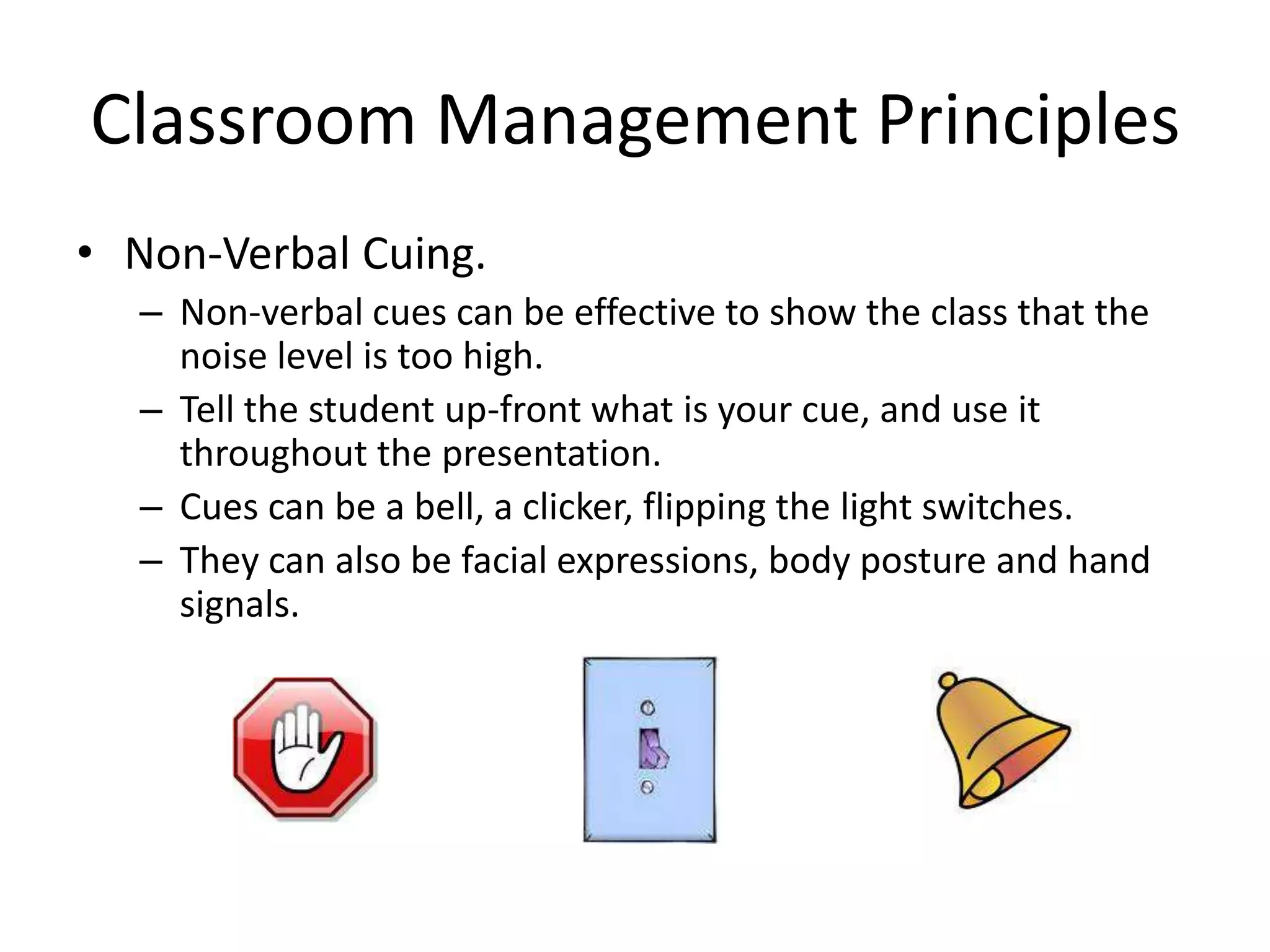
• Non-Verbal Cuing.
  – Non-verbal cues can be effective to show the class that the
    noise level is too high.
  – Tell the student up-front what is your cue, and use it
    throughout the presentation.
  – Cues can be a bell, a clicker, flipping the light switches.
  – They can also be facial expressions, body posture and hand
    signals.
Classroom Management Principles

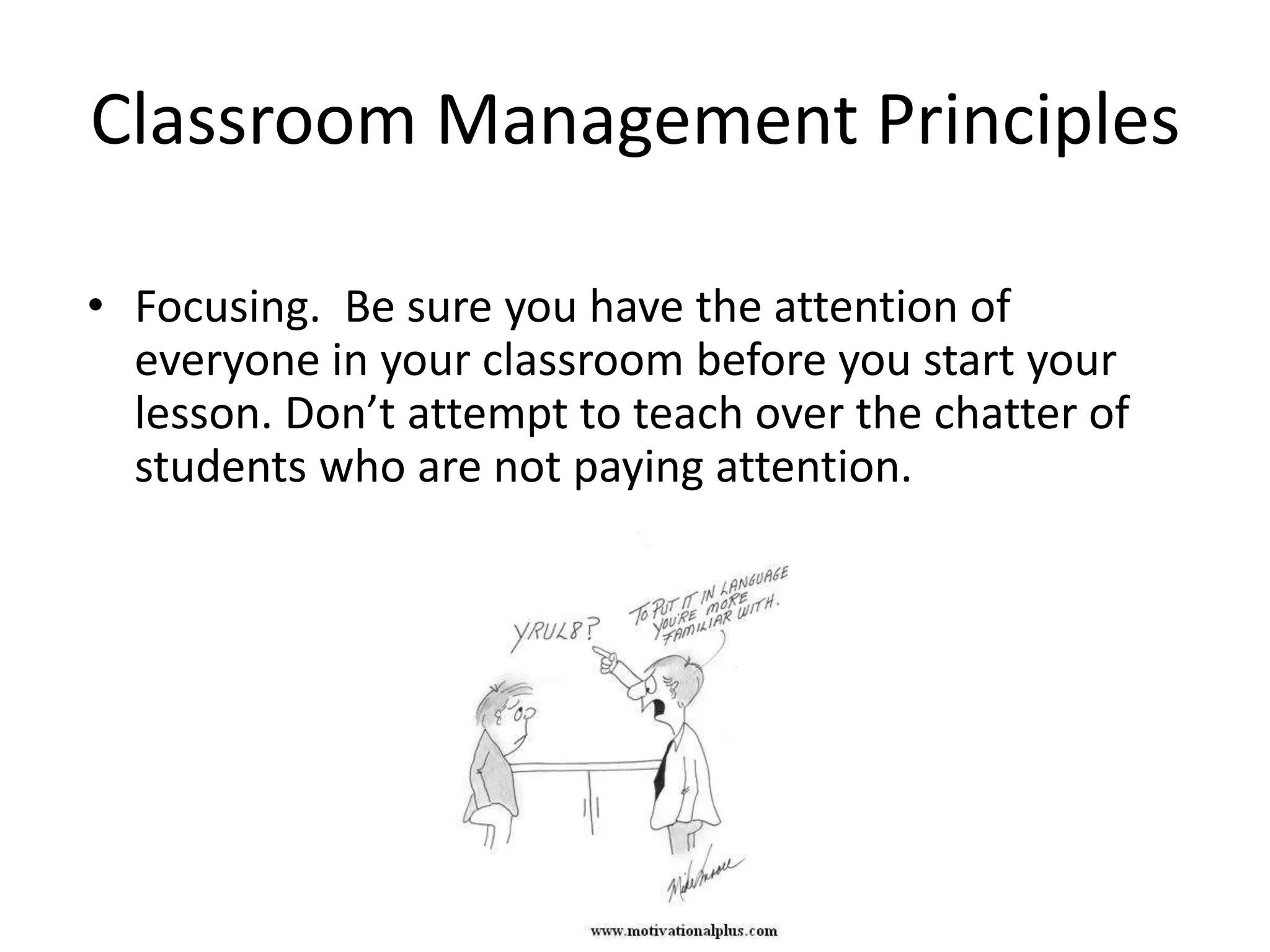
• Focusing. Be sure you have the attention of
  everyone in your classroom before you start your
  lesson. Don’t attempt to teach over the chatter of
  students who are not paying attention.
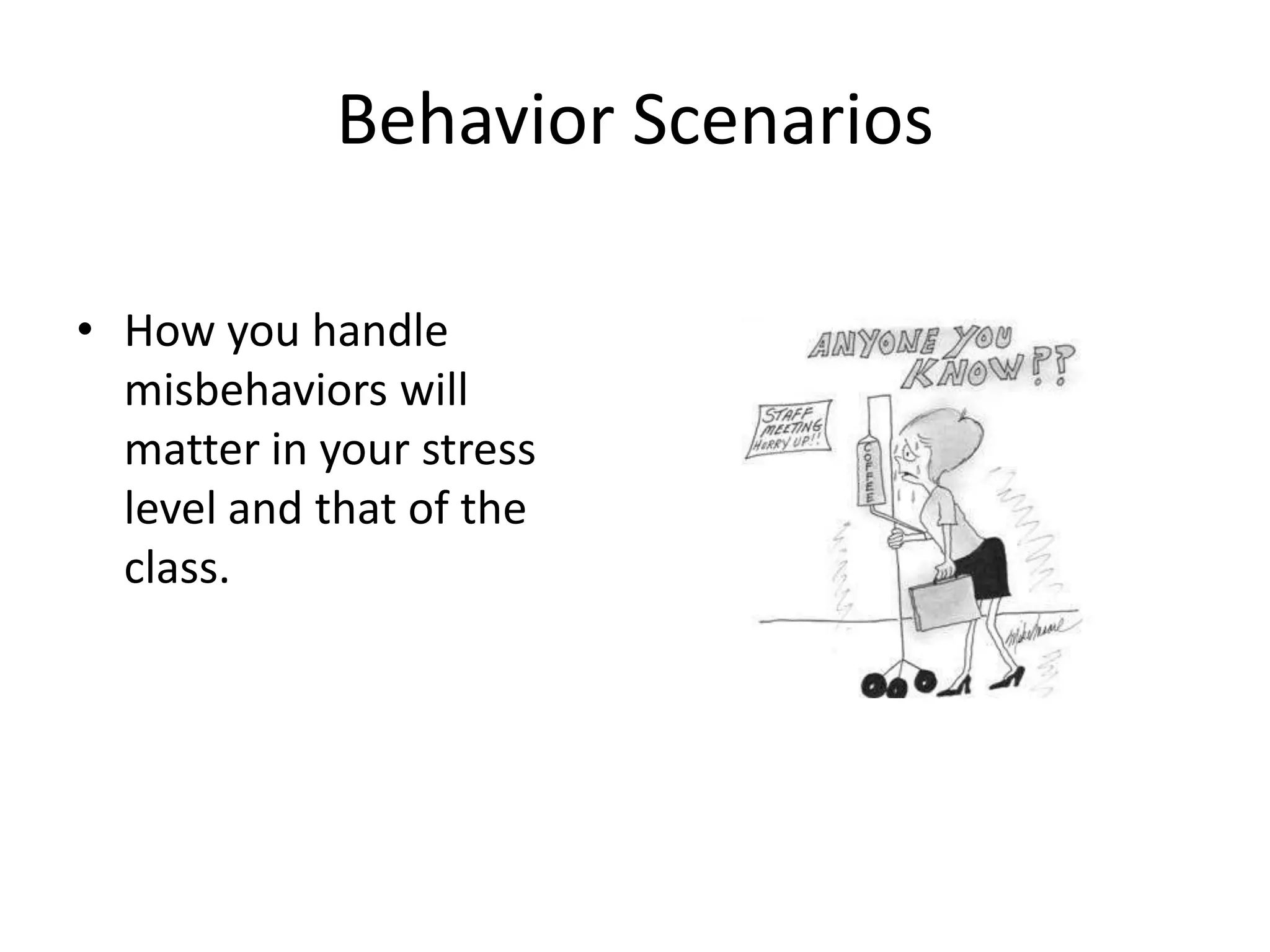
Behavior Scenarios

• How you handle
  misbehaviors will
  matter in your stress
  level and that of the
  class.
Thank you for taking your time to help
        educate our youth.

Classroom management

  • 1.
    Classroom Management Sometimes it feels like we are herding cats.
  • 2.
    Session Objective • Wewill differentiate between effective and ineffective learning environment and engagement strategies.
  • 3.
    Welcome to ClassroomManagement! If you don’t plan, the student will plan for you!!
  • 4.
    Think, Pair, Share •Why is having control of the class so important in order to get your message delivered effectively? • What are some components of effective classroom management?
  • 5.
    What is ClassroomManagement? • Classroom management is ways of organizing the resources, pupils and helpers so that teaching and learning can proceed in an efficient and safe manner.
  • 6.
    The biggest deterrentto classroom management issues is proactive, effective lessons. The more you plan, the more effective the lesson and delivery…the less problems with discipline.
  • 7.
    Classroom Management • ClassroomManagement involves establishing procedures, having rules, and reducing discipline problems. • Why do students cause discipline problems?
  • 8.
    Students misbehave forseveral reasons: • They are bored. • They don’t know the purpose of your presentation. • They don’t understand how the information that you are delivering applies to them. • Instruction is uninteresting • The pace of the instruction is incorrect (too fast, or too slow). • Not enough interaction between and among peers.
  • 9.
    "Listen" To TheStudents’ Misbehavior. • Student misbehavior isn't just an annoying disruption --- it's a secret message the student is (unwittingly) trying to convey to you.
  • 10.
    Guiding Values of Classroom Management • Fairness • Firmness • Consistency • Developmental appropriateness
  • 11.
  • 12.
    Classroom Management Principles •Make a good first impression. • Come in with enthusiasm and show you are excited to be there.
  • 13.
    Classroom Management Principles •Minimize the power differential in everyday communication. – Sitting behind a desk or standing behind a podium can send the message that you want to create some distance between yourself and the students. – Get down to their level when working with them.
  • 14.
    Classroom Management Principles •Address problem behavior directly and immediately. – Addressing a problem early lessens the chance that it will expand.
  • 15.
    Classroom Management Principles •Know the power of proximity – You can accomplish more through your body language than through your voice. – Put your body next to problems. – Put your body in-between students who are disruptive. – Know how to work one-on-one with students while not turning your back on the rest of the class.
  • 16.
    Classroom Management Principles • Think Prevention – Consider how you can manage the learning process to prevent undesirable behaviors (i.e. classroom set-up, opportunities for students to interact, active involvement, clear communication of expectations, structuring for success).
  • 17.
    Classroom Management Principles •Model behaviors you expect from the students: mutual respect, active listening, interest in learning, subject enthusiasm, open mindedness, positive attitude.
  • 18.
    Classroom Management Principles •Know the schools’ procedures regarding such things as code of conduct • Make your lessons relevant and interesting to your students. Use examples that interest students. • Teach positively and show your enthusiasm. Passion is contagious.
  • 19.
    Classroom Management Principles •Non-Verbal Cuing. – Non-verbal cues can be effective to show the class that the noise level is too high. – Tell the student up-front what is your cue, and use it throughout the presentation. – Cues can be a bell, a clicker, flipping the light switches. – They can also be facial expressions, body posture and hand signals.
  • 20.
    Classroom Management Principles •Focusing. Be sure you have the attention of everyone in your classroom before you start your lesson. Don’t attempt to teach over the chatter of students who are not paying attention.
  • 21.
    Behavior Scenarios • Howyou handle misbehaviors will matter in your stress level and that of the class.
  • 22.
    Thank you fortaking your time to help educate our youth.

Editor's Notes