CLASSROOM
INTERACTIONS
English Methodology
Mayra Arcos
BACKGROUND
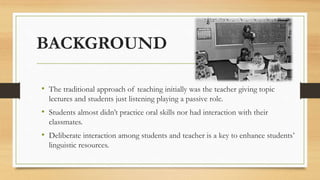
• The traditional approach of teaching initially was the teacher giving topic
lectures and students just listening playing a passive role.
• Students almost didn’t practice oral skills nor had interaction with their
classmates.
• Deliberate interaction among students and teacher is a key to enhance students’
linguistic resources.
DEFINITION
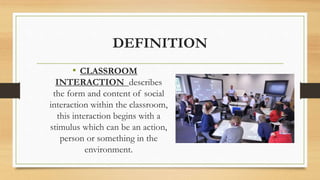
• CLASSROOM
INTERACTION describes
the form and content of social
interaction within the classroom,
this interaction begins with a
stimulus which can be an action,
person or something in the
environment.
OBJECTIVES
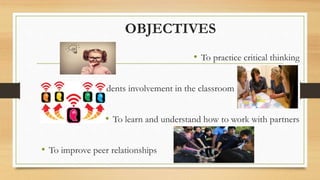
• To practice critical thinking
• To stimulate students involvement in the classroom
• To learn and understand how to work with partners
• To improve peer relationships
• To create a respect climate within the classroom
• To share responsibility of learning with peers
• To capitalize on the diversity of student experiences to generate
alternative solutions problems and to explore student ideas within
the context of the lesson
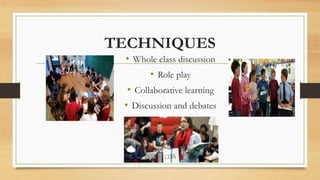
TECHNIQUES
• Whole class discussion
• Role play
• Collaborative learning
• Discussion and debates
• Interactive Sessions
• Loud Reading
• Story telling
• Conversation with learners
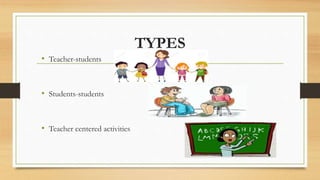
TYPES
• Teacher-students
• Students-students
• Teacher centered activities
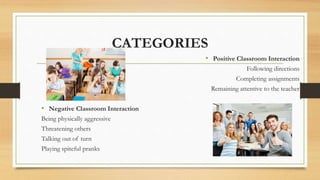
CATEGORIES
• Positive Classroom Interaction
Following directions
Completing assignments
Remaining attentive to the teacher
• Negative Classroom Interaction
Being physically aggressive
Threatening others
Talking out of turn
Playing spiteful pranks
DIMENSIONS OF TEACHING:
EMOTIONAL SUPPORT
• Is the way by which teachers help children develop warm, supportive relationships,
experience enjoyment and excitement about learning, feel comfortable in the
classroom, and experience appropriate levels of autonomy or independence.
Positive climate
Negative climate
Teacher sensitivity
Regard for student perspectives
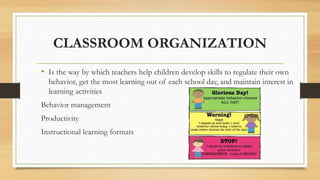
CLASSROOM ORGANIZATION
• Is the way by which teachers help children develop skills to regulate their own
behavior, get the most learning out of each school day, and maintain interest in
learning activities
Behavior management
Productivity
Instructional learning formats
• Is the way by which teachers effectively support students' cognitive
development and language growth
Concept development
Quality of feedback
Language modeling
IMPROVE INTERACTION
• Give more detailed feedback sufficient to shift the direction of the lesson.
• To meet key student learning needs will often require open-ended questions which let
students identify what they already know or where the teacher can best invest time and
resources.
• Provide opportunities to hear student voices and act on ideas originating with the
students.
• In more student-centered learning environments, teachers’ role is guide providing
assistance when needed.
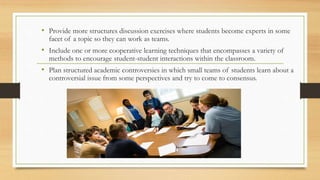
• Provide more structures discussion exercises where students become experts in some
facet of a topic so they can work as teams.
• Include one or more cooperative learning techniques that encompasses a variety of
methods to encourage student-student interactions within the classroom.
• Plan structured academic controversies in which small teams of students learn about a
controversial issue from some perspectives and try to come to consensus.
CONCLUSIONClassroom Interaction COMMUNICATION is the KEY
Group work Individual work
Close-ended Open-ended
Choral responses Full class
Self-access Collaboration
Teacher talk Student initiatives Teacher-Student
Interactions
Maximum Cognitive
Involvement
Maximum Identity
Investment
Focus on Meaning Focus on Language
Focus on Use

Classroom interactions

  • 1.
  • 2.
    BACKGROUND • The traditionalapproach of teaching initially was the teacher giving topic lectures and students just listening playing a passive role. • Students almost didn’t practice oral skills nor had interaction with their classmates. • Deliberate interaction among students and teacher is a key to enhance students’ linguistic resources.
  • 3.
    DEFINITION • CLASSROOM INTERACTION describes theform and content of social interaction within the classroom, this interaction begins with a stimulus which can be an action, person or something in the environment.
  • 4.
    OBJECTIVES • To practicecritical thinking • To stimulate students involvement in the classroom • To learn and understand how to work with partners • To improve peer relationships
  • 5.
    • To createa respect climate within the classroom • To share responsibility of learning with peers • To capitalize on the diversity of student experiences to generate alternative solutions problems and to explore student ideas within the context of the lesson
  • 6.
    TECHNIQUES • Whole classdiscussion • Role play • Collaborative learning • Discussion and debates
  • 7.
    • Interactive Sessions •Loud Reading • Story telling • Conversation with learners
  • 8.
  • 9.
    CATEGORIES • Positive ClassroomInteraction Following directions Completing assignments Remaining attentive to the teacher • Negative Classroom Interaction Being physically aggressive Threatening others Talking out of turn Playing spiteful pranks
  • 10.
    DIMENSIONS OF TEACHING: EMOTIONALSUPPORT • Is the way by which teachers help children develop warm, supportive relationships, experience enjoyment and excitement about learning, feel comfortable in the classroom, and experience appropriate levels of autonomy or independence. Positive climate Negative climate Teacher sensitivity Regard for student perspectives
  • 11.
    CLASSROOM ORGANIZATION • Isthe way by which teachers help children develop skills to regulate their own behavior, get the most learning out of each school day, and maintain interest in learning activities Behavior management Productivity Instructional learning formats
  • 12.
    • Is theway by which teachers effectively support students' cognitive development and language growth Concept development Quality of feedback Language modeling
  • 13.
    IMPROVE INTERACTION • Givemore detailed feedback sufficient to shift the direction of the lesson. • To meet key student learning needs will often require open-ended questions which let students identify what they already know or where the teacher can best invest time and resources. • Provide opportunities to hear student voices and act on ideas originating with the students. • In more student-centered learning environments, teachers’ role is guide providing assistance when needed.
  • 14.
    • Provide morestructures discussion exercises where students become experts in some facet of a topic so they can work as teams. • Include one or more cooperative learning techniques that encompasses a variety of methods to encourage student-student interactions within the classroom. • Plan structured academic controversies in which small teams of students learn about a controversial issue from some perspectives and try to come to consensus.
  • 15.
    CONCLUSIONClassroom Interaction COMMUNICATIONis the KEY Group work Individual work Close-ended Open-ended Choral responses Full class Self-access Collaboration Teacher talk Student initiatives Teacher-Student Interactions Maximum Cognitive Involvement Maximum Identity Investment Focus on Meaning Focus on Language Focus on Use