VEGETABLES
Prepared by:
MECHILLE E. LUGO
DJA-NHS
Zamboanga del Norte
VEGETABLES
•are plants or parts of plants like leaves, fruits,
tubers, roots, bulbs, stems, shoots, and flower used
in a dish either raw or cooked.
•Vegetables give color, texture and flavor to our
meals. They also give vitamins and minerals.
VEGETABLES
•Vegetables are important sources of many
nutrients, including potassium, dietary fiber, folate
(folic acid), vitamin A, and vitamin C.
• Diets rich in potassium may help maintain normal blood
pressure. Vegetable sources of potassium include sweet
potatoes, white potatoes, white beans, tomato products
(paste, sauce, and juice), beet greens, soybeans, lima beans,
spinach, lentils, and kidney beans.
• Dietary fiber from vegetables, as part of an
overall healthy diet, helps reduce blood
cholesterol levels and may lower risk of heart
disease. Fiber is important for proper bowel
function. It helps reduce constipation and
diverticulosis. Fiber-containing foods such as
vegetables help provide a feeling of fullness
with fewer calories.
VEGETABLES
• Folate (folic acid) helps the body form red blood cells. Women
of childbearing age who may become pregnant should
consume adequate folate from foods, and in addition, 400 mcg
of synthetic folic acid from fortified foods or supplements. This
reduces the risk of neural tube defects, spinal bifida, and
anencephaly during fetal development.
• Vitamin A keeps eyes and skin healthy and helps to protect
against infections.
• Vitamin C helps heal cuts and wounds, and keeps teeth and
gums healthy. Vitamin C aids in iron absorption.
VEGETABLES
CLASSIFICATIONS OF
VEGETABLES
Vegetables need to be prepared before they are ready to be served or used
as an ingredient in a cooked dish. Prior to preparation you need to identify
the various kinds of vegetables and different tools and equipment needed
in the preparation of vegetables. It is an important factor to consider in the
preparation of vegetables.
ACCORDING TO PARTS OF PLANTS
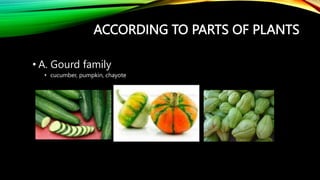
• A. Gourd family
• cucumber, pumpkin, chayote
ACCORDING TO PARTS OF PLANTS
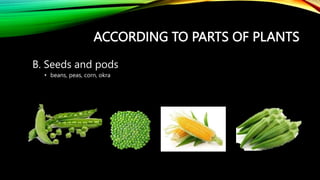
B. Seeds and pods
• beans, peas, corn, okra
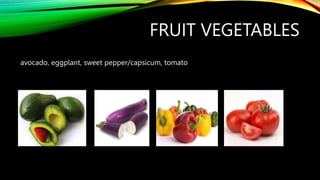
FRUIT VEGETABLES
avocado, eggplant, sweet pepper/capsicum, tomato
ACCORDING TO PARTS OF PLANTS
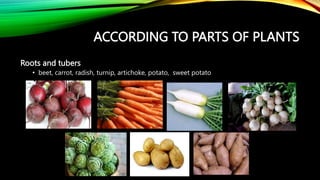
Roots and tubers
• beet, carrot, radish, turnip, artichoke, potato, sweet potato
ACCORDING TO PARTS OF PLANTS
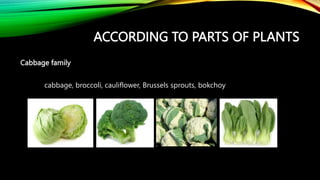
Cabbage family
cabbage, broccoli, cauliflower, Brussels sprouts, bokchoy
ACCORDING TO PARTS OF PLANTS
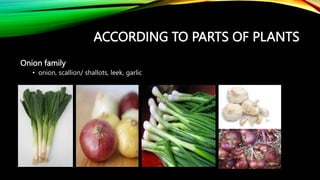
Onion family
• onion, scallion/ shallots, leek, garlic
ACCORDING TO PARTS OF PLANTS
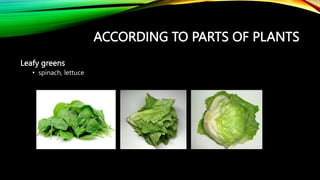
Leafy greens
• spinach, lettuce
ACCORDING TO PARTS OF PLANTS
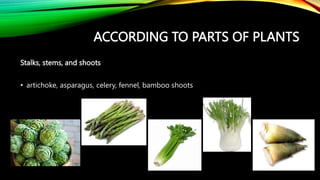
Stalks, stems, and shoots
• artichoke, asparagus, celery, fennel, bamboo shoots
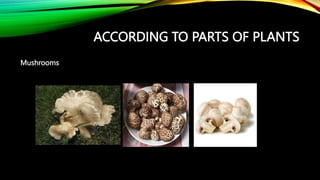
ACCORDING TO PARTS OF PLANTS
Mushrooms
ACCORDING TO CHEMICAL COMPOSITION
• Carbohydrates-rich vegetables – seeds, roots, tubers
• Protein-rich vegetables –legumes, peas, beans
• Fat-rich vegetables – nuts, olives, avocado
• High moisture content – mushroom, tomatoes, radish, green
leafy vegetables
ACCORDING TO NUTRITIVE VALUE
• The following is based on their nutrient content since
fruits and vegetables are good sources of vitamins and
minerals.
• Vitamin A-rich vegetables – green leafy and yellow fruits and
vegetables
• Vitamin C-rich vegetables – yellow vegetables
• Vitamin B (complex) – legumes, peas, beans
TOOLS AND EQUIPMENT NEEDED IN
PREPARING VEGETABLES

Classifications of Vegetables.pptx

  • 1.
    VEGETABLES Prepared by: MECHILLE E.LUGO DJA-NHS Zamboanga del Norte
  • 2.
    VEGETABLES •are plants orparts of plants like leaves, fruits, tubers, roots, bulbs, stems, shoots, and flower used in a dish either raw or cooked. •Vegetables give color, texture and flavor to our meals. They also give vitamins and minerals.
  • 3.
    VEGETABLES •Vegetables are importantsources of many nutrients, including potassium, dietary fiber, folate (folic acid), vitamin A, and vitamin C. • Diets rich in potassium may help maintain normal blood pressure. Vegetable sources of potassium include sweet potatoes, white potatoes, white beans, tomato products (paste, sauce, and juice), beet greens, soybeans, lima beans, spinach, lentils, and kidney beans.
  • 4.
    • Dietary fiberfrom vegetables, as part of an overall healthy diet, helps reduce blood cholesterol levels and may lower risk of heart disease. Fiber is important for proper bowel function. It helps reduce constipation and diverticulosis. Fiber-containing foods such as vegetables help provide a feeling of fullness with fewer calories. VEGETABLES
  • 5.
    • Folate (folicacid) helps the body form red blood cells. Women of childbearing age who may become pregnant should consume adequate folate from foods, and in addition, 400 mcg of synthetic folic acid from fortified foods or supplements. This reduces the risk of neural tube defects, spinal bifida, and anencephaly during fetal development. • Vitamin A keeps eyes and skin healthy and helps to protect against infections. • Vitamin C helps heal cuts and wounds, and keeps teeth and gums healthy. Vitamin C aids in iron absorption. VEGETABLES
  • 6.
    CLASSIFICATIONS OF VEGETABLES Vegetables needto be prepared before they are ready to be served or used as an ingredient in a cooked dish. Prior to preparation you need to identify the various kinds of vegetables and different tools and equipment needed in the preparation of vegetables. It is an important factor to consider in the preparation of vegetables.
  • 7.
    ACCORDING TO PARTSOF PLANTS • A. Gourd family • cucumber, pumpkin, chayote
  • 8.
    ACCORDING TO PARTSOF PLANTS B. Seeds and pods • beans, peas, corn, okra
  • 9.
    FRUIT VEGETABLES avocado, eggplant,sweet pepper/capsicum, tomato
  • 10.
    ACCORDING TO PARTSOF PLANTS Roots and tubers • beet, carrot, radish, turnip, artichoke, potato, sweet potato
  • 11.
    ACCORDING TO PARTSOF PLANTS Cabbage family cabbage, broccoli, cauliflower, Brussels sprouts, bokchoy
  • 12.
    ACCORDING TO PARTSOF PLANTS Onion family • onion, scallion/ shallots, leek, garlic
  • 13.
    ACCORDING TO PARTSOF PLANTS Leafy greens • spinach, lettuce
  • 14.
    ACCORDING TO PARTSOF PLANTS Stalks, stems, and shoots • artichoke, asparagus, celery, fennel, bamboo shoots
  • 15.
    ACCORDING TO PARTSOF PLANTS Mushrooms
  • 16.
    ACCORDING TO CHEMICALCOMPOSITION • Carbohydrates-rich vegetables – seeds, roots, tubers • Protein-rich vegetables –legumes, peas, beans • Fat-rich vegetables – nuts, olives, avocado • High moisture content – mushroom, tomatoes, radish, green leafy vegetables
  • 17.
    ACCORDING TO NUTRITIVEVALUE • The following is based on their nutrient content since fruits and vegetables are good sources of vitamins and minerals. • Vitamin A-rich vegetables – green leafy and yellow fruits and vegetables • Vitamin C-rich vegetables – yellow vegetables • Vitamin B (complex) – legumes, peas, beans
  • 18.
    TOOLS AND EQUIPMENTNEEDED IN PREPARING VEGETABLES